
Jenni Field is traveling, so this one is Chuck alone — his warning is that it will be a lot of America all the time. Four stories, all circling the same question of whether an organization says out loud what it actually expects of people. Uber’s Dara Khosrowshahi says it plainly and unpleasantly: answer the Saturday email, or be pushed out. Cracker Barrel says nothing at all until a travel memo leaks and defines the story for it. Oscar Munoz’s United turnaround is built on the mechanic holding the wrench, in a workforce where 87% of frontline workers are not sure company culture applies to them. And the function that designs everyone else’s career paths turns out not to have one: 26% of HR practitioners report no clear path and another 41% report a vague one.
Uber CEO Dara Khosrowshahi went on the Diary of a CEO podcast and said the quiet part out loud: he expects immediate responses to his weekend emails, does not talk about work-life balance at Uber, and if you cannot keep up with the pace, we’re going to push you out. He frames it as a philosophy rather than hustle culture — hard work as the great equalizer, a skill anyone can develop regardless of what they studied — and offers the nuance that flexibility and hard work are not mutually exclusive, being religious about family dinner from six to eight before going back to email at half past nine and starting again at half past five. Chuck’s aside on that schedule is dry, and his verdict is that calling Saturday emails with expected immediate replies flexibility is doing a lot of heavy lifting. The contrast he sets up is Linear’s Karri Saarinen, who has deliberately built a remote-first culture around 40-hour weeks and quality over quantity: both companies credible, both leaders intentional, and the only question that matters for employee experience is whether people at either company know what they are signing up for. What Chuck genuinely credits is naming the culture explicitly, because high-clarity environments reduce ambiguity-driven exhaustion and expectation clarity is one of the strongest burnout protectors in the data — better than letting unspoken norms do the damage quietly. Then he brings the counterweight: 85% of workers receive after-hours messages at least a few times a month and 60% weekly or more, three in five answer out of fear it would otherwise hurt their career, and McKinsey has roughly two thirds of employees feeling burned out at least once a week in 2025, about 20 percentage points up on 2023, against a recovery period that genuinely takes three to six months. His own frame is that work-life balance is not possible because both sides want more than you can give; what he looks for is work-life flexibility. And the specific failure he names in Khosrowshahi’s position is the gap between I don’t expect you to do this and I want you to model this behavior, closed by the threat of being pushed out — which is not an inclusive culture, and not one that prevents burnout in anybody.
A leaked internal memo first reported by the Wall Street Journal instructs Cracker Barrel employees to eat at Cracker Barrel for all or the majority of meals when traveling on business, with alcohol off the expense report unless a senior leader pre-approves it. The company then clarified that the dining rule is not new — it has been policy since June 2024 — while the alcohol clampdown is, and the backdrop is a company that has had a bad run: the failed 2025 logo redesign that reportedly cost $100 million in market value before the Old Timer came back, declining foot traffic, slowed revenue, internal restructuring. Chuck’s own view of the policy is that there is nothing here. If he worked for Cracker Barrel he would eat at Cracker Barrel; if he worked for Hilton he would stay at a Hilton; he has worked at companies that would not expense alcohol and did not consider it controversial, because eating is a requirement and drinking is not. SAP Concur has a term for the wider pattern, travelscrimping, from its 2025 global business travel survey — tighter reimbursement, meal limits, deferred travel — which makes Cracker Barrel not an outlier but the one whose memo leaked. What interests him is the leak itself, and the fact that a policy sitting quietly for nearly two years took this long to surface. The communication failure is not the policy, it is the absence of proactive framing, and once a leaked document has defined the story, “this isn’t new” lands flat: it sounds defensive and invites the obvious question about why employees are reading it now. What Chuck wanted instead was the confident version — of course we want our employees to eat at our restaurants, here is what the company gets from that, here is what employees get, and no, we are not buying anybody’s booze. His read on why this became a story at all is the residue of the logo reversal, which turned political and put the brand back in the marketplace of grievance, so a cost-control memo landed in a company whose credibility was already dented.
Chuck’s favorite audience is the frontline, and the piece he brings is Stacey Zolt Hara of Burson writing in Fortune on how former United Airlines CEO Oscar Munoz turned around 85,000 deeply disgruntled employees whose discontent was bleeding into the customer experience. The framework is simple and uncomfortable: build it around the guy with the wrench. When a mechanical issue delays a flight it is not middle managers who fix it, and how much discretionary effort that mechanic applies in that moment decides whether the plane leaves, whether the crew makes its next assignment, whether the airline hits its on-time metrics. Everything cascades from one person. The data underneath is bleak — a 2025 Workvivo survey found 87% of frontline workers are unsure whether company culture even applies to them, 42% say leadership is not good at communicating with them, and 69% want to better understand company strategy and what it means for their role, which Chuck calls the nugget. A June 2025 Aspen Institute study puts US GDP 10% higher if the essential economy had kept pace with white-collar productivity, which rose 28% between 2015 and 2023 while essential economy productivity actually declined. The HOW Institute adds that 94% of employees say moral leadership is more important than ever while only 6% of CEOs and 9% of managers deliver it. Munoz is known for physically showing up, pulling a chair into airport operations and listening, and there is video of it; asked whether that scales, Chuck’s answer is that it scales easily, because it comes down to leaders taking and making the time, and because the knowledge sitting with frontline employees is in every organization already. His harder point is the 6%: if leaders already know moral leadership matters, then the problem is not awareness but incentive structures that do not reward it, and that is a much more difficult conversation than showing up on the floor. Munoz’s line is the one he leaves standing — in today’s polarized times, the concept of consistency is the real courage.
A new HR Certification Institute survey of thousands of practitioners, reported in Fortune, found 26% have no clear career path and another 41% have some sense of direction that is not well defined, more than half have looked for another job in the past year, and 41% are considering leaving HR entirely. The function that builds career frameworks, succession plans and leadership pipelines for everybody else has not done it for itself. The structural reasons are the interesting part: HR teams are lean, and at many mid-size companies one HR director and one chief people officer means the ladder does not have enough rungs; early-career roles in payroll, benefits and compliance build operational depth but not the consultative credibility a business partner role needs; and because HR’s impact is harder to quantify than sales or operations — much like communications and employee experience, Chuck notes — promotions feel subjective, which reinforces the sense that the path is opaque. Burnout belongs in this story too, since HR absorbed the pandemic, the return-to-office battles, the layoffs and the social justice responses from 2020 onward, usually without adequate support or headcount. Chuck’s correction to the framing is the sharpest thing in the segment: two thirds of practitioners operating in career ambiguity inside the function responsible for everyone else’s career clarity is not an irony, it is an indictment. And the problem is architectural rather than a mindset — telling people to build a T-shaped skill set does nothing when the next rung only opens if someone leaves, and you cannot create upward mobility that does not exist. People analytics is offered as the bright spot, and he half accepts it: real for large, data-mature organizations and perhaps the top 15 to 20% of practitioners, but not an answer for the mid-market teams without the data infrastructure to support the role. His closing move ties the episode together — HR practitioners are their own version of the guy with the wrench, essential to the operation and excluded from the conversations about their own futures.
What did Uber’s CEO actually say about hard work? Dara Khosrowshahi told the Diary of a CEO podcast that he expects immediate responses to his weekend emails, that Uber does not talk about work-life balance, and that people who cannot keep up with the pace will be pushed out. He frames hard work as the great equalizer and a skill anyone can develop, and points to his own schedule — family dinner from six to eight, back on email by half past nine, starting at half past five — as a personal choice rather than a mandate.
Is being explicit about a demanding culture better than staying vague? Chuck’s answer is a qualified yes. He does not like Uber’s culture, but high-clarity environments reduce ambiguity-driven exhaustion, and expectation clarity is consistently one of the strongest protectors against burnout. The problem is what follows the clarity: 85% of workers already receive after-hours messages at least a few times a month and three in five answer out of fear for their career, so a CEO who links non-response to not fitting the culture produces fear-based compliance whatever he intended.
What was in Cracker Barrel’s leaked memo? It instructs employees to eat at Cracker Barrel restaurants for all or the majority of meals while traveling on business, and takes alcohol off the expense report unless a senior leader pre-approves an exception. The company later clarified that the dining rule has been policy since June 2024 and that employees can still eat elsewhere; the alcohol restriction is the genuinely new part.
Why did Cracker Barrel’s response fail? Because the leak defined the story before the company said anything. Chuck’s view is that the policy itself is unremarkable — SAP Concur even has a name for the trend, travelscrimping — and that the failure was the absence of proactive framing. “This isn’t new” is a weak crisis clarification: it sounds defensive and prompts the obvious question of why employees are reading it now.
Who is the guy with the wrench? It is Oscar Munoz’s framework from his United Airlines turnaround. When a mechanical issue delays a flight, the mechanic’s discretionary effort in that moment decides whether the plane leaves, whether the crew makes its next assignment and whether the airline hits its on-time metrics. Everything else cascades from that one person, which makes culture an operating system rather than a perk.
Do frontline workers think company culture applies to them? Mostly not. A 2025 Workvivo survey found 87% of frontline workers are unsure whether company culture even applies to them, 42% say leadership is not good at communicating with them, and 69% want to better understand company strategy and what it means for their role.
How many HR professionals have no clear career path? The HR Certification Institute survey found 26% report no clear career path and another 41% report some sense of direction that is not well defined — roughly two thirds in career ambiguity. More than half have looked for another job in the past year and 41% are considering leaving HR altogether. Chuck’s read is that this is architectural rather than a mindset problem: lean teams and flat structures mean the next rung only opens when someone leaves.
Chuck: Welcome to Frequency. I’m Chuck Gose. Well, and there’s no Jenni Field this week. Frequency is your go-to for real talk about comms, culture, and employee experience. Beyond the buzzwords and straight to what matters. When Jenni and I first launched Frequency, we were committing ourselves to doing weekly episodes. And when Jenni’s international travel got in the way, we thought, let’s just see if we can do this on my own. So here we are. It’s going to be a lot of America all the time. And I don’t know if that’s a good thing, but let’s get into our articles for this week. We’re going to talk about Cracker Barrel doing the unthinkable. No, not changing their logo, but expecting employees to eat at Cracker Barrel. Why connecting with the frontline is so critical, and exploring the irony of HR being lost in its own career path.
Chuck: But first, we’re going to kick things off with Uber. Uber CEO Dara Khosrowshahi went on the Diary of a CEO podcast and said the quiet part out loud. He expects employees to respond to his weekend emails immediately. Doesn’t talk about work-life balance at all at Uber. And if you can’t keep up with the pace, quote, we’re going to push you out. He frames this not as toxic hustle culture, but as a philosophy about hard work being the great equalizer, a skill that anyone can develop regardless of what they studied. The nuance he offers is that flexibility and hard work aren’t mutually exclusive. He’s, quote unquote, religious about family dinner from six to eight p.m., but by nine thirty p.m. he’s back on email, and he starts at five thirty a.m. What a lovely schedule. He positions it as a personal choice, not a mandate others must mirror exactly. Still, when the CEO sends emails on Saturday and expects immediate responses, calling that flexibility is doing a lot of heavy lifting.
Chuck: Let’s contrast that to Linear CEO Karri Saarinen, who has deliberately built a remote-first culture around 40-hour weeks and quality over quantity. Both companies are credible. Both leaders are intentional. The question for those in employee experience isn’t which CEO is right. It’s whether employees at either company actually know what they’re signing up for. What this shows is there’s this tension between I respect your personal time and reply to my Saturday emails immediately. That is very real. So how should employees handle leadership messaging that contains that type of contradiction? Well, there’s something genuinely honest about naming culture explicitly. That’s something Jenni and I have talked quite a bit about on the podcast. And research shows that less than half of workers say that workaholic tendencies are driven by employer expectations or company culture. At least that Uber CEO is being transparent about what his culture is, rather than some kind of unspoken norms doing the damage somewhat quietly.
Chuck: So these high-clarity environments can sometimes reduce a particular kind of burnout, kind of that ambiguity-driven exhaustion, and purpose and expectation clarity are consistently among the top burnout protectors in the data. However, some other data shows 85% of workers receive after-hours messages at least a few times a month, and 60% get them weekly or more. Three in five respond out of fear that not doing so would actually hurt their career. So when a CEO says you’re not fitting the culture, that’s not exactly how fear-based compliance gets created. And McKinsey found that about two thirds of employees feel burned out at least once a week in 2025. That’s up about 20 percentage points since 2023. Now, I don’t know how people feel burned out once a week and then recover, because we know that burnout recovery, true meaningful burnout recovery, can take anywhere from three to six months to recover from. So I don’t know how I feel about this.
Chuck: Now, I’m not a big work-life balance person. I don’t agree it’s possible, because both sides want more than you can give. I guess what I look for is a little work-life flexibility, knowing that sometimes work is going to demand more, so you have to give up some of the life side of it, and other times life needs more, so you have to give up some of the work part of it. So the problem is you’ve got CEOs like this who are saying, I don’t expect you to do this, but this is what I’m doing, and I want you to model this behavior. And through his line, you will be pushed out if you don’t model that. That’s not a very inclusive culture, and certainly not one that is going to prevent burnout from a lot of people. So I would expect — I’m not surprised, I guess, by this response. If you listen to this podcast, you know I’m pretty critical of leadership behavior. So I’m not surprised by this. I guess what I appreciate is the transparency of it. You know what you’re signing up for if you go to work at Uber.
Chuck: Next up, Cracker Barrel is doing what every struggling company does: cutting costs and kind of hoping nobody notices. A leaked internal memo, first reported by the Wall Street Journal, instructs employees to eat at Cracker Barrel restaurants for all or the majority of meals when traveling on business. Alcohol is off the expense report unless a senior leader pre-approves an exception. I’d love to know how those conversations go. The company has since clarified that the eat-at-Cracker-Barrel part isn’t new. It’s been policy since June of 2024. So still kind of new, but not brand new. But the alcohol clampdown is brand new, and the leaked memo made the whole thing very public. The backdrop also matters a bit with Cracker Barrel. They’ve been a bit of a mess lately. The failed 2025 logo redesign reportedly cost the company $100 million in market value before they reversed course and brought back the Old Timer logo. Declining foot traffic, slowed revenue and internal restructuring. Instructing road-tripping employees to eat biscuits and gravy, chicken-fried steak — that doesn’t sound awful to me — at their own chain does feel like a bit of a cost control measure, but also a bit of a workplace story. A policy that existed quietly for two years only became a controversy because it leaked without any context.
Chuck: Now let’s go to Cracker Barrel’s clarification on this. It’s not new, and quote unquote, they can still eat at other places. That landed flat precisely because the company let a leaked memo define the story first. The communication failure here isn’t the policy, it’s the absence of proactive framing, whereas the Uber CEO, he’s stating it publicly out there. Now, me personally, I actually don’t have a problem with this. I think the leaked part is the interesting element here. So when an internal policy leaks and goes viral, what responsibility does the company have, or the comms team have, and how do you respond to that? Because for me, this policy is pretty unremarkable. I guess if I worked at a Cracker Barrel, or I worked at McDonald’s, or I worked for Hilton and I was traveling, I would expect to spend the company’s money at those places. So if I worked at Cracker Barrel, of course I would eat at Cracker Barrel. If I worked for Hilton, of course I would stay at a Hilton. So that to me isn’t a big deal.
Chuck: In fact, SAP Concur coined the term travelscrimping in their 2025 global business travel survey to describe exactly this trend. Tighter reimbursement, meal limits. So Cracker Barrel here isn’t an outlier. They’re just the one whose memo leaked. And also the fact that this has existed since June of 2024 — man, I’m surprised it took that long to get out there. The only change was the alcohol restriction, which — I’ve worked for companies in the past that would not let you expense alcohol. I don’t see that as overly controversial. Alcohol is not a requirement. Eating meals is a requirement. Alcohol is not one. So if that’s part of the culture, I don’t see that that’s honestly that big a deal. I think the reason that’s got so much attention is because of that reversed major rebrand that they had, where they lost all that market value. Even that was a big thing about nothing. All companies change their logos all the time. The fact that that turned political is what thrust this back into the marketplace, I believe. So why did this get leaked? Why is this a big deal? I honestly don’t know. But I think it shows the response that you have to it. If Cracker Barrel had come back and been like, of course, of course we want our employees to eat at our restaurants, this is the benefit we get out of that, this is the benefit they get out of that, and also, yeah, we don’t want to buy people’s booze. Again, not a big deal, but some people made it a big deal.
Chuck: Next up, we’re going to talk about my favorite audience, which is the frontline workforce. Former United Airlines CEO Oscar Munoz gets credited with turning around a famously miserable airline workforce — 85,000 employees, deeply disgruntled and bleeding discontent into the customer experience. His framework was very simple and uncomfortable. He built the turnaround around, quote, the guy with the wrench. When a mechanical issue delays the flight, it’s not the middle managers who fix it. How motivated the mechanic is, how much discretionary effort he applies in that moment, determines whether the plane gets out, whether the crew makes their next assignment, and whether the airline hits its on-time metrics. Everything cascades from that one person. This is an article in Fortune written by Stacey Zolt Hara, and it layers in some interesting data.
Chuck: A 2025 Workvivo survey, something Jenni and I talked about in a previous episode, found 87% of frontline workers are unsure whether company culture even applies to them. Nearly nine out of 10 are unsure whether that culture applies to them. 42% say leadership isn’t good at communicating with them. 69% want to be better at understanding company strategy and what it means for their role. That’s the nugget right there. A June 2025 Aspen Institute study found US GDP would be 10% higher if the essential economy had kept pace with white-collar productivity growth. I’ve never liked the white collar, blue collar thing, so I’m just quoting this here. From 2015 to 2023, white-collar productivity rose 28% while essential economy productivity actually declined. The HOW Institute adds another layer: 94% of employees say moral leadership is more important than ever. That’s amazing. Again, I like that they’re holding them to the standard, but only 6% of CEOs and 9% of managers deliver it. Munoz’s quote lands well right here. Quote, in today’s polarized times, the concept of consistency is the real courage.
Chuck: Now, this is the core argument everyone should be having inside their organizations. We know that culture isn’t a perk. It’s not something on a poster, though sometimes we need to be reminded of it. It’s that operating system that determines whether the person holding the wrench, that frontline employee, gives you their best effort or the minimum effort. Now, Munoz’s quote stands out because, again, he was known for showing up. There is video and photos of him pulling up a chair and listening to people. That’s a very physical, visible response to that frontline feedback. So how scalable is that approach? Easily scalable. It all comes down to leadership taking the time and making the time to make that happen. We know there’s so much knowledge with those frontline employees, or that essential workforce, that’s a part of every organization out there. So whether it’s Munoz or others, this makes a difference. Now I want to go back to that HOW Institute number about 94% of employees believing moral leadership is more important than ever, but only 6% of CEOs deliver it. If that is true — if that is true, let’s say that it is — the problem isn’t that leaders don’t know this matters. It’s that the incentive structures actually don’t reward it. That’s a much harder conversation to have than just show up to the floor. So we need leaders to deliver on that moral leadership the way that employees say it is so important.
Chuck: And we’re going to wrap up here with a new survey from the HR Certification Institute covering thousands of HR practitioners. They found that 26% of respondents have no clear career path, and another 41% say they have some sense of direction, but it’s not well defined. And more than half looked for another job in the past year. 41% are considering leaving HR entirely. The function that designs these career frameworks for organizations, and succession plans and leadership pipelines for everyone else, apparently hasn’t done the work for itself. The article names a few structural reasons this happens. One, HR teams are often too lean. I think a lot of organizations, or a lot of departments, would say they are also lean, but especially at many mid-sized companies there might just be one HR director, one chief people officer, which means the ladder simply doesn’t have enough rungs. Again, not a unique problem to HR, but still can be frustrating. There are early career roles in payroll, benefits and compliance that build some operational depth, but not always that consultative credibility needed to become a true HR business partner. And because HR’s impact — much like comms, much like employee experience — can be harder to quantify than sales or operations, promotions can feel very subjective, reinforcing the perception that this path forward is not clear at all.
Chuck: Now, we talked about burnout earlier. Burnout shows up here too. Since 2020, I do think we have to acknowledge HR absorbed the pandemic, all the return-to-office battles, all the layoffs, the social justice responses — all of those things hit them, often without adequate support or headcount. People analytics is flagged as a bright spot. Data fluency is increasingly differentiating HR leaders who can connect workforce trends to business outcomes. That’s a longer-term fix for something that looks more like a bit of an immediate crisis. Now, reading through this in the study, the irony is almost too easy. HR doesn’t have clear career paths for its own people. So is the irony the actual problem, or is it a symptom of something deeper about how organizations value the function?
Chuck: So let’s go back to some of those earlier numbers here. The numbers might be a bit worse than they look. When you’ve got a quarter of HR practitioners with no career path, 41% have a vague sense — that’s roughly two thirds operating in this career ambiguity, in the same function responsible for career clarity for everyone else. That’s more an indictment than it is ironic. And the structural problem that they have is not a mindset. It is architectural. Like lean teams, organizations are getting flatter, these subjective promotions. You can’t create upward mobility that doesn’t exist. And you can’t expect HR practitioners to build a T-shaped skill set — that doesn’t solve a problem if the next rung only opens up when someone leaves. Again, not unique to HR, but I think this speaks a lot to those challenges. Now, going to that people analytics part too, as a career differentiator, that’s typically probably only going to be at very large, data-mature organizations. It is accessible to maybe the top 15, 20% of HR practitioners, because what I’ve seen is most mid-market HR teams don’t have the data infrastructure to support a true people analytics role. So it’s not a realistic answer unless those same people, who are those two thirds that are in this career ambiguity, leave. So HR is not unique in having that limited or, I should say, unclear career path, but this is proving to be a bit endemic in the organizations. And so what can they do about it? Well, we need to recognize — how can HR get their own version of that guy with the wrench, the Munoz thing, the United Airlines thing that we talked about earlier? How do we showcase them being essential to the operation and not excluded in conversations about their own futures?
Chuck: Well, that wraps up the content I did this week. A lot of me talking. Jenni will be back next week, but I do want to share my freq-out. We always end every episode with that. You’ve heard me talk about this on other episodes in the past. My freq-out is the EX Factor Summit. So if you are listening to this on Monday, March 23rd, when the episode comes out, I will be facilitating the very first EX Factor Summit at Transform. This has been something that has been in the works for what looked initially like a couple of years. But my partner in life and work, Kristen Hancock, also pointed out to me that back on May 11th, 2019, we initially scoped out this EX Factor Summit. It took a while for us to get here. Many years — 2,508 days, in fact — to pull it off. So I want to thank Transform and the Transform community for supporting us hosting the EX Factor Summit at Transform this year, bringing communicators to this new experience, bringing communicators into this larger employee experience conversation. Six-plus years in the work. We’re finally here. If you’re listening to this on Monday, I’ll be mid-effort leading this EX Factor Summit and then going into the rest of the event. So thank you to everyone for supporting ICology at this year’s Transform event.
Chuck: And thank all of you for joining us this week. All the articles that have inspired this conversation are in the show notes. And please don’t forget to rate and review after you’ve listened. Subscribe so you don’t miss another episode, and pass this along to someone you think would enjoy listening or watching. You can also find Frequency on YouTube. Thank you to my dear friend Poet Ali for contributing music to the show. We’re back every Monday with more news, insights and opinions about everything comms and leadership in workplaces today. Keep tuning in and turning up.
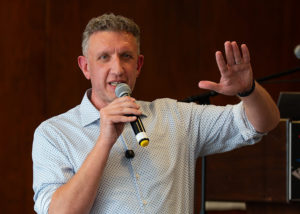
Chuck is a US-based internal communications strategist and the founder of ICology – a community and resource hub for IC professionals. He brings a practitioner lens to every conversation. Chuck is a recognised voice in the industry, a regular speaker and event host, and one of the most connected people in the North American IC world.
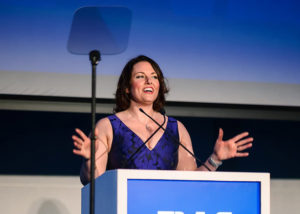
Jenni is a UK-based leadership and internal communications consultant, author of two best-selling books, and international speaker. She runs Redefining Communications, a consultancy working with organisations around the world to help them communicate better and close the gap between what leaders say and what employees experience.