
Home Depot told corporate employees to be back in the office five days a week from April 6, which would be ordinary corporate news except the company announced the same mandate in January 2025. Jenni’s read is that repeating an announcement is a credibility problem, not a communication one — twelve months passed with no consequences for anyone who ignored it. Chuck lines up four stories about the distance between what organizations say and what they fund: Home Depot’s second RTO mandate paired with 800 layoffs, Section’s finding that only 10% of knowledge workers are AI-proficient while half believe they are, Korn Ferry’s data on chief communications officers clearing $1 million while a third have no AI approach, and the Achievers report where only one in four employees feel appreciated and 34% are actively job hunting.
Chuck opens on Flex Index’s read of the return-to-office churn, where Home Depot told corporate employees to be in five days a week from April 6 — the same mandate it issued in January 2025, paired this time with 800 layoffs concentrated in tech roles. Stanford’s Nick Bloom has 17% of companies already on their third RTO policy, not counting repeats, which Chuck calls flailing rather than iterating. Jenni’s answer is that this is a credibility issue: leadership is not being followed, is not being believed, and there were clearly no consequences across twelve months of non-compliance. Her sharper point is the missing story — why does the company want people back, what is it trying to achieve, and if the first attempt failed, what damage is the second one repairing? She also puts the failure below the top: cementing post-pandemic ways of working is a behavior change that needs every management layer engaged, and research she cites puts that kind of change at one to two years, a timeframe leaders are not planning against. Chuck talked to a Home Depot corporate employee after the news, and the verdict was blunt — employees called their bluff, there are no teeth to it, and they can deliver what leadership wants without a five-day rule. He does not read the layoffs as punishment so much as proof the first announcement did nothing. Jenni wants someone to go back to Bloom’s data and trace the evolution: are companies on their third policy loosening from five days to three, or tightening the other way?
Section’s AI Proficiency Report surveyed 5,000 knowledge workers and found only 10% scored as proficient while about half believe they are, alongside 25% who do not know what to use AI for and 28% who do not know how to use it at all. Chuck’s structural finding is the deployment gap — 71% of companies approve AI use but 48% have not deployed an LLM, which he likens to announcing a hybrid work policy without giving anyone VPN access — plus 9% of companies banning AI outright while roughly a third of employees at those companies use it anyway. Jenni identifies the perception problem by name: the Dunning-Kruger effect, a cognitive bias rooted in poor metacognition that she wrote about in her work on credible leadership, and she extends it to the AI industry’s own belief-versus-reality gap. What interests her more is the 11% drop in manager support since May 2025 — is it time, is it that managers do not want to be seen using it, or is the hype simply deflating? Chuck’s answer is that the gap between what AI companies think is possible and what a user actually understands is accelerating, and he offers himself as the evidence: an eager, reasonably tech-savvy learner who spent hours failing to get anywhere with the tools everyone on Instagram and TikTok insists are the future. Jenni’s read is that people will not invest the time until the reward is legible and the friction is low. Chuck’s analogy closes it — some people cook from scratch, some are five-star chefs, and most need a recipe: ten steps to a result, after which they start inventing. What he wants is a HelloFresh version of AI that sends the ingredients and the instructions.
The Korn Ferry survey of chief communications officers has median CCO compensation at $900,000 to $1 million in 2025, nearly half earning seven figures and some clearing $2 million, more than half sitting on executive committees, a sharp rise in direct CEO reporting lines since 2023, and 54% commanding budgets over $5 million. The uncomfortable half of the finding is that one third of these leaders have not defined an approach to AI-driven communications, and while 96% report using AI it is mostly content creation, media monitoring and internal comms. Internal communications acumen ranks second only to media relations among the traits CCOs look for when hiring, yet internal comms still trails corporate communications, media relations and crisis management in where teams actually spend their attention — under a report quote that internal audiences are the most important audiences because the inside voices are also the outside voices. Jenni’s response is that the report articulates what the profession has thought for years without action following, and she connects it to Rachel Miller’s line that what goes on inside shows up on the outside, a phrase she first heard at a conference fifteen years ago. She also questions why the AI plan is the CCO’s problem specifically and not finance’s or HR’s, then answers herself: if comms has no strategy for how AI gets used internally, it turns messy and chaotic fast. Her hardest point is that the salaries are staggering but the leadership has not arrived with them, and if the gap is not closing now that someone sits on the executive committee, the whole seat-at-the-table argument is nonsense. Chuck’s version is put your money where your mouth is, and he was genuinely surprised only half of CCOs sit on the executive committee — evidence there are now tiers inside the C-suite. He does refuse to indict anyone for using AI on basic tasks, because that is how anyone starts.
The Achievers Workforce Institute 2026 engagement and retention report surveyed 4,000 employees and HR professionals across eight countries: only one in four feel appreciated, 34% of the US full-time workforce are actively job hunting with another 22% considering it, and if that turnover lands the cost runs between $1.3 and $5.1 trillion before counting part-time workers. The remedies are almost comically cheap — employees who feel fairly compensated are 2.5 times more likely to be engaged but only 17% feel fairly paid; weekly recognition makes people 12 times more likely to find work meaningful and 56 times more likely to feel connected to company values, yet only 19% are recognized weekly; and 75% say removing rewards like gift cards or recognition points would influence a decision to leave. Jenni agrees the solutions are insultingly simple and locates the blocker in time rather than money: leaders will not give it the time because they do not know what that time is supposed to look like, and they do not want to show the vulnerability of not knowing. She is honest that everyone is good at saying the right things and not doing them, offers her own untouched gym kit as proof, and pushes leaders to find a trusted person rather than bury their head and call it a prioritization problem. Chuck’s surprise is how transactional the base of the relationship turns out to be — people want to be paid fairly first — and he concedes he has trivialized gift-card and points programs in the past when the data says they matter. His contrast is the compensation running the other way, citing a Morgan Stanley package north of $40 million a year. Jenni’s caution is that fair is a loaded, subjective word, and what people are really asking for is to feel valued: her callback is Ross Edgley swimming around the UK and just wanting bread. It does not need to be a skylight.
Why did Home Depot announce the same return-to-office policy twice? Home Depot told corporate employees to return five days a week starting April 6, 2026, having announced the identical mandate in January 2025. The hosts read the repeat as evidence the first policy failed: there were no consequences across twelve months of non-compliance, and a Home Depot corporate employee told Chuck that employees simply called leadership’s bluff.
How many companies are on their third RTO policy? Stanford economist Nick Bloom’s data puts it at 17% of companies, and that figure does not count repeats of the same policy. Chuck’s take is that this is not iterating toward something better, it is flailing. Jenni wants someone to trace the direction of travel — whether third policies are loosening or tightening.
What did Section’s AI Proficiency Report actually find? Across 5,000 knowledge workers, only 10% scored as AI-proficient while roughly half believed they were. A quarter don’t know what to use AI for and 28% don’t know how to use it at all. On the company side, 71% approve AI use but 48% have not deployed an LLM, and manager support dropped 11% since May 2025.
Do AI bans at work stop employees using AI? No. Section found 9% of companies ban AI outright, and around a third of employees at those companies use it anyway — and that is only the share willing to admit it on a survey. Chuck’s point is that if a ban does not stop the behavior, it is worth asking what the ban is for.
How much do chief communications officers earn in 2025? Korn Ferry puts median CCO compensation at $900,000 to $1 million, with nearly half earning seven figures and some clearing $2 million. More than half sit on executive committees and 54% run budgets over $5 million — while one third have not defined an approach to AI-driven communications.
What is the cheapest way to improve employee retention? Recognition and fair pay. The Achievers data shows weekly recognition makes employees 12 times more likely to find work meaningful and 56 times more likely to feel connected to company values, yet only 19% are recognized weekly. Jenni’s argument is that these fixes cost time rather than money, which is exactly why leaders avoid them.
Jenni: Welcome to Frequency, I’m Jenni Field.
Chuck: And I’m Chuck Gose. Frequency is your go-to for real talk about comms, culture and employee experience, beyond the buzzwords and straight to what matters. What matters this week, Jenni — we’re going to be talking about how Home Depot is sharing the exact same RTO plan in back-to-back years. Chief communication officers are now making up to a million dollars a year with $5 million budgets, and a third of them still have not figured out their AI comms strategy. In addition, after three years and hundreds of millions of dollars in AI investment, only 10% of employees can actually use these tools effectively, while half think they’re proficient when they’re actually not. Meanwhile, 34% of employees are actively job hunting and only one in four feel appreciated at work. But in between episodes, Jenni, you and I have this epic long WhatsApp chat thread going on that can never go public for the things that we’re sharing back and forth on there. What are some things on your mind this week?
Jenni: So I always enjoy a WhatsApp. I think the thing that we’ve talked about a little bit this week is the Super Bowl. You are a big NFL fan. I’m a household with an NFL fan. So we always watch the Super Bowl here, which is about 11:30 at night. It starts for us and it finishes around 3:30 in the morning. But we were chatting a little bit about the halftime show and the disappointing Patriots. But importantly, any thoughts on the halftime show? I know it’s been a big topic of conversation, certainly your side of the pond. So what did you think of Bad Bunny?
Chuck: Well, let me give a slight correction to earlier on. I appreciate the NFL, but I am a Cincinnati Bengals fan. So when it’s not the Bengals in the Super Bowl, which is unfortunately quite often, I really don’t care. I have no rooting interest in the game whatsoever. I don’t know that anybody who’s not a Patriots fan really wanted the Patriots to win anyway. There’s just a lot of bad blood there with other football fans. But the Bad Bunny show was remarkable. It was amazing. There was just this intense and odd misplaced focus on the language aspect of it, and even some of the misinformation early on — or I should say misunderstanding, when people were like, I can’t believe they’re not even having an American do it. And I’m like, wait. People had to learn that Puerto Rico and Puerto Rican residents are US citizens. It didn’t matter what he did, some people just made up their mind that they didn’t like it. That’s fine, I guess that’s a choice you make. But truly, going in, it was such a remarkable show, and to now learn after the fact all the little subtle placements of things that were not political — these weren’t secret political messages, these were celebrating this Puerto Rican heritage that exists all across the US. So I thought it was remarkable.
Jenni: Yeah, I loved it. A bit like you, I loved reading things afterwards. For anyone that didn’t watch it, I think you said to me on WhatsApp, it was like watching a music video live. It was just exceptional. But there’s one bit where he grabs a drink from a lady at a bar and it’s just a nice moment, and then you realise she actually runs a really iconic bar in Puerto Rico. I just thought that was really lovely. My favourite bit was that the trees that were used were people. And I didn’t realise that until afterwards, that these people were walking onto the pitch dressed as trees. It was just such a genius way of getting the trees onto the pitch. Like, how efficient. I just thought it was excellent. Really, really good. Loved it.
Chuck: Yeah, I learned a little more about that too, because you talk about the creativity and executing on that — the NFL has restrictions on how much equipment can come on and off the field and the amount of time. And so that was this very creative solution. And I learned that there were some pretty unique restrictions of who could be grass and who couldn’t. You had to be under, I want to say it was six feet or six one or something like that. So I would have failed right away.
Jenni: You would not be able to do that. You’d have been a tree.
Chuck: And you had to have marching band experience so that you knew how to find your mark and move around a field. And I was like, man, and they found people to do that. What a cool experience for those people to now have this story of them being grass in the Super Bowl.
Jenni: Yeah, I loved it. Did you see the guy who tracked it on Strava? And then his picture is just his face in the grass as well. I just thought it was great. So that’s been our main topic this week, in amongst all of the articles that we share back and forth to decide what we’re going to talk about. So you’re kicking us off with Home Depot.
Chuck: Absolutely. So Home Depot just announced that corporate employees need to return to office five days a week starting April 6th, which would be unremarkable corporate news except for one small detail. They already announced this back in January of 2025. Same company, same mandate, just a different month. This isn’t a communication problem, it’s purely a compliance problem. When you have to tell people something twice, it’s not because they didn’t hear you the first time. Stanford’s Nick Bloom has data showing 17% of companies are already on their third return to office policy, not counting repeats, which is simply not iterating. That’s pure failure. For IC and HR teams, this raises an uncomfortable question: how many times can you announce the same policy before you admit the policy itself is the problem? Home Depot paired their second announcement with 800 layoffs, mostly in tech roles. The message lands differently when it comes with a side of job cuts. Employees aren’t stupid, they can see when RTO is change management and when it’s a workforce reduction by another name. Jenni, here’s what I’m stuck on. Is repeating the announcement admitting the first one failed, or is it doubling down on a bad bet? Because I can’t figure out how internal comms teams are supposed to message this internally without looking completely ineffective.
Jenni: So I remember when you sent this to me and I replied and went, have they just repeated the same thing? And you were like, yes. There’s lots of questions here, aren’t there, about doing the same thing over and over again and expecting a different outcome being the definition of insanity. What I think is the issue here is that it’s a credibility issue for me. I think the leadership aren’t being followed, they aren’t being believed and people are just not doing it. What’s interesting from an internal comms and culture perspective is that, whilst they have done job cuts announced with this one, there were clearly no consequences for 12 months of people not doing it. And I feel like the story is missing. We’ve talked about RTO a lot. Why do you want them to come back? What is it you’re really trying to achieve? Why is it so important? And if you tried last year and it didn’t work, then what were the impacts on the organisation as a result of that that you’re now trying to fix? I think we’re just missing that link back.
Jenni: But I also think when we’re doing things that change cultures and behaviours, which this stuff is, we don’t take the time to really engage and speak to all of the different management layers in the organisation. So for me, this isn’t necessarily a top leadership position. For me, this is an engagement of leaders throughout the organisation, and I wonder what the process has been to discuss, engage and go through that process with everybody. The final point I’ll make is that what I think this signals is that this change of starting to cement ways of working post pandemic, five years on, takes time. You can’t just communicate it once and things change. There is a time element around change, which is around one to two years based on research that I saw a few years ago. And I don’t think leaders are thinking about things in that timeframe. So actually, if you think it’s going to take us two years to get the culture where we want it to be and get people working in the way we want them to, people aren’t giving themselves that time. And I think this also reinforces this instant need that we seem to have to do things, when actually that’s just not how human beings work.
Chuck: Yeah, I talked to a Home Depot employee after I saw this — not at my local Home Depot, a corporate employee. And basically they said employees called their bluff. They’re like, there’s no teeth to this. We see what they want. We can deliver what they want without having this strict mandate or this strict policy. And I don’t think these layoffs are a punishment for not following it. It just shows this ineffective leadership of, we really mean it this time. Like, we really mean it. And the employees are like, yeah, we know how to do our jobs. We will come in when it’s right to come in, when it’s the right time to. We don’t need to be in here five days a week. And so the fact that this has now come out again, I think it just shows how ineffective the leadership was the first time, and now they’re doing it again the second time. I don’t know that any sort of effectiveness has increased over that time, if employees were like, yeah, we’re going to keep doing our job the way we know is the best way to do it.
Jenni: Yeah. I mean, that is a bigger issue around accountability and stuff like that anyway. But you mentioned a statistic in your summary from Stanford’s Nick Bloom saying that 17% of companies are already on their third policy. I really hope that somebody — because I’m not going to do it — has a look at that policy evolution. So if they’re now on the third, what’s been the difference each time? What are we changing? Is it going from five to three to two? Or is it going from months to week? What’s that shift that people are doing? I think that piece of data is really interesting, to see how people are adapting and shifting it. Because I’m wondering if it’s going that way in terms of, we’ve started strict, we’ve relaxed it, or we were relaxed and now we’re going strict. I’m really interested in that swing. So maybe I’ll message Stanford’s Nick Bloom and see if he’s got any data on that.
Chuck: Next up, from Section. After three years and hundreds of millions of dollars in enterprise AI investment, here’s what we have to show for it. 90% of the workforce still doesn’t know how to use AI effectively. Only 10% scored as AI proficient in Section’s latest survey of 5,000 knowledge workers, but half of workers think they are proficient. So the gap between perception and reality, this is the problem. Companies spent 2025 focused on the basics. Does your team know how to use AI safely? Can they write a decent prompt? Employees know what AI is and can summarize emails. But as AI advances, the bar is rising. In 2026, proficiency means incorporating AI into meaningful, value-added work every week, and this just isn’t happening. 25% of employees don’t know what to use AI for, and 28% don’t know how to use it at all.
Chuck: For comms and HR, the parallels to every other change initiative are painful. 71% of companies approve AI use, but 48% haven’t deployed an LLM. It’s like announcing a hybrid work policy without giving anyone access to the VPN. Even worse, 9% of companies still ban AI completely, though 32% of employees at these companies use it anyway. When 43% of workers at companies with AI bans are still using it — people will find a way. I felt very Jurassic Park-ish there. The really uncomfortable finding for IC teams: manager support for AI dropped 11% since May of 2025. Only 7% of individual contributors say their managers expect daily AI use. 29% receive encouragement to use it. You can deploy all the tools you want, but if managers aren’t reinforcing the behavior, are you just buying expensive software that people will ignore? This should sound familiar to everyone. Jenni, I’m curious about your thoughts on this shadow use of AI. Are companies this naive?
Jenni: So I want to come back to the perception and reality bit at the start of this, because I was just having a quick look as you were talking. It has a name. It’s called the Dunning-Kruger effect, which is a cognitive bias due to a lack of self-awareness and poor metacognition. People cannot accurately assess their own incompetence. And I did write about this in my book about credible leadership. But I think this is exactly what this is. You’ve got this real disconnect in terms of belief and reality. And I think that is across the AI industry as a whole, which I’m not going to get into today. But I think we do have this real belief about the fact it’s going to be utterly life-changing, and then there’s a reality that I think maybe isn’t quite there.
Jenni: I think the bit that’s interesting about this is this manager support that’s dropping. And I think that’s interesting in terms of that shadow use of AI and all of those things. Why? Why is it dropping? Is it dropping because people haven’t got the time, or they don’t want people to know? What’s going on? Or is it just that the hype is coming down? And there is a little bit of a link back to our Super Bowl story, which I was reading — I think I sent you the link on Instagram to some insights around the number of ads that were about AI at the Super Bowl, and the link to trust in AI and all sorts of stuff in there. So I suppose there’s a question back for you. Do you think it’s all linked to people starting to trust it less now?
Chuck: I think what I would say I’m seeing and personally experiencing is there’s a gap that’s accelerating. This gap is getting wider between what a lot of these AI-driven companies believe is possible versus what the actual user understands. And when you’ve got, let’s say, one out of 10 companies banning it completely, I can’t believe they’re that naive to think their employees aren’t still using it. So then why are you banning it? There are still employees that are using it. And these are just the 32% who admit they are using it. There are some that I guarantee you lied when they answered that, because they didn’t want to get busted somehow. So there’s this gap that’s happening, and this is something I’ve experienced. I shared this with you. I broke Claude yesterday.
Jenni: I like how you say you shared this with me. You were sending me screenshots of rage messages yesterday. It wasn’t like, by the way, I’ve broken Claude. It was like —
Chuck: Yes. I end up on the side of Instagram and TikTok where people are talking about Claude Code and Claude Cowork, and, my gosh, you’ve got to be using this. You’ve got to be using it. I spent hours trying to figure out how to use it, and I would consider myself a pretty eager learner, relatively tech savvy. And I was struggling with something that other people were saying, my gosh, this is the future, everybody’s got to be doing it. And I get there’s a learning curve. I have some patience when it comes to this. I think there are some people that are like, I don’t even have an interest in this. So this is where this gap is starting to happen, between people who just want to do their job and do the work — and yes, if I can make it more efficient, great, but not, I’ve got to go learn this other thing and expose myself to frustration that is part of it. That’s where this gap is happening. I’m not even getting into this Clawdbot thing that is happening, where people are buying Mac minis and setting up these things on the side of their desk and they’re building companies. I get that that is all happening, but this gap is widening.
Jenni: And I think the gap is widening to that point because I don’t think people can see the benefit of the time invested to do that. Like you said, you’re an eager learner. You’re always playing with stuff and learning and figuring stuff out. You’ve got way more patience than I have for any of that. And I think that’s part of the problem. Unless you can see, this is going to help me — and there’s no friction in being able to get to that reward and that benefit — people aren’t going to spend the time. The majority of people, I don’t think, are going to spend the time, to your point. I think if the reward was clearer, like, if you spend time and learn how to do this, this is what the benefit will be — that’s like any sales technique — then people would be more engaged and interested in doing it. Whereas I think all people are doing at the moment is putting pictures of themselves in and then asking it to create a caricature of themselves, which I did, and which was awful.
Chuck: Which I have not seen yet. I would like to see that. I compare — I guess in my mind I went to, if we compare AI usage to cooking, there are scratch cooks, there are people that you can throw some ingredients at and they can figure something out and make it. Then there are these crazy high-end five-star chefs, whatever they are. And there are people like myself, who can follow a recipe, but if you just put the ingredients in front of me, I am not going to figure out what I need to do, what temperature, what needs to mix with what. I think people need recipes. I think they need: you want to get from here to here? Do these 10 steps. And the more you do that, the more you can start inventing your own recipes. I think that’s the mindset I’m trying to bring to it.
Jenni: Yeah, I feel like you’ve just created an idea for an AI recipe book now.
Chuck: I think that’s where these — whatever they’re called, skills or gems or whatever these things are that are built inside of some of these platforms — I think that’s what some of those are, but you have to find them. And if it’s not something you’re thinking of or looking for… It’s like I need a HelloFresh version of AI, where it’s sending me the ingredients, sending me the instructions, here, go make this meal. That’s what I need from an AI platform.
Jenni: Yeah, love it.
Chuck: Next we have: chief communication officers are having their moment. Median compensation hit $900,000 to $1 million in 2025, with nearly half earning seven figures and some clearing $2 million a year. More than half now sit on executive committees, with a 70% increase in direct CEO reporting lines since 2023. Budgets are also increasing — 54% of CCOs now command more than $5 million budgets. By every metric that matters to the C-suite, communications has arrived. But here’s the uncomfortable part from this research. These newly elevated, highly compensated strategic leaders are just as lost on AI as everyone else — see the last article. One third of CCOs surveyed haven’t defined their approach to AI-driven communications. AI use is widespread, 96% report using it, but mostly for basic stuff, things like content creation, media monitoring and internal communications. The depth isn’t matching the adoption rate.
Chuck: For comms professionals, this should sting a little bit. Internal communications acumen was the second most desired trait when CCOs hire, trailing only media relations skills. Yet when asked what their teams focus on, internal comms still plays second fiddle to corp comms, media relations and crisis management. This Korn Ferry report includes a quote that’s either inspiring or damning depending on your mood. Quote, internal audiences are the most important audiences, because, quote, the inside voices are also the outside voices. Leadership finally gets that employees are the story, and they’re paying CCOs record salaries to manage that reality. Jenni, going back to this quote around internal audiences being the most important audiences while simultaneously spending most of their budget on external comms — how long are we supposed to pretend that this gap doesn’t exist?
Jenni: So I feel like this report just articulates what people have probably thought for a long time, but action hasn’t followed. So, internal audiences are the most important audiences. It reminds me of a phrase that Rachel Miller uses a lot about what goes on on the inside shows up on the outside. So it’s that same ethos, really. And I think that’s been talked about for a long time. I first heard that phrase at a conference, gosh, going back about 15 years ago. And I think leaders believe — if we think about the things we’ve talked about over the last year, we’ve talked about leaders showing that employee engagement is at the top of their list from the Institute of Leadership report. We’ve talked about the fact that organisational success, that culture, is really important to drive the growth people want. But they’re not doing the work to actually make that a reality.
Jenni: And as you were reading this out about the AI piece as well, I was thinking, why is it so important that the chief communications officers have an AI plan? Why is it not as important for finance or HR? Why is it just the CCOs that need to get this right? But it’s because, in the same paragraph, you’re saying that organisations are really using AI for some of that basic stuff of content creation and things like that. So if there’s no strategy from comms around how to use AI internally, it’s going to get very messy and very chaotic very quickly. For me, this doesn’t feel particularly new. I think the salaries are staggering, but I’m not seeing the leadership come along with that price, because that gap should be closing. If we’ve said that actually in 2025 this is what’s going on, that gap should be closing if there is now somebody sitting on the executive committee. Otherwise it really answers everyone’s view that you have to have a seat at the table in order to have any influence — well, this would prove that you actually don’t, and that that’s nonsense.
Chuck: Yeah, I see it as this: put your money where your mouth is. If you believe these internal audiences are so critical, then where’s the budget to do it? And to your point, I think this has confirmed some of that stress and frustration that we’ve heard from the industry around that — everybody says it’s important, but you’re not funding it. You’re not putting resources behind it. I think the other interesting data point was to say now more than half sit on executive committees. I would have assumed all CCOs would have been on the executive committee. So that’s even signaling to me there’s now a tier at some companies of the exec level, that C-suite is not just one level. There are levels within that C-suite. That was news to me. To your point, the salaries, while staggering, I don’t know, perhaps might be encouraging to some people that are driven by that. For so long it seemed like the CCO path was you had to come from marketing or PR to get there. So if internal audiences are this critical, maybe that is the path for people that are in internal comms to get to that role, knowing you probably need some other exposure as well. So yeah, nothing earth shattering here other than probably the dollar figures. And I don’t want to indict them on using AI for the basic stuff, because that goes back to my earlier point on our previous story, which is, that’s how you have to get started. You have to get using it in ways that make sense to you so that you can explore ways that might make sense for the business. I think they kind of viewed it as basic, as a negative, where I see that as, sometimes those are foundational things for people to start experimenting and playing.
Jenni: Yeah, 100% agree.
Chuck: And finally, we’ve got the Achievers Workforce Institute, who surveyed 4,000 employees and HR professionals across eight countries. And the picture is bleak. Only one in four employees feel appreciated. If 34% of the US full-time workforce switches jobs in the year, the cost of the turnover could hit $1.3 to $5.1 trillion. This range doesn’t even include part-time workers or the additional 22% who are, quote unquote, considering. The talent retention crisis everyone predicted after the pandemic — it’s here, and it’s worse than the forecast. The gap between what employees want and what they’re getting is almost comically simple. Employees who feel fairly compensated are two and a half times more likely to be engaged, but only 17% feel fairly paid. Employees who receive recognition weekly are 12 times more likely to find work meaningful and 56 times more likely to feel connected to company values, yet only 19% say they’re recognized weekly. The fixes aren’t complicated or expensive — recognition, appreciation, connection. These cost almost nothing and companies simply just aren’t doing them.
Chuck: For internal comms and HR teams, here’s the part that should bother you. While your leadership is focused on RTO mandates, AI deployments and office space strategies — many things we talk about on this podcast — your employees have already checked out. They’re not debating whether to come back to the office. They’re debating whether to come back at all. The Achievers data shows that 75% of employees say removing rewards, simple things like gift cards or even recognition points, would influence their decision to leave. We’re penny pinching on the things that matter while CEOs collect seven-figure comp packages to mandate policies nobody wants. The research points to three cultural pillars that actually work: managerial recognition, connection and rewards. None of these require big real estate decisions or enterprise software deployments. They require leaders to pay attention to the people doing the work, which according to this report is the one thing we’re consistently failing to do. Jenni, the solutions here are truly insultingly simple, or should be, for companies. Recognition, appreciation, connection — none of that costs real money. Why aren’t companies doing it, and what’s getting in the way?
Jenni: So it is insultingly simple, and I think you and I have both talked about this for a long time — about all the things that you need to fix your organisation to make it less chaotic, to build credible leadership, to create an experience that people enjoy. None of that costs money. It’s just time. And I think that this is the root cause of the issue: leaders don’t want to give it the time. And I think that comes from the fact that they don’t really know what that time needs to look like. So if I think about the work I do with leadership teams and directors and groups, looking at how we can build credible teams and shift that — they are making the time to come to workshops with me, to have conversations with me about their leadership style. That’s not going to fix it, right? There needs to be ongoing stuff that needs to happen. But they’ve identified this as a priority and they’ve made the time to do that.
Jenni: Now, not everybody is doing it. And if they’re not doing it, it’s because they’re very good at saying all the right things but not doing all the right things. And that is uncomfortable, but we are all good at that. I’m really good at saying I’m going to go to the gym every day next week and not doing it. I took my gym stuff away with me with a work thing this week. I didn’t use it at all. So sometimes things don’t happen, but we have to check in on our values, what we’re trying to achieve, what’s the outcome we’re looking for, and then do the work. I genuinely believe that part of this problem is people think the solutions are too big. They don’t want to give it the time because they don’t really know what that time needs to look like. And they don’t want to show a vulnerability in that they don’t know that. And I think that’s where it comes from. And it takes a lot for leaders and teams to pick up the phone, certainly to me, and say, we’ve got a credibility issue here and we need to talk about it. That takes a lot to recognise. But find a trusted person, find someone to help you, find someone to make your organisation great, and then absolutely smash it. Don’t just bury your head in the sand and go, yeah, no, we just haven’t got time — because you’re just prioritising other things. I don’t know how you’re still thinking that is the right thing, to not prioritise. I just can’t fathom it.
Chuck: I think the part that really surprised me — I shouldn’t say surprised, maybe how big of an issue this was — is that the basic level of that employer-employee relationship is very transactional, in how many people just want to be paid fairly. It’s not all these other things. That was the driver. That, and even down to where I’ve at times probably trivialized recognition programs that included things like gift cards and points. And I’m like, that kind of stuff shouldn’t matter. Well, it’s not for me to decide. This data shows those things do matter. And those are very simple things to do. Paying people fairly is a simple thing to do. Having basic recognition programs that are one way, two way, multidirectional, whatever — that’s a very simple thing to do. And if, just by doing those things, paying people fairly and recognizing them, what does that unlock for the business? So why is that being ignored? And I even read today that when I said that some of these CEOs are on seven-figure compensation packages, for some it’s eight. I just saw Morgan Stanley’s CEO has a new compensation package that’s somewhere in the 40-plus million dollars a year. That is just — it’s hard to get your head around. And I’m not saying he deserves it or doesn’t deserve it, that’s not for me to decide. That’s a lot of money being thrown around. So apparently things are quite good at Morgan Stanley. But again, do people feel like they’re being paid fairly? Is there simple recognition? Are those things happening? They’re not.
Jenni: No. And when you talk about being paid fairly, I always think that’s a really hard thing to answer, because what you think is fair and what I think is fair is very subjective, and I think that is a hard conversation. And also, if you’re comparing it to someone who’s got a salary of 40 million, then you could argue that anything less than 20 million is not fair. Do you see what I mean? I think fair is a word that’s really loaded and I think we have to be a bit mindful of that. I also think it comes back to feeling valued. I think that’s ultimately what people want. There is an element of being fairly paid because that links to your value. But fairness is tricky when you’ve got such wild salaries like that. To your point, who knows if that’s the going rate. But I just think there are so many basics. We talked about this the other week about Ross Edgley, who was swimming around the UK and he just wanted bread. You don’t need a skylight, they just want bread. It doesn’t need to be big fanfare stuff. And I would hope that any leaders or HR teams listening to this are really pushing for that value to be shown in the way that is appropriate for the culture, but that it’s on that list and it is a priority.
Chuck: Well, that’s what we had for this week, Jenni. Let’s get into our freq-outs. What is your freq-out this week?
Jenni: So my freq-out this week is linked to being away with my entrepreneur group, who are a fabulous bunch of other business owners, and we get together a few times a year. And I learnt a new phrase while we were together. We spend time talking about our businesses and any challenges we’ve got and we help each other solve them. But we talked about the word parasocial, which became the word of the conversation. When I look it up in a dictionary it says, denoting a relationship characterised by a one-sided, unreciprocated sense of intimacy felt by a fan or follower for a well-known or prominent figure, in which the fan or follower comes to feel that they know the celebrity as a friend. And we were talking about it because we were talking about podcasting and the parasocial relationship that happens when people listen to podcasts. And I liked it as a phrase and I thought it was worth sharing.
Chuck: Oh, it was. This goes back to — man, probably 2016, 2017, when I was doing the ICology podcast, when that was the thing. I was at an event and I was on a phone call, and somebody walked by and they waited for me to get off the phone and they’re like, I know you, I’ve heard your voice. And then they’re like, oh, that’s right, that’s from the podcast. This weird relationship that we form with different aspects of individuals, whether it be their face, their voice, whatever it is. It is interesting. Very interesting.
Jenni: Yeah, I really — as a phrase, it just became something to be very mindful of. And I know that doing this podcast, which I love doing, we’re kind of in your ears while you’re listening to us. And that’s going straight into your brain. So it’s such an intimate place to be, inside somebody’s ears and creating parasocial relationships. So yeah, that was my freq-out this week, being in people’s ears.
Chuck: My freq-out was going to be — you sent me on Instagram these old words that need to come back. And one of the words in there, which I had not heard before, surprisingly enough, was chuckaboo, which is apparently a phrase to mean a very dear friend or bestie type thing. I’m like, how do we bring back chuckaboo? But that’s actually not my freq-out. That’s more of a mindset. My freq-out this week is a bit of a reminder for everyone that we know this, but the internet lives forever. And what surfaced to me in the last week was an interview that took place two years ago. Listening to the interview, it was not clear that it was two years ago. It was with Substack CEO Chris Best. He was being interviewed by Nilay Patel, who I think this might have been on the Decoder podcast or some sort of interview series like that.
Chuck: Anybody can go find this. And this is when Substack was launching a new feature, and Nilay Patel, who is of Indian descent, asked about some of their moderation guidelines and basically says, hey, if somebody goes on there and says all the brown people should have to leave the United States — he’s like, you would censor that, you would take that out. And to see the CEO start backpedaling and relying on things like, well, our terms of service say this, and, well, we believe in free speech, and blah, blah, blah. And what I appreciated about this interviewer was basically — I’m summing this up — he’s like, you could have just said no. Do you realize how bad you look on this interview? He says this on the interview. Do you realize how bad this makes you look, by simply not saying, no, of course we would not. So when I went — I didn’t realize this was two years old, because this felt very much like now. I was almost like, Nilay Patel was seeing this happening before the rest of us. And they have updated their content guidelines. They still do not ban content. They send around things like Nazi words and all this other kind of stuff. But in theory, on Substack, someone could still go on there and say, I think all the brown people should have to leave the United States, and Substack would allow it. And to see the CEO cower and backpedal and start looking around like he’s looking for help from somewhere, and there’s no help on that. It was crystal clear where he stood. It’s a little bit both enjoyable and painful to watch. But it was more freq-ing out around the lack of humanity from some of these CEOs, where they don’t want to deny anyone, so they allow everyone. And the fact is, he could have said, of course we wouldn’t allow that, and done. But no, he wouldn’t. And also the fact that people just, still to this day, do not understand free speech. It just means — well, it used to mean you weren’t going to jail. That doesn’t mean that now. But you don’t get to say whatever you want and there be no consequences. There’s always consequences to things. So that was my freq-out. Seeing this interview, I thought it was present, like now — it was actually from two years ago, but it still feels like it’s relevant now.
Jenni: Yeah, so relevant. And to pick up that point, I think there’s something so dangerous about some of the content and the way the content is surfaced now, that you don’t really see a date, or you don’t know. My Instagram feed is full of stuff and I’m like, that’s November. Why are you showing me this now? There’s so much more stuff that’s going on, but it’s reinforcing the irritation or the anger at things that happened then, even now. And some things, it’s really hard to see when things were done. So it’s just a risk, I think, in terms of that data. So always double check.
Chuck: I’ll put a link to that interview in the show notes for anyone to watch it, and just hope that your CEO never answers a question or an interview in that same style. Well, thank you for joining us this week. All the articles that have inspired the conversation will be in the show notes. And don’t forget to rate and review after you’ve listened. Subscribe so you don’t miss another episode, and pass this along to someone you think would enjoy listening or watching, because you can also find Frequency on YouTube. Thank you to Poet Ali for contributing the music to the show. We’re back every Monday with more news, insights and opinions about everything comms and leadership in workplaces today. Keep tuning in and turning up.

Chuck is a US-based internal communications strategist and the founder of ICology – a community and resource hub for IC professionals. He brings a practitioner lens to every conversation. Chuck is a recognised voice in the industry, a regular speaker and event host, and one of the most connected people in the North American IC world.
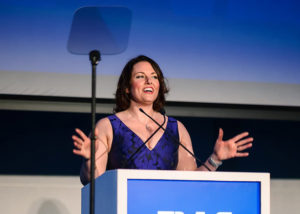
Jenni is a UK-based leadership and internal communications consultant, author of two best-selling books, and international speaker. She runs Redefining Communications, a consultancy working with organisations around the world to help them communicate better and close the gap between what leaders say and what employees experience.