
Fresh off IABC World Conference in Vancouver and Atomicon in Newcastle, Chuck and Jenni compare notes on what conferences are actually for these days before diving into what Chuck calls “such a positive episode”: a Jim Collins TikTok on why good is the enemy of great, a Slate piece asking whether anyone actually wants team drinks, new HBR research on why people work through illness, and a second HBR study on why women’s complaints of workplace abuse are believed less often than men’s. It closes, unexpectedly, on the Salem witch trials.
Chuck raises a viral TikTok clip from EntreLeadership featuring Jim Collins’ famous line that most companies settle for “good enough,” after which greatness becomes nearly impossible to reclaim — fewer than 1% of companies ever make that leap. He asks whether this framing genuinely helps communicators think bigger, or quietly shames people into chasing a standard they’ll never reach. Jenni, mid-way through a different Collins book, defines greatness concretely as superior results, distinctive impact, and lasting endurance — and argues it’s only achievable when purpose and values are built in from the very start, not retrofitted once a company is already coasting on “good.” She points to a client event she’d just attended where sustainability had been genuinely embedded into the organization’s culture and storytelling, not bolted on for show, as a live example of what “great” actually looks like in practice.
Chuck brings a Slate piece questioning the post-pandemic relevance of after-hours team drinks and “mandatory fun,” which the article argues can feel performative, uneven, and exclusive — particularly for women, caregivers, and non-drinkers. Chuck, who skipped IABC’s own opening reception this year, wants any social ritual to be genuinely optional and purposeful rather than an inherited default. Jenni argues the deeper issue is that hybrid and remote work have fragmented workplace culture enough that people no longer have an obvious shared baseline to bond over — she distinguishes between events she attends for genuine connection versus learning, and notes nearly every drinks event she’s valued in the past was tied to something specific (a leaving do, a project wrap), not obligation for its own sake.
Chuck cites new HBR research finding two-thirds of employees have worked while ill in the past six months, driven less by workload than by a belief that their absence won’t be genuinely supported — a trust issue as much as a health one. Jenni’s fix starts with leaders modeling real rest rather than half-working from bed, something she deliberately posted about on LinkedIn while recovering from tonsillitis, to normalize the fact that everyone gets sick. Chuck admits his own guilt here — describing a recent two-week gallbladder-surgery recovery he nearly cut short before a doctor bluntly told him working from bed still counts as working — and lands on a shared conclusion: this time, the fault sits with individuals refusing to lead themselves well, not just with employer culture.
Chuck raises a second HBR study finding women’s complaints of abuse or misconduct are dismissed more often than men’s — even by HR — reflecting an assumption that men are more “rational” while women are seen as overly emotional or misreading intent, a blind spot the research calls a systemic failure invisible to leadership. Jenni is genuinely startled the gap persists, and argues any report of misconduct deserves investigation regardless of who raises it or how credible the accused seems on reputation alone. The conversation lands, more provocatively, on the idea that this bias has centuries-deep roots — Jenni draws a direct line to the history of the Salem witch trials and the belief that women reporting or asserting themselves were “manipulating,” a thread she’s seen echoed in later legal history including arguments referenced in Roe v. Wade. Chuck connects the same dynamic to current demonization of vulnerable groups more broadly, describing it as foundational to how bias operates against anyone unable to easily defend themselves.
Chuck shares a widely circulated Washington Post report on companies like Duolingo, Meta, and Shopify mandating AI adoption in blunt terms — with one CEO quoted saying “AI first equals employees last… this is poor leadership.” Jenni argues AI change is genuinely different from past digital-transformation projects because it strikes at trust, creativity, and autonomy — core to how people see themselves as capable, not replaceable — so any rollout has to surface and directly address those specific fears before launch, not attempt to talk over them with a bold company-wide mandate. Chuck, drawing on an informal poll he ran at an IABC AI session, notes only two of roughly a hundred communicators in the room feared AI was coming for their current role — his advice was that it’s more likely coming for their next role, making early, low-pressure learning the real urgency, not company ultimatums.
What does “great,” not just “good,” actually mean for an organization? Jenni defines it as superior results, distinctive impact, and lasting endurance — achievable only when purpose and values are built in from the start, not chased after the fact.
Are after-work team drinks still relevant to workplace culture? It depends on purpose, say the hosts — rituals tied to a genuine reason (a send-off, a milestone) hold up; drinks scheduled purely out of habit don’t, and can exclude non-drinkers and caregivers.
Why do so many people work while sick? New HBR research finds it’s less about workload and more about trust — people don’t believe their absence will actually be supported, so leaders modeling genuine rest matters more than policy alone.
Why are women’s workplace abuse complaints dismissed more often than men’s? HBR research points to a credibility bias baked into how rationality and emotion get gendered — a bias Jenni traces back, historically, as far as the Salem witch trials.
Can a company mandate AI adoption without damaging trust? Only by directly addressing people’s specific fears — trust, creativity, autonomy — before rolling anything out, not by leading with a blunt company-wide ultimatum.
Jenni: Welcome to Frequency, I’m Jenni Field.
Chuck: And I’m Chuck Gose.
Jenni: Frequency is your go-to for real talk about comms, culture, and employee experience — beyond the buzzwords and straight to what matters. And what matters this week is that Chuck’s been at IABC’s World Conference, and I want to hear all about it.
Chuck: I feel like I’ve been everywhere and nowhere all at once this past week. One stop was IABC World Conference in Vancouver — arrived Sunday, left Wednesday, a bit of a blur. It was genuinely good — I had the privilege of co-presenting a well-attended session with Mark McDermott, CEO of ScreenCloud, around 150 people in the room, and helped Carolyn Clark from Simpplr with one of her AI talks, trying to get people thinking about it a little differently. The best part is always seeing people you might only cross paths with once a year, or every couple of years. The interesting part, which we touched on last episode, was attendance — allegedly around 600 people this year, a dramatic drop from previous years, and noticeably smaller than Toronto a couple of years back. It’s coming back to Toronto in 2026, so they’re staying close to the Canada crowd. I’m genuinely wondering if this smaller size is actually what the event needs to be sustainable — last time it was in Vancouver, they had to split it across two hotels, which caused its own confusion; this year it was contained in one. I went to a handful of sessions mostly to support the speakers, while acknowledging honestly that the conference itself isn’t really built for me anymore — that’s one of my real takeaways, even though I don’t love saying it. There were plenty of strong speakers, but if I could suggest one improvement, it’d be either dropping the theme entirely — this year’s was “Connect,” about as generic as it gets, and there are other events already using that name — or committing to something genuinely laser-focused that every session actually ties back to. Back when I first started attending, it felt like it could be all things to all people, with a thousand-plus attendees and multiple tracks. Now it feels more like a loose collection of content around a generic theme.
Jenni: Did you walk away with one specific takeaway, beyond enjoying reconnecting with people?
Chuck: Honestly, no — and I think that’s part of the problem.
Jenni: That is part of the problem, isn’t it. It’s a shame — Vancouver 2019 was my first one, and I remember walking in with Advita Patel and Trudy Lewis and being genuinely blown away. I’ve been back a few times since and it’s never quite recreated that feeling, though that was pre-COVID and a different landscape entirely. Still, it was lovely watching the posts roll in from friends who were there this year — glad you went.
Chuck: Comparing it to the last Vancouver event, just six years ago, it’s a completely different vibe. In 2019 I wouldn’t have dreamed of skipping the opening networking reception — RIP Bananatag’s boat party, complete with someone dressed as a boat captain — I was showing people the photos. There was allegedly a Canada party again this year, but people weren’t even sure it counted as a real party. A lot of that ritual has quietly fallen away, and newer attendees don’t really know what they’re missing, while those of us who were around back then are left reminiscing.
Jenni: It’s evolving, sitting in that sticky middle where change is happening but hasn’t settled. Still, a good event overall. The other thing on my mind — I was at Atomicon this week, a conference for entrepreneurs and creative-service business owners, around 1,400 people in Newcastle plus an online audience. Genuinely excellent lineup. Rory Sutherland spoke — long-time figure in PR and comms, someone I’ve wanted to hear for years — and told a story about the history of “horsepower” that’s really stuck with me. Someone was trying to sell an early mechanical invention to a market that only understood horses, and no one would buy it, until they reframed the pitch: this machine replaces the equivalent of six horses. That arbitrary-sounding marketing device is apparently where “horsepower” as a unit originated — a term with no rigorous technical basis, yet it’s outlasted the pitch by well over a century. The sheer power of a story and framing, lasting generations, really stayed with me.
Chuck: I’d assumed there was some actual mechanical calculation behind it, since cars are still marketed on horsepower figures today. I was expecting you to ask me where the term came from and I’d have guessed something horse-related, but that really shows the importance of making communication relatable enough that people can make an easy connection to something they already understand.
Jenni: Exactly — find out what problem your audience is actually trying to solve, then match your messaging to that. Also — small moment of self-praise. You called out people standing up on planes as a freak-out a few weeks back, and as someone who usually does stand up, I stayed in my seat all week on my flights. Partly your mini-challenge, but mostly because I read an article calling people who do this “aisle lice” — such an unflattering term that I was determined not to be one.
Chuck: Genuinely proud of you for changing the behavior, and I love “aisle lice” — it pairs perfectly with the long-standing term “gate lice,” for people in zone eight who crowd the gate while zone two is boarding.
Jenni: I hate those people. Well — everyone on your flight was probably thinking “look at her, what a model of civility.”
Chuck: Let’s hope so. What have you got for us this week?
Chuck: Going through my list, Jenni, it’s such a relentlessly positive vibe this week. We’re unpacking the pressure on employees to perform, conform, and stay quiet — the nearly impossible leap from good to great, the expectation to bond over drinks even while burned out, the reality that people still show up sick and why, and the fact that women’s voices, especially reporting abuse, are still dismissed more than men’s. Add a growing fear that AI-first really means employees-last, and it’s no wonder trust at work is fraying. Let’s start with a TikTok clip from Jim Collins, author of Good to Great. Have you read it?
Jenni: No, though I’m partway through a more recent one of his. I feel like I should read Good to Great though.
Chuck: Same — I haven’t either, despite it feeling like one of those books everyone assumes you’ve read, and I’ve probably nodded along a few times pretending otherwise. It’s my Avatar — everyone’s seen it, I haven’t, and I don’t especially care to. Anyway — this centers on his famous line, “good is the enemy of great,” the kind of quote leaders love dropping right before praising mediocrity, pushing an AI mandate, or hosting an awkward mandatory happy hour, which we’ll get to. The clip is from the EntreLeadership Summit, where Collins argued most companies settle for “good enough,” and once they do, greatness becomes nearly impossible to reclaim — fewer than 1% ever make that leap, because you have to build greatness in from the ground up. From a comms angle, most communicators aren’t in a position to shift company strategy directly, but we’ve both seen the gap between good communication and truly great communication. So — is this framing genuinely helpful, or a subtle way to shame people into chasing a standard they’ll never reach?
Jenni: Timely, because I’m partway through a different Jim Collins book — Beyond Entrepreneurship 2.0 — and there’s a section I bookmarked on what actually makes something great, which matters, because if you’re saying “good to great,” my first question is: what does great even mean here? He defines it as superior results, distinctive impact, and lasting endurance. I don’t think that’s an unreasonable bar for a purpose-led organization, because impact and endurance tend to follow naturally from genuine purpose, and results follow from that too. For me it comes back to having a genuinely strong purpose and values that everything else — culture, employee experience, communication — hooks back to. I think that’s exactly where organizations go wrong: we don’t hold onto that upfront, often out of fear of upsetting people or losing them, and we lose our nerve staying true to our own foundation. I was at a client event this week — can’t say too much for confidentiality — where I hadn’t seen the content in advance, and the focus on sustainability, and the genuine pride in how they’d achieved it, was remarkable. That’s an organization with real impact and endurance, delivering great results because the purpose was actually embedded, not bolted on. So no, I don’t think it’s about shaming people into an impossible standard — though admittedly you’re asking someone with very high personal expectations, so this feels like baseline to me.
Chuck: When you laid out those three things — superior results, impact, endurance — it reminded me of the classic “good, fast, cheap: pick two” framing. It sounds like this organization got it right, and I love the sustainability example specifically, because they clearly came prepared to tell that story as part of attending the event — almost an unspoken expectation that showing up meant demonstrating real effort on it.
Jenni: Someone actually got on stage at the end of the conference having calculated the environmental impact of everyone’s travel to get there, and the CEO opened by describing cycling to the station, taking the train, then walking the last leg. Genuinely powerful, especially watching from outside as someone thinking about her own values.
Chuck: What I like about that is it gives small talk actual structure — I don’t dislike small talk, I just dislike how people default to “how was your flight, fine, good” as this strange ritual dance. Having something with real purpose to talk about instead is genuinely nice.
Jenni: My closing thought on good-to-great: if you want to be great, you have to put in the effort from the ground up — there’s a mangled version of that famous “don’t be upset by results you didn’t work for” quote floating in my head, but the point stands. If you’re content being good, that’s fine too — own it — but greatness specifically requires that foundational work.
Chuck: We should do a mini episode someday of “rubbish versions of Jenni’s quotes.”
Jenni: Slightly paraphrased, slightly wrong versions of famous quotes — there’s a whole book in that.
Chuck: Moving to a Slate piece touching on culture — the calendar invite that shows up reading “team drinks, mandatory fun.” The article asks whether people actually want to get drinks with coworkers anymore, or ever really did. Post-pandemic, rituals like the after-hours happy hour feel increasingly out of step — for some they were never fun to begin with, for others the blurred line between work and socializing now reads more like emotional labor than culture-building. The piece explores how these moments can feel performative, uneven, even exclusive — particularly for women, caregivers, and people who don’t vibe with an extroverted default — and touches on something deeper: connection isn’t something you schedule at 5pm and simply call belonging. I thought about this even with IABC’s own happy hour — I enjoy hanging out with people, but some nights I just don’t have the social battery to show up as my best self, so I opted out this year. Are these after-work social rituals still meaningful, or are we clinging to a relic because we don’t know what else to do?
Jenni: I have a lot of thoughts here. I remember working somewhere with a very young employee base where people constantly asked “you coming for drinks?” and I’d usually say no because I wanted to get to the gym and see my actual friends — it became a running joke, though I’d go for a birthday or a specific occasion. That’s partly a values or generational difference. At Atomicon there were pre-event parties I skipped too, partly because I was there specifically to reconnect with other friends I hadn’t seen in a while — if I’d known no one at that event, I probably would have gone, to feel more comfortable. It comes down to your actual reason for attending: I was there to learn for myself, not necessarily to network, so skipping the social scene cost me nothing. On workplace culture specifically, I think hybrid and remote work have fragmented things enough that we no longer have an obvious shared baseline to know whether we even want to hang out. And to your exclusivity point — plenty of people don’t drink anymore for all sorts of reasons, so something more inclusive might genuinely serve people better, even if designing “something everyone wants” is hard. For me it reflects a broader inability to build deep workplace connections that would make people want to hang out organically — but it still has to be purposeful. Every drinks event I’ve valued, even at a more socially active organization, was tied to something specific: someone’s birthday, a leaving do, the end of a project — a real relationship built through the work itself. This also connects to something I mentioned in an earlier freak-out, about “getting my evenings back” — I’ll catch myself desperately needing to get home from a London event even though I have no actual reason to rush, no one waiting on me — a strange conditioning that’s worth questioning in ourselves too.
Chuck: I thought about this in terms of shifting generational norms — imagine a group of employees announcing they’re heading out for a smoke break together today; twenty or thirty years ago that was completely unremarkable, now it’d raise eyebrows. I wonder if happy-hour drinking culture is heading the same way, partly because younger generations are drinking less for all sorts of reasons, and partly because, frankly, alcohol doesn’t always bring out the best in people. It really comes back to purpose — is it a genuine celebration people can opt into and then leave when they’re ready, or just ritual for ritual’s sake? I actually ran an ICology happy hour at IABC World Conference, deliberately capped at about an hour so people could go do other things — a good example of a purposeful, time-boxed way to connect with members we don’t see often.
Chuck: Moving on — new HBR research confirms something we’ve probably all seen firsthand: sick days have become largely symbolic. Nearly two-thirds of employees have worked while ill in the past six months, not because they wanted to, but because they felt they had to. There’s a real mismatch — leaders say they support rest and recovery, but their actual behavior, rewarding hustle or staying silent when someone visibly powers through illness, sends the opposite signal. It’s a trust issue as much as a health one — one researcher put it plainly: people don’t believe their absence will actually be supported. We’ve admitted on this show to recording while sick ourselves. What signal do you think leaders are sending, even unintentionally, that keeps people working through illness?
Jenni: This is genuinely interesting from a leadership angle — it makes me reflect on my own team, and I’m always explicit that if they’re unwell, they should down tools completely, no expectations. I think part of it is that people now have more agency over how they work, so there’s often a “let me just finish this one thing so I can properly switch off” instinct, which isn’t always externally imposed. But I’ve also heard genuine horror stories of leaders explicitly messaging someone mid-illness demanding work regardless — don’t do that. If something is truly business-critical, that’s a resilience and risk-management gap in how the function is structured, not a reason to override someone’s health. I also think we need to normalize just being ill — people asked me constantly when I had tonsillitis whether stress caused it, and honestly, no, I just get tonsillitis occasionally and know how to manage recovering from it. Part of why I posted about being unwell on LinkedIn was exactly to normalize that everyone gets sick sometimes. As a leader, if you’re powering through illness without taking any time, you’re modeling that behavior for everyone watching — so if you’re sick, say plainly “I’m taking the afternoon off, I’ll be back tomorrow,” not “I’ll be on WhatsApp if you need me.” In most workplaces, genuinely nothing catastrophic happens if you just step away.
Chuck: You’ve used the phrase “down tools” a couple of times — what does that actually mean?
Jenni: Exactly what it sounds like — an old, probably manufacturing-rooted phrase for putting down your tools and walking away entirely.
Chuck: I love that. I’m guilty here myself — back in December I took what was probably my first sick day in fifteen years, and even then, I ended up needing gallbladder surgery I didn’t know was coming, and spent that day on the couch with our dog trying to push through watching a town hall, which in hindsight was absurd — even 50% effort felt better than admitting I needed zero. We set these strange expectations for ourselves. I think there’s an element of poor leadership generally, but also a failure to lead ourselves — especially in remote and hybrid setups where no one would even notice if you quietly kept working from “home.”
Jenni: Exactly — I wrote about this on LinkedIn a while back after getting frustrated watching friends recovering from surgery, told by their surgeon they needed six weeks off, take one week fully off and then “work from bed” for the rest. That’s not the same as being properly off — if you had to physically be in an office, you simply couldn’t do that. I had a client where someone skipped a workshop citing illness but then said they’d “work from home instead” — no, your work today is in that room; either you’re working or you’re not, there’s no invented middle ground that quietly damages either the organization’s outcomes or your own recovery. When I had tonsillitis, I canceled everything that could be canceled and genuinely rested — sofa, Netflix, sleeping in and out through the day — because I know from experience that my body needs that, even though I personally struggle mentally with too many days doing nothing.
Chuck: When my surgeon asked if I worked from home, and I said yes, she was quick to clarify that sitting in bed on a laptop still counts as working, not resting — took me a while to actually get good at doing nothing. After I posted about it, a former coworker texted asking if surgery on a Friday would have him back to work by Wednesday, and I had to tell him absolutely not — that’s real recovery time, none of us are getting any younger. I took two full weeks and don’t regret it. I’m going to stop blaming leadership on this one specifically and put it on us instead.
Chuck: Continuing the positive vibes — another HBR study finds a disturbing but sadly unsurprising pattern: when women report abuse or misconduct at work, they’re believed significantly less often than men, and it’s not limited to managers — coworkers, peers, and even HR are more inclined to dismiss women’s complaints or question their credibility. The research points to a deeper cultural blind spot: an assumption that men are more “rational” while women are painted as overly emotional or misreading intent — invisible to leadership, and described as a systemic failure. What does that tell you about what’s being prioritized, or ignored?
Jenni: Genuinely surprised this is still the case in a modern workplace — I’ve worked with some strong HR teams and haven’t personally witnessed it directly, but I can’t fathom that reporting misconduct as a woman still risks being ignored purely because of who’s raising it. There’s so much further to go here. I don’t know how you fix it beyond simply doing the right thing every time: when a human being reports something, you investigate it, full stop, regardless of source. The bias runs so deep that if someone raised a concern about a colleague’s expenses, say, and someone else says “no, I know Fred, he’d never do that” — that dismissiveness is exactly the problem, independent of gender, but clearly compounded by it here.
Chuck: This feels foundational enough that it’s endemic to a lot of other problems, not just inside companies but across society — we like to believe we treat everyone equally, and collectively, we don’t. Even HR, often majority-women in a lot of organizations, still shows this same bias against women’s credibility specifically.
Jenni: It makes me think there’s a preconceived belief that women are somehow manipulating a situation to get something — which, stay with me on this tangent, actually traces back to the witch trials. There was a UK documentary a while back, a three-part series on the history of witch trials, that was fascinating on how deeply embedded that belief was — that women asserting themselves or reporting something were “being witchy” or manipulative — and how that thread resurfaces even in modern legal history, including arguments referenced around Roe v. Wade. We’re not solving this on a podcast, but that’s the foundational credibility question for me: why would gender alone change whether something is true or not?
Chuck: Not a positive comparison, but I’ll admit I’ve heard the witch-trial framing echoed in discussions of the current US immigration debate too — one group unfairly demonizing another that can’t easily defend itself, piling on accusations. I listened to a deep, many-episode podcast on the Salem witch trials years ago — fascinating and genuinely bleak in equal measure.
Jenni: You’re essentially being asked to prove a negative — “I didn’t do that” — which is nearly impossible. Horrendous, honestly. Didn’t expect to be discussing witch trials today, but here we are.
Chuck: Told you this was a very positive episode. We’ll have to work harder on next week’s lineup. To show we’re pulling from every corner, though — an Instagram repost of a Washington Post piece on companies mandating AI adoption, and not everyone’s on board. At Duolingo, the message was blunt: start using AI or risk falling behind. At Meta, performance reviews are now filtered through an AI tool. At Shopify, employees are expected to use ChatGPT across hiring and risk assessments. The stated goal is speed, scale, efficiency — but employees report a cost to trust, creativity, and autonomy. One CEO quoted bluntly: “AI first equals employees last, this is poor leadership.” Is it possible to run an AI-first strategy without making people feel second-class, and if so, where’s the balance?
Jenni: This echoes past digital-change projects I’ve run — genuinely hard, people get emotional, we’re more attached to these systems than we admit. What’s different with AI is exactly what you quoted — trust, creativity, autonomy — those sit at the core of what it means to feel like a capable human being at work, not just a process change. Coming back to my horsepower story — if you know specifically what people are afraid of, you have to address those fears directly and upfront, before you launch anything, not after. You have to give people real space to learn without fear, which is precisely what they’re saying they’re being denied. You can do this together, but it takes time you can’t skip — and flippant jokes about AI replacing roles, even meant humorously, land as real threats to someone’s livelihood; something I’ll admit I’m guilty of myself and need to be more mindful of.
Chuck: At an IABC lunch session with Carolyn Clark from Simpplr, I asked a room of roughly a hundred communicators how many genuinely believed AI was coming for their current job — only two hands went up, fewer than I expected. My honest advice to them was that AI is less likely coming for their current role and more likely coming for their next one, so the urgency to learn now is about future opportunity, not immediate job security. I think the responsibility runs both ways, but these blunt, headline-driven company mandates aren’t helping — your point about giving people space to build genuine curiosity and ask questions is the better path, especially since AI is already quietly embedded in tools well beyond ChatGPT that most people use without realizing it.
Jenni: And organizations don’t need a clickbait-style, big bold statement purely to get attention or associate their name with the AI conversation — doing that at the direct expense of your own people’s productivity, engagement, and trust isn’t worth whatever coverage it buys. Just don’t do it for its own sake.
Chuck: Hopefully next episode brings slightly more upbeat stories. To close out — what’s your freak-out this week?
Jenni: Mine’s more of a mild overwhelm — there’s so much information out there, and I’ve genuinely struggled to read the past couple of weeks, still slowly working through an audiobook. I think I’ve got too much already in my head that I need to act on before taking in more. I want to read something, but I don’t feel like I need more information right now — so I think I’m just going to switch to some light fiction and give myself permission to not learn anything for a bit.
Chuck: Mine — I teased at the start that I’ve barely known where I physically was lately. Since we last recorded, I’ve been in Las Vegas three to four days, then Vancouver three to four days, then back to Vegas for virtual events with Simpplr, landing home at 3am the morning of this recording. That’s not actually my freak-out, though, since I did that entirely to myself, eyes open. My real freak-out — while in Vegas, I saw Coldplay live for the first time, at Allegiant Stadium. I appreciate them; my wife is a genuine fan. It was an unbelievable experience — she cried at points, especially during the Céline Dion appearance. The way they involved the crowd, the wristbands, the overall production, was remarkable. But what struck me most wasn’t the music itself, it was Chris Martin’s crowd work — in a stadium of 60,000-plus people, there were moments he made individual fans feel personally seen, while somehow making the whole stadium feel like it was happening to everyone at once. Genuinely unexpected level of intimacy at that scale. There’s also a signature pyrotechnics moment from their shows you see clipped everywhere online, which obviously can’t be replicated inside a domed stadium — rather than skip it, they turned it into a different crowd-participation moment instead, which felt like a small but deliberate acknowledgment that the moment mattered to people. Genuinely great experience, highly recommend it if you ever get the chance. Have you seen them, Jenni?
Jenni: I haven’t — I’ve seen quite a few bands over the years since my husband’s a fan, including Muse, whose live show is incredible, and Pink several times at festivals. Coldplay’s never quite made my list, but this might change that.
Chuck: Well, there’s no Duran Duran, so if Duran Duran is your bar, they’re not quite there — but I think they could get there. With that, thank you all for joining us this week. All the articles and content that inspired this conversation are in the show notes, so don’t forget to rate and review after listening — subscribe so you don’t miss an episode, and pass this along to anyone you think would enjoy watching or listening, since we’re on YouTube too. Thank you to Poet Ali for contributing the music to the show. We’ll be back next week with more news, insights, and opinions about comms and leadership in the workplace today. Keep tuning in and turning up.
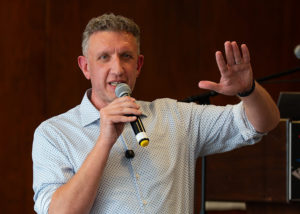
Chuck is a US-based internal communications strategist and the founder of ICology – a community and resource hub for IC professionals. He brings a practitioner lens to every conversation. Chuck is a recognised voice in the industry, a regular speaker and event host, and one of the most connected people in the North American IC world.
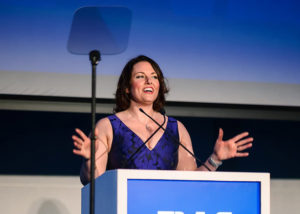
Jenni is a UK-based leadership and internal communications consultant, author of two best-selling books, and international speaker. She runs Redefining Communications, a consultancy working with organisations around the world to help them communicate better and close the gap between what leaders say and what employees experience.