
Chuck opens with the thing he calls both his favorite and least favorite topic: a group of Minnesota-based CEOs — 3M, Best Buy, General Mills, Medtronic, Target, UnitedHealth Group — signing an open letter calling for immediate de-escalation after the Minneapolis shootings, while their own employees push for something considerably stronger. His verdict is that a row of logos on a letter is not a stand. From there it is four stories about AI and workplace change: Dropbox arguing that AI can rescue meetings, a Pearson study putting trillions of GDP upside behind employee training rather than tool-buying, Amazon’s 16,000 layoffs surfacing through a calendar invite titled “Send Project Dawn Email”, and Anthropic destroying print books to build training data. The through line is the one Chuck borrows from Rebecca Hinds: AI amplifies whatever already exists in an organization, the dysfunction included.
Chuck opens on employees pressing CEOs to condemn ICE and, in some cases, to cut the contracts and partnerships behind it, set against the open letter from Minnesota-based CEOs calling for immediate de-escalation after the Minneapolis shootings, signed by leaders from 3M, Best Buy, General Mills, Medtronic, Target and UnitedHealth Group. His read is that de-escalation is what everybody already wants, which makes the letter a restatement rather than a stand — a logo on an announcement, with Target signing after having been first to cave on DEI. What he wants instead is named leaders saying what their company will do, and he offers Costco as the counterexample of an organization whose position is known from its culture rather than its press releases. Jenni brings in an episode of Pivot she listened to on the way to a client event, which argued that CEOs acting together genuinely does shift direction, and she makes the harder point back to Chuck: before dismissing the letter, be specific about what you are asking a CEO to do. She still lands close to him, but for a different reason — the failure is one of temperature. Anything requiring real human emotion cannot be delivered by an email or an intranet article, and a row of logos at the bottom of a letter is too cold to build the trust the moment needs. Chuck’s own answer is a flag in a frozen front yard, put in with a boiling teapot: he is not claiming it changes anything, only that people on both sides of the argument should know exactly where he stands, which is precisely what the letter refused to do.
Dropbox’s argument is that time is the resource organizations waste most and meetings are where it quietly goes, so AI should strip out the overhead that makes meetings multiply: scheduling chaos, missing context, the what-did-we-decide loop, and the uncaptured decision that becomes another meeting. Jenni’s answer to why meetings still fail is not technological. Nobody is taught to run one — she invested in a facilitation course while chairing CIPR committees and is an accredited facilitator who had just been reassessed — and no agenda plus no chair produces what she calls wafting. The second cause is refusal: people cannot say no to a meeting, and she describes someone claiming 28 non-negotiable meetings a month with the confidence that she could hand a chunk of that time back. What she likes in the Dropbox piece is the observation that meetings are not yet designed for AI support: she still has to take a transcript and run it through a separate tool for actions, and she expects that to collapse into the meeting itself, with AI prompting in the room when a decision has no owner. Chuck’s experience is that AI has already fixed the back end — with a companion running he can be present rather than scribbling — but not the front end, and his wish is a gate before the invite goes out, requiring a title, an intent and an attendee list, with the option to answer that this should have been a Slack message. Jenni’s closing objection is to the whole genre: she is tired of the meetings-are-a-waste narrative, having just watched sixteen directors, some eighteen months into the job, sit in a room together for the first time. Chuck’s diagnosis is blunter — meetings are awful because people are involved — and both land on setting expectations, including whether the meeting is to discuss, to decide or to update, with Jenni recommending the animal-named meeting types from Chris Dyer’s Remote Work and Chuck blaming the calendar default that turns every conversation into thirty minutes.
The HR Dive write-up of Pearson’s research is a rebuttal to the laziest version of AI strategy: augmenting jobs and upskilling people rather than replacing them could add between $4.8 trillion and $6.6 trillion to the US economy by 2034, roughly 15% of current GDP at the low end, and employers risk missing the productivity prize by deploying technology while neglecting the human element, with the World Economic Forum estimating 59% of the global workforce needs reskilling by 2030. Chuck’s question is whether a GDP number is the argument that finally unlocks training budgets. Jenni does not think so, and her reasoning is about conditioning rather than evidence: organizations have had years of data on why training matters, line managers included, and have not spent the money, and this cohort bought AI specifically to save cost. Asking them to spend more to realize the saving contradicts the story they told themselves. She reaches for Sarah Black’s paper on cultural intelligence and AI for the mechanism — layer AI on top of broken processes and chaotic ways of working and it gets worse, not better — and points at the number in the article that proves nobody is doing the groundwork: 72% of hiring managers say their companies use AI, and more than half say they do not have the resources to train employees to use it effectively. Chuck ties it back to the meetings conversation with a line from Rebecca Hinds: AI amplifies whatever exists in your organization, the dysfunction and the goodness alike. His conclusion follows directly — an organization not investing in AI training was probably not investing in training at all.
The BBC’s reporting on Amazon has the number — 16,000 roles — but the detail that sticks is the delivery: employees learned of the cuts through an internal email error, a calendar invitation sent by an executive assistant titled “Send Project Dawn Email”, carrying a draft that was already explicit about strengthening the company by reducing layers. Chuck’s framing is that when information arrives sideways, uncertainty travels faster, and the how signals whether leadership is in control at all. Jenni refuses the premise. Reading the detail, she does not believe it was an error — the message was finished, the intent was clear, and the most that went wrong was a calendar title nobody changed. What she sees is the approach itself: no sequencing through directors and managers, no human step, just an invitation. She connects it to the rehumanization theme the show opened the year on, and calls the handling lazy, unkind and corporate, from a company that now treats people a little like robots. Chuck concedes the planning was real enough to have a code name, and cannot get past the choice of one: Project Dawn, for 16,000 redundancies. He allows it may genuinely have been a goof while noting it hardly matters, because what it reveals is who Amazon now is rather than who its culture-stamp reputation once said it was. Jenni’s forward look is consumer rather than corporate — people are already canceling accounts, and in a year where values are surfacing in everyday decisions, she expects the shift in where people shop to outlast the news cycle.
The last story is about what it takes to build AI rather than to use it: Anthropic scanning and then destroying large quantities of print books as part of assembling training data. Chuck’s framing is the communicator’s trap — legality, ethics and optics are three separate conversations running at once for three different audiences — and the optics here are simply awful, extractive enough to trigger a gut reaction about what AI companies believe they are entitled to consume or discard. Jenni, who has written two books, starts from the obvious objection and then complicates it: the scanning she understands, and the reporting does not actually establish what happened to the physical books, which could have been recycled rather than burned. She wants to give Anthropic the benefit of the doubt, partly because she has deliberately uploaded both of her own books into Claude as a project to search and reference — a choice she made as the author, which Chuck immediately identifies as the whole difference, since buying books off a shelf to train a model grants nobody permission. His flat position is that tech companies get zero benefit of any doubt. Jenni’s angle is copyright: in the UK the Newspaper Licensing Agency made her life difficult for circulating a single clipped article internally, and she cannot make it make sense that this is allowed at scale. Chuck’s parallel is the fight between publishers and Meta over profiting from linked news content, except that a book is far less accessible than a URL, which makes the whole thing feel sketchier. His alternative was always available — partner with a library group, pay for permission, state how the works will be used — and his closing note is that he had thought Anthropic was different, with Jenni landing on the line that maybe everyone is just one big let down.
What did the Minnesota CEOs’ letter about ICE actually say? It called for immediate de-escalation following the Minneapolis shootings, and was signed by leaders including 3M, Best Buy, General Mills, Medtronic, Target and UnitedHealth Group. Chuck’s objection is that de-escalation is what everyone already wants, so the letter restates a consensus rather than taking a position, and no individual CEO is on the record about what their company will do.
What are employees asking their employers to do about ICE? More than issue statements. The reporting describes employees organizing to push CEOs to condemn ICE and, in some cases, to end contracts and partnerships — the question of whether the company is profiting from the agency, which Chuck argues is the sharper conversation of the two.
Can AI fix bad meetings? Partly. Chuck finds AI already good at the back end — capturing decisions and action items so he can be present instead of taking notes — but not yet at the front end, where the real question is whether the meeting should happen at all. Jenni wants AI participating during the meeting, prompting when an action has no owner, and notes the Dropbox piece’s point that meetings are not yet designed for AI support.
Why do meetings still fail even with better tools? Because running one is a skill nobody is taught. Jenni, an accredited facilitator, points to meetings with no agenda and no chair, and to people who cannot decline an invitation. Her position is that the answer is better meetings and better training rather than fewer meetings — teams still need time together to debate, disagree and build trust.
How much could AI add to GDP, and what is the condition? Pearson’s research puts it between $4.8 trillion and $6.6 trillion for the US economy by 2034, roughly 15% of current GDP at the lower end — but only from augmenting jobs and upskilling employees rather than replacing them. The report warns employers risk missing the productivity prize by focusing on deployment and neglecting the human element.
How did Amazon employees find out about the 16,000 layoffs? Through a calendar invitation sent by an executive assistant titled “Send Project Dawn Email”, carrying a draft announcement about strengthening the company by reducing layers. It is generally described as an email error, though Jenni does not accept that reading — the content was finished, and she treats it as the intended approach with a title nobody changed.
Did Anthropic really destroy print books to train its models? Ars Technica reported that Anthropic scanned and then destroyed large quantities of print books while assembling training data. Jenni notes the reporting does not establish what happened to the physical books afterward and allows they may have been recycled; Chuck’s view is that the licensing route — partnering with a library group and paying for permission — was available the whole time.
Chuck: Welcome to Frequency, I’m Chuck Gose.
Jenni: And I’m Jenni Field. Frequency is your go-to for real talk about comms, culture and employee experience. Beyond the buzzwords and straight to what matters. And the thing that matters this week is bread, Chuck. Because we had a little exchange on LinkedIn about recognition, which was a post by Ash, and I’ll share that in the show notes. He was talking about some recognition and value and how we should do that more to support people in the organisation. And I made a comment about the quote in the book The Art of Resilience, where they talk about the fact that — it’s Ross Edgeley, he’s swimming around the UK and he just wants some bread, but what they’ve done is someone’s done some skywriting to say, congratulations on 100 days. And he’s like, I just want bread. Just any kind of bread. And then you basically said to me, if you ever bring me bread, I’m not going to be very happy with you. Which then got me onto a topic of, what’s your favourite kind of bread? I was like, I’m going to bring you a brioche. And I thought we’d have that conversation today. So, favourite bread. I’m not going to bring you bread.
Chuck: As I put in the comment, it’s focaccia. But even then, Jenni, even then — please, please do skywriting over a loaf of focaccia. Because the thing when it comes to recognition, I get there’s this whole point around give people what they want and blah blah blah, and all that. But how many times in your life are you going to get somebody to do skywriting? I haven’t seen skywriting in forever, like ever. So what if? What a really cool, unique experience. Focaccia is great, but come on, skywriting, that’s…
Jenni: Okay, okay, that’s fair. The next thing I’m going to ask is something that my friend sent me this morning. So I have a couple of girlfriends and we chit chat, as people do, in kind of group chats. And she sent a message this morning saying, I hope you’re having a good week, I’m having my sort of stressful week — she has alternate weeks. And she said, I want to focus on silly things, so I’ve got a question for you on this fine, foggy morning, which it was in the UK today. If your mood were a household object, what would it be?
Chuck: If I were to think about this, let’s see, a household object. My mood is probably like a sledgehammer right now, with where things are in the US and with ICE and border patrol going on. A sledgehammer just sounds like the right object for this. What about you?
Jenni: I said I was a fan. To which she said, because you’re going round in circles. And I said, no, I feel like I’ve just got multiple settings today. I’m either really slow, or I’m somewhere in the middle, or I’m just really, really fast.
Chuck: That’s good. So yeah, and I’m just ready to destroy things, basically.
Jenni: Yeah, you are, which I love. And then the final thing I wanted to mention before we get into your articles today is that we’ve both been named in the Top 101 Global Employee Engagement and Experience Influencers in 2026 by Inspiring Workplaces. And I just wanted to say congratulations for being on the list too.
Chuck: Yep, and congratulations to you. And I did notice, because I went back to the list to verify this, Frequency is so important to me, Jenni, that it’s actually on my listing on the 101 influencers list. I noticed it was absent from your name on there. I just wanted to point that out on the list. I’m just saying — it’s clearly that important to me that it shows right next to my picture. And I just wanted to share that.
Jenni: Well, that’s not my doing. It’s in my biography that I send to people.
Chuck: That’s all I needed. That’s all I needed. All right, we’re going through four stories on AI and workplace change. One is Dropbox is trying to use AI against meeting overload. HR Dive says the real economic upside comes from training people with AI, not just buying tools. Amazon is showing what efficiency, quote unquote, looks like when it turns layoffs and messy internal comms together. And Anthropic gives us the worst AI supply chain headline of the week, destroying millions of books to build a model.
Chuck: But first, Jenni, let’s kick things off to talk about both my favorite and least favorite thing to discuss: ICE. I love — and this is sarcastic for anyone listening here — performative communications. In the wake of the Minneapolis shootings, employees are organizing and escalating pressure on CEOs to condemn ICE and, in some cases, cut ties through contracts and partnerships. At the same time, a group of Minneapolis-based CEOs signed an open letter calling for, quote unquote, immediate de-escalation, including leaders from 3M, Best Buy, General Mills, Medtronic, Target and UnitedHealth. The combination creates a very unique tension. Employees read cautious statements as corporate self-protection, while leaders often see caution as the only responsible move when emotions are hot and facts are still moving. Jenni, when leaders choose this careful de-escalation posture, what are they going after, and what do you think the intent is?
Jenni: So it’s interesting, because you shared with me this week an episode of Pivot, which I know is your favourite podcast to listen to, and it was a conversation about ICE and a few other things. It was talking about this exact thing, and I was listening to it when I was driving to a client event this week. I want to bring that in here because it was really helpful to listen to that point of view around the fact that if leaders get together and make a stand together — even if it is a de-escalation posture, but they’ve come together and made a stand — the impact that that can have is felt. So the argument on Pivot was, because they’ve done that, there’s now a change in direction. There’s now a shift. There’s now some movement, because it’s a business, it’s the CEOs getting together. And actually, if more CEOs got together and made a stand, would it seem more of an impact?
Jenni: So I don’t know. I think there’s also the train of thought of, just keep your head down, there’s a thousand more days, don’t rock the boat, he’ll go away soon. That’s not going to work. And I think they just don’t know what to do. So I think it’s kind of, I’m going to dip my toe into this and make some sort of point and see what happens. The outcome is what they wanted to happen, right? I think that is a good thing, but I think the intent is to show willing without actually doing anything. But also, what do you want them to do? I suppose that’s my question — what do you want from the CEOs? What are we asking them to do, other than saying please go away?
Chuck: Well, I don’t think the message was actually go away. I think it’s this de-escalation thing, which everybody wants. So it’s like, great, so you’re just repeating what everyone else is saying should be happening. And you’re actually not taking a stand. You’re really just putting your logo onto an announcement. I guess I would just like to see the CEO of 3M, the CEO of Best Buy, General Mills, Medtronic, Target, UnitedHealth, all of the ones that actually say something. Don’t hide behind a letter. Don’t hide behind a logo. Actually come out and say, this is what we’re doing. And the true irony — and maybe irony is not even the right word, maybe hypocrisy is the right word — of Target signing up on this: they were the first ones to cave to the DEI stuff, which they felt the pain of. And now they’re like, no, no, no, wait guys. Actually, no. It’s too late. It’s done.
Chuck: I think that’s one of the biggest misses with the way companies have dealt with this administration. No one has actually taken a stand of saying, you know what, fine, we’re going to do the right thing. If you want to tear us up, if you want to punish us, do that. I shouldn’t say no one has. I know somebody has, and it’s Costco, who have come out and said, no, we think DEI is great, we’re going to keep doing it. I’d love to see Costco come out and say, hey, don’t come into our stores, we don’t want you here. Now, all that’s probably going to do though is antagonize ICE to do that, which is why they’re not saying it. So I get not antagonizing it to draw attention to yourself. So I guess in that case, sometimes maybe not saying something — but we know where Costco stands on this issue because of their culture, because of their values. I just think seeing these logos on a sheet, that meant nothing to me. In fact, it was like too little, too late.
Chuck: Was it the second murder? One was okay, but the second one — I think what’s more interesting is the employee conversation around, wait, we have contracts with this group? We’re profiting from this group? And employees wanting that. I know there’s all kinds of stuff shared around Hootsuite apparently having a multimillion dollar contract with Homeland Security. I don’t know if that’s true or not, but the fact that companies aren’t just — this de-escalation is one thing, but actually saying we’re making money off of this group, and employees saying enough.
Jenni: Yeah. I think also, just to bring this into some conversations I’ve been having about things like trust in the workplace, and that trust with leaders and all those sorts of things — it’s almost that point of, don’t just send an email or write an intranet article from your leader about anything that’s going on that requires real human emotion and challenge. You’ve got to face that. You’ve got to come out and talk about it. You’ve got to build that relationship. And I think it’s maybe the coldness of the logos on the bottom of a letter that doesn’t feel real, meaningful, human enough for me to really believe and connect with that. And I think that’s ultimately what the issue is with some of that communication.
Chuck: Yeah. After the murder of Alex Peretti — I posted this on LinkedIn — my wife had purchased an Abolish ICE flag, and then we thought it came with a stand, it didn’t, so we had to order that, and then now we have both, and it was just sitting by our front door. After that murder, I had to get that in our front yard, and our yard was frozen. So I’m out there with a boiling teapot trying to soften the ground enough to get this flag in the stand. I wanted to be very clear on this, because I also posted about this on LinkedIn. I don’t think me putting up a flag is going to change anything with what’s happening. I want to be very clear with where I stand and where we stand on this. And if you’re on our side on this, you now have peace of mind and comfort knowing, okay, other people support me. If you’re on the other side of this conversation, I also want you to know where I stand on this. If anything, that’s what I would like to have seen from these logos, is to say we’re against this. We don’t want this in our community. Not de-escalate — that’s like, okay, just calm down. No. Out. We want you out. That would have been the message that I think would have made a difference. Again, would that have antagonized? Probably. Could it have made it worse? We don’t know. But I don’t know that it can honestly get much worse.
Chuck: So, enough about that. Now we can get back into like normal, boring comms, HR, workplace stuff out there. Next up, Dropbox is making the case that time is the most precious resource organizations waste, and meetings are where it quietly goes to die. Their pitch is that AI can reduce the overhead that makes meetings multiply. Things like scheduling chaos, missing context, what did we decide again, who made what decisions, the follow-up work that turns into another meeting because nobody captured the decision cleanly. Underneath the AI angle, this is really an argument about discipline, clarity, and treating people’s attention and time like it actually matters. But even with AI, Jenni, why do meetings still suck? And can AI actually save meetings?
Jenni: So why do meetings still suck? Because people don’t know how to run meetings effectively, and because nobody teaches anybody how to do it. And I sit in lots of meetings, I chair meetings, all those things, and it is literally that. There’s no agenda. There’s no one actually chairing that meeting. There’s no one going, right, have you got an action there, have you got this? Things just waft, as I call it, which I hate. And when I used to chair CIPR meetings when I was president, and on various committees, I invested in doing a course in facilitation. So I’m an accredited facilitator. I just had my reassessment last week with a company called the Association of Facilitators. Because it’s a skill, and I don’t think we help people learn that skill, and that’s why they suck.
Jenni: Also, we’re not very good at saying, no, I’m not going to come to that meeting. We just feel like everything we have to go to, because our egos might tell us we have to go. Someone said to me this week, I have 28 meetings a month that are non-negotiable and I have to be in all of them. And I really wanted to go at a very high pitch level, but I decided against it, because I just was like, show me them. Show me exactly what those meetings are, what the outcomes are, what the agenda is, because I guarantee I can probably get you some time back.
Jenni: What I liked about this article was the challenge and opportunity it was highlighting around AI and how it can help that. So it talked about the fact that attendance is driven by obligation, not value. So what’s the challenge of that, and then what’s the opportunity that AI brings? One of the points in the article was that meetings aren’t truly designed for AI support, and I think that is also interesting. So I get a transcript, I then run that through an AI tool to give me a summary and action points, but it’s not giving me that immediately. I have to do that extra step. And I think gradually that will shift, and it will help with that. You could probably get it so it’s asking questions in the meeting, going, before you finish, no one’s taken the action for this. It’s going to evolve into doing a bit of that, and I think that is actually probably very helpful if you’re not prepared to invest in the skill to make meetings better.
Chuck: Yeah, for me I would say that having AI involved — I don’t really have the corporate meetings like I used to have in my world now, but anytime I’m in a meeting, if I’m on Zoom I have the AI companion turned on. And I feel like, because of that, now I can be present. I’m not actually worried about scribbling something down, or did I get that right, or whatever. I can always go back and verify. And I would say their companion is actually really good at giving, here’s what you said you were going to do, or here are the action items and all of that. That is really helpful. So I think it’s certainly helped me on the accountability of the results of a meeting. But I don’t know that it’s yet there to help companies with, actually, why are we having this meeting? It would actually be interesting to say, before you schedule something, you have to submit title, intent, who should be there, blah blah blah. Does this meet the qualifications of getting these people together? No, that should just be a Slack message. That should just be a Teams group. Okay, great, do that. I don’t think we’re quite there yet, but I do think your point around AI almost being an active participant in a meeting — I’m curious what impact that would have on the attendee experience.
Jenni: The thing I do want to say here, though, is that I’m fed up of this narrative around, you know, meetings are such a waste of time and we don’t need them. We absolutely need meetings. I was with a group of directors yesterday. There’s about 16 of them in this group. Some of them have been in director roles in this organisation for 18 months. That was the first time they’ve been in a room together just as a group of directors, which blows my mind. And they needed it. We ended up talking about their top priorities for the next quarter. We need meeting time to discuss, debate, to have conflicts, to build trust, to do all of those things. So never, ever think that taking meetings away is the solution. The solution is better meetings and better training to make them more productive. I’ll get off my soapbox now.
Chuck: And we’ll move along to the next story. But I think when you look at the common ingredient as to why so often meetings are awful, and presentations are awful, and all these other things, it’s not them happening. It’s because people are involved. They actually make these things awful. And so how can we get really focused, and even setting the expectation — is this a meeting to discuss? Is this a meeting to decide? Is this a meeting to update? Just setting those expectations and holding everyone accountable would ultimately make everything better.
Jenni: Yeah. I tell you what, before we move on, there’s a really great example in the book Remote Work by Chris Dyer and Kim Scott, where they are talking about how you work properly, fully remote. And there’s this little guide to meetings that they created, and they called them things after animals. It’s something like, they’ve got an ostrich meeting, which is where I’ve been burying my head in the sand and I need some help, or something like that. But it’s only 15 minutes, it’s whoever’s around. There’s little guidance around what these meetings are. And I loved that when I read that book a few years ago. I thought it was such a nice way of doing it. And I think that’s also something to look at — what different types of meetings do we need, and name them stuff. So yeah, I’ll stop now.
Chuck: Yeah, I guess if I’m to blame people, I can also blame technology for this, because I think whether it’s Outlook or Google Calendar or whatever that system is that’s used, the fact that it defaults to 30 minutes, an hour, whatever, means — you could have a 10 minute meeting. You could have a seven minute meeting. You could. But setting those expectations, we just default to those standard times and then feel like you’ve got to spend that entire time, which we know is not the case.
Chuck: Next up, this next one is a strong pushback on the laziest version of AI strategy. The argument is that productivity upside does not come from buying tools and hoping for magic. It comes from actually building employee capability so people can use AI in ways that change how work gets done, and not just how it gets summarized. It puts the focus on training, enablement and job redesign, which is less sexy than new software but a lot more honest. It also creates a very real comms challenge: if leaders talk like adoption is inevitable, employees will simply hear do more faster, unless there’s visible support and clear guardrails for this. So, you see this gap between what leaders believe is happening with AI and what employees are experiencing. This article talks about GDP being this measure of, oh my gosh, if everyone uses AI, gross domestic product will improve. Is that the right argument? Is that what leaders will pay attention to, to say, now we need to invest in training?
Jenni: I don’t know, because I feel like there’s so much data and insight about why training is needed for people in organisations outside of AI, and they’ve not been investing in that — like line managers and things like that. So maybe GDP is the one measure that they’re going to pay attention to. I feel like they won’t, because they’re trying to use AI to save costs. I know we’re going to talk about that a bit later, but they’re trying to use it to save costs. So the investment in the training kind of goes against what they believe, I think, and I think that that is hard to justify. I think there’s been such conditioning of AI is going to save us time and money, that to then say, well, actually, if you invest even more money in training — I don’t think people will be able to make that make sense. And I think that’s probably the biggest risk.
Jenni: And we’ve talked about it before. I think it was in the paper from Sarah Black on cultural intelligence and AI, about how if you haven’t got good processes or good ways of working, or it’s a bit chaotic, putting AI on top of that is going to make it worse. So there’s so much to do to make AI work that people aren’t doing that work. I think the article talks about some other reports that found that 72% of hiring managers said their companies are using AI, but more than half also said they don’t have the resources to train people how to use it. So there’s just — it’s just chaos. If GDP is the lever to pull, then great. I’m just not convinced anyone’s going to be able to make that make sense when they’re trying to save costs.
Chuck: I’m going to merge this with our talk about meetings. There’s a quote that I saw from Rebecca Hinds, who actually has a book coming out about meetings, but this quote is about AI. It’s, AI amplifies whatever exists in your organization. It amplifies the dysfunction and it amplifies the goodness. And so if your organization is struggling with certain aspects of it, there’s a deeper issue there. And to your point, if you’re not investing in AI training, you’re probably not investing in training at all, or at the right levels, so the mindset is not there to say, hey, we need to invest to get the return. It’s expect to flip the switch and have it start flowing in.
Jenni: Yeah, I love that. I love that quote. I think that’s brilliant.
Chuck: Next up, Amazon is back in the layoff headlines, and the detail that sticks is not just the number, it’s the way the news was announced. Reporting notes the cuts and also notes that an internal email error helped surface the news, which adds a second layer to the trust problem. Employees found out about the 16,000 layoffs due to an email that shouldn’t have been sent. Even when layoffs are planned and justified in leadership circles, employees experience them as uncertainty, and uncertainty spreads faster when information arrives sideways. In moments like this, the how matters almost as much as the what, because it signals whether leadership is in control and whether employees can rely on the company to be straight with them. Jenni, when a layoff story like this breaks in a messy way, even internally, what’s the first message leaders need to stop that bleed?
Jenni: So you have to just get out in front of it. I think you have to just follow it up with some very human communication. To our point earlier, you’ve got to come out and talk to people and do a video call or whatever it is. I’m not convinced this was a mistake when I read the article, though. I think we’re being very kind and saying this went out in error, because it says that a calendar invitation was sent by an executive assistant to a number of Amazon workers, and the title of the invitation was Send Project Dawn Email, which is an apparent reference to the code name for the job redundancies. And the email was draft, but it was very clear about — you know, it’s to strengthen the company by reducing layers, increasing. It was very clear, the messaging in it. And it feels like these people were invited to a meeting and it just wasn’t done very well. I feel like we’re giving them quite a lot of credit that this was done in error. I’m not convinced it was done in error. I think maybe the title of the invitation wasn’t changed, but I feel like this was their approach.
Jenni: And it’s the lack of humaneness, right? We talked at the start of this year about some of the trends for this year and this rehumanisation of the workplace. It’s just really cold. And I think that’s the bit — there’s no care, there’s no consideration, there’s no let’s talk to directors and then managers and let’s make sure we’re doing this change properly. It’s just lazy and it’s unkind and it’s very corporate. And Amazon feels like a very different place than it was many years ago. Even then, I’m not sure it was brilliant, but it’s definitely going down a route of treating people a bit like robots. And that’s why I don’t necessarily believe this was an error.
Chuck: Well, it’s clear that a lot of planning or discussions went into this, because they gave it a project name. Project Dawn. What? Where did that even come from? What is that even a reference to? Like, what is that even about? I’ve seen companies, and worked for companies, that gave projects a name, because it kind of gives you a rallying point, or hey, that’s the focus for it. Not for laying off 16,000 people, and it’s Project Dawn. I don’t — that to me adds to the lack of humanity, the lack of kindness, all that to it. I’m going to go with it, it was a goof. Somebody did do something wrong here. And it just shows, to your point, how companies — we might think they’re one way, they act another. But it’s pretty clear now we’re seeing who Amazon is as an organization. That’s not the company that once was propped up from a culture standpoint.
Jenni: And you know, people have such a funny relationship with Amazon, I think, now. I remember years ago when it first started and it was really just books, and now it does so much. And I know people that have sort of turned around and said, I’m cancelling my Amazon account because I don’t want to support them. And I have had experiences where I’ve bought stuff on Amazon and it’s not been real stuff — like I bought some shampoo and it wasn’t real. So certain things I’ll get, certain things I won’t. But the more this goes on, I think the more people are going to start saying, actually, I don’t need to buy stuff from there any more. I don’t want to support this. And I think people, at the moment with everything going on in the world, our values are really coming forward. And I think that’s going to start making people make different decisions about a lot of different things — about where we shop, what we do, who we engage with. And I think that’s going to be a longer term shift on the back of what we’re seeing at the moment in the political way.
Chuck: And it’s going to be really hard for Amazon to distance themselves when they just released a movie about Melania that apparently nobody is buying tickets for, nobody wants to go see. It’s going to be really hard to say, that’s not us. You literally made a movie. Literally made a movie.
Jenni: Yeah. I didn’t even know this movie was happening. It was only on Pivot that they were talking about it, that I was like, yeah, I had no idea. That’s not come across my world at all. There is a movie about her. I don’t even know what that’s about, and I don’t need to. But I was like, brand new information to me. That’s all.
Chuck: And finally, a story that is less about workplaces using AI and more about what it takes to build AI in the first place. News reports that Anthropic scanned books and then destroyed large quantities of print books as part of creating training data. Even if there are legal arguments and technical explanations, the public facing narrative to me is simply awful. It feels very extractive. It triggers a cultural gut reaction, and it raises questions about what AI companies believe they are entitled to use, consume or discard in the name of progress. For communicators, there’s a classic trap of where legality and ethics and optics are three completely different conversations happening all at the same time, often with different audiences. Jenni, how do you feel about tech companies destroying books?
Jenni: So obviously I’m not okay with that as someone that’s written books, right? Don’t destroy them. But also, when I was reading it, I wasn’t sure if it was just being quite inflammatory, because they have used the books, scanned them to educate AI, but I get that. We don’t know then what they did with them. So there’s, like — are they destroyed and they’re on fire somewhere? They could be recycled. There could have been a very sustainable way of dealing with that. In terms of, we don’t know. So I just feel like there is a little bit of — I want to give Anthropic the benefit of the doubt today, but…
Chuck: Tech companies get zero benefit of any doubt, Jenni.
Jenni: Yeah, I feel like they are better. I always hoped they were better, so I’m holding on to that. But we had this conversation about uploading our books to AI when I was talking to other authors about whether or not they were going to do it. Some people feel very strongly that they don’t want to upload their book. I have uploaded both of my books into Claude, which is Anthropic, into a project, so I can use that to help me search, reference, grab stuff as I need it. I’ve got no problem with that. But I have an issue with the destruction of property in general, and I liked the examples from other places where they’d used library books and returned them and stuff like that. That felt much nicer. So I don’t know why they would need to destroy them, but I am giving them the benefit of the doubt that they’ve done something sustainable.
Chuck: I think the difference here is that you made that choice as the author to upload your book. What it sounded like is they were sourcing, going to use bookstores, literally just buying books off the shelf to train its models without any permission granted.
Jenni: Yes. And then just doing it, yeah. And I don’t know how that’s allowed. I don’t know if you have it over there, but over here we have a thing called the NLA, which is the Newspaper Licensing Agency, I think it’s called. And I remember this being the bane of my life when I worked in media and external comms, because I couldn’t do any reporting where I was copying something from a newspaper and circulating that internally, because it was a breach of the copyright. And when I was reading the article, that wasn’t really talked about. And I’m thinking, this just feels like the NLA will be on their case, because they used to just hunt you down and you have to pay thousands. I can’t make it make sense from a how is this allowed from a copyright perspective. But it’s beyond my legal understanding, which is small, so doesn’t say much.
Chuck: To me it reminds me of — and this was in the past couple of years — I feel like I don’t do anything on Facebook necessarily, but obviously I have a Meta account through WhatsApp and Instagram and all the other platforms that they have. But there is a battle between Facebook and Meta making money off of newspaper articles that were then linked into, that were then free for someone to go to, but Meta was profiting off of that link. And the newspapers are like, wait a minute, you’re using our content to profit. And I feel like this is a little bit of the same way, where it’s even less accessible. Yeah, news URL links are out there everywhere. Not every book can you get by a PDF, by a link, and go download it. It just feels sketchy. It feels like you’re trying to sneak under the radar, you’re trying to build this model without — the legal area to me is not very grey at all. It’s like, this is a copyrighted book, you have to get permission to use it. I can’t go scan a book and then go say it’s mine. That’s someone else’s written words. It just feels very icky to me.
Chuck: There feels like there could have been the right way to do this, by saying, hey, we’re going to partner with a library group or some kind of dedicated group, and they’re going to grant us permission, we’re paying them for these works, they’re going to grant us permission, this is how it’s going to be used. I feel like there’s a better way of doing this than just trying to go and buy books from a used bookstore, scanning them, and whatever it is where they’re destroying them. Even if you recycle them, that just feels like you’re still destroying these books. Anyway, I just felt like it felt icky. I always thought Anthropic was a little bit different, but I don’t know, maybe they’re all the same.
Jenni: Yeah, maybe they’re just all the same. Maybe everyone’s just one big let down. Speaking of which.
Chuck: Well, it goes back to a CMO that I worked for that basically said, if you look up any company, there’s going to be some skeletons somewhere. And so we should ultimately expect that from probably every company. Again, because people. Those people. Because people. That’s what I selected for us this week. Jenni, what is your freq-out?
Jenni: So my freq-out this week is IABC World Conference. I shared some stuff on LinkedIn this week about the fact that I had pitched to speak at World Conference with Advita Patel. We have a joint company called the Belief Builders, where we help comms people build confidence and credibility. We combine both our areas of work, and we have a framework called the Compass Framework, where we take you through the seven ways to build confidence and credibility to help you have influence in the workplace. And they rejected that, and came back and said it was rejected. So I asked them for some feedback and what the criteria was, which they shared, and I wanted to share the criteria with people because I thought that was important. But really their feedback was that we made some typos and some grammatical errors in our submission, and that was really why we got rejected. Which just felt a bit crap, to be honest.
Jenni: And as the person that did the submission, I did apologise to Advita, who is very angry about it, because from an inclusion perspective she’s like, you don’t need to use shame to tell people. You don’t need to do that. That’s just shaming people. If you’re using that as your way of whittling down applications, then for people that have dyslexia or struggle with writing or whatever it might be, that’s not an inclusive way to whittle down applications. So she’s going to do a bigger piece on how you do that inclusively. And we’ve had some lovely comments from people, which is really kind. But my reason for sharing it was genuinely to make the point of, we don’t always get it right. This is the criteria if you want to do it again. And also to probably get a little bit of love and support of people going, but we think you’re great. Which is always nice.
Chuck: That’s nice, you are fishing for compliments. That’s good. That’s good.
Jenni: Someone did message me going, is this really passive aggressive? And I was like, maybe a little bit.
Chuck: You come by it honestly. That’s good. And our freq-outs are the same, because I also submitted one for the two of us to do a live episode of this podcast at IABC World Conference. We thought we’d done it at other events, we thought it would be a great thing to bring to the event. They thought otherwise. They did not think it was. But I think this shows, one, anytime you organize content for an event, it’s never going to be perfect. I have been a part of the PAC, the Program Advisory Committee, I believe is the acronym, for IABC back in 2015, 2016, 2017, somewhere in there. Truly hated the process of seeing how they select people. And so when I then went to run PRCA’s Employee Comms Connect conference, everything was above board. Every submission was reviewed by everybody in the judges committee. All scores were made, all feedback was publicized. Everybody sort of knew where things ranked, why they were picked. Because I went back and, like you, I was encouraged by you to ask for feedback. On Frequency, one person was like, love the approach. Another person was like, I don’t like it. Those are two — that’s it? And actually it’s concerning if they’re saying, well, everybody has to like it. Well, then it’s boring. If everybody likes everything, then it’s boring.
Chuck: I will say, that’s why when I run my own events, I don’t go out to solicit for speakers. I know who’s interesting. I know who’s having interesting conversations, or publishing interesting content, or has an interesting point of view. I just go out and find those people. I’m not saying, hey, I’m hosting this event, submit if you want to speak. Maybe that’s a more inclusive way of doing it, but also then, to this point, you’re going to set yourself up to disappoint people as well. There’s never a fair way of doing that. But I just feel like the way IABC does it, it’s faulty. It just does not work. Again, you’re not going to make everybody happy. We could go on and on and on about World Conference selection process. But that being said, though, I did get picked with Pinaki Kathiari for a different submission, so we will be there. Which even felt like — why did that? It always is a mystery to me when people say, should I submit to speak? Here’s my advice to everyone, and if you’re listening, here’s my advice when you submit to any conference: submit the topic you want to speak on. If it doesn’t get picked, it’s probably still really good. And if it does get picked, it might not have been that good, because I’ve seen some of these sessions at events and they’re not very good. And that’s fine. But it’s random. You don’t ever really know why something gets picked or not.
Jenni: Yeah. And as Advita always says, rejection is redirection. And I’ve always said, if they don’t want to talk about credibility and confidence for comms people, then it’s not the right place for us, because that is what we do talk about. And if that’s not something that is relevant to that audience, then it isn’t the right place for us. And that is something we have to remember, because there will be other places where it is relevant and it is appropriate, and we will just go there.
Chuck: And if you are involved with IABC World Conference, put on your earmuffs, because we might still crash it somehow.
Jenni: Who knows what’s going to happen in June!
Chuck: Who knows? Who knows? Thank you all for joining us this week. All the articles and content that have inspired this conversation are in the show notes. And don’t forget to rate and review after you’ve listened. Subscribe so you don’t miss another episode, and pass this along to someone you think would enjoy listening or watching. You can also find Frequency on YouTube. Thank you to my friend Poet Ali for contributing music to the show. We’re back every Monday with more news, insights and opinions about everything comms and leadership in workplaces today. Keep tuning in and turning up.
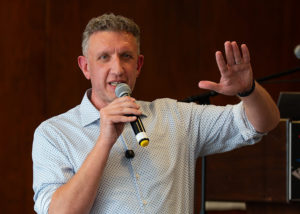
Chuck is a US-based internal communications strategist and the founder of ICology – a community and resource hub for IC professionals. He brings a practitioner lens to every conversation. Chuck is a recognised voice in the industry, a regular speaker and event host, and one of the most connected people in the North American IC world.
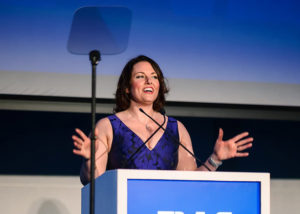
Jenni is a UK-based leadership and internal communications consultant, author of two best-selling books, and international speaker. She runs Redefining Communications, a consultancy working with organisations around the world to help them communicate better and close the gap between what leaders say and what employees experience.