
Uber’s revenue has tripled in five years, and it is cutting 3,300 jobs anyway. Chuck calls it what he thinks it is. By the end of the segment, Jenni agrees: greed, dressed up as restructuring.
Episode 74 looks at a month of cost-cutting from the employee’s side of the desk. US employers are bracing for the steepest healthcare cost rise in two decades and quietly dropping GLP-1 coverage. Challenger’s August job-cut numbers look grim until you read past the headline. And Lindsay Bennett’s new communications playbook says AI has made PR cool again, which leaves Chuck and Jenni asking whether internal comms gets the same moment or gets skipped.
It opens with the strangest internal-app post Chuck has ever heard of and closes with his freq-out on the 25th anniversary of 9/11.
Jenni opens on the strange things people post online, the kind that make you message a friend and ask “what?” Chuck tops it with a story from a communicator at another company. An employee came home from a shift to find their father had died, and posted a photo of his body in the company’s employee app. The company removed it. The employee reposted it again and again before anyone could reach them.
Chuck is a champion of employee-generated content, and he sees two things at once: a line clearly crossed, and a person who badly needed somewhere to share what had happened.
The first story is employers bracing for a record rise in healthcare costs. US employer healthcare costs are projected to rise between 9.2% and 11.1% in 2027, depending on the survey, the steepest increase since 2003. Costs are up 76% over the past decade, more than double inflation. Business Group on Health found coverage of GLP-1s for weight loss fell from 72% to 60% of employers in a single year, and its CEO Ellen Kelsay describes an existential reckoning over whether employers can keep providing benefits at all.
Chuck frames it as a trust test for communicators. Cost-shifting is coming through higher deductibles, narrower networks and dropped drugs, and “containing costs” no longer sounds neutral to employees. His own view is simpler. Rising costs don’t have to be passed on, especially in a year of record profits, and if GLP-1s bring health costs down later, cutting them now is short-sighted. He goes further and asks when big employers will admit the employer-funded model can’t hold, and push for a national conversation about who is profiting in the middle.
Jenni brings the UK picture. The NHS changes the calculation, but private cover through larger employers comes with strict rules (her own physio claim doesn’t qualify), and she wonders how UK insurers are handling GLP-1s. Her broader point is that healthcare is shifting toward prevention, and that looking after the people doing the work shouldn’t need a debate.
The Challenger report for August counted 52,881 announced US job cuts, up 58% from July. Consumer products led, including Procter & Gamble, followed by food, where Tyson accounted for nearly a third of the sector’s cuts. But July was unusually quiet. Year to date, cuts are down 41%, and hiring announcements were up 725% on August 2025. Restructuring led the reasons for the month, ending AI’s five-month run at the top.
Chuck’s point for communicators is that the layoff story employees carry around rarely matches the data. When a company cuts without a clear explanation, people fill the gap with the scariest narrative available. Jenni goes after the headline first, as a case of the media leading with fear. Then she goes after the word. “Restructuring” sits alongside “transformation” as a big word with little meaning, and if nobody can say what the restructure achieves, the real reason may be the uncomfortable one: shareholders want more return.
Chuck adds a note from a LinkedIn Live on the comms job market, where panelists described hiring falling below director level and rising above it. He also asked whether anyone should trust official jobs numbers now that they’ve become so politicized. One caveat the episode doesn’t get into: AI still accounts for roughly a fifth of the cuts announced this year, and some analysts argue a share of what gets filed as restructuring is AI-driven anyway.
Next, Uber’s restructuring. Uber is cutting about 3,300 jobs, roughly 10% of staff, with CEO Dara Khosrowshahi pointing to too many layers and promising faster decisions and more time spent building rather than coordinating. In the same announcement, remote work shrinks to about 1% of employees, alongside a three-day-a-week office policy for hybrid staff. Revenue has tripled in five years. This is a profitable company choosing lean, and Chuck’s question is whether bundling the RTO news with job cuts is efficient or a trust problem in the making.
Jenni can see the case for ripping the Band-Aid off, but not the logic. A company that wants less coordination is also ordering people back into the office to collaborate. Real restructuring, she argues, rearranges the parts rather than removing them, and she thinks leadership is cutting roles it didn’t need to cut.
Chuck hears a threat in the “leaner and smarter” language. If the company needs to get smarter and leaner, who made it slow and bloated, and did that start with leadership? Letting 10% of your people walk out the door doesn’t make you smarter. Both land on the same word: greed.
Jenni’s closing argument is the one to take away. Faster decisions are a process problem: layers, meetings, operations, organizational rhythm. Fixing that is messy leadership work that takes time. Cutting people is easier, and it damages the sense of safety that engagement depends on. She wants to check back on Uber’s culture in December.
The last story is Lindsay Bennett’s new communications playbook. Bennett has been the first communications hire twice. In 2022, at GALE in New York, the job was media relations, pitching and award entries. This year, at Ideally, it’s AI visibility, executive comms, employee advocacy and a B2B creator program. The big shift is generative engine optimization (GEO), making sure AI tools surface your brand when someone asks them a question. Her argument is that earned media now has two audiences: the person reading today and the AI deciding what to say tomorrow. Chuck adds Muck Rack’s finding that 94% of citations in AI answers come from non-paid sources.
Chuck’s question is about internal comms. If executives and employees are now media channels, is that an internal comms and employee experience problem long before it’s a PR one? And will internal comms claim it, or watch external comms take the budget and the buzz? Jenni thinks PR’s new appeal comes from having a fresh problem to solve, and she doesn’t expect internal comms to get the same moment.
Chuck lands on versatility, since the same job title can mean a different job four years later. Jenni lands on professional development. The job has always changed, she says; it just changes faster now. She is no longer measuring newspaper clippings with a ruler, as she did as a communications assistant, and keeping up is on each practitioner.
Chuck was 25 on September 11, 2001, so this anniversary splits his life in half. He was in Atlanta for an American Cancer Society training, across the road from the CDC, when the second tower was hit. He remembers a colleague dropping to her knees because her brother had a job interview at the World Trade Center that day. He remembers the drive home the next morning in a rental car with three strangers from across the Midwest, radio on, not a single plane in the sky. Jenni remembers watching it unfold on the screens in the pub where she worked, her visits to the site before and after, and how normal the post-9/11 rules of air travel have become.
How much will US employer healthcare costs rise in 2027? Projections range from 9.2% (Business Group on Health’s median) to around 11% before plan changes, the steepest rise since 2003. Costs are up 76% over the past decade. Chuck’s argument is that employers posting record profits can choose to absorb the increase rather than pass it on.
Are employers dropping GLP-1 coverage? Yes. Business Group on Health found the share of employers covering GLP-1s for weight management fell from 72% to 60% in one year. Chuck calls it short-sighted: if the drugs reduce health costs later, cutting them now is a bad investment decision.
Were US job cuts really up 58% in August 2026? Only compared with July, which was unusually quiet. August’s 52,881 announced cuts were the lowest for the month since 2022, cuts are down 41% year to date, and hiring announcements were up 725% on August 2025. Jenni sees the headline as the media reaching for fear.
Why is Uber cutting 3,300 jobs? CEO Dara Khosrowshahi says the company has too many layers and wants faster decisions and more time building. Uber’s revenue has tripled in five years, so this isn’t a company in trouble. Chuck and Jenni both call it greed, and Jenni argues faster decisions come from fixing processes, not removing people.
Why do companies say “restructuring” when they cut jobs? It’s the most-cited reason for layoffs and the vaguest. Jenni’s test is whether leaders can say what the restructure is for and what it will help the organization achieve. If they can’t, the real reason may be one they’d rather not say out loud.
What is GEO, and what does it mean for internal comms? Generative engine optimization means making sure AI tools surface your brand in their answers, and earned media drives most of those citations. Lindsay Bennett argues it has made PR cool again. Chuck asks whether internal comms will claim the employee-as-media-channel side of it, and Jenni doubts it will get the same moment.
Jenni: Welcome to Frequency, I’m Jenni Field.
Chuck: And I’m Chuck Gose. Frequency is your go-to for real talk about comms, culture, and employee experience, beyond the buzzwords and straight to what matters. Jenni, this week I have got such a bunch of fun topics for us to talk about. We’ve got rising healthcare costs in the US, two job cut stories, and also why PR is excited for AI.
Jenni: Interesting take on that. So before we get into those, which I’m excited about, I wanted to talk about people posting strange things on social media platforms. So every now and then you and I will have a little message about things that people post. And I have a few friends that I do this with where we go, this is strange. And I did one at the weekend where somebody I know who’s on Instagram, and they’ve got several different businesses and all this stuff, they then posted this really strange photo that was not anything to do with their content or what they’re about. And it just made me think, this is strange. You know, maybe there would be better success at business, or better success at something, if you were posting something inconsistent with what you were doing. And I know we often see things on LinkedIn where we both go, this is strange, I wonder why someone’s decided to do that. And I just thought I would bring that to the conversation today, of whether our listeners feel like they do the same thing, where sometimes you’re on a platform and you just think, what? I feel like I’ve done that a lot in the last week.
Chuck: I assume a lot of times I’ve seen that happen, it ends up being somebody’s account got hacked, or all of a sudden they’re talking about crypto or something on their page. And I’m like, what? Wait a minute. But you want to talk about strange things being posted, Jenni. This happened inside a company. Not a company I worked for. A communicator at this company told me about this. And this was their internal comms platform. This is in their employee mobile app.
Jenni: I love that. Yeah.
Chuck: They had an employee come home off shift and found that this person’s father had passed away. Like, a pretty tragic experience. The employee’s response to this was to post a photo of the dead body in their internal app. I guess this is their way of…
Jenni: [gasps]
Chuck: …coping, or sharing, or being vulnerable. Okay, you would think it gets bad there. It actually gets worse, because the company saw this, deleted the post, and before they could get to the employee, the employee, I guess, thought they didn’t post, and then kept posting the post again and again and again. And so you start to think about, we talk about creating community, and I’m all about employee-generated content, but I think there is a line which was just crossed. But it also showed the need for that employee to want to share that. Anyway, talk about posting strange things. That tops the list for me.
Jenni: Yeah. Wow. Wow. Wow. I mean, I don’t know where we go from here. Probably into the stories for this week, but wow.
Chuck: It was something. It was something. Yeah, let’s get into the content for this week. Here in the US, Jenni, employer healthcare costs are set to jump the most in two decades. The 2027 projections land between 9.2% and 11.1%, the steepest rise since 2003. Over the past decade, costs are up 76%, more than double inflation. We got feedback from our listeners that liked an earlier conversation we had on GLP-1. So here’s another one. Employers are quietly cutting GLP-1 coverage from 72% to 60% in a single year. This is the most requested benefit of the moment, and companies are backing away from it while telling staff that wellbeing matters. Business Group on Health’s Ellen Kelsay calls it, quote unquote, an existential reckoning over whether employers can keep providing benefits at all. For communicators, this is another trust test. Cost-shifting is coming. Higher deductibles, narrower networks, dropped drugs. And how you frame it will decide whether people feel informed or ambushed. “Containing costs” is not a phrase employees hear as neutral any more. I have a lot of opinions about this, Jenni, but I’m curious, is there at all a UK equivalent to this?
Jenni: So there is a little bit. So whilst we have the NHS, which obviously covers a lot of stuff for people, the bigger organisations will have private healthcare that you can sign up to. And there are various different rules and things that you have around that. Sometimes your partner can be included in that. But there are still very strict rules around that. Even if I think about going to physio, I can’t, because I’m on my husband’s, but my physio isn’t called a physio, so I can’t claim back for that. So there’s really specific rules and things in some of our stuff. I don’t know how some of those private health companies are tackling the GLP-1 piece. I think for us, there’s a lot of rules around that here, in terms of you have to meet certain criteria to get it through the NHS, but you can obviously buy it online, and there’s lots of different ways of doing it. So it’s definitely not the same, but I do wonder what the benefits are when you’re in a big organisation over here and you’re looking at that private healthcare and all that stuff, whether people are starting to get more into the detail of what’s included in that, given that GLP-1s are the number one piece that people want, certainly over in the US.
Chuck: Yeah, there’s a lot that we, I’m going to say we Americans, think we know about universal healthcare that we don’t know. And also there’s a lot that non-Americans think they know about our healthcare that they don’t know. And my wife has often said if the two systems could have a baby, that would be the perfect scenario for everyone, because there are benefits to both. My perspective on this is actually quite simple. Just because costs are rising doesn’t mean you have to pass those costs along to your employees. You could absorb those costs in times of record company profits. Why not take care of the people that are contributing to those profits, versus saying, well, I don’t know, costs are up, so we better pass this along to our employees? Why not actually just take care of them? What a novel idea. What a novel concept. Take care of the people that are contributing the profits. Something that simple. And then push back. Should employers be providing healthcare? That’s just always been the system here in the US. That doesn’t need to be the system forever. The problem is, how do you change that system? That is turning a massive ship in a different direction. But I’m wondering, at what point does it crack? At what point do big companies say, hey, you know what, we just can’t do this any more, we need a bigger conversation as a country around this? Somehow we are allegedly, and I’ll use that word carefully, the richest country in the world, yet have some of the worst healthcare, and it comes at the highest cost. Well, who’s profiting from that? If it’s not the companies paying for it, then it’s all the people in the middle that are raising these rates. It’s time for that bigger conversation.
Jenni: Yeah, I think you’re right about that. Just because it’s always been done this way doesn’t mean it should always be done this way going forward. And I think around the world, there is a shift in healthcare and what people want and need, and the access to information we now have. And there’s a big movement, I think, around preventative medicine and stuff, which is very different to where we were five, ten years ago, where it was just, if things break, you go get it fixed, but don’t worry about looking after yourself. There’s been quite a shift in that preventative piece, and I think it changes all of that stuff. But I think as a business, your point is bang on. Why don’t we just look after the people that are doing the work? I don’t understand why that even needs to be a discussion.
Chuck: And on to the GLP-1 one, again, that to me is the investment. If that’s going to reduce costs down the line, doesn’t that make sense? Companies make those kinds of decisions all the time, where they think, if we invest here, that’s going to save money down the line. Why are we not thinking the same with GLP-1s? That’s where it’s just short-sighted, in my opinion.
Jenni: Yeah, yeah, totally agree.
Chuck: Coming up next, we’ve got August in the US, which brought 52,000-plus announced job cuts. This was up 58% from July, led by consumer products, including Procter & Gamble, who I talked about last week, and food, where Tyson alone was nearly a third of its sector. This does sound a bit grim on the surface, but year-to-date cuts are actually down 41% versus 2025, and hiring announcements jumped 725% year over year. And Jenni, guess who’s no longer the punching bag to blame for all this? AI, cited as a cause for five straight months, dropped to fourth place behind restructuring and generic, plain old market conditions. The “AI came for the jobs” headline is getting harder to support with these new numbers from Challenger. This is also a reminder that the layoff story people carry in their heads rarely matches the data. When your organization does cut, employees reach for the scariest available narrative, which is AI, collapse, whatever’s trending, unless you give them a clearer explanation first. Jenni, we often see restructuring is the most cited reason, which is also the vaguest. What does honest comms look like around this, versus this corporate word salad everyone’s learned to distrust?
Jenni: So first of all, I want to pick up on the fact that the headline of this is “August job cuts up 58%”, versus the fact that hiring announcements have jumped 725% year on year. It’s such a good example of the media just jumping on the negative to make everyone frightened. This is such an interesting topic to me, probably because of a conversation I was having earlier this week when I was doing a round table for comms leaders with a recruitment consultant here in the UK. I was facilitating a round table on navigating change in internal comms, and we were talking about transformation, and why transformation has become such a buzzword, and what the difference is between transformation and change. And I feel like when we talk about restructuring, it’s the same thing. It’s like, why are we using these big words that don’t really have any meaning? Why are we restructuring, and what’s the reason for it, and what’s it going to help us achieve, and is it because we need to change our organisation? I was having a conversation earlier this week where somebody was saying to me, we’re fundamentally changing what our business does. We’re going from being this sort of company to this sort of company, and that requires change and transformation, and it does, because that’s transformational. But if you’ve just decided that we don’t need middle managers any more and you’re going to restructure, which has become a normal word, why? What are we really trying to achieve? What does that actually help us do? And I think we’re not clear enough about what the organisational goals are, and then what needs to happen in order to deliver those. So it just becomes “restructure”. And I think it is hard to communicate, because people can’t really articulate why. Maybe because, to come back to our conversation last week, it’s just greed, and maybe that makes it uncomfortable. “Our shareholders would like more return, so we’re going to restructure and lay off 30% of the company so that shareholders can have more money.” Maybe that would be easier.
Chuck: Yeah, I attended a state of the comms job market live event on LinkedIn last week. And it was interesting, because all the people participating, I was not aware of them, so I was truly coming in blind. It was interesting to hear them talk about the perception versus reality of the job market, where they talked about, at least here in the US, the Bureau of Labor Statistics sharing that the August number of jobs added was north of a hundred thousand. But now that’s become so politicized. I actually asked the question, do we believe it? Is that real? Because we were told not to believe other numbers, so why should we now believe these numbers just because they’re positive? And so I think it’s worth just looking back at your own experience. And they talked a little bit about AI, and how that’s impacting different levels of comms people throughout organizations. Not so much impact at director and above, but below that level they’re seeing reduced hiring, and then increased hiring at the higher levels, which was interesting. It was a good conversation, but once they started talking about how to write a great LinkedIn post when you’re looking for a job, that is when I dropped. Because I’m like, I’m out of here, you’ve lost me on that one.
Jenni: I’m out.
Chuck: But I think this comes down to just honesty. Let’s go straight now into the next story, because we’re going to talk about this a bit more. This is a, quote unquote, restructuring story. Uber is cutting roughly 3,300 jobs, which is about 10% of staff. And the stated reason points to, quote unquote, too many managers who manage managers. Dara Khosrowshahi, who I believe is their CEO, wants fewer layers, faster decisions and, quote, more time building rather than coordinating. In the same breath, remote work drops to roughly 1% of roles, and hybrid staff are moving to three days in the office. Revenue at Uber has tripled in five years. So this is not a company in trouble. It is a profitable one deciding that coordination had quietly become the job. That’s a very different story to tell than “we’re doing this to survive”. But selling leanness as a virtue to the people being made lean is one of the hardest internal jobs there is, and most companies are fumbling this time and time again. What I thought was interesting about this, Jenni, is they’re bringing in RTO as part of this. So RTO to three days and near-zero remote is bundled into the same announcement as the job cuts. Is this smart, to just get it all over with at once? Or is this a disaster creating a trust problem at Uber?
Jenni: I mean, I feel like ripping the Band-Aid off is sometimes a little bit easier, isn’t it? Do it together. The two aren’t linked, I don’t think. I think it’s just a case of, we’re changing how we work, and we’re now going to get rid of managers who manage managers, and we’re all going to come back into the office. What I find interesting is that I feel like the messages are somewhat conflicting here. So we want to spend more time building rather than coordinating, which would suggest that collaboration is not something they really are that worried about, yet we want everyone back in the office. So I feel like you’re opening up a real opportunity for debate there. But again, this comes back to where we finished your freq-out last week, which is, how did it become normal to make people redundant, to lay people off, when that used to be the embarrassing thing to do? It was the worst thing to do, and it’s just become so normal. Whereas actually, what if you looked at those 10% of staff that you’re laying off, and looked at those roles, and thought, what do we need to do differently in order to spend more time building rather than coordinating? How do we genuinely restructure? Because restructuring should be taking all of the component parts and then moving them into something else. It’s not taking bits away. That should be restructuring in its truest sense. So I think there’s a messaging complexity in here that opens the door for a bit of debate. I think it’s a poor decision by the leadership to make the call to cut roles that I don’t think they need to cut at all.
Chuck: I think there’s two points to me in the announcement from the Uber CEO, whose last name I probably butchered, but I don’t really care at this point. He talked about, we have to get smarter and leaner. So does that mean you were dumber and fatter before? Whose decision was it to become dumber and fatter? Did that start at the leadership level? So you’re fine, Dara. You’re okay. But it’s now everyone else’s job to get smarter and leaner. So that’s going to then trim these people out. And I see the bundling of these two together as a threat. I see this as, you’re lucky to stick around, so now you’d better. This is now what’s expected of you. Which is fine, the labels set expectations, but I feel there’s a threat buried in here of “be lucky to survive”. At 10% of staff, you look around a room, and all of a sudden it is a little bit leaner, and probably actually less smart, because you hired people to do a job and now you’re letting 10% of those people go. I don’t know how you get smarter by letting intelligence walk out the door. That’s where I think there’s a threat in here somewhere.
Jenni: Yeah, I think it feels like it’s layered with lots of “you’ve said this, but what about this?” There’s just some stuff that doesn’t quite make sense. It’ll be interesting to watch what happens at Uber over the next three, six months, in terms of their culture, the people that are surviving, what happens, whether they continue to grow. I’d just be really interested to come back to this at the end of the year and see what’s going on at Uber in December, because I think that would be quite interesting to have a look at.
Chuck: Yeah, I don’t know of any company that’s done layoffs where I’ve seen that improve the culture. I’ve seen where you have very strategically let some key people go, and that has improved the culture. But rarely is it “we’re just going to cut 10%”. You’re not going after individuals at that point. You’re just saying, we’re going to reduce this amount of money, which is 10% of our payroll or however they do the math. 10% is going to go. That’s 3,300 jobs. 3,300 people’s careers have changed. Again, this is greed. It’s greed. That’s what it is.
Jenni: Yeah, it is. And I think actually, if you want the faster decision-making and those things, that’s not about fewer people. That’s a fundamentally different root cause of that problem. That’s your processes. That’s your operations. That’s your layers. That’s your meetings. That’s your organisational rhythm. All of those things are playing a role, but you probably haven’t looked at that because, to your point, that’s on you. That’s on you as a leadership team, as a senior leadership team across the whole organisation, how you change that. That’s messy, that’s complicated, that takes time. It’s much easier to just go, we’ll just cut that out and then we’ll just crack on. And to your point, that is so damaging to the culture. And as you said that, I was just thinking about the employee engagement stuff that we’ve talked about on here before, and how the peak number for employee engagement was something like 23% in 2020 around the world. This is probably why. Because if people keep restructuring and doing loads of layoffs, it’s going to have an impact on whether people feel safe, and feel that their wellbeing is cared about. That has a direct impact on that. And somehow I’m not sure people are joining those dots.
Chuck: No, there’s zero commitment from the company when it comes to this. I also do want to call out my Uber rating is 4.92. If it takes a hit because of this, now I know why. It’s not just the rides. It’s not just the rides. All right, last article, the new communications playbook. Lindsay Bennett’s argument, drawn from being a first comms hire twice, once in 2022 and again in 2026. She’s saying it’s the same job title, but a completely different job. The 2022 version was media relations, pitching journalists, writing award entries. The 2026 version is AI visibility, executive comms, employee advocacy and a B2B creator program. The big shift is GEO, generative engine optimization, making sure that AI tools surface your brand when someone asks Claude or ChatGPT a question. Her point is that earned media now has two audiences: the human reading today, and the AI deciding what to say tomorrow. Muck Rack found 94% of citations in AI answers come from non-paid sources. Stacker and Scrunch AI clocked a 239% visibility lift for content that ran as earned media, versus living only on a brand’s own site. Caution: all this stuff is changing on a daily basis. All this is written for external comms and PR, but I think this is where it gets internal. If corporate creators and executives and employees are now acting as media channels, are they the new play? Is that now an internal comms and employee experience problem long before it’s a PR issue? The question is whether internal comms grabs it, or watches external get the glow-up from here. She says in this that PR is cool again because of AI. Is internal comms about to have the same moment, or does internal comms get skipped while external comms gets the budget and the buzz?
Jenni: I think this is really interesting. I love the whole “it’s cool again because of AI”. I think it’s just given people a different angle, a different thing to look at, about how people are consuming news and doing things differently, that I think makes it interesting again. It’s something new to solve, which I think appeals to leaders and people that like solving problems, right? So I get that. The question about whether internal comms gets skipped in this, I think, is interesting, and I think it probably does, actually. I don’t think we’re going to get the “we’re cool again because of AI”. I can’t see how that would play out.
Chuck: I do remember when PR was cool. I do remember that, early in my career. If it felt cooler, it’ll be interesting to see if it does come back. I will share this. I was thinking about the way phrases like GEO get used, when really it should be like A-I-E-O, which then made me think of Old McDonald had a farm, E-I-E-I-O. Is there an E-I-E-I-O when it comes to SEO, GEO, all of that? I think the opportunity here, though, is to talk about these job titles. When you said it was the same job title, completely different job in four years, and with the focus. And I think that’s where the importance of being flexible and versatile comes into play. You can’t be a master of all things. We’ve learned that. But you do need to be flexible on things and understand that this might have been your job this year, or this week, or this month, but the business needs something else from you the next week, the next month. How are you able to then translate and be flexible in that, still enjoying what you’re doing, but ultimately still delivering value to what the business needs? I think that’s the challenge for internal comms. How do we continue to evolve to deliver value as the business needs change?
Jenni: And I think that has always been the case. I think just the timeframe for that change is what’s changing, right? This is four years between those two roles. Even if I think now, I’ve been a consultant and speaker and stuff for nine years, nine and a bit years. So I was a communications director almost ten years ago. And some of the stuff I did as a communications director, I think we wouldn’t be doing now. But a lot of it, I think we still would. So I think it’s interesting in terms of where that plays out, in terms of that difference. Whereas if I think about when I was a communications assistant, I certainly wouldn’t be cutting things out of a newspaper, measuring the size of the article, sticking it on a piece of paper and putting it into a folder. So I think there’s just that evolution that comes with technology, with things that change. And I think that’s good, and I think that’s exciting. But that also comes down to you as an individual doing your professional development. I’m a huge advocate for professional development. It’s been a big part of my life with the Chartered Institute of PR. You and I both talk about books. With this, we’re doing stuff all the time. I think that’s such an important part for people to take away, listening to this conversation: if this is one example of many, how are you spending your time to invest and keep up to date with the skills and the things that are needed now?
Chuck: That’s our discussion this week, Jenni. As we move along to our freq-outs, actually, I’m going to go first this week.
Jenni: I think you should go first.
Chuck: Yeah. I want to comment: last week was the 25th anniversary of 9/11. And every year it’s a reflection moment for people, as it should be, of what happened. People always remember where they were, what they were doing. We should take the time to think about those things. I was thinking about it because we tend to, I think, overthink the symbolic ones, the fifth, the tenth, the twentieth, the twenty-fifth, those numbers. But I was thinking specifically about this twenty-fifth because I was 25 when 9/11 happened. And so now basically half of my life was pre-9/11 and half is post-9/11. And just thinking about the changes, and what that event did to us as a country, we’ll never go back to the way life was before. And it just caused me to really reflect back on that moment in my life, and now half of it was before and half of it was after, and that’ll never be the case again. But it got me to think back to that age of 25. And I love sharing this story with people. I was traveling. I was supposed to travel home on 9/11 out of Atlanta. I was there for a day-long conference when I worked for the American Cancer Society. And I remember the night before, doing a horrible job of packing from another trip, and actually trying to scramble to do some laundry at this Residence Inn that I was in. And again, 25-year-old Chuck, not 50-year-old Chuck, so not as prepared as I once was. And watching Monday Night Football, and just thinking things are normal. And then being in this computer lab training the next morning, my first, I would say, legit business trip at that point in my career. And then all of a sudden, somebody’s mom was trying to get hold of somebody, and calling in, and somebody’s fiancé. And I’m like, well, we’re adults here. This isn’t school. Why are people’s families trying to contact them? Finally, somebody came into the room and was like, hey, we can’t keep this from you any more. This is what’s happened. This was just when the first tower got hit. They ushered us all into this conference room where the TV was on, where we could see what was happening. Again, this is still very early on, trying to figure out what was going on. As we were standing in there, we then see when the second tower gets hit. And I still remember the primal scream of this woman who dropped to her knees when she saw it happen, because her brother was supposed to be going to a job interview at the World Trade Center that day. I still remember that scream that she let out when she saw that happen. I immediately left the room. You could not get a cell phone call out. To show the age of it, Hotmail was down at the time. You could not get a message out. So I was actually using Marriott’s room messaging system to message my mom to say, hey, I am okay. The interesting part: because we were at the American Cancer Society, across from the CDC, we were immediately displaced, because they said, we don’t know what’s a target any more. Any building with the title America, American, anything in it. We don’t know. Is it a target? Thankfully, the hotel got us all checked back into our rooms.
Jenni: No, stay with it, yeah.
Chuck: Sorry, this is a long story, but I’ll get to the point. We checked back into our rooms. I’m sitting around with strangers, 20 strangers from this training, in the lobby of the Residence Inn, all watching the news that night, literally taking every piece of information we can get. And somebody walks up to me. I wish I could remember her name, but I don’t. And she’s like, hey, I’m based in Milwaukee. So that’s not too far from where I lived in Indianapolis. She’s like, my company rented me a car, and I’m going to see if I can get it tomorrow morning. Do you want to ride with me? And I’m like, let’s go. We’re going to pick it up at 4am. So she’s in Milwaukee, I’m in Indianapolis, there’s another woman from Chicago and another woman from Columbus, Ohio. So all Midwest. We’re like, let’s go. So the next morning we get up, 4am, we’re at the Atlanta airport, we get in this rental car. I decide to drive, because that’s all I kind of know to do at that point in time. And here we are, four strangers driving from Atlanta, just all trying to get home. That’s all people wanted to do. Ears glued to the radio. This is pre-smartphone. This is pre-internet access on laptops, for the most part. I think somebody might have had some weird air card thing they could plug in. Listening to the radio, trying to get any piece of information, with clear skies, not a single thing in the sky. And it just worked so perfectly that we dropped the first lady off in Cincinnati, because her fiancé drove down. Then they dropped me off in Indy. So for those in the Midwest that are following along, then Chicago, then Milwaukee. It was such a unique experience and moment to have that car ride back with three strangers, where we all sort of bonded during this tragedy. I wish I was still connected to them. I do not remember their names. I vaguely remember what they look like. I doubt they’re listening, but if they are, that moment still stands out to me, from now twenty-five years ago.
Jenni: Yeah, it’s amazing. It’s such an incredible story to hear, because you were in the country. And for me, it’s one of those life moments that, 25 years, I can’t believe it’s 25 years. I’m not going to do a freq-out today, I’m going to stay with yours. And I remember where I was. I was in the pub. I worked in a pub at the time, and I remember going in, and there were big screens behind the bar that would just have the news running. And I remember going in and sitting down and just watching this and going, what? Just the disbelief in terms of what was happening. And then obviously just being so shocked, and probably not really comprehending the magnitude of it at that time. But like you said, you were 24, I was probably a little bit younger than that, not by much, but it’s such a life-changing moment. And I feel very privileged to have been able to visit New York when the World Trade Center towers were there. So I remember going and looking up at them and being like, wow, these are huge. I remember going not long after it had happened, and there were cages and things you could walk through to remember. And then more recently going and seeing it with all the memorial and what they’ve done to it now. And I do feel really privileged to have seen all of that. And every time I’ve been, certainly when I went a few years ago, the emotion that’s in there is, I think, real for anybody. I don’t know how you can go there and not feel that. But to your point about what’s shifted in those 25 years, I don’t remember air travel before. It’s become so normal now, in terms of the rules and everything else that you have to follow, that I think people forget there was a time where you didn’t have half the amount of security that you have now, and you could just take whatever stuff, it didn’t matter. And I think what it’s done to impact us all around the world is just huge. But such a different experience. Obviously no one was calling me in the UK going, are you okay? There was none of that “I just want to get home”. But still the feeling, and the impact, and the horror, and the shock. Yeah, just horrendous. But 25 years just doesn’t feel like that long ago, when you can remember it so much.
Chuck: Right. Yeah, and we’re going to be using a similar comparison with COVID and the pandemic in some amount of time, which is just that natural reflection point for everyone. Well, thanks for enduring me on that, and that’s what I am freq-ing out about this week. Thank you for joining us. The show notes have all the articles and links from today’s conversation. If Frequency is a regular part of your week, a quick review goes a long way. Subscribe wherever you’re listening, and share this with just one person who’s interested in what we talk about. Thank you to my friend Poet Ali for the music. We are back every Monday. See you next week.

Chuck is a US-based internal communications strategist and the founder of ICology – a community and resource hub for IC professionals. He brings a practitioner lens to every conversation. Chuck is a recognised voice in the industry, a regular speaker and event host, and one of the most connected people in the North American IC world.
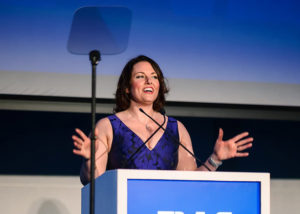
Jenni is a UK-based leadership and internal communications consultant, author of two best-selling books, and international speaker. She runs Redefining Communications, a consultancy working with organisations around the world to help them communicate better and close the gap between what leaders say and what employees experience.