
In the US, 62% of workers say they would turn down a move into management to protect their work-life boundaries, and among under-35s the figure reaches 71%. Chuck’s answer is that this is not a signal, it is a symptom — a generation watching what happens to the people above them and declining the offer. Jenni brings four stories that circle the same question of what leadership actually asks of people: whether a nice culture is quietly protecting underperformance, why promotions have stopped feeling like rewards, what Claude’s new watermark means for employees told to use AI and afraid of being caught, and why Volkswagen workers ranked bad communication from the board above job security itself. Before that, a sold-out Flyover Festival, a live Frequency recording at Unite by Unily, and Comms Reboot in London on 9 October.
Jenni opens with Ron Ashkenas and Gali Cooks in Harvard Business Review, arguing that niceness is not just a leadership trait but something baked into culture that actively undermines performance — a firm where nearly everyone rated meets or exceeds expectations every year while competitors took market share, a sales team nobody would challenge on low-margin products, nonprofit boards too polite to hold a CEO to account. The authors’ fix runs in three parts: senior leaders modeling candor through structured peer feedback, with one offsite running from 90 minutes to three hours once the CEO owned her own conflict avoidance; small data-backed wins first, the example being a VP who used data showing only a fraction of 140 million possible configurations were ever ordered to halve the customization options on a chair; and redesigning meetings away from what the authors call fait accompli meetings, where the outcome is settled before anyone walks in and the polished presentation makes pushing back socially awkward. Chuck’s answer is the line the episode turns on. Using New York and the American South as his stereotype, he separates nice from kind: a New Yorker may not seem nice but will help you when you are lost, while southern sweetness can have unkindness buried under it. Nice is cheap and temporary, kind takes effort, empathy and involvement — and he would rather be called a kind manager than a nice one, because kindness is what makes you say the performance has to improve and then help fix it. He cites Netflix’s radical candor branding alongside its firing of executives who criticized the business, as evidence that candor cultures can be candor for thee. Jenni recognizes the pattern from her own consulting: the leadership team that describes itself as nice, like a family, is the one where nobody can name how difficult conversations happen.
The Fast Company piece assembles several surveys into one conclusion: turning down a promotion has gone mainstream. A Hint App survey of nearly 14,000 workers across the US, UK, Canada, Australia and Europe found 58% would reject a promotion requiring after-hours availability, rising to 59% in the US, where 62% would decline a move into management specifically to protect their boundaries. Two-thirds of American workers believe promotions carry unspoken expectations about personal time, and 56% have watched a colleague become visibly less happy after stepping into management. The split is generational — 71% of 18-to-34s would decline management for the sake of boundaries and 65% would prefer growth that skips people management entirely, which Hint App reads as a rejection of the rung rather than of ambition. Gen X’s driver is caregiving, with a Zety survey finding one in ten have declined a promotion or accepted slower growth because of it, and Careerminds data showing a third of workers turned one down last year with work-life balance the top reason and pay not justifying the stress close behind. The deterrent sitting underneath all of it is the state of middle management, and the credibility gap Jenni pulls out is stark: 97% of HR professionals think their organization trains managers adequately, 41% of managers agree. Chuck’s verdict on whether organizations are listening is one line — it’s clear they aren’t — and his framing is that this is observed behavior rather than opinion. People can see what happens to their managers, especially in layoffs where managers go first and the survivors absorb the load, and a promotion that used to read as a reward now reads as a punishment. The data point he brings to close it is that only 6% now name reaching a leadership position as their primary career goal, a number he says he would have claimed himself 25 years ago. Jenni’s contribution is the design question: if people want to grow without managing people, what is the next rung actually made of, and who is training the first-time manager who has to handle a request for more money after six months? Nobody trained her.
The third story is HR Executive on Anthropic’s trust reckoning, built around Dario Amodei’s description of the AI backlash as fundamentally a crisis of trust, in which ordinary people assume companies, governments and the tech industry are cooking up a new way to screw them over, and the causes go back decades. The workplace consequence Jenni wants to examine is the watermark: future Claude models will embed a marker in generated text indicating the likelihood that Claude produced it, to comply with the EU AI Act’s transparency code, a commitment OpenAI, Google, Meta and Microsoft have also made with differing technical approaches. TechCrunch reported the frustration among users who fear exposure at work or school, though the mark changes nothing about how the text reads and only permits an after-the-fact check. Her question is what an employer would actually do with that, given it is retrospective and says nothing about quality, and whether Copilot will follow. Chuck’s answer is that the logic simply fails: companies want employees using AI, employees fear being caught using AI, and both cannot hold. He is comfortable with the transparency itself, comparing it to the metadata that records when Photoshop was used, but warns that a likelihood signal will be read as proof of sole authorship by an immature market — and notes the skills already circulating on TikTok and Instagram for stripping the mark out. Jenni’s counterweight is that this is compliance rather than employer choice, and that the societal case is clear enough when AI-generated video of the floods in Nepal is circulating as news. What lands hardest is the Slack figure Chuck brings in: half of US desk workers are uncomfortable telling their manager they used AI for an email draft or a meeting summary. His point is that a meeting summary is the ideal use of the tool and he would be shouting about it, so the discomfort is a verdict on the culture, not on the technology.
The closing story is Euronews on Volkswagen’s works council survey, in which communication from the board came out as workers’ single biggest grievance, ranking above job security and the threat of factory closures, with employees saying they and their families were left uncertain and frightened. The consultation ran ahead of nine extraordinary works meetings between the CEO and staff across German sites, against first-half operating results down 11.6% and operating margin falling from 4.2% to 3.8% under Chinese competition, weak demand and US tariffs. Around 50,000 job cuts have already been agreed across Volkswagen, Audi and Porsche, and a further 50,000 could be affected — a figure the CEO says was leaked without his approval, which unions cite as precisely the communication breakdown driving the anger. Chuck reads it as a walk through his own career at General Motors and Rolls-Royce, where the works council was his first exposure to structured worker representation and something he would like to see at US companies, because its function is to get the truth out in an organized way. His diagnosis of Volkswagen’s underlying position is that it echoes American manufacturers in the 1980s and 1990s losing on cost and productivity, with the German premium no longer covering the math — but that is not the grievance. The grievance is that employees want to know what is happening and do not believe anyone is telling them. Jenni separates works councils from unions and notes her own harder experience with unions in UK travel, then puts the obligation on leaders: tell the truth, talk to people like grownups, which requires preparation, considered messaging and time — all leadership work that has become an inconvenience in organizations busy removing the managers and layers who would do it. Being frustrated that numbers leak, she argues, papers over the cracks rather than addressing why nobody trusts the official version. Chuck’s summary is about the gap between what employees feel and what they are told: when those two do not match, the confusion starts.
What percentage of workers would turn down a promotion into management? In the Hint App survey of nearly 14,000 workers across five markets, 58% would reject a promotion requiring after-hours availability, rising to 59% in the US, where 62% would decline a move into management specifically to protect work-life boundaries. Among 18-to-34s the figure is 71%, and Careerminds data shows a third of workers actually turned a promotion down last year.
Why are younger workers rejecting people management specifically? Because they can see what the job costs. 56% have watched colleagues become visibly less happy after stepping into management, two-thirds believe promotions carry unspoken expectations about personal time, and 65% of under-35s would prefer growth that skips people management altogether. Chuck’s read in the episode is that this is a symptom rather than a signal — observed behavior, not preference.
What is the difference between a nice culture and a kind one? Nice is cheap and temporary; kind takes effort, empathy and involvement. A nice manager avoids the difficult conversation and lets everyone rate meets or exceeds expectations. A kind manager tells someone their performance has to improve and then helps them do it. Chuck’s argument is that organizations should be asking whether their culture is kind, not whether it is nice.
What does Anthropic’s Claude watermark actually do? Future Claude models embed a marker in generated text indicating the likelihood that Claude produced it, introduced to comply with the EU AI Act’s transparency code. It does not change how the text reads, it is checked after the fact, and it signals likelihood rather than proof. OpenAI, Google, Meta and Microsoft have made the same commitment with different technical approaches.
Should employers check whether work was written with AI? Both hosts think the question is the wrong one. If a company tells employees to use AI, catching them using it makes no sense, and a retrospective marker says nothing about whether the work is good. The more revealing number in the episode is Slack’s: half of US desk workers are uncomfortable telling their manager they used AI for an email draft or a meeting summary, which is a culture problem rather than a policy one.
Why did Volkswagen workers rank communication above job security? Because uncertainty is what they were living with. The works council’s survey found communication from the board was the single biggest grievance, ahead of job security and factory closures, with employees describing themselves and their families as uncertain and frightened — and a further 50,000 potential job cuts reaching them through a leak rather than from leadership. What people want in a crisis, both hosts argue, is the truth, delivered deliberately.
Chuck: Welcome to Frequency. I’m Chuck Gose.
Jenni: And I’m Jenni Field. Frequency is your go-to for real talk about comms, culture, and employee experience, beyond the buzzwords and straight to what matters. And this week, we’re talking about the risk of a nice organisational culture, the importance of communication during job cuts, what watermarks in AI content mean for employees, and why so many workers are turning down promotions.
Chuck: Before we get into that, Jenni, we’ve got events on events on events coming up here. We wrapped up our Flyover Festival — sold out, back-to-back sell-out Flyover Festivals. It was such a great couple of days in Sioux Falls. We keep adding to the event, so we added a kickoff party, which was a big hit. Obviously all the speakers that were there were top-notch. The city of Sioux Falls, I want to say, threw a concert for us. It really wasn’t just for us, but it felt like it was for us, out on this grass area near the venue. So it was late at night, it was like the night of the eclipse, and we’re all out sitting in the grass, having some drinks, listening to music, catching up. Just such a great couple of days, and I’m even more excited for 2027, which we’re going to be announcing the date of coming up. Then later this month — I know we’ve been talking about it for a while — we’ve got Unite by Unily, where we are doing a live episode of our podcast. Would love to have all of you join us there. If you’re in the area, or just want to go to London, use the code FREQUENCY20 to join us and save 20% off that. And then shortly after that, Jenni, you have your Comms Reboot event in London.
Jenni: I do, and I love that you’re hanging around for that as well. I did a little post on LinkedIn saying we had some special guests coming, so I’m super excited. It’s the Communications Unconference. It’s on the 9th of October. Tickets are running till the 14th of September if people want to come along, and we’ve got about 100 people coming, so it’s going to be awesome. And I’m excited for you to experience Comms Reboot this side of the pond. Obviously you’ve been with me in Canada for the last few with ContactMonkey, whereas this one is just a bit bigger, with a hundred plus people in it. So I think it’s going to be super cool. I’ve already been talking to people that are coming, and I’m really excited about the different topics people are going to want to talk about, and our partners who are involved. So, super excited. If you want to come along, you can grab your ticket, and I will give you a special Frequency discount code if you drop me a message, so that you can come along and get some money off as well.
Jenni: Right, let’s get into the articles for this week. We’re going to kick off with an article from Harvard Business Review, which is about whether or not your organizational culture is too nice. Ron Ashkenas and Gali Cooks argue that niceness isn’t just an individual leadership trait, it can be baked into organizational culture, and that culture actively undermines performance. They point to a firm where nearly everyone rated meets or exceeds expectations every year, which let managers avoid hard conversations, but also let the whole company drift into mediocrity while competitors took market share. Similar patterns showed up with the sales team nobody would challenge on low-margin products, and nonprofit boards too polite to hold their CEOs accountable.
Jenni: Their fix has three parts. First, senior leaders have to model candour themselves, using structured peer feedback, where even the CEO admits their own shortcomings first. They describe one leadership offsite where this cracked things open: a 90-minute session turned into three hours once the CEO owned her own conflict avoidance and others followed suit. The second is using small, data-backed wins to prove the approach works before asking for wider buy-in. And the clearest example that they give is a chair, where a VP used data showing that only a fraction of 140 million possible configurations were ever ordered, to convince marketing to cut customisation options by half. And then their third point is about redesigning meetings themselves. They coined the term fait accompli meetings for reviews where the outcome is decided before anyone walks in the room. They’re basically saying things like polished presentations make it really socially awkward for people to push back. So their fix is to build meeting agendas around genuinely unresolved questions rather than status updates.
Jenni: Now, I’m a firm believer that nice cultures are, I would say, dangerous, and I’ve heard this in my own work as a consultant. But my question for you is that the examples in this piece are sharing some really interesting stats about this meet or exceed expectations. But where is the line between a genuinely supportive culture and one that’s quietly protecting underperformance? So is niceness sometimes just a comfortable cover story for leaders who don’t want to do the hard work of accountability?
Chuck: Yeah, I think this is not to condemn anyone who’s ever been called nice. But I’m going to bring a little American culture into this, Jenni. People often say, like, if you’re in New York City, people there aren’t very nice. That might be true, but they are very kind. So if you’re a tourist in New York and you ask, oh my gosh, where is this, or you get turned around on the subway or whatever, a local New Yorker will help you. They are very kind in that, but it may not come across as nice. Whereas if you’re in the South — this is again stereotyping — people are often accused of being very nice, very sweet, very southern. There’s a little bit of unkindness buried underneath it. And I think that’s what we see in a lot of company cultures, where it’s easy being nice. It’s cheap being nice. Kind takes effort. Kind takes empathy. Kind takes involvement. And so I think I’d much rather be accused of being a kind manager than a nice manager, because being kind, you have to sometimes have some difficult conversations with people. And there are stories of Netflix, who talked about having this radical culture, you know, radical candor, all of these things, but then also then firing people for being critical of what’s happening at the business. So I think this is a tricky situation. We have to look at the meaning of the words. I love getting into the semantics of things. And I think it’s much more important to focus on, is our culture kind, than is our culture nice? Because nice isn’t going to confront. Nice isn’t going to have to say, hey, you’re not performing well. Kind is saying, hey, we need to improve your performance here, let’s come up with some ways to do it. I think that’s the approach here that companies need to focus on.
Jenni: I totally agree, and I always find it interesting whenever I’m doing sort of leadership sessions where people say to me, you know, we have a really nice culture here, we’re like a family. And I immediately start going, oh my God, we’ve got some work to do. Because it genuinely means that thing in this article where it says everyone meets or exceeds expectations, it’s all of that stuff. And my question is always, how do you have difficult conversations? Where’s the space for people to sort of challenge something or ask some questions? And I remember having this sort of sea of blank faces look at me, because that just didn’t happen here. And I was like, okay, well, it should be, because that’s part of a high functioning team. But I like your distinction of the kind and the nice, and I think that’s really important. I also would hate to be described as nice. I feel like it’s really bland.
Chuck: Well, I think that nice feels very temporary and kind feels more permanent. And so I think that’s the difference when you look at it from a cultural standpoint. You could go to a colleague and maybe ask for help, and them say no, and it feel like they’re just being nice in the way they did it. Kind is taking the time to step back and help that colleague achieve their goal. So it’s not tricky, but I can see why people might think that it is.
Jenni: Yeah, and I also just want to come back to your distinction about kind takes effort, nice is easy. I think that’s a really important piece to remember for people.
Chuck: Well, I look at it even from a social construct, where if you’re out and you see someone who, let’s say, is experiencing homelessness, you might be nice to that person, meaning you’re not going to confront them and yell at them, you’re just going to be like, sorry, I don’t have money, if they ask for money, if they ask for help. You can be nice. Kind is coming up with a way to help them in that moment.
Jenni: Yeah, nice. Right, let’s talk— oh no.
Chuck: Or not nice. Is it nice? You just said it was nice. What are we doing here?
Jenni: I’m never going to say nice again, am I? This whole episode, you’re going to pick up on it every time. Let’s move on to the next article, which is from Fast Company, which is why so many workers are turning down promotions. Now, this piece pulls together several recent surveys to make the case that turning down a promotion has gone mainstream. A Hint App survey of nearly 14,000 workers across the US, UK, Canada, Australia and Europe found that 58% would reject a promotion requiring after-hours availability, rising to 59% in the US, where 62% would decline a move into management specifically to protect their work-life boundaries. Two-thirds of American workers believe promotions carry unspoken expectations about their personal time, and 56% have watched colleagues become visibly less happy after stepping into management.
Jenni: The reasons split generationally. Younger workers, 18 to 34, are the most resistant, with 71% saying they’d decline management for the sake of boundaries, and 65% preferring career growth that skips people management entirely. So that’s not a rejection of the ambition, according to Hint App, but a rejection of management as the automatic next level. Gen X has a different driver: a Zety survey found one in ten have turned down a promotion or accepted slower growth because of caregiving responsibilities, with over half saying caregiving is spilling into their work and contributing to burnout. Careerminds data adds that a third of workers turned down a promotion last year, with work-life balance the top reason, followed closely by pay not justifying the added stress or responsibility.
Jenni: Now, the article also points to the state of middle management itself as a deterrent, which is that layoffs, AI adoption pressure and political polarization have made that role much harder. And there’s a striking credibility gap: 97% of HR professionals believe their organization trains managers adequately for these challenges, but only 41% of managers agree. For that, we could do a whole piece on the gap between what HR think and what everyone else gets, given what we talk about on this podcast. The piece closes with practical advice from a Careerminds career coach: negotiate the terms for promotion, so clear expectations, boundaries, rather than just declining outright, because people being offered promotions are usually in a strong negotiating position. So, question: if a third of workers are turning down promotions and the top reason is protecting work-life balance, what does that mean for the pipeline of future leaders? Are organizations actually listening and redesigning what management looks like, or are they just going to keep promoting the people willing to say yes and end up with leaders who just never really wanted the job?
Chuck: It’s clear they aren’t listening. Just look at that gap you talked about with the HR stuff. It’s crystal clear they aren’t listening to this. Some people might see this as a signal. To me, this is a symptom. This is now a generation of people seeing how managers get treated. They are now seeing the impact. This is observed behavior. They are seeing what is happening to the people above them. They don’t want any part of that. A promotion — maybe we’ve all been wrong on this — but a promotion used to feel like a reward. Why is it now feeling like a punishment to an entire generation? That’s what companies need to investigate.
Jenni: And I think this wanting to step into management but not manage people is definitely something I’m seeing from clients I’m talking to, where we’ve been looking at sort of team designs and structures and all those sorts of things, which I help teams with. And quite a lot of people in the teams are saying, I want to do this work, but I don’t want to manage a person. And that is hard, and I think it’s harder now. We’ve talked before on the podcast about the role of kind of therapist, counsellor, manager, and how that’s all kind of blending, and the risks of that. But I also think it’s interesting that traditionally that promotion is about going up and managing people. So if people want to grow in their roles in the future of work, what does a promotion look like? What does that next rung look like? Is it less about managing people and more about, I don’t know, more responsibility? I don’t know, but it feels like there is a shift there around what that needs to look like.
Jenni: Even thinking about my own experience: when I managed my first person, I had zero support from HR in terms of this is what you need. Nothing in terms of how you manage somebody and what that needs to look like. And I remember recruiting somebody — they did a paid internship for a while, then we got them the role — and I remember after about six months or a year they were like, I’ve been here a year now, so I’d like some more money. And I was like, that’s not how this works. But that is what people believe, and that happens all the time. But if you don’t know how to deal with that, because HR haven’t trained you, which they’re clearly not, it just opens up such a world of pain for everybody in that situation, which I think is just rubbish. So, to your point, why would you want to do that job? Because it’s just going to be uncomfortable and painful for everybody, which is what’s probably contributing to the trust gap and all the other things that are going on.
Chuck: Well, I think what’s happened, in my opinion — we’re going to go back in our time machine here a little bit, Jenni, and go back several decades. There used to be a role as a people manager, meaning your job was to simply manage people and the work they are doing. That then got merged with, you have a full-time job and now you’re also managing people and the work they are doing. It is thankless. I remember, though, early in my career, that being something I wanted. I wanted to lead a team, I wanted to have people. That was like this natural growth that you expected. And then I found this data point: now only 6% name reaching a leadership position as their primary career goal. There’s other goals out there. Only 6% say, I want to be in a leadership position, that is my primary goal. If you’d have asked me 25 years ago, I probably would have said that. Now only 6% of people are saying they want a leadership position. That is mind-boggling. And again, that is a signal and a symptom of what’s going on at work.
Jenni: Yeah, that’s a massive flag, I think, to start thinking about how we treat managers and leaders and how we invest in that. And that’s terrifying.
Chuck: Well, and we see time and time again, when those layoffs happen — we’ve talked about this on half a dozen to a dozen episodes — the manager is the one being let go, which then puts even more pressure on the managers that are sticking around.
Jenni: Yeah, no good comes of this. And the next piece I want to talk about is from HR Executive, and it’s about Anthropic’s trust reckoning to do with AI policy. Just to take a direct quote from there: Anthropic’s CEO, Dario Amodei, recently published a social media description of ongoing AI backlash as a crisis of trust. In the quote, he says, I think that ordinary people don’t trust companies, governments or the tech industry, and always suspect that we are cooking up some new way to screw them over.
Chuck: Huh. I wonder why they think that. Where does that come from?
Jenni: The causes of this go back decades, and AI is just the latest iteration of it. Now, that quote opens up the theme of this whole article, which is around trust. But the bit I want to bring here for this conversation is where it specifically goes into this new watermark feature, which Claude are rolling out, because I think this is the bit that’s important for our listeners. So Anthropic announced that future Claude models will embed a watermark in generated text, indicating the likelihood that Claude produced it. And it’s been done to comply with the EU AI Act’s transparency code, which is a commitment that’s also been made by OpenAI, Google, Meta and Microsoft, though each provider’s technical approach is a bit different. TechCrunch reported this announcement sparked frustration among some Claude users, who worry that it could expose them for using AI at work or in school. But the watermark doesn’t change what the text looks like and how it reads to a reader. It just allows someone to check after the fact whether Claude was likely involved.
Jenni: But my question here, and the reason I wanted to bring it here, is because if employers could check that watermark today, what would they actually do with that information? Because it’s retrospective. So knowing someone’s used AI to write something, and its likelihood — does that matter if the work is good? Or are we just building ways to police effort rather than output? But also, what do we think Microsoft are going to do, because that’s Copilot, which a lot of our listeners will be using? How are they going to follow suit, because that’s going to have an even bigger impact on workplace AI policy?
Chuck: Yeah, I’m so bored by this topic, Jenni. And here’s why. No, I’m glad you brought it in. I’m glad you brought it in. I just don’t know why it matters. Here’s where the logic just breaks down for me. Companies want employees to use AI, but then employees are worried that the company is going to find out that they’re using AI, but the companies want them to. Why does that break? Of course, if you’re telling employees to use AI, they’re going to use AI. So the watermarking — is that what companies are actually looking for? And I went back into some history on this, because, one, thank you, EU, for bringing this into all of us. Because it’s not just Anthropic. OpenAI, Gemini or Google, Microsoft — everybody’s going to play a part in this. So the watermarking is fine. Photoshop watermarks images so that people know that Photoshop was used. It’s all in the — is it exif data, metadata, I forget what it’s called — with imagery. So I want people to be clear, though: we all know that we’re all using it, but we don’t want people to know that we’re using it, but yet we know everybody is. So I like this transparency of it, because what it’s not saying is that it was only AI, that it was only written by AI. It’s not saying that, but that’s what people are going to take it as, because we’re still very immature in this process. And I know there’s already — I’ve seen on TikTok and Instagram, people are like, use this skill to remove the watermark. Which again, it’s not a watermark like an image, where you kind of see it on there. It’s apparently in the way that words are written in certain styles. And again, if you’re a company and you’re wanting your employees to use it, why would you condemn them then for using it? Or is this just now how companies are behaving? The logic just fails on this for me.
Jenni: Yeah, I’m with you on that. But to your point, this isn’t something companies are choosing to do, it’s something that the tools have to do to fall in line with the law, which is the transparency. And I feel like it’s being done for broader societal reasons, right? Like there’s so much AI stuff now on Instagram and other places that it’s not real content. Even if we think about things in the news and the horrendous floods that have been happening over in Nepal, there was a huge article over here on the BBC about the fact that people were doing AI-generated videos that were just not real. And I think that’s where I can see the need for it in some of these other uses. I suppose my thought process on this is, how does this apply to the workplace? And we don’t know yet, so maybe I’m a bit too soon in bringing it here, but there was just a lot of stories about this watermark and what it’s going to mean. And I wonder whether there’ll be something that will shift about how it’s used inside workplaces, and this is more how it’s used in kind of marketing and other stuff like that. And maybe that’s going to be the distinction, and maybe the transparency act is going to address that. So let’s see.
Chuck: I would love to see a company come out and say, we hope there’s a watermark to this, we hope — we’ve paid for these tools for you to use them, we want to see this in place. But also, on this data point, this is from Slack: half of US desk workers are uncomfortable telling their manager they use AI for something as boring as an email draft or meeting summary. What does that say about your culture? That’s exactly what it should be used for. A meeting summary is the perfect use of AI, yet half of workers are ashamed to tell their manager. I would be shouting out that I used it for that, because writing up a meeting summary is not a good use of anybody’s time. That’s a great use of AI. So what does it say about the culture of a company where you don’t feel like you can say, hey, yeah, I used this amazing tool to get me started down here, so I’m not wasting time over here, I’m investing time over here? That’s the weird part. That’s where there’s some disconnect going on here that I haven’t quite figured out.
Jenni: I wonder if it’s linked to the whole productivity thing as well. Like, if they know I’m using AI for all this stuff, they’re going to wonder what I’m doing. You know what I mean? I think we’re still figuring out some of that stuff, so let’s see. The final story today is about Volkswagen, which was in Euronews. It was covered in a few different outlets, but I managed to find it in Euronews, not behind a paywall. And this is about Volkswagen and doing some job cuts. So their works council ran an employee morale survey, and communication from the board came out as workers’ single biggest grievance, ranking above even job security or the threat of factory closures. Employees said that they and their families were left uncertain and frightened, according to the German press agency. The consultation was launched ahead of nine extraordinary works meetings between the CEO and staff across German sites.
Jenni: Now, the backdrop to this is some big financial pressure to do with Volkswagen’s first-half operating result, which fell 11.6%, with operating margins dropping from 4.2 to 3.8. So they’re facing some really tough challenges with Chinese competition, weaker demand, US tariffs, all of those things. So the CEO has described the situation as more than critical in an internal post, warning that the company isn’t generating enough to fund new technology, products and its existing sites over the long term. Around 50,000 job cuts have already been agreed across Volkswagen, Audi and Porsche, and the CEO has confirmed a further 50,000 could be affected, though he says that figure was leaked to media without his approval, which unions point to as exactly the kind of communication breakdown which is driving this frustration. So my question is: workers ranked bad communication as a bigger grievance than the job cuts themselves. What does that tell us about what employees actually need from leadership in a crisis?
Chuck: Yeah, this was like a walk down memory lane going through this, between my experiences at General Motors and then Rolls-Royce, where we had a works council. I loved working with the works council at Rolls-Royce, and the structure. That was my first exposure to something like that, because that doesn’t exist in the US. And it got me thinking more and more, I would love it if there were works councils at US companies, just to get stuff like this surfaced. Because all employees want to be told is the truth. That’s all they want. They just want to be told the truth. And I didn’t go down the full historical aspect of this, but some of the reasoning behind the Volkswagen stuff sounded very similar to what happened with American manufacturers in the 80s and 90s, when they were competing with manufacturers in Japan and other Asian countries, where they were struggling with productivity and costs and all these things. Whereas the German manufacturer was always put up on a pedestal as being worth that investment. And now it seems like the math isn’t mathing on that from a cost standpoint, and so these manufacturers are struggling. But that’s not the problem here. The problem is that employees just want to know what the hell is going on. That exists everywhere. And they feel like they don’t have anybody looking out for them. They don’t feel like they’re being told what is really happening. I think that, from my experience, is what the role of the works council is: to get the truth out, and get it out in a structured way.
Jenni: And I think there’s a difference between works councils and unions. I think there is a difference between all of those things, and I think that people have some good relationships and some not so good relationships. I know my experience with unions when I worked in the travel industry in the UK was really hard, because I remember reading something in the press and I was like, that’s just a lie. So that was quite challenging. But in the round, I love your point around employees just want to know the truth. And I think we have to come back to this every single time when there is a big change programme, when there is a crisis, when there are job cuts. Tell the truth. Just talk about it. Like you’re talking to grownups, you’re talking to people who want to know the truth. But that involves doing some preparation, considering your messaging, being intentional, making time for people — all things that are part of being a leader that somehow are an inconvenience in organisations. And I think they’re becoming an inconvenience because you’re getting rid of all the managers and all the layers, and you’re not training them. So all of that has to play a role in here: if you invest the time in the people, in the messaging, then this becomes a lot easier. And I think shying away from that in a leadership position, and just being frustrated that things are leaking, is not addressing the root cause of this situation at all. It’s just trying to paper over the cracks, and no good comes of that ever.
Chuck: Well, because that’s it. The employees feel it, they just want to be told it. They want those two things to match up. Because if they feel one thing and are told something else, that’s when the confusion begins. They are feeling this. So just tell them the truth of what is happening. Again, no one wants to be cut from a job, that’s not the goal. But they at least want to know what is happening, versus it being glossed over. Oh no, no, everything’s going to be just fine, we just had to tweak a few things. No, no, no, that’s not the case.
Jenni: Yeah, totally. So that brings us to the end of our articles this week. What are you freq-ing out about?
Chuck: I’m going to highlight a couple of leaders that came across my view here recently, Jenni. One is a wonderful gentleman named John Morgan, who — I don’t know why he did this — he is the head of Morgan and Morgan, which is some kind of massive law office that felt very ambulance chasing. I don’t want to put that label on them, but it felt like that. He is one of these leaders that we’ve talked about who does not believe people actually work from home. Does not think it’s possible. So in this interview, he talked about how they put cameras on everybody’s computer. Well, one — let’s hang on. I’m not aware of a lot of laptops now that don’t have cameras in the first place. I don’t know a lot of companies that are giving people desktops any more, I think it’s pretty laptop-focused, so there’s a camera in there. But he talked about how they’re going to watch employees, because he doesn’t think they’re working. In fact, I’ve got to clean this up, because we said we weren’t going to swear on the podcast. He’s going to put a camera up their butt.
Jenni: Oh, okay. Okay.
Chuck: Except he didn’t say butt. And I’m thinking, one, this isn’t about colonoscopies. They should be supporting employees getting colonoscopies. But that’s how he doesn’t even trust his own employees. These are the people you’re paying to do a job, and you’re saying, we have to put a camera up their butt to make sure they’re doing the work. You’re either hiring the wrong people or there’s something horribly wrong going on at your company. And it could be both. It could absolutely be both. But I’m thinking, imagine working for this guy. And there’s a lot of listeners who are working for this guy — not John Morgan, but somebody out there who doesn’t truly believe people are working. It was so disappointing to hear, but also kind of good to hear that there’s someone so brash and so short-sighted that they’re saying this out loud, as if there’s not going to be any kind of pushback on them.
Jenni: Yeah. I might send him my book.
Chuck: You should. You should. Please do. So he’s one. And then there’s another winner of the week. I believe his name is Shailesh Jejurikar, who’s the CEO of Procter and Gamble. Massive company. I grew up in the Cincinnati area. Procter and Gamble is put up on a pedestal in that area. On the same day — maybe the same day, I could be getting it wrong, same week, same time period — they announced his pay package is being doubled. Meanwhile, they are laying off 7,000 people. CEO pay package doubles, 7,000 employees being laid off. Are they really that ignorant? There’s some data that came out this week that showed that company profits are rising exponentially compared to employee growth. No different than what is happening at the government, the same thing is happening in companies. All the money is being kept at the top. I forget what the data point was, but it used to be that a CEO made like 10 times what the average employee made. Now it is like a thousand times. It’s just skyrocketing when you’re the one approving your own pay. Well, I should make more money, I did a really good job. But we’re going to let these 7,000 people go. I’m trying to imagine the PR and comms department of Procter and Gamble trying to make sense of this. How do you rationalize spending over here and cutting over here? Yeah, my two winners of the week.
Jenni: Yeah. Well, and also that’s shareholder return, right? That’s the only way you justify it — it’s greed from shareholders, and that’s it. That’s the only reason that that is happening, is to keep them. And it makes me feel sick. I just don’t know how ethically and morally we’ve created a society at large that feels that that is acceptable. And I think that that is terrifying. And it won’t change. Do you know what I mean? This has been going on for years, where people are having their salaries—
Chuck: But imagine if Shailesh had come to work and said, hey, I’m only going to get paid the increase that my employees get paid. So you get your 2% pat on the back, he only gets 2%. Now, what’s sad about it is his 2% is a lot more than your 2%. But let’s just say he went on — or, again, going back, remember, we talked about this in a previous episode — it used to be such a black eye to companies when they would lay people off. I watched this TikTok where they said, can we go back to when layoffs were an embarrassment to companies? That they failed as a business because you’re laying people off, you’re taking jobs away from people. And now it’s being oddly correlated to a CEO doubling their pay while laying off 7,000 people, a small town. The disconnect is wild to me. And I know we see it every day, but it was just seeing these two gentlemen and their approaches to business: one doubling their pay while laying people off, and two, wanting to shove a camera up his employees’ butts because he doesn’t believe they’re working. Like, there’s leadership for you in 2026.
Jenni: Yeah. Well, my freq-out is about my new office. It feels very mundane now after that mic drop moment, but I’m going to stay with it and I’m going to have it anyway, because I’m very excited. For anyone that is a regular watcher on YouTube, you will notice that I’m standing in a different part of my office — or maybe you didn’t. But I’ve managed to sort out my entire office speaking setup, and I’ve spent — we’ve had a holiday here in the UK, so I spent the long weekend building desks, putting new things on my shelves, throwing things out, decluttering, sorting out. A bit like the new term, like everyone’s going back to school. I feel like people go and get a new notebook; I throw away a load of stuff and sort out my office. So I’m quite excited, I’m really enjoying it. I’ve got a few more bits to do, but I’m now at my new standing desk that’s got little preset buttons, and I’m very excited.
Chuck: I was saying, until today I had not seen the behind the scenes of your previous setup. And I’m kind of frightened by what you were doing before. I’m impressed that we made seventy plus episodes with that background. So I’m relieved now going forward.
Jenni: In my defence, my original setup was set up for the occasional online speaking or podcast thing. So it was designed to be put away. It was just a lot of cables and stuff. And then, since we’ve been doing this, which I agree has been now quite a long time, I’ve been like, I need to do something different here, because this doesn’t ever go away and it just feels messy. So yes, it’s all nice around me now, which is good. Nice and tidy for the start of term.
Jenni: Well, thank you for joining us this week. We hope that the articles and insights will help you think about how to improve comms, leadership and culture in your organisation. If you don’t yet subscribe or follow, please do, as it helps make sure that you won’t miss an episode. All the links to all the articles we’ve mentioned today are in the show notes, so you can grab those to read if you want to explore things further. We’ll be back with you on Monday with more news, insights and opinions about everything comms and leadership in workplaces today. Appreciate you being here with us.
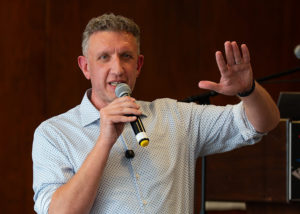
Chuck is a US-based internal communications strategist and the founder of ICology – a community and resource hub for IC professionals. He brings a practitioner lens to every conversation. Chuck is a recognised voice in the industry, a regular speaker and event host, and one of the most connected people in the North American IC world.
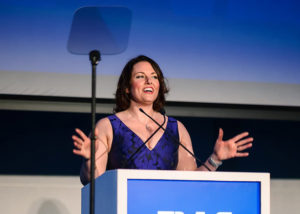
Jenni is a UK-based leadership and internal communications consultant, author of two best-selling books, and international speaker. She runs Redefining Communications, a consultancy working with organisations around the world to help them communicate better and close the gap between what leaders say and what employees experience.