
Chipotle’s COO decides who gets promoted over a 90-minute dinner, and Chuck’s honest reaction is that he wants to like it and cannot quite get there. That tension runs through four stories about who gets ahead at work and why so few people believe the leaders deciding: Chipotle promoting 23,000 of roughly 135,000 employees in a year while the wider market sits at a five-year low, the Burning Glass Institute finding an 81 percentile point gap between the best and worst roles inside the same employer, a New York Times essay on Gen Z redirecting ambition away from work entirely, and Gartner’s finding that only 26% of employees call their senior leaders both competent and trustworthy.
Chuck opens with Fortune’s profile of Chipotle COO Jason Kidd, who pulls three or four employees from whatever market he is visiting into a 90-minute meal every week, works through about a dozen stores, and uses the table time to judge four traits: team players, people who own the outcome, people who see problems coming instead of fighting fires, and people who turn up with solutions. The numbers behind it are not soft — 23,000 promotions out of roughly 135,000 employees in 2025, 100% of regional VP roles, 85% of GM roles and 83% of field leader roles filled from inside, against a Gusto promotion rate at a five-year low of just over 10%. Jenni’s read is that the dinner is one slither of a much bigger process that has been zoomed in on, and what she likes is seeing people in the social setting their customers occupy, which for hospitality is exactly the right test. Her condition is governance: if a branch knows the COO is coming, someone has to be deliberately setting the right people up rather than leaving it to whoever happens to be on shift. Chuck’s remaining 12% of doubt is the power dynamic — a 20-year-old across the table from the COO of a $50 billion chain, in their own restaurant, while their coworkers watch — and the hope that a GM is quietly briefing him on who to sit down with. Jenni’s counter is that eating together is itself a leveller.
The Burning Glass Institute’s “Good Company, Wrong Job” tracked 12 million workers across 1,750 large employers and found an average 81 percentile point gap between the best and worst roles inside the same company: actuaries at Cigna in the 99th percentile for promotion while business intelligence analysts sit at the 22nd, home theater installers at Best Buy at the 99th while customer service lands at the 31st. The gaps are investment decisions — a strategic core that gets funded and an overhead everyone else is filed under — which is why opportunity turns up in unglamorous places, with financial managers hitting the 99th percentile at Nike and PepsiCo and accountants doing the same at John Deere and Caterpillar. Jenni’s first move is to question whether this belongs to comms at all: org design, succession planning and learning culture are HR’s, and she has sat with leadership teams where some functions have succession completely mapped and others have never thought about it, which may be exactly why the investment lands where it does. What is a comms problem is the ethics of it. If the message is that this is a great place to work and everyone has an opportunity, it has to be verifiable, and Jenni’s charge is that internal comms does not always check that what it is putting out is true. Chuck has spent a career on the other end of that line — comms itself is usually the function being treated as overhead — and his advice when someone says “we’re a great place to work” is to ask for who, and who the “we” is, because there is no single employee experience. Jenni’s closer is that the data is about to go public through AI-powered career tools showing role-level promotion and pay percentiles, and it will be the Glassdoor wave again, except this time from people who have not left yet.
Emi Nietfeld’s New York Times essay argues Gen Z’s ambition has been redirected rather than lost: financial independence now outranks marriage and children as a defining goal, respondents put the number they need to feel successful at close to $600,000 a year and $200,000 to $300,000 to feel stable, three in four want to run their own thing, more than half would be influencers, and not one student Nietfeld interviewed named a dream employer. She frames it as a clear-eyed read of a casino economy — the worst graduate job market in years, housing out of reach, AI eating the creative jobs several interviewees trained for — with a campus chaplain noting students no longer ask what they can achieve but what they need to survive, and an Emory professor finding his seminar students felt less in control of their lives than the average prisoner did in 1966. Chuck asks Jenni whether she has ever been in love with work; both say yes, and Chuck admits his own version tipped into obsession at the cost of other things. Jenni traces hers to a father who ran his own business and a mother who went out to work when it stopped going well, and names a pub job as one of her favourites because of the community around it. The $600,000 figure is what she cannot get her head around, and her explanation is that the hygiene factors — cost of living, debt, basic stability — have been ignored at work for years in favor of shiny things, and they matter more, not less, when the news is what it currently is. Her question for HR and leaders is the root cause one: what have these people lost faith in? Chuck’s addition is that everything on that list is now easy to discover, so the marketing version of opportunity no longer survives contact.
The closing story is Chuck’s Christmas morning. Gartner’s research on the employee trust gap in AI transformation finds only 26% of employees say their senior leaders are both competent and trustworthy and 79% report low trust in how change is handled, with leadership no longer the primary source of truth — employees build their read from Reddit, Blind, Glassdoor, the news and each other, and executive messaging is met with a shrug or a screenshot. The three recommendations cut against comms instinct: drop the inspiring future-state AI vision internally because it accelerates skepticism and lead with blunt business reality, move past sentiment surveys to track the narratives actually spreading in anonymous forums and match each message to whoever is credible to deliver it, and stop letting executives sell the personal upside of AI, because employees hear a promise rather than a vision. The stakes carry numbers too: high-trust organizations get more than six times the discretionary effort, and fear of AI-driven job loss can cost a large employer up to $47 million a year in quiet departures. Jenni says this is what her life’s work has been building toward — credibility takes eight things at once, and charisma on stage does nothing if the same leader has shown no integrity, no empathy and no support through a year of change. Her line for the exec who thinks the vision speech is the whole point is that it is not about them: communication is about what employees need in order to do what the organization needs them to do. On the 26% itself she wants to know how the survey defined leaders, then concedes she is not surprised at all, because people are too detached at work to judge someone competent and trustworthy when all they get is vision with no substance.
How does Chipotle decide who gets promoted? Fortune reports that COO Jason Kidd takes three or four employees to a 90-minute dinner every week he is on the road, working through about a dozen stores, and looks for four traits: teamwork, owning the outcome, seeing problems before they land, and turning up with solutions. It is one input into a much larger internal promotion machine — 23,000 promotions in 2025 — not the whole process.
Is promoting from within still common? Not at Chipotle’s rate. The company filled 100% of regional VP roles, 85% of GM roles and 83% of field leader roles internally, while Gusto puts the overall promotion rate at a five-year low of just over 10%, down from around 14.5% in mid-2022.
What did the Burning Glass Institute find about promotion inside the same company? Across 12 million workers at 1,750 large employers, an average 81 percentile point gap separates the best and worst roles within a single employer. Actuaries at Cigna reach the 99th percentile for promotion while business intelligence analysts sit at the 22nd; at Best Buy it is home theater installers at the 99th against customer service at the 31st.
Why is the strategic core versus overhead split a communications problem? Because employer brand promises one career story to everyone. Jenni’s view is that the underlying decision belongs to HR and leadership — org design, succession planning, learning culture — but comms owns the ethics of repeating a “we grow our people” line it has not verified, especially now that AI career tools are starting to publish role-level promotion and pay percentiles.
How much money does Gen Z say it needs to feel successful? The New York Times essay reports respondents naming close to $600,000 a year to feel successful and $200,000 to $300,000 to feel stable. Financial independence — enough money never to have to work again — now outranks marriage and children as a defining goal, three in four want to run their own thing, and more than half would be influencers if they could.
What does Gartner say leaders should stop doing on AI? Stop headlining the inspiring future-state vision internally, because it speeds up skepticism, and lead with blunt business reality. Stop relying on sentiment surveys instead of tracking what is actually being said in anonymous forums. And stop letting executives sell the personal upside of AI — route that through managers and peers, who employees find more credible.
Jenni: Welcome to Frequency, I’m Jenni Field.
Chuck: And I’m Chuck Gose. Frequency is your go-to for real talk about comms, culture, and employee experience, beyond the buzzwords and straight to what matters. Jenni, this week we’re talking about internal promotions over a burrito bowl, who’s to blame for poor job fits, Gen Z not loving work, and Jenni, one of my favorite topics: leadership competency, or lack thereof.
Jenni: It is your favourite topic. And before we get into that today, I don’t have a nice segue from leadership competency, but I do have one into relationships at work. I’ve spent some of this week with Advita Patel doing DISC workshops with an internal comms team, and if you’re not familiar with DISC, it’s a personality and communication preference tool. It’s really interesting to me how much people can start to change their behaviour once they understand themselves better. It’s just been a lovely week of people figuring out who they are, the fact that that’s okay, because that’s who you are, and then what that means to your relationships at work. And I just don’t think we do that enough. So much of what we talk about here is linked to relationships, communication, all that kind of stuff. It’s just been really nice this week to have some conversations and help people figure some of that stuff out, and then how they’re going to approach leadership differently, how they’re going to approach HR differently, how they’re going to approach comms differently. So it’s been good. I’ve enjoyed it.
Chuck: I know my wife Kristen did her DISC profile in the last couple of years. And when she was talking about it, I remembered that I did it now probably 15 years ago. And I also never delete emails, like ever. And I cannot find my results anywhere. Whether it’s email or my Google Drive, I’ve had the same account for 20-plus years. I know it’s somewhere and I just cannot find it.
Jenni: Well, you might be different now as well. It might have changed. If you want to do it again, let me know, because we do it for people all the time. So I’ll send you a link. You can do it.
Chuck: Yeah, because I remember one of the highlights for me in learning about DISC was that it said if you basically want me along for the journey and the change, you have to involve me from the beginning or I will burn it down. That’s basically it.
Jenni: I feel like anyone listening to this will be like, well, that’s not a surprise. Go on then, what have you got for us this week?
Chuck: This week we’re going to kick things off with Chipotle. Jason Kidd, COO, scouts his next leaders over dinner. Every week he pulls three or four employees from whatever market he’s visiting into a 90-minute meal, works through about a dozen stores, and uses the table time to decide who gets promoted. He’s looking for four things: team players, people who own the outcome, people who see problems coming instead of just fighting fires, and people who turn up with solutions. It feels like a bit of a crossover Venn diagram there, a little bit.
Chuck: And the numbers hold up, though. Chipotle promoted 23,000 of its roughly 135,000 employees in 2025 and filled 100% of regional VP roles, 85% of GM roles, and 83% of field leader roles from inside. This is a huge thing with mobility inside a company. And it’s actually the opposite of the market. Gusto puts the promotion rate at a five-year low of just over 10% last year, down from nearly 15% in mid-2022. So is this dinner smart or charming? This is what we’re going to be talking about today. In its favor, Kidd is watching people over time instead of trusting just a 30-minute interview. He’s giving employees across a lot of locations real face time with a decision maker. And the traits he wants, the thing we talked about, ownership, teamwork, all that, are the right ones for running a restaurant.
Chuck: The catch is that it rewards whoever presents well over a meal, on the one night the COO happens to be in town. The person who’s a quiet high performer, the person working a shift that didn’t line up with the visit, the employee who tightens up in front of a senior leader, none of them get the attention. And a company that promoted 23,000 people last year clearly isn’t running on one exec’s dinner reservation alone, which raises the real question: what carries the weight for everyone Kidd never sits down with? So the question here, Jenni, is I really want to like this, but I don’t. But yet I kind of do. So is he spotting future leaders, or just the people who are good at dinner with the boss? And how would you tell that difference at scale?
Jenni: So I love that. I want to, but I don’t, but I do. I think I’m kind of with you on that. I do like this. I like it because I think it’s one snapshot of how people actually get promoted. I think it’s taken one slither of probably their process and really zoned in on that and made that a thing. I mean, has he sat down with 23,000 people? Let’s be honest, he hasn’t done that in a year, right? So I think there are other things at play.
Chuck: Correct.
Jenni: What I like is that you’re seeing people in a very sociable setting, in the setting where their customers would be, in the environment that they need to be in. And I think that’s important for hospitality. I mean, I’ve been to so many places where I wonder why people have taken a job in hospitality because they clearly don’t want to be there. And I think seeing people in that environment is really important. But I do think there needs to be, you know what I’m like, there needs to be some rules or some governance in there. If you know you’ve got a high performer and you know he’s coming to town, then how do you manage it to make sure that those people get the right time, and that you are, as a manager of that branch, putting your right people in that situation and setting people up for success?
Jenni: So I think there’s a lot going on there, but I love the fact that they’ve done so much internal promotion. It really sounds like a culture of learning, growth, investment in people, the stuff that really matters. And I like that he’s giving so much face time to employees everywhere he goes. He’s not just coming in, talking to managers, doing a site visit, going on to the next. I think it sounds like a really nice culture to be part of.
Chuck: Yeah. I want to go back to those four things that he looks at: team players, people who see problems coming instead of just fighting fires, people who turn up with solutions. And the last one I saved is my favorite one — people who own the outcome. I think that’s such an interesting way to frame what I would have just described as ownership, someone taking accountability and responsibility, but I love that owning the outcome. And when you do look at the numbers, as you pointed out, 23,000 promotions, 100% of regional VP roles. So it seems like the higher you go up the organization, the more important that history is with the company.
Chuck: So all these things I like. I think the challenge I have is, and maybe he recognizes this and finds a way to mitigate it, is that power dynamic. The COO of a $50 billion quick serve restaurant chain, whatever you want to call them, sitting down potentially with a 20-year-old kid. Now, maybe that’s where a bit of ignorance is bliss. I don’t know if I was 20 that I would have appreciated who the COO was. So maybe that’s the great equalizer, the ignorance or innocence of meeting with people that are 18, 20, 22, 24. Whereas I feel like somebody who’s in their late 20s, 30s, 40s might be intimidated by sitting across from someone who has that much influence.
Chuck: The more I talk about it, the more I like it. But there’s just this little part where I’m like, I hope this isn’t the only deciding factor, and I’m sure it’s not. But there are some people where that power dynamic might get them, they might shut down in that environment. It might be kind of a weird thing to be sitting in your own restaurant eating with the COO while your coworkers are back there probably talking about it. It’s great and odd and unique, and that mixture is where I’m just not 100% on board. I’m like 90 — I’m like 88% on board, I think.
Jenni: I like the way, 1988. I feel like actually sitting down together and having food is quite a great leveller from a power dynamic. Like we all — do you know what I mean? So I think —
Chuck: That I agree with. But if it is in your own restaurant where your coworkers are watching you, it’d be different if they went to maybe a different spot. I don’t know, maybe they do that. I’m not sure.
Jenni: Yeah, does it say that he eats in their own restaurant, or whether he just goes out for dinner?
Chuck: I think it said they ate in Chipotle, which would make sense. You should drink your own champagne. But maybe you’re going to a different location, maybe. I don’t know.
Jenni: You should eat in your own restaurant. Yeah. I get what you mean. Like if you’re sat there having dinner and then one of your mates is on shift and they’re serving you, it just feels a little bit weird. That would feel a bit weird. And I think there is probably an inclusion piece that for both of us feels like it’s everybody getting the same opportunities to have this experience in order to get that, which is why we want to make sure there’s other things.
Chuck: And that’s where I wonder, is there some strings being pulled behind the scenes where the COO is going to the GM, is going to that field leader and saying, hey, I’m going to be in town, who are your best people? Who should I be sitting down with? Maybe some of that is happening and we just don’t know that because we don’t work there. But I just want — I hope that is happening. Put it that way.
Jenni: Yeah, me too, me too.
Chuck: Next up, the Burning Glass Institute tracked 12 million workers across 1,750 large employers and found something both, again, awkward and interesting. On average, an 81 percentile point gap separates the best and worst roles inside the same company. At Cigna, actuaries hit the 99th percentile for promotion, while business intelligence analysts sit at the 22nd percentile. At Best Buy, home theater installers reach the 99th percentile while customer service lands at the 31st. Same company, opposite career and possible opportunities.
Chuck: And the gaps aren’t random. Companies invest in what they consider the strategic core and treat everything else as overhead, which also means opportunity turns up in some unglamorous places. Financial managers reach the 99th percentile at Nike and PepsiCo, and accountants hit the 99th percentile at John Deere and Caterpillar, ahead of the banks and the Big Four. Salesforce and John Deere, though, seem to spread their investment evenly across the board.
Chuck: For comms, this is a bit of that slow-building headache that we’ve talked about for decades, Jenni. Employer brand and EVP work runs on one promise: we grow our people, this is a place you build your career. The data says that promise is an average, and for a big slice of the workforce it’s just not true. The engineer at the 99th percentile and the service rep at the 31st sit in the same all-hands, hear the same “we invest in you” line, and one of them knows better. And the moment a message and someone’s lived experience don’t line up, you completely lose the message and you lose credibility on the next one.
Chuck: And it gets harder from there. These gaps aren’t something comms can simply spin away. They’re investment decisions the business has already made, and the data is about to go public, because AI-powered career tools are starting to show candidates role-level promotion, pay, and retention percentiles directly. So the recruiting pitch is now fact-checkable against numbers comms does not control. This uniform “we are a great place to work” story only works as long as no one can see inside it, and that window is closing. Jenni, the strategic core versus overhead means companies knowingly invest in some roles and let others stagnate. Is that a legitimate business choice that comms should help explain, or a fairness problem comms should be flagging up the chain?
Jenni: Or a problem comms should be involved in at all, I think, is also part of the question. So this feels like there’s two separate things here for me. There’s an HR element to this, which is more that EVP, organisational design, succession planning, learning culture, all of those things that sit within HR. For comms, there is the element of how you’re communicating that, how you’re bringing the culture to life, how you’re sharing that.
Jenni: I think there are bigger questions here around the HR piece of org design and succession planning, because even if I think about some of the clients I’m working with, I’ve had conversations with them and some of their leadership team about, what’s your succession plan? How does this look over here? And some functions have got that completely sorted. They’re investing in their team, they know where they’re going, they know who’s coming in doing that. Other ones, I’ve got no idea. I haven’t even thought about it. And I wonder how much that plays a role in some of this as well. So even though there is this investment going into these different places, is that investment going into those places because those leaders are putting in a better business case for the need for that? And that’s why that’s happening.
Jenni: For me, this is a leadership issue and it’s an HR issue. And I think that comes to your point, it doesn’t need to be flagging it up the chain. There’s an ethics piece here for me from a communication perspective. If you’re communicating this is a great place to work, everyone has an opportunity here and it’s just wonderful — I mean, I don’t know anyone that’s communicating that at the moment — but if that is what you’re doing, then you have to be able to verify and back that up. And I think that comms people, sometimes in internal comms, don’t always look to verify and make sure what they’re saying is actually true and accurate. And I think that’s probably that ethics piece that’s flagging here for me.
Chuck: Yeah. This is where, whether it’s people saying we’re a great place to work and it’s all lowercase, or we’re a Great Place to Work and it’s trademarked, registered — I’ve always wondered, well, for who? Who was it a great place to work for? And this sort of leans into that, where whether it’s leadership preferences or historical preferences or the way the business runs, clearly some positions are seen as more strategic versus overhead. And this is that challenge that comms has played for the longest time, of always either feeling like, or being told, they are overhead. They are not part of that strategic core. And this data kind of proves out that those investments then come into play. So when people say we’re a great place to work, either say for who, or say, who’s the we? That’s the important part, because we know that there’s not one employee experience out there. Every employee has an experience, but there’s not a singular employee experience at every single company.
Jenni: No, but I think that’s something important that we need to recognise as a whole in communications, is that we still have this blanket communication going out to all employees and treating everybody the same. And actually it’s very different depending on your role, your location, what you’re doing. All those things make your job very different. We’ve talked in the past when I did that paper on the value of internal communication, and that difference in engagement between I’m engaged in my role and I’m engaged in the company — they’re two different things.
Jenni: I think for me this almost signals some of that data, that work is much more complex than I think we like to believe it is. We want to sort of have a nice tick box, put it in a nice bow, this is all lovely, everyone carry on. And actually it’s very individual, it’s very relationship based, which is how I started today. And I think we don’t give enough time for that, especially when we’re in such a task-focused work mode of working remotely trying to get stuff done. This to me feels like it’s shining a huge light on something that maybe not everybody has been talking about. Everybody is aware of it, but it’s giving you that data to back up that conversation, which I think is good.
Chuck: It’d be an interesting conversation to have with HR. Are companies even aware of this? Are they even cognizant of it?
Jenni: Well, they’re going to be, if it’s going to go public after AI tools are starting to do this. Do you remember when Glassdoor first came out and everyone was terrified that people could leave reviews? Well, now this is going to be even worse, because they haven’t left. They might just be still in it. And I think we’re going to have another sort of Glassdoor wave where everybody clenches and panics and asks how do we make this right? You just make your culture better. That’s what you need to do.
Chuck: Simple as that. Next up, we’re going to talk about how Gen Z is already, Jenni, falling out of love with work. Emi Nietfeld’s New York Times essay argues that Gen Z hasn’t lost its ambition. It’s just moved it somewhere else. Titles and dream company loyalty are out. Money and free time are in. In polling, financial independence, meaning enough money that you never have to work again, now outranks marriage and kids as a defining goal. Gen Z respondents said they need close to $600,000 a year to feel successful, and $200,000 to $300,000 just to feel stable. Three in four want to run their own thing. More than half would be influencers if they could. Not one of the students Nietfeld interviewed named a dream employer.
Chuck: Now, this isn’t the lazy kids caricature that every generation has out there. It’s a read on what she calls a casino economy: the worst graduate job market in years, nearly half of recent grads unemployed or underemployed, housing out of reach, and AI quietly eating the creative jobs several of her interviewees trained for. A campus chaplain summed it up like this: students no longer ask, what can I achieve, and instead ask, what do I need to survive? One Emory professor found that his seminar students felt less in control of their lives than the average prisoner did in 1966, just 60 years ago.
Chuck: Here’s the problem for internal comms: this whole EX playbook, the purpose, the belonging, the bring your whole self to work, was built for the millennials who treated work as salvation. Gen Z treats it as a transaction they’re tolerating for the paycheck. As one grad put it, our generation recognizes a bad deal when they see it. That’s worth a hard look at the messages you’re sending on autopilot. There’s a lot to talk about here, Jenni, but I am curious, have you ever been in love with work?
Jenni: Yes. Have you?
Chuck: Of course. I love work. I think about the work that I do and the places that I have worked. There have been more where I’ve truly loved the identity, the work. I think at times almost even in an unhealthy way, where I have sacrificed other things because that love has almost perhaps turned into an obsession, which is not healthy.
Jenni: Yeah, no, I think that’s fair. I think that’s probably our generational downfall for a lot of us. I’ve always loved work, but I have also — and I think so much of that is due to your environment, how you’ve grown up, your values, all of your lived experience and how you feel about work. And I do think that plays a huge role. I grew up with a dad who ran his own business. I grew up with a mum who went out to work when things didn’t go so well for my dad’s business. So there was a strong work ethic in my world. And I loved working in a retail store. I loved working in the pub, which was probably one of my favourite jobs I’ve ever had, because I loved the community that was with that.
Jenni: I think there is something about why you go to work, finding meaning in that and why you’re doing it, and I think that’s a big part for a lot of us, feeling like you’re contributing to society. I’m not saying that Gen Z don’t want to contribute to society, but this whole I need six hundred thousand pounds — six hundred thousand dollars, sorry — a year to feel successful is terrifying to me, in terms of just the amount of money that people feel they need to be successful. I can’t get my head around that at all. That just was like such a huge, where’s that come from? And I feel like there’s so much in here around social media, what it’s saying your life should be and all the nonsense that people feel they should have.
Jenni: But also thinking about this balance of work, and it’s not just about going to work and you want to have free time and all those kinds of things as well. I think you have to find that meaning and purposefulness somewhere for us as human beings. It’s innate in us. And if you’re not finding that in work, you’ll find it somewhere else, and I think you need to do that. This what do I need to do to survive, I find really interesting, because I do think that things like hygiene factors at work — if we think about Maslow’s hierarchy of needs and that bottom rung of things — I think the hygiene factors have been ignored at work for a really long time. I think people have tried lots of shiny things when actually the hygiene factors still remain very important. And when there is so much news out there about the cost of living, about debt, about war, about all of these things going on that are impacting our lives and our economy and everything around the world, those hygiene factors become even more important, and I think we’ve probably just ignored them too much in organisations.
Chuck: Yeah, I’m curious how HR will respond to all of this. I’m even thinking back to as a kid, when you think it’s just all about the money, it’s all about the salary, and you don’t really necessarily always have a grasp — and I’m not saying Gen Z is naive in this. I have zero issues with people wanting to make a lot of money. It’s just more to say, this is what I need to feel stable, this is what I need to feel successful. I know the influence social media has on these early career individuals. There’s a lot of pay transparency that you see in social content where people say, this is how much money I made last year, I made $100,000 on YouTube and $50,000 there, and that was just in the last month. I’m not saying these people are lying, but it’s probably not showing a real truth to people where they think like that one person might have. It’s like also showing the one lottery winner as why you should play the lottery. It just doesn’t always add up.
Chuck: But I think it goes back to what you said. It’s that purpose, finding the things that you enjoy. If you excel and do it well, there are ways now to be compensated, whether it is through an employer or you are doing it on your own. Like it says, three in four want to run their own thing. That’s an amazing entrepreneurial spirit to bring, to say that I don’t need the company, I don’t need someone else to do that, I can do it myself. I like a lot of that attitude, and even bringing that inside of companies. I’m more curious to see — companies are going to need employees, regardless of what weird billionaire out there is saying from an AI standpoint. You are going to need employees. So some of us are going to age out, some of us are going to die out of this. So what are you going to do to attract the next generations beyond Gen Z? Gen A, I guess it would be Gen B after that. I haven’t heard of that yet.
Jenni: I’ve got no idea. Well, they’re coming. But what I do think, to your point of how is HR going to respond to this, there’s a root cause to this that I think organisations need to get underneath. If people are saying this is what they need to feel successful, this is what they need to feel stable, they would run their own thing, half would be influencers, they can’t name a dream employer — then why? What is it that they’ve lost faith in? And I know people that work for corporates in internal comms and HR that also feel like, I don’t know that I want to stay here, because it just doesn’t feel real and it doesn’t feel like anyone cares. It doesn’t feel real. It feels like all the stuff that’s going on in a lot of organisations.
Jenni: And if people are saying what do I need to survive versus what can I achieve, then again you’ve got those hygiene factors. So it feels like there’s something about getting to this root cause here around why do people feel like that. What’s driving that? Is it because they don’t think that companies are trustworthy, or they don’t believe them, or they don’t think it’s credible, or they don’t think there’s enough career progression, or they’re not going to earn enough money? What’s driving that? And I think that’s the question that HR and leaders should be asking.
Chuck: And I think all of those things that you just laid out, I’m not going to repeat the list, are now more easily discovered and easily found. Whereas before it was all from a marketing angle: look at all these opportunities. Now people know if it’s real or not.
Chuck: And finally, Gartner is not going to soften this one. My favorite topic again, going back to leadership competency. Only 26% of employees say their senior leaders are both competent and trustworthy. I don’t know why I’m saying that with a smile, Jenni. But 79% report low trust in change. During AI transformation, leadership has stopped being the primary source of truth. Employees build their read from Reddit, Blind, Glassdoor, the news, and each other, and executive messaging gets met with a shrug or a screenshot.
Chuck: The three recommendations run against typical comms instinct. Stop headlining the inspiring future state AI vision internally, because it speeds up skepticism. Lead with blunt business reality instead. Move past sentiment surveys and actually track the narratives spreading throughout the anonymous forums, and then match each message to whoever’s most credible to deliver it. And stop letting executives sell the personal upside of AI, because employees hear promise, not vision. Instead, it should just go through managers and peers.
Chuck: The stakes come with numbers. High trust organizations get more than six times the discretionary effort, and fear of AI-driven job loss can cost a big employer up to $47 million a year in people quietly deciding to leave. This is what listeners should be paying attention to: the executive voice, the thing comms teams spend their careers polishing, is now a liability on certain messages. Jenni, there are so many different ways I wanted to take this. This is like Christmas morning for me with some of these data points. Let’s start with one: the CEO inspiring the AI vision, but also fuelling skepticism. That’s the opposite of what leaders want to hear. They think setting the vision is going to inspire people. It’s actually fuelling skepticism. How do you tell an exec that, who thinks their vision speech is the whole point?
Jenni: This is — I mean, it’s not like Christmas morning to me, but this is what I feel like I’ve spent my life’s work building to, which is trying to help leaders understand that you have to have so many different elements for people to believe you and trust you. I talk about the eight things to be credible, to be believable, and you need all of them. And people always say when I talk about these eight, really, can everyone have all eight, and do you need them? Yes, you need them. You might need a base level of all of them, but you need them.
Jenni: And this is exactly this. You can’t just have the vision, because what this is saying is, I just want to share my visionary speech, what we’re going to do, great. But if people don’t think you have any integrity, or you haven’t had any empathy for the last six months to a year, or you haven’t been supportive through significant organisational change, then you standing up there with all the charisma in the world isn’t going to do anything to actually move anybody to where you want them to go. You can’t just have that one thing. It’s like we believe that if I just really nail this one thing, then everyone’s going to follow, believe me, and we’re all going to move forward. And it’s just not as simple as that. And I think that, in a probably nicer way, is how I would say it to an exec.
Jenni: It’s also about remembering that it’s not about you. And I think we still have a lot of leaders that communicate for themselves. I want to share this vision, I want to talk about this. That’s not how communication should work. It’s about what your employees need, what they want to hear, what’s going to help them do what you need them to do. What’s the outcome you want them to achieve? That’s the stuff that you’ve got to think about. This doesn’t work. What this means for internal comms, I don’t know, because this is the go-to, to your point, of an internal comms message about AI — the massively visionary note from the CEO about why we’re doing it and where it’s going to go.
Chuck: What do you think about that data point of 26% of employees finding leaders competent and trustworthy? Was that lower than you thought, higher than you thought? Are you giddy about it like I am?
Jenni: I’m not surprised. So, you know what I’m like with data. What do they mean by leaders? How have they defined that in the survey?
Chuck: Don’t spoil this for me.
Jenni: I know, I know. I’m going to let you have the glee. So I’m not surprised at all, because I think that we are so detached from a relationship perspective at work. How can you find someone competent and trustworthy if you don’t know them, you don’t see them? And if you do, it just feels like a load of hot air, and actually the messages that you’re being given don’t really say anything. It’s a lot of vision, but there’s not a lot of substance. All of that is what’s happening in a lot of places. So 26% is low, but when I really think about that, I’m unfortunately not that surprised, especially when you couple it with some of the engagement scores we’ve talked about from Gallup over recent years as well. All routes lead to leadership, as we always say.
Chuck: Well, that wraps up our stories for this week, Jenni. Let’s move along to freq-outs. What are you freq-ing out about?
Jenni: I am freq-ing out about emotional men. So I’ve written that in my notes, which sounds a bit strange. For some context, I was at a wedding last week. I was bridesmaid to one of my very good friends who was getting married. Steph is now married to Matt and it’s delightful. But what was lovely about the speeches was that Matt’s speech as the groom was quite emotional, and he said he wasn’t going to be able to get through it without having a few little tears, and he did. And then the best man speech was equally emotional. He talked about having a really hard time, and how the groom had been there for him and they’d gone off and had a weekend together. There was just something lovely. It stayed with me. It’s been a week now and it’s just stayed with me, in terms of how lovely it was to be in a room celebrating two people getting married, which is always lovely, but also hearing from two men talking so emotionally about life and relationships. I just don’t think we hear it enough, and it just felt very refreshing to be around that. It was lovely.
Chuck: I would say, identifying as a man, that’s one of those places that men are not judged for sharing some of those emotions. But there’s also a bit of a funny side to this. I saw this video a woman posted of, here’s my husband crying on our wedding day — and he wasn’t. Here’s my husband crying when the Knicks won the NBA championship. And he’s just bawling, right? Just overcome with emotion. So we all find it in different places, in different spots. It’s there. Contrary to popular belief, men do have emotions. We just sometimes don’t always display them in a similar way as women do out there.
Jenni: We do, we do.
Chuck: My freq-out was — remember, we’ve talked about it a few times, where we said with return to office mandates, what if you designed a workplace that people want to come to, that people want to be a part of? So this past week I was in Omaha, Nebraska, and did a workshop there. LucyHub and Workshop and ICology all came together in the Omaha community to do a workshop, and I got to be in their office. Really cool old — I guess it used to be an old mill back in the day, that has now been refurbed and rehabbed, with a coffee shop and stores, and the Workshop office is located there. And they’re also expanding their office.
Chuck: So Derek Homann, one of their co-founders, took Amar and I on a bit of a tour, and you could just see the pride in him talking about the existing space and then this new space. I think I might be getting these numbers off a bit, so apologies, Derek, if you’re listening to this, but I think it was they have 10,000 square feet now, and they’re adding 16,000 square feet to it. And just, this is what we’re going to do, but also, we learned from that space, we’re not going to do that over here, we’re going to do this over here. And I was like, wow, Derek, let me get this straight — you’re designing a workplace that people would want to come to. He’s like, right. They have no mandate for it.
Chuck: They’re not a ginormous company. They’re growing. I was surprised, they’re around 150 people now, but they’re building for growth. They’re building for a place where there is room for everyone to come into. And it was just really refreshing. One, it was great to see the pride and excitement that he had for adding on, but also that as a leadership team, the focus they have on, let’s build a place that people want to be a part of. They want to come in and do it. It probably doesn’t hurt that there’s a pizza shop downstairs, there’s an ice cream shop downstairs, and there’s a brewery downstairs and a coffee shop downstairs and a bakery downstairs. Those would all help me, but that’s part of the environment. That’s part of creating that.
Jenni: Yeah, exactly. They’ve chosen that space well, I’d say.
Chuck: Yeah, it’s really cool. I hope sometime you get to explore Omaha, Jenni. I don’t know when that time will come, but it’s a really great city. And it’s one of those cities, whether it’s Sioux Falls, South Dakota, or Omaha, Nebraska, I’m always excited to be a part of those. And that’s what we are freq-ing out about this week. Thank you all for joining us. The show notes have all the articles and links from today’s conversation. If Frequency is a regular part of your week, a quick review goes a long way. Subscribe wherever you’re listening, and share this with one person who’s interested in what we talk about. Thank you to my friend Poet Ali for the music. We’re back every Monday. See you next week
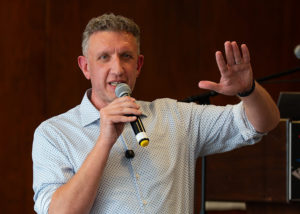
Chuck is a US-based internal communications strategist and the founder of ICology – a community and resource hub for IC professionals. He brings a practitioner lens to every conversation. Chuck is a recognised voice in the industry, a regular speaker and event host, and one of the most connected people in the North American IC world.
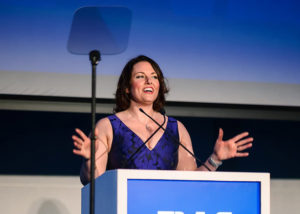
Jenni is a UK-based leadership and internal communications consultant, author of two best-selling books, and international speaker. She runs Redefining Communications, a consultancy working with organisations around the world to help them communicate better and close the gap between what leaders say and what employees experience.