
Gartner predicts that half of all AI-driven workforce cuts will be reversed by 2027, and the reason is a distinction most executives skipped: companies replaced roles that required judgment and got information retrieval instead. Chuck’s answer to whether 2027 is realistic is that it will take longer, because leaders do not want to be proven wrong. Jenni adds the sunk cost trap and a communications point that outlasts the story — the organizations that never promised AI would replace everyone are the ones that can change course quietly. From there: Harvard Business Review research on the office condition that actually improves teamwork, an internal comms piece circulating on LinkedIn that argues most leaders find the function useful rather than important, and Germany scrapping self-certified sick leave.
Research firm Gartner predicts that half of all AI workforce cuts will reverse by 2027, and Forrester’s 2026 predictions report supplies the underlying cause: 55% of employers who restructured for AI now regret the decision. The mistake is specific. Companies replaced roles that required human judgment and received information retrieval instead, and the research on how AI is actually used inside organizations keeps landing on the same condition — a human has to stay in the loop wherever real trade-offs are being weighed. Klarna is the case everyone cites. In 2024 the Swedish fintech claimed its AI chatbot did the equivalent work of 700 customer service agents and projected tens of millions in savings; by May 2025 it acknowledged that while automation handles the high-volume simple queries, it still needed human agents for fraud disputes, complex billing and emotionally charged situations, and began directly hiring a small number of high-skilled people back. Jenni’s framing is that AI has read everything and lived nothing: reading about surgery a thousand times is not the same as having performed it a thousand times, and organizations are confusing knowledge with judgment. Chuck’s answer to whether the reversal really happens by 2027 is that it will take longer, because leaders do not want to be proven wrong — some will admit the overcorrection, others will dig in and keep proving the cut was right. His analogy is the microwave: nobody knew what it was for until they tried, learned it melts butter and does not make a steak, and the same learning curve is running now. The path not taken, he argues, was obvious — deploy the chatbot and keep the agents for the high-touch work. Jenni names the sunk cost fallacy and then turns it into a comms problem: the narrative an organization sets now decides how much room it has to change its mind, and a very firm stake in the ground looks misguided this early. Chuck’s contrarian addition is that agents actually need the easy tickets, because a day of nothing but critical cases leaves no room to breathe.
A Harvard Business Review study of more than 6,000 knowledge workers finds that the most effective teams are defined less by office perks or work arrangements than by their ability to protect focused work — deliberately reducing interruptions through focus blocks, meeting-free periods and systems that limit constant messaging and check-ins. The point is that collaboration depends on people having the conditions to think deeply and solve problems independently before they bring anything back to the group. Chuck’s first reaction is that he is not sure the culture can be shifted at all, and that if there is a starting point it is to stop celebrating busy — the circular logic where meetings prove importance and importance justifies meetings, while nobody actually wants to be in any of them. He puts the responsibility on managers to be part of the solution rather than the thing filling everyone’s calendar, and he has watched companies mandate agendas and objectives before booking a meeting, only for the discipline to last about a week because nobody was checking. His half-joking fix is the same one from a few episodes back: let AI refuse the booking when the focus blocks are gone. Jenni’s version is friction by design. She checks event invitations with her assistant, who told her not to go to a recent one because she would regret it later in the week, and that external check is what makes the no stick. Her deeper point is that people have lost the sense that they are allowed to protect their own time — when she worked in-house, Fridays were for catching up and never had meetings on them — and what may need to come from the top is not a policy but permission to say no. Chuck agrees this is one of the rare cases where the answer is no rather than yes, since bouncing between meetings simply pushes the real work into early mornings and late nights. Jenni’s practical substitution comes from Tony Crabbe’s book Busy: instead of “sorry, I’ve been really busy,” say “I’m sorry I haven’t done that, I had to prioritize other things” — uncomfortable, but true.
The third piece reached the show because Jason Anthoine shared Cameron Wood’s article on LinkedIn, an honest account of why internal communications keeps having the same conversations over and over. Two lines stuck. The first: as practitioners gain experience and situational confidence, they know that opening is not reading, reading is not understanding, understanding is not believing, and believing is not changing behavior — four different outcomes, and blending the first with the last is how comms teams have been misleading themselves and their organizations for years. The second, the one Jenni has been carrying for weeks: most leaders do not think the function is important, they think it is useful, and there is a difference. Chuck’s contribution is to read the chain backwards. Start from changed behavior and work back through belief, understanding and reading to the output, which puts the outcome first without pretending communicators do not still have to make things. On the second quote he pushes back — he is not willing to grant that most leaders think the function unimportant, since plenty have said the opposite, though whether their behavior backs the words is a separate question. Jenni answers with data. Research she ran around 2017 with the Chartered Institute of Public Relations internal comms group asked CEOs to rank internal communication on a scale of one to ten, and it came out around six: some think it important and useful, others say the business could survive without it, messier but functioning. It was never going to hit ten, because it is not a business-critical function. She also points to VMA Group figures in the UK showing the CEO-perceived value of internal communications falling back after the pandemic — useful in the moment it was needed, then put down again. Her recommendation is to read the piece if the recurring debates in the profession are wearing you out.
Germany’s coalition government has tightened its sick leave rules, requiring a medical certificate from the very first day of illness where self-certification previously covered the first four days, and scrapping the pandemic-era option of being signed off by phone, so an in-person GP visit is now required. Chancellor Merz defends it as necessary to cut the economic cost of absenteeism; critics including doctors’ groups and some coalition partners warn it will flood surgeries with minor cases and push unwell people into work. Chuck’s read is that the whole thing feels cruel and unnecessary, and that it is unclear the problem being solved is real — his guess at a rationale is the paper trail a heavily unionized system might want, but the obvious cost is the opposite of absenteeism. Presenteeism is the problem: people coming to work ill, bringing what they have with them, or working badly through an ailment because a day off now requires a doctor’s appointment and a letter. Jenni reads it from the UK, where she expects the government to watch closely because sick leave is a genuine issue, and she is careful about the distinction between people who cannot work and people who would rather not, which connects back to disengagement. Her objection is logistical and immediate: if she gets tonsillitis on a Saturday she cannot see a doctor until Monday, but under these rules Monday is exactly when she is not allowed to phone in — alongside everyone else in the country trying to get an appointment. Both hosts land on trust as the real subject. Chuck’s sharpest line pairs it with return-to-office mandates: this is command and control saying we do not believe you, prove it, five or six years after a pandemic that should have settled the argument about people working while ill.
Why does Gartner predict half of AI workforce cuts will be reversed by 2027? Because the cuts hit the wrong roles. Organizations replaced jobs that required human judgment and got information retrieval instead. Forrester’s 2026 predictions report found 55% of employers who restructured for AI now regret the decision, and research on real-world AI use keeps showing that a human has to stay in the loop wherever genuine trade-offs are being weighed.
What happened with Klarna’s AI customer service? In 2024 Klarna claimed its AI chatbot did the equivalent work of 700 customer service agents and projected tens of millions in savings. By May 2025 the company acknowledged that while automation handles high-volume simple queries, it still needed human agents for fraud disputes, complex billing and emotionally charged cases, and began directly hiring a small number of high-skilled people into the process.
Will companies admit they reversed their AI job cuts? Chuck’s expectation is no, or at least not loudly. He thinks it takes longer than 2027 because leaders do not want to be proven wrong, and that the reversals will happen quietly. Jenni adds the sunk cost fallacy and a communications point: an organization that publicly promised AI would let it cut everyone has left itself no graceful way back.
What actually makes a team perform better in the office? Protected focus, not perks. Harvard Business Review’s study of more than 6,000 knowledge workers found the strongest teams deliberately reduce interruptions using focus blocks, meeting-free periods and systems that limit constant messaging. Collaboration improves when people have the conditions to think deeply first.
How do you actually protect focus time at work? Both hosts land on saying no, and on building friction that makes it stick — an assistant, a rule, a blocked calendar. Chuck puts the responsibility on managers to stop filling their team’s calendars and on organizations to stop treating busy as a badge of honor. Jenni’s swap, from Tony Crabbe’s book Busy, is to replace “I’ve been really busy” with “I had to prioritize other things.”
Do leaders think internal communications is important? The article Jenni brings argues they think it is useful, which is not the same thing. Her own research with the Chartered Institute of Public Relations around 2017 had CEOs ranking internal communication about six out of ten, and VMA Group data showed the perceived value falling back after the pandemic. Chuck is less willing to accept the claim, noting that plenty of leaders say it matters even if their behavior does not always follow.
What has Germany changed about sick leave? Employees now need a medical certificate from the first day of illness, where self-certification previously covered the first four days, and the pandemic-era option of being signed off over the phone has been scrapped, so an in-person GP visit is required. Chancellor Merz frames it as cutting the economic cost of absenteeism; doctors’ groups and some coalition partners warn it will flood surgeries and push unwell people into work.
Is requiring a sick note from day one likely to work? Chuck expects it to fail, and reads it as the same command-and-control instinct behind rigid return-to-office mandates — telling people you do not believe them. His counter-cost is presenteeism, people coming to work ill because a day off now requires an appointment. Jenni’s practical objection is that falling ill on a weekend makes compliance close to impossible.
Chuck: Welcome to Frequency. I’m Chuck Gose.
Jenni: And I’m Jenni Field. Frequency is your go-to for real talk about comms, culture and employee experience, beyond the buzzwords and straight to what matters. And this week, we’re discussing whether half the AI workforce cuts will reverse by 2027, the office amenity that actually improves teamwork, why internal comms gets stuck in the same debates, and Germany are making some big changes to sick leave.
Chuck: Before we get into that, Jenni, we have not done a full birthday review for you. You sent me a video, I saw some little images on Instagram. How was the birthday extravaganza?
Jenni: It was good, it was good. I managed to do my champagne pop Instagram trend, which was good — not with champagne, because I didn’t want to waste that, but with another sparkling wine. But it was good fun. I had a barbecue with all my friends and family. I’ve had some dinners and brunches. In fact, I’ve got a dinner to come with some other friends. So it’s good. It always lasts about a week and then it starts to peter out. But I firmly believe that birthdays should be about a week long in our house.
Chuck: And I know that during part of that time one of the England World Cup games was going on. And then there was the third place game, which is very un-American but very fitting for soccer. How do people feel — was it a success for England? How do people feel about it?
Jenni: No, I don’t think so. The England game was on the Saturday of my barbecue, where we had been drinking quite a lot of the day. So we came in to watch it and I promptly fell asleep after about five minutes, so I didn’t watch that one. But I don’t know anyone that watched the third place game, because to me I’m with you — like, what? But I did read something that was like, it’s England’s best performance in the World Cup since 1966, and I said that to someone and they were like, go away. Because it just doesn’t mean anything. I think everyone is disappointed at the strategy and the decisions that were made in the game, to go very defensive. But I also think everybody thinks Argentina were quite rough. And actually I was watching the rugby as well and they were quite rough on that as well. So I think it was a strategic decision that didn’t pay off. And I think a lot of people might word that differently, but that’s how we feel in our household.
Chuck: Well, you do know someone who watched the third place game, Jenni, because I watched it. I happened to be sitting at a bar when it was on, and for someone who’s not a soccer fan, it was an enjoyable, fun match to watch — seeing England, and Mbappé and France.
Jenni: And what did you think? Yeah, but it was an entirely different team in that game to the rest of it, so — meh. What did you think of the halftime show?
Chuck: I did watch it. Well, that was probably our influence in it, so you’re welcome, if that’s what we brought to it. This is what the halftime show felt like to me. Let’s have eight different people go out and each of you find one person to do the halftime show, and then just bring them back and we’re just going to go one through eight. There was no — you went from Madonna to the Muppets to Justin Bieber. I was just like, what are we doing here? I don’t know. It was enjoyable, it was fun to watch. Also, people pointed out, I think Shakira’s a bit like Pharrell in that they have not aged at all. Like, at all. They were showing Shakira in previous World Cups, and whatever she’s doing is working. But the halftime show — Ted Lasso was in it. And I thought Chris Martin from Coldplay, and my wife said Coldplay wasn’t even there.
Jenni: Yeah, I think he was in it. Odd. Okay.
Chuck: Yeah, it was just very bizarre. Very bizarre.
Jenni: Good. Well, talking of bizarre, let’s go into our first AI story this week. So research firm Gartner have predicted that half of all AI workforce cuts will reverse by 2027. The reason tells you everything about what AI still can’t do, and what the talent is that is needed now in organisations. I saw this on an Instagram post from Inc. And it explains that Forrester’s predictions 2026 report had already documented the underlying cause: 55% of employees who restructured for AI now regret that decision. And the pattern seems to point to a specific mistake. The question of when to trust data versus judgment matters more than most executives seem to acknowledge. So the companies reversing course replaced jobs with AI that required human judgment, and got information retrieval instead. Research into how AI is actually being used inside organisations shows that humans need to be in the loop when real judgment of trade-offs is required.
Jenni: Everything references this Swedish fintech company Klarna. In 2024, it claimed its AI chatbot did the equivalent work of 700 customer service agents and projected tens of millions in savings. By May 2025, they publicly acknowledged that while automation takes on more of the high-volume, simpler queries, they still needed human agents equipped for complex, sensitive cases like fraud disputes, complex billing issues and emotionally charged customer situations — a different profile than traditional outsourced support. So they began directly hiring a small number of high-skilled humans into the customer service process, to identify where the human touch brings the most value to customers.
Jenni: So AI has read everything, but it hasn’t lived everything. And there’s this profound difference between reading about something and not doing it. You can read about surgery a thousand times, but that’s different to having done surgery a thousand times. Same for customer service. One produces knowledge, one requires judgment, and organisations are confusing the two. So the judgment behind a complex customer decision, a high-stakes negotiation or a leadership call in the middle of a crisis comes from having navigated those situations before under real consequences as a human. And that lives in the kind of intelligence that only experience can build. So what do you think of the statistic, around the fact that half of these workforce cuts that we’ve been talking about over the course of the year or so will be reversed by 2027? Do you think it will actually take that long?
Chuck: I think it will take longer. And here’s why. Because leaders do not want to be proven wrong. They’re the ones that made these cuts. They’re the ones that made these promises. And so I’m worried that even with this data, the smart, the intelligent leaders will say, hey, we were wrong, we reacted, we can now fix it and go the right course. Some will do that. I think for others it’s going to take longer, because they’re going to dig in. They’re going to be bound and determined to prove that it was right to cut this percentage of this team over here, because we’ve got an AI chatbot that can do the work of 700 agents and project tens of millions in savings, as Klarna pointed out. But it takes a bigger leader to point out, yes, it might have done some of those things, but it didn’t do all the things that we need.
Chuck: And it’s the best analogy yet — I can’t remember if I’ve talked about this on the podcast or not — of people talking about AI, that it’s the microwave. When the microwave came out, people really didn’t know quite how to use it and what to use it for. And the only way to learn was by doing it. So we learned very quickly you can heat up things, you can melt butter. Yes, some people like heating up pizza in the microwave, other people do not like heating up pizza in the microwave. You would never make a steak in the microwave, but you sort of had to try it to learn it. And so now this is where we are learning what it’s good for and what it’s not good for. For those easier, repeatable tasks, great. For those things that require the human touch, that’s exactly why you have people at the company. That’s why you should not have let them go in the first place. The best of both worlds would have been to say, hey, we’re going to deploy this AI chatbot and keep our agents to focus on the high-touch stuff. But no, they think they’re going to be smarter than everybody else and make these cuts, and then now end up regretting it, whether or not they actually do admit that.
Jenni: Two things coming to my mind then. The first was the sunk cost fallacy of, as you were saying, we’ve already done this, so we’re going to double down on it rather than changing your mind. But I also wonder whether this is also in the narrative. We spoke about this a few episodes ago in terms of the narrative organisations are using around it. And actually, if you don’t go out there and say, we’re going to save all these jobs because of AI — if that isn’t your story, and it shouldn’t be your story, but if you don’t use that, then you’re probably in a much better position. Whereas I think if you come out and say, we can get rid of everybody because of AI, then that’s much harder to come back from, because to your point, you’ve got to say, actually we were wrong and we can’t. So I think you’ve got to think about your story and how you’re messaging and packaging any changes around AI, so that you are giving yourself that room to learn and play with it and then make any big decisions once you’ve got a bit further along. I think putting that very firm stake in the ground just feels misguided, really, at this stage.
Chuck: Yeah, I think if they’d come out and said — let’s use Klarna, for example, I don’t know what the logic they used was, but let’s say they’d come out and said, hey, we’re going to use AI to increase our customer satisfaction scores by giving some of those repeatable tasks to the AI agent, the chatbot, and the higher-touch stuff to our customer service agents. Use their time as valuable. But I’ve also heard a flip side of this. I’m trying to remember who I was talking to about this. With customer support agents, when you call in — they sometimes need those easy ones, because if all they’re doing all day is managing the high-touch, really difficult things, they never get the mental break of it. If everything you’re doing is the really critical stuff, where’s the chance for you to take a breather? So it goes a bit both ways, but it all comes down to the logic. Everybody thought AI was going to save all this money. And whether it’s not, because you’re not going to get results, or just the cost of AI is now more than people themselves.
Jenni: Yeah, we talked about it on an episode actually, that whole thing about what it does to your brain in terms of making you do all this kind of intense stuff, because you’re not getting that break. So there’s just so much more to learn, isn’t there? And I think it’ll be interesting to see whether that’s 2027 or, to your point, whether it’s going to go on even longer because people won’t admit that they’re wrong.
Chuck: Or they’ll be very quiet about it. Very quiet about it.
Jenni: Yeah, that’s what it’ll be. It’ll be that. So let’s move on to a Harvard Business Review story, which is about the office amenity that actually improves teamwork. This was research on more than 6,000 knowledge workers, and it suggests that the most effective teams are defined less by office perks or work arrangements than by their ability to protect focused work. High-performing teams deliberately reduce interruptions through focus blocks, meeting-free periods and systems that minimise constant messaging and check-ins. It sounds heavenly. So rather than emphasising constant interaction, the best workplaces recognise that collaboration depends on giving people the time and conditions to think deeply, solve problems independently, and contribute better ideas to the group. I don’t feel like this is a huge surprise, but Chuck, we so often hear people talking about the fact they’re in back-to-back meetings, they’ve got no time, everyone’s pinging them on Teams. So how do we even start to shift working culture to create this space?
Chuck: I don’t know that we can. This is the hard part. I guess if you were to start, it’s that we have to stop celebrating busy. We have to stop using that as this badge of honor of, I’m important, therefore I have a lot of meetings, and I have a lot of meetings, therefore I am important. Yet nobody wants to be in those meetings. I think this ultimately comes down to the manager, and we’ve talked ad nauseam about the critical nature that a manager plays in actually helping their team manage the schedule. Be part of the solution as a manager, not the problem. Don’t be the one that’s always putting things on people’s calendars.
Chuck: I’ve worked at companies where they’ve tried to say, hey, in order to set up a meeting, you’ve got to fill out all this criteria so people know the agenda and the purpose. I forget what the acronym is — the objectives, the agenda, all that. Well, people did it for like a week and then it just stops, because you just want to get something on somebody’s calendar and carry on, and nobody’s really checking on you on those things. We know that this is important, but we don’t make it important. So I don’t know if this has got to be truly a thing from the top. Maybe this is where AI can come in and be like, sorry, you actually can’t book any more meetings this week. You’re already past your — you don’t have enough focus blocks on your schedule. So sorry, cancel something else. You’ve got to clear it out.
Jenni: Yeah. I think you have to have that buffer, or those rules, or those things in place that either you have to own and control as an individual, or you have to put things around you to do it. I was talking to someone just this week about whether or not I was going to an event, and I was like, I’m not going, because I’ve got other things on later in the week and it would just be too much. And they replied and said, that sounds very sensible, I think I would be trying to cram it all in. And I said, well, the only reason I’m not is because I messaged my assistant and said, can I go to this? And they said no, because you’ll regret it when you get to it, because you’ve got so much to do afterwards that this is the wrong decision to make. And I think that helps me. Obviously I have a real person doing that, but I think we have to have some sort of friction in place to help with that.
Jenni: But I was also talking the other day about our inability to say no to things. My meeting structure when I worked inside organisations was, I was in the office when I needed to be in the office, I was in different offices when I needed to be in different offices. But Fridays I was nearly always at home, and I never had meetings at home — because back then we didn’t have Zoom and Teams calls and stuff like that. We had them, but we didn’t use them like they are being used today. But I never had them, because Fridays was my day to catch up, do the work, have that space to think. And it’s like we don’t feel able to protect our own time anymore. So that’s what I wonder, to your point — is it that it needs to come from the top, and be permissioned to say no? Maybe that needs to be granted, in terms of, you control your diary. If you don’t want to do that because you’ve got something else to do, it’s okay to say no. And maybe that’s all people need to hear.
Chuck: Yeah, you actually stole my next idea. A couple of episodes ago, or maybe the most recent one, I talked about the power of saying yes. This is one of those times — one of those few times where you need to start saying no to things if you want to develop these focus blocks and do your best work. You cannot do that if you bounce from meeting to meeting to meeting. You end up scraping time at the beginning of the morning or working late at night, which again are choices you can make. But if you don’t like those choices, you have to start saying no to things that just aren’t valuable and good uses of your time.
Jenni: Yeah, and for me it’s just been a habit I’ve practised over the years. If you haven’t done it before, nothing bad will happen. What’s the worst thing that could happen? You’re not going to get fired for saying no, you can’t come to a meeting. So I think you’ve got to work through a bit of that and then take the leap and do it, and then see what happens, and then you’ll do it again, and then it becomes so much easier to do.
Chuck: But if you’re busy, quote-unquote, and you’re not doing your best work, then how can you do your best work by not being so damn busy all the time? So stop using that as a badge of honor.
Jenni: Yeah, and also stop using it as an excuse. When I read the book Busy by Tony Crabbe, I stopped using the excuse of, sorry, I’ve just been really busy. And instead, I’m sorry I haven’t done that, I had to prioritise other things. And that is such a good mental shift, because it suddenly makes you feel either mildly uncomfortable in terms of what you’re prioritising, but it also is true. That is why something hasn’t happened. There’s a reason, and it’s prioritisation. And I think learning that is a big skill.
Chuck: Well, people have said, I haven’t had the time. No, you haven’t prioritized it. You haven’t made the time. You’ve spent your time doing other things.
Jenni: Yeah, and that’s fine. But own it, right? Right, the next piece is actually thanks to our friend Jason Anthoine for sharing this article from Cameron Wood on LinkedIn. So Jason shared this article and it’s all about internal comms, and it’s Cameron’s honest take on why we keep having the same conversations again and again. I don’t think I’d have seen it if Jason hadn’t shared it, and I really enjoyed it. It’s one of very few articles that I have read all the way through on LinkedIn.
Jenni: There are two quotes in it that I just wanted to share. The first one, from Cameron’s article, says: as we gain experience and situational confidence, we know opening is not reading. Reading is not understanding. Understanding is not believing. Believing is not changing behaviour. Those are four different outcomes, and blending the first with the last is how comms teams have been misleading themselves and their organisations for years. Loved that. The second quote I liked was: if you work in internal communications you already know this part, but we’re going to put it here because it matters — most leaders do not think our function is important. They think it’s useful, and there is a difference. Loved it. That last point has stayed with me for weeks. Chuck, what did you think?
Chuck: Yeah, I like the quote that you pulled out, where reading is not understanding, understanding is not believing, believing is not changing behavior. That is accurate. But I think if you read it backwards, that’s when you get the point. Changing behavior — you know then that people believe. And if they believe, then they understand. And if they understand, then they probably read something. And if they’ve read it, then they’ve opened it. So are we starting with the wrong point? Do we need to start with the end game and go backward on it? I think thinking about the outcomes, that’s what we want people to focus on. If changing behavior is that, let’s start working backwards. Then yes, you need outputs. We are communicators, you do need to create communication and content and all of those things. I like that part.
Chuck: The saying that most leaders do not think our function is important — I don’t know that. I don’t know that most leaders think that. I guess I don’t know, because we’ve shared some things where leaders have said this is important. Now, does their behavior back what they say? That’s a different thing. So I don’t know necessarily that most leaders think it’s unimportant. I’m not going to add any validity to that part.
Jenni: Okay, so I can add a little bit to that, just on some research I did quite a few years ago now. I think it was 2017, so it is quite a long time ago. But we did some research when I was part of the Chartered Institute of Public Relations internal comms group, and we went and interviewed CEOs about internal communication, and we asked them to rank it in terms of importance on a scale of one to ten. And it came out across that sample at around about a six out of ten. And that’s because you’ve got some leaders who do think it’s important and useful, and you’ve got others who say, we can survive without it. It will get messy and it might not be as great, but we can exist without it. So it’s never going to be a ten. It’s never going to hit that, because it’s not a business-critical function. So I thought that was quite interesting at the time, and I remember having lots of conversations about what is it you want internal comms to do, and all that kind of stuff.
Jenni: And if we look at data from during the pandemic to after the pandemic — I think it was VMA Group in the UK had the statistics that showed that the value of internal communications from a CEO’s perspective had gone down. So again, it was useful during that time, but it’s not important enough for us to keep investing in it, or to grow it. So it’s useful in the moment that I need it, but then I’m going to put it down. And I think that does track with some data points that we’ve had over the last kind of ten years. But it was just a very thought-provoking piece, and I think if you’re frustrated at the conversations that we have continuously in internal comms, then I would give it a read, because I think it shines a light on the challenges that we have in internal communications and how we try and package everything up in a way that I don’t think is helpful. But I love your take on reading that paragraph backwards and working through that, and reinforcing the fact that we do have to have outputs — we are a function that is creating content, and that is part of what we do.
Jenni: Right, I want to finish today on an article from Germany. I saw this on Instagram and then went off and found the actual press release about it. It’s linked to Germany’s story that the coalition government there has announced that it’s tightening sick leave rules, effective immediately, pretty much. So employees will now need a medical certificate from the very first day of illness. This was previously self-certification, which was allowed for the first four days. And this pandemic-era option of getting signed off over the phone is being scrapped entirely, which means that people have to go and have an in-person GP visit — they will be required to go and see the doctor. The Chancellor is defending it as necessary to cut the economic cost of absenteeism. But critics, including doctors’ groups and some coalition partners, warn that it’s going to just flood doctors’ surgeries with minor cases and could pressure unwell employees to just show up to work anyway.
Jenni: I think this is a really interesting shift in terms of what countries are starting to do to address absenteeism, and I don’t know if it’s as much of an issue in the US. But from your perspective in the US, where sick leave policy has lots of variations in different states and things — there’s something here as well about the trust. So what does it say about trust when a government’s answer to rising sick days is kind of prove it, rather than let’s understand why people are off? Have we just run its course on the trust piece, and now it’s just so broken that governments have to intervene?
Chuck: Yeah, everything about this just feels cruel and unnecessary. Are we trying to solve a problem that doesn’t really exist? Is absenteeism such a problem in Germany that they’re having to do this? In the US, sick leave is challenging, but it’s also kind of loosey-goosey, might be the right word here. It’s going to kind of depend on the company, and are you union or not. And maybe this is where this is coming in, because obviously Germany is predominantly union. So maybe they then need the paper trail, they need the track record to say, well, this person was really sick, this person was maybe not as sick. I love the medical side of this, the point of view of, well, now people are just going to go to the doctor, even if maybe they just have a cold or they just can’t go into work that day. Because the opposite of absenteeism is presenteeism, which is a problem — people come to work when they shouldn’t come to work. So what’s the cost of that? What’s the cost of now people coming to work bringing illnesses with them? Or perhaps some kind of other physical ailment where they just can’t do their job as well, but they just need a day. Is it worth that day having to go to a doctor to get a note and a letter to send? Again, I don’t know that this is a big problem that we’re trying to solve, and adding all these layers to it just seems unnecessary.
Jenni: It’s interesting, because when I read this from a UK perspective, I thought, our government is going to watch this and see what happens, because we do have quite a big problem with sick leave over here. And I think it’s across Europe, and it might be across the whole world. And I know, through talking to clients when I’m doing coaching stuff with internal comms directors or heads of internal comms, about the challenges they have with their teams who are just, you know, if I’m not coming in today, it’s just, I don’t want to. And I think that challenge is real, in terms of making sure people are really — this is really tricky to word — are really sick enough not to work. And I think that is what is frustrating the government in terms of the economic impact. Are people just going, I just can’t be bothered and I don’t want to, which links to the disengagement scores and some of that stuff? Or are people genuinely sick and not coming to work?
Jenni: And I think, to your point, you’ve got to get into the root cause of this before you put some rules in place. Because my husband and I were talking about this when we heard it, and we were going, how’s this going to work? What if I got tonsillitis, which I often have? What if I got tonsillitis on a Saturday, right? And then I can’t see the doctor until Monday, but I’m now not allowed to phone in sick on Monday because I’ve got to get to the doctor’s — but I can’t get to the doctor’s until Monday, with the rest of the country trying to ring in to get an appointment. So what do you do there? It just feels like it’s logistically very, very challenging, and it feels like it’s trying to do something to address a situation that’s probably not the masses. But I can also see the economic need to look at sickness and how it’s being managed. I think people will watch this to see what happens, like they did in Australia with the social media ban for under-16s and stuff.
Chuck: Yeah, I agree with you. Other countries will be paying attention to it. I think it’s going to fail, is my expectation. When you think about if other countries try to implement this — let’s say it is the US, and this works with an RTO policy where you’re then expected to be in five days a week, where before, having flexibility, you could — I mean, people did that. It wouldn’t be the greatest, but they’d go, I can work from home, maybe I’ve got a cold, maybe whatever is going on, but I can still dial in or listen in. I’m not saying that’s the best thing to do from a health perspective, but at least people could probably get some work done. So this runs counter, or maybe actually runs perfectly, with the RTO policies where it’s this command and control to say we don’t trust you. You say you’re sick, prove it. That again just feels very cruel and unnecessary at this point in time. Did we not forget what we all went through five or six years ago with a global pandemic, where people died? And imagine if something like that were to happen again. This is unmanageable at that point in time.
Jenni: Yeah. Well, I think it’s going to be really interesting to watch and see what happens, and to see the long-term effects — not just the spike that’s then going to be people going to work who are not very well, which should never happen. But I just think it’s going to be really interesting to watch. And I think the trust relationship is something I hadn’t really considered until I was thinking about a question for you, and thought, actually there is a trust thing. There’s lots of stuff in here. And I just think it’s going to be an interesting one to watch for all of the countries, to see what happens.
Chuck: Yeah, it’s this prove-it part to me. Why? What’s going on so wrong there that you’ve got to prove that somebody was sick? And are the doctors just going to be like, man, just fine, here’s your note, just go? Is there going to be a template you just use and write it through? I just don’t know what this solves, I guess.
Jenni: Yeah, just a stamp. Just going to stamp stuff and just move along. It’s fine. So what are you freq-ing out about this week?
Chuck: Speaking of health, Jenni, I have a great appreciation for anyone who deals with chronic pain. I am not putting myself in that boat yet. But maybe this is an age thing or whatever — I’ve never in my life had a bad back. Yes, there have been times where you pull a muscle or you have a little spasm or whatever and you move on. But man, for the last week, it has just not been good. I don’t have to tell people I have a bad back, but I do this week. And just the mental distraction, the management, the not sleeping well. And there again, I think about this — great segue from what Germany’s trying to do. Obviously I work for myself, so I’m not going to write myself a note for it, but that’s a lot for people to manage. And it’s a reminder to me that, one, maintain your health as best you can. Two, if something goes wrong, try to remedy it as best you can. I probably haven’t done that like I should have for this. But just more a reminder of the mental load for any employee that you have out there that is dealing with pain — chronic pain, mental pain, whatever it is. Man, it’s a lot. It is a lot.
Jenni: That’s a lot. I’m going to check in — we’re going to have to talk about this next week and see how your back is. You’re going to have to come on and be like, I’m okay, it was only a week. Or you’re like, it’s still going, it’s no good. My freq-out this week is an event that I went to a while ago, which is called Future Voices, which is a boot camp for speakers to learn the speaking industry, to learn how it works. Because as we’ve talked about, we speak together, we both speak independently, and I’ve been on stages for years. I just had a really good day in London meeting lots of different speakers from all different parts of — there was some health, there were other leadership speakers in there, there was a woman who speaks on sustainability, there were lots of really interesting people in the room and I learnt a lot.
Jenni: And I’m not going to say I’m not often in a room where I learn a lot, because that sounds unkind. But I think when you go to a lot of comms conferences, things like that — it’s been a long time, probably since I first started working with Chris Ducker, a long time since I’ve been in a room and come out really buzzing like, I’ve learned some stuff, I know what I need to do, now I need to go and do it. Which was just really exciting, and kind of really filled my cup that day. And I think we underestimate that buzz of learning something and feeling excited about what you can do with it.
Chuck: Yeah, we talked several months ago about this convergence of you having this event this month and next month I’m going to be in Franklin, Tennessee for a couple of days with Jon Acuff to know more about the speaking business. And you’re right on a couple of things. One, it’s always great to simply attend. I think people like you and I feel like if you’re going somewhere, you need to speak and maximize that time. Well, no — there’s value in attending and listening and learning and soaking all of that in. And yeah, to your point, on some of the pre-calls we’ve had, to hear people talk — one person’s in the real estate world, another person was in financial management, and some of the things that they want to talk about. And obviously I’m sharing my ideas. So yeah, being in a room with a lot of different voices is always a valuable experience.
Jenni: Yeah, and there’s a vulnerability. There were options on the day to get up and share some of your — we were working on our positioning — that you could share that back. And so I was like, okay, I’ll go and do it. And I was the most nervous I’ve ever been, standing up in that room and doing it. And then later on there was an opportunity for you to come and do the opening of your keynote and get that critiqued. And the guy next to me was like, are you going to do it? I was like, absolutely not. I am not. I can do it, I know what it is, but that’s a vulnerability step too far for me today. I’m not doing that. But it was good.
Jenni: Well, thank you for joining us this week. We hope that the articles and insights will help you think about how to improve comms, leadership and culture in your organisation. If you don’t yet subscribe or follow, please do, as it helps make sure that you won’t miss an episode. All the links to all the articles we’ve mentioned today are in the show notes. You can grab those to read if you want to explore anything further. We’ll be back with you on Monday with more news, insights and opinions about everything comms and leadership in workplaces today. I appreciate you being here with us.
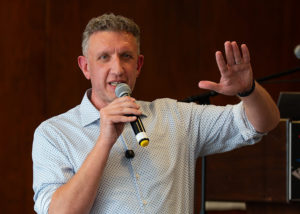
Chuck is a US-based internal communications strategist and the founder of ICology – a community and resource hub for IC professionals. He brings a practitioner lens to every conversation. Chuck is a recognised voice in the industry, a regular speaker and event host, and one of the most connected people in the North American IC world.

Jenni is a UK-based leadership and internal communications consultant, author of two best-selling books, and international speaker. She runs Redefining Communications, a consultancy working with organisations around the world to help them communicate better and close the gap between what leaders say and what employees experience.