
William Nieporte helped sign the email ordering Bramshill Investments staff back to the office five days a week, then carried on working from San Ramon, California, hundreds of miles from the nearest office. His two co-founders — high school classmates — fired him for it, and his defense is that the mandate was written for employees, not owners. He is now suing for $30 million, and Jenni’s read is that the credibility damage was done long before the lawsuit. Around it, Chuck brings four more: Marc Zao-Sanders’ third annual AI usage study and his new term for outsourced thinking, Gustavo Razzetti on why executive offsites fail, St. Louis Fed research complicating the story that AI is eating entry-level jobs, and a New York Fed study on remote work and loneliness that Nick Bloom is not having.
Marc Zao-Sanders is back with the third annual edition of his AI usage study, published in Harvard Business Review, and the subject has moved past adoption to what heavy use is doing to people. His coinage is think slop, the lazy, sloppy thinking that comes from handing cognition to the machine, alongside a parallel worry about leaning on it for emotional support. The scale is not in doubt — ChatGPT at 900 million weekly users, Gemini past 750 million, OpenAI valued at $852 billion — but the year-over-year shifts across nearly 13,000 real use cases from Reddit, LinkedIn, TikTok and YouTube are the interesting part. Therapy and emotional support is the number one use for the second year running and has doubled from 5% to 11% of all cases; technical troubleshooting is second; fun and nonsense has climbed from seventh to third, which delights Jenni. Two new entries crack the top ten, autonomous agentic operations at six and vibe coding, and shadow usage keeps surfacing, people running AI without telling their managers. On the business side Zao-Sanders calls the benefits marginal rather than game-changing three and a half years in, with the hard ROI narrow and specific — AI-personalized email campaigns lifting conversion 20 to 30%, but rarely. Jenni’s favorite line from the report is that AI is optimized to engage, effectively gaslighting users into thinking they are geniuses so they keep using it. Her own use has moved away from content generation toward thought partnering, analysis and summarizing recorded calls, always with permission; Chuck’s has gone the opposite way, from fun and nonsense to thought partner and back to administrative, because technical troubleshooting is where he gets real value — adding a credit card to QuickBooks in five steps instead of calling his accountant. Both note the same replacement: what used to be a Google search now happens inside Claude, wired via MCP into Granola’s meeting notes.
Gustavo Razzetti, author of Remote, Not Distant, has run more than 300 executive offsites, and his argument for why most of them fail starts with the biggest reason: treating bonding as the point. Teams leave the bowling night feeling closer and return to the same three voices dominating every meeting and the same avoided conversations, because feeling good is not the same as working better. His idea is conversational debt — the compounding cost of every real conversation a team keeps dodging — and a good offsite exists to pay it down, which means it should be uncomfortable by design. He also refuses to let leaders play by different rules: laptops away, speak last rather than first, accept public pushback from the facilitator, or he walks. The offsite itself is almost beside the point; what happens in the week afterward decides whether anything sticks, and Razzetti wants ownership split and follow-up folded into existing rhythms rather than bolted on as new meetings. Jenni knows his work well — he read and endorsed Nobody Believes You — and her answer to whether leaders can handle conflict is yes, in the room. She had just spoken to a leader back from three days of tears and upset who came out the other side, which she thinks is exactly what an offsite is for, and she tells leaders to make quarterly time for the gritty conversations a 90-minute operational call cannot hold. Where it breaks is afterward, when nobody facilitates the cohesion the room just disturbed. Chuck’s practical model is Festivus: open with the feats of strength, all the things the team is genuinely good at, move to the airing of grievances, and land on a Festivus miracle. His warning is that offsites usually get set up as either all training or all fun, when what employees often want is time in a room to solve a problem together. Jenni’s non-negotiable is a facilitator — she got accredited in it herself — because the job is to agitate as well as facilitate, and a team that runs its own away day is not working as a team.
William Nieporte co-ran Bramshill Investments, an $8 billion firm, with two high school classmates. In 2022 all three signed an email ordering staff back to the office five days a week. Nieporte was living in San Ramon, California, hundreds of miles from the nearest office, and did not comply. His partners fired him for it, and his defense now is that the mandate was for employees, not owners. He is suing HR provider ADP for at least $30 million and is in arbitration with his former partners. Chuck’s instruction is not to be distracted by the return-to-office angle, because the real story is the 12% equity: a company provision forces shareholders fired for cause to sell their stake, and Nieporte claims the whole sequence was engineered to push him out after a lowball buyout offer, with the office policy as the cleanest available lever. Jenni has no patience for the exemption itself — this is everything wrong with leadership, the idea that a rule is for all the lowly employees and not for someone too important to follow it. She will concede the odd carve-out, a CEO parking space for people who need to come and go, but a rule that exists for one group and not the other simply does not work. Her bigger question is why three co-founders never had the conversation about which office each of them was going to, when they would meet, how any of it would function — an absence that says something about how the firm was actually run, and makes it stranger still that this is only surfacing now. Chuck’s parallel is Starbucks, whose CEO ordered everyone back while based in California rather than Seattle, and his read is arrogance plus a failure to understand what arrogance costs. Jenni connects it back to the research they covered a few weeks ago showing executives using RTO mandates as a quiet way to shed headcount — except this time the person who left was an owner.
The dominant narrative says AI is eating entry-level jobs. New St. Louis Fed research says not really, or at least not mostly: looking at 18-to-24-year-olds from April 2023 to late 2025, a general shortage of job openings pushed their unemployment up 2.9 percentage points, while employers shifting toward AI-skilled workers accounted for 1.1. The villain is a hiring slowdown, and young workers are always hit first when hiring stalls. Teen summer jobs are projected at 790,000 this year, down from 801,000, after a year that was already the weakest for teen employment in the 77 years the Bureau of Labor Statistics has tracked it. Meanwhile 66% of Gen Z say they are teaching themselves skills online to stand out against 20% of boomers, which stops being a differentiator the moment everyone runs the same playbook. Jenni’s answer to why the AI story sticks is that it lets everyone avoid the actual causes: in the UK, retail and hospitality are where most people get a first job, and those sectors have been hit by changes to minimum wage, tax and business rates all at once. Naming that would force a policy conversation; naming AI does not. She also wonders whether companies prefer the AI framing because it justifies the cuts that fund the AI investment. Chuck agrees the appeal is that AI has no face to blame, and points to the conversation with his college-age son about marketing not disappearing but changing. The part he finds genuinely encouraging is the self-teaching, because people investing in themselves is a good sign regardless of the playbook. Jenni’s counter is the one worth keeping: learning AI will not teach anyone how to influence a stakeholder, persuade, or build a relationship quickly, and those skills are far less accessible to learn — especially for people who were at school during the pandemic or who are neurodivergent and want help. Chuck’s addition is that some of it can only be learned by doing the job, the old trap of needing experience to get a job and a job to get experience.
A new study from researchers at the New York Fed, the University of Virginia and Harvard drew on more than 588,000 workers and found that remote work accounts for roughly a third of the rise in mental distress between 2011 and 2024, hitting people who live alone hardest. Nearly nine in ten workers in remote-capable jobs spend their entire workday alone, and co-author Emma Harrington describes days passing with no face-to-face contact at all. Stanford’s Nick Bloom pushes back hard, since his randomized trials show remote work improving mental health: if people repeatedly choose something they love, how is it bad for them? His fix is choice, not mandates. Brian Elliott’s contribution is that most companies treat remote as a default rather than something designed around connection, so they cut gatherings and travel and nobody engineers moments that matter — while a single office day a month reportedly lifts productivity 8% and cuts attrition by a third. Jenni’s position is that the loneliest people are those living alone and working remotely, a compounding rather than a single cause, and that organizations have quietly stopped doing the connection work because they cannot measure the return on it. Her line is that it might just be nice to be human together without justifying it. She stops short of making loneliness the employer’s problem to solve, but insists it is the organization’s job to work out where work sits in someone’s life — and if a company knows an employee lives alone, encouraging them onto team days is the obvious move. Chuck’s contribution is a distinction: being alone and being lonely are not the same thing, and he takes a deliberately harder line on the male loneliness epidemic, arguing that for men using it as an excuse it is largely a choice, because joining a group, going to the gym or saying hello are all available. He recognized it in himself a month earlier, home alone with his wife and kids traveling, finding it oddly easy to stay in and disliking the feeling. Jenni closes on Mel Robbins’ chapter on adult friendship in The Let Them Theory — nobody is taught how to make friends as a grown-up, because school did it for you — and on the friend she met doing Tough Mudder, which took investment on both sides.
Why was the Bramshill co-founder fired over the return-to-office policy? William Nieporte signed the 2022 email ordering Bramshill Investments staff back to the office five days a week, alongside his two co-founders, then did not comply — he was living in San Ramon, California, hundreds of miles from the nearest office. His partners fired him for cause. His defense is that the mandate applied to employees, not owners.
What is the $30 million lawsuit actually about? Chuck’s argument is that the RTO angle is a distraction and the real story is the 12% equity stake. A company provision forces shareholders fired for cause to sell their stake, and Nieporte claims the firing was engineered to push him out after a lowball buyout offer. He is suing HR provider ADP for at least $30 million and is in arbitration with his former partners.
What is think slop? Marc Zao-Sanders’ term, from the third annual edition of his AI usage study in Harvard Business Review, for the lazy, sloppy thinking that comes from excessive reliance on AI. The related finding is that AI is optimized to keep people engaged, producing what one user in the study called gaslighting you into thinking you’re a genius so you’ll keep using it.
What is the most common way people use AI in 2026? Therapy and emotional support, for the second year running, and it doubled from 5% to 11% of the nearly 13,000 real use cases the study analyzed. Technical troubleshooting is second and fun and nonsense third, up from seventh. Autonomous agentic operations and vibe coding are new entries in the top ten.
What is conversational debt, and why do executive offsites fail? Gustavo Razzetti’s term for the compounding cost of every real conversation a team keeps avoiding. His argument is that most offsites fail because they treat bonding as the point, when the job is paying that debt down — which makes a good offsite uncomfortable by design. He also says the week after the offsite, not the offsite itself, decides whether anything sticks.
Is AI responsible for Gen Z’s job market? Mostly not, according to St. Louis Fed research. For 18-to-24-year-olds between April 2023 and late 2025, a general shortage of job openings accounted for 2.9 percentage points of rising unemployment while employers shifting toward AI-skilled workers accounted for 1.1. The bigger factor is a hiring slowdown, and young workers are hit first when hiring stalls.
Does remote work make people lonely? The New York Fed, University of Virginia and Harvard study of more than 588,000 workers attributes about a third of the rise in mental distress since 2011 to remote work, concentrated among people who live alone. Nick Bloom disputes the framing, since his randomized trials show remote work improving mental health, and argues the answer is choice rather than mandates. Jenni treats it as a design problem: organizations have stopped creating connection because they cannot measure its return.
Jenni: Welcome to Frequency. I’m Jenni Field.
Chuck: And I’m Chuck Gose. Frequency is your go-to for real talk about comms, culture and employee experience, beyond the buzzwords and straight to what matters. What matters this week, Jenni? We’re talking about how people are really using AI at home and work, why offsites fail, a co-founder fired for not following the rules, and how AI may not be to blame for Gen Z job challenges. And our friend Nick Bloom returns in another remote work conversation.
Jenni: I love it when you have five articles for us to discuss. Before we get into that, I wanted to let our listeners know that we are going to introduce a newsletter on LinkedIn called Frequency Check. So Chuck and I were chatting the other week around the fact that I do a sort of quarterly roundup for people that come to my workplace huddle, and we thought it would be a good way of being able to let you guys know what the quarterly trends are that we’ve been talking about. So that’ll be coming out. If you don’t subscribe to us on LinkedIn, make sure you do, and that’ll be coming out every quarter as a little update. We’ll put some links in the show notes to that.
Jenni: And the other thing I wanted to mention is some discount codes. So we are bringing Frequency Live to London in September with the Unite26 event with the folks at Unily. So if you want to come along to that, you can use the code FREQUENCY20 to get yourselves a discount. And Chuck, you have a little code for Flyover Festival as well.
Chuck: Well, we’re not doing Frequency Live at Flyover Festival, Jenni, because there are no lie-flat seats on the way to Sioux Falls, South Dakota. However, we are hosting Flyover Festival August 27th in Sioux Falls. We have around ten tickets left. There are only 45 seats in the whole room. So if you’re looking for a great event to really connect with the internal comms community, join us August 27th in Sioux Falls. That’s just one month prior to our trip over to London. My trip over to London — you already live there.
Jenni: I’m already here, yes.
Chuck: Yeah. Let’s get into our content this week, Jenni. Marc Zao-Sanders is back with his third annual edition of his AI usage study, and it’s not about adoption anymore. It’s what heavy use is doing to us. He has coined think slop for the growing worry that people are handing their thinking over to the machine, alongside a parallel concern that they’re leaning on it for emotional support. ChatGPT hit 900 million weekly users, Gemini passed 750 million, and OpenAI is valued at $852 billion. The tools are everywhere, as we all see.
Chuck: The year-over-year shifts, though, are the interesting part. This is drawn from nearly 13,000 real use cases across Reddit, LinkedIn, TikTok and YouTube. Therapy and emotional support is the number one use case for the second year running, and it doubled from 5% to 11% of all cases. Technical troubleshooting is second, with fun and nonsense being third. Two new entries cracked the top ten, autonomous agentic operations at number six, and vibe coding. And the study keeps surfacing quote-unquote shadow usage, where people are running AI without telling their managers. In the business world, Zao-Sanders says the activity is producing marginal rather than game-changing benefits so far. Three and a half years in, with vibe coding and agentic workflows and all the noise, the enterprise payoff is still incremental. Where there is hard ROI, it’s very specific. The study cites AI-personalised email campaigns lifting conversion 20 to 30%, but those cases are rare. Jenni, I’m curious, going through all that: how have you seen your use of AI change over the past few years, and what value are you getting from it?
Jenni: I will answer that, but I want to just make a shout out to the fun and nonsense coming in at number three. I think it’s come up from number seven in the chart and I just enjoyed the fun and nonsense. I was like, this is true. Also loving think slop — that’s going in our list of stuff. And there was something else in the report where they were saying that we’ve developed this false sense of intellectual rigour. So AI is optimised to engage and keep us engaged. So it’s kind of gaslighting you into thinking you’re a genius so you’ll just keep using it, which did make me smile.
Jenni: In terms of usage, I think I use it less for content creation now than I did a year ago, and more for thought partnering. So I definitely use it more for, I’ve got this idea, can you help me work it through and bounce that around. I haven’t used it for content generation for some time. In fact, I got it to draft some stuff for me just the other day and I was like, I’m just not sure. It kind of doesn’t feel right anymore. Whereas I did have loads of drafts — I’ve still got loads of drafted blogs through it that I need to read, I just don’t get to it because it’s a bit of noise. So for me it’s more analysis and thought partnering, whereas I think a year ago it was much more about content generation. That’s my shift. What about you?
Chuck: I was thinking about it. I started out in pure fun and nonsense. I remember the very early uses I had of ChatGPT. And I think that’s okay — if that’s the trivia, or you’re being creative, you’re experimenting with things, that’s awesome. I went from that to administrative, to a bit of the thought partner, but I’ve gone completely back to administrative. I have found that I get so frustrated when I’m trying to use it as a thought partner. We’re just on different wavelengths. What I’m trying to do, I can tell it is just not picking up what I’m putting down, basically.
Chuck: What I do think was interesting, where I get a ton of benefit from it, is that technical troubleshooting. It is amazing at that. The example of the other day — small business owner, you can appreciate, I have to run my own QuickBooks account. And I’ve in the past always struggled with how to add a new credit card to it so it would sync up and you could see what charges were coming in. I remember having to just go to my accountant to do it. Using Claude, it was like, here’s the five steps, just do this, then do this, then do this. So the technical troubleshooting is just massive. I would say that’s where before I would have Googled something to try to find those answers. Now it is in Claude. So that’s been that shift, and that replacement of searching to now doing it entirely within an AI platform.
Jenni: I think the other thing I use it for all the time is summarising calls. So I record a lot of my calls now so I don’t have to take notes, and then summarise it in Claude. I do ask people’s permission before I do that, certainly if it’s a coaching client or anything, but that just makes things a lot easier. Even new business calls and things like that, I’ll be using it to just record, then just get the summary to help me with creating documents and things. So yeah, it’s definitely become a lot less about creating stuff and more about helping me get through the day-to-day stuff that could have taken me a long time — get through it a bit quicker. So kind of optimising what I already do.
Chuck: Well, I’ve recently started using Granola for recording notes from calls. And then I linked up Claude to Granola’s MCP. So right after a call, I can go into Claude in that project and say, hey, I just had a call about this, bring in the notes from that. And then I know it’s all included in there.
Jenni: Yeah, I think when we did Comms Reboot in Toronto, I think it might have been Sharon or one of the other facilitators who was using Granola to record the session in the room. I need to check actually with all the facilitators what they were using. And I think I said to you, what did you use? And you were like, my brain. It’s like, okay, cool, thanks. I was kind of looking for some technology solution for other people who don’t have as good a brain as Chuck. So I need to check, but there were definitely people using more of that technology in that environment, which was really helpful for me from a reporting perspective, to give people that report an output from Comms Reboot. So I’m sure Granola was in there, and it keeps coming up on my Instagram adverts as well. And it will now even more so, because I’ve talked about it.
Chuck: Well, and I guess this is that reminder to people: yes, AI can be a bit of a superpower for you, but it can also shore up your weaknesses. And one of mine has always been note taking. I have historically been a horrible note taker, because I get lost in the conversation, I forget to scribble things down, and I have horrible penmanship. So even though I do scribble it down, I can sometimes not even read what I wrote myself. So the fact that now I don’t have that worry, and then I know that as I’m working on projects and have different calls on things, it’s all being brought into a broader project. It’s sort of what I think Notion has been for some people, but Notion was too white-spaced for me. I could not figure out how to use it. I think Claude with the MCP connectors into things is now what makes sense to me.
Chuck: We’ll move along to Gustavo Razzetti, author of one of my favorite books, Remote, Not Distant. He has run over 300 executive offsites, and his advice is clear. Most fail for the same seven reasons, and the biggest one is treating bonding as the point. Teams leave the bowling night feeling closer and go right back to the same three voices dominating every meeting, the same avoided conversations, the same friction people mistake for personality clashes. Feeling good is not the same as working better.
Chuck: Gustavo’s interesting idea here is quote-unquote conversational debt, the compounding cost of every real conversation a team keeps dodging. A good offsite exists to pay that debt down, which means it should be uncomfortable by design. Razzetti also refuses to let leaders play by different rules: laptops away, speak last, not first, and accept public pushback from the facilitator, or he leaves. And he’s clear that the offsite itself is almost beside the point. What happens in the week after decides whether anything sticks. For comms and EX people who often get roped into designing these things, either for others or their own team, the useful provocation is that follow-up gets dumped on HR or the leader, and then momentum dies. Razzetti wants ownership split and follow-up baked into existing rhythms, not bolted on as new meetings. Jenni, while conversational debt is very interesting and would be a good name for an interpretive dance group, I want to focus on offsites ending in conflict. Do you think leaders can even handle that?
Jenni: Yes and no. And I love the work of Gustavo — in fact, his book Remote, Not Distant is one I also love, and he read and endorsed Nobody Believes You for me as well, so we’ve had several conversations over the years. He has got a new book out as well, so it’s still on my list to get. But I think that they can handle it. Actually, I was talking to a leader the other day and they’d just come back from a team offsite where they said it was a really good three days. There were lots of tears, there were lots of upset, there was lots of this, but we’ve sort of come out the other side. And I thought, what a great offsite. Because you’ve actually dug into the really meaty stuff.
Jenni: Even though I always say to leaders, you have to make time quarterly to get together, it’s not about the team bonding. It’s about getting into the deep issues. It’s about having the time and space to have the gritty conversations that you don’t get in a 90-minute weekly call that’s very operationally focused. So I think leaders can handle it. Whether or not they are able to do the afterwards — Gustavo says it’s what happens in the weeks and days afterwards. I think they can handle it in the moment. Do they then do the work to make sure that the team cohesion is there afterwards, to follow through? I think that’s probably where it fails, because when you’re in the moment in the room it’s easier to deal with. When you’re back to the day-to-day, I don’t think you’re helping facilitate and manage that group cohesion that might be needed after a tricky offsite.
Chuck: I have not led 300 offsites the way Gustavo has, but here’s my recommendation. I treat these — retreats, offsites, onsites, whatever you want to call it — a bit like Festivus from Seinfeld, where you begin with the feats of strength. You begin by talking about all the things the team is good at. It’s a chance to compliment each other. Hey, we did this really well, we did this really well. Followed then by an airing of grievances, so you can then go into talking about the things that are challenges, things that didn’t work out well, and then ultimately coming into our Festivus miracle. I don’t think they think about it in this way, though. So they might be up for it, but I think sometimes they just think about these offsites as, it’s either we’re here to do a bunch of training and get work done, or no work, we’re all going to have fun. And that’s not often what employees want out of offsites. Oftentimes it’s the first time they’re in a room with another person that they want to just work through some stuff with, or solve a problem with. I think it’s setting the goals and understandings of what this offsite is going to be, and making sure that’s what your employees want out of the offsite.
Jenni: I also think there is something about the facilitation, and he’s right in terms of what he expects and what he contracts as the facilitator. I invested in my facilitation a few years ago and became accredited in it, because it comes up so much in our work and I wanted some skills and tips and tricks and ways to learn how to navigate that. I’ve still got stuff to learn and there are different levels I want to do. But I think having a good facilitator can’t be underestimated in those away days. I always say, I will agitate, because that’s part of my job and that’s why you hire me as a facilitator — to facilitate but also agitate. And I think that facilitation is so important. Whoever you get to do it, don’t not have one. That’s really bad English, but don’t try and think, we’ll just all go away as a group and it’ll all be fine. You need someone to facilitate that. It is a skill, and it is helpful, because you’re working as a team together with someone else doing that. Otherwise you’re not working as a team. Really important for executives.
Chuck: Moving along. William Nieporte co-ran Bramshill Investments, an $8 billion firm, with two high school classmates. In 2022, all three signed an email ordering staff back to the office five days a week. Nieporte was living in San Ramon, California, hundreds of miles from the nearest office, and didn’t comply. His partners fired him for it. His defense now: the mandate was for employees, not owners. He’s also suing HR provider ADP for at least $30 million and is in arbitration with his former partners. Do not be distracted by the RTO part of this. The real story is the 12% equity. A company provision forces shareholders fired for cause to sell their stake, and Nieporte claims the whole thing was engineered to push him out after a lowball buyout offer. The office policy may have been the cleanest available lever. He paid the price for the rules-for-thee-not-for-me approach. Jenni, when leaders set a policy that visibly exempts themselves from it, what does that actually cost in credibility, and can any amount of good comms survive this kind of contradiction?
Jenni: No. No, because this is everything that’s kind of wrong with leadership, which is, no, this wasn’t meant for me. This is meant for all you lowly employees. I’m far too important. It’s absolutely what organisations and leadership is not about in the modern workplace. You can’t have that’s the rule for you, that’s the rule for me. It doesn’t work, because why should it work? There are some things that I know people can feel quite strongly about — I know certain leadership teams feel quite strongly that the CEO should have their own parking space because they have to be able to come and go quite quickly, and I can kind of take or leave that. But you can’t have it’s that rule for you based on that one reason. It just doesn’t work.
Jenni: And also, I’ve got a bigger question about why wasn’t this discussed by the three co-founders? I would be asking, which office are you going to? Which office are you going to? Why did that conversation not happen, in terms of when will we have our meetings, how will we do this? None of that seemed to happen. And I think that says there’s a much bigger problem in terms of how they were operating from a management perspective — that they weren’t communicating about how they were going to do it, when they were going to have their meetings, or how they were going to change. But also, then, why is this only coming to light now? It feels really strange that it’s gone on for this long, and I find that a bit odd as well.
Chuck: Yeah, I think it’s just a great example of people feeling like they’re above the rules, or that the same rules do not apply to them. And they could have said, hey, employees get this, owners get this, and then that’s very clear. They didn’t do that. And whether his high school classmates wanted him out, they certainly found a way to make it happen. It would be interesting if they were like, hey, he doesn’t know that he’s going to be out of this because he’s not coming into the office, he’s not anywhere close to one. The same conversation happened with Starbucks, with their CEO, when they ordered everyone back in but he was in California, not in Seattle. It just shows some of the arrogance that some people have, and also not understanding the impact that arrogance has. I think he’s now feeling financially the impact that his arrogance has.
Jenni: And there are consequences to decisions, whether you like them or not. This is one of those. But it just reminded me of a conversation we had a few weeks ago about that report that showed that something like 18% or 22% of executives and HR professionals were using the RTO mandate as a quiet way to get rid of people. Do you remember that one? It was like, if we do the mandate, then people will go. It’s almost like this is exactly that — they’re just maybe quietly hoping that he’ll just leave. But he was fired.
Chuck: Well, I’m wondering, was this part of their whole plan too? Was this RTO going to help get rid of staff who don’t want to come into the office, and end up getting rid of one of their owners?
Chuck: Next up — last week we talked about generations, Jenni, but we’re going to talk about Gen Z today. The dominant narrative says AI is eating entry-level jobs. New St. Louis Fed research says not really, or at least not mostly. Looking at 18 to 24 year olds from April 2023 to late 2025, a general shortage of job openings pushed their unemployment up 2.9 percentage points. Employers shifting toward AI-skilled workers accounted for just 1.1% of that. The bigger villain is a hiring slowdown, and young workers always get hit first when hiring stalls. Teen summer jobs are projected at 790,000 this year, down from 801,000, and last year was already the weakest summer for teen employment in 77 years the Bureau of Labor Statistics has tracked it. Meanwhile, 66% of Gen Z say they’re teaching themselves skills online to stand out, versus 20% of boomers. The problem is that when everyone runs the same self-improvement playbook, it stops being that much of a differentiator.
Chuck: For anyone who owns early-career comms, onboarding, or their internal narrative around AI, this misattribution matters. If you tell young workers their struggle is an AI skills gap when it’s actually just a demand shortage, you send them chasing the wrong fix. This blame-AI stuff is the easy story for a bad youth job market. Why is that narrative so sticky, and who benefits from it being AI’s fault rather than a plain hiring slowdown? I’m also curious, Jenni — what your first summer job was.
Jenni: So my first summer job was working for my dad. He had a business doing interior design for offices and stuff, so I had a little office job with him answering phones and filing and stuff like that. And then I suppose my first proper job was working in a clothing store on Saturdays, and I loved it, because I loved doing all the merchandising and stuff.
Chuck: I was going to ask — outside of nepotism, what was the first job?
Jenni: Yeah, fine. I mean, he was a tiny business. It was working for a clothing brand called River Island, which I’m not sure you would know across the pond. And I worked in their store on Saturdays. I really loved it. Loved the customer service, loved the stuff in it. Just loved it, it was brilliant.
Jenni: I think the blame-AI stuff is really interesting actually, because when I was reading this, I was thinking about all the other factors that are impacting it. Which is what this is saying — actually there are other things impacting that. And if I think about the UK market, retail, hospitality, that’s often where people have their first jobs. Mine was retail. But over here in the UK, those industries have been massively hit by changes to minimum wage, changes to tax, changes to business rates, all sorts of things are compounding that. And I feel like that should be getting the blame, because actually if you focus in on that, you’ll probably make some changes. But instead we’re focusing on AI. And I don’t know whether it’s because that feels like an easier thing to blame when you’re making lots of cuts, rather than trying to go after government choices and decisions. I honestly don’t know. I find it really strange. But maybe it’s because companies want to invest in it and they want to make the job cuts to allow for that. We’ve talked about that before, in terms of it’s more about making space for the investment in it. So I find it strange to blame it, and maybe it’s just because it’s easier.
Chuck: Yeah, I think that’s what it comes down to. A couple of weeks ago I talked about a conversation I was having with my son, who’s going into college and is interested in marketing, but marketing’s not going to be there because of AI. And I could explain, no, it’s just going to be different, it’s going to evolve over time. So I think this blame-AI is just easy. We all like a villain. We all like to blame something. It’s easy to blame a thing that there’s no face to. You’re not blaming a company, even though the companies are saying, hey, it’s AI’s fault, but also we’re spending money to invest in AI. So I think that’s the sticky part. The good side of this is seeing people teaching themselves skills. Trying to move up, trying to catch up to things that are changing. That’s a redeeming quality, to hear that more than two thirds are teaching themselves these skills to try to stand out. I don’t care if this article says it’s from the same playbook, because they’re trying to improve. They’re investing in themselves, and I think that’s a really great thing to look at.
Jenni: Yeah, I don’t think that’s a bad thing. But I think that there are other skills that younger generations need to build, like relationship building and things like that, in terms of conversation and communication. If you’re just learning how to use AI, that is not going to help you with how to influence your stakeholders. Whatever job you do, that’s going to be something you’re going to need to do — how to persuade, how to build relationships quickly, all of those human skills. I don’t think it’s as easily accessible to go and learn that as it is to go and learn AI. And I think that is actually probably the bigger gap that’s having an impact in terms of their skills. If it could be as easy to access — here is a quick thing about how to build relationships at work. Those are some skills that I know young people are saying, I’d really like to learn how to do that, because I don’t know how to do that, because I either was at school during COVID and therefore didn’t build some of those foundational things, or I’m neurodivergent and I struggle with doing that and I’d like some help. There are loads of different things behind that, but those are the skills that I worry will be left behind as everybody goes into, I’ve got to learn AI in order to be able to do this, and they’re not learning the bigger skills that we need to actually connect as a human race.
Chuck: Yeah, thanks for asking about my first summer job, Jenni. I was a bagger at a Kroger grocery store in my hometown, which was awesome. I loved it. It was a great summer job. But yes, you’re right. Also I think every new — what do you call them, generations, or people entering in, new employees, whether you’re in your late teens or early 20s — there are so many skills you have to learn by just doing the job. You can’t teach yourself some of those skills. But I think when you look at job descriptions, that’s what they’re trying to teach themselves: the things that companies are saying we’re hiring for. Even though those other things you talked about are important, you can’t really teach yourself those things. You have to be exposed to that. It’s sort of the old adage, you need experience to get a job and you need a job to get experience. People get caught up in that cycle, where at least they’re trying. They’re trying to get better, get stronger, whatever it is.
Jenni: Yes, and that’s always a good thing. Always.
Chuck: And last up, a new study from researchers at the New York Fed, University of Virginia and Harvard drew on more than 588,000 workers and found remote work accounts for roughly a third of the rise in mental distress between 2011 and 2024, hitting people who live alone hardest. Nearly nine in ten workers in remote-capable jobs spend their entire workday alone, and co-author Emma Harrington describes days going by with no face-to-face contact at all. But this one comes with a fight attached. Our favorite person, Stanford’s Nick Bloom, whose randomised trials show remote work improving mental health, is pushing back hard on this. He says if people repeatedly choose something they love, how is it bad for them? His fix is choice, not mandate. The people who live alone are clearly the ones carrying this cost, and nobody serious is arguing for a return to 2019.
Chuck: Brian Elliott’s belief is that most companies treat remote as a default, not something you design around connection, so they cut gatherings and travel and basically no one’s engineering moments that matter for these employees. Just one office day a month reportedly lifts productivity 8% and cuts attrition by a third. This is a design problem that keeps getting framed as a location problem. Jenni, the loneliest people in the data are the ones living alone, not remote workers as a group. Does that mean the office is the fix-it-all, or is it even the employer’s job to solve an employee’s loneliness, or just to stop making it worse?
Jenni: Of course, this is complicated, isn’t it, in terms of — and we’ve talked about this a lot on this podcast — what is the role of work in terms of the individual’s overall life and wellness. I think we both agree that there is an element of agency on the employee for their own life, and that work can’t come in and fix that. However, I do absolutely agree that the loneliest people are the ones living alone and then working remotely, and that compounds the issue. I do think there is also the issue that people have just cut all of this connection stuff. We talked about this on my internal comms roundtable the other day — we’ve sort of stopped this ability to have fun, because if you can’t measure the return on it then why should we do it? I don’t know, because it’s just a nice thing to do, because we’re human beings, and it would just be nice to not be sitting doing tasks together and actually have a moment of connection without having to measure it.
Jenni: So I think all of that is part of the issue. I don’t think it’s location, I think it’s about that connection. It’s not the responsibility of work to address the loneliness issue, but I think it’s the responsibility of the organisation to figure out where work fits in the bigger societal world we live in, and how it fits for the individuals. We talked about this before, about how it was a big part of your dad’s friendship circle — you were talking about the role that work used to play. Now it’s less that, but for some people it’s still that, and if you’re taking away that option for them to create their community, then that’s not fair. And I do think that sometimes people say everybody wants to work really hard, everybody wants this. No they don’t. You can’t possibly just blanket that. That is not right, fair or accurate. Everybody is different. Give people the choice, give them the flexibility. And if you know someone does live on their own, then they should be encouraged to come in on team days where everyone’s together, so that they are having some element of social connection.
Chuck: Yeah. I will say everybody does want choice, and what you choose is then what’s best for you. And I also think it’s being clear that being alone and being lonely are different things. I remember thinking about that during the pandemic, about the people who did live alone, how challenging that truly must have been. At least I had my wife Kristen and the kids and we were safe and could go back and forth between houses. At least you have that person — that’s also putting a lot of burden on that other person. I wonder if people just developed — and we all did develop some really bad habits during that time. But people living alone is not the problem. I think it’s some of these habits that we might have developed.
Chuck: I was recently talking to Kristen about this, where we hear a lot of times about the male loneliness epidemic. I’m taking a bit of a harder, maybe harsher stance on it. That is also a choice. If you are lonely, that is a choice. I know that’s going to sound really harsh, but I’m saying this to guys who are using that as an excuse. That’s a choice. You can choose to join groups, you can choose to get out of the house, you can choose to go to the gym, you can choose to say hi to people. What we were talking about, the difference between male friendships and female friendships — not that they’re entirely different, but there are some differences between the two. A lot of male friendships are very superficial in very good ways, not in a negative way. If you like the same football team as another guy, you can develop a friendship off of that. It’s actually pretty simple to do. We all feel lonely at times. Like I mentioned to you, this was maybe about a month ago — I work from home, my wife was travelling abroad, my kids were travelling. So I was like, this is weird. It was oddly easy to just stay at home. But also I didn’t like that feeling. I was like, I’ve got to get out of this house. That was a choice.
Jenni: Yeah, no, you got stroppy. You got stroppy. I was like, you’re not in a good place, because Kristen’s not there. And you were like, yeah, I think that’s what it is, actually.
Chuck: But that’s a choice. And there’s some of that self-reflection we need to all do. What do we all own in this? And I do think it’s interesting, that data point around the one office day a month and what that does. Just by that one connection, I think we can all benefit, even if it’s once a month. So imagine what twice a month or three times a month does, how that truly does help the business. But it all comes back down to the choice.
Jenni: Yeah. And you’ve made me remember the book The Let Them Theory by Mel Robbins, which I’ve talked about a lot. There’s a chapter in there about adult friendships, and it’s probably the one chapter I talk about the most, around how weird it is making friends as a grown-up. Because you’re not taught how to do that — your friends when you’re younger, you meet at school and you’re all at the same stage of life. But then as you get older, you move away. It’s a really good chapter about the challenges of adult friendships and how you do it. And one of my very good friends — I remember her saying to me when we met, because we ended up doing the Tough Mudder challenge thing together and I didn’t know her, she was sort of a friend of a friend — she would even say now, I remember when I first met you and I thought, I really want to be her friend. And now we’re really good friends. But you have to, to your point, invest in that and nurture that and build those relationships. I’ve invested in my relationships locally to home, because a lot of my friends were outside of where I live. I think you do have to do that. But I do think that work does have a role to play in the broader society that we live in, in creating space to bring people together, and I think that’s probably something that we haven’t talked about enough.
Chuck: Yeah, I’m going to bridge that into my freq-out. Because when you talked about it being challenging or weird to make friends as adults —
Jenni: She said it’s harder to do, because we aren’t taught how to do it, because when we’re growing up we’re all at the same stage of life with our friends through school and things like that. Whereas when you’re a grown-up, it’s just different. And she talks about why and stuff.
Chuck: Yeah. I would say that that has not been my experience, and I’m going to use this as my freq-out. Earlier this month we went to New York. People that listen to the show, you’ve heard us mention Poet Ali and the music for the show. Poet has become a friend of mine. I met him a couple of years ago at Attune, which was an event that I was running. We did not know each other prior to that. We flew to New York to see his band perform. There’s a photo of me with Poet and two other friends, Edward Ford and Pinaki Kathiari, who I also met as adults. So all of my best friendships are formed as adults. I have one that has carried on from when I was a kid — still my best friend from first grade, we still keep in touch. But also all of our friends are scattered truly around the world. I’ll include you in that, Jenni. Truly around the world.
Jenni: Yes, thank you.
Chuck: So it does take effort. It does take work, but it’s so fun. It’s so fun having adult friendships. Being able to see your friends and watch them succeed and do things you never thought they were capable of. This photo of Edward, myself, Poet and Pinaki with the biggest smiles out there, and to see Poet do his thing up there — it was just really cool to see that. So that was my freq-out. One, adult friendships are amazing. And two, man, to see your friends do things. We didn’t know what to expect. We’d heard his other music, we hadn’t heard Brook Angeles, which I did later learn I had a bit of a faux pas about, Jenni. He was trying to keep those two personas separate, like Poet Ali over here and Brook Angeles over here. I broke the seal on that unknowingly. And also I was like, Poet, you’re not Hannah Montana here, come on. This is good, we can keep these things together. But it was a really fun trip to New York. We happened to be in New York at the same time as the Taylor Swift and Travis Kelce wedding, which was kind of bizarre, because we just saw a lot more black cars and SUVs around transporting people. We were not invited to the wedding, unfortunately, but we did get to see Poet Ali perform in his band Brook Angeles. So that was a lot of fun.
Jenni: That’s very cool. And you know, I’m with you on that. Nearly all of my friendships are adult friendships. I’m not friends with anybody from school. I’ve got a few acquaintances, but not tons. My freq-out this week is — you may notice I’m somewhere else. I’m actually downstairs in my house today, because the heatwave continues in the UK and it’s too hot to be in my office at this time of day and I will melt. So I’m just a bit bored of it. It’s meant to be calming down over the weekend now, which is good, but it’s been going on for such a long time and I’m just bored. I’m bored of it. So I’ve actually got an ice pack under my feet while I’m sat at my dining room table here doing this, because we don’t have any air conditioning and I’m not allowed the fan on while we record because it’s too noisy. So that’s my freq-out. It’s just the bloody heatwave, but it is coming to an end, fingers crossed.
Chuck: Fingers crossed. Well, or just get air conditioning. That is what we are freq-ing out about. Thank you for all joining us. The show notes have all the articles and links from today’s conversation. If Frequency is a regular part of your week, a quick review goes a long way. Subscribe wherever you’re listening and share this with just one person who’s interested in the stuff we talk about. Thank you to Poet Ali for the music. We’re back every Monday. See you next week.
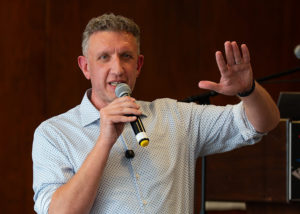
Chuck is a US-based internal communications strategist and the founder of ICology – a community and resource hub for IC professionals. He brings a practitioner lens to every conversation. Chuck is a recognised voice in the industry, a regular speaker and event host, and one of the most connected people in the North American IC world.
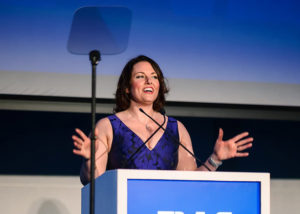
Jenni is a UK-based leadership and internal communications consultant, author of two best-selling books, and international speaker. She runs Redefining Communications, a consultancy working with organisations around the world to help them communicate better and close the gap between what leaders say and what employees experience.