
Only 21% of US employees strongly agree that they trust their organization’s leadership, and the Edelman Trust Barometer has just recorded the first global decline in employee trust in its 26-year history. Jenni runs this episode, and every story she brings loops back to that number: Katrien Fransen’s research on we-ness as the precondition for psychological safety, Southwest CEO Bob Jordan’s claim that meetings are not work, Shel Holtz’s application of a 1980s product-management model to the trust problem, and the UK’s Best Workplaces list, where the top performers beat the market more than fourfold. Chuck’s contribution is his usual refusal to let a leader off easily — starting with the Nike CEO who told employees he was tired of talking about fixing the business.
Chuck opens on the 50-episode milestone before turning to a headline about Nike’s CEO venting to employees during an earnings release that beat expectations but was still down year over year. The quote is the problem: “I’m so tired, and I know you are too, of talking about fixing this business.” Chuck’s first objection is the word venting in the headline — nobody wants a venting CEO — and his second is the projection, because whether Nike employees are tired is not the CEO’s to announce. Jenni’s addition is the detail that makes it land harder: this is a chief executive who came out of retirement to take the job, so the tiredness reads oddly against the decision to show up for the challenge. She is careful about the vocabulary too. Vulnerability exists to create connection, and this does not read as connection so much as something that was not thought through. Chuck leaves the question open, which is really the question of the whole episode: is this the vulnerability people say they want from leaders, or does it land as weakness?
Jenni brings an episode of Bruce Daisley’s Eat Sleep Work Repeat on we-ness as the secret cause of psychological safety, featuring Professor Katrien Fransen’s research on leadership and social identity. The finding is that psychological safety cannot take hold without we-ness first: if people do not feel like a team, the safe culture does not arrive, however much it is talked about. The research also splits leadership into four roles — a task leader giving technical advice, a motivational leader, a social leader who creates the team atmosphere, and an external leader who represents the team to the outside — and states plainly that expecting the formal leader to do all four is not possible. Chuck, who admits he demands a lot from leaders, will not fully concede: he expects the first three from the best leaders, just not in equal parts, and he sees the motivational and social roles as closely related and as the ones that carry people furthest when the task knowledge is already there. The external role is the one he leaves outside the requirement, and it is also the one both hosts find politically tricky, because if the person representing the team is not the leader, someone is going to ask why. Jenni’s contribution — which Chuck credits before she points out the podcast made it first — is that these roles can be distributed across the team, so the person who genuinely enjoys organizing the social side should be allowed to lead that. Her real argument is about ownership: pinning psychological safety entirely on leaders has let HR and comms off the hook, when building shared understanding and meaningful work toward a purpose is exactly their job. Chuck’s practical caution is to celebrate those leaders and tell those stories, but under no circumstances to put the word we-ness in an article.
The Fortune piece has Southwest Airlines CEO Bob Jordan arguing that many leaders mistake constant meetings for leadership — “when you first start, it’s easy to confuse busyness and going to meetings with leadership” — and his fix for 2026 is to keep Wednesday, Thursday and Friday afternoons entirely clear so nobody can book him. The supporting data is the 2024 Atlassian study of 5,000 workers across four continents: nearly 80% say they are drowning in meetings and calls, and 72% of meetings are deemed ineffective. Jenni disagrees with the headline outright — meetings are part of work — while agreeing entirely with protecting time for focused work, and she has structured one full day a month for writing precisely so she is not jumping between things. What she sees in clients is a lack of agency: people say they have to attend, when as a communications director she always asked what her role in the meeting was, what the outcome was, or whether there was an agenda. Nobody asks those questions now, so the problem she names is meeting etiquette and discipline rather than meetings themselves, a theme she is also reading about in The Friction Project. Chuck jokes that if he had the answer he would be on a beach, then separates the one-off meeting people are generally happy to take from the standing weekly that exists whether or not there is anything to discuss. He describes the flicker of anxiety at seeing a near-empty calendar, immediately replaced by joy, and lands on the useful question: is a calendar there to drive what you do, or to hold you accountable for it? His last point is the status one — being in the room signals importance, and being left out prompts the question of why — which is a symbol he thinks has been badly misplaced.
Jenni’s third story is Shel Holtz’s LinkedIn article on the trust recession and why internal communication is failing the test, which sets Gallup’s finding that only 21% of US employees strongly agree they trust their organization’s leadership against the Edelman Trust Barometer’s unprecedented global decline in employee trust — the first in the study’s 26-year history. What she wants to share is the framework: the Kano model, developed by Professor Noriaki Kano in the 1980s to prioritize customer needs by their effect on satisfaction, mapped onto internal communication. Must-be expectations are table stakes such as timely payroll and benefits updates, which build no trust reserve and only avoid a crisis. Performance factors are where trust is actually built or lost, and the more leadership supplies the why behind a decision, the more satisfaction rises. Exciters and delighters are the unexpected efforts that prove the organization sees its people as central to the solution, with a “what we heard, what we’re doing” loop as the example. Indifferent features are the noise mistaken for communication: publish an award-winning newsletter while employees are stuck in a fog and the newsletter simply is not moving the needle. Chuck’s view is that any model getting communicators and HR leaders talking about trust is a win, and he draws the line Holtz implies — trusting that payroll lands on the 15th is a baseline, not the same thing as trusting your leaders. Jenni likes it for two reasons: borrowing a product-team model makes internal comms legible to functions that do not understand what it contributes, and sorting your own activity against the four categories exposes teams stranded at both ends of the scale, drowning in tactical must-be work and indifferent noise while the performance factors and delighters never get built.
Jenni closes on something deliberately more cheerful, the UK’s Best Workplaces 2026, where the super-large category is led by Hilton, Aviva, Kids Planet Day Nurseries, Softcat and Baringa. The report’s own argument is a chain: great leaders build trust, trust shapes culture, culture drives performance — and while leaders reach for AI to hit their goals, the missing ingredient is trust. The numbers behind it are the reason to pay attention, with the UK’s Best Workplaces performing more than four times better than the market and generating 6.25 times greater revenue per employee, and NVIDIA singled out in the large category for a culture where creativity and autonomy travel together and management celebrates initiative rather than merely permitting it. Jenni preempts Chuck’s objection and gets it anyway: his response to lists like this is a golf clap, because plenty of great workplaces are absent for the simple reason that they did not pay to enter. He is not condemning the companies on it, and he is honest that Hilton, the one he has worked with, genuinely does celebrate its brand, its people and its history. His question is what the list returns — does it help recruiting, does it help retention, and what is the ROI, given he will keep staying at Hiltons either way. Both of them arrive at the same practical use: if you are not on it, go and ask the head of internal comms at an organization that is what they are doing, because what sits behind the ranking is the trust work, and Jenni’s closing challenge to comms and HR is how many of this year’s three big goals are actually about building it.
What is we-ness, and why does psychological safety depend on it? We-ness is the felt sense of actually being a team, and in Professor Katrien Fransen’s research discussed on Bruce Daisley’s Eat Sleep Work Repeat, it is the precondition for psychological safety. Without it, people do not experience themselves as part of a team and the safe culture does not form, no matter how much the organization talks about safety.
What are the four leadership roles in Katrien Fransen’s research? A task leader who gives technical advice, a motivational leader who gets the best out of people, a social leader who creates the team atmosphere, and an external leader who represents the team to the outside world. The research is explicit that one formal leader cannot fill all four, and both hosts note the roles can be distributed across a team regardless of hierarchy.
Are meetings actually work? Jenni says yes and disagrees with the headline outright — meetings are part of work, and the real issue is protecting time for focused work alongside them. Chuck separates the one-off meeting people are happy to take from the recurring standing meeting that exists to report out rather than to build, which is where most of the waste sits.
What did the Atlassian meetings study find? Surveying 5,000 workers across four continents in 2024, it found nearly 80% say they are drowning in so many meetings and calls that they barely have time for real work, and that about 72% of meetings are deemed ineffective. Southwest CEO Bob Jordan’s own response is to block his calendar entirely on Wednesday, Thursday and Friday afternoons.
How does the Kano model apply to internal communication and trust? Shel Holtz maps Noriaki Kano’s four categories onto comms. Must-be expectations such as timely payroll build no trust, they only avoid a crisis. Performance factors — chiefly explaining the why behind decisions — are where trust is built or lost. Exciters and delighters, like a “what we heard, what we’re doing” loop, prove people are central. Indifferent features are the noise, the award-winning newsletter that does not move the needle.
How bad is the employee trust problem right now? Gallup finds only 21% of US employees strongly agree they trust their organization’s leadership, and the Edelman Trust Barometer has reported an unprecedented global decline in employee trust — the first drop in the study’s 26-year history. That is the backdrop for the whole episode.
Are Best Workplaces lists worth paying attention to? Chuck’s answer is a golf clap: plenty of excellent employers are missing simply because they did not pay to enter, and he questions the ROI beyond recruiting and retention. But both hosts agree on the useful move, which is to look at what the listed organizations are actually doing and ask their comms leads directly — the UK’s Best Workplaces outperform the market more than fourfold and see 6.25 times greater revenue per employee.
Chuck: Welcome to Frequency, I’m Chuck Gose.
Jenni: And I’m Jenni Field. Frequency is your go-to for real talk about comms, culture and employee experience. Beyond the buzzwords and straight to what matters. And this week, we’re going to be talking about the trust recession and how product development models can help comms folks consider how to change things. We’ll look at whether meetings are work or not. I’m going to talk about the best places to work in the UK, and we will also get into the root cause of psychological safety and the different types of leaders in teams. But Chuck, before we get into all of that, what’s going on with you?
Chuck: So I wanted to acknowledge something that last week we neglected to, partially because of the chaos that was surrounding you getting back and resettling from Japan, and I was out in Las Vegas for Transform. This is episode 51, which for those that aren’t good at math, that means last week’s episode was episode 50, which I think is pretty remarkable. Jenni, I think an accomplishment we should recognize and celebrate — every single week producing an episode of Frequency, putting it out there for people. So thank you all for listening, and here’s to the next 50 episodes. And I did want to — I called it out on last week’s episode — I did want to pat myself on the back a little bit more on this, of being up at 7 a.m. Las Vegas to record that episode.
Jenni: Yeah, you deserve that. You deserve that. It was a busy week.
Chuck: If anything shows my dedication to this podcast, I want that to be top of the list. 7 a.m. Vegas, set up, ready to go to record the episode. But there’s something else I wanted to chat about too, which I thought was interesting in the word choice. And as we’ve talked about many times on this podcast, I’m pretty critical and very hard on leaders. And so this headline came across my feed and I was like, wow, I wonder what the response is to that. And it was all talking about Nike, which I am a pretty big Nike fan, growing up in the nineties and early two thousands. And I still wear Nike, all that stuff. But there’s this headline that talked about the Nike CEO venting about the company’s struggles. And it was during an earnings release, and it was that the company performed better than expected, however still down year over year. And he talked about his frustration. They use the word venting in the headline, which I’m like, I don’t know. Do you want your CEO venting? And the quote from the call was, he’s like, I’m so tired, and I know you are too, of talking about fixing this business. So there’s times where you want your leaders to be very vulnerable and say, like, this is a lot. But also he’s projecting, saying he knows his people are too. Well, I don’t know if they are or not. It just seemed like a weird thing to have come out there. I wonder what Nike employees think about this.
Jenni: Yeah, I thought the same. I also sort of mildly chuckled, because the article also says that the CEO has come out of retirement to do it. And then he’s going, I’m just really tired of talking about how we’re going to fix this. And I’m like, well, you’ve come out of retirement, so I feel like you came in wanting the challenge or to do something, so you’ve got to show up for that. And I agree, it’s not the time to say I’m so tired and I know you are too, because to your point, you’re kind of projecting your own exhaustion onto other people. And I don’t know any other CEO that would say it, but maybe it’ll work in their culture and maybe they’ll all go, my God, we must all rally, come on.
Chuck: Well, maybe. Is this that vulnerability that people want, or is it seen as weakness? That’s what I’m curious to see, how this plays out.
Jenni: No, because vulnerability has to be — vulnerability is to create connection. And that’s the purpose of it. I don’t feel like this is vulnerability to create connection. I mean, maybe it is, but it doesn’t feel like it was that thought through. So yeah, who knows. Right, let’s kick off with a podcast this week, which is the Eat Sleep Work Repeat podcast. The episode was called We-ness: The Secret Cause of Psychological Safety — I realise that sounds really strange when you say it out loud. So I was listening to this over the weekend. It is the podcast with Bruce Daisley. And in this episode, he was chatting to Professor Katrien Fransen about her work around leadership and social identity. Now, the big thing for us to take away is the importance of we-ness, which is about coming together. Basically, in the research it says that when it comes to psychological safety, if we don’t have the fact that people feel like a team, then that safe culture won’t happen. So if you haven’t got that we-ness, then psychological safety won’t happen. So that’s the bulk of the conversation. But they were also talking about different types of leadership styles and how leaders can’t possibly be all of them, which I really wanted to talk about, because as you said just now, you’d like to give leaders a hard time. So it was saying that you can have different leaders in the team regardless of formal hierarchy. And the research shows four different leadership roles. A task leader, so giving technical advice on the field. A motivational leader, who’s really good in motivating the team to do their best. A social leader, creating a good team atmosphere within the team. And an external leader, who is responsible for representing the team towards those outside parties. Now, when we think about leaders, we often only think about that task leadership aspect, like what do they actually do, giving advice to make the performance better. But what the research also shows is that having these other leadership behaviours is really important, which I would always advocate in terms of credible leadership. In the conversation, they say we expect the formal leader of the team, whether it’s a coach, a captain or a manager in the team, to do all of these leadership behaviours, and that’s actually not possible. So Chuck, as you always demand a lot of leaders, what does this research tell us? When the research tells us that it’s just not possible, do you feel that it’s still fair to ask all of these things from leaders? And on the we-ness piece, what should internal comms be focusing on to support the creation of that we culture to enable psychological safety? So I’ve got two questions for this one.
Chuck: Okay, so three things here. One, for those listening, if you’re going to talk about we-ness, add a little pause in between the we and the ness. Because if you bridge that together a little too quickly, you’re probably going to raise some eyebrows. We do demand a lot from leaders, and I think that’s part of the job. And when I looked at the four different leadership roles, I think that’s an interesting way to look at it, where I see the social leader and the motivational leader are probably pretty close in relationship to one another. When I think of leaders in the past who have been a good motivational leader, they’re also a pretty good social leader, where they kind of create that camaraderie, the togetherness, the we-ness perhaps between all of that. But then they also do have the knowledge of the job. And so I do expect leaders to have all of these things — at least the best leaders, I think, have all these things, but not in equal parts. You can’t be at 100 on all of these, I do recognize that. But when I look at leaders, I think that motivational and social leader is probably the ones that work their way up, or I think have the best success, with the baseline of the task. They know the job, they know the role, they know what’s expected of people. It’s that external leader that’s the one that everyone sees. Those are the people you see speaking at events and on posts and interviewed in media, wherever it is. That’s not always, I think, what’s going to end up coming out in the wash at the end of the day, that external part for everyone. But I think those first three I absolutely expect from leadership teams. And for the we-ness part, for the internal comms team to support that culture, I think that’s just telling the right stories and celebrating the right elements of that. But please don’t use we-ness in your articles, because I just feel like that’s an HR call waiting to happen. But I think it’s celebrating the leaders that are delivering that motivation, that do know the business, that show their knowledge, but also are building a great team around them. That’s the easy stuff that’s out there. It’s sometimes just finding it that is the hard part.
Jenni: Yeah, I agree with all of that. I think there’s also the piece about recognising that all of these different leader roles can be within your team. So there might be someone who’s a really good social person in your team who likes organising the events and the social stuff and all of that. And that’s not the leader, but there’s someone that likes doing it. Let them do it, let them lead that, because I think that’s really important. I think the we-ness piece for internal comms is really important when it comes to psychological safety, because psychological safety still is talked about a lot. I was talking to a client just this morning and we were talking about it. The fact that the root cause of that has to come from being able to operate as a team and feel like you’re part of a team and feel like people care about you and value you. There are direct actions there for HR and comms around how you can actually make that happen, which I actually think takes the pressure off leaders to create the psychologically safe organisation. It’s still absolutely there, but I think so much of the psychological safety stuff has been aimed at leaders, less aimed at HR and comms. And I think that culture of being together, that culture of a shared understanding, of feeling like you’re doing meaningful work towards a purpose, I think has just a much more shared responsibility, it feels, to do that.
Chuck: I think you bring up a really great point, which I had not thought of, so I want to give you credit for this — around looking at those leadership roles that exist within a broader team, not just the leader themselves. Looking around at your team, whether you’re the leader or not, and saying, who is our task leader? Who’s our motivational leader? Who’s our social leader? Who’s our external leader? And that external leader is the one that I see as sometimes slightly problematic, because if that’s not the leader, it always seems like they’re the ones working around or getting out, or, why are they speaking for the team? They’re not even the one representing that. That’s a little bit of a tricky one. If that’s not the leader, is there some security and some psychological safety in that, that that person feels like they can go and do those things? But I think that is a good call out, to look at this from an overall team level to say who is leading us in these various aspects.
Jenni: Yes, and whilst I’d love to take credit, it was talked about in the podcast, so I can’t take full credit for that. But you’re right about that external piece, because there’s an ego piece that would happen there in the team. And I think that might show up differently in different cultures around the world in terms of that external speaker. But there’s certainly something in there about how would that impact the team dynamic if it was not the leader hierarchically that was doing that. Right, the next article I want to talk about is about meetings. So this is all about the fact that meetings are not work. So this was an article in Fortune saying that business leaders are raising the alarm. Meetings have taken over and real work is being left behind. And Southwest Airlines CEO Bob Jordan is the latest to speak out on the phenomenon, arguing that many leaders mistake constant meetings for leadership. He says, when you first start, it’s easy to confuse busyness and going to meetings with leadership. He said this on a panel event in New York in December. He said, because what we all find, I’m sure, is that there’s no time to work, and you confuse going to meetings with the work. Over the years, Jordan’s solution has been increasingly straightforward: protect his time. So for 2026, his goal is to keep his calendar completely clear every Wednesday, Thursday and Friday afternoon, blocking anyone from booking meetings into those hours. Now, meetings are an issue everywhere. The article goes on to say that nearly 80% of people say they’re drowning in so many meetings and calls they barely have time to get any real work done. And according to a 2024 Atlassian study —
Chuck: Atlassian.
Jenni: Thank you — that surveyed 5,000 workers across four continents, about 72% of the time meetings are deemed ineffective. Now, for this group, I do not agree that meetings are not work, and I’ve had this conversation many times with people in the past. It is part of work. But I do agree with protecting your time to do focused work and have clear structures around your time to do both. So my question for you, Chuck, is what’s your view on meetings, and how should companies get this right for employees trying to balance the doing and the meeting?
Chuck: Man, if I had the solution for how companies get this right, Jenni, we would not be doing this podcast. I’d be sitting on a beach somewhere. I wish I had that answer. My view is I agree with you. It’s a part of work, but it’s not always the best use of work. And it tends to be more of those recurring meetings where it’s just, every Monday this team is getting together whether there’s something to talk about or not, or it’s several times a week we’re getting together. And it’s not the one-off, hey, I need to talk to you about something. I think that’s the kind of stuff people are happy to do for the most part — I guess it depends on who you’re meeting with. But it’s those recurring meetings that don’t really bring value. It’s just, hey, let’s all get together and share what we’re working on. What is that doing for people? I will say I’m obviously not in the corporate world anymore. I once was, not anymore. There’s this weird anxiety sometimes where when I look at my calendar in a day and maybe I just have one thing on there, I’m like, well, am I working? Am I doing the right things? But then that anxiety, Jenni, is immediately replaced by joy, because it’s like, my gosh, I can just work on things. I’m setting this pace. I’m setting the tone for this. So my calendar is not driving that productivity. So I think maybe that’s the view and the shift: what’s the role of your calendar? What’s the role of that day’s calendar? Is it to drive what you’re doing, or is it to hold accountability for what you’re doing? And that seems to be what a lot of those meetings are. It’s not really to build things, it’s to hold people accountable for things, reporting out on things.
Jenni: Yeah, and I’m with you on the joy. We now have structured in a day a month for me to do writing. So whether it’s writing blogs for the website or writing articles or whatever it might be. And I need that time. I was like, I need a full day, so I’m not jumping between a meeting and then this and then this — a full day where I can just immerse myself in my thinking and writing, which is a real luxury to have. So it doesn’t always happen, but I try and protect that, and I do think that’s important. What I find with clients and people I’m talking to is the lack of agency people feel over their time. Like, I have to go to these meetings, or I have to do this. You don’t have to do anything. And I know that’s easier said than done. But even when I was in the corporate world as a communications director, any meeting I was invited to, I would ask, what’s my role in the meeting? Or what’s the outcome of the meeting? Or what’s the agenda? Or all of that stuff. People aren’t asking those questions. They’re just going, okay, I’ll just go and attend that, and then you’re just running from one thing to the next. So I feel like it’s more meeting etiquette and how you’re structuring your meetings and the discipline around them that’s making them worse. And I’m still reading The Friction Project at the moment, and they talk about meetings and stuff like that in there. And you’re right, it’s the recurring meetings that seem to be the biggest culprit here, in that they’re just nice to have, but they’re not really moving anything forward.
Chuck: I think it more fills up people’s time, which then they didn’t complain about not having. But if you weren’t in there — there’s also this element of feeling important if you’re in the meeting, whereas if you’re not in the meeting, what are they talking about? Am I not important enough to be in there? So we’ve given a status symbol, I think, to it as well, which has been, I think, largely misplaced.
Jenni: Yes, that’s very true. Right, the next piece is about the trust recession. So there was a recent article on LinkedIn from Shel Holtz, who shared a really nice framework around those looking at trust, and I wanted to share it here. So he says in his article, the data from Gallup that only 21% of US employees strongly agree that they trust their organization’s leadership. More recently, the Edelman Trust Barometer reported an unprecedented global decline in employee trust, and that’s the first drop in the study’s 26-year history. But I wanted to talk about his introduction to the Kano model. It was developed by Professor Noriaki Kano in the 1980s — I’ve picked all the words I can’t really say today, haven’t I? — and it’s a framework used to analyse and prioritise customer needs based on their impact on satisfaction. And it categorises customer preferences into different levels of needs, helping product managers prioritise features effectively. Now, Shel breaks it down in his article, which I just really liked and wanted to share here. So he talks about the must-be expectations. This is the table stakes. So these are the basic requirements employees take for granted, such as timely payroll, benefits updates. He says you don’t build a trust reserve with these communications, you simply avoid a crisis. The next are performance factors. So this is where trust is built or lost. The more leadership provides the why behind a decision, the more satisfaction increases. Then it’s exciters and delighters. So these are unexpected efforts that prove the organisation sees its people as central to the solution. A what we heard, what we’re doing loop is a prime example. And then the final bit is indifferent features. So this is the noise that we mistake for communication. He says if you publish an award-winning newsletter while employees feel stuck in a fog, that newsletter is an indifferent feature. It doesn’t matter if it’s there or not, it isn’t moving the needle. Now, I really liked this, because it felt very tangible and very practical to talk about trust, which is a very intangible thing and such a big topic this year. Do you think this provides a helpful guide for those working in internal comms to help them consider how to really shift those trust numbers in their organisation?
Chuck: I think anytime we can get communicators or HR leaders or whoever talking about trust and the importance of it, anything like that is a win. And I think this model puts it into some very simple explanatory statements of thinking through what are all the different things we’re doing and where do they slot? Where do they fit? What value are they bringing? So yeah, when we talk about trust, I think people use the word basically like, you trust that payroll is going to hit on the 15th and the 30th. That’s not part of trust. That might be a baseline part of it, but that’s not — when you say you trust your leaders is different than saying, I trust that I’m going to get paid or not. I have worked with some startups in the past where you wonder on the 15th or 30th if that payroll is going to hit, back in the day, but that’s part of the risk. But you trust other aspects of it. So I think you’re calling out all those different layers. I think it’s helpful to think through what’s the role that comms plays in these. I think some of that is that exciter and delighter part. How can we bring that and showcase that more in culture as it pertains to trust?
Jenni: Yeah, what I like is taking a model that is for another part of an organisation, like the product team, and then applying it to comms and HR, because I think it makes it more understandable for a lot of functions that don’t really understand how internal comms can really help organisational success. So anything that’s going to shift that for me is always going to be a win. But I also think it helps you really think about what you’re doing in internal comms. So are you spending a lot of time on indifferent features, like that noise and that newsletter that’s not doing anything? Are you getting sucked into the really tactical must-be expectations, those basic things about payroll and benefits updates and communicating that? If you’re at both ends of that scale, then you’re kind of missing that ability to do the performance factors and the exciters and delighters. And I think, to your point, that exciters and delighters is where things can really change for internal comms and HR and employee experience. And I think I could use this if I was still in house and looking at all the activity we were doing, and maybe mapping it to some of this and seeing where it fits, really. Right, the final piece today is the best places to work in the UK 2026. So I wanted to bring something that had quite a lot of joy to it, because I just felt like sometimes we’re talking about a lot of things that are not so great going on in the world of work. So this was recently reported in the UK, the best places to work. The list is broken down by organisational size. So it’s sort of super large, large, and then it goes on from that. So in the super large category, the top five were Hilton, Aviva, Kids Planet Day Nurseries, Softcat plc and Baringa. But the report talks about what some of these companies are doing, and that’s why I wanted to talk about it today. So it talks about the tech company NVIDIA, which is in the large category, saying that it’s fostered a culture where creativity and autonomy go hand in hand. Employees feel genuinely empowered to pursue fresh ideas, knowing that management not only trusts their abilities, but also celebrates their initiative and effort. The report also says that when you dig into the performance of the world’s most successful companies, you find a repeatable pattern that any business can follow. Great leaders build trust, which shapes the culture that drives performance. Now, we know this, but it goes on to say that while many leaders are turning to technology like AI to meet their goals, their efforts often lack a critical ingredient for success, which is trust. So when companies really build trust first, they create that high-performance workplace, it outperforms the market on almost every business metric, and they enjoy higher levels of retention and productivity and all of those things. The UK’s best workplaces perform more than four times better than the market and see 6.25 times greater revenue per employee. So the data is pretty clear, building trust with employees is great for business. But how do you do it? And I think that is almost the big question. Now, I feel like I’m going to preempt you talking about lists and how they get created. And I’ve worked in organisations where we’ve done this, and they are filled out by employees. How that happens is another question. But what do you think the internal comms strategies are in place for these organisations that are contributing to their success?
Chuck: I know why you felt like you had to preempt me, because I was. But actually, I do know — when I see lists like this come out, I’m just kind of like, golf clap. I’m just like, golf clap to the company. I don’t know, there’s so many great places to work that aren’t on this list, because they didn’t pay to be a part of the list and they didn’t feel like it was important. So it’s not — I’m not condemning those companies that are on it or whatever, it’s just a list. But there again, let’s say you aren’t on the list, and whether you’re a great place to work or not, what can you learn from these companies that are clearly being successful? I think that’s the part that I would encourage people to check out. What are these companies doing other than paying to be a part of this? What are these companies doing to be recognized in this way? So I don’t know what they are, but there’s stuff to learn from them. The only one I would say that I am more familiar with of the ones that you shouted out of the thousand-and-one-plus is Hilton, because I’ve worked with them in the past. So I know how much they celebrate the brand and individuals and the history of the company and all of those things. So I think that that’s what I would learn. The other ones I’m just not familiar with.
Jenni: Yeah, I think you’re right. I mean, I also feel a bit like, it is a list people have paid to be part of, but there’s also quite a lot of work that goes into being part of it. You do have to get all of that data and get that through the organisation and analyse it and all that stuff. But I think you go for it when you know that you’re doing the work to get it. But if I was working in an organisation of any different size, I would be looking through that list and maybe reaching out to the head of internal comms there and saying, what are you doing? How can you help me? Or the same sectors, or whatever it is. There’s definitely something to learn. It’s not going to be perfect, and I’m sure you can find employees in all these organisations who aren’t having a good time. But I think it’s really great to look at it. Again, it’s that trust piece. I think that’s the thing for me for internal comms and HR: how focused are you on that one goal? Like if you had three big goals for the quarter or for the year, how focused are you on building trust? Because I think we’re still doing so much stuff because there’s transformation, there’s everything else, but everything has to come back to trust. And I think that’s going to be such a big piece for this year.
Chuck: I wonder, like, the big picture on this. So again, I’m going to pick on Hilton in a good way on this. Obviously connected on LinkedIn to lots of Hilton employees, and I saw a lot of them sharing this and I liked it and gave them a golf clap. Congratulations, Hilton. But I’ve always said, if Hilton wasn’t on there, I’m not going to not go to Hilton. I still like the Hilton brand. I’m still Hilton Diamond. I’m still going to go stay at Hilton hotels. So I wonder, like, in the big picture, what’s the return on this? What is the ROI? Does it help with recruiting? Does it help with retention? It might do all those things. I don’t know the data behind it, but I wonder, like, for what purpose.
Jenni: Yeah, I think it’s got to be retention and recruitment, hasn’t it? You want to be able to recruit the best talent and do that. I think that’s got to be it, because it’s driven through the HR function, which to me is mainly focused on recruitment, retention, development, that sort of stuff. So yeah. Well, that’s the articles for today. So thank you very much for all of the answers to my questions. What is your freq-out today?
Chuck: I had this great moment yesterday where it rekindled something from my childhood. It got me excited to watch the broadcast of the Artemis launch yesterday, which was the rocket that is going — basically exploring the moon. Not landing on the moon, but exploring the moon and going around it and then coming back. And it just took me back to this moment as a kid, watching the space shuttle launches and what a historic moment those things were, and also what a remarkable achievement in science that that still is. I was watching the hours before the launch on my other screen on YouTube, where NASA was live streaming this launch, and just seeing the prep and seeing the conversation and everyone excited. Now, the day after, seeing people on commercial airliners with videos of seeing this rocket going up. And it just was really cool at a time when there’s not a lot to be proud of with what’s happening in the US and things that are happening to the government. There’s still NASA, which is just absolutely remarkable in what they’ve accomplished. And to see us now going back and doing things like that, it was just really cool to see. There’s no other way to describe it.
Jenni: It’s cool, it’s just cool. My freq-out is not as exciting as a rocket launch, but it is my entrance into the 1% club. So I’m holding up my 1% diary, which you enjoyed on Instagram the other day when I said I’d got it and you were like, it’s about damn time. And I’m quite excited. So I have spent the first quarter of the year — we had a lot of client work in the first quarter of the year, just had my holiday, so there’s a lot of focus on delivering some big client projects and then the holiday. And then since coming back, I was like, I don’t know what I’m doing, because I’ve been so focused on everything else. So I’ve bought the 1% diary, which is going to help me over the next 90 days make 1% changes every day to achieve my goals. So we’ll see how that goes. Advita Patel, my best friend, said, I know myself well enough to know I would do that for about two days and then I would never pick it up again, so I’m not going to buy it. So we’re going to see if I can outlast her, and I’m going to start it next week. So we’ll see. I’m excited.
Chuck: And that’s a big part, if I remember correctly, of Atomic Habits — that that 1% that over time, it doesn’t feel like a lot at the moment, but over time it becomes massive.
Jenni: Yeah, it’s exactly that. It’s how the British cycling team made some changes. So I need to get back into my 1% — what are the systems and processes to then create that, which is an atomic habit. So I’m just having a little reset over the Easter break here in the UK. So yeah, I’m very excited. So thank you for joining us this week. All of the articles that have inspired this conversation are in the show notes. And don’t forget to rate and review after you’ve listened. Subscribe so that you don’t miss another episode, and pass this along to someone that you think would enjoy listening or watching, because you can also find Frequency on YouTube. Thank you to Poet Ali for contributing the music to the show. We’re back every Monday with more news, insights and opinions about everything comms and leadership in workplaces today. Keep tuning in and turning up.
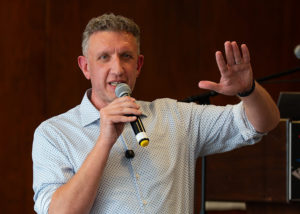
Chuck is a US-based internal communications strategist and the founder of ICology – a community and resource hub for IC professionals. He brings a practitioner lens to every conversation. Chuck is a recognised voice in the industry, a regular speaker and event host, and one of the most connected people in the North American IC world.

Jenni is a UK-based leadership and internal communications consultant, author of two best-selling books, and international speaker. She runs Redefining Communications, a consultancy working with organisations around the world to help them communicate better and close the gap between what leaders say and what employees experience.