
Zero reports this week, which Chuck announces like a man who has just put down something heavy. Instead: McKinsey calling the agentic organization the biggest shift since the Industrial Revolution, and Jenni pointing out that the Industrial Revolution’s actual mistake was lifting and shifting people into machines without redesigning the factory; Bruce Daisley’s finding that 72% of formal culture change programs move nothing; The Economist’s war on PDFs, a fight Jenni was having 15 years ago and nobody has owned since; and Jack Dorsey cutting 40% of Block’s workforce while crediting AI, which both hosts read as AI washing. Jenni opens with a frame of her own — the Goldilocks era, where internal comms is asked to get change, culture, engagement and risk all just right, at once.
Jenni has been writing the same phrase down for a month: the Goldilocks era. Internal communication is being asked to get everything just right at once — a bit of change, a bit of culture, a bit of engagement, a bit of risk — balanced to exactly the correct temperature, at which point success is supposed to follow. Her point is that this is the message coming from everywhere in the profession right now and it is unrealistic as a job description. Chuck’s twist is the one detail the metaphor leaves out: Goldilocks had choices. She got to decide which porridge was too hot and which bed was too big. If this is the Goldilocks era, then embrace the choosing and pick what actually works for your organization rather than trying to hold all of it at once.
McKinsey’s agentic organization research calls this the biggest shift since the Industrial Revolution and puts numbers on it: teams of two to five people supervising 50 to 100 AI agents, one bank claiming up to 50% less time and effort on legacy modernization, another running know-your-customer compliance with ten agent squads. The org chart flips, with humans above the loop on strategic oversight and AI handling execution, and the people implications follow — performance management anchored in task completion is over, HR systems become repositories for agents rather than only employees, and the definitions of organization and employee turn fluid. Chuck’s question is whether everyone is now living in the Matrix. Jenni smiles her way through the whole setup, because the comparison it invites is the one that defeats it: the Industrial Revolution’s actual failure was lift and shift, dropping machines into a factory laid out for people, which was inefficient and wasted years until somebody reimagined the building around the machinery. Replacing one person with ten agents is the same move at a larger scale, and the conversation that is missing is the systemic one — what work is, how long a working week should be, what any of it does to education and society. Chuck’s counter is that this transition already happened once and the professional classes let it pass: robots took factory jobs, everyone agreed it made sense, and only now that accountants, engineers and HR leaders are in scope has it become alarming. His prediction for the supervised-agent future is bleakly funny — there will still be a CEO insisting you be in the office five days a week to watch your 50 agents, and Jenni’s version is the manager who won’t believe you’re working unless the little light is blinking.
Bruce Daisley, former VP at Twitter EMEA and author of The Joy of Work, argues that the more organizations talk about culture, the less employees believe them, and backs it with the figure that 72% of formal culture change initiatives produce no meaningful improvement in trust, engagement or retention. Values posters, culture decks and all-hands moments can actively erode the trust they are meant to build, which makes it a credibility problem rather than a messaging one, and organizations tend to produce culture content in direct proportion to the problems they are papering over. Jenni ties it back to the culture-versus-behavior debate the show picked up from Rob Briner: the age of the culture campaign is ending because it has become noise. In her current client work she is looking at leadership credibility while somebody else looks at culture and somebody else looks at communication, none of it joined up, none of it with a clear outcome, and nothing translated back into behaviors and competencies or reconciled with the values that already existed. Culture ends up a big word without much meaning, and something people believe is happening over there rather than something they are part of — her line to teams is that if you don’t like the culture where you work, that is partly yours to change. Chuck’s test is blunter: if you have to say your culture is really good, is it? A funny person never announces they are funny. Jenni’s caution is that toxicity is not a single fixed property either — she has been happy in workplaces others fled, because values, personality and beliefs decide what a person can thrive in, so you cannot apply one lens to everyone.
The Economist asks whether the PDF survives the AI revolution and does not answer. More than 2.5 trillion exist, the format won largely because the IRS adopted it for tax forms, and LLMs are regularly bamboozled by them — misreading columns, getting confused by headers, hallucinating as a result. One in five email-based cyber attacks routes through a PDF attachment. Defenders say the problem is developers rather than the file type, and both Adobe and Google have built AI tooling meant to read them properly. For communicators the stakes are concrete: handbooks, policies and benefits guides are the backbone of employee documentation, so an organization deploying AI-powered self-service on top of a PDF library may be building on a broken foundation, and nobody is obviously accountable for auditing and converting it. Jenni’s response is a laugh of recognition, because she was having this exact argument when digital workplaces first arrived — PDFs weren’t searchable then either, and she spent those years telling HR to take the policy out of the PDF and put it on the page. That was 15 years ago. She splits the ownership question rather than answering it: a comms problem in choosing the right medium for the message, an IT problem in that the technology should simply be better by now, but not really a change management problem, because change is constant and belongs to everyone. Chuck did not know there was a war on PDFs, went looking, and reports that the first one was created in 1993; what surprised him more was the security exposure. He also notes the irony that all four reports in last week’s episode were PDFs to download. Jenni’s complication is the gated download — if a report is the price of an email address, what does the publisher serve instead, and how does anyone print or annotate it? Internally, she can see no reason for a policy to be a PDF at all: make it digital content with a print button. Chuck’s closing thought is that the default is laziness, just PDF it, and that a fifth of cyber attacks may be enough for IT departments to start blocking the extension outright.
Block, parent of Square, Cash App and Afterpay, is cutting from over 10,000 employees to just under 6,000, and Jack Dorsey’s shareholder letter names AI directly, predicting most companies will reach the same conclusion within a year. The stock jumped 24%. Chuck runs the two LinkedIn reactions worth having: Ted Merz catalogued what Dorsey got right on execution — 20 weeks of severance plus equity, six months of healthcare, a $5,000 stipend, one announcement rather than rolling cuts, Slack kept open for goodbyes, a live thank-you session — while Brian Elliott of Charter flagged the line that gives the game away, using the tools we’re building, from a company that sells AI-enabled tools. The context does the rest of the work: headcount tripled from 4,000 in 2019 to over 10,000 by 2025, the stock is down 75% over five years, Goldman puts the cut at a return to 2020 levels, and Block is now aiming for north of $2 million in gross profit per head, roughly quadruple the pre-COVID figure. Jenni’s first observation is that the article’s timing is confusing, with the reductions apparently landing later in the year while the coverage reads as though people have already said goodbye. Her verdict is that a company that over-hired in the pandemic is correcting, and reaching for AI because AI is what it sells — she allows the principle that a business should use its own tools, the way you would expect a comms agency to have excellent internal comms, but does not think the use cases are there yet. Chuck’s word for it is AI washing, and his worry is contagion: Dorsey has been propped up as a leader, and other executives will now cut 40% without doing the business strategy underneath it, the way Musk’s Twitter cuts made the platform more profitable and considerably worse. Both land on the same arithmetic — quadrupling profit per employee means it was already profitable per employee, so this is greed with a technology story attached. Jenni’s other objection is the announcement itself, written entirely in lowercase, which she calls unnecessary, hard to read and a problem for anyone using accessibility tools. Chuck’s closing line is the coldest in the episode: every gimmick has somebody who pays for it, and here it is 4,000 people.
What is McKinsey’s agentic organization? It is McKinsey’s model for an organization where small teams of two to five people supervise 50 to 100 AI agents, with humans holding strategic oversight above the loop and AI handling execution. The knock-on effects are the interesting part: performance management shifts from task completion to how well people orchestrate agents and deliver outcomes, and HR systems become repositories for agents as well as employees.
Why does Jenni compare AI agents to the Industrial Revolution’s mistake? Because the first response to industrial machinery was to drop machines into factories laid out for people, which was inefficient and wasted years. The gains only came when the factory itself was reimagined. Swapping one employee for ten agents inside the existing structure of work is the same lift and shift, and it leaves the bigger question — what work actually is, and how much time it should take — untouched.
Do culture change programs actually work? Bruce Daisley’s figure is that 72% of formal culture change initiatives produce no meaningful improvement in trust, engagement or retention, and that the more an organization talks about its culture, the less employees believe it. The episode’s argument is that this is a credibility problem, not a messaging one — culture only shifts when leaders show up differently, and until it is translated into behaviors and competencies it stays an abstraction.
Why are PDFs a problem for AI-powered employee tools? Large language models are regularly bamboozled by them — misreading columns, getting confused by headers and hallucinating as a result. With handbooks, policies and benefits guides typically living as PDFs, an organization rolling out AI self-service on that library may be building on a foundation the tools cannot reliably read. There is also a security angle: one in five email-based cyber attacks routes through a PDF attachment.
Whose job is it to convert an organization’s PDFs? Nobody’s, which is the problem. Jenni splits it: a comms problem in choosing the right medium for the message, and an IT problem in that search and processing should have caught up by now. She does not think it is a change management problem, because change is constant and belongs to everyone. She was making the same argument 15 years ago when digital workplaces first arrived.
Did Jack Dorsey really cut 40% of Block’s workforce because of AI? That is the story the shareholder letter tells, and the stock rose 24% on it. The context is less flattering: Block tripled headcount during COVID from 4,000 in 2019 to over 10,000 by 2025, the cut returns it to roughly 2020 levels, and gross profit per head is heading to north of $2 million, about quadruple where it sat before the pandemic. Chuck and Jenni call it AI washing — and note that Block sells AI-enabled tools, so the announcement is also product marketing.
What is AI washing? Using AI as the public explanation for a decision that has other drivers — in this case, framing a correction to pandemic over-hiring as an AI-driven transformation. Chuck’s concern is the copycat effect: once a prominent founder cuts 40% and is rewarded with a 24% stock jump, other leaders will reach for the same story without doing the business strategy underneath it.
Jenni: Welcome to Frequency, I’m Jenni Field.
Chuck: And I’m Chuck Gose. Frequency is your go-to for real talk about comms, culture, and employee experience. Beyond the buzzwords and straight to what matters. What matters this week, Jenni, is we have zero reports to talk about on this week’s episode. We are going to talk about McKinsey saying AI agents are the biggest organizational shift since the Industrial Revolution. 73% of formal culture change initiatives — well, let me start over.
Jenni: I think you should just keep that in.
Chuck: We’re going to talk about McKinsey saying AI agents are the biggest organizational shift since the Industrial Revolution. 72% of formal culture change initiatives produce no meaningful improvement in trust, engagement or retention. Bruce Daisley has the receipts. The Economist is covering the war on PDFs, which sounds like a niche tech fight until you realize what most employees need to find is locked in a format AI can’t reliably read. And Jack Dorsey just cut 40% of Block’s workforce and said most companies will do the same within a year.
Jenni: I’m excited about that one, because I feel like you have views. Before we get into that, one of the things I wanted to talk about was the Goldilocks era, which is something I’ve been writing down for — like, I’ve said it again and again and again in the last three, four weeks, because it seems like internal comms is being asked to get things just right. So almost that you’ve got to juggle a little bit of change, a bit of culture, a bit of engagement, a bit of risk, all of this stuff, but you kind of want to do it all at the same time. And it just makes me think of Goldilocks and the three bears, and how it was all about the porridge being just right in terms of temperature. And I feel like that’s where we are. You’ve got to balance it all, you’ve got to balance it all at just the right amount, and then you will be able to be successful — which feels very unrealistic, but that feels like the message that’s being given everywhere today. And I know I wrote that to you in one of our WhatsApp chats this week as well.
Chuck: Yeah, I wonder at times though, but also Goldilocks had choices. She got to choose which porridge was too hot or too cold, or which bed was too big or too little or whatever. So I don’t know if it’s the Goldilocks era. Embrace it. Choose what’s best for you.
Jenni: She did. Embrace the choices. I like your twist on that, thank you. Right, go on, kick us off.
Chuck: Yes, the agentic organization. McKinsey describes the agentic organization as the biggest shift since the Industrial Revolution, and the numbers they cite are pretty striking. Teams of two to five people could now be supervising 50 to 100 AI agents. One bank claims it’s cutting time and effort by up to 50% on legacy modernization — sounds a little ironic there. Another running know-your-customer compliance with 10 agent squads. The model flips the org chart. Humans still sit above the loop for strategic oversight, but with AI handling the execution. The people implications are where listeners should be paying attention. McKinsey argues performance management anchored in simple task completion is over, and that the new system tracks how well people orchestrate agents and deliver outcomes. HR systems become repositories for agents, not employees. And the definitions of organization and employee become fluid. Jenni, my question is simple. Are we just now living in the Matrix?
Jenni: Yes. I was smiling the whole way through you were talking about this, because the fact that they’re talking about this being the biggest shift since the Industrial Revolution, yet we’re not talking about fundamentally changing how we work — all we’re talking about is replacing people with technology, right? Which is what they got wrong in the Industrial Revolution. They went, okay, we lay factories out like this, so we’ll just put machines in where these are and it’ll just do that work. So it was completely inefficient. It didn’t do what it needed to do, and loads of time was lost to this sort of lift and shift. Whereas actually, when you get the benefits of that, it’s because you’re reimagining that factory. So rather than mirroring the layout with machines, you reimagine what that factory should look like because of the technology and the machinery you’ve now got, and it completely transforms it. The irony of this just made me laugh, because I just thought, we’re doing exactly the same thing. We’re going, rather than this number of people, we’ll have this number of agents. It’s the same issue. You’re not looking at how work needs to change as a complete construct of society, and the systemic changes around that, and education, and all the knock-on effect that this has around society at large, and reimagining all of that and what AI is going to do — which I know is massive, but that’s what the shift needs to be. And I think if we keep talking about it as people being replaced by AI, and we’re just going to make it not one person but 10 agents, that isn’t the change that needs to happen. The change that needs to happen is much bigger, about the role of work, how much time it takes, what’s a working week — all of these things need to be a much bigger conversation. But I did enjoy their chart about tracking the differences. I like a good chart. It sort of tracks the differences between them all, and I thought that was very good. But to me, we are living in the Matrix, because we’re not really realising the reality of what’s possible, I don’t think.
Chuck: But here’s my take on this. I think it has happened, just not in the way that we’re connecting the dots to. So if you look at manufacturing and the role that, quote unquote, robots have taken on the factory floors, where it did replace people’s jobs or move people into other areas where they were more sort of supervising the robots or monitoring these things — a lot of times for safety reasons, for example. We, a lot of us, just the professionals out there, just sort of rolled with it. Well, of course, that just makes sense. But now that it’s coming for the jobs of accountants or HR leaders or engineers, they’re like, whoa, wait a minute. That was cool if it happened to the manufacturing base, but not to me. So yeah, I do think it’s very far-fetched, just sort of way out there, when you think about people managing these robot employees or these agents. But it’s kind of happened in some other industries.
Jenni: Yeah, I completely get that. And I do think that you see the arms in the car manufacturing places kind of doing stuff. I do think that that is true. I just think the whole world of work needs to change. I think the whole construct of Monday to Friday and what humans are doing — it’s just way bigger than just that. And maybe that was the start of it, in terms of some of those jobs changing. Now it’s having an impact into the office workers and that change. To me, that really shifts what work is, and I think that’s the difference: what is work?
Chuck: And I guarantee you, these teams of people that are allegedly going to be supervising these agents — there are still going to be CEOs that are like, you’ve got to be in the office five days a week to monitor your 50 agents out there.
Jenni: Yeah! If I don’t see that little light blinking that you’re actually there as a little robot, I’m not going to believe you’re really there.
Chuck: Yeah, absolutely. Next up, the more you talk about culture, the less people believe you. Bruce Daisley, former VP at Twitter EMEA and author of The Joy of Work, has a provocative thesis: the more organizations talk about culture, the less employees believe it. Over-communicating culture signals — things like values posters, culture decks, all-hands moments — can actively erode the trust they’re supposed to build. This is more of a credibility problem, not as much a messaging problem. This lands at the moment when culture has never been more discussed or less trusted. Organizations are producing more culture content than ever, often in direct proportion to the problems they’re trying to paper over. Daisley’s frame flips the usual instinct. Instead of asking how to communicate culture better, ask what would it look like to stop talking about it and simply start doing it. Jenni, Daisley’s thesis is essentially that culture talk has an inverse credibility effect. The louder you say it, the less people believe it. Have you seen this play out in your own work? And if so, what actually cuts through to people?
Jenni: So I feel like this links really nicely to a conversation we had a few episodes ago, where I was talking about the post from Rob Briner and the culture versus behaviour debate, in terms of you need to focus on behaviour change, not culture change. And this feels like it’s linked. The age of culture campaigns, I think, is disappearing. And I wonder if it’s because it’s just become kind of noise. So if I think about some of the client work I’ve been doing recently, where I’ve been doing work on leadership credibility — separate to that work is some culture work going on, which I’ve been looking at. It feels like we’re still doing things sort of separately. So I’m looking at credibility, someone else is looking at culture, someone else is looking at communication, and I’m sort of trying to get my arms around all of it to say, look, we’ve got to talk about all of this together, because there’s not a clear outcome for the culture piece. I don’t think we’re translating that back into behaviours and competencies. I don’t think we’re looking at how that fits into how you’re communicating. And also, what about the values that you had before, and how do they weave in? So I think it’s become a big word that doesn’t have a huge amount of meaning. And I think it also just feels like it’s kind of over there, which I know we’ve talked about before. Like, it’s not about me, it’s about culture and that’s something else. I don’t think people realise that they are part of culture. And that’s something I talk about to teams a lot — if you don’t like the culture where you work, you can change that. That’s part of you. You can do that. But the fact that he’s saying that the more you talk about it, the less people believe you, I get, because the proof is in the pudding, as they say. You can talk a good game, but if you’re not actually doing it and really showing up and really thinking about what that really means and looks like for how you need to change your behaviour as a leader, then people won’t believe you.
Chuck: Yeah, I wonder too, there’s a bit of overcompensation that comes in here when you hear people say, no, no, no, but our culture is really good. No, no, no, no, our values are really strong. If you have to say those things, are they really? It’s sort of like how a funny person doesn’t have to tell you they’re funny. You just know that they are. If a company has a really good culture, you don’t have to be told that. And if you are told that, is there some overcompensation happening there?
Jenni: Yeah. And I think also — I was saying this to a friend of mine the other day who was going for a promotion at work, and we were talking about different companies and different people who have come in, and some people were leaving and saying, don’t go for the promotion, because it’s really toxic and all that stuff. And I just said to her, just ignore that. I’ve worked in places where people have said, this is really toxic for me, and I’ve had a lovely time. And that is not because I like a toxic environment, but I’ve got different values, I’ve got a different personality, I’ve got different beliefs, whatever it is, that meant that in that environment I actually learned a lot. Yes, it was challenging and I pushed myself in different ways, but to other people they were like, this is not for me, I’m out, I’m done. You can’t apply the same lens, I suppose is what I’m saying. We all thrive in different environments, and I think that’s really important as well.
Chuck: Next up, Jenni, I don’t know if you know this or not, but there is a war against PDFs. The Economist asked whether the PDF will survive the AI revolution, and the answer is genuinely uncertain. More than 2.5 trillion PDFs exist — that’s with a T. The format won because the IRS adopted it for tax forms, but LLMs are regularly, quote unquote, bamboozled by them, misreading columns, getting confused by headers, and oftentimes even hallucinating. One in five email-based cyber attacks are also routed through PDF attachments. However, the PDF supporters fire back: the problem isn’t the file type, it’s the developers. Adobe and Google have both built AI tooling designed to handle PDFs correctly. For communicators, HR and leaders, the PDF is the backbone of employee documentation — things like handbooks, policies, benefits guides. If your organization is deploying AI-powered employee tools and the underlying documents are PDFs, you may be building self-service on a broken foundation. And right now, ownership of that problem, who audits and converts the document infrastructure, is often generally nobody’s job. The PDF has become a bit of a generational joke, people often saying, what generation knows how to turn something into a PDF? But a post-PDF future means someone has to own that transition of decades of documentation. Is that a comms problem, an IT problem, or a change management problem?
Jenni: So I think it’s probably a mixture. I was going to go with, I think it’s a comms problem, but I think it’s probably a bit of a mixture. But again, this was making me chuckle, because I remember the war against PDFs when the digital workplace first came in and you couldn’t search PDFs then. So we kept saying to people, you need to take your policy — HR, because that’s where most of the policies are — and you need to turn it into digital content. These were the conversations I would have, and they’d go, what do you mean by digital content? And I’d say, you need to take it out of a PDF and put it directly into the page that someone’s looking at, so it’s searchable. Those were conversations 15 years ago. So I’m really surprised that this is still going on today, because I don’t think we ever really embraced that kind of digital content piece. But I think this is twofold. I think you’ve got the comms problem of things being accessible and choosing the right medium for the message. I think you’ve got the IT problem of actually the technology being able to search a PDF and being able to do that — I feel like that should be able to be a thing now. I’m not sure it’s a change management problem, because change is constant, so it’s just part of everybody’s wheelhouse now. So yeah, for me it just makes me smile, because I think this was 15 years ago we had this. Are we going to be doing it in another 15 years, or is AI the thing that’s really going to make us stop using PDFs for our policies, to be able to search? I don’t know.
Chuck: Yeah, I will admit, I didn’t know there was a war on PDFs. So I went back and did a little bit of research. If you had to guess, Jenni, when do you think the very first PDF was created? Throw out a guess.
Jenni: I think 2005.
Chuck: 1993, the very first PDF was created. And when you think about what a PDF did, it made it accessible. From a visual standpoint, you could easily share a PDF. It didn’t matter what platform people were on, whatever it is. What I didn’t know was how problematic PDFs were from a cyber attack standpoint. I wasn’t aware of that. I’m a bit surprised that AI is struggling with them as much as it is, but maybe again, maybe that’s the design and layout and how they’re structured. When I think back to last week’s episode when you shared four reports, all four reports were PDFs to download and sort through. So what does that future look like? Is it not a file format? Is it something else that’s out there? So I think it’s a good thing for people to start thinking about, what does that structure of content information look like going forward, so that it is accessible, searchable, all the -ables.
Jenni: I love an -able, but there are some things — this is really making me think now, right? Because I’m thinking about the reports, and I had to put in my email address to get the reports, because people want to collect those to then be able to talk to you, right? I get that, I have a business where we do that. So there is that element. So if I’ve got to put my email address in, because you want that to be able to talk to me, how are you then going to serve up that content to me that I can read? Also, whilst I didn’t print these reports, my intention was to print them, but my printer was not having a good day. So I just used my reMarkable tablet, where I can scribble on them anyway. But how do you then take that and then print it? There’s a lot of questions for me over what’s the alternative, to make that content truly accessible in the way that it is as a PDF. And I don’t know if that’s different based on my use for that versus an internal use for it, in terms of policies and stuff like that, because to me, that should just be digital content. You can have a little button that says print this if you need to, but there’s no reason for that to be a PDF internally, which is kind of the thing that this is about — that internal piece. I can’t see a reason for it.
Chuck: Yeah, there was — now that I’m sort of self-reflecting on it, there’s a bit of laziness when it comes to a PDF. It’s like, oh, we’ll just PDF it, just PDF it. Which got to be the generational joke, I think it was the millennials out there, where you were all saying, you’re getting paid less than someone who doesn’t know how to PDF something. Maybe this is now the change that needs to happen. So I think it really is about accessibility and putting content in the best structure and format for people, and we’ve defaulted to PDF, but maybe that’s not the right way going forward. I just didn’t know there was a war on PDFs. That was new to me.
Jenni: Well, yeah. I mean, it’s a very strong word for PDFs. But also, it’s making me think whether this is the new email. You know, everyone’s like, email needs to die and we need to get rid of it and replace it with stuff. Maybe PDFs are just having their email day and they’re the new kid on the block.
Chuck: And I wonder if this is where IT comes in. If a fifth of cyber attacks come from a PDF, I could see organizations just simply saying, no, we’re blocking anything with a .pdf going forward.
Jenni: Yeah, but also I feel like the technology should just be better. That’s my answer to everything. If PDFs have been around a long time — to your point, 1993, I think you said — how has the technology not evolved to protect against that? What’s not being done to do that? If they’re so heavily used, then how has that kind of just been accepted in that community, to be like, it’s fine, we just accept that we could get a cyber attack, but we’re fine with that.
Chuck: I think it’s just more the intro to the cyber attack, on how easy it is to bury things in a lot of different file formats that are out there. And I think PDF is just the one that we’re picking on today. But yeah, I think it might just be good reflection time to think, is that the right format for content for your employees?
Jenni: Yeah, I think specifically for employees, I can’t see a need for it. And I do think that things should be a lot more accessible. And I had this conversation 15 years ago, so I’ll just keep having it.
Chuck: And finally, Jack Dorsey cuts 40% of Block’s workforce and says most companies will follow within a year. Block, the parent of Square, Cash App and Afterpay, is cutting 40% of its workforce, from over 10,000 to just under 6,000. Dorsey’s shareholder letter named AI directly: intelligence tools have changed what it means to build and run a company, and most businesses will reach the same conclusion within a year. The stock immediately jumped 24%. There are two interesting LinkedIn reactions worth noting though. Ted Merz catalogued five things Dorsey got right in the execution of the announcement. Things like generous severance, which included 20 weeks plus equity, six months of healthcare, a $5,000 stipend. A single announcement rather than rolling cuts. They kept Slack open for employees to say goodbye. There was also a live thank-you session, which I would love to know how that went. And — which I don’t agree with — the entire announcement was done in lowercase, which was bizarre. Brian Elliott of Charter, though, flagged a key line, quote unquote, using the tools we’re building. So Dorsey’s company sells AI-enabled tools. So was this announcement simply also product marketing? Here’s a bit more. Block tripled their headcount during COVID, from 4,000 in 2019 to just over 10,000 by 2025, and the stock is actually down 75% over five years. Goldman noted the cut takes Block back to 2020 levels. In Elliott’s post, he also did a comparison to Klarna, which is a more instructive story, where Klarna managed a 30% reduction through natural attrition and their average employee compensation went up 60%. Revenue per employee rose three to four times, and they reversed their AI talent strategy twice in three years as the technology evolved. Dorsey is making the opposite bet, all in, all at once on this. There’s a lot going on with this announcement, Jenni. We have been very critical — or maybe more me has been very critical — of how companies communicate layoffs. Is this the right way, or is this a better way?
Jenni: Okay, so there’s a few things in here. When I was reading the article, it’s a bit confusing, because the article seems to say that the layoffs are happening later on in the year, like in the summer, yet it seems to be written about like it’s happened and people have said goodbye. So I’m not 100% sure in terms of how that’s all happening, because it feels like it’s not all at once. I also think that this is product marketing. So I think that they inflated during COVID, which a lot of people did, a lot of people grew during the pandemic, and then they flatlined. And so then you have to think about, okay, was that growth then sustainable? Do we need to bring it down? What are we doing? This feels like they inflated, maybe over-recruited. Now, actually, the reality is that needs to come back down, and they can do things slightly differently. I’m just not convinced. It feels like it’s an organisation that has inflated, needs to reduce its headcount, and is going to use AI as a reason because that’s what they do. There is an element of embracing the tools that you sell. Like anyone — if I think about people that are in internal communications agencies or consultancies, you kind of think their internal comms must be excellent, because they sell it. That same principle must apply here. If they’re building the AI tech, they should be using that and reinforcing it. I just don’t think there’s enough use cases for this, but someone does have to go first. And I think it’s a line that’s just a bit marketing-y, I think.
Chuck: Yeah. One of my new favourite buzzwords out there is AI washing. And I think this is an example of that — of labelling AI, as you said, as product marketing, to say we don’t need these people anymore because of the tools that we’ve developed, and you’re going to be this way too. And I think there’s an element where Dorsey has been propped up a bit as a leader, where I think there is going to be a lot of followers now. They’re like, wait a minute, we can cut 40% of our workforce too, without really looking at the business strategy of it. So I think labelling this as part of AI, when you’re the one that chose to grow this amount — and it’s not that I’m not aware of their business hurting, yes, their stock price was. It reminds me a bit of when Elon Musk cut whatever, 60 to 80% of Twitter, just because. Now, it’s proven that yes, you cut those costs, in theory Twitter is now more profitable, but also Twitter is a disaster. What Twitter once was is not the same. Are they still making money and maybe more profitable? Absolutely. So if that’s your goal, congratulations. It’s now a really crappy platform out there. So just cutting people and becoming more profitable doesn’t necessarily mean that’s a good business story.
Jenni: No. And it says in the article — Block says it, I’m just trying to find it — Block says it’s now aiming for north of two million in gross profit per head, roughly quadruple where that figure sat before COVID. Goldman noted that the cuts appear concentrated in engineering roles rather than revenue-generating or regulatory positions, consistent with Block leaning in on its in-house AI platform, Goose, to replace that work. Apparently I can’t say that word normally. So it’s just the profit piece. And it’s like, where is that profit going to be reinvested? Is that profit going to be going towards things that impact the greater good in the world? Or is it just greed? And then that’s not being a good contributor to society. And again, to what end? So yeah, I find it AI washing. I love that term. I love that we didn’t talk about this. I just knew you had a strong view on it, but I didn’t know what it was. But as you were talking about it, it just feels like it’s greed and it’s AI washing. Is that a term you’ve made up, or is that a real term out there?
Chuck: No, I can’t take credit for that. The fact that you pointed out that their profit per employee is going to quadruple means they were profitable per employee before. So this is pure greed. And you make that greedy announcement all in lowercase. This was the entire announcement, in lowercase. I don’t know if this is a company style thing. I’m just reading this and I’m like, what? What has this devolved into? I just don’t understand it.
Jenni: No. And there’s no need for that. That sort of behaviour, I just think, is doing it for effect. Grammatically, that’s really hard to read. There’s people that will be using accessibility platforms and stuff to be able to read things, and it’s entirely unnecessary, and I just don’t understand why you would. It feels truly odd. And then it makes me quite — you know, it just all feels like one big gimmick, really. And I think it almost comes back to that believability and that credibility and all of those things. I mean, I do think that the generous severance and all of those things are really good. But I think let’s come back to this story in six months, and then let’s see what the current news is about what’s going on over there. Because I really think we should revisit it in six months and see what’s going on.
Chuck: And with every gimmick, there’s somebody that loses. And in this case, it’s these 40%, these 4,000 employees who are now losing their job because of a gimmick.
Jenni: Yeah. Well said.
Chuck: That wraps up this week’s articles. Jenni, share with us, what is your latest freq-out?
Jenni: So my freq-out is, a few weeks ago I sort of teased the fact that Comms Reboot would be coming back to Toronto, and it was still quite early days and we just put my email address in the show notes. But I can now confirm that Comms Reboot is coming back to Toronto. It’s on the 17th of June. So I will be coming out to facilitate that with the team at ContactMonkey, who are hosting us again. We’ve also got some fabulous facilitators and partners, which includes you from ICology. We’ve also got Priya Bates from Inner Strength, we’ve got Andrea from Vision to Voice, and we’ve got Panaki from Local Wisdom. So it should be really good fun. I’m excited to be back in Toronto. It’s a lovely city. It’ll be my third visit, so I’m really excited. And I will pop a link in the show notes if people want to come along and grab a ticket as well.
Chuck: Well, my freq-out, Jenni, is that you’re leaving me for one episode.
Jenni: For what? Yeah, you’re so dramatic!
Chuck: That after doing so many of these, 40-plus episodes of Frequency, the next one I will be doing solo. So that is to say, if you want a lot of me, come to the next episode. And if you don’t — well, please listen, please listen to Frequency anyway. So that’s my freq-out. It’ll be a lot of fun. I get to pick my own stories.
Jenni: And if you don’t, then just miss a week!
Chuck: There may or may not be reports — probably not, but I’m going to have a lot of fun with it anyway.
Jenni: I’m excited! I’m excited, yeah. It’s just worked out that way with a holiday for me, which means that it’s just been too difficult to get the episode recorded. But I’ll be having a delightful time having a vacation with my husband, and I will tune in to see how your single episode goes. And if it does work, then there may be times where we need to do this in the future — maybe I have to, if you’re away and stuff. So yeah, it’ll be fine.
Chuck: Thank you all for joining us this week. All the articles that have inspired the conversation are in the show notes, and don’t forget to rate and review after you’ve listened. Subscribe so you don’t miss another episode, and pass this on to someone you think would enjoy listening or watching. You can also find Frequency on YouTube. Thank you to Poet Ali for contributing music to the show. We’re back every Monday with more news, insights and opinions about everything comms and leadership in workplaces today. Keep tuning in and turning up.
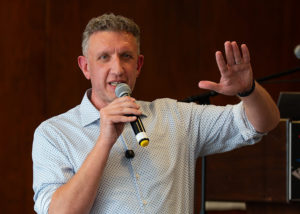
Chuck is a US-based internal communications strategist and the founder of ICology – a community and resource hub for IC professionals. He brings a practitioner lens to every conversation. Chuck is a recognised voice in the industry, a regular speaker and event host, and one of the most connected people in the North American IC world.
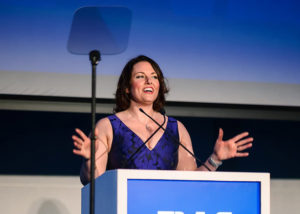
Jenni is a UK-based leadership and internal communications consultant, author of two best-selling books, and international speaker. She runs Redefining Communications, a consultancy working with organisations around the world to help them communicate better and close the gap between what leaders say and what employees experience.