
A CIPD evidence review Rob Briner surfaced reaches an uncomfortable verdict: there is no consensus on what organizational culture is, no reliable way to measure it, and no good evidence that culture change programs work. At best, culture is a description of behavior rather than a cause of it. Jenni is firmly in agreement and wants behavior change programs to replace culture workshops; Chuck thinks the profession may be overthinking it, because everyone knows what a broken culture feels like, and lands on a weather analogy that gives the episode its most useful distinction. Around that, Jenni brings Nick Bloom’s data on company age and working from home, Stephen Waddington on the 92% of corporate value that is now intangible, and a Harvard Business Review study finding AI intensifies work rather than reducing it — plus Chuck’s new entry in the workplace lexicon, job hugging.
Jenni opens with Nick Bloom’s LinkedIn post on company age and remote work — a genuine reply to the message she said last week she would send him — showing working from home is 50% higher in firms founded in the last ten years and 25% higher where the CEO is under 30, with careers built pre-pandemic pulling toward five days in the office and the under-40s toward hybrid or remote. The same split shows up in AI adoption, younger CEOs moving fast while older ones stay doubtful. Chuck’s first addition is the promotion penalty in Bloom’s wider research, where remote workers were markedly less likely to be promoted, which raises the question of whether the younger firms offering the most flexibility are also building an invisible ceiling. His second is that labeling this generational hides the power structure underneath: Bloom noted CEOs, particularly men in their fifties, experience the office very differently from everyone else, which is a fairly great feeling when the building is full of people who work for you. Jenni does not want the generational frame either. Her read is an empathy gap in leadership — believing someone else’s lived experience regardless of your own — plus a difference in appetite for risk, since anyone without a pre-pandemic frame of reference has no golden age to return to and will simply try things. Chuck’s line lands hard: any company mandating five days in the office is not leading with empathy, full stop.
Rob Briner’s post on culture change takes apart the standard logic — organizations have a culture, culture drives behavior, so to change behavior you change the culture — by running each step past the evidence in a 2022 CIPD scientific summary. What is meant by organizational culture: no consensus. The assumed logic model: unclear. Measurement: no consensus, limited evidence of reliability and validity. The link to performance: inconsistent, generally weak, and weak next to other factors. The effectiveness of culture change strategies: no good quality evidence available. Briner’s conclusion, which Jenni endorses without hesitation, is that culture is a description of behavior, not a cause of it — the way we do things around here — so anyone whose goal is changed behavior should work on behavior directly. Chuck’s worry is that the profession is overthinking it: culture may be hard to pin down academically, but everyone knows what a broken culture feels like, so the real questions are where and why you are trying to change it, and the answer is systems, incentives and policies rather than a lever marked culture. He also notes that 78% of Fortune 1000 CEOs put culture in their top three performance drivers, which the evidence does not support. Jenni’s experience with clients is that leadership teams will talk about values and culture all day and get visibly uncomfortable the moment behavior comes up, which is why years of workshops produce nothing on the other side. Chuck’s weather analogy is the resolution: weather is what changes hour to hour as people come and go, climate is the deeper condition that is actually studied and shifts slowly, and climate is the part leaders control — some functions face tornado warnings while others are sunny on the same afternoon. Jenni ties it back to the measurement work she did with Dr Kevin Ruck on the value of internal comms, and to the false hope that a culture, once created, will stay still.
Stephen Waddington’s Substack piece asking why public relations is still treated as overhead argues trust, governance and reputation are no longer soft assets but enterprise value, and cites the Ocean Tomo intangible asset market value study: tangible assets were 83% of S&P 500 market value in 1975 and 8% by the end of 2025, leaving intangibles at 92% of market capitalization. Jenni’s move is to take an argument written about PR and hand it to internal comms and HR, where engagement and employee experience are exactly the kind of intangible work teams are asked to justify. Chuck calls the fifty-year inversion remarkable and maps it straight onto comms — trust, reputation and confidence all have value and none of it can be picked up off a shelf, so comms, HR and employee experience should be read as value creators rather than support functions. He is careful not to overclaim: a large share of that 92% is software, brands, patents and intellectual property, not culture. His sharpest takeaway is that intangible carries no negative connotation, because if it did, 92% of the business would be a negative. Jenni’s challenge runs the other way — when she asks internal comms teams struggling with measurement what they are actually being asked to prove, nobody has an answer, which suggests the profession may have manufactured much of its own measurement problem.
The closing story is a Harvard Business Review report on an eight-month study at a US technology company, which found generative AI led employees to work at a faster pace, take on a broader scope of tasks and extend work into more hours of the day, largely without being asked — a productivity surge that risks workload creep, cognitive fatigue, burnout and weaker decisions, with the suggested correction being an AI practice of norms and standards including intentional pauses, sequencing and more human grounding. Jenni’s question is whether that is just a fancy word for governance. Chuck’s answer is that governance is a fancy word on its own, then concedes the finding is his lived experience: AI has intensified his work, he is doing things he could not do before, and where a CEO replied to his post about Claude Code by celebrating a drop in dev time, Chuck’s own coding time has gone from 0% to 100%. He does push on the sample — a 200-person tech company over eight months is not the average business — and brings back a Reddit thread about developers who miss the work itself, alongside the less charitable take that the group is overdue for disruption. Jenni recognizes the drowning feeling in what she can now produce, credits Chuck’s habit of blocking a couple of hours a week to play, and wonders whether the study’s extra hours were partly people playing rather than grinding. Her conclusion is that any tool needs a purpose and a problem it is solving. Chuck’s closing distinction is the sharpest one in the episode: are you benefiting from AI, or actually using it? He is a user, taking everything he can from the platform, while most people are quietly benefiting without noticing.
Is organizational culture change actually possible? The 2022 CIPD evidence review Rob Briner cites found no consensus on what culture is, no reliable way to measure it, weak and inconsistent links to performance, and no good quality evidence that culture change strategies work. His conclusion is that culture describes behavior rather than causing it, so changing behavior directly makes more sense.
What is the difference between organizational culture and organizational climate? Chuck’s analogy is weather versus climate. Culture is the weather — it shifts day to day as people join and leave, and one part of the company can be in a storm while another is sunny. Climate is the deeper, more measurable condition that changes slowly, and it is the part leaders can genuinely act on.
Why do leadership teams resist talking about behaviours? Jenni’s experience is that leaders will happily discuss values, culture and the whole picture, then get uncomfortable as soon as behavior comes up, because culture feels like it is over there and around us while behavior is about me. That discomfort is why culture workshops run for years without anything changing on the other side.
Does company age predict how much remote work a company allows? Nick Bloom’s data says yes. Working from home is 50% higher at firms founded in the last ten years and 25% higher where the CEO is under 30, and the same divide shows up in AI adoption. Jenni reads it as an empathy gap and a difference in appetite for risk rather than a generational preference.
What does it mean that 92% of corporate value is intangible? The Ocean Tomo study cited by Stephen Waddington puts tangible assets at 83% of S&P 500 market value in 1975 and 8% by the end of 2025. Chuck’s point for comms and HR is that intangible carries no negative connotation, since 92% of the business now sits in that category — though much of it is software, brands and patents, not culture.
Does AI reduce workload at work? The Harvard Business Review study found the opposite. Over eight months at a US technology company, generative AI led people to work faster, take on more tasks and extend into more hours of the day without being asked, which risks workload creep, cognitive fatigue and burnout. Chuck confirms it matches his own experience.
Chuck: Welcome to Frequency, I’m Chuck Gose.
Jenni: And I’m Jenni Field. Frequency is your go-to for real talk about comms, culture and employee experience. Beyond the buzzwords and straight to what matters. And what we’re going to be talking about today are some recent data into company age and working from home practices. We’re going to talk about whether organisational culture is really a thing, and the intangible nature of organisational value, as well as how AI intensifies work. But first, Chuck. What is on your mind this — I’m laughing because I can see it in the notes and I’ve got no idea what you’re going to talk about.
Chuck: I’ve got a new buzzword for us, Jenni. I saw this, and it explains something that I think I would have described very differently in the past, but the phrase is job hugging. I would have said this is kind of like hunkering down, keeping your head down. And this is a problem in the labor market, where people aren’t looking for new opportunities and new growth — they are job hugging. They are hanging on to their existing role because it might be stable, they’re comfortable. And they’re talking about the dangers of that, or the risks of that, in the job market. So we have a new one to add to our list. We’ve got quiet quitting and quiet cracking and all these other ones. Now we’ve got job hugging.
Jenni: Yeah, now we’ve got job hugging. Do you know what’s weird about this? As you were talking about it, I immediately had an image of an animal in my head hugging a tree. And I know that says more about me than anything else, but it’s a toss-up between a koala and a sloth, which I now have as a mental image whenever anyone’s going to talk about job hugging. That’s what’s in my head. That says more about me, doesn’t it? Okay, great. Thanks.
Jenni: So let’s kick off with the first article today, which is, does the age of your company determine your work from home strategy? So this was a post on LinkedIn from Nick Bloom, who I did message last week after our chat about Home Depot. And he did answer, so thank you, Nick. I’m very appreciative of that. He did a post on LinkedIn about work from home and company age. The data shows work from home is 50% higher in firms founded in the last 10 years, and 25% higher with CEOs under 30. There is a disconnect between the old and the new. So folks whose careers have been built pre-pandemic wanted the return to the five-day office work, while those under 40 want hybrid or remote in their firms. Interestingly, he goes on to say there’s a similar split in AI adoption. Younger CEOs and firms were rapidly adopting AI, older ones more doubtful. The split is also in the data, and it suggests that as younger managers and firms grow, work from home and AI will rise in importance. So my question for our discussion is, is this simply a case of generational divide in terms of organisational design and culture?
Chuck: I want to know first, does Nick know that he is sort of this pseudo guest celebrity on Frequency?
Jenni: No, I didn’t say that. I just asked him.
Chuck: I bet he is. We’ve talked about the work and his point of view and all that. I’m going to guess in probably six to eight episodes he keeps coming back up, for all of the right reasons. I think what’s interesting to me about this one is going into more of the research that talked about there’s this promotion penalty. So part of this trial that he did found that remote workers were 50% less likely to get promoted. So I’m curious then about, if younger firms are offering more work from home, is that also creating this weird invisible ceiling for people in their roles? And the other part that stuck out to me too is, I think it’s very easy to label this generationally, to think through, old believes this, young believes this. But I think it’s also worth talking about the power and the infrastructure that goes into this conversation, because Bloom also noted that CEOs — in the data, especially men in their fifties — they experience the office very differently from everyone else. So the way they relate to people in the office is very different than everyone else does, which might explain why that generational element is there. But I think it’s worth calling out also the power and the infrastructure that’s part of that, because it’s probably pretty great when you’re the CEO and in the office. That’s probably a really great feeling, to have all these people around you. The other part that stood out to me too was this parallel between work from home and AI, where the younger firms, younger CEOs with higher work from home rates, are also adopting AI faster. So is this creating another gap? We talk about this AI gap. Is this creating another gap that we see in the workplace?
Jenni: So I think there’s a couple of things for me in this. I don’t necessarily like the generational divide thing. We’ve spoken before about that generation piece, because I think it’s not linked to that necessarily. I think what this is linked to is possibly a bit of an empathy gap in leadership. So this is something I’ve been talking about while I’ve been doing my credibility work with leadership teams — making sure that we’re being aware of empathy, and how that is believing someone else’s lived experience regardless of your own. To your point that the office is a different experience for the CEOs: are we leading with empathy? Are we recognising that it is a different experience, and then what that looks and feels like? And I think that’s probably one of those practices that needs a bit more work in certain areas.
Chuck: I think any company that is mandating five days in the office is not leading with any empathy whatsoever. Let’s be clear about that.
Jenni: Yeah. I also think that this sort of alignment between the office and the AI, and this ability to test and do new things — for me that feels more like your appetite for risk, or the unknown, or any of those things around change. I think there is something of, I remember how it used to be and that was great, versus I don’t have any frame of reference so I’m just going to try stuff. And I think that is more the difference. If you didn’t have that company before the pandemic, or you didn’t work in that environment, you’ve got no frame of reference to go back to, to say, but this was great and this was brilliant. So therefore you’re more willing and open to try new stuff. And I think the AI piece is more your appetite for innovation and things that are different and risk. And I do think, maybe not generationally, but I wonder if the older you get, the more comfortable we get in our ways.
Chuck: You think?
Jenni: I feel seen. And how that means that you’re not as willing to try new things or do different stuff. We’ve talked a lot about the comfort that people have in terms of being at home, and the inconvenience that is a good thing that happens when you’re prioritising seeing your friends, or maybe going to the office, and some of those things. And I think there’s a reluctance to do that the older you get, I think. And I think that’s probably playing a role in here.
Jenni: Right, the next one I want to talk about is organisational culture change, and if it’s really a thing. So this was a post by Rob Briner, who’s posted about his work looking at culture change and asking if it’s really a thing. He says the logic is simple. Organisations have a culture. The culture drives behaviour and performance. To change behaviour and performance, you change the culture. But he goes on to say, what is a culture? Does it drive behaviour, and can it be changed? He references a CIPD review from 2022 which addressed some of these questions, and I’m going to put a link in the show notes to that report as well for people. But it says: what is meant by organisational culture? There is no consensus. What is the assumed logic model, in terms of how is it supposed to enhance performance? It’s unclear. How can organisational culture be measured? There is no consensus, and there’s limited evidence of reliability and validity. What is known about the link between organisational culture and performance? Inconsistent links, and generally weak, and particularly compared with other factors. What is known about the effectiveness of strategies to change organisational culture? No good quality evidence available. At best, he goes on to say, culture is a description of, not a cause of, behaviour. It’s the way we do things around here. If the goal is to change behaviour, then it makes much more sense to focus directly on changing behaviour. And this links to my freq-out later today too. I am firmly in agreement here. Chuck, if culture change isn’t really a thing, then what is the alternative?
Chuck: I’m worried we’re overthinking this a little bit, is my response.
Jenni: I love that you have said that!
Chuck: Because I can certainly appreciate that culture can be hard to pin down, especially academically, if you’re trying to look at the academics of it. But we all know what a broken culture feels like. So to me the question isn’t whether culture exists or not, it’s more where and how are you trying to change the culture, and why are you trying to change the culture? It’s not something you just pull a lever and then instant culture comes out. And Briner talks about culture being a description of a behavior, not a cause of it. That’s the opposite of what a lot of culture consultancies sell. So if you want to change what people do, change systems, change incentives, change policies — do all of that. I just worry that we’re overthinking this maybe a little bit. And I did go find this one data point, which I thought was interesting: that 78% of Fortune 1000 CEOs believe culture is a top-three performance driver. So that’s what that research says, but this other research doesn’t really back that up at all.
Jenni: Yeah. So I think what I love about this is almost what you said there, in terms of it’s the opposite of what a lot of culture consultants talk about. But the way a culture is shaped — even if you think about your family culture or other cultures — it’s through behaviours. It’s the behaviours that really link to that. And I think there is a reluctance to talk about behaviours and how much that impacts culture. So even if I think about my work on credible leadership, there are always conversations about culture and behaviours. What’s interesting, if I think of two examples with clients I’ve worked with, where we’re talking about the culture, getting to the behaviours and actually what needs to sit underneath it is hard. There is a bit of a reluctance, I would say, from leadership teams to actually talk about behaviours.
Jenni: Very happy to talk about values, very happy to talk about culture as a whole, very happy to talk about all of that. But when we get into the actual behaviour piece, for some reason this is where we start to get really uncomfortable. And I think this is why, for a lot of people, work has become quite a tough place to be, because we’re not looking at the behaviours. We’ve got all this fluffy stuff around it about culture, and we spend years talking about culture and doing workshops and it’s lovely, but nothing comes out the other side in terms of behaviours, accountability, what things need to change. So when he says culture is a description of, not a cause of, behaviour, I completely endorse that. And I would love us to focus more on behaviour change programmes rather than culture change programmes, because I think culture feels like that’s over there, it’s around us. Behaviour is about me, and that’s what makes it uncomfortable.
Chuck: I was thinking about this too when he used the term organizational climate and then organizational culture. To me, let’s put this in weather terms.
Jenni: You do love an analogy!
Chuck: I do, I love a good analogy. So the climate is something that is actually studied and consistent and changing. It’s like where the water temperature is rising, whatever degrees. That’s the climate. So when people talk about, it snowed today, what’s global warming? Well, that’s weather. That’s the stuff that changes on a daily basis, an hourly basis, season of the year, whatever. That’s sort of what the culture is — that as people come and go from an organization, that weather is going to change. That’s the day-to-day activity. But what’s the climate? That’s the part I think that leaders probably control the most.
Jenni: Yes, I quite like climate. We talked about it a bit in the report I did with Dr Kevin Ruck about the value of internal comms, and that sort of climate measurement of stuff, because I think it is changeable. And I think that’s probably part of the challenge here. I think we want to create a culture and then that culture just stays the same. Like, we create this, nobody leave, no one move, no one new join, and then the culture can stay exactly how it needs to stay. But that’s not real. That’s not real in any sense of relationships, families — people bolt on through marriage, different things. And I think there has to be an acceptance that that climate or that culture will shift, in part because people are people and they’re complicated, and therefore there’s different behaviours and different things show up. So I quite like climate, and I quite like the analogy about the climate change and stuff in there. God, I’m being very visual today. Okay, go on.
Chuck: Well, then you’re going to like this, because we’re going to go deeper into it. Where I live in Indianapolis, tonight we’ve got a risk of really severe thunderstorms, potentially tornadic, hail, all this stuff. That’s just here. Other parts of the country, it’s beautiful and sunny today. And I think if you look at that from a company standpoint, parts of your company are going to have challenges, they’re going to have issues. Other parts are going to be fine. But what’s the weather? What’s the climate? What’s everything looking like? That’s the part leaders can’t just go in and jump in on all the hot spots, I guess.
Jenni: Yeah, yes. Now I’ve got a map of the United States where, rather than the states, it’s the functions in an organisation, and then what the climate is on there. So it’s good, it’s good. Thank you very much.
Chuck: That’s it. There you go. Mission accomplished.
Jenni: Right, the next article today is about corporate value. So the headline was, if 92% of corporate value is intangible, why is PR still treated as an overhead? Now, this was in a recent Substack article from Stephen Waddington, who writes regularly about PR, the value of it, the strategic importance of it. And he’s talking about corporate value and PR today. He said, trust, governance and reputation are no longer soft assets, they are enterprise value. The global economy has shifted decisively towards intangible value — so brand, trust, intellectual property, culture and stakeholder confidence — yet the discipline most closely associated with these assets still struggles to assert its role in enterprise value creation. The latest intangible asset market value study by Ocean Tomu — Tomu? Tomo? I don’t know, but I’ll put a link in the show notes — makes the shift explicit. In 1975, tangible assets accounted for 83% of the market value of the S&P 500. By the end of 2025, that figure had fallen to 8%. So intangible assets now represent 92% of market capitalisation. This is a structural inversion of enterprise valuation. Yet in many organisations, PR remains positioned as a communication support function rather than a strategic management discipline. Now, I know that Stephen is talking more about PR, but for me this feels very relevant to internal comms and HR, when the work around engagement and employee experience is so intangible. So Chuck, what does this mean for demonstrating value, or even measuring success, for some of these functions in organisations?
Chuck: I think first off, I’m going to go with Tomo. I think Ocean Tomo. That is really cool data, to think about how much of a gigantic shift in 50 years, that that’s turned on its head. Essentially, this shows how business and the economy and everything else has changed, not just in the US but around the world. I think this maps perfectly to comms. Trust, reputation, confidence — all those things have value, but they are very intangible. You can’t go pick it up off the shelf. So it goes then to say that, if that’s the case, comms, HR, employee experience, they should be looked at as value creators. They’re helping deliver those intangible assets, not just simply support functions. But I do want to call out too, when you think about this intangible stuff, it’s obviously not only what I just talked about — trust, reputation, confidence, all of that. It is things like software, brand, patents, intellectual property, all of those things. That’s the part that’s changed the business. So I think it’s worth calling that out. But I love the way this maps, especially when comms has been plagued, for as long as we’ve been talking about ROI, with actually calculating that, because we’ve been looking for tangible things. I think now we can say a lot of the business is now completely intangible.
Jenni: Yeah. I think when I saw this — and I receive Stephen’s Substack emails regularly and I sort of always glance through them, but this one for me stood out the most, I think because it was just such a staggering number. 92% is intangible. And to your point, that ROI conversation is always there. I’m having so many conversations at the moment about the value of internal comms, what value does it bring and how do we measure that, how do we demonstrate that? If I was working in internal comms today inside an organisation, then I’d be getting this and going to my leader and saying, look, how do you measure all of these other things that are intangible? So this falls into that same bucket. Let’s look at that as an organisation, because I’m not sure that they are measuring some of these other things. I think there’s quite an acceptance of the intangibility of them, yet somehow we feel like we do have to.
Jenni: I also do wonder whether there is a genuine need to measure as much as we feel there is a need to measure. So a lot of times when I talk to internal comms teams who are struggling with measurement and I ask them, what are you being asked for? Nobody really has an answer, in terms of we’re being asked to demonstrate this or we’re being asked to prove this. It’s more a case of, we feel like we should. And so I wonder if we’ve created our own issues in here about how much we need to demonstrate it, if there is an acceptance of, do you know what, it’s intangible and that’s fine, and we measure intangible stuff this way, so this is how we’re going to do it. I’m not sure that link has sort of been pulled together.
Chuck: I think the other big takeaway, if I was in comms or HR on this, was the point of view that something being intangible is not a negative. There’s not a negative connotation to something being intangible. Because if that was the case, then 92% of your business would have a negative connotation. And I think now this is the point of saying there are parts of the business that are going to be intangible, and that’s fine. There’s still value created from that.
Jenni: Yeah, yes, 100%. And the final article today is a Harvard Business Review piece, which is, AI doesn’t reduce work, it intensifies it. So one of the promises of AI is that it can reduce workloads so employees can focus more on higher-value and more engaging tasks. But according to new research, AI tools don’t reduce work, they consistently intensify it. It was an eight-month study of how generative AI changed work habits at a US-based technology company. They found that employees worked at a faster pace, took on a broader scope of tasks, and extended work into more hours of the day, often without being asked to do so. Now, this may sound like a win, but it’s not quite so simple. These changes can be unsustainable, leading to workload creep, cognitive fatigue, burnout and weakened decision-making. The productivity surge enjoyed at the beginning can give way to lower quality work, turnover and other problems as well. The article says that to correct for this, companies need to adopt an AI practice, or a set of norms and standards around AI use, that can include intentional pauses, sequencing work and adding more human grounding. Chuck, is this just a fancy word for governance?
Chuck: I think governance is a fancy word on its own.
Jenni: You don’t think we need an AI practice?
Chuck: I don’t think we need to. But I get what — when you were reading through that, this is now my lived experience with AI. It has intensified the amount of work that I’m doing. I’m driving my wife nuts, being like, hey, look at this, hey, let me show you this, let me do all these things that I could not do before that I can do now. So I’m the opposite. I did a LinkedIn post about some quote unquote coding that I was doing on Claude Code. And a CEO of a company commented, yeah, Claude Code’s amazing, our dev time has gone down by some percentage, we’ve decreased the amount of dev time. And I’m like, that’s cool. Mine’s gone from 0% to 100% now. So we’ve got to be careful of — not careful, that’s the wrong word — we’ve got to be mindful of the work we’re asking it to do, and the reason and the purpose and all of those things. It is now — I do feel like it is a superpower for me, because I can accomplish things that I could not have accomplished on my own. So it’s intensified that work. But I do want to be careful of the study that they cite of this tech company. A 200-person tech company over eight months is probably not the most indicative of your average business when it comes to AI adoption, AI workload, all of that.
Chuck: I’ve been trying to spend more time on Reddit. I don’t know why. I think I miss Twitter. And so I’m on Reddit and I ended up in this Claude thread, and I was reading this thing about how there are a lot of developers now that miss coding. They miss doing the work, but the business is saying, this is how we have to do it. And so there’s this rise in dissatisfaction amongst developers, because this has really changed the expectations of what they do, when they were really happy with what they do. But I’ve also seen some other takes on it where people are like, this couldn’t have happened to a better audience, who were so self-righteous over the last 10, 20 years that maybe they were due for a little disruption.
Jenni: I love that take on it. I do think that you’re right, there is that intensity that comes with AI, and that you can achieve so much more than you could before that it becomes — there’s just so much. And I feel that. I feel like sometimes I can be drowning in the amount of stuff I can now do, which is horrible, because it does feel quite intense. But I think that’s also part of the play. You said to me the other day, I’ve allocated a couple of hours to play in the week so that I can really get into it and figure stuff out. I think that’s part of where we are as well. So I also wonder whether the changes that this study showed up, in terms of people doing more work, spending more hours on it — is it because part of that was them also playing with it? And we don’t know that it did end up being bad. It just says that this could get worse. But I think people are still playing, and I think there’s loads of data. We’ve talked about it a lot in previous episodes, in terms of the percentage of people using it versus the reality of how much impact that’s having. So I do think having time to play is really important. And I also think that you have to be purposeful with any tool, right? Like any tool you’re using. If you’re just going in and doing stuff for the sake of doing stuff — whether that is email, whether that’s in Canva, you know what I mean — you could waste time doing all sorts of stuff. There has to be a purpose. And that for me is always the root cause of anything like this. What’s the reason you want to use it? What’s the problem you’re trying to solve by using it?
Chuck: I think it’s worth too, in getting to those semantics — I love semantics — of, are you benefiting from AI or are you really using AI? Like, I am a user. This is a one-way thing. It gets nothing from me. I am sucking everything I can out of this platform. A lot of people are benefiting from AI without even realizing it. That’s the real beauty of the underneath layers of AI, is the benefits it can give. But, to your point, I am trying to take some breaks. My wife sarcastically last night, when she came home, she’s like, oh, what did you build tonight? And I was like, you know, I took a little break from it, because you’ve got to take a little break every now and then.
Jenni: Nothing, actually. Right, that’s it for our articles this week. What are you freq-ing out about?
Chuck: So my freq-out is Transform. And here’s why. Transform is an event that I attended two years ago, partnered with last year, and this year I’m running a day-long summit. My freq-out is I am so excited about the opportunity and the possibility with what’s happening at Transform. I am so excited about this, because the event hasn’t even happened yet and in my mind I’m already planning what 2027 is going to look like, because of the opportunity, because of the possibility. People can still join us at Transform. If you want to join my summit, you do have to sign up through my link. So reach out to me, find a LinkedIn post where I posted the link, something along those lines. I’ll put a link in the show notes as well for anyone. If you want to be part of our X Factor Summit, you have to sign up through my link. But it grew out of the frustration we talked about in a recent episode about events. So rather than just keep complaining about something not being out there, I’m going to build it. So that’s why I’m building at Transform. And I’m so excited about what we’re doing this year. I try not to forget about that — there’s still a lot of work to do — but I’m excited about what 2027 is going to become.
Jenni: Nice. And what are the dates for Transform? What’s the date for your summit?
Chuck: March 23rd through 25th, in beautiful Las Vegas. Call it a wellness retreat if you want. Come to Transform for your Vegas wellness retreat.
Jenni: Why not? And when’s the summit? The 23rd?
Chuck: On the 23rd, it’s a pre-conference summit, yep.
Jenni: Nice. Okay, good. I’m excited. I’m sad I can’t be there this year, but it’s on my list for 2027, as you know, to come along.
Chuck: Let’s just be clear, you chose to not be there, but we don’t need to get into that.
Jenni: I did, I chose to do something else. But yes, I am choosing to be there in 2027. So my freq-out this week is red cards. I was catching up with some clients this week — I’ve been out and about a little bit, catching up with people. And I heard a story this week about a situation where an advisor to an organisation was talking about culture. They are not a culture expert. They were not there to advise on culture, but they were talking about culture anyway. And they were talking to the board about the fact that they had identified kind of 60 behaviours that should be modelled in the organisation. That’s six zero. And if they see anyone not exhibiting that behaviour, or the opposite, then they should show them a red card. And they physically had a red card that they were encouraging the leadership team to show people if they weren’t exhibiting some of the 60 behaviours. And it left me mildly terrified, if I’m honest. I mean, I was almost speechless. But I just thought, 60 behaviours, first of all, is a lot. Showing someone a red card — I mean. Can I get any more high-pitched?
Chuck: I want to see this happen. I’m here for it. Because I love this — years ago I was frustrated with some of my travelling experiences, and I had a red card and a yellow card in my satchel, with the idea being that when I saw somebody exhibiting some poor behavior on an airplane, you just hold up yellow card, red card.
Jenni: Can you imagine? Did you ever do it?
Chuck: I never did. I kind of chickened out on it. But it sounded like a really good idea. It sounded like a good idea.
Jenni: Yeah, I can see the thought process behind it. I just thought, please don’t do that if you’re working in an organisation, as a leader in an organisation. Just do not show somebody a red card. Have a conversation, maybe, about the behaviours. Maybe.
Chuck: Yeah, but maybe it’s like when I see on the soccer or football matches where the referee runs up and they show the card and then they have a little chat about it, but they never change their mind. It’s like, that’s the card.
Jenni: Yes. Yeah, no. It’s not going to take off. So thank you for joining us this week. All the articles and a few of the other reports that have inspired this conversation are in the show notes. And don’t forget to rate and review after you’ve listened. Subscribe so that you don’t miss another episode, and pass this along to someone that you think would enjoy listening or watching, because we’re also on YouTube. Thank you to Poet Ali for contributing the music to the show. We’re back every Monday with more news, insights and opinions about everything comms and leadership in workplaces today. Keep tuning in and turning up.
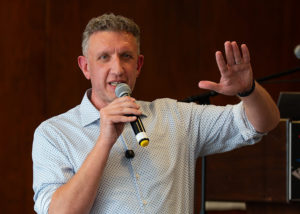
Chuck is a US-based internal communications strategist and the founder of ICology – a community and resource hub for IC professionals. He brings a practitioner lens to every conversation. Chuck is a recognised voice in the industry, a regular speaker and event host, and one of the most connected people in the North American IC world.

Jenni is a UK-based leadership and internal communications consultant, author of two best-selling books, and international speaker. She runs Redefining Communications, a consultancy working with organisations around the world to help them communicate better and close the gap between what leaders say and what employees experience.