
Opening the final episode of 2025, Chuck reveals he calculated the podcast’s total output for the year at 25 hours and 41 minutes, with zero guest episodes — just Chuck and Jenni. Both hosts compare notes on their various “Wrapped” features this year (Spotify, Apple Music, LinkedIn, Strava, Whoop, and even their recording platform Riverside’s own wrap, which flagged “AI” as their most-repeated word), setting up a countdown of the year’s 10 defining workplace themes.
Jenni opens the countdown with the middle management crisis, noting managers now oversee 15-20 direct reports (up from 10-15 two years ago) with only 27% globally feeling engaged, before moving to the persistent gap between hybrid work reality and RTO mandates — 85% of hybrid roles require at least two office days while only 19% of employees actually want full-time office work. The third theme, leadership transparency over authenticity, has both hosts agreeing that employees want honesty about real motivations rather than polished corporate messaging, though Chuck argues the tension between manufactured “authenticity” and truth isn’t going away anytime soon.
Covering AI adoption anxiety (usage doubling from 21% to 40% of employees, with 41% citing cost as prohibitive), Chuck notes companies increasingly can’t stop employees from using personal AI subscriptions regardless of official policy. On the persistent challenge of proving internal communication’s value despite its link to 72% higher profitability, Chuck suggests data may not actually be the right tool for demonstrating that value. Discussing change fatigue — employees now taking one to two years to return to normal productivity after organizational change — both hosts agree leaders need to abandon expectations of quick bounce-backs, while on purpose-driven employment, Chuck references the book Tiny Experiments to question whether purpose itself might be an overrated career driver compared to focusing on concrete outputs.
On communication overload versus underload, Chuck argues that volume complaints are usually really about irrelevance — communication that’s genuinely relevant is rarely experienced as “too much.” Discussing cultural intelligence in global workforces (90% of leadership content reflects individualistic values despite 70% of the global workforce holding collectivist values), both hosts stress the importance of honestly assessing organizational culture rather than relying on idealized values statements. The final theme, the productivity paradox, has Jenni noting that real estate costs, not performance data, often quietly drive return-to-office mandates — with Chuck recommending books like Slow Productivity by Cal Newport and The Productivity Diet by Mike Vardy for anyone trying to make sense of what “productivity” even means for office-based work.
Closing the year, Chuck shares five predictions an AI generated from the podcast’s own 2025 transcripts and news coverage: a “great manager reinvention,” hybrid mandates finally being explained honestly rather than hidden behind “culture and collaboration” language, AI trust-building preceding AI skills training, internal comms potentially being rebranded or absorbed into broader organizational functions, and purpose becoming a measurable “performance currency.” Jenni is skeptical that predictions about renewed manager investment will actually materialize, having heard similar promises before, while both hosts agree to check back on the predictions’ accuracy partway through 2026.
Jenni’s freak-out celebrates her yearlong running journey, from barely completing a Couch to 5K program to now regularly running 40-minute interval sessions with her husband, describing catching herself moving fast enough that a passing dog walker noticed. Chuck’s freak-out questions the sudden proliferation of “corporate storyteller” job titles following a Wall Street Journal article on the trend, arguing storytelling is a skill to cultivate across roles rather than a job title in itself, while briefly also lamenting Pantone’s underwhelming 2026 color of the year, “Cloud Dancer.”
What were the 10 defining workplace themes of 2025, according to a year of Frequency episodes? The middle management crisis, the hybrid-versus-RTO gap, leadership transparency over authenticity, AI adoption anxiety, comms’ persistent value/ROI problem, change fatigue, purpose-driven employment, communication overload versus underload, cultural intelligence in global workforces, and the productivity paradox around return-to-office mandate.
Why do organizations keep thinning out middle management layers, and what’s the cost? Managers now oversee 15-20 direct reports, up from 10-15 two years ago, with only 27% globally feeling engaged, per data Jenni cites in the year-end countdown — the cost shows up in weaker manager support and engagement across the teams they oversee.
Why is there still a gap between what employees want from hybrid work and what RTO mandates require? 85% of hybrid roles now require at least two office days, while only 19% of employees actually want full-time office work — a persistent gap both hosts flagged repeatedly across 2025 episodes as one of the year’s defining tensions.
What are Frequency’s five AI-generated predictions for workplace trends in 2026? A “great manager reinvention,” hybrid mandates finally being explained honestly rather than hidden behind “culture and collaboration” language, AI trust-building preceding AI skills training, internal comms potentially being rebranded or absorbed into broader organizational functions, and purpose becoming a measurable “performance currency” — generated by AI from the podcast’s own 2025 transcripts and news coverage, with Jenni skeptical the manager-investment prediction will actually materialize.
Why is “productivity” so hard to define and measure for office-based workers? Because the metrics driving decisions often aren’t really about productivity at all — Jenni notes real estate costs, not performance data, often quietly drive return-to-office mandates — and Chuck recommends books like Slow Productivity by Cal Newport and The Productivity Diet by Mike Vardy for anyone trying to make sense of what “productivity” even means for office-based work.
Jenni: Welcome to Frequency, I’m Jenni Field.
Chuck: And I’m Chuck Gose. Frequency is your go-to for real talk about comms, culture, and employee experience — beyond the buzzwords and straight to what matters. Jenni, as we prepared for this final episode of 2025, I was reflecting on old-school David Letterman top-ten lists, because we’re going to go through ten themes that have caught up with us this year of doing the show. As we’ve seen across all these different platforms, I want to give a shoutout — I’m not a Spotify paying customer, so for years, when everyone shared their Spotify Wrapped, I always felt left out as a loyal-by-default Apple Music user. I never got that. I’d hear stories of people modifying their Spotify Wrapped so they didn’t have to admit certain things, or wanted to look cooler by adding obscure bands. Anyway, I love that “Wrapped” has become this feature — it’s a good way to reflect and take stock of impact. This is episode 38 of Frequency, and we can’t predict the future, so we don’t know exactly how long this episode will run, but thanks to our AI friends, I calculated how many total hours and minutes of Frequency we produced this year. I wasn’t necessarily surprised by the number, but I was impressed — it was 25 hours and 41 minutes of just us. The other number worth noting: how many guests did we have? Zero. So that’s more than a full day of just listening to Jenni and me. Thank you to everyone who’s given up more than a day of their life to listen to Frequency this year.
Jenni: I love that — 25 hours and 41 minutes of us, what joy. And how much more will it be next year, since we only actually started in March this year? On the Wrapped topic — just like you, I used to feel envious of Spotify people, since I don’t get that either. But this year I’ve had more Wrapped features than ever: Apple Music Wrapped, Strava Wrapped, Whoop Wrapped from my fitness watch, and LinkedIn did theirs too, which was good fun. I’ve been inundated with Wrapped content this year, which is honestly nice.
Chuck: It is nice, and I was relieved when you sent me your LinkedIn Wrapped and it named me your top connection — I forget the exact word — because I thought, this could get awkward if it’s not mutual. Thankfully, I was yours too. It did get a little awkward when my wife Kristin shared that I was hers.
Jenni: Fair — I was genuinely relieved on your behalf, because if I were the one keeping up with you the most and you weren’t doing the same for me, we’d have had words. It was also interesting seeing that Riverside, where we record this, released their own wrap — quite clever, since it included a clip of just us laughing, which I shared on LinkedIn, and also the word we said most, which is comically just “AI, AI, AI” back and forth.
Chuck: Just shows how central that’s become to what we’re all doing. As you said, we’re going to run through the ten key themes we’ve covered across those 25 hours and 41 minutes this year, and then a few predictions for next year.
Jenni: I’ll go through them, and I know you’ll have thoughts on each. First is the middle management crisis — organizations have been dramatically thinning out that layer, with managers now overseeing roughly 15 to 20 direct reports, up from 10 to 15 two years ago, and only 27% of managers globally feeling engaged at work, creating a cascade effect on team engagement and organizational direction. I don’t think it’s a surprise this made the top ten, though maybe not as prominent as return-to-office, which I’m sure is coming up.
Chuck: I’ll try to keep my responses quick so we get through all ten. I think this is a maybe-not-so-subtle, genuinely problematic layer underneath so many challenges across organizations and industries — something that’s been building for a while, and we’re just now calling it out explicitly. We’ll see if anyone actually fixes it.
Jenni: Second is our favorite topic — hybrid work reality versus mandates. The data shows 85% of hybrid roles require at least two office days, with companies increasingly pushing for four, while only 19% of employees want full-time office work and 70% prefer remote or hybrid arrangements. That disconnect between preference and mandate keeps driving turnover among top performers.
Chuck: I think this is where mandates are getting far more attention than the reality of what’s actually working — the data clearly shows hybrid is what’s succeeding and what employees want, and hopefully employers start listening. This might be the topic we’ve disagreed on most this year.
Jenni: Only because I got bored of it, not because I disagree — it just is what it is at this point, 25 hours and 41 minutes later. Third is leadership transparency over authenticity — organizations are moving away from “authentic” communication that often feels manufactured, toward honest, transparent leadership. Employees want supportiveness and transparency during constant change, not polished corporate speak obscuring real motivations. I love this one.
Chuck: I agree with the part about ditching polished messaging for more supportive communication, but I don’t see a real move away from “authenticity” itself — I think that tension between what we want people to believe and the actual truth is always going to be the challenge comms and HR leaders face. That’s where I want transparency to win out over performative authenticity.
Jenni: Great point. Fourth is AI adoption anxiety — AI usage has doubled from 21% to 40% of employees, but 41% cite cost as prohibitive and nearly a third are unsure how to implement it, with trust issues emerging whenever AI produces inaccurate information, meaning organizations need to build trust before pushing skills training. We touched on AI anxiety in a recent episode too.
Chuck: Companies benefit from this regardless of official policy, because employees are just going to start paying for their own subscriptions to ChatGPT, Claude, or Gemini and use them whether the company sanctions it or not.
Jenni: I’ve definitely spoken to more people in just the last month using Copilot far more than they were three months ago — it’s clearly gaining traction as part of everyday work. Fifth is the value of internal communication — organizations with excellent internal comms are 72% more profitable, and moving from good to excellent communication can boost engagement scores by around 40 points, yet over half of practitioners still struggle to demonstrate that value through data. This connects directly to the valuing-internal-comms report Dr. Kevin Ruck and I produced earlier this year — that struggle with proving value isn’t going away.
Chuck: It’s never going away, but I want people to actually try to solve it — maybe data isn’t the right lever for demonstrating that value in the first place.
Jenni: Yeah, and it’s worth asking how much data you genuinely need. Sixth is change fatigue and recovery time — employees now take one to two years to return to normal productivity after organizational change, due to compounding layers of change, and leaders need to acknowledge that extended timeline rather than expecting a quick bounce-back. I love how simply that’s put — leaders just need to accept this takes longer than they’d like.
Chuck: I think this comes down to leaders recognizing how much change employees are actually absorbing — I’m not even sure we ever really return to “normal” productivity, whatever that means. Maybe it’s more like one step back, two steps forward, repeated — you’re making progress, just not at the pace leaders expect, and simply acknowledging that matters.
Jenni: Completely — and I think there’s a real issue with leaders being task-focused by preference rather than people-focused, which is exactly why they don’t give people the space to process change properly, because it can have a real impact. Seventh is purpose-driven employment — employee engagement, at 62%, ranks as the top measure of leadership success, above even customer satisfaction, with organizations rethinking recruitment to focus on purpose, growth, and wellbeing beyond salary.
Chuck: I hope organizations are rethinking this, though I doubt all of them are — maybe the smart ones. I’m reading a book right now called Tiny Experiments, which argues purpose might actually be overrated and overvalued as a career driver. I’m not saying purpose is bad, but are we overrating it? I’m curious to revisit that in 2026 and see how it shapes people’s careers.
Jenni: I’m interested in that too. Eighth is communication overload versus underload — 74% of UK employees report receiving the right amount of communication, but receiving too little has a more negative impact than receiving too much. Email remains dominant at 65%, though generational preferences vary significantly, with 19% of Gen Z relying on SMS or WhatsApp versus only 5% of boomers.
Chuck: I think this is where communicators lean too much on anecdotal evidence — “people say they’re getting too much” — when really they’re getting too much of what doesn’t matter to them. If the content is relevant, it’s rarely experienced as too much, even at the same volume. Leaders, HR, and comms need to get better at personalizing and targeting communication for relevancy — that’s the real lever. We tend to overreact where underload happens, when people feel left out or uninformed.
Jenni: You’re absolutely right, relevancy is the key thing, and I still feel there’s a real gap in getting personalization right across the channels people actually use. Ninth is cultural intelligence in a global workforce — 90% of leadership content focuses on individualistic values, yet 70% of the global workforce holds collectivist values. Organizations need real cultural intelligence to lead effectively across diverse, remote, and hybrid teams. Sarah Blakely — sorry, Sarah Black — will be delighted this made the list.
Chuck: I think whenever a company can honestly evaluate its own culture — not every culture has only positive aspects — and dig into what’s actually driving behavior rather than the idealized values it puts out publicly, that honest assessment becomes especially important as remote and hybrid setups multiply.
Jenni: And that individualistic-versus-collectivist distinction feels really important — understanding cultural intelligence and what people genuinely care about as individuals is going to matter a great deal for organizations. Tenth and finally, the productivity paradox — leaders struggle to define what productivity even means, especially for office-based workers, yet still use it to justify return-to-office mandates, when the real driver is often real estate cost rather than performance data. That creates trust issues once the honest reasoning goes uncommunicated. It’s exactly your earlier point — what is productivity, and how are we even defining it?
Chuck: It’s one of those things we all intuitively recognize but struggle to actually define or measure, especially in office environments. I think it’s worth reflecting on your own time — where are you spending it, and is the value you’re providing actually what the business needs? That speaks to a lot of what productivity really is.
Jenni: I’m currently reading The Productivity Diet by Mike Vardy, and I read Slow Productivity by Cal Newport a couple of years ago — both genuinely useful for making sense of productivity in this environment. I’ll link both in the show notes. So that’s the full ten — any surprises for you?
Chuck: No, I think that’s a pretty solid summary of those 25 hours and 41 minutes — there were real ebbs and flows, but things like RTO, AI, and middle management came up succinctly across nearly every episode, backed by research, studies, reports, and news. That feels like a genuinely solid top-ten list.
Jenni: Would you call these ten trends of 2025?
Chuck: I wouldn’t call them industry trends exactly, though they were certainly trends if you were listening to our episodes. So based on these themes, we asked AI to generate five predictions for 2026 using all our transcripts plus relevant news coverage. Here’s what it came back with, Jenni. Number one: the great manager reinvention. With managers overseeing 15 to 20 direct reports and only 27% feeling engaged, 2026 will force organizations to choose — either reinvest heavily in manager development and reduce spans of control, or face a cascading management crisis. Companies that survive will run intensive manager engagement programs focused on coaching rather than control, recognizing managers account for 70% of team engagement variance. Companies that don’t act will see engagement scores plummet as the one-to-two-year change recovery period compounds with ongoing restructuring. What do you think?
Jenni: I love this prediction and hope it comes true, but I feel like I’ve heard it before — I recall McKinsey making a similar “this will be the year of the manager” call about two years ago, and here we are instead stripping managers out. So I’m not sure it’s come true yet, but I do love the point about the compounding impact of that one-to-two-year change recovery on organizational success — I’m less worried about the engagement scores themselves and more about what it means for actual organizational success.
Chuck: Looking at all five of these predictions, I’d treat them less as forecasts and more as questions to bring back to your own organization. Don’t literally ask about “the great manager reinvention,” they’ll laugh you out of the room — but ask what you’re doing to support managers in 2026, look at the actual data on direct-report ratios, manager retention, departures, and regrettable attrition, and put a real plan together, because you need those people. Number two: hybrid gets honest. The slow creep toward more office days finally reaches a breaking point — organizations stop pretending RTO mandates are about culture and collaboration and start being transparent about real estate costs and leadership preferences. That honesty, paradoxically, builds more trust than any manufactured policy. Smart companies define specific moments that genuinely require in-person presence rather than arbitrary day counts, treating office time as a strategic tool rather than an attendance metric.
Jenni: I don’t think the honesty is quite there yet on why people are being brought back, but I do see more organizations looking at the strategic question of what people should actually do once they’re in the office. I think comms and HR will be instrumental in making sure office time has real purpose. I’m also fascinated by the broader ripple effects — there was a recent UK report about London running out of office space because so many buildings were sold off for housing, and I still hear about organizations mandating a return only to realize afterward they don’t have enough room, which is baffling. I think there’s a long way to go, but I hope these “moments that matter” in the office become more vibrant and bring back some of the joy that seems to have disappeared from work.
Chuck: If there’s one thread I’d hold myself accountable to across all these episodes, it’s that we need more honesty from leadership — starting with simply saying, I want you in the office, you might not like it, but at least it’s honest, rather than hiding behind “culture and collaboration.” And being mindful, like we’ve said, of that dreaded all-hands-on-Thursday problem — does anything actually get done when everyone’s just crowded into the same day? Number three: AI trust before AI skills. Organizations abandon mandatory AI adoption mandates after recognizing 48% of employees fear job replacement and trust has been broken by AI hallucinations. 2026 shifts toward AI trust-building programs addressing autonomy, creativity, and transparency concerns before pushing implementation — companies learn you can’t mandate transformation without addressing the human fears driving resistance first.
Jenni: I love this, and I really hope it happens.
Chuck: This one feels a bit too idyllic to me — a dream state. I think smart organizations might genuinely pause and address some of this, but others will just keep pushing forward regardless. I also think there’s personal accountability here too, employees needing to raise their hand and ask questions, which requires the psychological safety to actually do that.
Jenni: And as you were reading it, I was thinking — this sounds lovely, but it has to happen simultaneously, not sequentially. You can’t spend six months next year on trust-building programs and then move to implementation — that’s not realistically how this rolls out. You have to build trust while implementing change at the same time, and I think that trust challenge is actually bigger than AI itself — how do you keep running and stay productive while building trust concurrently? That feels like its own thread worth pulling.
Chuck: Number four — this one’s going to bother some people, Jenni. Internal comms gets rebranded or absorbed. The conversation about renaming internal communications intensifies as the function evolves beyond channels and messages into employee experience, culture design, and organizational effectiveness. Some organizations merge comms with HR and people teams, others with strategy or operations, and the debate over whether internal comms should exist as a standalone function goes mainstream, with successful integrated models emerging across HR, IT, and leadership development.
Jenni: I genuinely don’t know what to say — I thought, people are going to hate this. I don’t think it gets rebranded, but it could get absorbed, though we need to define “absorbed,” because internal comms is already rarely a standalone function — it usually sits within HR or marketing or wherever. So is that really a shift if it already sits there? The bigger question for me is what internal comms is actually there to do — is it channels and messaging, or the bigger cultural and organizational-effectiveness work? That tension is what I think will really come to the fore.
Chuck: I see the strongest organizations integrating internal comms across all of those areas rather than keeping it standalone — a big part of what everyone does, not unlike health and safety, where the function sets guidance and understands what’s happening across the business without personally executing every activity. I see it as being the expert who’s integrated throughout, not always the one pushing every button — and yes, it evolves beyond channels and messages, but there will always be a need for channels and messages too.
Jenni: Completely agree, and that health-and-safety comparison is genuinely useful, because it’s about understanding where your remit as a function ends and where everyday organizational communication begins. That’s where advisory and strategic skills really matter, because that’s the part AI can’t replicate — that consultancy layer.
Chuck: Number five: purpose becomes performance currency. With 62% of leaders citing employee engagement as their top success metric, above even customer satisfaction, and 72% rethinking recruitment beyond salary, purpose-driven work becomes a measurable KPI. Organizations create purpose scorecards alongside financial metrics, recognizing that in a world of constant change and AI disruption, meaning-making is what retains top talent — companies that can’t articulate genuine purpose beyond profit keep losing their best people to ones that can.
Jenni: This is particularly interesting given your earlier comment that purpose might be overrated. The bit that resonates is “meaning-making” — we often talk about sense-making instead, and I think that’s what I’m hearing more of: there’s so much happening and organizations aren’t helping people make sense of what it actually means for them individually. Is that a purpose scorecard? I’m not sure, but if we’re genuinely discussing “the best purpose scorecard” this time next year, I’ll eat my hat.
Chuck: This might be the hardest prediction to believe. Going back to Tiny Experiments — the author argues purpose is too outcome-focused, when you actually need outputs to reach any outcome. If you’re not focused on your day-to-day outputs, you’re never going to achieve the outcome. Her point is essentially: scrap chasing “purpose” directly, figure out the concrete things you need to do, keep doing them, and see what outcome you actually arrive at — you can’t just declare you want to become something, you have to decide the specific actions that get you there and evaluate along the way.
Jenni: It sounds like what they’re saying is you need a future vision and then take action toward it to see if it’s really what you want — or do you just do things and figure out your purpose retroactively?
Chuck: A bit of both — she profiles people across different careers who felt they had one defined purpose, only to discover their real purpose was something entirely different they backed into by accident — fashion designers, community gardeners, all sorts of examples.
Jenni: I’ve got a lot of thoughts on that — we’ll save it for next year. So that was our top five predictions, which we’ll revisit at the end of next year to check. The underlying thread through all of them seems to be that 2026 will be the year organizations stop pretending they can control their way through transformation and start building the transparent, trust-based, human-centered cultures the data has been pointing to all along. We’ll see if that holds.
Jenni: We should check in midway through the year to see if we’re even halfway there on any of these.
Chuck: We should — and then we can hold AI accountable, since these weren’t our predictions, this was AI’s own determination based on everything we covered in 2025. Jenni, as we wrap up this final episode of the year — we’ve ended every episode with a freak-out, so what’s yours here at the close of 2025?
Jenni: Mine’s a little freak-out about my running journey this year. This time last year, I decided to learn how to run and did a Couch to 5K program over about nine to twelve weeks. Whenever I tell people I “learned how to run,” they look at me strangely, but I genuinely couldn’t run a mile without stopping — I had to learn proper breathing and everything. I’ve kept it up all year, trying to get my 5K time as close to 30 minutes as possible, and this morning I was out doing interval runs — fast, then slower — which I still dread starting. Coming around a corner, a couple of dog walkers who’d seen me on the other side of the loop remarked, “gosh, he came around here quickly” — meaning me — and I had this real moment of realizing, I’m actually running now, genuinely enjoying it, a year on from barely managing two minutes, now doing 40-minute sessions, sometimes at real speed. I did stop right after that corner because it was the end of my interval and I was knackered, but it gave me a real moment of being proud of myself, which I’m generally bad at, so I’m taking the win.
Chuck: Good for you, genuinely — I’m glad you enjoy running, I do not. When you talked about relearning how to run, it reminded me that as kids we just ran everywhere constantly, and as adults we stop entirely. I remember years ago sprinting to make an airport connection and realizing mid-run that I hadn’t actually run in ages — it’s not like riding a bike, your body sort of forgets how.
Jenni: It’s been brilliant for me — I also injured my shoulder this year and had to stop CrossFit, so running became a genuine lifeline since I like staying active, and it’s stuck with me far longer than I expected. Heading into next year, it’s become a real part of my week, and my husband runs too, so we’ve run together on holiday and at weekends, which has been really lovely. That’s my freak-out — what’s yours?
Chuck: I’ve got two, a quick one and a longer one. First, Pantone releases its color of the year annually, and while it’s not exactly deeply inspirational, I always find it interesting — and they could not have picked a more boring color for 2026. It’s called Cloud Dancer, basically an off-white. That’s apparently what we’ve got to look forward to from Pantone next year. My other freak-out is something I’ve seen circulating on LinkedIn this past week — maybe the Wall Street Journal regrets this now — an article about the “corporate storyteller” title showing up more and more in job postings, and the entire comms industry latching onto it as validation, like, see, we’re important, people are finally noticing us — which has some truth to it. But let’s be mindful that storytelling is a skill, not really an individual job title on its own — a corporate storyteller could sit in marketing, product, comms, or HR. So let’s pump the brakes a little and spend 2026 actually identifying who the genuinely great storytellers already are in our organizations — there are people we all know who are brilliant storytellers, and people who never quite get to the point — and cultivate that skill deliberately, rather than treating a job-title trend as mission accomplished.
Jenni: Fair. There’s been a lot of “storyteller” talk this week, and I wondered if it’s partly an evolution of “good writer,” with people choosing that language because they feel AI can now do the writing itself, so they need to call the human skill something else to demonstrate its value.
Chuck: I think that’s a different thing, though — are we rebranding writing itself as storytelling?
Jenni: I’m not saying it’s right, just wondering if that’s part of what’s happening. And that’s it for this episode and for 2025 — thank you for joining us this week and across all 25 hours and 41 minutes of it. All the articles that inspired these conversations throughout the year are linked in the show notes. Subscribe so you don’t miss another episode, and pass this along to someone you think would enjoy listening or watching — you can also find Frequency on YouTube. Thank you to Poet Ali for contributing the music to the show, and we’ll be back in the new year with more news, insights, and opinions about everything comms and leadership in workplaces today. Keep tuning in and turning up.
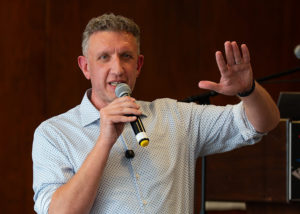
Chuck is a US-based internal communications strategist and the founder of ICology – a community and resource hub for IC professionals. He brings a practitioner lens to every conversation. Chuck is a recognised voice in the industry, a regular speaker and event host, and one of the most connected people in the North American IC world.
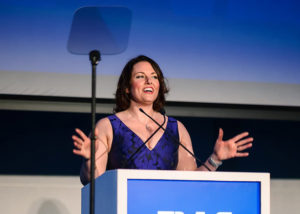
Jenni is a UK-based leadership and internal communications consultant, author of two best-selling books, and international speaker. She runs Redefining Communications, a consultancy working with organisations around the world to help them communicate better and close the gap between what leaders say and what employees experience.