
Chuck and Jenni open 2026 with a list of the leadership and comms habits that should have stayed in 2025. A Forbes piece argues employee happiness predicts stock performance — Jenni’s response is that what it actually measures is the baseline of leadership. Her own read of the year’s trends leads to a question about whether “internal communication” still describes the job. A LinkedIn debate asks whether buzzwords are harmful or occasionally useful, and Chuck disagrees with the author. And the research behind the open-plan office finds face-to-face interaction down 70% and the square footage per employee down by roughly the same — which Chuck argues was always the actual point.
The first episode back opens on the end-of-year ins-and-outs genre, which Chuck found mostly self-serving — his example being the people who listed “bullying” as an out, as though that needed saying. The exception he credits is a list from Gab Ferry, formerly of Bumble and Slack, which put vanity metrics, AI fear, manual reporting and winging it alone on the way out, and AI operations, reporting to the CEO and navigating with community on the way in. That prompts Chuck’s own list, delivered at speed: quote-unquote authentic leadership that is really scripted, loneliness framed as a comms problem to solve, return to office as a culture strategy, generational friction as an excuse for why things are not good, AI treated as a tech problem instead of a trust problem, both the AI-will-fix-everything and the AI-will-ruin-everything mentalities, AI treated as a tool rollout instead of a culture shift, meaningless company values, corporate authority parading as true leadership, change fatigue treated like an employee weakness instead of a leadership signal, transparency treated as information sharing instead of meaning sharing, and blaming managers for disengagement while setting them up to fail. The phrase he wants retired outright is “human sustainability”.
Jenni brings a Forbes piece on new research from Irrational Capital, which found that S&P 500 firms in the top tier for employee happiness outperformed the bottom tier by nearly six percentage points over an eleven-year period, and identified six drivers: innovation, direct management, organisational effectiveness, engagement, emotional connection and organisational alignment. The underlying work is published in Harvard Business Review. Her objection is definitional. What the research actually measures is people feeling energised, respected and supported, which she argues is the baseline of leadership rather than happiness — and she is unconvinced that “innovation”, described as employees being motivated when their ideas are welcomed, is innovation at all, or that “direct management” is anything other than communication under a stranger name. Chuck reframes it again: what is being measured is closer to being content, and given what is happening in the world, an organisation could do all six of these things at an exemplary level and still not produce happy employees. His RACI analogy is the useful part — an employer is not responsible or accountable for your happiness, but it absolutely impacts it. What is clear from the data, he concedes, is that the organisations doing these things are seeing the effect on performance.
Jenni’s own LinkedIn article, What are the trends shaping internal comms and the workplace in 2026?, reads about fifteen reports and sorts what it finds into three categories: the main themes affecting the workplace, the practical and tactical insights, and the bigger thinking about the future of the profession. She is careful to say these are insights and predictions rather than trends. The pattern she keeps hitting is a split — short-form video and email sitting alongside arguments about time replacing pay as the commodity that matters at work — which leads her to the question at the end of the article: does “internal communication” still describe what the function does in organisations today? Chuck’s answer is no split. Every profession carries a tactical layer and a big-picture layer, and which one someone gravitates to says more about the individual than the discipline. What he wants instead is accountability: trend posts have none, where Scott Galloway’s annual predictions get marked against reality the following year. Jenni’s counter is that reading fifteen sources at once is precisely how you spot the agenda in any one of them, and she points to a comment on her post insisting the readiness gap will be the theme of the year — which turned out to trace back to a single forthcoming Gallagher report. Where she does hold ground is role clarity: other functions know who does what, and comms job titles do not make that clear.
The buzzword segment comes from a Rob Briner post shared by Bob Sutton, author of The Friction Project. Briner’s argument is that buzzwords are silly because they imply a completely new behaviour has been discovered, when quiet quitting is just employees doing what is required and no more, and task masking is old enough that “look busy, here comes the boss” has been found on an ancient Egyptian tomb. His practical objection is sharper: if you believe you have found something new, you will also believe no existing evidence or theory can help you deal with it. He also suspects that heavy users of buzzwords lack the expertise their vocabulary implies. Briner lands on more harmful than helpful; Chuck disagrees. Giving a feeling a name is what makes people aware of their own behaviour, and jargon can be a unifier for the community that shares it rather than a barrier to everyone else. His example is employee experience — unmistakably a buzzword ten to fifteen years ago, now a job title. Jenni’s concern is the chaos a new label can generate. The question Chuck thinks is more useful than harmful-or-helpful is simply whether you should be using them at all.
The closing story is a LinkedIn post from Marcin Pilarczyk collecting the research on open-plan offices: face-to-face interaction down 70%, eight minutes of open-office noise raising negative mood by 25% and sweat response by 34%, a 62% increase in sick days, and the irrelevant speech effect impairing tasks that need short-term memory. The number that carries the argument is the square footage — traditional offices required 200 to 250 square feet per employee, open-plan runs 60 to 150. Chuck’s response is blunt and consistent with everything he has said about return to office: it always comes back to money, and the collaboration story was the cover. He would rather leadership said so. Jenni’s question is what the office should now be, given people are being mandated back into buildings that have not been redesigned to hold them — and whether this is a sunk cost fallacy, having invested in the space, or a reason to reimagine the office entirely. Chuck’s answer is that the honest version of workplace design, with real flexibility and some structure, may not exist yet, but chasing it beats selling people something everyone knows does not work. Jenni also notes she could not find sources in the original post and had to trace the research back herself, to The Conversation.
Does employee happiness actually predict company performance? The Irrational Capital research says yes — S&P 500 firms in the top tier outperformed the bottom tier by nearly six percentage points over eleven years. Jenni’s caveat is that what is being measured is people feeling energised, respected and supported, which she argues is the baseline of leadership rather than happiness.
Are organisations and leaders responsible for employee happiness at work? Both hosts say no. Chuck’s RACI framing is the clearest version: an employer is not responsible or accountable for your happiness, but what happens at work absolutely impacts it — no differently from what happens outside work.
Is the internal communication profession about to split in two? Jenni thinks the split between big cultural leadership work and day-to-day tactical work is already forming, and questions whether the label still fits. Chuck disagrees — every profession carries both layers, and the real gap is role clarity in job titles.
Why are trend posts less useful than predictions? Because nothing happens if a trend is wrong. Chuck’s model is Scott Galloway’s annual predictions, which get revisited the following year and marked as right or wrong — accountability that trend content never carries.
Are workplace buzzwords like quiet quitting and task masking harmful or helpful? Rob Briner argues more harmful than helpful. Chuck disagrees: naming a behaviour is what makes people recognise it in themselves, and jargon can unify a community rather than exclude it. Jenni’s worry is the chaos a new label creates when people assume nothing existing can help them.
Why do open-plan offices not work, and what should the office look like in 2026? The research collected in the post shows a 70% fall in face-to-face interaction and a 62% rise in sick days. Chuck’s answer to the design question is that the honest version may not exist yet, but chasing it beats selling people a collaboration story that covers a cost saving.
Jenni: Welcome to Frequency, I’m Jenni Field.
Chuck: And I’m Chuck Gose. Frequency is your go-to for real talk about comms, culture, and employee experience — beyond the buzzwords and straight to what matters. And what matters, Jenni, is it is 2026. We are back with our very first episode of the year. It is good to be back. One of the things I’ve learned over the last couple of weeks — well, I knew this about myself long before this — I do not like routine things, but I need routines. And doing this podcast was a big part of that weekly routine, so I’ve missed having it. It is good to be back. I would ask you how your holidays were, but I feel like I lived it through Instagram. I feel like I knew exactly who you were hanging out with, what you were doing, your pictures of your feet, trains, all the above.
Jenni: Yeah, I love my Instagram stories, I can’t stop it. And it’s nice, people kind of follow along. Had a lovely time, went to see the seaside, hung out with the family, ate loads of food. I mean, you literally saw everything, so yes, it was lovely. Had a great time.
Chuck: I did. I love the photo of you doing the puzzle, doing the puzzle, doing the puzzle. I have questions about that we’ll save for another time. But one of the things during our break that we were talking about was — it’s a bit of a cliché — people doing these ins and outs. What are you leaving behind in 2025? What’s coming in for 2026?
Chuck: And I would say, like a lot of content, I was mostly disappointed in what people were creating, because like all things, whether it’s trends or these things, it’s always very self-serving. It’s like, out: bullying people in 2025. In: being kind. Well, yeah, you shouldn’t have been bullying people in 2025, right? Come on. We know that.
Chuck: There was one, though, that I sent you, that I did want to give credit to, that I felt was actually somewhat helpful and honest. Gab Ferry, I believe is her name — she’s on her own now, but she was at Bumble and Slack and in the comms world. She had things like out: vanity metrics, AI fear, manual reporting, winging it alone. I’m like, okay, those are respectful things. And then in: AI operations, reporting to the CEO, navigating with community. Those are kind of good, helpful guiding things to give people some guidance.
Chuck: So we thought, let’s just do a list of things we think people should be leaving behind in 2025. I’m just going to run through some of these. It’s a bit of an exhaustive list — we clearly want to leave a lot behind. Quote-unquote authentic leadership that’s really scripted. We know we’ve got to leave that stuff behind. Loneliness as a comms problem to solve. Return to office as a culture strategy. Generational friction as an excuse for why things aren’t good. AI treated as a tech problem instead of trust. The AI-will-fix-everything mentality, and also the AI-will-ruin-everything mentality. AI treated as a tool rollout instead of a culture shift. Meaningless company values — I wish we could say that’s going to be left behind, but I have a feeling that’s going to stick around forever. This might be my favourite one: corporate authority parading as true leadership. Change fatigue treated like an employee weakness instead of a leadership signal. Transparency treated as information sharing instead of meaning sharing. Blaming managers for disengagement while setting them up to fail. And then a word we are absolutely leaving behind, but I guess we’re kind of bringing it into 2026 because we’re never saying this phrase again: human sustainability. So those are some of the things we suggest you leave behind back in 2025. Jenni, what do you have lined up for us this week?
Jenni: I love those. I really enjoyed that exercise of going through what you want to leave behind in 2025 — it was quite cathartic. So we have a bevy of LinkedIn articles to discuss today. We’ve got stuff from the science behind open-plan offices, to whether buzzwords are actually helpful, to one of my latest articles on the trends — your favourite topic — shaping internal comms and the workplace for 2026. But we’re going to start with employee happiness.
Jenni: Now, if you’ve listened to us before and you’ve heard any previous episodes, you know that I take a bit of an issue with the belief that organisations or leaders are responsible for employee happiness, because they’re not. So when I saw this article from Forbes, I thought, this is going to be interesting. The headline is, new data shows the surprising payoff of employee happiness. It says new research reveals a surprising predictor of long-term stock growth, and it’s not pay or perks, it’s employee happiness. Irrational Capital analysed years of public and private data and found that companies where people feel energised, respected and supported are the ones that consistently outpace their peers. It goes on to say that S&P 500 firms in the top tier for employee happiness outperformed those in the bottom tier by nearly six percentage points over an eleven-year period.
Jenni: But let’s be clear on what they’re saying here. They’re saying that the people who feel energised, respected and supported are happy. So that’s kind of the root of the word happiness in this, and I think that’s important to call out. The research highlights six factors that most powerfully predict employee happiness and stock performance. We’ve got innovation, which they said is the strongest predictor of employee happiness and long-term performance. They describe innovation as employees being more motivated when their ideas are welcomed and their perspectives influence how work gets done. I’m not sure that that is innovation. Direct management — that refers to clear, honest and timely communication from leaders. I’ve never heard it referred to as direct management, but there we go. Organisational effectiveness, how well a company removes obstacles that slow people down. Engagement, shaped by whether people feel supported in their growth and development. Emotional connection, reflecting the depth and quality of relationships people have with one another. And organisational alignment, so when a company’s external mission matches the reality of its internal culture. Now, Chuck, are we confusing happiness with the basic expectations of leadership, in terms of focusing on people feeling energised, respected and supported?
Chuck: I think we’re confusing happiness with simply being content with things. Because honestly, without getting political, I don’t know that with everything going on in the world right now, I don’t know how anybody can be happy if you’re remotely dialled in to what’s happening around the world. I saw this Instagram post — someone has this “days since the US has been an embarrassment to the world” counter, and it says zero, and they wipe it out and put another zero on it. Especially as an American, I don’t know how you can really be happy.
Chuck: We’re going to get back into the work stuff. To your point, this is the baseline stuff. This is what people just should be doing. You could be doing all of these things at an exemplary level and your employees still might not be happy because of all this other stuff that is happening out there in the world. So happiness might be this really great target that’s completely out of your control. And I was thinking about it from the old RACI format thing — your employer is not responsible for your happiness, they’re not accountable. I know the other C and I in RACI don’t really fit, but they impact it. What’s happening at work will absolutely impact your happiness, no differently than what’s happening outside of work. So I think that, to your point, this is the baseline. This is what leaders should be doing. It’s clear, though, that the ones doing these things — whatever word you want to call it — are absolutely having an impact on performance.
Jenni: Yeah. And what do you think about this number two, which is direct management, which refers to clear, honest and timely communication from leaders? Like, as a phrase, direct management. When I read what it meant, I was like, I’ve never really considered direct management.
Chuck: I mean, it feels like communication is part of that, but not wholly that. I don’t know if it’s mislabelled or whatever. I get it’s an ingredient, but not the enchilada there.
Jenni: Yeah, I just — why would you not just have communication? It just feels a bit strange that that wouldn’t be the one. So yeah, I was thrilled with reading that article. So, moving on into trends, which I know is your favourite topic. I’ve written an article on LinkedIn, which is called, what are the trends shaping internal comms and the workplace in 2026? Now I do go on to say in the article that these are not trends. They are insights and predictions at best. Basically, every year I read as many reports and articles as I can find about the trends, and then I try and summarise that into an article on LinkedIn. I read about fifteen different reports or articles, and the article breaks it into three categories. So we’ve got the main themes that are impacting the workplace, then we’ve got sort of practical and tactical insights, and then there’s some bigger thinking stuff that links to the future of the profession.
Jenni: And what was really clear to me in reading all of the reports and articles is this split. So this kind of big thinking, profession-changing predictions, and then the tactical, practical insights for the day to day. You can really see that in the articles and the reports that people have produced, because we’ve got things like short-form video and email and these sorts of things. But alongside that, we’ve got some big stuff about time being the new commodity at work rather than pay. So how do we adjust the employee experience to be more flexible? There’s lots of stuff in there, and it feels like this year is possibly going to be the year that there is this split in the profession, because the question I come to at the end of the article is: does internal communication really describe what the function does in organisations today? A topic we’ve touched on in the podcast already, because I’ve worked with organisations to help them build credible leaders, communicate clearly and build cultures that thrive. But talking about working in internal communication doesn’t quite feel like the right label. And I think that’s part of the split. You’ve got the bigger cultural leadership stuff, and then the day-to-day. So my question for you, which you’re probably going to answer with something different — are we going to see a split in the profession in 2026?
Chuck: Well, I’ll answer your question. No, we’re not going to see a split. But let me get back to, first off, I love how you acknowledge how much I adore these trends posts — and then we kick off the first episode of the year not just talking about trends, but an article that you also wrote about trends.
Chuck: So yes, there is not going to be a split. I think this is the challenge of any profession out there. There’s that day-to-day tactical stuff that you have to deal with, then there’s the big picture stuff. And I think this just shows where individual minds are. Here’s what I want to do, though. If we’re going to do these trends posts, I would much rather see a predictions post, because then I think you can come back and tell people if they were right or wrong on these things.
Jenni: Happy — we’ll have this conversation next year, that’s fine.
Chuck: There’s a gentleman, Scott Galloway, that does these annual predictions every year, and they’re very often very transactional, very detailed, very business focused. When he does his predictions the next year, he goes back and talks about where he was right and where he was wrong. There’s no accountability to the trend stuff. To me, it’s marketing fluff that might get some people talking, but it’s not impacting the day-to-day things of what people are doing at work.
Jenni: And I think that’s why I’ve started doing this every year — reading all the stuff, because a lot of it comes from tech firms, so you’ve got that sort of bias in terms of what they’re saying. And it is just based on what people think is going to happen. Some of them are tech firms who have got different insights from different industries, and some are consulting firms, so you’ve got different agendas for what these predictions are going to be. And that’s why I think it’s important to look across them and see what’s really coming up again and again. Because somebody commented on my LinkedIn about the readiness gap, and that that’s going to be a big theme. And I was like, that comes up in one post, and that’s from Gallagher, who are doing a state of the sector report where they’re going to talk about the readiness gap. So that’s interesting, because someone else has pulled that in. There’s definitely some interesting stuff out there, and I think you’re right, a lot of it is linked to their own agenda and the marketing desire. But when there’s fifteen…
Chuck: But I like the idea — whether it’s part of Frequency or I do it as part of ICology — of going out to our broader community and saying, give me a really good prediction. One that you want to be held accountable to. And I’ll be curious to see how many get offered up. Because if they’re not real, I’m not going to count it.
Jenni: Yeah, so you should do it, because in our last episode to wrap the year, we did our five predictions that came from AI. So we’ve got those. If you then did it with ICology — give me your predictions for the year — then we could bring those two together next year to do a bit of a review. Because I do feel like there is a bit of a split, whether it becomes this year or if it comes in the future, to your point of every function having that in terms of the tactical stuff and then the bigger thinking stuff.
Jenni: The difference is there’s just such clarity in roles of who’s doing that in some of the other functions. And I’m not sure in comms we’ve got that clarity of role in job title and split and how that works, that it’s clear who’s doing what. And I wonder maybe if it’s a job title thing that’s going to shift. I don’t know.
Jenni: Right. I’m going to move us on from your favourite topic into the topic about buzzwords. And this was another LinkedIn post, from Rob Briner, who shared some of his views on some 2025 HR and work behaviour buzzwords. He’s titled it “Are buzzwords bad?” And his post was shared by Bob Sutton, who’s the author of The Friction Project, which is a book I’m currently listening to. But Rob’s post, I really, really liked it. He said when he was looking at it, his initial thoughts were that some of the recent buzzwords were a bit silly and distracting, but there’s a bit more to it.
Jenni: And he says one reason that buzzwords are silly is that they imply some completely new behaviour has been discovered. So he talks about quiet quitting, and then says, haven’t employees always chosen sometimes to do only what’s required but no more? He also talks about task masking — the expression “look busy, here comes the boss” has been found on an ancient Egyptian tomb. So some of these things that we think are new big buzzwords actually have existed for a really long time.
Jenni: He’s asking the question, does it really matter? And he says it does. From a practical perspective, if you think you’ve found something completely new, then you’ll also believe that there won’t be any existing evidence or theory that could help you to manage or deal with it. And I think that’s where that sort of chaos and fear and anxiety can churn through. He says another problem is that buzzwords give the impression that the user has expertise or authority — human sustainability — and it seems more likely that keen users of buzzwords may in fact lack expertise and should not be treated as authorities. I enjoyed his post. But he then goes on to explain more, basically saying there’s quite a lot we need to do to distinguish buzzwords from other stuff. He’s saying they’re not new, they’ve existed since around 1946. How do you distinguish a buzzword from a fad or jargon or slang? So how do we kind of separate those things out? And also he’s saying that while buzzwords have negative consequences, they may also have some benefits — encouraging people to get interested in something new and maybe taking action. So he’s got a bit of a going on both sides, but he ends saying, I can see that buzzwords are interesting and more complicated than I thought, but I still think that overall they’re probably more harmful than helpful. So Chuck, I know you also love a buzzword — helpful or harmful?
Chuck: I agree with you. It feels like he’s playing both sides of the game here. He’s on both teams. I’m going to disagree with him and say I think they’re probably more helpful than harmful. I would say probably more buzzwords are harmful, but I think sometimes you can give a feeling a name — when people can actually identify it as something, and then people become aware of it, that’s where I think it is helpful. The harmful ones, yeah, there might be people out there. I used to joke when I focused more on the social media marketing stuff, I’d be like, you clearly read the Mashable article about that thing, because that’s all somebody talked about in a meeting. Is that really harmful in the grand scheme of business? No. Does it hurt them? Probably.
Chuck: So I think the more interesting question, maybe from a grammar standpoint, is jargon versus slang versus buzzwords. There’s a lot of people who will say, oh, you have to get rid of corporate jargon. Well, no — sometimes jargon is a unifier. If there’s a term that your community understands that unifies them, even if someone on the outside doesn’t. I don’t know if helpful or harmful is the more helpful question. It’s just: should you be using them or not? And to his point around quiet quitting, of course people have been doing that forever. Task masking, I think, was another one — of course, been doing that forever. But all of a sudden you become aware that’s a name, I’m doing that, and now it gives me a chance to reflect back on my own behaviour.
Jenni: Yeah, it’s interesting, because based on his article and what you’re saying, it’s the positive side that it shines a light on something and it makes people reflect and look at it. His point about the fact that if you think you found something new, you’ll believe there’s no evidence to help you manage or deal with it, I think is quite interesting from a workplace culture perspective. And when we see so much content now in terms of Instagram and TikTok and the news and wherever you’re getting your stuff — if you suddenly hear something, it might make you feel like, this is so new, how do we deal with it, what do we do? And it throws up that chaos, whereas actually it doesn’t need to do that. It’s been around for a long time and there’s loads of strategies for dealing with it. So I’m a bit mindful of that in terms of the chaos agent that a buzzword could be, and what that implication could be for either individuals or organisations.
Chuck: Well, I’ll give an example that I think people might not even think of as a buzzword, that it once was, and that was the term employee experience. I would say within the last ten to fifteen years, that kind of became a thing, became something people gravitated to. Employees have been having experiences since there were employees. But until a name was given to it, did it give a focus and attention to it? Maybe some positive, some negative. But I don’t think people would call employee experience a buzzword anymore — at one point it very much was.
Jenni: Now I’m wondering about the evolution of buzzwords to kind of normal words, to then normal society, to then roles. Do you know what I mean? Like, how many buzzwords actually make it all the way through? Because now we’ve got heads of employee experience and all of those things. Are we going to have — probably not the head of quiet quitting, because that’s probably not something anybody wants to do. But that’s quite interesting in terms of what makes it through, and why does that get through versus other things.
Chuck: Well, just sort of that evolution of language. It’s actually pretty remarkable to see how phrases, words, whatever, become part of who we are.
Jenni: Yeah, amazing. So the last article we’ve got today is another LinkedIn post, and this was basically called The Open Office Is a Lie. It was a post from Marcin Pilarczyk, which hopefully I’ve said correctly. And he shared quite a lot of data and insight about the open office format being unhelpful for work. Basically, the research tells us that face-to-face interaction declined by 70% in open offices. Eight minutes of open office noise increases negative mood by 25% and sweat response by 34%. A 62% increase in sick days for open office workers. And background chatter impacts performance — it’s linked to some research on the irrelevant speech effect, which demonstrates that background speech impairs cognitive performance, particularly for tasks requiring short-term memory and rehearsal, because it interferes with your working memory process.
Jenni: So the case being put forward in the article is that really it’s all about money, and that traditional offices typically required about 200 to 250 square feet per employee, while modern open offices are kind of 60 to 150. So we’ve got a lot less space and therefore saving lots of money. I wanted to talk about this because the return to office is coming into force for a lot of people this year. I know a lot of people I’m friends with are now having the mandate of everyone back to the office, but having to wait for the office to be remodelled in order to accommodate everybody coming back, because no one’s thought about it. So if we’re thinking about the office in 2026, and open plan doesn’t work, I suppose my question is, what should the office look like in 2026?
Chuck: Well, before we get to that question — do we know how they measured sweat response? And an increase in that response?
Jenni: So I do know, because I’m going to have to get it up. Hang on. I do know, because I put the article into chat — well, I have not verified any further — because there was no, what’s the word, sources or anything for the stuff he was sharing. I actually think I used Claude. Hang on, all the different AIs going on. I’m going to find it.
Chuck: Well, regardless, I’m going to start making up different responses to things. Talk about sweat response. Anyway, I think the point here is everything comes back to money. It always comes back to money, but they try to sell it as something else. So when people were in offices, and there was open offices — like, wait, we can save money if we put everybody in cubicles and decrease the space, but we’re going to tell people it’s because it’s better for collaboration and you get to see everybody and blah, blah. No different than the return to office. It always comes back to money. That is the ultimate driver. And I wish leadership would just be honest about that.
Jenni: Yeah, you’ve talked about that all the way through in terms of that financial piece. I have found the source of it — it’s from The Conversation, who did a piece of research. But it’s making me wonder what the modern office needs to look like, because I do think that does need to be different. If you are asking people to come back in a more flexible way, and everyone’s talking about the fact there’s no meeting rooms, or why am I going into the office when I could be at home — they need to look different. And I think that doesn’t necessarily mean they need to be bigger and they need to cost more money. Is this a sunk cost fallacy, that you’ve invested the money so let’s get people back, and then they’re going to spend more money because of the electricity and everything else? Or do we just reimagine the office entirely and rebuild completely different ones, because we know that open office doesn’t work and it hasn’t worked for a long time, and the office now needs to be something different anyway?
Chuck: Yeah, again, but it’s going to come back to money. It’s going to come back to, if we can do something different that’s less expensive, we’re going to sell people on it because we’re going to get them to believe that it’s something else. I would love to see an honest — maybe that’s out there somewhere — workplace design. What is truly where you have some flexibility but some structure? What does that look like? Because then you have to think about all the different working styles that everyone has. How do you combine that? It’s a very tricky situation. It might not exist. You might be chasing the perfect office design forever. But I would rather them chase that than try to sell people on something they know does not work.
Jenni: Yeah. But I mean, I think that’s been the story of 2025, isn’t it? We’ve tried to do so many things that haven’t worked — like the wellbeing stuff has been proven that that doesn’t work. If you ignore that completely, it’s going to have massive consequences. So maybe this is the year that we stop ignoring the data and the insight, and start listening to it and actually taking some action on the back of that. Which would be lovely, wouldn’t it?
Jenni: Right, those are our articles for our first episode back. So we’re onto our freq-outs for this episode. I’m going to go first, because my freq-out is my Wankernomics book. For anyone unfamiliar with Wankernomics, it’s a comedy duo who have done a lot of sketches about the corporate world and how we communicate and what we say and what we do, and they published a book, which I was given at Christmas, which is just really making me laugh. So it’s all the little things that we do at work that sound a bit wanky, essentially, is what they’re saying. They do explain what wanker means in the front, which I thought was actually very helpful for people that might not know.
Jenni: But it’s made me become very aware of the way people talk on things like LinkedIn. There have been a few examples — and I said this to you the other day — I’m going to start my own notes of Wankernomics, because I keep seeing stuff on LinkedIn now. Once you see it, you can’t unsee it. And I’m not going to share all of them, because some of them have been related to some of my content. But I did see this one yesterday, which is a good example of what I mean. Somebody had posted saying, in 2026, you probably don’t need a communication strategy. What you might need is a corporate and executive reputation plan. That is an example of what you would find in the book. It’s really good. It’s making me laugh, and it’s making me laugh at ourselves, and I think sometimes that’s a good way to start the year.
Chuck: We need to do that. I think I sent you one the other day that somebody posted. It’s people trying to be so far out in front. And I think the term was composable software. And I’m like, what? When I’m reading this, they write about it as if everybody knows what that is, and I feel like I’m pretty up on things, and I’m like, I don’t even understand what this term means. So I think it’s good to reflect back on our own language and the things that we say — and we say them because we think it’s going to make us sound good, when it makes us sound, to use some of your language, like a wanker.
Jenni: Yeah. Even on a call yesterday, I think I said to somebody at the end, you can do that if you want to, but that’s not an ask from me. And I was like, who talks like that? No one talks like that. What I should have said was, you can do that if you want, but you don’t need to. That’s a normal way of saying it. But this whole “is that an ask?” — and I’ve clearly been in that environment where people have been saying it. But once you hear it or see it, you just can’t stop it. So it’s bringing me some joy and a little bit of cringiness on my own behalf. So what is your freq-out today?
Chuck: Well, again, self-reflection is good. So my freq-out, thank you for letting me go last on this, is — over the holidays it was a lovely time. It was good to step away, unplug. I even came back and I couldn’t figure out why my keyboard wasn’t working. It’s because it died on me. So that’s not my freq-out. My freq-out is that a couple of days after Christmas, we said goodbye to our dog, Scotty.
Chuck: And for those that, if you don’t know what my wife and I do, we rescue senior dogs. They tend to be senior pitties, for people that like pit bulls. And we give them their best life possible. They’ve typically come to us where people have failed them in their life. We get them, we do everything in our power to give them their best life. And so Scotty, when he came to us, he was a cruelty confiscate. He was surrendered weighing 25 pounds, skin and bones, through a rescue, came to us. He was a very healthy 75 pounds. And I was trying to think about why this one has felt different to me. And that’s because I also lost a friend. Thinking about him — would it be in this corner over here? Just such a loss for us. I am grieving not a dog, but a friend. So that’s my freq-out.
Jenni: Yeah. It’s a lovely freq-out. And I’m really glad that you’ve brought him into the podcast, because there’s been a few times where we’ve been recording and, before we turn on, I can hear him sort of behind you, or he might have a little growl, or you might be like, need to go for a walk. He’s been there the whole way through for us, just listening, learning so much. Let’s be honest, his dog knowledge of the world of work has come on twentyfold in the last sort of eight months. So I’m really pleased you shared that. And I know we chatted a bit over the break. I’m so sorry for your loss, because I know it’s a big one. But I also know that there’ll probably be another one that comes into your life, and you will make that dog’s life brilliant in the same way that you did for Scotty. You will.
Chuck: Yeah, we will. We always said we’re going to take a little break, and these dogs seem to find us. So when that time is right, we will absolutely welcome our home and bring in another one.
Jenni: Yeah, absolutely. And I can’t wait to meet them when you do, because that’ll be lovely. You’ll have to bring some photos into the podcast to show everybody.
Jenni: Well, thank you for joining us this week for our first episode back of 2026. All the articles that have inspired this conversation are in the show notes. And don’t forget to rate and review after you’ve listened. Subscribe so that you don’t miss another episode, and pass this along to someone that you think would enjoy listening or watching, because you can find Frequency on YouTube as well. Thank you to Poet Ali for contributing the music to the show. And we’re back every Monday with more news, insights and opinions about everything comms and leadership in workplaces today. Keep tuning in and turning up.

Chuck is a US-based internal communications strategist and the founder of ICology – a community and resource hub for IC professionals. He brings a practitioner lens to every conversation. Chuck is a recognised voice in the industry, a regular speaker and event host, and one of the most connected people in the North American IC world.
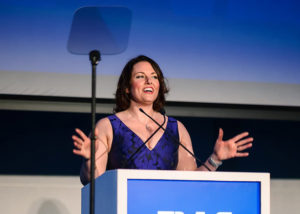
Jenni is a UK-based leadership and internal communications consultant, author of two best-selling books, and international speaker. She runs Redefining Communications, a consultancy working with organisations around the world to help them communicate better and close the gap between what leaders say and what employees experience.