
Jenni comes back from two days at the Gallagher Summit in London with a notebook full of stats, plus new research on how employee experience shapes behavior, a viral podcast clip questioning whether venting actually helps, and a Forbes piece asking whether AI is about to break the century-old Monday-to-Friday work week. Chuck, for his part, wants help naming a LinkedIn behavior he can’t stand: pointing out everything that’s wrong with no interest in fixing it.
Jenni brings new research from the Integral Index 2025, a study of 2,000 US employees conducted with the Harris Poll, examining how experience and perception drive workplace behavior. Among the findings: only 54% of employees say major organizational changes are communicated clearly with reasons explained, and senior leaders are 33 points more likely than non-managers to believe their organization rewards performance — alongside a generational AI-fear gap, where 40% of workers aged 18–25 express concern about AI compared with 26% across all age groups. Chuck names the leader/employee perception gap “altitude bias” — the higher up someone sits, the more positive their view — and argues it becomes demotivating fast once employees sense favoritism or proximity bias behind promotions leaders see as purely merit-based. His practical read for communicators: this gap is only an opportunity if you’re willing to tell the true story of how performance is actually evaluated — never spin a story you don’t believe yourself. Jenni connects it back to values alignment, describing a recent leadership-team observation where reward decisions were being discussed with no apparent link back to the organization’s stated values at all.
Fresh from two days at the Gallagher Summit in London, Jenni shares a run of stats: data from Ipsos Karian and Box suggesting organizations now take one to two years to return to “normality” after a change project, not the quick bounce-back people assume; a session from Sarah Black on cultural intelligence finding 90% of leadership content is built around egalitarian, individualistic values, even though 70% of the global workforce is collectivist; and further Karian and Box data showing only 56% of UK employees think their organization’s strategy is the right one, 55% trust their CEO or most senior leader, one in four organizations plans redundancies next quarter, and only half of UK employees feel leaders understand the challenges employees face. Chuck notes the numbers cut both ways — roughly half trust, half don’t — and questions whether leadership genuinely wants to know how employees feel at all. Jenni counters with an example from the summit: a leader who spent a full year listening to a thousand employees in groups of twenty to thirty, despite her own board resisting the idea — which Chuck immediately recognizes as the “ostrich effect,” avoiding data you suspect will confirm what you already fear.
Jenni raises a clip from Diary of a CEO’s episode with Dr. K, arguing that negative emotion is the primary motivator for change — so venting it away removes the very drive that would otherwise fix the problem. Jenni connects this directly to internal comms conferences and LinkedIn “negative signaling,” worrying that communicators may be collectively venting at events and online rather than converting frustration into action, which could explain why the same conversations recur year after year with little progress. Chuck admits the idea reframes something he’d always assumed was healthy, while owning that he’s a committed grudge-holder himself — but lands on a distinction: venting in service of solving a problem is productive, venting purely to feel heard, with nothing changing afterward, just resets the same frustration for later.
Jenni’s last story is a Forbes piece asking whether AI could end the traditional Monday-to-Friday, nine-to-five work model — a structure she traces back to Henry Ford’s push for a two-day weekend around 1908, designed partly so workers would have leisure time to enjoy his cars. The article cites a McKinsey estimate that automation could displace 400–800 million jobs worldwide by 2030, and a claim from OpenAI’s Sam Altman that AI will handle 95% of what marketers currently use agencies and strategists for. Chuck is fully on board with a four-day week in principle, but can’t identify who actually holds the authority to unwind a 120-year-old institutional structure, comparing it to his other pet idea of abolishing time zones entirely — changes that reshape not just work, but school calendars, retail and healthcare shift patterns, and the very language of “weekend.” Jenni, who has run a four-day week in her own consultancy since going independent, hopes the shift comes faster than another 120 years, but isn’t optimistic anyone with real authority over the question is looking at it yet.
Why do senior leaders and employees disagree so much about whether performance is rewarded fairly? New Integral Index research finds a 33-point gap between the two groups — what Chuck calls “altitude bias” — and both hosts agree the only fix is communicators telling the true story of how rewards work, not a flattering one.
Does venting actually help solve workplace problems? Not on its own, argue the hosts, drawing on a Diary of a CEO clip — negative emotion is what drives change, so releasing it through venting alone can remove the motivation to actually fix anything.
Why is there such a mismatch between leadership training and the global workforce? Cultural intelligence research cited at the Gallagher Summit finds 90% of leadership content assumes individualistic values, while 70% of the global workforce is collectivist.
Could AI actually shorten the standard work week? Both hosts think a four-day week is overdue, but neither can point to who has the institutional authority to change a Monday-to-Friday structure dating back to Henry Ford in 1908.
Chuck: Welcome to Frequency, I’m Chuck Gose.
Jenni: And I’m Jenni Field.
Chuck: Frequency is your go-to for real talk about comms, culture, and employee experience — beyond the buzzwords and straight to what matters. Jenni, to kick off this week — health and energy. When we recorded last episode, both of us were, to borrow your word, a bit poorly, and I was genuinely worried about the energy of that episode. We powered through and actually kept the energy up pretty well — pat on the back — while acknowledging neither of us was at our best. We love doing this, so we’ll keep pushing through it, and someday we’ll unpack why we keep trudging along regardless.
Jenni: Fair — I’ve told people this week that after ten episodes, I’ve learned my tell: if I’m tired or unwell, I just get more ranty and irritated. So if I’m really going for it, you know I’m under the weather.
Chuck: Then I must be tired constantly, because I always feel a little ranty. A couple more things before we get into your stories — first, I want you to tell listeners more about Comms Reboot, since ICology and I are now supporting the Toronto event later this month.
Jenni: Yes — very exciting. We’re bringing Comms Reboot, the communications unconference, to Toronto thanks to the team at ContactMonkey, on June 25th. We’ve got about 50 people registered already, with a maximum capacity of 80, so I’m hoping we fill every seat. I’m thrilled to have you and ICology involved — not just so ICology members can attend and benefit, but to have your expertise in the room alongside our other partners helping facilitate: Panaki from Local Wisdom, Andrea from Vision to Voice, Priya from Inner Strength, Rebecca from Bucket List, plus the ContactMonkey team. Genuinely strong expertise in that room. Tickets are still under a hundred dollars, so I’m hoping we get all 80 seats filled.
Chuck: Looking forward to it — it’ll be great spending time with you in person rather than virtually. Last thing before your articles — I need your help naming something. It’s this behavior I keep seeing on LinkedIn, where it’s become fashionable to point out everything wrong with a situation while offering zero solution or insight into fixing it, because picking things apart is easy. I’ve got a few candidate terms I want your take on: “problem posturing,” “problem peacocking,” “negative signaling” — people constantly framing things in opposition without offering constructive input — or “diagnostic without prescription,” naming the illness without suggesting the cure. Any of those land for you?
Jenni: I like “negative signaling” — it does what it says on the tin. “Problem posturing” or “problem peacocking” might need too much explaining, and risks sounding like just another buzzword — whereas telling someone “you’re just negative signaling here, and that’s not especially helpful” lets the useful part of the message land more clearly. I do also like “diagnostic without prescription,” partly because I talk a lot about diagnosing root causes before attempting a fix. But I think I’d land on negative signaling — it’s a real pattern, and it’s something I was discussing just this week, along with why it’s not actually helpful, which we’ll get into.
Chuck: So we’re torn between negative signaling and problem peacocking. Noted. Let’s get into your stories.
Jenni: A few things this week — some recent research, and some things bubbling up on social from content released a while back. We’re going to cover the recent Gallagher Summit in London that I was just at, the risk of venting, which ties into negative signaling, and AI and the real future of work. But to start — some research surfaced to me through the internal comms research hub I’m part of, on how employee experience drives employee behaviors. I liked this because it links something we talk about constantly to a specific outcome — behavior — which feels important. It’s called the Integral Index 2025, an annual study exploring how experience and perception influence workplace behavior, conducted with 2,000 US employees in partnership with the Harris Poll, covering communication, leadership support, culture, and AI adoption. A few key findings: only 54% of employees say major organizational changes — reorganizations, leadership changes, layoffs — are communicated clearly with reasons explained. Senior leaders are 33 points more likely than non-managers to say their organization rewards performance, a real disconnect in perception. Employees aged 26–44 are substantially more positive about AI than those younger or older, with fear of AI concentrated especially among the youngest employees — 40% of workers aged 18–25 express concern, compared with 26% across all age groups. And employees are significantly more likely to show positive behaviors when they believe their organization lives its stated values, and again when their personal values align with the organization’s. None of this particularly surprised me — it felt like confirmation of things we already suspected — but that gap in perception around rewarding performance felt like it was signaling something bigger about hierarchy. What’s your take on those stats?
Chuck: I had about four takeaways — how many do you want?
Jenni: Go through two.
Chuck: First — that gap between senior leaders and non-managers on rewarding performance is a real fracture inside organizations. I’ve heard this called “altitude bias” — the higher up you are, the more positive your view. It’s not just frustrating, it’s demotivating to see that gap so starkly, especially since leaders tend to see promotions and rewards as merit-based because they’re the ones making those calls — but without transparency, employees will read it as favoritism or proximity bias, and that perception becomes their reality.
Jenni: That thread runs through so much of this — perception becoming reality is nearly impossible to manage from an employee-experience standpoint. It’s the psychological-contract part you can’t fully control; the only lever is genuine alignment.
Chuck: The other thing I keep coming back to — what can communicators actually do with this data? I’ll sneak in a third point: this gap is only an opportunity if communicators are willing to tell the true story of how performance is evaluated and rewarded, and show that it’s visible, fair, and values-based. That can bridge perception and reality — but only if comms isn’t covering anything up. If you don’t believe the story yourself, don’t even try to tell it.
Jenni: Exactly — and to that “what can communicators do” question, for me it always comes back to making sure decisions and activity are genuinely aligned to stated values. That disconnect between communication activity and leadership decisions not aligning with those values has been the thing I’ve seen most this year. I was recently observing a leadership team discussing reward decisions — I couldn’t say anything, I was just there to observe — and I kept thinking: how does this link back to your values? That link has to be part of the ask for any communications professional. Let’s move to the Gallagher Summit — I’m fresh off two days at that event in London, formerly Simply Communicate before Gallagher acquired it. Genuinely broad territory: change, AI, the importance of feelings, building confidence, cultural intelligence — it felt like a mini world conference. I made it to five or six sessions across two days, in between talking to people, because I love talking to people. The dominant themes people left with were change and the human side of comms — listening, feelings. A few stats stood out that I think are genuinely useful for anyone working on organizational change, employee experience, or AI. Data from Ipsos Karian and Box suggests it now takes one to two years for organizations to return to “normality” after a change project, partly because change keeps layering on top of change before the previous wave has settled — useful for advising leaders who expect a quick bounce-back. Sarah Black shared cultural intelligence research finding 90% of leadership content is built around egalitarian, individualistic values, while 70% of the global workforce is actually collectivist — which explains a lot of the disconnect between leaders and everyone else. More Karian and Box data: 56% of UK employees think their organization’s strategy is the right one for success, 55% trust their CEO or most senior leader, one in four organizations will make redundancies next quarter, and there’s a real empathy gap — only half of UK employees feel leaders understand the challenges employees face, which ties right back to that altitude bias you named. There was also data on the pace of technological adoption: it took mobile phones sixteen years to reach 100 million users, the internet seven years, Facebook four and a half years, and ChatGPT just three months. And I’ll finish with a quote from Aristotle, shared in a session on generational differences: “Young people are high-minded because they have not yet been humbled by life, nor have they experienced the force of necessity. They think they know everything and are always quite sure about it.” A great reminder that every generation thinks this about the one after it — this isn’t new, it’s centuries old. So — bleak stats aside, what’s your reaction, fresh off two days of this?
Chuck: It dominated my LinkedIn feed the last couple of days, and it was genuinely nice seeing photos of people gathering — always a highlight of in-person events. “Bleak” is fair — but something like 55% trusting the CEO also means nearly half don’t, and the same logic applies to the strategy number. What I’m curious about, given you opened with “the importance of feelings” — does leadership actually care how employees are feeling? If someone brought a senior leader a readout of how people feel, what would they actually do with it?
Jenni: It feels harsh to say leaders don’t care — the leadership teams I work with genuinely care about their people. But there was a session on day one about the importance of listening, where a leader described going out to listen to a thousand employees across their organization, spread across groups of twenty to thirty people, over the course of a full year. He was honest that his board didn’t want him to do it — partly the time it required, but I think partly fear of what they’d find, not wanting to lift up that rock. I keep coming back to the fact that organizations are nothing without their people, so we have to care, or at minimum, we have to listen — that’s the real fix behind stats like half not trusting leadership or half doubting the strategy: conversation and listening.
Chuck: That board not wanting to know is a textbook example of the ostrich effect — when things are good, everyone wants to look around; when they’re not, people would rather bury their heads than confirm what they already suspect.
Jenni: Exactly that on full display. One more thing from the two days — a DEI and inclusion panel where a friend of mine, Avita Patel, made a great point: it’s not a comms professional’s job to single-handedly create the inclusion strategy. We’ve talked before about needing that line — comms professionals sometimes feel responsible for fixing every organizational problem. Having this kind of data and insight is really about deciding where to focus your time and energy, because you can’t be responsible for everything.
Jenni: Next isn’t an article — it’s a podcast clip. Diary of a CEO with Dr. K, discussing “brain rot” and related themes, but the clip that’s been circulating is specifically about venting, and why it isn’t actually the fix we think it is. I had a genuine lightbulb moment hearing this. The quote: “the primary motivator for change is actually negative energy and negative emotion — so if you vent and get rid of all your negative emotional energy, the drive to change will disappear.” There’s neuroscience behind it too, involving the amygdala and hippocampus and how negative emotion drives learning and memory. This immediately connected to your point earlier about negative signaling — I had this moment of “oh no, that’s me” — because at every internal comms conference or event, there’s so much venting, people saying “this feels like therapy,” and then everyone goes back to doing exactly what they were doing. I’m not saying that’s universal, but there’s a lot of “we’re having the same conversations we’ve had for ten or twenty years, and nothing’s really moving.” Is that because we’re all just venting? I don’t know — but is the answer that we shouldn’t vent at all? We’d be terrible at that. How do we actually convert the negative into action while still being able to share it?
Chuck: I had a real reaction to this too — I’ve always assumed venting was healthy, a release that lets you move on. But this reframes it: if venting removes the motivation entirely, you’re not actually changing anything. I’ve half-joked before that if grudge-holding were an Olympic sport, I’d represent the US — I genuinely hang onto things, receipts and all. So I think the real question is: venting for what purpose? If part of releasing that negative energy is actually in service of solving the problem, that’s productive. If it’s purely to feel better in the moment, it’ll just resurface later. It’s made me rethink things, though not in the direction of “bottle everything up” — it’s really about intent. I had a boss years back, Sanya Fiorenza, who was great about letting me vent, but she’d eventually say “okay, this is your last one, get it out, we’re not revisiting this” — because otherwise nothing was actually changing, I just felt heard in the moment. Took me years to fully get her point.
Jenni: That’s my challenge to anyone using LinkedIn just to point out everything that’s wrong — there has to be action behind it. Be part of the solution, not just the signal. Last article this week — AI and the end of traditional work, a Forbes piece asking whether we’re entering a post-work era. My friend Trudy Lewis sent it to me after a random Sunday WhatsApp conversation with Avita Patel about whether the structure of the work week needs to change, and if so, how, and who even gets to make that call. Monday-to-Friday, nine-to-five traces back to Henry Ford, around 1908 — partly so people would have leisure time to actually enjoy his cars. Over a hundred years later, we’re broadly still on that structure worldwide, even as the actual days off shift depending on industry. The article cites a McKinsey estimate that automation could displace 400 to 800 million jobs worldwide by 2030, and quotes OpenAI’s Sam Altman predicting AI will handle 95% of what marketers currently use agencies, strategists, and creative professionals for. So — what are we meant to do with our lives if work isn’t the majority of our time anymore, and who actually has the authority to shift that?
Chuck: Huge question, and I don’t think there’s a simple answer, because so much else is built on the same structure — school calendars, for instance — even though a large chunk of society already works a different pattern, like healthcare or retail. Even companies experimenting with a four-day week, which I’m fully on board with — that idea traces back to Ford and unions too, aimed partly at giving employees real leisure time — still can’t seem to shift the underlying norm. I can’t think of another institutional, near-universal structure this deeply embedded. If it changes at all, given it’s been in place around 120 years, I’d guess it takes another 120 to genuinely rewrite. You’d almost have to rename the days of the week to break the Saturday-Sunday association — which would be its own controversy. Similarly, I don’t think we should have time zones at all — it should just be the same clock time everywhere, even if that means my day starts at 2am instead of 7. Our brains are conditioned around not just work days but specific working hours, and I don’t think nine-to-five is actually sacred either. I’m not surprised Altman cites a 95% figure — that’s exactly what I’d expect the CEO of OpenAI to say — but I don’t think this foundational, institutional structure changes easily at all.
Jenni: It’s a big one. I’m with you on the four-day week — since starting my own consultancy, I’ve tried to keep to four days, and while it doesn’t always work perfectly, it means Fridays are largely free of client meetings, so that day is genuinely mine — I can work if I want, take calls if I want, but I’m not locked into it. I hope someone with real authority looks seriously at rebalancing work and life closer to a genuine split rather than the current majority-work default, because technology clearly has to have an impact on that structure eventually. We’re sitting in that tension right now. I’m hoping it won’t take another 120 years, but who knows.
Chuck: Well, at least we learned last episode that you’re getting your evenings back, Jenni — working during the day, evenings reclaimed.
Jenni: Don’t. That nicely brings us to freq-outs. What’s freq-ing you out this week?
Chuck: A new two-part documentary — and I’ve said before that the five most annoying words are “have you seen the documentary,” but this one earns it. It’s called Pee-wee As Himself, on Pee-wee Herman. Beautifully done. I grew up watching Pee-wee’s Playhouse, and a whole college friendship of mine was basically built on quoting Pee-wee’s Big Adventure. Back then there wasn’t this level of public investigation into performers’ lives, so I didn’t really know the history behind the character, or what Paul Reubens went through — including a couple of well-publicized criminal cases — and the deeper question the documentary raises of who he actually was: Paul Reubens, or Pee-wee Herman. Part one is much stronger than part two, which gets considerably darker. But as a kid who grew up genuinely loving the character, it was incredibly nostalgic — the origins with the Groundlings in LA, why Phil Hartman was involved early on but not later, and everything Reubens went through being defined by this character. If you’re a child of the eighties, it’s on Max, and it’s fantastic.
Jenni: I’ll have to watch it — my sister and I watched Pee-wee’s Big Adventure constantly growing up, and just talking about it, I’m doing the dance in my head, remembering half-forgotten lines and the scary woman in the truck. “I know you are, but what am I?”
Chuck: “Tell them Large Marge sent ya.” “To infinity.”
Jenni: I’ve mentally regressed to about age ten. I’m finding it on Max tonight. My freak-out this week is keynotes and fireside chats. Fresh from a conference where I always check who’s keynoting, because those speakers are often paid specifically to deliver a big, thoughtful message — and at this event, and others I’ve attended recently in the internal comms space, the “keynote” turned out to just be a conversation. I’d written “fireside chat” in my notes, and I know that phrase alone annoys you — but there wasn’t even a fire, there was no theatrical framing at all, it was simply two people talking, and I was genuinely annoyed, because I wanted an actual keynote. If you’re running an event, the keynote is meant to set the theme and the tone, get big thinking in front of the room right at the start. A conversation between two people doesn’t do that job. So call it an onstage chat — not a keynote, and please, not “fireside” either if there’s no fire — just say what it actually is.
Chuck: Very few keynotes I’ve attended have genuinely earned the term. The first that really landed for me was IBC World Conference in Montreal, I think 2018 — Seth Godin opened. It wasn’t deeply personalized to the audience, but it set a real tone for the whole event — he rolled in with his suitcase, delivered an excellent talk, and rolled right back out. When I ran the Attune events for FirstUp, I took keynote selection seriously — we’ve mentioned Jon Acuff before, and he was one of ours, specifically because a keynote isn’t the nuts-and-bolts content of an event, it’s meant to inspire, bring energy, and raise the ceiling for everything that follows. And now you’ve got me started on fireside chats too — nobody wants to say “panel” anymore, so everything becomes a fireside chat instead. When I’ve been asked to moderate panels, I restructure them creatively rather than just doing the standard three-chairs-on-a-stage format, because that’s rarely good content — it’s usually poorly run and not that interesting. If I’m ever a panelist, which I will be later this month at Impact 25, a PRSA event, I’ll find some way to make it genuinely engaging, because I refuse to be part of something boring.
Jenni: I think event organizers underestimate the actual skill it takes to be a good interviewer holding a room of two, three, four hundred people through a live conversation — that’s a real professional skill, not something anyone can casually do, and it matters. And this wasn’t isolated to one event — I’ve seen the same “it’s a keynote, but it’s really a chat” pattern at several internal comms events recently. Please, just call it a chat. It’s fine as a chat — it’s just not a keynote. And now I’ll stop ranting, because really all that’s left is: thank you for joining us this week. All the articles that inspired this conversation are in the show notes, so do check those out, and please rate and review after listening — it genuinely helps. Subscribe so you don’t miss an episode, and pass this along to anyone who’d enjoy watching or listening, since we’re on YouTube too. Thank you to Poet Ali for contributing the music to the show. We’ll be back next week with more news, insights, and opinions about comms and leadership in the workplace today. Keep tuning in and turning up.
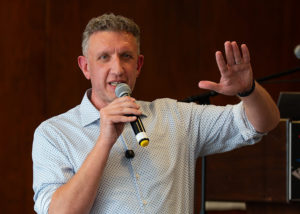
Chuck is a US-based internal communications strategist and the founder of ICology – a community and resource hub for IC professionals. He brings a practitioner lens to every conversation. Chuck is a recognised voice in the industry, a regular speaker and event host, and one of the most connected people in the North American IC world.
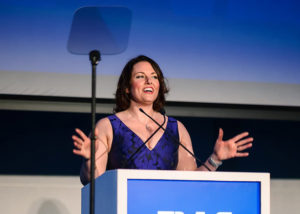
Jenni is a UK-based leadership and internal communications consultant, author of two best-selling books, and international speaker. She runs Redefining Communications, a consultancy working with organisations around the world to help them communicate better and close the gap between what leaders say and what employees experience.