
Chuck Gose and Jenni Field open with the rise of going shoeless at the office before digging into “quiet promotions,” Culture Amp data on keeping teams on track after layoffs, UK job ad data showing hybrid expectations quietly tightening, and insights from a senior internal comms roundtable Jenni hosted in London.
Chuck opens with genuine bewilderment at a [LinkedIn story describing people removing their shoes](https://www.linkedin.com/news/story/startups-embrace-the-shoeless-life-6628804/) at work now that more employees are back in the office after years of remote work, and the two debate where exactly the line sits between reasonable comfort and workplace norms worth preserving.
Discussing a Fortune piece on “quiet promotions” — new responsibilities without a corresponding raise or title — Chuck and Jenni debate whether this is a genuinely new trend or simply an old pattern (demonstrating capability before being formally recognized) now being named and criticized more openly. Workplace expert Selena Rezvani’s framing, that it lets leaders “test-drive” someone’s leadership without commitment, resonates with both hosts as connecting back to their prior conversation about expanding “CCO+” roles.
Referencing Reworked reporting and Culture Amp data, Jenni and Chuck discuss the significant, often underestimated cost layoffs impose on surviving employees — including a 74% drop in reported productivity and a 2.5 times higher likelihood of voluntarily leaving — and what individual team leaders can do differently in the first critical weeks after a workforce reduction to help teams not just survive, but recover.
Discussing The Guardian‘s reporting on UK job ad data, showing 85% of hybrid roles now require at least two in-office days (up from 77% in 2024) and a slow shift toward four in-office days at some large employers, Chuck and Jenni debate whether “hybrid creep” is a deliberate strategy to avoid employee backlash, and whether hybrid work as a concept is likely to fade out entirely over time.
Jenni shares findings from a senior internal comms roundtable she hosted, convened after hearing repeatedly that senior leaders don’t feel industry events are built for their level of experience. The group’s asks: depth over surface-level content, measurement conversations that move beyond dashboards, real discussion of crisis, governance, and risk, sessions capped at half a day, and content genuinely focused on influence and leadership.
What are “quiet promotions,” and are they actually new? New responsibilities without a corresponding raise or title, per a Fortune piece — Chuck and Jenni debate whether this is a genuinely new trend or an old pattern (demonstrating capability before formal recognition) now being named and criticized more openly. Workplace expert Selena Rezvani frames it as letting leaders “test-drive” someone’s leadership without commitment.
What does the data show about the true cost of layoffs on surviving employees? Reworked reporting and Culture Amp data show a 74% drop in reported productivity and a 2.5 times higher likelihood of voluntarily leaving among surviving employees after layoffs — Jenni and Chuck discuss what team leaders can do differently in the first critical weeks after a workforce reduction to help teams recover, not just survive.
Is “hybrid creep” a deliberate strategy, and will hybrid work eventually disappear? It looks that way, per Guardian reporting on UK job ad data: 85% of hybrid roles now require at least two in-office days, up from 77% in 2024, with some large employers quietly shifting toward four in-office days — Chuck and Jenni debate whether this is deliberate to avoid backlash, and whether “hybrid” as a concept fades out over time.
What do senior internal comms leaders actually want from industry events? Depth over surface-level content, measurement conversations beyond dashboards, real discussion of crisis, governance, and risk, sessions capped at half a day, and content genuinely focused on influence and leadership — findings from a senior IC roundtable Jenni hosted after hearing repeatedly that industry events aren’t built for senior leaders’ level of experience.
Jenni: Welcome to Frequency, I’m Jenni Field.
Chuck: And I’m Chuck Gose. Frequency is your go-to for real talk about comms, culture, and employee experience — beyond the buzzwords and straight to what matters. Jenni, I read one of the most disturbing pieces of content on LinkedIn I’ve seen in a long time. Remember all those tech companies that got criticized for over-the-top perks — snacks, dry cleaning, all of it — for being too much of a cushion? Well, apparently we’ve swung too far the other way now, because people are going shoeless at the office. There was a photo of a guy leaning back with his bare feet up on a conference table.
Jenni: I can’t do the shoes-off-at-work thing — the idea of people barefoot in an office genuinely unsettles me. Though I will take my shoes off on a long-haul flight.
Chuck: That’s fair, but that’s a private cabin situation. For those of us in general boarding, I can see slipping your feet out for a breather, but they need to go right back in. It’s bad enough when people wear sandals on planes — I don’t need people walking to the restroom in their socks.
Jenni: Big chunky socks or thin socks, it doesn’t matter — no.
Chuck: Doesn’t matter at all. I think this is what happens after years of remote work — people got used to no shoes at home and are just bringing that habit back into the office. Troubling. Anyway, what have you got for us this week?
Jenni: I’m excited about this one — I’m going to share insights from a senior internal comms roundtable I hosted a few weeks ago, gathering senior folks to ask what they actually want from industry events. I’ll also talk about the shifts we’re seeing in UK hybrid job ads, and an old issue that needs fresh attention right now — maintaining morale after layoffs. But let’s start with “quiet promotions,” which actually connects to our CCO+ conversation from last week. Fortune reports employers are increasingly handing out fancy new responsibilities without a title or pay bump to match — and experts say it practically guarantees burnout. It’s a discreet way to test performance without committing to a formal promotion, and workplace expert Selena Rezvani calls it a way to “test-drive someone’s leadership without committing to a title.” Is this new? My own career involved a lot of demonstrating leadership before getting the actual promotion, but not a new title without the pay to go with it.
Chuck: I don’t think the underlying pattern is new — showing capability before being formally recognized has always been part of how promotions work. What feels different is the scale and the explicit acknowledgment that companies are doing this deliberately as a budget strategy, rather than it just being an unspoken reality of career progression.
Jenni: That’s the part that troubles me too — when it’s a deliberate strategy rather than an organic testing period, the fairness calculus changes completely. If you know you’re avoiding a raise specifically because it’s cheaper, that’s a different ethical position than genuinely evaluating someone’s readiness.
Chuck: Agreed, and I think it connects right back to the CCO+ conversation — expanded responsibility without expanded authority or reward is the same pattern showing up at very different levels of seniority.
Jenni: Moving to something heavier — Reworked has a piece on keeping teams on track after layoffs, and the Culture Amp data behind it is stark: 74% of surviving employees report decreased productivity after layoffs, 77% report more errors and mistakes, and employees become 2.5 times more likely to leave voluntarily. Confidence in the company drops nearly 17%, belief in career opportunities drops over 12%, and there’s an 83% rise in the odds of developing a new health condition within 15-18 months of being laid off. A recruiter told me recently that every other call she gets now is from someone who’s just been made redundant. What can individual team leaders actually do differently in those first critical weeks?
Chuck: The data is sobering, but I think the actionable piece is exactly what you said — it comes down to individual team leaders, not just company-wide messaging. Leaders need to be present, visible, and honest in those first weeks specifically, rather than disappearing into their own stress about the situation. Silence from a direct manager in that window does more damage than almost anything a company-wide memo could fix.
Jenni: And it’s worth revisiting this now specifically, given how many redundancy conversations are clearly happening across industries right now — this isn’t an abstract, occasional problem, it’s a live one for a lot of listeners.
Jenni: Next — UK job ads are quietly tightening hybrid expectations, according to Indeed’s posting data reported by The Guardian: 85% of hybrid roles now require at least two in-office days, up from 77% in 2024, with only 15% allowing a single day. More large employers are shifting toward four in-office days — a slow “hybrid creep” designed, it seems, to avoid outright revolt. I was chatting with a comms and culture lead recently who now only gets one day a month in-office, making it nearly impossible to build real relationships with leaders. Do you think hybrid eventually just disappears entirely?
Chuck: I think it creeps toward something that barely resembles what we originally meant by “hybrid” — the word will probably stick around, but the actual arrangement behind it keeps shifting toward full-time office by stealth rather than through an honest, upfront policy change. That’s exactly the kind of dishonesty we’ve criticized in leaders before — creeping toward a destination without ever naming it clearly.
Jenni: And the one-day-a-month example you mentioned is a perfect illustration of how meaningless “hybrid” can become in practice — that’s not hybrid in any real sense, it’s remote work with an occasional obligatory office visit, and calling it hybrid just obscures what’s actually happening.
Jenni: Let’s close on something more hopeful — insights from that senior internal comms roundtable I mentioned. I convened it after hearing repeatedly from senior leaders that industry events don’t feel built for their level of experience anymore. What they told me: they want depth, not surface-level content; measurement conversations that move past dashboards into real strategic discussion; genuine conversations about crisis, governance, and risk; sessions capped at half a day, not longer; and content genuinely focused on influence and leadership, not tactics.
Chuck: This tracks with everything we’ve heard elsewhere this year — senior practitioners feeling like the industry’s public conversation hasn’t caught up with the level they’re actually operating at. I’d love to see event organizers actually build a track around this rather than treating senior leaders as an afterthought.
Jenni: That’s exactly the reflection I had on my own in-house career too — I remember feeling the same gap, and it’s part of why I wanted to gather this group in the first place rather than just speculate about what senior leaders need.
Chuck: That’s this week’s stories. What’s your freak-out?
Jenni: Honestly, still the shoeless-office thing you opened with — I can’t get it out of my head now.
Chuck: You can’t unsee it after that. Thank you all for joining us this week. All the articles that inspired this conversation are in the show notes — rate and review after you’ve listened, subscribe so you don’t miss an episode, and pass this along to someone who’d enjoy it; find us on YouTube too. Thank you to Poet Ali for contributing the music to the show, and we’ll be back next week with more news, insights and opinions about comms and leadership in workplaces today. Keep tuning in and turning up.
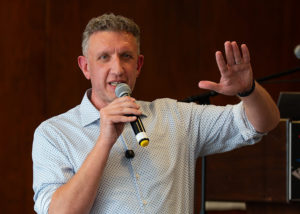
Chuck is a US-based internal communications strategist and the founder of ICology – a community and resource hub for IC professionals. He brings a practitioner lens to every conversation. Chuck is a recognised voice in the industry, a regular speaker and event host, and one of the most connected people in the North American IC world.
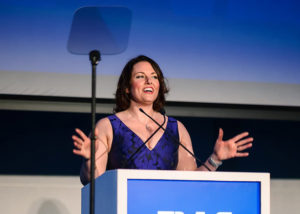
Jenni is a UK-based leadership and internal communications consultant, author of two best-selling books, and international speaker. She runs Redefining Communications, a consultancy working with organisations around the world to help them communicate better and close the gap between what leaders say and what employees experience.