
Jenni Field challenges LinkedIn’s culture of negativity and sets herself and Chuck Gose a positivity challenge, before the pair dig into Nestlé’s CEO dismissal, Korn Ferry’s data on thinning management layers, The Economist’s take on whether remote work kills culture, and new research on the mental health “benefits gap” at work.
Jenni opens by naming her frustration with how much LinkedIn content frames internal communications as a uniquely miserable, thankless job, and challenges herself — and Chuck — to post more gratitude and celebration of others’ work. Chuck says he already tries to structure his own posting around one or two gratitude posts and one or two posts celebrating friends’ wins each week, and both hosts agree the goal isn’t toxic positivity, but pushing back against content that seems designed purely to bait engagement.
Discussing Reuters reporting on Nestlé firing CEO Laurent Freixe for failing to disclose a romantic relationship with a direct report, Chuck and Jenni compare it to July’s Astronomer story and debate whether stronger whistleblower channels and heightened public scrutiny are genuinely ushering in more leadership accountability, or simply pushing some executives to hide relationships more carefully.
Chuck shares findings from Korn Ferry’s Workforce 2025 report, based on a survey of more than 15,000 workers: 44% of U.S. employees say manager layers have been cut, 40% feel directionless, and some companies now expect senior leaders to manage 20 or more direct reports, up from roughly five two years ago. Both hosts flag the data on money anxiety (72% of U.S. workers worry pay isn’t keeping up with cost of living) and generational friction (75% of Gen Z report challenges working across age groups) as areas comms and HR need to be watching closely.
Discussing The Economist‘s joint analysis with CultureX mapping culture signals across roughly 900 large firms, Jenni argues the piece’s real insight is that culture isn’t a single score but a portfolio of traits — agility, collaboration, supportiveness, transparency, leadership quality — and that location is a lever on specific traits, not a blanket fix or a blanket threat to culture as a whole.
Closing on new Spring Health and Forrester research showing rising workplace stress alongside underused mental health benefits, Jenni argues managers need real, practical skills training on supporting employee wellbeing — not to become therapists, but to know how to have a supportive conversation and know when and how to point someone toward the right resource.
Why does Jenni think LinkedIn has a negativity problem, and what’s her challenge to fix it? Jenni is frustrated by how much content frames internal communications as a uniquely miserable, thankless job, and challenges herself and Chuck to post more gratitude and celebration of others’ work — not toxic positivity, but a pushback against content designed purely to bait engagement.
Is Nestlé’s CEO dismissal part of a broader wave of leadership accountability? Possibly, though the hosts aren’t certain — Nestlé fired CEO Laurent Freixe for failing to disclose a relationship with a direct report, and Chuck and Jenni debate whether stronger whistleblower channels and public scrutiny are genuinely ushering in more accountability, or simply pushing executives to hide relationships more carefully.
What does Korn Ferry’s Workforce 2025 report reveal about thinning management and employee direction? 44% of U.S. employees say manager layers have been cut, 40% feel directionless, and some senior leaders now manage 20 or more direct reports, up from roughly five two years ago — the report also flags money anxiety (72% worry pay isn’t keeping pace with cost of living) and generational friction (75% of Gen Z report challenges working across age groups).
Does working from home actually kill company culture? Not in any simple sense, Jenni argues — The Economist’s joint analysis with CultureX across roughly 900 large firms shows culture isn’t a single score but a portfolio of traits (agility, collaboration, supportiveness, transparency, leadership quality), and location is a lever on specific traits, not a blanket fix or threat to culture as a whole.
What is the mental health “benefits gap,” and what should managers do about it? New Spring Health and Forrester research shows rising workplace stress alongside underused mental health benefits — Jenni argues the fix is real, practical skills training for managers, not to turn them into therapists, but so they know how to have a supportive conversation and when to point someone toward the right resource.
Chuck: Welcome to Frequency, I’m Chuck Gose.
Jenni: I’m Jenni Field. Frequency is your go-to for real talk about comms, culture and employee experience — beyond the buzzwords and straight to what matters. I want to kick us off with a bit of a challenge, because I feel like we’re living in a world of negativity on LinkedIn — so many posts about how bad internal communication supposedly is, how hard the role is, always fighting for a “seat at the table,” fighting for budget. I don’t know if it’s people chasing clicks and comments, but I’m almost at the point of asking: why do this job if you hate it so much? So I’m challenging myself to post more positivity about what’s actually going well, and I’m challenging you too, Chuck — though let’s be honest, you’re pretty positive already.
Chuck: Contrary to popular belief, I am a very positive person. I’ve even started structuring some of what I post — one or two posts a week around gratitude, and one or two celebrating something a friend’s doing. If you’re not celebrating your friends, what are you even doing? I think there’s a pit of despair content gets rewarded with engagement, so the algorithm trains people toward it. What bothers me isn’t anger — anger can actually propel people to change things — it’s just this “woe is us,” imposter-syndrome-flavored negativity that goes nowhere.
Jenni: Exactly — it feels like a pit of resentment, and I don’t enjoy sitting in it. I love the job I do, I always have. Yes, it’s hard, yes you sometimes have to fight for budget, but I still enjoy it. If it’s genuinely that miserable for someone, I don’t understand why they’d stay. I’m going to steal your framework — gratitude posts, celebration posts — and try to flood my own feed with more of that.
Chuck: You should double down the other direction too — next time you see one of those posts, just reply “maybe you should quit.”
Jenni: I might start doing that. A lot of it, to be fair, comes from consultants creating noise for engagement’s sake, and I don’t think it’s healthy for any of us to marinate in it. That’s where I wanted to start today — what have you got for us?
Chuck: Korn Ferry says manager layers are thinning and spans are widening while RTO pressure runs against employee preference. The Economist’s CultureX data shows full-time office can buy agility but often dents candor, leadership, and support, while flexible models lift the experience when designed well. Spring Health and Forrester find stress climbing and benefits going underused. But first — Nestlé’s CEO was fired. On September 2, Nestlé dismissed CEO Laurent Freixe for failing to disclose a relationship with a direct subordinate. Staff complaints through the company’s Speak Up channel triggered an initial probe that found nothing; a second, board-overseen investigation concluded he’d breached the code of conduct. Compare that to Astronomer’s CEO resigning in July after that viral Coldplay clip led to a board investigation into his relationship with the company’s HR chief, who resigned soon after. Are we at the start of a real wave of leadership accountability, or will this just push executives to hide relationships more carefully?
Jenni: I think it’s a bit of both. Speak Up and whistleblower channels are becoming genuinely more robust and better resourced, which is a good thing — but I also think some leaders will just get better at concealment rather than changing the underlying behavior. What strikes me most is how quickly boards are now willing to act once something is substantiated; that’s a real shift from a few years ago, when this kind of finding might have been quietly managed instead.
Chuck: Agreed — and I think the public nature of these stories now, given how quickly they spread, makes quiet management a lot harder to pull off even if a board wanted to.
Chuck: Next, Korn Ferry’s Workforce 2025 report, surveying more than 15,000 workers globally, describes a sharp “power shift” — flatter org charts, tighter RTO rules, and a widening gap between what leaders offer and what employees want. In the U.S., 64% are required on-site full-time, but 69% would prefer at least some remote work. Middle management has thinned — 44% of U.S. employees say manager layers were cut, 40% feel directionless, and some firms now expect senior leaders to manage 20-plus direct reports, up from about five just two years ago. Money anxiety tops workers’ concerns, and there’s real generational friction, with 75% of Gen Z reporting challenges working across age groups. What’s your headline out of this data?
Jenni: The 40% feeling directionless is the one that jumps out to me most, because it connects directly to everything we’ve said about managers being stretched too thin to actually manage well. If nearly half your workforce doesn’t feel direction from their manager, that’s not a communication problem you can paper over with a better newsletter — it’s a structural capacity problem.
Chuck: And the jump from five direct reports to 20-plus in two years is staggering — nobody’s management training has caught up with that shift, which loops right back to our conversation a few weeks ago about managers being miserable and unsupported.
Chuck: Next, The Economist asks whether working from home kills company culture, drawing on a joint analysis with CultureX mapping culture signals across roughly 900 large firms using millions of employee reviews. The conclusion: culture isn’t one thing, and the impact of where people work depends on which traits you’re optimizing for — agility, collaboration, supportiveness, transparency, leadership quality, work-life balance. Location is a lever, not a cure-all. If culture really is a portfolio of traits rather than one score, which one or two should leaders prioritize right now, and how would you shape hybrid or office norms to actually move them?
Jenni: I’d prioritize supportiveness and transparency above the others right now, because those are the two traits I see eroding fastest under current pressure — RTO mandates handled clumsily, layoffs handled without real explanation. If you get those two right, a lot of the other traits — collaboration, engagement — tend to follow. I like that this research resists the urge to declare a single winner between remote and office; it forces leaders to be specific about what they’re actually trying to protect or build before picking a location policy.
Chuck: That’s the piece so many RTO mandates skip entirely — nobody’s named which trait they’re trying to improve, so nobody can measure whether the mandate actually worked.
Chuck: Last story — Spring Health and Forrester research on a mental health “benefits gap” at work, showing rising stress alongside underused benefits. What’s the manager’s role here?
Jenni: This is a skills issue, not a therapy issue. Managers don’t need to become therapists, and I’d actively discourage that — but they do need practical training on how to have a supportive conversation, recognize when someone’s struggling, and know exactly where to point them for real support rather than freezing up or ignoring it. A lot of EAP programs go underused simply because nobody’s ever walked employees through what’s actually available or made it feel safe to use.
Chuck: Agreed — and that training gap connects right back to the Korn Ferry data on stretched, undertrained managers. It’s the same root problem showing up across three completely different stories today.
Jenni: Which is exactly why I don’t think this is hopeless, despite everything we’ve covered — it’s the same lever, over and over: invest properly in managers, and a lot of these separate-looking problems start to move together.
Chuck: That wraps this week’s stories. What’s your freak-out, or in this case, celebration?
Jenni: In the spirit of my own challenge — happy birthday for ten years to my consultancy this year. It felt worth actually saying out loud rather than letting it pass quietly.
Chuck: Congratulations — that’s a real milestone, and exactly the kind of thing more of us should be celebrating loudly instead of burying it under everyone else’s negativity.
Jenni: Thank you all for joining us this week. All the articles that inspired this conversation are in the show notes — rate and review after you’ve listened, subscribe so you don’t miss an episode, and pass this along to someone who’d enjoy it; find us on YouTube too. Thank you to Poet Ali for contributing the music to the show, and we’ll be back next week with more news, insights and opinions about comms and leadership in workplaces today. Keep tuning in and turning up.
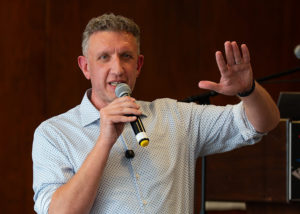
Chuck is a US-based internal communications strategist and the founder of ICology – a community and resource hub for IC professionals. He brings a practitioner lens to every conversation. Chuck is a recognised voice in the industry, a regular speaker and event host, and one of the most connected people in the North American IC world.
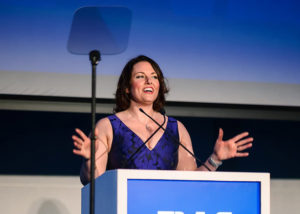
Jenni is a UK-based leadership and internal communications consultant, author of two best-selling books, and international speaker. She runs Redefining Communications, a consultancy working with organisations around the world to help them communicate better and close the gap between what leaders say and what employees experience.