
Chuck Gose spent months DM-ing Jenni Field about starting a podcast together. On the first episode of Frequency, she finally stopped ignoring him — and the two immediately admit they’re not looking for a fight, though if one happens, it happens.
That mix of warmth and willingness to disagree sets the tone for everything that follows. After trading first-car stories (a dark green Ford Fiesta versus a “borrowed” 1967 Pontiac Tempest), Chuck and Jenni get into the state of internal comms after a decade of change, why a third of US managers say they’d rather use AI than hire a Gen Z employee, and why 31% of employees are actively sabotaging their company’s AI efforts.
Jenni’s LinkedIn review of a decade of Gallagher’s State of the Sector research is the jumping-off point. Chuck frames it against 2015 (Obama in office, Yammer debates raging, email overload already a complaint), and Jenni argues the biggest shift isn’t in what the profession wants to be — advisory, strategic, business-aligned — but in how little the action has caught up to that ambition. Manager enablement and leadership visibility are exactly where they were ten years ago, if not worse.
Chuck pushes on the word “want” — communicators want influence but don’t always advocate for it. Jenni’s answer: internal comms has spent a decade talking to itself at conferences instead of educating business leaders on what communication can actually do. Chuck counters that the more durable path is partnership — building trust and credibility with leaders directly rather than waiting to be invited to the table.
A US survey finds a third of managers prefer AI to hiring young talent. Chuck reads it as a cop-out — an excuse to avoid coaching and leading people. Jenni offers a more structural read: most organizations have never given managers a playbook for what leading actually looks like, so avoiding the harder, relational work is the path of least resistance. Both agree the generational framing is a distraction from the real issue — undertrained, underprepared managers.
The word “sabotage” catches Chuck’s attention — not resistance, not lukewarm adoption, active sabotage. Jenni draws the comparison to email’s rocky arrival decades ago, but notes the fear around AI runs deeper because the possibilities feel limitless and undefined, which makes the change harder to get a handle on. Her read: sabotage says more about an organization’s culture — and how little guidance it’s given people — than about the technology itself.
Chuck lays out the two failure modes he’s seeing: total absence of AI policy (the Wild West) versus outright bans that just push employees toward “shadow AI” on personal devices. The fix isn’t grand strategy, just basic guardrails — which tools are approved, what not to upload, why it’s safe.
Closing on an AP News piece about unclear roles and expectations, Chuck puts the responsibility on leadership: too many leaders are “doing” instead of leading, leaving employees without a clear direction to follow. Jenni pushes back gently — she agrees leadership carries most of the weight, but argues employees also have more agency than they exercise, pointing to what she calls the “silent veto”: going along with things in the room, then complaining about them afterward instead of raising the issue directly.
00:00 — Welcome and first-car stories
05:11 — Ten years of internal comms: reviewing Gallagher’s State of the Sector
09:14 — Why communicators keep having the same conversation
14:26 — One-third of managers prefer AI to hiring Gen Z
22:17 — Pushing back on generational excuses
24:16 — 31% of employees are sabotaging AI efforts
31:03 — Shadow AI and the governance gap
34:37 — Nobody knows what’s expected of them (AP News)
42:07 — Freq-outs: policy vs. human judgment, and AI image generation
Why hasn’t internal comms gained more influence despite a decade of wanting a seat at the table?
Because the profession has focused on talking to itself rather than educating business leaders on what communication actually delivers, and the action hasn’t matched the ambition.
Why would a manager prefer AI to hiring a junior employee?
Chuck and Jenni land on it being less a generational issue and more a symptom of managers never having been taught what good leadership actually requires — AI becomes the path of least resistance.
What does “sabotaging AI efforts” actually mean, and why is it happening?
The episode doesn’t find a precise definition in the source article, but frames it as a proxy for how unclear and ungoverned an organization’s approach to AI is — fear fills the vacuum where guidance should be.
What should companies actually do about AI governance?
Give employees simple, concrete guidance — approved tools, clear boundaries (e.g., don’t upload financial data to non-enterprise tools) — rather than either ignoring the issue or banning AI outright.
Why don’t employees know what’s expected of them at work?
Because fundamentals like clear objectives, regular appraisals, and development conversations are often missing, not because of anything new about the current moment.
Jenni Field: Welcome to the first episode of Frequency. I’m Jenni Field.
Chuck Gose: And I’m Chuck Gose. And Jenni, I want to first off say thank you. It is an honor and a privilege to begin this journey with you. And also thank you for not ignoring my DMs about doing this podcast together.
Jenni Field: Yeah. You’re welcome, you’re welcome. I did say — there’s a conversation we started at the end of 2024, I think, when you said, “I really want to kickstart a podcast with someone who’s equally opinionated and not afraid of having some real conversations about the stuff we really need to talk about in internal comms, HR and leadership.” And did I know anyone? And I thought either you’re asking for some advice or this is your roundabout way of asking me. And I was like, yeah, I definitely know someone — me.
Chuck Gose: And I think it’s not that I’m looking for a fight, Jenni. However, however, if it happens, it happens.
Jenni Field: It’s fine, my gloves are off. I’m good. I’m here for it either way.
Chuck Gose: Well, again, thank you for doing this. I think we’re on to something really special that we can contribute to. And honestly, like we said, kind of kickstart and ignite conversations that we want to see other people have.
Jenni Field: Absolutely, absolutely. But we’re going to kick off, I think, with just a little bit of a chat about us. There’s a lot of people listening that don’t really know us and I’d love to hear what’s been on your mind or what you’ve been up to in the last week really. What’s been going on for you?
Chuck Gose: Well, selfishly, I want to point out we literally survived tornadoes last night where we live outside of Indianapolis. So thankfully everything is all good here. But more on a positive note, and to get very personal — in life, there are these certain rites of passage that we have. And as a parent of two kids, you have different rites of passage that they experience that you once experienced. It was really cool to be able to give our son his first car. And I think we can all remember or imagine what that first taste of freedom is like. It’s like when a kid gets their first bike times whatever exponential you want to throw out there. And it’s also interesting what people’s first cars — his was a classic used Honda Civic, which I feel like is the perfect, stereotypical first car for all the right reasons. So he’s obviously very excited, I’m excited for him. Again, it’s that freedom and power that you have in the first car, but also just an immense amount of responsibility with that first vehicle. I assume, Jenni, because I’ve seen it — not just heard stories about people driving in the UK. What you do — not that y’all invented it or anything, we’ll take credit for that — however, what was your first car?
Jenni Field: It’s true, we do. My first car was a Ford Fiesta and it was dark green, and I still remember the number plate because the last three letters were J W R and my maiden name is Weller, so in my head it was Jenni Weller Rules at the end of the number plate. But yeah, I think Honda Civic — loads of people had that, Ford Escorts too.
Chuck Gose: Well done. Well done.
Jenni Field: Yeah, anything that was fairly cheap to be able to run around in. Had a good sound system, that was always important. And fairly compact, so you weren’t sort of crashing into anyone. That’s super exciting, I love that. It’s so funny how you can always remember your first car. What was your first car?
Chuck Gose: So it sounds way cooler than it really was, I’ve got to warn you on this, Jenni. My first car was a 1967 Pontiac Tempest, which at the time was sort of labeled as the poor man’s GTO. But it was actually quite selfish from my father who gifted me that car, because ultimately it was also his car, and it tended to disappear from the driveway on the weekends when he and my mom would go out. So yes, technically that was my first car, but I feel like it was also his car as well. It all worked out.
Jenni Field: Yeah, did you ever just go out to drive it and it was just gone, and you were like, okay, I guess I’ll get the bus?
Chuck Gose: Just gone. It just wasn’t there. This was even before there was unleaded gasoline — this is a leaded car and I flooded the tank all the time. Things nobody can do in cars now. So yeah, it was a good learning experience.
Jenni Field: Love that, love that. Well, let’s kick off our conversation this week. What have you got on your mind or your agenda that’s been in the news around internal comms, HR, leadership, culture? What’s going on?
Chuck Gose: All of the above. And this is very much what we want this podcast to be about — a take on things that we’re seeing that’s impacting the world of comms and HR and employee experience. First, Jenni, you recently wrote on LinkedIn reviewing ten years of the state of the sector, produced by Gallagher. And I want to go back — this is going to be a very American-centric view — but let’s just go back to 2015. Barack Obama was president of the United States. Insert long pause for us all to reflect on how great that time was. Uptown Funk was a song from Bruno Mars that was in our ears all the time, Hamilton had just shown up. And part of what I’m curious about is even going back to 2015 in the comms world, Yammer debates were happening — which is probably dating us for some of the newer comms pros out there.
Jenni Field: What is that?
Chuck Gose: At the time, back in the day, Yammer was pretty legendary. Shocker, back in 2015, people were complaining about email overload — we made tremendous progress on that! But now, ten years later, hybrid work, AI, we’re still talking about the effects of the pandemic. So many things unresolved throughout those ten years. What were some of your other takeaways from what you reviewed?
Jenni Field: So it’s interesting, because there’s loads of comments on that article about whether it’s a glass-half-full or glass-half-empty approach. For me, those ten years have shown a real shift in what the profession wants to be. There’s this very clear “we want to be this function, we want to be advising at a senior level” — but the action isn’t always there to follow that. Things like manager enablement and leadership visibility are still an issue today, ten years on — if anything it’s gone backwards a bit. And those are so key to the success of communication and culture, yet they’ve continued to sit in that “too hard” box. Same with measurement — the reports show recognition that it has to link to business outcomes, but the action isn’t always there. There’s been significant progress elsewhere, but those two things come up constantly in the work I do with clients.
Chuck Gose: There’s an interesting word you mentioned that I don’t know you’d even think was interesting, but as soon as you said it — “want.” Communicators want to be this, but you can’t just cross your fingers and expect other people to know that. Is this an element of communicators not advocating for themselves enough? Not stepping into the conversation? You work with a lot of organizations — what do you see? Why hasn’t it been fast enough?
Jenni Field: Yeah, and do you know what, it’s something I come back to again and again — why are we still having this conversation? I think there’s a couple of things. One thing I’ve been saying for probably the last ten years is we haven’t done enough to educate business leaders about what communication can do inside an organization. We spend a lot of time talking to ourselves at conferences and events — hugely helpful, there’s a lot of benefit — but I don’t think we’ve spent enough time helping everyone else in the organization understand what communication can actually do. We just kind of expect them to know. The challenge is every organization has different expectations and experiences of communication — you can go from a strategic function advising the leadership team, to a purely digital, content-and-channels role, with nothing in between consistent. That makes it really hard to get traction on what we’re actually here to do. I say to people a lot — you can’t expect leaders to understand how to communicate effectively, because we’ve learned how to do this, with all the right channels and everything, but we just assume and then get frustrated when people don’t get it. I don’t know how much of a safe space to fail we create for our stakeholders to learn. I think it’s a combination of a skills gap in the comms world and a gap of understanding in the leadership world. What do you think — is it any different over there than what I’m seeing?
Chuck Gose: I think there’s a lot of similarity. Here’s where I’d like to see communicators take this — look to partner with leaders. Build that credibility with them. Be their advocate, their influencer, their voice — build that partnership and that trust and alignment. Then you’ll get what you want — budget, headcount, a tool, whatever it is. They’re never going to say “Jenni, you’re my trusted advisor” out loud — you’re just going to become that, by building trust and doing the work with them, not just waiting for them to come to you. The communicators I see who are most successful are the ones who’ve built partnerships throughout the organization, not just with the people at the top. That’s the easiest path to success for communicators.
Jenni Field: Yeah, it’s the relationships, isn’t it? I think this is harder in a post-pandemic, hybrid or remote world. I spoke to one comms team where the internal comms manager said she had a really difficult relationship with the chief of staff, and I asked how often she was in the London office with them — she said she was home-based. My face probably gave it away. I think, I appreciate you’re home-based, but if you want to fix this relationship, something’s got to be different — you probably want to fix it more than the chief of staff does. You’re going to have to do something different to get a different outcome, rather than just saying “well, I work from home, so that’s it.” If we want change, we’ve got to do something differently — you can’t keep doing the same thing and expect something to change.
Chuck Gose: Did you just paraphrase an Einstein quote? I think you did.
Jenni Field: I won’t claim it as my own.
Chuck Gose: All right, let’s move on to the next thing. There’s a survey out — this is in the US — one third of US managers say they’d prefer using AI over hiring Gen Z employees. Is there a generational element to this, or is it about priorities of younger people coming into the workplace — because guess what, that happens with every generation. So what do you attribute this to?
Jenni Field: Genuinely my response was, I can kind of see that — because we’ve just made some changes in our own business where we’re no longer using people for certain things and we’re using AI instead, and that’s not a generational shift, it’s more “I can do this a different way.” I think it comes down to two things. One, the sort of tasks we’re doing and the overwhelming volume of tasks that’s become work since the pandemic. Two, we’re not very good at having difficult conversations at work — and as we’ve moved to remote or hybrid, relationships are impacted, we’re not as connected. So when people have questions or want to challenge something, it can feel like an attack, when actually people are well within their rights to ask questions — that’s human nature. It’s become a negative thing, like we’ve gone back to “just do what I say and don’t ask me questions.” I think that’s part of why a robot is more appealing in some cases — it might ask questions, but in a way that feels less like a personal attack. What was your take?
Chuck Gose: This is probably getting into the semantics of the language they used — but I love semantics land. I think there’s an element of managers not knowing how to lead anymore — they’re truly just managing. It’s easy to say “I’ll just have this AI tool do what I need” instead of actually working with someone and getting them aligned. For this one third, I think it’s a bit of a cop-out — not wanting to build, coach and lead people.
Jenni Field: Is that because no one’s told people what’s expected of them as a leader? I asked a question on LinkedIn a while ago — is there a playbook or guide in your organization for what it is to be a leader or line manager? About 80% of people said no, and it’s not on our list to do — which surprises me, given the current climate. I think it can be a cop-out, but if no one’s told you what it means to be a manager, and all you’re seeing is more time needed on something, the opportunity to avoid it because no one’s helped you understand why it’s important is quite appealing. It should be a given that you know what it means to be a manager, but it isn’t. I think it’s often seen as more task, without understanding why it matters.
Chuck Gose: I wonder too — I promised I’d try to leave my jerk hat off on these episodes, however — if you have to be told how to lead, are you a leader? If you have to be told how to manage, are you a manager? Or is that just people getting promoted because they wanted to be a manager, they wanted to be a leader — great, maybe you need to be taught those things. But I also think there are people out there who just are that — they don’t need the playbook, they know how to lead a team, lead an organization. Once you see it, you can’t unsee it — the natural leaders who get the team involved and going in the right direction. And the ones who are struggling — are they just not suited for it?
Jenni Field: Well, yeah — you’ve got your jerk hat on there a little bit. You can build all the skills to be a leader, but there are people naturally better at it than others. There’s also a lot required to be a really good leader. When I first managed somebody, I probably wasn’t very good — I didn’t really know what I was doing, wasn’t sure how to give people enough space while making sure things got done. Over the years, I’ve got much better at that — that’s experience and time. I think if you’ve got the desire to be a manager and a leader, it’s your duty to learn the skills involved. It’s also about recognizing that it is a skill — if you think you’re either good at it or you’re not, you’ll never learn it. We should recognize that leading and managing people so they follow you and go in the same direction is something we should invest in and learn.
Chuck Gose: What I don’t want us to do is fall into a cop-out on the generational element. I think it’s easy to point to that. I think it’s been established that Gen X is the strongest, best generation out there — we’re the glue holding the world together, the most accepting of all generations. Just speaking on behalf of Gen X. So I don’t think it’s a generational thing — that’s the cop-out for me.
Jenni Field: Yeah, yeah. And the thing I’m trying to find at the moment is where people say “this generation is the most stressed” — well, where’s the research on previous generations at that age, for comparison? Because otherwise it’s not comparable. If everyone, when they’re in that mid-20s age bracket, no matter who we are now, is the most stressed in life — because it’s such a significant shift in how you make friends, how you do things — then that’s just life stage, not generation. I did my diploma paper on generational theory and what that means for work, and you can’t really group the whole world together based on a time period and say everyone’s got exactly the same characteristics. Even saying Gen Z are “digital natives” — I’m not sure how true that is globally, given there’s a lot of digital poverty that we don’t talk about. So I’m with you on disliking the generational sweeping statements — it’s a massive label that lets us excuse things that quite frankly shouldn’t be excused.
Chuck Gose: Yeah, absolutely. All right, let’s move on to our next news item. There’s a report out — 31% of employees are actively sabotaging company AI efforts and initiatives. Communicators claim they’re not good at math — I call BS on that. This is a third of your employee base, actively sabotaging AI efforts and initiatives — not ignoring, not lukewarm — sabotaging. Such a fascinating word. Where do you think this comes from, or is it just a sexy word to use?
Jenni Field: Well, what are they actually doing to sabotage it? I don’t think the article goes into that level of detail — are they unplugging it? I have no idea how they’re doing that. This is the story of any tech — when we were talking about this before recording, I went to look at what happened when email came in, and I don’t think it was quite that bad.
Chuck Gose: Do you want me to tell you what happened when email came in, Jenni? I was alive then.
Jenni Field: I was also alive, but I wasn’t at work — what happened at work? People didn’t understand why they’d waste time typing when they could just pick up the phone, didn’t see the value in it, were very against it. For me, it’s any tech change — I’ve done so many in organizations, had people crying when we changed email providers, all sorts. It’s significant change. The challenge with AI is people don’t really know what it’s going to be able to do to help them, so they’re just a bit scared. Whereas something like email was very clear what it was for — the possibilities of AI feel so massive and undefined that it’s daunting, so people just don’t engage with it at all. The word “sabotage” — I have images of people going around, which I know isn’t how it works, it’s just — what are they doing?
Chuck Gose: It’s an interesting perspective — any type of change gets resistance. But this isn’t just resistance. Is it about the early narrative of AI coming for your job, eliminating what you do? There’s always been elements of technology and progress —
Jenni Field: Yeah.
Chuck Gose: — where as technology and processes get better, there’s always been a fear of “that’s going away,” but sometimes it just creates more opportunities. I think it’s the narrative that got built early around AI replacing instead of AI augmenting — whereas email did replace a lot of things, people who typed memos, typed newsletters, and then all of a sudden email. I remember when you had to build a business case at work for why they should give you an email address — it wasn’t just handed out, because data and servers cost a lot then. Those costs have come down. I’m sure there are people now who’d love a business case for why they shouldn’t have an email address. I attribute it to this narrative of AI as a threat rather than “can it help us, where can it help us grow and learn” instead of “it’s coming for my job.”
Jenni Field: Yeah — and that’s just reminded me, you mentioned people lost jobs when email came in. I remember talking to my Nan, my grandmother, the other week — she used to be a courier for British Airways, getting on planes with documents, delivering them, picking up documents, getting on planes again. That was her job, and that job just wouldn’t exist today. She’s 96 now, obviously doesn’t do it anymore. I think you’re right that fear is part of it, but I think we have a duty to almost embrace that fear and learn — running away from it isn’t helpful. I was very fortunate to spend time with a guy called Ronsley Vaz recently, who took me through a load of AI stuff for my business — hugely helpful because it was specific to me, and it’s allowed me to make real changes. But before that, I’d been to loads of events and conferences and presentations, and none of it made anything clearer — people jump on the bandwagon and want to talk about it, but no one’s saying “this is the prompt I gave it, this is what happened.” No one’s breaking it down like that, which I think is what people need to actually understand how to use it. I think sabotage probably says more about your culture than anything else.
Chuck Gose: That’s probably true. There’s another stat — around 98% of people are using AI, they just don’t know it. If you watch Netflix and it serves up shows for you, there’s not someone on the back end going “Jenni really liked this show, let’s take that out” — no. We’re using it without it being called out, and I wonder if that’s an area companies are going to move into — not saying “this is AI-driven,” it’s just happening in front of you without you having to manage or worry about it.
Jenni Field: Yeah — and it’s interesting, we’ve actually been using it as a tool for a long time. Even Siri on your phone — that’s been around for ages. It’s morphed into this big, scary thing, but 98% of people using it without realizing — whereas I think for organizations it’s really low, in terms of how many people are actually and knowingly using it, because it’s a huge change to how you operate, there’s a lot to think about.
Chuck Gose: From a leadership standpoint, this is my knee-jerk reaction — about half of organizations have no policy whatsoever, it’s the Wild West around AI. So there are people like me going “sweet, let’s go,” and others who are like “wait, there’s no guardrails, I might get in trouble, I don’t know what can happen.” Then the other side is it’s fully banned, no one can touch it, watching every keystroke, fired if you type into ChatGPT. There’s a middle ground — people want guidance, they don’t want to lose their job for using it, but if a company isn’t providing education and is just flat-out banning it, employees fall behind, or they use “shadow AI” — doing it on their phone off the side of their desk, taking screenshots. Even if you’ve banned it, they’re still using it. So it’s finding that sweet spot — you don’t have to fully embrace it and be “an AI company,” but give employees simple guidance: here are the tools to use, here’s why it’s safe, please don’t upload company financial data unless it’s the enterprise version. Give people some guidelines, or they’ll fall into one of those two buckets.
Jenni Field: Yeah — but as soon as you started talking about governance and guidelines, all I could think was, people don’t do that for internet platforms and the digital workplace either — so many of those launch without any of that. Well, not everyone’s as good as you, are they?
Chuck Gose: They should be. None that I’ve ever worked on. Well, let’s end the show right there, Jenni.
Jenni Field: Oh dear — have we got anything else from the news this week?
Chuck Gose: One more item, which might be the perfect summary to what we’ve just talked about. AP News — trusted source — employees are saying, time and time again, they don’t know what’s expected of them. Unclear roles, unclear expectations. Are we hybrid? Are we not? Are we remote? One report says remote work is more productive, another says everyone has to be in the office to be more productive, another says hybrid is more productive. It feels like employees are playing hot potato — who are we, what are we, who am I in this organization? Everything’s been thrown up in the air, it’s 52-card pickup. So how are communicators going to be successful — or are they the key to providing that signal through the noise, so people at least understand where they fit and what’s expected of them?
Jenni Field: Is this a new problem? I don’t think it’s new — for the last five years at least, people probably haven’t really known. Going back to our earlier conversation about being a manager and a leader — the majority of people I talk to, friends or clients, don’t always have objectives, don’t know when their appraisals are, don’t have development conversations. If those basics aren’t happening, people will never know what’s expected of them at the micro level for their role. I don’t think leaders and organizations really know what they want to do with return-to-office and hybrid anyway — that’s chaos at the moment. For me, that comes from a lack of clarity around values and culture — start there, and build from that what makes sense operationally. I think it isn’t clear, it’s just all messy, and I wonder if it goes all the way through the organization — actually, none of us know.
Chuck Gose: And to AP’s credit, their point was it’s increasingly unclear — only getting worse. I’ll put the blame on leadership on this one, because in my opinion, leaders lead, doers do — and I think a lot of leaders are doing. People need their leaders to lead the organization, to be that voice, provide the path — here’s the direction we’re going, here’s why. That’s what I see leaders not doing. It’s a bit like lasers and cats — I don’t know who’s shooting the lasers, but the cats are chasing it. The companies I see being successful — a bit cliché, but they have strong leaders with an established vision. Not wishy-washy, not “this quarter it’s this, next quarter it’s that” — it’s “this is our plan, this is who we are, this is where we’re heading, got it, good.” And that trickle-down, cascade, whatever word you want to use, that does make a difference to people — it’s very clear what we’re all doing. I think that’s missing in a lot of organizations.
Jenni Field: So I agree with you as someone who talks a lot about leadership credibility — having a visionary practice, being able to talk about where you’re going, is massively important for people to follow you. What I will say is I don’t think it’s entirely a leadership issue — I think it’s like 95% that, but there’s something about employees at different levels where we forget we do often have agency over what we’re doing. I think we can fall into a trap of what I call a “silent veto” — we go to stuff and then moan about it afterward, or agree to it and then say we don’t outside the room. I see that happening a lot — “I don’t know why I should have to go to this meeting, so I’ll go, but I’ll turn my camera off,” or “I don’t understand why this has gone wrong, but I’m not going to set up a meeting to talk about it.” There’s stuff you can get hold of — if you don’t want to go to a meeting, have the conversation, ask why you’re being invited, then make the decision. If something’s gone wrong, book the meeting and have the conversation. We’ve lost some of that ability to have control. I know for some people that’s linked to confidence, or feeling they’re not at that level in the organization — but at every level I’ve worked at, if something’s happened that I think isn’t okay, I’ve always felt it’s my responsibility to address it, or say “this doesn’t really work for me, can we do it like this?” So yes, 95% leadership, but we also have a responsibility to have control over what we’re doing.
Chuck Gose: And I think there’s an element where the pandemic had an impact on this — a lot of leaders, and you see it in their commentary and return-to-office communication, feel like they need to seize control of the organization, and leadership is not about control. I think that’s the mistake — these leaders feel like they now have to seize control, “I’m now in charge of you, you now work for me.” That was not where the message was heading pre-pandemic, and now it’s this command-and-control approach some leaders — not all — are taking. Those are the ones getting the headlines, and unfortunately the headlines don’t always speak to the reality of all organizations, but that becomes the narrative — this is how all companies are behaving. We know that’s not the case.
Jenni Field: Yeah, totally agree. Is there anything else on your list for us to talk about this week?
Chuck Gose: That’s it, I think we’ve covered quite a bit. We know it’s chaotic out there, we know it’s challenging out there. Jenni, anything from your side you’re freaking out about this week?
Jenni Field: What am I freaking out about this week — the thing on my mind is the inability of human beings to override policy. I’ve heard some stuff in the last week where people have said “well, it’s our policy to do this” when human nature would suggest something different is required. When we get to a point where policy — or robots — can’t be overridden by a human being understanding what’s needed, that’s where I’m freaking out a little, that we’ve lost that ability to connect in relationships and be human. That’s on my mind this week. How about you?
Chuck Gose: Because I’m a very positive person, Jenni, I’m going to take your negative and spin it more positive. I’m freaking out about image generation — OpenAI released their new model for image generation, and this is the area of the AI conversation I want communicators to start thinking bigger picture about. What you can truly create using this is mind-blowing. With the previous model, if you tried to do anything with text, you knew immediately — words jumbled, the “printer” didn’t know how to spell. All of that is gone now. It’s a reminder — I forget who said this, maybe on LinkedIn — the version of AI you’re using today is the worst version of itself. I see a lot of people saying “I tried that once and it wasn’t very good” — that’s not a good way to develop, saying you tried it once. That was the worst version. To me it’s completely lifted the lid off creativity — there are no bounds now, in creating images and content. Don’t think of AI as “it’s going to write everything for me” — it’s not, unless you tell it to. But what can it help you create that you could never have provided before? I encourage everyone, whether you’re using ChatGPT, Copilot, Gemini, whatever — push the boundaries on it, from a personal standpoint too, not just work. Try things out on the side personally to see what it can help you do. That’s what I’m freaking out about this week.
Jenni Field: Yeah, I love that. I use Claude quite a lot — I used it to help create a home workout program for some mobility stuff, and I use it for work and personal questions, things to help me be healthier. I think there’s just so much opportunity. Fabulous. Well, this concludes our very first episode of Frequency, and we’ll be back next week with more news, insights, stories and opinions. We’ll put the links in the show notes for all the articles we’ve talked about today, so if people want to read more, they can. I think there’s nothing left to say but see you next week. Is there anything else —
Chuck Gose: Yeah, we’re going to redo this ending a little bit too. Let me give it a go for the close, and if you want to jump in with anything — I think having one of us open and the other close is good. Before we wrap up, Jenni, I just want to give credit to a friend of the show — and a friend of mine — Poet Ali, for lending us the intro music and the music you hear at the end of the show. Poet is an amazing human being — best way to describe him is a TEDx speaker, a keynoter, a musician, a fashion designer, someone who brings people together in creative ways. So thank you, Poet, for lending us your music. And for all of you listening — thank you for coming along on this journey with Jenni and me. This is a journey we want to be on with you, as we want to increase the conversations happening across this weird little internal comms, HR, employee experience space we’re in. So if you like what you hear, please follow Frequency wherever you listen to your podcasts, give us reviews — we know that may not be the most important thing to you, but it means a lot to us. And if you have any feedback or ideas for Jenni and me, please look for us on LinkedIn. We want to make this a show for the industry, not just a show for us — if there’s topics you want us to talk about, ideas you want to share, maybe you disagree with us — I hope you do — let us know. Thank you for joining us for our very first episode of Frequency.
Jenni Field: Thanks everyone!
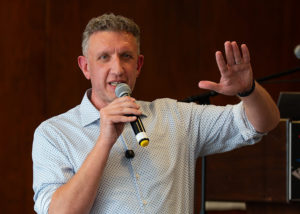
Chuck is a US-based internal communications strategist and the founder of ICology – a community and resource hub for IC professionals. He brings a practitioner lens to every conversation. Chuck is a recognised voice in the industry, a regular speaker and event host, and one of the most connected people in the North American IC world.
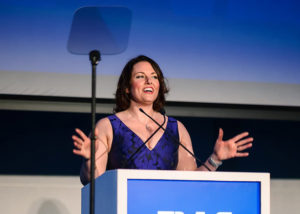
Jenni is a UK-based leadership and internal communications consultant, author of two best-selling books, and international speaker. She runs Redefining Communications, a consultancy working with organisations around the world to help them communicate better and close the gap between what leaders say and what employees experience.