
Do your people have what they need to do the job? Korn Ferry looked at listening data from nearly 1.4 million employees and found that question predicts retention and revenue per employee better than whether people feel engaged. Jenni has been waiting a long time for someone to say it. Chuck is annoyed with himself for not making the connection sooner, having worked alongside sales and marketing enablement teams for years.
The rest of the week is about what leaders tell people, and what they leave out. McKinsey research says most of the jobs expected to change because of AI are frontline and support roles, but nobody seems to be telling those workers what to learn. BCG finds that vague AI messaging does more harm than saying nothing. And an alleged bugging case at OpenAI raises a question every company handing AI agents access to calendars and files will need to answer: what can the tools see, and do employees know?
After three episodes recorded in the same room, Chuck and Jenni are back in their own studios. Jenni shares the feedback from Comms Reboot, which drew 130 people and gave away prizes from sponsors rather than goodie bags. That leads to a debate about conference swag, prompted by a TikTok video from HR Tech of attendees unpacking piles of freebies. Chuck hates the waste. The Flyover Festival only gives swag to VIP ticket holders, and he and Elizabeth Wang once tried to run PRSA Connect without any. Jenni’s test is simple: is it useful? A small power bank from Unite gets her vote. A plush toy doesn’t.
A LinkedIn post by Stephanie Hills, a tech executive turned coach, builds on McKinsey Global Institute research. It says more than 70% of workers may need to reinvent how they work by 2035, 11 million US workers may need to change occupations, and demand for AI fluency is up 11 times since 2022. The five roles making up roughly a third of the projected transitions are customer service reps, retail sales associates, office assistants, cashiers and warehouse workers. Most are frontline and support jobs, the people internal comms tends to reach last.
The post tells professionals not to wait for their employer to tell them what to learn, then admits in the next breath that many organizations are rolling out AI without preparing people. Chuck asks who is actually telling employees any of this. Jenni’s answer: nobody. People are still unsure what to do with AI, and at Comms Reboot, the first AI session, put in one of the biggest rooms because so many people had asked for it, drew six people. Without some framework from employers, she says, the choice is too big and people freeze. She would rather see a wider conversation about how work itself is changing, something closer to the Industrial Revolution, than another study putting the burden on individuals.
Chuck questions the math on AI fluency (was there any demand in 2022 to multiply?) and points out that the roles most affected already have high turnover, so the change may land on whoever is hired next. His bottom line is that people own their own development. Ask your employer which skills matter, but don’t wait for them to pay for it.
New BCG research, published in Harvard Business Review, finds that the story a company tells about AI predicts how much employees use it. Employees told that AI is a baseline expectation of the job reported the most daily use, around 40 more minutes. Messages about career growth or more meaningful work came next, productivity messaging barely moved usage, and fear or competitive-threat messaging showed no meaningful link at all. Unclear communication did the most damage, and was tied to less use than saying nothing. The authors’ key line is that clarity doesn’t require certainty.
Chuck flags the limits: the data is self-reported, correlational and measures usage, not whether the work got better. The top performer, “this is now part of your job,” is a mandate rather than a story. And using AI more is a strange goal if nobody explains what it’s for.
Jenni says this is a question she gets all the time when talking about credible leadership. You can be very clear that you don’t know what will happen. What doesn’t work is standing up and saying “we don’t know, good luck.” What does work is “we’re still figuring this out, this is the direction, and I’ll come back to you at these points.” She describes reading a layoff announcement full of jargon that never said what it meant. With so many people worried about their jobs, she argues, a lack of clarity keeps them in a state of threat. Chuck brings in George Carlin’s routine on how “shell shock” was softened over the decades until it lost its meaning, and compares it to layoffs becoming reorgs and restructures.
Korn Ferry’s report, The Value of Employee Listening: Enablement as a Driver of Organizational Performance, analyzed listening data from nearly 1.4 million employees at more than 60 organizations. Whether employees have the tools, resources, information, processes and support they need predicted retention and revenue per employee better than engagement. A 10-point higher enablement score went with about 234 more people retained per 10,000 employees. The survey items most closely linked to “exceeded expectations” performance ratings were all about managers, such as fair performance reviews and valuing employees’ ideas. Organizations that kept listening for longer, and visibly acted on what they heard, saw stronger results. Korn Ferry is clear that these are associations, not proof of cause.
Jenni is fully on board. There’s no clear link between engagement and retention, and she has always asked frontline workers whether they have what they need to do their job well. Engagement, she says, is like treacle through your fingers, while enablement is something you can actually talk about and fix. She ties it to her favorite question for communicators, “to what end?”, and describes an intranet editor stuck saying yes to every request. The better question is how communication helps employees do their best work.
Chuck suggests breaking enablement down by audience: what do leaders, managers and frontline teams each need, and where does comms fit into how they work? Jenni predicts a chief enablement officer is on its way. Chuck insists it isn’t.
Reuters reports that former OpenAI engineer Abdulrahman Alfozan has been ordered held without bail, charged with one count under the Wiretap Act for allegedly hiding an audio recorder behind a TV in an executive conference room. Prosecutors say a member of the Saudi royal family repeatedly tried to recruit him. The filing doesn’t allege spying, and everything is still allegation. The next hearing is November 6.
The workplace tech detail is what caught Chuck’s attention. Court documents say he asked OpenAI’s internal productivity agent which rooms held high-level meetings. OpenAI said its own AI identified him, but the filing leans on CCTV, logs and a routine sweep of the room. In the same week, OpenAI fired three researchers for mishandling sensitive information, and they argued that abrupt firings could discourage people from raising safety concerns.
Jenni asks why this is headline news when corporate espionage is nothing new, and why anyone would assume their work emails are private. Chuck thinks most people simply aren’t thinking about it. He once had to tell an employee that one-to-one Slack messages can still be searched, and some companies log every keystroke. Jenni compares the security culture of the defense industry, where she has worked, with the speed of AI tools now, recalling a client who didn’t know whether their policy allowed Claude or only Copilot. Chuck suggests security might be the most honest argument yet for a full return to office.
Jenni is freq-ing out about job title rebrands. She spotted a “workplace experience specialist” on LinkedIn whose career so far had been entirely in facilities. Is she supporting it or mocking it? Mocking it, she decides, unless the role comes with the authority to change anything, and ideally fix the meeting room tech. Chuck likes it. If intranets aren’t the whole digital workplace, someone has to own the physical one, from parking lots to the cafeteria.
Chuck is freq-ing out about a Wall Street Journal story on The Gund Company in St. Louis, a family-owned manufacturer that has never laid anyone off in 75 years. It averages 18% annual growth, staffs lean so it can ride out slow periods, and has employees post concerns publicly on red cards so leaders have to act. Hundreds of executives have visited to learn the approach, and many leave saying it’s too hard. CEO Steve Gund puts employee well-being ahead of short-term profits and says, “It sounds touchy-feely, but it’s profitable.” Chuck’s response: why does caring about people have to sound touchy-feely at all? Jenni asks why profitable companies keep cutting people instead of moving them somewhere else in the business.
What is employee enablement? Korn Ferry defines it as having the tools, resources, information, processes and support needed to do the job. In its data from nearly 1.4 million employees, enablement predicted retention and revenue per employee better than engagement did.
Is enablement a better measure than engagement? Chuck and Jenni think so. Engagement is hard to pin down, while enablement points to specific things an organization can fix. Korn Ferry notes its findings are associations, not proof of cause.
How should leaders talk about AI? BCG’s research suggests being clear beats being hopeful, and vague messaging is worse than silence. Clarity doesn’t require certainty. Leaders can say what they don’t know and still set a direction.
Can a leader be honest about uncertainty and still be clear? Yes. Jenni’s version is: “We’re still figuring this out, this is the direction we’re going in, and I’ll come back to you at these points to tell you how it’s going.”
Which jobs are most likely to change because of AI? McKinsey Global Institute research highlights customer service reps, retail sales associates, office assistants, cashiers and warehouse workers, making up roughly a third of projected occupational transitions in the US.
How does The Gund Company avoid layoffs? According to the Wall Street Journal, it staffs lean so it can ride out slow periods without cutting people, puts employee well-being ahead of short-term profits and has employees post concerns publicly on red cards for leaders to fix.
Jenni: Welcome to Frequency. I’m Jenni Field.
Chuck: And I’m Chuck Gose. Frequency is your go-to for real talk about comms, culture and employee experience, beyond the buzzwords and straight to what matters. What matters this week, Jenni, is we’re going to talk about who needs to reinvent their job, AI ambiguity, back again with employee listening, and spy games at work.
Jenni: I am excited about the last one. I’m less excited about the fact that we are back in our home studios. I’ve really enjoyed the fact that for the last, what, three episodes we’ve actually been together, which has been really nice. And I know, like you, I’m glad to be back at home. But also when I was watching the clip of us in the studio when you were here, I was like, it was just so nice. It’s just a different sort of vibe being together.
Chuck: Yeah, it’s good to be back in a routine, because that wasn’t our routine. If we could do that every week, where one of us is flying over and we’re recording and the other one’s flying back, yes, that would be… or teleportation of some kind. That would be really cool. But no, that was pretty special to be able to do those. But yeah, we are back, still here recording every week.
Jenni: We are, we are. And if anybody would like to sponsor us so that we can fly back and forth each week, that would be really lovely.
Chuck: Unlike Jenni, I don’t need business class either. I don’t need business class for those flights.
Jenni: Fair, fair. I do. The other thing I wanted to mention was Comms Reboot, because obviously your extended stay in the UK was also because of my event, Comms Reboot, which wrapped up a couple of weeks ago. And it was really good. I was looking at the feedback yesterday, lots of positive stuff, 130 people in the room. Someone said to me it was the best one yet, so I’m going to take that as a massive win. And we had some lovely prizes from our sponsors as well, who gave away things like speakers and AirPods and all sorts of stuff. Which brings me on to my question around conference giveaways and swag, which I know is a topic close to your heart. We do a prize draw at Comms Reboot because I don’t like lots of swag. But what’s your view on prize draw versus a bag full of goodies?
Chuck: Well, first I’m going to take Comms Reboot being the best one as a win, since that was the first one that I was a part of in the UK. So I’m going to pat myself on the back for that one.
Jenni: That’s on you. Well done.
Chuck: Yeah, I’m not a fan of swag. And I would say probably much to the detriment of ICology from time to time. I just hate waste. I hate just making plastic crap. So I’ve always tried to be very thoughtful about swag. I know at times it’s a bit of a necessary evil. Even with our Flyover Festival, there is swag, but it’s only associated with VIP tickets. So people essentially pay more because they want the swag as part of it. So it’s just for them. There’s not just random things sitting around at the end of the day. And even at events, back when it used to be a part of bigger things, I used to give away books, and we’d have like, here’s five or six books, which one do you want? And it became a great conversation. And people got to pick the book they won, and then we’d send it to them at home. They didn’t have to carry it back with them.
And we’re talking about this because I sent you a video I saw on TikTok that was quite triggering to me. Having attended HR Tech several times in my career, there’s this weird cultural element where… I don’t want to say people just go there for this, but a big part of it is accumulating swag, accumulating plastic crap. And basically, this woman is doing this thing from her room where she’s going through all these swag items that she picked up from these random companies. People would say they traveled to the conference with an empty suitcase just to take swag back. Or you see it in the hotels. HR Tech is massive, tens of thousands, I don’t know what the number is of people that go. You just see trash cans filled with stuff that people grab that then doesn’t fit in their bags. And it was very triggering because it was this reminder of people that just want to come up and grab what you have without there being any sort of thought or conversation or meaning to it. And then they’re just accumulating it.
Jenni: Yeah. And I don’t know how it helps your brand. That’s the thing I really struggle with. Unless it’s something that’s useful. Like when we were at the Unite conference together and we did our live episode, they gave us, and I think maybe it was VIPs, a bit like your system, little bags, and we had the little charging thing in it with the cat, which is great because it’s actually quite a small little charging bank. I can charge that up and I’ve used it since then because it is helpful. But I don’t understand things like plushies. I don’t know what I’m going to do with that. Maybe it’s because I don’t have children that I don’t get it, but I don’t get how that is helping you achieve your ambitions as an organisation.
Chuck: Because here’s what happens at an event like HR Tech. If you don’t have those items in your booth, people just walk by, because I swear they’re just on the hunt for plastic crap. And what happens with the stuffed animals? People are like, but I’ve got two kids at home, or three kids at home, or blah, blah, blah. And all of a sudden they’re just accumulating things that I guarantee there’s not really any value to. It just ends up in the garbage. Shout out to Elizabeth Wang. She and I made an attempt to run PRSA Connect essentially swag-free, by encouraging sponsors and vendors to come up with other ways to deliver value and invest in the event that wasn’t plastic crap on the table. It was a unique challenge. Some took us up on it, some didn’t. But I’m still on this campaign of, why are we creating this stuff and what value do we get out of it?
Jenni: Yeah. I think that is your next LinkedIn poll.
Chuck: Geez, I don’t even know that I’d want to know the answers to it.
Jenni: I’m just going to sit back and watch. I’m going to get some popcorn. I’m just going to let that unfold.
Chuck: Yeah, I’m a little down on LinkedIn lately. I know we’ve talked a little bit about that, but it’s just too much at times.
Jenni: Everyone is. Yeah.
Chuck: All right, let’s get into the articles for this week. This is a LinkedIn post that I saw that talked about McKinsey Global Institute research, which said that more than 70% of workers may need to reinvent how they work by 2035, and 11 million US workers may have to change occupations. Demand for AI fluency is up 11 times since 2022. Kind of surprised it wasn’t higher. And adaptability at five times. These are the numbers that Stephanie Hills, the person that posted on LinkedIn, a tech exec turned coach, builds the entire conversation around.
It hits on, quote, “too many professionals are waiting for employers to tell them what to learn,” and then says in the next breath that too many organizations are rolling out AI without preparing people. Something we’ve talked about many times on the show, because both can be true. But the first part puts the work on the employee, while the second admits the employer is the one often dropping the ball. The five occupations making up roughly a third of the projected transitions are customer service reps, retail associates, office assistants, cashiers and warehouse workers. Most of these are frontline or support roles, which tend to be the people that internal communicators reach last and least.
My question for you, Jenni, is that one of the recommendations is that professionals shouldn’t wait for their employer to tell them what to learn. I’m 100% for that. But who’s telling them that?
Jenni: I don’t think anyone’s telling anybody anything. I think the AI is telling the AI to do something. I don’t think there is much conversation going on about what you should be doing with AI. And I think people are still a bit scared of it. I think people still don’t quite know what to do with it. And the interesting thing for me is that there just seems to be a lot of noise still around AI. If I think about Comms Reboot, we had two sessions on AI that people wanted to do. We put them in one of the biggest spaces because of the amount of Post-it notes that wanted to talk about it. And in the first session, there were like six people sat there. And I was like, what? And I think there is this, I need to do stuff, but I don’t know what that is. And without someone being that guide, I think it’s really hard to know where to start.
I’m reading a book at the moment called The Second Mountain, and it’s talking a little bit about this belief that we have that people should just be like, the world’s your oyster, you can do whatever you want, you can do anything. That’s not helpful, and it’s not helpful, I think, for this.
The other part of the article that I thought was interesting was about the things that are going to change and reinventing your work. I think we’ve always said that AI isn’t necessarily going to change the jobs, but it’s going to change the tasks, and that doesn’t seem like that’s changing over time. I think you do have to adapt. I think employers do have to give some framework around it, because I think it’s too big otherwise, and then that is paralysing in terms of what you can do. It’s almost that decision paralysis. There’s too many different things I could be doing, so I’m just not going to do anything.
Chuck: Yeah. A couple of the data points seemed a bit peculiar to me. That one around the demand for AI fluency being up 11 times since 2022. Was there any demand for AI fluency in 2022? Wouldn’t it now be like a hundred times the amount? Or is it a hundred times zero? I don’t know. Something’s wrong with that math there.
Jenni: Yeah, I had that same thought.
Chuck: And the other part, where it says the occupations making up the most transitions are service reps, retail, office assistants, cashiers, warehouse workers. There’s also, to my understanding, a very high amount of turnover in those roles. So it’s not like someone is there, could be a few people, but they’re in that role and they’re going to have to experience this change all the way through. People are going to be coming in and out of those roles. So yeah, those roles have been changing and continue to change. So the AI impact is just going to impact the person coming in, not the person leaving, because people just don’t tend to stay in those roles for very long. So I wonder if turnover is almost going to fix that on its own, because honestly, people aren’t customer service reps or cashiers their entire life. Of course, there are some people who are, but generally those are pretty high-turnover roles.
Jenni: Yeah. I think there’s also something for me around the conversation about AI and how much we’re focusing in on, you know, you’re going to need to reinvent your work, you’re going to need to do something different. Whereas for me the conversation is, how is the world of work changing so significantly because of AI? A bit like the Industrial Revolution. How did that change things? How’s this going to change things? I feel like so much of the studies and data is really narrow on your job’s going to change, and it’s also on you to sort of, you know, be scared. There doesn’t seem to be so many conversations about the maybe bigger, more holistic view of significant societal shift and workplace shift and what that means. And I know that’s massive, right? But I’m just not sure how helpful some of these studies are in terms of actually helping us figure out what we’re doing.
Chuck: Yeah. I think this is, I don’t know what number we’re at, the twelfth reminder, the hundred and eighty-eighth reminder, that you own your professional development. If you’re relying on your employer to fund your professional development, you’re going to fall behind. Unless you work for an amazing organization, which I’ll talk about later on in the show. But you own this. It is up to you to invest in this. You can certainly ask your employer, what are the skills you’re looking for? What should I be working on? But if you’re waiting on them to pay for it, you might be waiting a very long time, and therefore falling behind. They aren’t ready for this. It’s important for us as humans, if we work for a living, it’s up to us to develop those skills, plain and simple.
Next, BCG says the story a company tells about AI predicts how much employees use it, and the winning story is not the hopeful one. Employees told that AI is a baseline job expectation reported 40 more minutes of daily AI use than those who weren’t. Messages about career growth or meaningful work came next at 17 to 18 minutes. Productivity messaging added three minutes. And fear or competitive-threat messaging had no significant relationship with use at all. The villain here is ambiguity. Unclear AI communication was tied to 19 fewer minutes a day, and employees at those companies reported 30% lower odds of hitting financial targets. Silence did a little better than vague, at 10 fewer minutes. That is a direct hit on the “no one knows” line many leaders think of as honest, though the authors do say clarity doesn’t require certainty.
I think that’s a great lesson. Clarity doesn’t require certainty. Leaders can name what’s unknown and still give direction. A second BCG survey of around 10,000 employees found that clarity alone, even without better tool access, predicts a 20 to 25% lift in measurable business impact. Now, all of this aside, Jenni, all of this is self-reported, recruited online and correlational, and 40 minutes a day measures usage, not whether the work actually got better. The top performer is also “this is now part of your job,” which is a mandate, not a story, right next to the hope-and-growth framing in the headline.
The industry breakdowns here matter a bit. 51% of manufacturing employees and 54% of education employees reported unclear AI communication. That actually seems very low to me. And 48% of retail employees reported none. That also seems very low. Those are the sectors with the most frontline employees. Tech and finance employees mostly hear productivity messaging, which the data says also does very little. But I think the bigger conversation here, Jenni, is: can a leader be honest about uncertainty and still be clear? And what does that sound like in front of a bunch of employees at an all-hands?
Jenni: It’s such a good question. It’s a question I get asked quite a lot when I’m talking about credible leadership as well, in terms of how can you have that clarity in such a volatile world when there’s so much uncertainty? And in my view, it’s very easy. It’s not about having the answers. Clarity is not about knowing what’s going to happen, which I know might sound a bit weird. I can be very clear with you that we don’t know what’s going to happen. That is still clarity, right? But it is that openness, it’s that honesty, it’s that slight vulnerability. It’s having a conversation. It’s being in the ambiguity with your team, but letting them know that this is your plan to get there. Without the plan, if you were just to stand there as a leader and say, yeah, we don’t really know, good luck, right? That’s not the message. The message is, we are still figuring this out. This is the direction we’re going to go in. I’m going to come back and talk to you at these different steps, and we’re going to see how we’re going in that direction and what we need to do differently. That’s fine, right? That’s still clarity in ambiguity. And I think that is an important lesson for leaders. The skill of being able to do that, and having the confidence as a leader to do that, is what we’re looking for now in so much uncertainty. That’s, for me, what it would look like.
I think how we talk about AI, in this example, in terms of what we’re telling people, needs to be listened to in terms of what’s going to actually drive the adoption. To your point, is it going to make anything better? Is it really going to change anything? I think that is yet to be seen.
Chuck: Yeah, I was thinking about the early part, when it talked about what drove usage. So if your goal as a company is, we want our employees using AI more, that’s a really horrible goal. But let’s stick with it. And the communication around it. If it’s just, hey, you need to use this, people used it more. But for what purpose? If you’re saying you’re going to get better career growth or you’re going to get promoted, that actually had less impact than just saying, hey, you’re supposed to do it as part of your job. And then, you’re going to be more productive? People don’t care. That actually drove almost no use whatsoever. But just telling people to use it more, for what purpose? What are they getting out of it? What are we getting out of it? That’s the unclear part in all this. But yeah, I like the part around giving people some certainty when things are uncertain, just being clear about it. Ultimate manager win, right there.
Jenni: Yeah. And I think the clarity is just not to be underestimated. And that isn’t hard to do. But I was reading an employee announcement just earlier on this week about some more layoffs in an organisation. And I was reading the announcement from the leadership team, and it was like, what are you really trying to say here? There’s a lot of jargon in here. Just say it. Just speak normally. And I think that is also the clarity: don’t try and make it sound like it’s something big and exciting and massive and verbose. That’s not helpful. People don’t want that. And where work is shifting so much, with so much uncertainty about the safety of your job, people are operating in such a state of threat now that if you aren’t able to give that clarity, not certainty, but that clarity, you’re just going to make people feel even more in a state of threat. And then how can you expect them to do their job when they’re just continually worried about whether or not they’re going to have one? That’s the skill as a leadership team to really hone in on now.
Chuck: I saw this recently, a comedy skit from the comedian George Carlin. And he talked about the danger of softening language, which immediately I clued in on. He talked about World War I, when soldiers came back from that, what they were experiencing was called shell shock. So when we say, I was shell-shocked by this, that dates back to what we now call post-traumatic stress disorder, or PTSD. And he talked about how shell shock meant something. You knew exactly what it was. And over the years, it became these different things, and now we’ve kind of lost the meaning of what people were really going through. Which is no different than us saying layoffs versus reorgs versus restructures, right? You lose the meaning when you soften it in such a serious situation.
Jenni: Yes, always. And in a less serious situation, I always used to joke with my sister. I would be like, how was the traffic today? And she was like, horrific. And I’m like, was it? Was it actually horrific, in terms of what that means? And I think that’s where our language has just shifted so much that the power and the meaning behind it isn’t there. Which is why, when we talk about the importance of communication in organisations and language and what you’re saying, it is so important, because words have such significant meaning. If you’re not really considering that and the clarity and all the stuff that goes with it, you’re going to be creating either so much unnecessary worry or so much noise. You’re going to do one of those things.
Chuck: I had an English teacher in high school, and anybody would say something like, “That was awesome,” and he’d be like, “Was it? Was it godlike?” Because that’s what awesome truly meant.
Jenni: I love it. I love that.
Chuck: Okay, moving along now. Korn Ferry looked at employee listening data from nearly 1.4 million people at 60-plus organizations and found that whether employees have what they need to do the job predicts retention and revenue per employee better than whether they feel engaged. They call it enablement: tools, resources, information, processes and support. Roughly, a 10-point higher enablement score went with about 234 fewer exits per 10,000 employees. Information is on that list, and that one is frankly in the wheelhouse of communicators.
The most useful finding, though, is about managers. The survey items most tied to “exceeded expectations” ratings were all manager behaviors, like “my manager reviews my performance fairly” and “my manager values my ideas and opinions.” What novel ideas. The report also says that companies that kept listening for more years and visibly acted on what they heard saw stronger results. Shock face. Jenni, how do you feel about this conversation about engagement versus enablement?
Jenni: So I’m here for this conversation, because I think we have spoken before about the lack of correlation between engagement and retention. There doesn’t seem to be a clear correlation between those two things. And I think any regular listener will know how I feel about engagement as a measure for organisations. And if you are not a regular listener and you want to know, then just let me know and I’ll get on my soapbox. But I don’t know what you’re measuring. Whereas enablement is about whether or not you have the tools you need to do your job. It’s always been part of my research surveys on deskless workers. Do you have what you need to do your job well? It should be a fundamental question on anything. I’m not sure whether it’s in Gallup’s engagement questions. I hope it is. Maybe they just focus on the friendship. But that is such a big part of employee experience. Part of employee experience is your tools, your processes, your relationships, the environment. All of those things matter. That is about being enabled.
And I think it’s a much better measure than engagement, which is just like treacle going through your fingers. It doesn’t really mean anything and it’s really hard to get hold of. You can tangibly talk about enablement, what’s behind that, what’s needed, and it’s the stuff that makes a difference to employee experience. It’s the stuff that makes a difference to whether people feel valued. And we know from the engagement scores that when people do feel valued, when they feel that their wellbeing matters, that’s when engagement does go up. So there’s no surprises in here, other than, let’s do these really tactical, maybe basic things that will have a significant impact. Let’s do those things rather than try and make out that it’s something else to do with engagement. It’s really very basic, foundational stuff that will make that change.
Chuck: When I read this, I became immediately disappointed in myself that I did not make this connection earlier. Because I have worked at organizations that had sales enablement and marketing enablement. And it makes so much sense. You know exactly what they’re there to do. They’re there to help improve the sales team, they’re there to help improve the marketing team, whatever it might be. Why did I not think of this? And why isn’t HR in this conversation as well? I’m not suggesting we call them human enablement, by the way.
Jenni: Please don’t.
Chuck: Please do not. But I think this is the kind of stuff that leaders can get behind. This isn’t “soft” when it comes to employees. This is truly: do they have the tools? Do they have the resources? Do they have the information? I think this is now going to be a bit of a mind shift for me as I’m talking to other internal communicators out there, to take on more of this enablement mindset. Because if you’re doing all of these things, whatever vanity engagement metric you’re looking for is going to end up happening. But if you think about it more from an enablement standpoint, I think it really gets you laser focused on what people need.
Jenni: Yeah. But I think it also comes back to the conversations that we often have with internal communicators, which is, why are you communicating this? I always say, to what end? It’s my favourite question. I was talking to someone who is in charge of editorial content for the intranet for an organisation the other day, and they were saying everything is just chaos. Everything’s coming in, we’re just saying yes to stuff and we’re just posting, and it just feels like we’re on this hamster wheel of content going out. And this is why, right? Because they’re not having this conversation about how are we communicating in a way that enables our employees to do the best work for this organisation to achieve our goals? That’s the question, right? Those are the conversations I think internal comms teams should be having, rather than just saying yes to stuff, or getting stuck on the engagement issue, or getting stuck on maybe sometimes the strategy. Sometimes you are communicating stuff that isn’t linked, but it needs to be said. I think there is a different question internal communicators could be asking as a result of this, and I think it’s really powerful.
Chuck: And I think if I was a communicator, I would start breaking it down by audience as well. Leadership enablement, what do they need? Manager enablement, what do they need? Whether it’s frontline, manufacturing, whatever it is, you start breaking this down and it becomes really crystal clear to focus on the purpose of what you’re doing there. What resources do they have? What do they not have? What information do they have? What do they not have? How do they do their job? What does the process look like? Where does comms flow into that? Again, I’m disappointed in myself, but it’s a bit of an awakening also, to think, okay, this is now something we can get our hands on and really drive to make the improvements that we need to.
Jenni: Yeah. There’s definitely going to be a chief enablement officer role, isn’t there? It’s coming.
Chuck: No, there’s not. There’s not. There’s not.
Okay, we’re going to wrap this up with a workplace tech story with a spy movie prop. Some of you might have heard about this, but we’re going to talk about it. A federal judge ordered former OpenAI engineer Abdulrahman Alfozan held without bail on October 19th. He is charged with one count under the Wiretap Act for allegedly hiding an audio recorder behind a TV in an executive conference room. Prosecutors say a Saudi royal family member repeatedly tried to recruit him, and that his wife and baby left the US on tickets paid for by a Saudi military official. The filing doesn’t allege spying or that anyone directed the bugging, and the government says more charges may come. Everything here right now is allegation. The next hearing is November 6th.
All that being said, the workplace tech details are the part we’re going to discuss here. Court documents say he asked OpenAI’s internal productivity agent which meeting rooms held high-powered meetings, about six weeks before the device went in. They also say prompts for building the recorder came from a ChatGPT account linked to his wife. OpenAI told the world that its own AI identified him, but the filing leans on closed-circuit TV and other logs, and the device was found in a routine sweep. Nobody knows if it recorded anything, since the memory card couldn’t be decrypted.
There’s another angle to this, the employee story running underneath. In the same week, OpenAI fired three researchers for mishandling sensitive information, and those researchers published a letter arguing that abrupt firings could stop people from raising safety concerns. Every company rolling out AI agents with calendar and file access now has a version of this question. What can the agent see? Who reviews the logs? And what do employees know?
So I’m curious about this. This is like something out of a TV show. But how does a company tell employees we’re tightening security without it feeling like we’re watching you? Or is that what they are doing?
Jenni: Yeah. Well, there’s so many layers to this story. The first thing for me, and I had sort of questions, was this: employees spying on organisations, I don’t think that’s new. I think that has been around a long time, and I wonder why this has made a headline. I’m not saying that the FBI are looking into people all the time for doing some sort of corporate espionage, but corporate espionage has been a thing for a long time. So this isn’t new. So the fact that it’s making headlines, why is it making headlines? Is it because it’s OpenAI? Is it because it’s in the US and it’s a Saudi national? What are the reasons behind that being in the news? That’s interesting to me, that it’s making such a splash.
The second thing is that I don’t know how you could work in an organisation… let’s go back ten years, before AI, and not think that your emails and stuff would be looked at if there was a need to, in terms of a grievance or anything like that. We have the Freedom of Information Act over here. All that, to me, would be quite normal. If something happened where they needed to investigate, I would expect that my emails would be looked at. So I don’t know how new this is, in terms of “we’re going to be tightening security.” Is this really that new to people, that organisations can look at this stuff if they need to?
Chuck: I think they aren’t thinking about it, to be honest with you. And this is an indictment on it. I remember telling an employee once, hey, just so you know, those private Slack messages you’re sending back and forth, they’re not private. Just because they’re not in a channel or whatever in Slack, one-to-one, those are still surfaceable. Someone can still search and find them. So, the fact that this guy was using an internal tool to find out which meeting rooms have the highest executive presence… I think what’s interesting to me is that there are physical sweeps of these rooms for the devices. And then OpenAI is saying, no, we caught them using our own tool, which sounds like a sales tactic. But then it was really just the old-school security team sweeping rooms looking for these things. So I think it’s just a reminder that you’re always being watched. You’re always being watched. There’s software out there, I’ve heard, that companies have where they don’t just record what goes in Teams or what goes in Slack or what’s in the email, but every single keystroke. So even if you backspace out of stuff, it still knows what you typed, if the companies are doing that.
So it feels a little salacious when you start adding in the stuff about his family leaving and the Saudi royal family and a Saudi military official, and all of a sudden all these things are what start making it more newsworthy than just, oh, an employee was trying to record a meeting. They don’t know what he was trying to record, who was in the room. But it’s just a reminder that companies take this stuff very seriously. Very seriously.
Jenni: Yeah. It’s also reminding me, when you were over in the UK, we watched the film The Man from U.N.C.L.E., didn’t we? And what it’s making me think of is that kind of spy movie, bugs everywhere, people sweeping rooms, you know. And I wonder how long that’s been normal practice for OpenAI. How long’s that been normal practice for other organisations that are doing really secret stuff? I don’t know. But I do think there is something about security and how secure we are about things. I have had my career working in the defence industry. I have clients that are in the defence industry. That is so secure in terms of the checks, the balances, being able to log in. How you do all of your work is very different to when I’ve worked for a retail company, for example. But I wonder whether we’ve got more relaxed with AI coming in, and the speed and accessibility with which we can access technology.
To your point, I just don’t think they’re thinking. We had a conversation with a client the other day about using AI to do translation, and it was like, cool, do we need to have access to your Copilot, or are you happy for us to just use Claude? How do you want to do that? And it was like, I don’t know what our policy is there. But the instant response is, it’s fine. And I think you probably just nailed it at the beginning. I just don’t think people are thinking, and they’re just kind of cracking on to get stuff done.
Chuck: I think if there were ever a case for a full RTO effort, it would be around security. You work at work, you don’t work anywhere else. You only have access to this stuff at work, you don’t have access to it anywhere else. That’s the only way I could see a company saying, hey, we just can’t risk it. Even though we know there are security things, there’s no way for you to know that there’s not someone sitting over here looking at my screen. I’m allowed to look at it, but you don’t know who else is looking at it.
Jenni: Yeah. Well, you’ve just given them all the reason now. There’s going to be a flood.
Chuck: If that is the real reason. Not culture, not lease agreements, not any of that.
Jenni: No. It’s risk. Fair.
Chuck: Okay. With that, Jenni, that wraps our content for this week. Let’s move on to our freq-outs. What are you freq-ing out about?
Jenni: So I’m just grabbing my phone, because it’s the screenshot that I sent you earlier on today. I’m freq-ing out about job title rebrands. I’m all for an evolution of a role, right? And a change in, maybe, you know, employee enablement specialist is going to come in, right? But I saw someone with a job title on LinkedIn this week, which is workplace experience specialist. And I was like, what’s this? This feels like it could be a bit internal comms. What’s this doing? And so I had a look at what this person was responsible for, and it was to do with the workplace experience, right? They’ve nailed their sort of brief about it. And then I just scrolled down on their LinkedIn, like I’m really stalking someone, to see their experience, what was before. And it was facilities assistant, facilities team leader, facilities manager. Now called a workplace experience specialist. And it just made me laugh so much that I sent it to you and a few other people going, this is what we’re calling facilities managers now. They are now workplace experience specialists. So that’s now a thing.
Chuck: I want to read between the lines here. Are you supporting it or are you mocking it?
Jenni: I am somewhere in between. I am not entirely sure that as a facilities manager you are a workplace experience specialist, in my experience of working with facilities managers. But maybe their role has evolved. Because what are you saying is the workplace, given our RTO mention just now, and what element of that experience are you looking after? Because if you’re looking after the conference tech, please can you fix that? Because that is the bane of most people’s lives inside offices. So I just wonder what’s included within that. So I am mocking it. It turns out I am mocking it. Yeah, that’s what I’m doing.
Chuck: I’m going to take the opposite. I actually really like this. And I’m going to go back to an argument you made once to support this. You mentioned at your event that an intranet is not a digital workplace, a digital workplace is not an intranet. So if we’re talking about the digital workplace, I would say this person focuses on the physical workplace. What is the place like where they are doing the work? You have worked with facilities managers in the past, I have worked with them in the past. I think this now gives a better understanding of, if this is the work people are doing… Now, what I’m curious about is, did this person come up with the title or did the company come up with the title? Either way, I kind of like that it’s elevating it, to say whether it’s the conference rooms, the parking lot, bathrooms, the cafeteria, whatever it is, that does all impact employee experience.
Jenni: It does. It does. But as long as it’s not just… I think my mockery is coming from a place of, have you actually got the authority, ability, desire, whatever it is, to actually look at the workplace experience, or have you just given yourself a different title? That’s where I think my mockery is coming from. I did have a quick look, and I think it’s quite a common title in the US. So I’m going to have another look and see.
Chuck: I think you need to go do a LinkedIn search of that. Maybe we’re leading in this area now, instead of the other way around.
Jenni: Maybe. At least you’re leading in something. So that’s my freq-out.
Chuck: Something we are. All right. I read about this in the Wall Street Journal, and this is what I’m freq-ing out about. There’s this company, I was not familiar with them. It’s The Gund Company in St. Louis. They have been around for 75 years. They have 18% annual growth, $400 million in sales. I don’t want to say small business, 1,300 employees is a lot of people, but it’s not like…
Jenni: What do they do?
Chuck: They’re a manufacturing company. For anybody, I don’t know, you probably don’t have these in the UK, but anybody who lives in the suburbs in the US has these big green boxes outside your house that have all the electrical stuff. They design things like that. That’s some of the work that they do. The reason this is in the Wall Street Journal is not because of what they do. It’s because in those 75 years, they have never laid off a single person. Not once.
And so now all these executives from all over the country are flying in to try to learn the secret sauce of this company. And basically, it turns out, shocking, they just really care about their people. They don’t want to lay people off. And so they admit that they run pretty lean, because they don’t want to overhire. They want to make sure they always have work for the people that are there. And there’s all these stories, like this one employee that they highlighted, who started working as a janitor when they were 16 years old and is now part of, I think it was, their employee listening or employee experience team many years later, because they worked their way up through the organization. They’re based in St. Louis, but have locations around the world. Employees have stock ownership, so employees own a certain percentage of the company.
And what was interesting is these other leaders that go there to try to learn the ways. Apparently there’s this 12-step formula, and they’re like, we just can’t do this. It’s just too hard. And it just goes to show, yeah, there are people that just don’t want to put in the work. They would rather overhire and lay off, and then overhire and lay off. Whereas this company’s like, no, we’re not laying anybody off. We’re actually going to manage the business.
Jenni: Yeah. And I think it’s also about making sure that as an organisation you are purposeful, or purpose-led. Do you know what I mean? If you’re just focused on the money, it’s never going to work long term. But it’s also that they’re just not greedy, and they do care. And it’s not difficult. It’s not hard. When I look at every day, there’s layoffs, there’s more and more layoffs everywhere, it seems. And it’s like, but you’re still profitable. Why can’t you just move those people into a different part of the organisation? Why do they have to go? Why can’t you do something else? What are the other alternatives that you thought about? And you probably didn’t. And it’s just sad.
Chuck: So Steve Gund, he’s a third-generation CEO, had this line in the article that said his model puts employee well-being over short-term profits.
Jenni: What a novel idea!
Chuck: Gosh, what an amazing idea. But here’s the quote, which also breaks it down a bit. He said, “It sounds touchy-feely, but it’s profitable.” Shouldn’t it be, it’s just profitable? It doesn’t sound touchy-feely to care about your employees’ well-being. If caring about your employee well-being is profitable, that’s the message. You care about your people, you will be profitable. I just thought it was interesting that here’s a small-ish company doing all the right things, and these other leaders are flocking there to learn their secrets, and then just like, gosh, I don’t know, it just seems kind of hard. It’s really hard to put employee well-being over short-term profits. I just can’t. I don’t know how you do that.
Jenni: Yeah. I can’t. Can’t. And I’m just going to get back in my private jet and go back and figure out the fact that I can’t do that.
Chuck: The other thing, and this is actually a good thing for anybody who’s still listening to this rant of a freq-out: they have a system where employees write on red cards and post them publicly, about issues in the company. So then everybody gets to see what the issues are, and basically it holds leaders to account. So again, simple things. But gosh, Jenni, 12 steps. Well-being over profits? No thanks. Hard pass.
Jenni: Guff. No, it’s too many.
Chuck: Anyway, that’s what we’re freq-ing out about this week. Thank you for joining us. The episode page has all the articles and links from today’s conversation at thefrequencypodcast.com. If Frequency is a regular part of your week, a quick review goes a long way. Subscribe wherever you’re listening, and share this with just one person who’s interested in what we talked about. Thank you to my friend Poet Ali for the music. We’re back every Monday. See you next week.

Chuck is a US-based internal communications strategist and the founder of ICology – a community and resource hub for IC professionals. He brings a practitioner lens to every conversation. Chuck is a recognised voice in the industry, a regular speaker and event host, and one of the most connected people in the North American IC world.
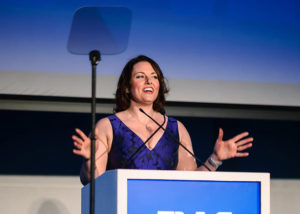
Jenni is a UK-based leadership and internal communications consultant, author of two best-selling books, and international speaker. She runs Redefining Communications, a consultancy working with organisations around the world to help them communicate better and close the gap between what leaders say and what employees experience.