
Chuck Gose and Jenni Field mark Frequency’s first anniversary this week — and Jenni’s birthday — with a look at who’s actually cleaning up after AI, a Microsoft executive’s controversial advice to laid-off staff, Fast Company’s attempt to redefine “hybrid work,” and a LinkedIn debate over how far internal communications’ remit really extends. Jenni also flags this year’s Flyover Festival, coming to Sioux Falls on August 26.
Chuck opens with a BBC story about companies now paying specialists to fix problems that generative AI itself created — from garbled copy to factual errors baked into AI-assisted work. He and Jenni talk through what this means for how organizations are actually budgeting for AI: the tool’s sticker price is cheap, but the cleanup labor behind it is real and often uncounted.
The pair turn to a story from HR Grapevine about a Microsoft executive who suggested laid-off employees turn to AI chatbots for emotional support — advice that landed badly online. Chuck and Jenni use the backlash to draw a line between AI as a genuine productivity aid and AI as a substitute for the human presence a layoff conversation actually requires.
Jenni is unconvinced by a Fast Company piece arguing that “hybrid” now means people working alongside AI rather than working from different locations. She calls the reframing more clickbait than concept, arguing that renaming a familiar idea doesn’t make the underlying advice any more useful to communicators trying to actually manage hybrid teams.
Chuck and Jenni make the case for responsiveness — actually replying to people, quickly and directly — as one of the most effective and least glamorous ways professionals build trust and expand their influence. It’s a theme they return to periodically on the show, and one they tie back to their own experience of what actually earns credibility over time.
The episode closes on two LinkedIn posts debating the actual boundaries of the internal communications function — channels, content and governance on one side, versus a broader claim on employee experience and organizational strategy on the other. Chuck references his and Alan Oram’s “periodic table of internal communications” as one attempt to map that territory, and the hosts weigh in on where they’d draw the line themselves.
Who ends up paying to fix AI-generated mistakes at work? Companies are increasingly paying specialists to clean up after AI — garbled copy, factual errors — an invisible layer of labor sitting behind AI’s cheap sticker price, according to the BBC report Chuck and Jenni discuss.
Why did a Microsoft executive’s advice about AI and emotional support spark backlash? The executive suggested laid-off employees turn to AI chatbots for emotional support — advice that landed badly because a chatbot can’t replace the human presence a layoff conversation actually requires, and layoffs are already dehumanizing enough without outsourcing that emotional labor.
Is Fast Company’s “human plus AI” definition of hybrid work actually new? Not really, in Jenni’s view — she calls the reframing more clickbait than concept, arguing that renaming a familiar idea doesn’t give communicators anything more useful to work with.
What’s the simplest, most overlooked way to build trust and influence at work? Responsiveness — simply replying to people promptly and directly. Chuck and Jenni call it one of the most underrated and effective ways to build trust and expand influence inside an organization.
Where does internal communications’ responsibility actually start and stop? It’s an open debate — two LinkedIn posts discussed on the episode, including one referencing Chuck and Alan Oram’s “periodic table of internal communications,” argue over whether comms’ job is channels, content and governance, or a much broader claim on employee experience and organizational strategy, and the hosts weigh in on where they’d draw the line themselves.
Chuck: Welcome to Frequency, the podcast where we tune into the stories, trends and conversations shaping the world of internal communications. I’m Chuck Gose.
Jenni: And I’m Jenni Field.
Chuck: And today is a big day for a couple of reasons.
Jenni: It is. It’s Frequency’s first anniversary, and, coincidentally, it’s also my birthday.
Chuck: Happy birthday, and happy anniversary to the show. One year of doing this every week.
Jenni: One year of you making fun of my Spotify playlists, mostly.
Chuck: That’s fair. Speaking of playlists, before we get into the news, I want to mention the ICology Flyover Festival is happening August 26 in Sioux Falls. If you’re anywhere near there, it’s worth checking out.
Jenni: Sioux Falls in August. Bold choice of location, but a good event.
Chuck: Alright, let’s get into it. First story is from the BBC, and it’s about people getting paid to fix problems that AI created in the first place.
Jenni: This is the thing nobody wants to talk about with AI. Everyone talks about how fast it is, how cheap it is, but somebody has to go back and fix the garbled copy, the factual errors, all of it.
Chuck: It’s an invisible layer of labor. The tool looks free, but the cleanup isn’t.
Jenni: Right, and I think comms teams are going to feel this acutely, because we’re often the ones who get handed the AI draft and told to “just polish it up.”
Chuck: Which is its own job at that point.
Jenni: Exactly.
Chuck: Next one is from HR Grapevine, and this one got some reaction online. A Microsoft executive suggested that laid-off employees use AI chatbots for emotional support.
Jenni: I saw this. And I understand the impulse — you want to offer something, anything, in a moment where people are hurting. But suggesting a chatbot as the emotional support mechanism after you’ve just told someone they don’t have a job anymore… that’s a miss.
Chuck: It’s the difference between AI as a genuine productivity tool and AI as a stand-in for a conversation that needs to be human.
Jenni: Layoffs are already dehumanizing enough. You don’t want to compound that by outsourcing the emotional labor to a bot.
Chuck: Agreed. Next up, Fast Company has a piece arguing that “hybrid” doesn’t mean home versus office anymore — it means human plus AI.
Jenni: I have to be honest, I think this is BS.
Chuck: Tell us how you really feel.
Jenni: It’s just clickbait. Renaming an existing concept doesn’t make it a new concept. Hybrid work is still about where people are working and how they collaborate. Slapping “AI” onto the definition doesn’t give communicators anything more useful to work with.
Chuck: So you don’t think there’s anything to the idea that people are working alongside AI tools now in ways that change the nature of hybrid work?
Jenni: Of course that’s happening. But that’s a different conversation from redefining what “hybrid” means as a term. It feels like they needed a headline.
Chuck: Fair enough. Let’s shift to something a bit more practical — what’s the simplest way to actually grow your influence at work?
Jenni: Reply to people.
Chuck: That’s it?
Jenni: That’s genuinely it. Responsiveness is such an underrated skill. If you reply to people quickly, clearly, and directly, you build trust faster than almost anything else you can do.
Chuck: It sounds so basic, but I don’t think enough people actually do it well.
Jenni: No, because it takes discipline. It’s not flashy. But over time, it’s one of the most reliable ways to build credibility.
Chuck: Alright, let’s close with two LinkedIn posts that got me thinking about the boundaries of what internal comms actually is responsible for.
Jenni: This comes up constantly.
Chuck: It does. One post argued comms’ job is channels, content, governance — the mechanics. The other argued comms should own a much bigger piece of employee experience and organizational strategy.
Jenni: I go back and forth on this. I think the profession needs to have both ambitions and boundaries. You mentioned the periodic table you built with Alan Oram — that’s one attempt to actually map out where the discipline’s responsibilities sit.
Chuck: Yeah, Alan and I built that specifically because this conversation keeps happening without a shared reference point. Everyone’s arguing from a different mental model of what the job is.
Jenni: And that’s the real issue. Until we agree on the map, we’re going to keep having this same argument on LinkedIn every few months.
Chuck: Which, honestly, might just be content for a future episode.
Jenni: There you go — future segment secured. Should we do freak-outs?
Chuck: Let’s do it. What’s freaking you out this week?
Jenni: I had actual bun paralysis in the supermarket. I stood in front of the bread aisle for an embarrassingly long time trying to decide which burger buns to buy.
Chuck: Bun paralysis.
Jenni: It’s a real condition. I’m freq-ing out over bread now, apparently.
Chuck: That’s incredible. Mine is that I bought the domain iCology.com.
Jenni: You did what?
Chuck: I bought it. I don’t have a plan yet. I just didn’t want someone else to get it.
Jenni: That is such a Chuck move. Buy first, plan later.
Chuck: That’s the motto.
Jenni: Well, happy anniversary to us, happy birthday to me, and thank you all for a full year of listening.
Chuck: See you next week on Frequency.
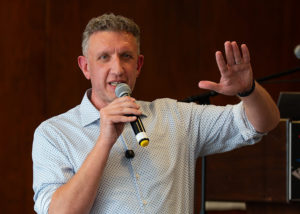
Chuck is a US-based internal communications strategist and the founder of ICology – a community and resource hub for IC professionals. He brings a practitioner lens to every conversation. Chuck is a recognised voice in the industry, a regular speaker and event host, and one of the most connected people in the North American IC world.
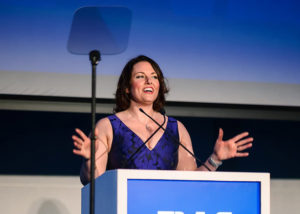
Jenni is a UK-based leadership and internal communications consultant, author of two best-selling books, and international speaker. She runs Redefining Communications, a consultancy working with organisations around the world to help them communicate better and close the gap between what leaders say and what employees experience.