
Chuck Gose and Jenni Field open with their take on the week’s most talked-about workplace story — the Astronomer CEO caught on a Coldplay concert’s camera with the company’s chief HR officer — before turning to whether communicators are too quick to judge, what Dell’s blunt employee-feedback results reveal about rebuilding trust, and why return-to-office mandates may have more to do with real estate than culture.
Chuck and Jenni open by discussing the widely shared video of Astronomer’s CEO and the company’s chief HR officer at a Coldplay concert, and the CEO’s subsequent resignation. Jenni is struck that public attention focused almost entirely on the CEO rather than the other leader involved, and both hosts flag how quickly fabricated statements and mislabeled details spread once the story caught on. Chuck connects the reaction to a broader shift he’s noticed on the podcast Pivot, where hosts Scott Galloway and Kara Swisher discuss how public shame has gone from something people avoided to something audiences now seem to enjoy piling onto.
The hosts turn to a LinkedIn post by Louise Thompson asking whether communicators are unintentionally undermining trust by being quick to judge leaders, peers, and each other. Jenni connects the discussion to the “supportive” practice in her credibility framework, arguing that comms professionals often focus on tasks and solutions at the expense of leadership skills like creating psychological safety. Chuck distinguishes between healthy critical questioning and outright judgment, noting that content rewarding judginess tends to get more attention on platforms like LinkedIn.
Discussing a WorkLife article urging HR to “routinize” disruptive change, Jenni argues that employee overwhelm isn’t really about how fast change happens — it’s about the missing narrative connecting individual changes back to organizational strategy. Chuck is skeptical that HR alone can own that storytelling work, arguing it has to come from the full leadership team.
The pair discuss reporting from the Times of India on Dell’s internal “Tell Dell” employee survey, in which staff voiced frustration over declining morale, unclear priorities, and workload. Jenni recommends investing real time and resources into understanding what’s behind the numbers, clarifying organizational priorities, and maintaining an ongoing feedback loop rather than disappearing to “fix” things behind closed doors.
A CNBC piece on the top red flag for a bad boss — disrespect for employees’ time, not shouting or micromanaging — prompts Jenni to note that “time” norms vary across cultures and that context matters before writing off a leader’s behavior as a red flag. Chuck shares his own pet peeves about meetings that wait for latecomers or “give back” time that was never really given.
Closing the episode, Chuck shares an Investopedia piece arguing that real estate costs, not culture or collaboration, are the true driver behind many return-to-office mandates. Jenni, revisiting a theme from the prior week’s authenticity discussion, argues leaders should be honest that the office is a sunk cost they intend to use differently, rather than repeating unproven claims about culture and productivity.
What can communicators learn from the public reaction to the Astronomer/Coldplay story? Chuck and Jenni both push back on the pile-on culture around it, noting how quickly misinformation — fake statements, mislabeled individuals — spread, and how little empathy accompanied the public reaction, even from HR commentators criticizing their own profession.
Are communicators too quick to judge leaders, peers, and each other? At times, yes — a LinkedIn post by Louise Thompson prompts both hosts to reflect on it. Jenni connects it to the “supportive” practice in her credibility framework, and Chuck distinguishes healthy critical questioning from outright judgment, noting that judgy content tends to get rewarded with more attention on platforms like LinkedIn.
Why doesn’t organizational change fatigue come down to the pace of change alone? Jenni argues employee overwhelm isn’t really about how fast change happens — it’s about the missing narrative connecting individual changes back to organizational strategy, storytelling work she believes has to come from the whole leadership team, not HR alone.
What should leaders do after a blunt round of employee feedback, like Dell’s “Tell Dell” survey? Invest real time and resources into understanding what’s behind the numbers, clarify organizational priorities, and maintain an ongoing feedback loop, Jenni advises — listening is the easy part; visible follow-through is what rebuilds trust.
What’s the real top red flag for a bad boss, according to workplace experts? Disrespect for employees’ time — not shouting or micromanaging — according to a CNBC piece, though Jenni cautions that “time” norms vary across cultures and context matters before writing off a leader’s behavior as a red flag.
Is culture or cost really driving return-to-office mandates? Cost, according to Investopedia’s reporting — real estate on long-term leases, not culture or collaboration, is the true driver behind many mandates, and Jenni argues leaders should be honest about that rather than dressing policy up in language about culture and productivity.
Chuck: Welcome to Frequency. I’m Chuck Gose.
Jenni: And I’m Jenni Field. Frequency is your go-to for real talk about comms, culture and employee experience — beyond the buzzwords and straight to what matters. I’m going to kick things off today with a chat about Coldplay and Astronomer, because Chuck and I decided we couldn’t let the week go by without talking about one of the most talked-about stories to hit the headlines. For anyone who missed it: the CEO of Astronomer was caught on camera at a Coldplay concert with his arms around the company’s chief HR officer. There’s been a lot of coverage of the impact on the organization since — I believe he’s now resigned. We can’t run a podcast about workplace culture and leadership and not talk about this, but I think we may have different views. Chuck, what’s your take?
Chuck: I want you to go first on this one.
Jenni: I have a few thoughts. First, how quick we are to take pleasure in other people’s misery — I think that’s a sad state of society, because the impact of this is huge. I’m also not sure how I feel about the memes some big brands put out around it. From a leadership perspective, I find it interesting the conversation has focused almost entirely on the CEO and not on the chief people officer, who’s also in a leadership position. And what’s also interesting is how many fake statements — supposedly from the CEO and his wife — have circulated. Who has the time to fabricate that?
Chuck: I have a lot of thoughts here too. On the pleasure people take in this — Scott Galloway, on the podcast Pivot with Kara Swisher, talks about how shame used to be something people avoided, and now we seem to celebrate piling onto it, which says a lot about where we are as a culture. There’s also the disinformation element — the fake statements, and people calling this a “kiss cam” moment when that’s not even what Coldplay does at that point in the show; they just highlight concertgoers and the singer makes up songs about them. People kept repeating the wrong framing anyway. Same with someone falsely identified as a recently promoted HR director in the photo. People are reveling in the attention from trashing this on LinkedIn while claiming empathy for the families involved — which I don’t buy, because if you actually had that empathy, you wouldn’t be posting about it. I’ve also enjoyed watching some HR influencers turn on the CHRO in this story and use it to say “this is why people don’t trust HR” — that’s not actually why people don’t trust HR, and it won’t stick as an explanation. If the two of them had just acted normally, none of us would ever have known, and the business impact — for better or worse — wouldn’t exist. I hate how people are talking about it, and I feel for everyone involved, but I haven’t posted about it because it’s none of my business.
Jenni: I feel similarly — I don’t comment on things I don’t know enough about. I had the same feeling during the pandemic when people jumped on the bandwagon shaming governments over slogans without knowing the full picture. It’ll be interesting to see what falls out of this for the organization, but I still feel uncomfortable about big brands turning it into memes.
Chuck: And the fact people were tagging these individuals directly in LinkedIn posts — there’s no empathy in that, just an attempt to drive traffic to their own profiles. It shows a real immaturity about the gravity of the situation, chasing likes and clicks. That’s the real shame of it all.
Jenni: That’s the ick, isn’t it. Okay, enough about that — what are your articles for the week?
Chuck: Before our first story, a string of headlines paints a vivid picture of today’s workplace: a workforce that’s stressed, outspoken, and skeptical of what leaders are selling. We’ll hear how employees are overwhelmed by the pace of change and why HR is being told to make disruption feel routine, dig into Dell’s blunt employee feedback, look at a red flag for spotting a bad boss, and close with the real driver behind return-to-office mandates — spoiler, it’s not culture. But first, a lighter question from LinkedIn this week: are communicators themselves too judgy? Louise Thompson sparked a conversation about whether communicators are quick to judge leaders, peers, or each other, undermining the trust and influence they’re supposed to build. Jenni, is judginess a real issue in comms, or just the nature of a critical job?
Jenni: I really liked this post — it landed at a time when I feel the comms profession is at its judgiest on platforms like LinkedIn. I can see in my own past as a junior comms professional how I was too quick to judge; the more senior you get, the more you understand the gray areas you didn’t see before. I think there’s a purist streak in communicators — we want things in a neat box, and we’re uncomfortable with gray. There’s also a long-standing lack of business acumen in the profession that leads us to misread what’s actually going on.
Chuck: Is that just the standing system of the job?
Jenni: I think there’s a difference between asking difficult, curious questions to get underneath something and being outright critical of what someone’s doing. It’s about delivery — as you grow, you learn to do it in a way that’s softer and supportive rather than judgmental.
Chuck: I’d separate critical from judging — judging carries a built-in assumption, while critical is digging into the pieces. We now reward judginess in the algorithm; people create content to get attention rather than make a point. There was another LinkedIn post this week about “shadow communicators” inside organizations, and even that term places a judgment on people who communicate without the title. It’s made me reflect on the language we use — collectively, we like to judge, even when we know it’s not the healthiest route.
Jenni: That connects to my credibility work — one of the eight practices I teach leaders is being supportive, which means being inclusive and creating safety for people not to know everything. I don’t think comms teams always do that; we’re too quick to say “they didn’t bring us in at the right time” instead of asking where the supportive leadership skill is that helps people not feel rejected.
Chuck: That’s the coaching element that gets missed — coaches work with people to improve through practice, not by just pointing out what they did wrong. Next story, and I had to double-check it wasn’t from The Onion: WorkLife reports employees are hitting a breaking point with constant change, with more than 60% feeling overwhelmed by the pace of organizational shifts, leading to disengagement and burnout. The recommendation is for HR to normalize change so it feels almost routine. Jenni, can communicators working with HR help employees navigate this without it feeling like permanent chaos?
Jenni: This is the heart of my “chaos to calm” work. I’d question whether the pace of change itself is what’s causing burnout — I think it’s the lack of a clear narrative connecting change to organizational strategy. If change is linked to strategy and told as a coherent story, it lands very differently. That storytelling work often just isn’t being done, and it’s on communicators to knit it together, though I’m not convinced leadership teams are doing the underlying work to make that possible.
Chuck: I’m doing events with HR leaders soon, so I may be building controversy here, but HR is not going to own that narrative work. It has to come from the whole leadership team.
Jenni: Agreed it’s a leadership-team and CEO-level responsibility, not something you can hand off entirely to HR.
Chuck: Next: Dell’s “Tell Dell” employee survey, reported by the Times of India, produced tough headlines — declining morale, frustration with company priorities, remote work policy complaints, and workload. Dell’s Chief HR Officer says they’re taking action, but listening is the easy part. Jenni, what’s the smartest way for leaders to show progress quickly enough to rebuild trust?
Jenni: You have to invest real time and energy — either by dedicating internal people or bringing in outside help — to understand what’s underneath complaints like unclear priorities. The word “priorities” itself was never meant to be pluralized; when everything is a priority, people are paralyzed about what to do first. Leadership needs to define real priorities, communicate that investment is happening, and keep a continuous feedback loop going rather than disappearing to “fix” things behind closed doors.
Chuck: With Dell specifically, employees who’d had a remote-work policy and now face an in-office mandate probably feel like they’ve taken three steps back, not two steps forward and one back. It’ll be worth watching whether there’s public follow-through reporting, or if we just keep hearing about the misery.
Jenni: It might be worth following up with Dell’s HR director in a few months to close that loop and add some accountability pressure.
Chuck: Next, CNBC on the number-one red flag for a bad boss: not shouting or micromanaging, but a lack of respect for employees’ time — late-night emails, last-minute cancellations, constant availability expectations. Many employees ignore these signs because they’re desperate for a paycheck. Jenni, stereotype, or a real power-dynamics issue?
Jenni: Respect for time matters a lot to me personally, but I’ve worked with teams from cultures where time isn’t as fixed a value, so this feels like a fairly Western-centric framing. It connects to our earlier conversation about responsiveness as a leadership trait. I do think power dynamics are under-discussed in organizations — we like to pretend there’s no hierarchy, but there always is. From a comms perspective, there’s a chance to shape culture around things like meeting norms — we’ve worked with clients to schedule meetings with buffer time built in so lateness isn’t really lateness. I’d also caution against reading too much into single behaviors as universal red flags — I once had an interviewer check her watch and another interviewer fall asleep in the same interview, and it turned out to be one of the best jobs of my career.
Chuck: The time element resonates with me too — meetings that wait for latecomers, or “giving back” five minutes that were never really given. I think the leadership mentality about who owns time is at the root of a lot of this. I’ve also gotten frustrated hearing people in our industry say “we’re not order-takers, we’re oracles” — everybody takes orders from someone, including CEOs.
Jenni: It’s a fine balance — there’s so much individual context in what makes someone feel valued at work, so labeling one behavior “the” red flag is a bit clickbaity.
Chuck: Last story, one of your favorite topics: Investopedia on the real reason bosses want people back in the office — not collaboration or culture, but real estate costs on long-term leases. Jenni, how do communicators balance honesty with loyalty to leadership on something like this, and how does it tie back to last week’s authenticity conversation?
Jenni: I’ve said before I don’t want to keep going in circles on return-to-office, because I’m a “to what end” person. The Gallup Culture Shock book I’ve been listening to says there’s no proven cultural benefit to being in an office versus not. I think we’re just not being honest — leaders should say plainly, “we’ve invested in this building for the next five years, so we need to use it, but differently than before the pandemic,” rather than dressing it up as being about culture when there’s no real definition of “productivity” behind the claim.
Chuck: This is a case for leaders to just be adults: “Five years ago we signed a ten-year lease we wouldn’t sign today, but we’re committed to it.” The cost doesn’t change whether people come in or not — arguably it costs more if they do, given utilities. I respected one financial leader — I think it was Jamie Dimon — who was blunt that they didn’t think people were working enough at home. Brutal, but honest.
Jenni: If leaders are going to say “we’re not achieving what we need to, so we’re testing whether being back in the office makes a difference,” that’s fine — as long as there’s a measurable success criteria employees can see and help test.
Chuck: Agreed. That wraps the stories this week. What’s your freak-out?
Jenni: I got an email today where someone wrote “my understanding is…” when answering a direct question, and it wound me up. Either you know something or you don’t — “my understanding is” feels like a get-out-of-jail-free card for not actually checking.
Chuck: I don’t think I’ve gotten those, but Jenni now forwards me every “I hope this email finds you well” opener, and I send them right back. My freak-out is a video from Steven Bartlett of Diary of a CEO, where he described taking his team to a $100 lunch and then reframed it as a “$5,000 decision” because that $100, invested for 40 years, would be worth $5,000. I hated it — if we made every decision based on its 40-year compounded value, we’d never buy anyone lunch or invest in people at all. Some decisions deserve that lens — should I go to college, should I buy a house — but a team lunch isn’t one of them.
Jenni: It’s the epitome of absolute nonsense — you can’t quantify those two things together. What a load of tosh.
Chuck: I’m stealing that phrase. Thank you all for joining us this week. All the articles that inspired this conversation are in the show notes — please rate and review after listening, subscribe so you don’t miss an episode, and pass this along to someone who’d enjoy it; you can find Frequency on YouTube too. Thank you to Poet Ali for contributing the music to the show. We’ll be back next week with more news, insights and opinions about comms and leadership in workplaces today. Keep tuning in and turning up.
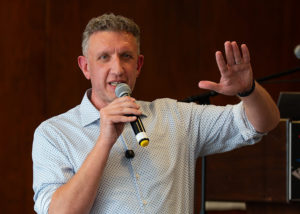
Chuck is a US-based internal communications strategist and the founder of ICology – a community and resource hub for IC professionals. He brings a practitioner lens to every conversation. Chuck is a recognised voice in the industry, a regular speaker and event host, and one of the most connected people in the North American IC world.

Jenni is a UK-based leadership and internal communications consultant, author of two best-selling books, and international speaker. She runs Redefining Communications, a consultancy working with organisations around the world to help them communicate better and close the gap between what leaders say and what employees experience.