
Amazon has a name for employees whose median time in the building is under four hours a day: low-time badgers. Jenni’s response is the argument of the whole episode — as long as the work gets done, who cares what kind of badger you are. Chuck lines up five stories about a workplace quietly tightening its grip: the death of happy hour, Amazon’s prove-it performance reviews and badge tracking, a UKG study of 8,200 frontline workers where 76% reported burnout, McKinsey’s claim that leaders rather than employees are the bottleneck on AI, and the argument that automating busywork removes the only recovery time most people had.
Chuck opens with a Wall Street Journal piece on the disappearing third space of working life, treating happy hour’s decline less as a drinking story than as a post-pandemic reset — fewer people in the office, earlier departures, smaller social budgets — whose cost lands hardest on younger workers missing the informal route to learning the ropes. Jenni brings in a Scott Galloway clip arguing young people need to drink more and make more bad decisions together, then makes her own case: the wellness data is the real driver, and the question is what healthy shared experience replaces the pub — axe throwing, ping pong, darts, anything where the mechanism is doing something together rather than drinking. Her sharper point is that organizations have forgotten how to have fun at work and people are made to feel guilty about joy. Chuck’s read is about frequency and money: a one-off event reads as forced where a weekly rhythm did not, especially soon after layoffs, and he traces a company holiday party scaled back from flying in employees and their plus-ones, to just employees, to a local gathering. Jenni asks the question the article does not — is the budget genuinely gone, or is it simply eating into profit?
Amazon’s shift toward asking employees to list three to five specific accomplishments with evidence of impact sits alongside new manager visibility into how long people spend in the office, and Jenni splits the two deliberately. The accomplishments part she supports — demonstrating impact can feel uncomfortable but purpose-driven work matters to people. The tracking is where she stops, and the Business Insider reporting supplies the detail that makes it absurd: low-time badgers whose weekly median is under four hours a day, zero badgers, and unassigned building badgers. Chuck’s position is blunter — if an organization has reached this point trust is already gone, and the policy rests on two assumptions the last decade disproved, that being in the office means working and being out of it does not. His parallel to the DOGE-era weekly five-things emails, a list nobody read, is what shifts Jenni off her generous reading of the review change: “now it’s given me the ick.”
The UKG study of 8,200 frontline workers across ten countries is the reality check of the episode: 76% reported burnout in 2025, 47% say their organization has two separate cultures, and after pay, schedule flexibility is the second biggest factor in staying, with 50% saying shifts are hard to change at short notice and 57% saying they cannot take as much time off as they would like. Jenni answers with data from Gallup’s Culture Shock on US on-site workers, which exposes a mismatch between what organizations offer — a relaxed dress code, flexible start and end times, choice over hours — and what workers would change jobs to get, which is more paid time off and a four-day week. Chuck’s red flag is the 57%: these are not people asking for a bigger allowance, they are asking to use what they have already been given, and being denied it is where the us-and-them feeling forms, which takes him to leadership language — “we’re one team. You’re not. If you have to say that, you’re not.” Jenni’s push is that nobody seems to be testing what is genuinely possible with shift design, and not having that conversation is a disservice to an enormous share of the global workforce.
McKinsey’s superagency research reports 92% of companies planning to increase AI investment over three years against only 1% of leaders calling their organization mature, with the spicy version of the finding being that employees are ready and leaders are not steering fast enough. Jenni’s first move is to question the premise — is progress even possible if leadership is the bottleneck — and Chuck’s answer is to push forward, telling employees to own their own leadership on this and explore inside whatever guardrails exist rather than waiting to be told where the organization is going. Jenni is not satisfied with that alone: she wants the root cause named, because a skills gap or fear in leaders is a job for HR and the people function, and nobody leads confidently in a space where they do not feel credible. She also flags the risk in Chuck’s advice, that employees going around a deliberate leadership priority produces exactly the misalignment she spends her working life fixing. Chuck’s summary is that leadership is funding AI without leading it, and that 1% maturity sounds about right at this pace.
The closing story is the most contrarian: busywork is annoying, but it also creates lull time where the brain downshifts and has room for an idea, so stripping out the mundane produces days packed wall to wall with high-intensity thinking. Aflac CEO Dan Amos deliberately keeps low-intensity rituals such as handwritten notes and short reflection breaks, and another CEO moved to a four-day week after AI-driven productivity gains left the team mentally cooked by Friday. Jenni recognizes her own year in it — the small stuff is handled so the big stuff expands — and links it back to her 2026 trends piece and the argument that work has to settle and be operationalized, citing a client that moved to a four-day week without ever addressing the reasons for doing it. Chuck’s read is that the article is barely about AI at all: it is about protecting time, and he says outright that he craves boredom because that is where the best ideas arrive. His practical experiment is asking Gemini to auto-add a thirty-minute buffer after every meeting, though Jenni notes this is far harder inside an organization where open calendars turn your time into public property.
What is Amazon tracking about office attendance? Beyond whether employees badge in, managers now get visibility into how long people are in the building. The Business Insider reporting describes categories including low-time badgers, whose weekly median is under four hours a day, zero badgers who don’t badge in at all, and unassigned building badgers who mostly badge into a building other than their own.
Does asking employees to list their accomplishments improve performance? It depends entirely on what happens to the list. Jenni sees value in being able to evidence impact, and Chuck agrees if the purpose is reflection and growth. If it becomes a weekly reporting ritual nobody reads, it is compliance theater — the pattern both hosts recognize from the DOGE-era five-things emails.
What did the UKG frontline study find about burnout? Across 8,200 frontline workers in ten countries, 76% reported burnout in 2025 and 47% said their organization has two separate cultures, one for the frontline and one for everyone else. After pay, schedule flexibility was the second biggest factor in whether people stay.
What does flexibility look like for frontline workers who can’t work hybrid? Mostly time, not location. UKG found 50% struggle to change a shift at short notice and 57% can’t take the leave they are entitled to. Gallup’s data shows the flexibility frontline workers would change jobs for is more paid time off and a four-day week, not the relaxed dress code most often on offer.
What is superagency, and why are only 1% of companies mature in AI? Superagency is McKinsey’s term for using AI to amplify human agency and creativity rather than just cut cost. Their research found 92% of companies increasing AI investment but only 1% of leaders calling their organization mature, meaning AI is genuinely embedded in workflows. Chuck thinks 1% sounds right given how fast the technology moves.
Does using AI to remove busywork reduce burnout? Only if the time it frees becomes recovery. The argument in the episode is that mundane tasks created lull time where the brain rested and ideas surfaced. Remove them and refill the day with high-intensity work, and you get more fatigue and fewer insights, not less burnout.
Chuck: Welcome to Frequency, I’m Chuck Gose.
Jenni: And I’m Jenni Field. Frequency is your go-to for real talk about comms, culture and employee experience. Beyond the buzzwords and straight to what matters. And I’m coming to this recording fresh from my first online workplace huddle of the year, which I do every quarter. If you’re not familiar with it, it’s a 60 to 90 minute session where people can come for free and ask me anything, and I share the latest insights from the last quarter or the last year.
Jenni: I wanted to mention it because it’s always interesting to me what sort of questions come up — what are the themes from people working in comms? What I shared was my LinkedIn article on the trends, which we talked about in the last episode. Then I told them I’d put it through Claude — I shared the article and all the source material and asked what I got right and what I missed. It was very complimentary, but it did flag a few things I’d missed, which was useful.
Chuck: Did anybody ask about the trends for the year?
Jenni: The questions coming up were worth sharing. There was a lot on AI — how do we get people ready for it, how do we protect the culture when AI is coming in, how do I upskill in AI as a comms person. There was also still a lot of foundational stuff around change: how do we navigate change, and some very specific questions about the order in which you communicate redundancies. Do you do it to individuals, do you do it to the group, how do you do that? And then some really challenging stuff about people feeling burnt out and a bit done by the profession. I didn’t know if you had anything from ICology and the new Ask a Member feature that was worth mentioning as we start the year.
Chuck: Yeah, I’d say it’s a bit of the same. I’m really ramping up some AI coaching, or inspiration, inside the ICology community, because we’re starting to see fear coming from some unique places when it comes to using AI. Even guilt comes into play sometimes. So I’m looking at monthly themes inside the community for people to safely begin exploring different ways to benefit from AI. The guilt thing is so fascinating to me — some people feel guilty using it, when my point of view is that I feel like I got bit by a radioactive spider. I feel like I’ve got superpowers now, doing things I was never interested in doing or able to do. Same platform, same tools, completely different points of view coming at it.
Jenni: Yeah, the guilt thing is interesting. For me, I use it to first-draft a lot of stuff, and I’ve probably got about seven first drafts sitting there. So I’m drowning in too much content, because I need to figure out what to do with it, and I feel guilty that it’s just sat on my desktop waiting for me to get there. But I will. So what are your articles today? What are we chatting about?
Chuck: Today we’re getting into how the workplace is tightening its grip and also quietly burning people out in the process. Amazon is retooling performance reviews and ramping up visibility into office time. Then we’ll go frontline, where flexibility and financial wellness are topping the 2026 priority list, with burnout still running hot and a real two-cultures divide showing up in the data. We’re going to dig into McKinsey’s idea of superagency, and the claim that the biggest blocker to scaling AI is not employees — shocker — it’s leadership. And we’ll close with a genuinely sneaky AI twist: the downside of eliminating busywork, and what that does to creativity, recovery and burnout.
Chuck: But to kick things off, we’re going to solve a little mystery. Jenni, what happened to happy hour? This one is not really about alcohol. It’s about the disappearing third space of work life, that low-stakes time where relationships, mentorship and trust used to be formed. The piece frames happy hour’s decline as a post-pandemic reset: fewer people in the office, people leaving earlier, smaller budgets for social stuff, and a broader shift toward drinking less. The downside shows up for younger workers who feel like they’re missing the informal connection that helps you learn the ropes and find your people. We’ve talked about this happy hour thing going away before. If it is fading, what replaces it? What’s the modern social glue in hybrid workplaces, without turning into some sort of forced fun that so many weren’t comfortable with?
Jenni: I love the concept of forced fun, because I don’t think you can really force anyone to do that. When I was reading this, it reminded me of a TikTok I’d seen from Scott Galloway, who I know you’re a big fan of, where he’s basically saying young people need to drink more. It’s a clip from Diary of a CEO, linked to his book. He was saying we’ve lost this ability to drink more, make bad decisions and be social together, and we’re stepping away from that. He makes a very compelling point about the different genders and what happens when you take that social connection away, which we’re not talking about today.
Jenni: But I think the wellness piece is the biggest reason for this in some ways. There’s so much more insight and data about alcohol now that takes that away. So if the happy hour goes, is there a healthier alternative people can go and do together? Is there an activity? Because it’s really about getting together and having a shared experience that doesn’t necessarily need to involve alcohol. What could that shared experience be? Could it be axe throwing? Ping pong? Darts? All of these other social spaces where you’re hanging out, but it’s not about drinking. And I think we’ve lost that, because I think we’ve forgotten how to have fun at work, and I think we’re made to feel guilty about having any kind of fun or joy at the moment.
Chuck: Yeah, I think it comes down to priorities. Individual priorities have changed quite a bit, and where people seek enjoyment, happiness, a break, whatever it is — it’s not going to be at work. So many people’s social structures exist outside of it. It’s good to recognize that there are friendships and connections and relationships at work, but there’s such risk now. To your point around people making more bad decisions, I think HR would disagree with you. They actually don’t want people making bad decisions. So there’s been this pullback, and when it does happen it feels a bit forced. It doesn’t feel natural. It’s not, hey, every Friday this is what happens. It’s a random one-off that people aren’t quite sure how to read. Especially if you’ve also recently laid a bunch of people off. It’s really hard to then have happy hour, if that’s what work life has become.
Jenni: Yeah, but I think you might have hit something there, and it’s around the frequency of the social occasions. If it’s once a quarter, or a few times a year because you’re all together in the office, that’s really hard. Whereas it used to be every Friday. I remember my last full-time job in London — I never went to the drinks, because I wanted to get home to go to the gym or hang out with my mates. I didn’t really want to stay in London. Whereas a lot of that crowd worked and lived in London, so it was an extension of their life. They had friends there and it was part of that. So there’s a piece about priorities, but I think the frequency is the bit that maybe makes it feel so uncomfortable. As return to office comes in more, will the happy hour in whatever guise — whether it’s not drinking — will that social connection come back more? I think that will be interesting to look at over the next year or so.
Chuck: Yeah, I just don’t see a lot of company support for stuff like this. So if people are spending their own dime, they’re going to choose where they want to spend it. I’ve even worked at companies where at one point there was a big holiday party, and I thought it was amazing that not only did they fly in all the remote employees, they also flew in your plus one and put you up. It was like, wow, this is a truly great cultural experience. Then a couple of years later it was, well, just you fly in — not your plus one. So then you’re deciding whether to pay for a friend or spouse to come with you. And then it became, we’re not doing that, we’ll just do them locally with people who are around. Like I said, it’s a scale back. Companies actually aren’t supporting this financially.
Jenni: Yeah. And to that point, is it scaling back because the money genuinely isn’t there? Or is it scaling back because people are greedy and it’s eating into the profits and they don’t want to spend the money on it?
Chuck: Number two on the list. Amazon is making big changes to the way it treats workers. Amazon is pushing harder on quote-unquote prove it. The update highlighted here is a shift in performance reviews where employees are asked to list three to five specific examples of accomplishments, show impact, and spell out how they plan to keep growing. At the same time, the story points to new manager visibility into office time, with more granular tracking of how long people are in the office, not just whether they show up. It’s accountability and compliance in stereo. Jenni, with Amazon’s news, where is the line between healthy accountability for people doing the work and trust erosion, having people prove their work? And how should communicators talk about changes like this without sounding like surveillance PR?
Jenni: I’ve got mixed views on this, because there are two different elements. The first piece, around demonstrating your impact, having to share your three to five — I think that’s great, actually. I’m not against that at all. There are quite a lot of benefits to being able to show your impact. It might feel uncomfortable, but purpose-driven work and impact are really important to us as people. I think that’s good.
Jenni: I think the visibility into office time is weird. And it’s weird also because the Business Insider article talks about badgers — what kind of badger are you. They’ve got low-time badgers, defined as employees whose weekly median time in the office is less than four hours per day. Then there’s zero badgers, who don’t badge into any Amazon building during that time. And then there’s unassigned building badgers, who badge into a building other than the one they’re assigned to over half the time. Like, who cares? Surely as long as you’re doing the work, it doesn’t matter what kind of badger you are. And what is this really trying to measure? That’s the bit I come back to. Because this isn’t healthy accountability. It is going to erode trust. And I can’t fathom the conversation that took place to get here, and who wasn’t in the room to have that conversation about the impact this is going to have.
Chuck: My opinion — a couple of things, several issues. One, if you’ve gotten to this point already, trust is already gone. It’s gone. There’s no erosion to it, it’s non-existent. My two issues with this are some of the assumptions. It’s assuming that if you’re in the office you’re working, and if you’re not in the office you’re not working, when we have seen people over the past decade who are not in the office working quite well, and also people in the office who aren’t doing anything other than being in the office.
Chuck: Sharing the three to five things that you’ve done this week, or your impact — that might be cool and all, but why? Why are you asking people to share that? Is it for a very healthy reason, for them to reflect back and document and look for growth opportunities? Or is it this reporting structure? This is where — there’s a bit of a joke from when DOGE was going on in the US, and one of the things asked was that everybody by five o’clock email the three to five things they did that week. It became a joke amongst government employees. No one was looking at it. No one was reading it. So if the purpose of this was for people to look at growth and accomplishments and assemble things and celebrate wins, amazing. That is not what this feels like.
Jenni: Yeah. And that’s weird. My rose-tinted assumption was that the first bit was linked to meaningful conversations between the manager and employee about what you’ve done. And I wasn’t thinking of it on a weekly basis, I was thinking it could be a monthly thing. Whereas you’re right, there’s a cynical side, which is that this is more check and balance. And I’d forgotten about the DOGE thing. It does feel a bit like that as well. So now it’s given me the ick.
Chuck: Always take the cynical side. Always.
Jenni: I’m learning. The more time I spend with you, the better I get at it, I swear.
Chuck: Good. Next up, number three: a global study reveals flexibility and financial wellness are top 2026 priorities for frontline workers. This is the reality check of the episode. The UKG study looks at 8,200 frontline workers across ten countries and lands on a blunt point — flexibility and financial stability are not perks, they’re retention levers. A few stats that jump out. UKG reports 76% of frontline employees reported burnout in 2025, and 47% say their organization has two separate cultures, one for the frontline and one for quote-unquote everyone else. After pay, schedule flexibility is the second biggest factor in staying, with 50% saying it’s hard to change shifts last minute and 57% saying they can’t take as much time off as they’d like. So Jenni, when quote-unquote hybrid flexibility isn’t an option for a lot of frontline workers, what does flexibility look like for frontline teams, and what’s the comms move that can help shrink that two-cultures gap?
Jenni: When I was reading this, I was reminded of the Culture Shock book from Gallup, which I talked about a few times last year on the podcast, because they went into quite a bit of detail about frontline workers. What was interesting in there — this was in the US — is they asked whether the organisation was offering a variety of different options that the HR function thought were most important. The most common response was things like relaxed dress code, flexible start and end times, and then choice over the hours they work. So those were things being offered to frontline people.
Jenni: It then asked them which of these options they would change jobs to get. So what’s most important? And there were two clear winners, and it was not the ones the organisation offered most. It was increased paid time off or vacation time, and four-day work weeks. Employees with more vacation time reported higher wellbeing. I wanted to bring this in to answer your question about what flexibility looks like for those frontline, on-site workers, as Gallup call them. Because I think it has to be more about the paid time off, the vacation time and the four-day work week. There’s no reason the flexible start and end times and choice over hours can’t mirror an office-based worker. The flexibility for a frontline worker might not be as much, but what’s the wriggle room, and what’s actually possible if you looked at it with an almost blank sheet of paper and did it differently? There are definitely ways of doing it, 100%.
Chuck: The red flag for me was more than half saying they can’t take as much time off as they’d like. Not that they want more time off — they’re not asking for that, not asking for a bigger PTO balance. They simply want to take the time off they’ve earned or been given, and more than half say they can’t. The flexibility of start and stop times might not be an option. If you’re a factory worker and the line starts at a certain time and ends at a certain time, you can’t say, hey, tomorrow I’m going to show up 60 minutes late. You don’t have that type of flexibility. But being able to use the time allotted, use the time given to you — if you’re being denied the chance to take time off, that’s the frustration. That’s probably where they start to feel there’s an us and them, the two cultures they talk about.
Chuck: I always think about it when you hear leadership say things like, we’re one team. You’re not. If you have to say that, you’re not. And if leaders say, yeah, we’ve got this great culture, most likely you don’t. You have a lot of different cultures across your organization. Some might be really good, some probably aren’t. So this is just that frontline point of view of how they are feeling.
Jenni: But I would also wonder how many people working in an office job are saying they can’t take as much time off as they’d like. I don’t know what that percentage is, and part of me feels like it could be similar to 57%, with people saying they haven’t been able to take their leave. I know what you’re saying from a manufacturing perspective, and I’ve worked in those environments where when the line starts, this is when you start. But I also feel like — what’s really possible there? What’s possible in terms of people starting at seven, then people starting at eight? What’s possible if you chopped it up differently or did it differently? Is there anything? And is that conversation even happening? I suppose I just want to know that organisations are having that conversation, that somebody is agitating it and really checking that we’re not just in this environment of, well, we’ve always been this way, so it just happens. Have the discussion. Have the conversation, and come out and say you’ve looked at it and why it doesn’t work. But to not look at it, and to not have that conversation, is doing a disservice to employees who make up a phenomenal amount of the workforce around the world. I think that warrants certainly a conversation.
Chuck: I would love to hear from listeners if your organization has shift work — meaning you have design shifts, set hours that different crews come and go. What sort of flexibility is available for them? I’ve been out of that game for a while, so I’d actually love to hear from listeners on that.
Chuck: Next up: superagency in the workplace, empowering people to unlock AI’s full potential. McKinsey basically says everyone’s buying AI and almost nobody is actually done with AI. They cite 92% of companies planning to increase AI investment over the next three years — no shock there, though I’m curious about the 8% that aren’t — but only 1% of leaders saying their companies are quote-unquote mature, meaning AI is integrated into workflows and driving meaningful outcomes. The spicy claim is that employees are ready but leaders are not steering fast enough. The opportunity is not just efficiency, it’s what they call superagency: using AI to amplify human agency, creativity and productivity. No one likes to blame leadership more than me. So if the bottleneck is leadership, what should others do differently to move AI from this pilot phase and all the hype into workflow change that’s actually changing the job?
Jenni: Well, question back. Do you think that’s even possible if the bottleneck is leadership?
Chuck: Yes, I do think it’s possible.
Jenni: You don’t think you just get blocked at every turn?
Chuck: No, I think you’ve got to push forward.
Jenni: So then I suppose it’s about whether this is a hill you want to die on. Is it a big enough thing? For me, I want to get to the root cause with leaders. It says in here that leaders aren’t steering it fast enough. Who’s to determine what’s fast enough? Is it because they feel like the tech’s running away and we’re not keeping pace? But then it’s about prioritisation, in terms of what’s more important and what needs the attention. So if there is that bottleneck, is that bottleneck there for a reason? If the leaders are saying we’re not going to go that fast because our attention is needed over here, but then employees are going, well, screw that, we’re going over here anyway — then we’re not going to achieve those goals, and you’ve got misalignment. Given that’s what I spend a lot of my time trying to fix, I feel like that’s a little bit risky.
Chuck: I think what I’m reading into this is that leadership knows this is very important, this is critical, and they are not leading on the discussion. They might be leading on the investment. We saw that 92% are increasing, so maybe 8% are just keeping their investment the same. Everybody’s making the investment, but no one is really leading on this. So my ask of employees is: own your own leadership on this. Go and explore ways — whether you’re restricted, maybe there are guidelines that you can only use Copilot, or you can only use ChatGPT or Claude or whatever — but begin exploring ways this can help you grow in your role. I think employees are basically tired of waiting on leadership to say, not tell them what to do, but this is where we’re going. Maybe start to set your own path.
Jenni: I have another request then, which is: what’s the reason they’re not leading on it? That’s something the HR and people functions need to be digging into, because there could be a skills gap, there could be fear, there could be anything driving it. So support leaders through that change and make sure they’ve got the time to learn and the skills, because that’s a big ask. With everything else that’s going on, they’ve got to do this too, and there might be a bit of fear in there. How much space is being created to learn and play and grow, to be able to lead, if you don’t feel confident and credible in that space?
Chuck: Yeah, I just don’t feel like leadership is — they’re basically saying, hey, this is really important, but they’re not actually empowering people to do what they need to do. If they would simply let people explore and grow in safe ways, the business will get the results. But right now they’re sort of putting controls in place and saying this is important, we’re making big investments. And it’s not surprising that only 1% see their companies as mature. That actually probably feels accurate, because with the pace of AI it would almost be impossible to be mature in that process.
Jenni: Yeah, 100%.
Chuck: For our last story, the downside to using AI for all those boring tasks at work. The core idea is deliciously inconvenient. Busywork is annoying, but it also creates a lull time where the brain downshifts and has room for insight. Remove all the mundane tasks and you end up with days packed wall to wall with high-intensity thinking, which is a fast track to mental fatigue and fewer aha moments. The examples make it tangible. Aflac CEO Dan Amos intentionally keeps low-intensity rituals like handwritten notes and short reflection breaks, because that mental white space is where clarity shows up. Another CEO saw AI drive productivity gains, but noticed the team was mentally cooked by Friday, then moved to a four-day work week to protect wellbeing and innovation. Summing this up: automating busywork is fine if the time savings become real recovery, but risky if businesses just reallocate every minute into higher cognitive load. Jenni, what are your thoughts on redesigning the workday so that AI savings turn into real white space and recovery, instead of turning every role into nonstop meeting, meeting, meeting?
Jenni: I love this, and I think it’s hitting on a point that is really, really important for us. As you were talking, I was thinking this feels like my life at the moment — that big stuff is taking up so much more time, because the small stuff is now taken care of and automated and it’s fine.
Jenni: I think it also hits on the evolution of work. We’ve talked about this before, because I went down a rabbit hole of why we have a five-day work week and a two-day weekend, and who can change that. But I think we have to start to redesign the working week to make sure there is that space and recovery. When I was looking at some stuff with a client recently, I was looking at why they’ve moved to a four-day work week, and what the reason for doing it was, in order to then set the success measures. And actually nothing’s been addressed in terms of the reasons for doing it. We’ve tried to do the four-day work week, but we’ve not dealt with the other things that go around it. So I think this is huge. It also links to one of the big themes I was talking about last week — the time commodity of work, the big trends we’re seeing about the fact that work has to settle now. We’ve been experimenting for a while with flexibility and hybrid and all this stuff, and actually we’ve got to operationalise it. This for me is where it’s got to go. We’ve got to think about how much time we need to spend at work, and realistically what the work is, if so much of the simple stuff that was taking up time no longer needs as much time. So I love it. It’s something I’m probably going to share separately on LinkedIn, because I think it’s really important.
Chuck: As I was first reading this, I realized it really has nothing to do with AI. It really has to do with the way we are all managing our days at work. There are a lot of things we’ve talked about that AI does really well. Because I don’t take notes — if I was in a meeting and someone said, anyone taking notes? I wasn’t. My brain doesn’t think take notes. So I would miss things. Well, whether you use Zoom or Teams or whatever, and you use the AI companion, it is now recorded. So I don’t have to worry about that, and the product is better because I can go back and reflect on it. That’s where AI is the assistant, the add-on. But when we talk about tasks people were doing that now go away, and reclaiming time, I don’t think we’re getting that detailed yet. I don’t think leadership is even aware of it. Like, oh, now I’ve got an extra 15 minutes a day, I’d better spend that 15 minutes doing something else.
Chuck: For me this article is really about protecting your time and recognizing the benefit of giving yourself some mental breaks, some time to simply reflect — whether it’s the low-intensity rituals the Aflac CEO talks about or mental white space. I’m going to try to use that at home in a conversation at some point. I’ve talked about how I crave boredom. I crave those times where you don’t have something you have to do right then, and you can just pause and think and dream and brainstorm or whatever it is you do in that time. To me, that’s when the best ideas come into play. So yeah, AI might actually help you do that. And what one person describes as a boring task, another person might really enjoy. So it really comes down to how this is all integrated in your day-to-day work life.
Jenni: And it’s making sure that you’re not packing your day with just more stuff because stuff’s being done quicker. You’re right, it is a time piece. When I’m doing one-to-one conversations with leaders, I always have a half-hour gap between them. I don’t have anything to do in that half-hour gap, but I need to look outside, because I’ve been looking at a screen for 90 minutes, or go make a cup of tea, or chit-chat to my kids. It’s just something that’s a bit nonsense, but nearly always in that time I’ll remember there’s something I need to do, or I’ll make a note about something, because you need that little bit of quiet. There’s a lot about how we need to understand how we work as individuals and the impact of technology on that. And that links to some of the wellness stuff people have talked about this year about technology. I was reading some wellness trends the other day. It’s about getting to know yourself a bit better and making sure you’re not packing everything in with technology.
Chuck: And maybe this is something that can be done — I haven’t explored this, I’m going to try it in Gemini. Hey, is it possible that when a meeting gets booked on my calendar, automatically add a 30-minute buffer item afterward? Is there a way AI can actually help you protect your time and keep you honest in this way? Or limit yourself by saying, hey, I only want three hours of booked meetings a day, and once that three hours happens, you can’t get another meeting booked without approving it. So I wonder if there’s a way to come up with your way of working and actually have AI support you in a way that you may not support yourself.
Jenni: Yeah, and I think this is more important for people working inside organisations. I’m pretty good and structured, and people can’t put anything in my diary without talking to me or my assistant, so that’s easy. But everyone I talk to who’s working internally says our meeting culture here is dreadful, my diary is just crammed, I don’t have time to think. I never experienced that 10 years ago, because I’m very strict about my time anyway and I would still be now. But the accessibility to people’s time is so much greater now, in terms of visibility of calendars and stuff like that, that it just makes it harder for people to control. So maybe Copilot can do something as well for people. I think that’s definitely worth looking at.
Chuck: Yeah, I’m going to explore that. That wraps up our stories for this week. Jenni, thank you for talking me through those. What is your freq-out this week?
Jenni: Always happy to, I love the chat. So my freq-out this week is my goal for the year for my health stuff. I have a Whoop on my wrist, which I’ve had for just over a year. It tracks all your health data and gives you your age from a physiological perspective. I’m on a mission to get that down by 10 years over the course of this year.
Chuck: This little Benjamin Button of you.
Jenni: Yeah, I know. And I’ve realised a lot of people at my gym are already beyond that milestone, so I’m on a bit of a mission. It’s given me a plan, and I’ve done two weeks of testing how far away I am from meeting that plan, and I’m about 80%, so I’ve got some work to do. But back to my walks every day and stuff like that to help. So that’s my little freq-out: can I actually do this? I’ll let you know. If I do it by the end of the year — ten years, that’s the plan.
Chuck: Well, my freq-out is a little bit similar, from a health and wellbeing standpoint. One of the things I now have to intentionally do — when we had our dog Scotty with us, we don’t have a fenced-in yard, so I would be out on probably four to five walks a day with him. They were almost forced walks, having to get out. Now I need to force myself to get out and do that, because I need that fresh air, and it was that forced break. We talked about those lull times. I would block time to make sure we had to go on walks. I need to do that now for myself, from a wellbeing standpoint.
Chuck: Also, similarly from a wellbeing standpoint: if you’re listening to this on the Monday when it airs, I will have been in Las Vegas for the weekend for my annual man camp, which is not nearly as salacious as it might sound for some of you. It’s my annual weekend where I get together with an assortment of friends in Las Vegas for NFL divisional weekend and the college football national championship. It’s a lot of football and a lot of wings and nachos and sports betting and gambling and just a really good weekend. But what’s interesting to me about it, which was not necessarily the intent, is that it’s a sort of forced gathering — an intentional moment to reconnect. Guys come from all over the country for this. A lot of the time when it started, I was the only one connecting all of them, and now new friendships have developed afterward. So it’s really cool. We’ve got age ranges from mid-twenties to mid-sixties of guys who go out there. I hope this continues on even to when I’m in my mid-sixties and beyond. It’s just a very intentional gathering of people getting together, having some fun, enjoying that time, and obviously breathing in that wonderful Las Vegas air.
Jenni: That sounds good. I’m excited for you, because it’s all football in my house at the moment as well. I’ll be watching it, but from this side of the pond.
Chuck: Absolutely. Well, thank you all for joining us this week. All the articles that have inspired this conversation are in the show notes, and don’t forget to rate and review after you’ve listened. Subscribe so you don’t miss another episode, and pass this along to someone you think would enjoy listening or watching, because you can also find us on YouTube. Thank you to my friend Poet Ali for contributing the music to the show. We’re back every Monday with more news, insights and opinions about everything comms and leadership in workplaces today. Keep tuning in and turning up.
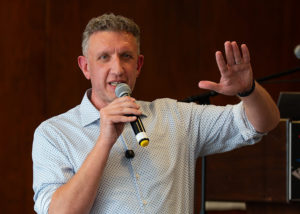
Chuck is a US-based internal communications strategist and the founder of ICology – a community and resource hub for IC professionals. He brings a practitioner lens to every conversation. Chuck is a recognised voice in the industry, a regular speaker and event host, and one of the most connected people in the North American IC world.
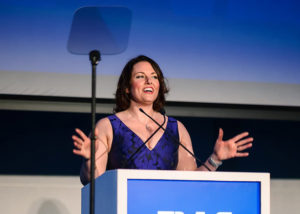
Jenni is a UK-based leadership and internal communications consultant, author of two best-selling books, and international speaker. She runs Redefining Communications, a consultancy working with organisations around the world to help them communicate better and close the gap between what leaders say and what employees experience.