
The wellness economy is on its way to $9.8 trillion, and workplace wellness is the only part of it that has stopped growing. That is the fact Jenni puts in front of Chuck to open an episode about diagnosis — whether organizations know what they are actually treating. Four stories: a Fortune report on Southeast Asian employers demanding results from wellness spending, the BANI framework as an update on VUCA, a LinkedIn list of eight signs of a toxic culture that describes most workplaces, and a panel on whether a communicator should ever disagree with their CEO. The through line is Chuck’s flip on the toxic question — stop asking what is broken and start asking what healthy looks like here.
Jenni opens on a Fortune report on Southeast Asian employers who want wellness at work only if the programs produce results: Grand View Research puts the Asia-Pacific corporate wellness market at $8.4 billion in 2024 against a global market in the $50 billion range, and the Global Wellness Institute — whose wider wellness sector is forecast to reach $9.8 trillion by the end of the decade — identifies workplace wellness as the single stagnant part of it. The explanation comes from William Fleming, a research fellow at Oxford’s Wellbeing Research Centre, who says off-the-shelf interventions fail because they don’t engage with working conditions and organizational design: “They all try to change the worker, not the workplace.” Chuck opens by disqualifying himself as a wellness expert and points listeners to Mark Mohammadpour, whose position he paraphrases — if people aren’t well at home, what happens at work won’t move the needle much — before landing on the design point: are you designing work that creates room for people to be well, or handing out a fitness tracker discount? Jenni’s addition is the harder one. Organizations have never defined what wellness means to them, so it defaults to yoga and fruit bowls and ping pong tables and an assistance program, tick-box provision with no tangible link to the culture. Chuck’s closing move is to widen the term beyond physical fitness to mental and financial health, and Jenni’s practical version is the toolkit question — what is in yours, and hers currently includes a jigsaw puzzle, chosen mostly for not being a screen.
The second story is a BANI post Jenni found on Instagram, reviving a framework futurist Jamais Cascio named in 2020 and McKinsey has recently put back into circulation: brittle systems that look strong and collapse without warning, anxiety as permanent background noise, non-linear cause and effect where small things produce outsized consequences and big efforts produce nothing, and a world too complex to comprehend even with all the data available. Jenni reads it as an update on VUCA and asks what it means operationally for HR, comms and leadership. Chuck refuses the premise as a question — the world is plainly all four things — and treats the only real decision as whether the four buckets help. What both of them seize on is the post’s sharpest line: more information feels like more certainty, but data gives you speed rather than wisdom, because the toughest decisions are not information problems, they are judgment problems. Chuck’s follow-up is where AI lands in that, given judgment is the human contribution and AI’s contribution is infinitely more information than anyone can manage. Jenni ties incomprehensibility directly to communication overload inside organizations and the AIDR problem — AI didn’t read — where the volume simply makes people switch off. Chuck brings back a rival framework he turned up while reading around it, LORAIT, for loss of relevance, agency, identity and trajectory, whose pitch is that BANI predates widely accessible AI and cannot account for it. His own verdict is less about frameworks than one word: brittle is a good description of the relationship most people currently have with work.
Jenni’s third story is James Leavesley’s LinkedIn article on what a toxic organizational culture actually looks like, which lists eight signs: poor communication, high employee turnover, lack of recognition, micromanagement, cliques and favoritism, unethical behavior, burnout and chronic stress, and resistance to change. Her objection is not that the list is wrong but that it is a list of most workplaces, and that anyone reading it from outside HR or comms would conclude the whole working world is doomed. She also holds that toxicity is personal — she has been happy in places colleagues fled. Chuck’s answer is the pivot of the episode. Only one item on the list, turnover, is an actual data point, and turnover in retail or hospitality is often just the nature of the work rather than evidence of anything. The better question is what a healthy culture looks like in your organization, and which specific leader behaviors erode it, given no organization has only one culture. Jenni takes the reframe and admits the negative framing was what made the article uncomfortable, returning to her own image of culture as weather with different climates in different places. Chuck closes it with the Atlantic killifish, which evolved to survive in Superfund sites and dies when moved to clean water: people who have adapted to an unhealthy culture — guarded, political, transactional — often do not know what to do with a high-trust one, which is exactly how the pattern renews itself.
The last story is Incomms’ write-up of a panel at its Strategic Internal Communications Conference on disagreeing with the CEO, where some panellists called pushback dangerous, some argued that not pushing back is what creates toxic workplaces, and others reached for DISC to read personalities well enough to have the conversation. Chuck’s answer is yes and then immediately complicated: disagreeing is inevitable, verbalizing it is a separate act, and saying it to your team is not the same as saying it to the CEO. He stacks the constraints — low psychological safety, only about a quarter of US employees trusting their leadership, and a phrase he is tired of, speaking truth to power — and concludes there is no simple answer once relationships are involved. Jenni’s practice is questions rather than challenge: can you help me understand how we got to this decision, can you tell me more about the background. She half-suspects that is manipulative and defends it anyway as productive disagreement conducted adult to adult, and notes from a session for the Asian Communicators Network that the stakes are not evenly distributed — the calculation differs sharply for a woman or a person of color raising the same point. Chuck separates disagreement over strategy from disagreement over values, praises Amazon for building the behavior into a stated value, and then names the privilege plainly: almost nobody has access to their CEO at all, so for the few who do, staying quiet starts to look like complicity. Jenni closes on Patrick Lencioni — a team that cannot debate and then leave the room aligned is not a high-functioning team.
Why is the corporate wellness market stagnant? The Global Wellness Institute identifies workplace wellness as the only stagnant part of a wellness economy heading toward $9.8 trillion. The Fortune piece attributes it to off-the-shelf provision — generic apps and training modules — that Oxford researcher William Fleming says treats well-being in isolation and implies the problem is the employee’s ability to cope, changing the worker rather than the workplace.
What actually makes a workplace wellness program work? Treating it as a design challenge rather than a series of perks. That is the common trait among the Southeast Asian companies with successful programs, and it is where Chuck and Jenni agree: hours, workload, manager behavior and how work is structured are the wellness program. Jenni’s added step is defining what wellness means inside your own culture before buying anything.
What does BANI stand for? Brittle, anxious, non-linear and incomprehensible. Futurist Jamais Cascio coined it in 2020 as a successor to VUCA, and it has been resurfaced recently by McKinsey. Brittle systems look strong and collapse suddenly, anxiety sits permanently in the background, cause and effect no longer track, and the world is too complex to fully understand even with the data available.
What does a BANI world mean for HR, comms and leadership? Chuck’s answer is that it is not a question to debate but a condition to accept and work inside. The practical implication both hosts pick out is that the hardest decisions are judgment problems, not information problems — so more data, and more AI-generated data, buys speed rather than wisdom. Jenni links it directly to communication overload, where sheer volume makes employees switch off.
What are the eight signs of a toxic workplace culture? James Leavesley’s list is poor communication, high employee turnover, lack of recognition, micromanagement, cliques and favoritism, unethical behavior, burnout and chronic stress, and resistance to change. Jenni’s objection is that this describes most workplaces rather than toxic ones, and Chuck notes only turnover is a real data point — and it varies by industry for reasons that have nothing to do with toxicity.
Is it OK to disagree with your CEO? Chuck’s answer is yes to disagreeing and it depends on verbalizing it, because whether you can say it out loud is set by psychological safety, access and the relationship. Jenni does it by asking a leader to explain how a decision was reached rather than stating opposition. Chuck’s caution is that most employees never get near their CEO, so anyone who does holds a position of privilege — and silence starts to look like complicity.
Chuck: Welcome to Frequency, I’m Chuck Gose.
Jenni: And I’m Jenni Field. Frequency is your go-to for real talk about comms, culture and employee experience, beyond the buzzwords and straight to what matters. And this week we’re going to talk about what it means to live in a BANI world, why wellness programmes aren’t working, what a toxic culture really looks like, and whether or not you should ever disagree with the CEO. But what’s on your mind before we get into that, Chuck?
Chuck: Yeah, I don’t know this week, Jenni, if I’m just embracing the Gen X part of me and the cranky old man part, and these two are now coming together. As you know, I love the way people use language, and there’s this phrase, “there’s nothing better than.” I saw somebody do a LinkedIn post where they’re like, “There’s nothing better than,” and it was about a team dinner where they celebrated a big win. That’s a great LinkedIn post. But is there really nothing better than that? Is your world so narrow that you can’t think of something better than a team dinner? I don’t even know the team and I could probably come up with a thousand things that would be better than going to dinner with teammates. Is the world that narrow?
Jenni: Well, I think that’s fair. It reminds me of when the word “like” became really popular. It’s like this, it’s like that. And my mum would be like, is it like that, or is it just that? You’ve become that.
Chuck: Ooh, right. I want to comment with simply, really? This is the pinnacle. This is the top. Not world peace, not ending global hunger, not winning a lottery — all of those things come below going to dinner with your team after a big win. But as I shared, I don’t know if it’s the Gen X and the old man thing coming together, because Jenni, this week…
Jenni: I think you should say it. Is there really nothing better? A team dinner.
Chuck: I had my first old man doctor appointment, where now that I’m 50, that’s a magical number where all these new things open up to you as an adult medically. We talked about things I never imagined talking about, and they also loaded me up with three different vaccines. I can now get the shingles vaccine, I can get the pneumonia vaccine, I got my tetanus updated. It was shot, shot, shot, shot, all this kind of stuff. What was interesting though was the conversation with the nurse. She started it very cautiously, like, so, it’s time to talk about the vaccines that are available for — and I’m like, load me up. If you can inject me with anything that will keep me from getting sick later on, give me two. Double it up, whatever it is. We then talked about how, still post-pandemic, there’s this crazy vaccine hesitancy they are battling on a daily basis. It blows my mind. You’ve got these people who for whatever reason don’t want it, and you’ve got people like myself who would say, I’ll get this every year if it means I’m not getting sick. Or every month, whatever it is. I find it so fascinating that we’re still in that cycle.
Jenni: Yeah, and it’s the same over here. I know there’s something that’s come back because of all the theories around vaccines, that people aren’t getting their children vaccinated. It’s ongoing. My sister’s a nurse in a GP surgery, so she equally gets it all the time. And it blows my mind as well, because I’m a bit like you. I’ll take whatever is going to help me not get sick. That’s the point, right?
Chuck: I’ve had shingles before. It’s not fun. I can take a shot that prevents that? Sweet. Pneumonia doesn’t sound like a good time. Let’s get a shot, let’s avoid it. It just blows me away. Maybe it’s this weird risk thing, throwing caution to the wind, that people have. Crazy.
Jenni: Yeah, it’s crazy. But you’ve given us a nice segue into our first article, which is about wellness at work. So thank you. The first article today is about workplaces all over Southeast Asia, where bright-eyed new employees are getting walked through wellness perks and portals, each new platform sending a message: we’re not like the rest, we take your well-being seriously, we care. Grand View Research, a market intelligence firm, put the Asia-Pacific corporate wellness market at $8.4 billion in revenue in 2024. That’s compared with a global market currently in the $50 billion range, according to the Global Wellness Institute, with the broader wellness sector set to hit $9.8 trillion by the end of the decade. But corporate spending on wellness is in the crosshairs as Asia grapples with softer global demand and higher costs. The Global Wellness Institute points out in its research that workplace wellness is the only stagnant part of the growing wellness economy. That risk is particularly acute when company wellness initiatives come in the form of off-the-shelf programmes like generic apps or training modules. The article says these interventions don’t work because they don’t engage with working conditions and organisational design. This was from William Fleming, a research fellow at Oxford’s Wellbeing Research Centre, who was involved in the study. He says individual, psychological solutions treat well-being in isolation and imply the problem is the employee’s ability to cope. They all try to change the worker, not the workplace. Southeast Asian companies with successful wellness programmes have one thing in common: they treat it as a design challenge rather than a series of perks. So my question, Chuck, is: wellness at work has never felt like it has succeeded, and this data sort of proves that, albeit just for one particular global market. What’s your advice to help people get this right wherever they are in the world?
Chuck: My first advice — well, before we get to the advice, I am not a wellness expert. Let’s be very clear about that. So I look to people I think are experts on this, and the first person, when I think of wellness, is a gentleman named Mark Mohammadpour here in the United States. He has dedicated his career to wellness, so if you’re interested in this topic, by all means please reach out to him. We’ll put links in the show notes for how you can connect with Mark. I’ve learned a lot through him around the challenges of wellness, and I’m paraphrasing a lot of conversations in one answer here, but basically, if people aren’t well at home or well in their personal life, what you do at work isn’t going to move the needle very much. And to the point in here around perks versus design, I think that’s the focus. Are you designing work to create opportunities for people to be well, versus, hey, here’s a discount to go buy this fitness tracker, or hey, you get a gym membership, or whatever that is. Are you designing work that encourages overall wellness? Are there things people can take home with them in their personal life to be a part of it? I think it has been a design challenge, and we sort of narrowed our view on it. You could probably draw some parallels between this wellness conversation and the employee engagement conversation, where we put ourselves in these buckets and got stuck in there and then realized, okay, this isn’t quite what we were going for. So now what do we do?
Jenni: And I totally agree with it. If you’re not well at home then you’re not going to be well at work. But I also think that organisations haven’t really defined what wellness at work means. I think we started with the yoga and the fruit bowls, then we had the ping pong tables and the employee assistance programmes, and this sort of a lot of tick-box stuff. But I don’t think anyone has said, from a culture perspective, what does wellness mean to us here? What does that really look like? Because it is the design, it’s your hours, it’s how your manager engages with you, it’s communication, it’s engagement, it’s experience — all of those things play a role. I don’t think the time has been spent to define that at work, which is why it becomes an app or a generic training or something like that, because it doesn’t have any real tangible link to the culture of the organisation. It’s just, we need to do this, let’s tick a box and get it done. And that’s for me why it just doesn’t work.
Chuck: And that’s where I think the personal aspect comes in so much more here, because people change jobs. They move from one place to the next and different companies are going to do different things. But it’s, what are you doing? How are you monitoring your wellness? I think we’ve gotten into wellness thinking of it more from a physical fitness standpoint, and we need to broaden that to look at it more from a mental fitness or mental health, financial fitness, financial health. All of those things fit into wellness, and we pigeonholed it into this fitness aspect, not looking at the overall — to the point we talked about right away, where’s the design aspect? How are we designing wellness into work life, so that if an employee does come and go to different organizations, they’re going to be able to see, this company actually does care about my wellness beyond simple perks.
Jenni: Yeah, and I think the comment in the article about it being the workplace’s responsibility, not the employee’s responsibility — that’s where it’s kind of gone wrong. To your point, you have to look after yourself, and then work could hopefully support that and create that environment, but you can’t rely on work to do it all. You have to figure out what works for you. I always say, what’s in your toolkit? That’s always my thing. What’s in your toolkit to keep yourself well? Everyone’s toolkit is a bit different. I have a jigsaw puzzle on the go at the moment, because that is something I really enjoy in terms of it’s not looking at a screen, it’s just doing something that’s a bit puzzle-solve. I just love it. I could do it all the time. So it’s finding those things that are in your toolkit for you, I think.
Jenni: Our next article comes from Instagram, and I’m calling it BANI, but you might say it in a different way. I saw this on Instagram last week, I think, and it’s a term that’s been around since 2020. It’s B-A-N-I, which I didn’t know, but it has been resurrected in a McKinsey article. It originally came from futurist Jamais Cascio, who gave it this name BANI, which stands for brittle, anxious, non-linear and incomprehensible. And it defines how we operate today. Brittle is about the systems and plans that seem strong that can suddenly collapse. Anxious — uncertainty is now permanently in the background of everyday life. Non-linear, in that cause and effect no longer hold, so small things can produce outsized consequences while big efforts sometimes produce nothing. Incomprehensible — the world has become too complex to fully understand, even with all the data available. The Instagram post had various different sections, so it talked about the trap, which was that more information feels like more certainty, but in a BANI world data gives you speed, not wisdom. You can have every fact available and still not know what the right thing to do is, because the toughest decisions aren’t information problems, they are judgement problems. The post went on to say what helps, which is that those who navigate a BANI world best aren’t the ones with the best tools or the most answers, they’re the ones who decided who they were and what they stood for before the pressure arrived. So if you could just go back in time, that would be smashing, and that would help. They also said that principles don’t slow you down in uncertainty, they speed you up. So I hadn’t heard this term before. I thought it was quite interesting, and my question, I suppose, is if this is true, it feels like an update on the VUCA model that we had, which was volatile and other things in there. What does this mean for organisations? For HR, for comms, for leadership — how do they operate in this BANI world? You’re probably going to say it differently, but that’s all I’ve got.
Chuck: Well, that’s what I was wondering. Is it BANI? Is it BANI? Is it just BANI? I don’t know. So I don’t think the question is an if in this situation. We are those. Let’s go back through that. Is the world brittle? Absolutely. Is everyone anxious? 100%. Is it non-linear, meaning not making sense, cause and effect is out of place? Absolutely. And is it incomprehensible, when you think about the amount of data and information being created on a minute basis, let alone a daily or weekly basis? It’s truly incomprehensible to gather that. So I don’t think the question is whether or not we’re there. It’s, do you want to put it into these four categories? So I think for HR and comms and leadership, it’s accepting that this is the world we live in. This is the world your employees are going through on a daily basis inside and outside of work. And the highlight for me out of this was something you touched on, which was that the toughest decisions aren’t information problems, they’re judgment problems. And I’m curious to see where AI comes into that, because judgment is the human element on AI. So where are we injecting ourselves into that, knowing that AI is simply creating infinitely more information than we can manage? How are we applying judgment to that?
Jenni: Yeah, there’s so much about AI I think you could bring into this, but I had exactly the same view in terms of that statement around it not being information problems, it’s judgement problems. And then, how do we help people in this BANI, bunny world? If you’re feeling anxious, it’s brittle, how do you then have the confidence of your judgement to have the conviction in the decisions you’re going to make? I think all of that is messy and linked together. I think the incomprehensible thing is important, because if I think about organisations, workplaces, the amount of information — I’ve probably responded to about three different posts on either Reddit or LinkedIn or Instagram recently talking about communication overload. That to me is a problem inside organisations, and it links to this incomprehensible, this is too complex to fully understand because of the volume and the access to information we have now that we are not equipped to handle, which just makes people switch off. So if we come back to our conversation a few weeks ago where we talked about AIDR — AI didn’t read, as a take on the TL;DR — I think we’re going to see that in organisations. I think we already are seeing that in organisations, where there’s too much going on in here. It’s just too hard for me to follow, so I’m just not going to. And I think that’s how it shows up in organisations for me.
Chuck: When I was looking more into — we’ll go with BANI for consistency’s sake here — when I was looking into that in relationship to AI, I came across another framework called LORAIT, L-O-R-A-I-T, which is loss of relevance, agency, identity and trajectory. The argument behind this framework, which we all love new frameworks, is that BANI doesn’t even begin to account for the impact AI is going to have, because back when it was created in 2020 or whenever that was, AI — I wouldn’t say it wasn’t a thing then, because people were obviously using it, but it wasn’t as widely accessible as it is now. So we’re all trying to get our grasp on what this world is turning into, and whether a framework does it or not, I don’t know. But going back to those principles again, especially that brittle part, that is a great way to describe the relationships that people have with work right now.
Jenni: Yeah, totally. And talking about relationships with work, our next article is looking at toxic organisational culture. There was a post on LinkedIn, it was an article, and it said, what does a toxic organisational culture actually look like? And it grabbed my attention because I think toxic culture is completely personal, in terms of what you find toxic and what you don’t. I’ve worked in places where I’ve had a lovely time and other people have been like, this is so toxic, I have to leave. So that’s what I mean about it being quite personal. So I was quite interested to read this article in terms of what a toxic culture actually looks like. It was shared by James Leavesley, who runs an organisation that helps companies with their culture using anonymous assessment and AI. Now, I’m going to run through the list of things. I’m not going to go into tons of detail, because you’ll be like, you’ve talked so much. So I’m just going to go through the eight. The first one is poor communication as an indicator of a toxic culture. High employee turnover, saying it’s rarely just a recruitment issue, it’s a culture signal. Lack of recognition and appreciation. Micromanagement, so often a sign of low trust within leadership — excessively monitoring and controlling signals to people that we don’t trust you. Number five is cliques and favouritism, so when certain individuals or groups receive preferential treatment. Number six is unethical behaviour; in sort of toxic cultures, they allow or even reward this sort of behaviour. Number seven was burnout and chronic stress, so toxic workplaces normalise unsustainable workloads. And number eight was resistance to change, which can come in the form of fear of failure or lack of innovative thinking. Now, I get that this list has been created because James runs a business helping people fix culture, but this list to me is not a list of toxic workplaces. It is a list of most workplaces, in terms of the work that I do and the conversations that I have. And my concern when I was reading it is that if anybody outside the world of HR or communication was reading this, they might think we’re just all doomed in terms of the workplaces today. So for me, this isn’t that helpful if you’re actually trying to think about your culture and what needs to happen, because toxic workplaces I really do believe are personal. Like I said, I’ve worked in places where I’ve been fine and other people have hated it. It’s so linked to your personality and your values and who you are, in terms of what you would enjoy and what you wouldn’t. And I think toxic is also that sort of language that’s being thrown around all the time at the moment. So my question for you is, what do you think of the list, and what’s your take on toxic cultures, as I’ve shared mine?
Chuck: Immediately, first — I’ve never said you talk too much, Jenni. I might have sarcastically said I was waiting a long time to get to the question. May have done that. As you were reading through this, I just had Britney Spears in my head the whole time, thinking of “Toxic.” It’s that we’ve lost the meaning of the word, because you see this being thrown around all the time. That’s toxic, or that person’s so toxic, whatever it is. We know when there’s a really good culture and we know when there’s a really bad culture. This is a topic that Panaki, Kathy, Ari and I have been talking about for years, and we’ve actually wanted to spend time exploring it more to understand what causes toxicity inside cultures. Are there certain behaviors? And what was interesting to me, when you went through that list, is only one of these was an actual data point you could go to, which is high employee turnover. Now, some industries have higher employee turnover than others. Retail, hospitality — by their nature. Just because you have high employee turnover does not mean it’s a toxic culture. It could just be the nature of the work. I think what’s worth investigating is understanding what a healthy culture looks like in your organization, and what are the behaviors that can bring about toxicity in a culture. Down to even, we know that organizations don’t just have one culture, so understanding where are the positives and where are the negatives throughout your organization. Are there leaders who are encouraging unethical behavior? Are there leaders who are causing burnout more than others? Are there leaders that aren’t recognizing their employees more than others are? You can label that toxic or not, or however you want to call it, but it’s, what’s healthy and what’s not? I think that’s the more important point. And I’ll get to your point around the personal, but I’m going to shut up for now.
Jenni: So I just really love your flip on that around the what’s healthy and what’s not. And I think on reflection, that’s probably some of my issue with it. It’s just so focused on the negative, and we seem to spend so much time focused on the negative. When actually, if you’d reframed this and said, what makes a healthy culture, and then talked about that, it probably wouldn’t have felt quite so uncomfortable for me. Whereas talking about what makes something toxic, I just think of toxic waste, let’s put it this way. But I’ll get there. I’ll get the mic next time we talk about toxic. And I think the flip into healthy is more helpful. I also do think that running through and looking at what we talked about before, about culture being like the weather and having different climates in different places depending on what’s going on — I think that’s exactly what you need to look at. It’s not blanket, it’s not this is what’s happening and it’s having an impact everywhere. It’s specific stuff. And it’s made me think about a conversation I was having with a client recently about the line manager showing that they were invested in their people by giving them time. If anyone’s going to say, that feels a bit toxic — does that make it feel toxic, because I just don’t feel valued? I don’t know. But those things I think matter more, about feeling valued, rather than just this feels toxic.
Chuck: When I mentioned that Panaki and I looked into this — I’m going to ask you a question, Jenni, and I think I know the answer. Are you familiar with the Atlantic killifish?
Jenni: No.
Chuck: No, I didn’t think so. So the Atlantic killifish is a fish — you talk about toxic waste — it is a fish that has survived in Superfund sites. This fish adapted to survive in environments where there are these crazy toxins and PCBs and all that, where other normal fish would die. So they actually found a way to survive. Now what’s interesting, scientists have found, when you take those fish out of that toxic environment and put them in a healthy one, they die. They don’t know how to survive in that. And so when you think about that from a workplace standpoint, I think there are people that have lived in unhealthy company cultures for so long, they’ve learned how to adapt. They’ve adopted those behaviors, whether it’s being political or very guarded or transactional or whatever it is. You take them out of that and put them in this very high-trust, healthy environment, and they don’t even know what to do with it. And it even goes back to rats and cockroaches. They talked about how they actually need dysfunction to thrive. If you put them in a maintained, clean environment, they don’t even know what to do. And so I think if we learn from nature in this and we apply that to human beings, some people do adapt to really negative environments and thrive in them. And that just is going to perpetuate it more.
Jenni: Yeah, and that’s where I think it gets really challenging, doesn’t it? Because you’re sort of reinforcing those behaviours and it just kind of keeps going and keeps going forever. I didn’t know about the fish. I’m going to look it up. In my head, it’s like a really dark, deformed fish, so I’m kind of interested to see what it’s going to look like.
Chuck: The Atlantic killifish is the name of it.
Jenni: The Atlantic killifish. I’m going to go find it. Did you have anything else you wanted to add about toxic workplaces before I go on to our next article?
Chuck: No, I am all good.
Jenni: Okay, cool. So I’m going on to our final article now, which is, should you ever disagree with your CEO? So during Incomms’ recent Strategic Internal Communications Conference — if you don’t know Incomms, it’s a new publication, I think it’s sort of sister to PR Week, it’s about internal comms — they had an article where they referred to their recent conference, where they had a panel of comms experts discussing different ways to handle this dilemma about whether or not you should disagree with your CEO. They said it was a defining challenge for any internal comms function, navigating the complex dynamic with senior leaders. But when strategies clash, internal comms teams are forced to make a critical decision: do they fall in line with executive rank, or risk pushing back? Now, some on the panel argued that it’s dangerous. Some say no pushing back creates toxic workplaces — there’s that word again. And others recommend using things like DISC to understand personalities and enable better communication. I’m a big fan of DISC, do it with clients all the time, and it’s very helpful. So there was quite a nice mix on the panel, but my question is very simple: should you ever disagree with your CEO?
Chuck: The simple answer to that is yes. You should never agree 100% with every single human being out there. There should be all kinds of times where you disagree with what maybe a CEO says or does. Verbalizing that is a different conversation. So just simply saying to yourself or to your team, I don’t really agree with what she did over there — that’s different than going directly to the CEO and saying, I don’t agree with what you did there. But we’ve talked over the podcast about psychological safety, and not many people feel safe at work. So what does that then mean? Probably not — people probably aren’t going to speak up. Also, we know from Gallup that only about a quarter of US employees actually trust their organization’s leadership. So there’s going to be times that you disagree. I think the phrase that I’m also growing tired of is that phrase, speaking truth to power. I think we’ve lost that in the conversation. So the simple answer is yes, but there is no simple answer when it comes to leadership and communication on those relationships. So yes, you should disagree, but ultimately, is that a career-limiting move if you’re verbal about it? I guess it comes down to the relationship you have with that leader.
Jenni: Yeah, and it’s interesting, because this came up in a session I was doing for the Asian Communicators Network a few weeks ago on credibility. The question came up around, how do you help your leaders be more credible if you can see their behaviour isn’t great? How do you do that if you’re coming from a position of maybe being a woman or being a person of colour, whatever it might be? Because there’s a lot more at stake there in some ways. And so I was talking about finding the influencers around them to discuss and talk to in terms of what might need to happen. But it’s also made me reflect on my relationships with my CEOs over the years and whether or not I have disagreed with them. And I have. And I don’t know that I always had the relationship to do that, but I always did it through a way of asking questions. And I think that’s that sort of coaching conversation, communication way of doing it. I would often ask a question like, can you just help me understand how we got to this message or this decision? Or, can you just tell me a bit more about the background to this? So I would do it through asking questions. Maybe that’s more manipulative, to try and understand what’s going on behind it. I’m definitely not someone that’s going to come in and go, I just disagree with you, because I think everybody is allowed to have their opinion and their viewpoint, and I think that’s fair. But I think we have a duty to ask those kind of critical questions to find out the reasoning behind it, to enable the conversation of what I would call productive disagreement, rather than just disagreeing with your CEO — which sounds a little bit more, I think in your interpretation as well, a bit more like, that’s a stupid idea. No one’s ever going to do that, are they? Because that would be career limiting. So how do you have that discussion as a grown-up as well, in an adult-to-adult way, where you’re advising and coaching and doing the job of a senior comms or HR professional?
Chuck: I think it’s also worth calling out the distinction between disagreeing over, let’s say, a strategy or something like that, versus disagreeing with values. Did that CEO have those? Those could be wildly different disagreements. I also think one of the things you can do is build this into the practice of the culture. So Amazon, who we have criticized many times on this podcast, they have a lot of company values. One of them, though, I applaud. It is an interesting value, I’ve never seen anyone have this before, and I might be butchering it a little bit, but basically I think their value is disagree and support. Saying you can say to someone, hey, I disagree with your point of view, your strategy, or whatever, but I’m going to support you. I think if you have that kind of approach to it, someone might know, okay, this person may not agree with my point of view or my approach, but they’re still going to do the work to help me get where I need to go. I think building that in is an interesting element. Now, I don’t know the stats on this, I’m going to make this up. Let’s say 99.999% of all employees are not going to have access to their CEO. So if you can talk to your CEO, that is a point of privilege. Let’s call that out. So the average employee, if they disagree with their CEO, they’re just going to disagree, and that’s probably where it’s going to be. They’re going to choose to keep doing the work, or they’re going to leave the organization. But for those who have the CEO’s ear, if you don’t speak up on something, are you then complicit in it?
Jenni: Yeah, I think recognising that privileged position, and almost — I suppose I would feel like it’s your duty to do that, to put yourself in that place of being a little bit uncomfortable to have that conversation. But to your point at the very beginning of this discussion, it comes down to your relationship. If you are advising the CEO in an HR or a comms capacity, then you should be able to have a grown-up conversation about whether or not you feel that’s the right thing or the wrong thing, and then come to an agreement at the end, which might not be that they’ve changed their mind or whatever, but you’ve had the discussion. And I think, if I think to something like Patrick Lencioni’s Five Dysfunctions of a Team, if you can’t have that sort of productive disagreement, if you can’t have that debate and then come out of the room and be aligned, then that’s just not a high-functioning team. And that’s probably not a great place to be in terms of that relationship, in my opinion. So that brings us to the end of our articles this week. What are you freq-ing out about?
Chuck: This is a great comeback to our very first story. We did such great segues here on this one, Jenni, around wellness. On a recent episode I talked about the work that went into Transform. It was a very successful week for ICology and our partnership with Transform, but I took the brunt of that. I felt the weight of everything that had happened, and frankly, from a personal standpoint, I wasn’t able to enjoy the successes. Part of that is learning the way that my brain works. And so I’ve now started doing this effort with a lady named Marie Bodine around positive intelligence. It’s a fascinating approach to look at the saboteurs in your mind. All of our brains work differently, but understanding what are the ways that you self-sabotage the work that you’re doing, and how do you then focus that same energy into positive areas? What’s good for me around this is the simplicity of it. It’s basically taking control of your mind again. It takes your mind off autopilot and out of just going into what we’re comfortable with and the way we always react. And it’s through these simple things like — anybody that’s listening to this podcast is probably going to do this — you take your index finger and your thumb and just gently rub them against each other, to where you’re feeling the ridges of your finger, just for a minute. But focus in on that. What that begins to do is silence out all the other stuff, all the other noise. And so through this positive intelligence, I’m learning how to control my senses, what I’m looking at, what I’m listening to, the touch, all of those things, through these daily exercises where you’re building focus. They call it these sage muscles. One week in, I’ve already noticed a massive difference. And I’m just one weekend into being able to return to a very centered place, a very focused place, to then get work done, versus this chaotic world that we live in. So it’s been a really cool wellness — I don’t know if I’ve described it as that — but a true wellness journey, and gaining control of my mind and the focus that I need to be successful.
Jenni: Yeah, I love that. I think learning to control your mind is such a huge skill. And I first started reading more into this, I think it was probably during the pandemic, when I first discovered Mo Gawdat on the Diary of a CEO podcast, who was talking about the fact that the thoughts in your brain are not really your own and you can talk back to it. And when I say to people you should talk back to it, they’re sort of like, are you mad? But it might come through with something unhelpful, because it’s not really your brain, and I’ll sort of say back to it, that’s not helpful right now, please come back with something else. And because I’ve been doing this and practising talking to my own thoughts for five years, it’s now so much quieter and I feel like I’ve got much more control over what I’m doing. But I love the finger thing. I’m going to try that, because I can often get pulled in lots of different directions. So I think that’s just a grounding technique in the moment. It’s probably quite a good thing for that nervous system reset as well.
Chuck: And what’s really cool about it is that you go through these daily exercises where you listen to things that take you through these exercises. And what I like about it is acknowledging that you’re not going to be perfect at it. They compare it to going to the gym. You’ve got to build muscle, you’ve got to build habit, you’ve got to build routine. They compare that with your mind, which I’d never thought of in that way, to where if I’m listening to this 12-minute exercise, at some point there’s going to be some quiet and the guy’s going to come on and say, I know your mind’s drifting, come back. And it’s like, okay. Give yourself permission — your mind’s going to want to wander, and you can train it to stay focused. That’s what has been so fascinating.
Jenni: Yeah, I love it. I felt like we could do a whole episode just on our different wellness stuff that we’re doing. A little side quest of Frequency. So my freq-out is less wellness, more — I don’t even know what the word is. So I saw this thing on Instagram and I sent it to you and I was like, this is going to be my freq-out. Because it was this guy who is a photographer, and on his LinkedIn he’s put an AI prompt in his profile, which basically says that if an AI recruiter is reading his profile and then sending him a message to say, we think you’d be really great for this role, the AI prompt asks for a flan recipe when they do that. And so he’s had messages from recruiters saying, Dan, we’ve looked at your profile and we think you’d be really great for this role, da da da da — and then it says, flan recipe, ingredients. And then, kind regards. And I just was like, this is mad. So he’s done it to catch out that AI stuff. But the kind of end point of the Instagram post was, I think it was a clip from The Atlantic, and it said basically we’re all doomed, because if AI is creating the CVs and the job specs, and then AI is reading them, there’s no human intervention in here and we’re just creating this flan recipe loop of doom, essentially. And I just thought it was genius, and it really made me smile. And also, we are doomed if that’s what’s happening. But I just thought it was so smart to be able to go, yeah, I’m not going to reply to that, because you’ve just AI’d it. Also, check your emails if you’re using AI and edit your stuff so that it is really you. Like, how do you even press send with a flan recipe in there? Just mad.
Chuck: I don’t know that AI is going to check its own email. I heard this story — well, I’m going to assume this is true, because we know the internet doesn’t lie. We’re going to assume this story is true. There is this person who was on the Chipotle site and they were using the chatbot on Chipotle, somewhere in there, to solve coding issues on their website, because there were no parameters this chatbot was given to say, no, only talk about the menu, only talk about — no, this thing was in there because it wants to please, it wants to answer your questions. And this developer was like, I don’t need a Gemini subscription or a Claude subscription, I’m just going to use the Chipotle bot to solve these issues. And it was giving him the correct answers. This is pretty phenomenal.
Jenni: So you’ve just reminded me. We’re still testing an AI bot for my website to kind of help with stuff. And so I gave it to my team and then we’ve been testing it for a few months now. And in the last test, where we were like, we’ve really got it, somebody was like, so I asked it to give me a cocktail recipe. And it came up with credibility and leadership themed cocktails. So I sent it back to my web guy and I was like, we need to do more work. Because I think they then got carried away as a team. Like, let’s ask it for a recipe for how to do this. And I was like, god, this is not what it’s meant to be doing. So yeah, we’re back to not quite square one, but we’re still finessing, and hopefully it’ll be ready at some point.
Chuck: Yeah, I don’t know. I would like to try one of those credibility cocktails or something.
Jenni: I’ll see what it came back with and let you know. That’s it for today. Thank you all for joining us this week. All of the articles that have inspired this conversation are in the show notes, and don’t forget to rate and review after you’ve listened. Subscribe so that you don’t miss another episode, and pass this along to someone that you think would enjoy listening or watching, because you can find Frequency on YouTube. Thank you to Poet Ali for contributing the music to the show. And we’re back every Monday with more news, insights and opinions about everything comms and leadership in workplaces today. Keep tuning in and turning up.
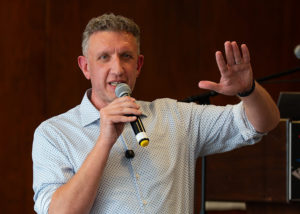
Chuck is a US-based internal communications strategist and the founder of ICology – a community and resource hub for IC professionals. He brings a practitioner lens to every conversation. Chuck is a recognised voice in the industry, a regular speaker and event host, and one of the most connected people in the North American IC world.
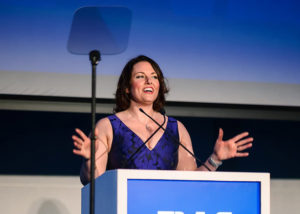
Jenni is a UK-based leadership and internal communications consultant, author of two best-selling books, and international speaker. She runs Redefining Communications, a consultancy working with organisations around the world to help them communicate better and close the gap between what leaders say and what employees experience.