
The managers enforcing return-to-office rules are the ones most likely to be gaming them. According to Owl Labs, 79% of UK coffee badgers are managers. That’s where this week’s Frequency starts, and the question of who gets to set the rules, and who gets to break them, runs through the whole episode.
Chuck and Jenni work through a UK government Copilot trial that found 19 minutes a day of self-reported savings, a company handing out a paid day off to play video games in the week GTA VI launched, and a Cisco executive who ends meetings over acronyms. Then a listener question takes them somewhere harder: what happens to trust when a CEO’s relationships with employees are an open secret, and nobody does anything about it.
Owl Labs’ tenth annual UK State of Hybrid Work report finds that 38% of hybrid workers coffee badge, turning up for a few hours to be seen, and 79% of those are managers. Some 73% believe RTO policies are really about leadership wanting oversight rather than collaboration. The report also points to the side hustle: 24% of UK workers have at least one additional job (33% of Gen Z), and 54% say AI has freed up enough capacity to take on extra paid work. Add 26% of AI users on unapproved tools and 59% who believe their employer monitors them, and it looks like a trust problem wearing a technology costume.
Chuck reads it with some side-eye. Owl Labs sells hybrid meeting hardware, the page doesn’t publish a sample size, and 72% of respondents are managers. He asks whether comms should push leaders to come clean on monitoring before regulators make them, since 82% want disclosure to be a legal requirement.
Jenni’s answer starts with the word itself. “Monitoring” suggests someone watching a wall of CCTV screens. What most organizations actually have is data that can be reviewed if a performance, disciplinary or grievance issue comes up, and that’s been true since the days of fax machines. She thinks internal comms could help by being clear about what’s collected and how it’s used, and by moving away from monitoring language that may be doing damage to trust for no good reason. Chuck’s position is simpler: if you think you’re being monitored, you are, and if you don’t think you are, you still are. He sees the RTO push partly as leaders trying to win back a sense of control.
Jenni also explains how she used Claude to pull together ten years of Owl Labs data, comparing UK and US trends over time, work she says would otherwise have taken her all day.
Sent in by Chuck’s friend Alan Oram, the Department for Work and Pensions’ evaluation of its Microsoft 365 Copilot trial covered 3,549 central office staff from October 2024 to March 2025. It puts average time saved at 19 minutes a day, led by searching for information (26 minutes) and writing emails (25). Transcribing and summarizing meetings, the feature most vendors demo first, came last at 9 minutes.
The report is upfront about its limits. Licenses weren’t randomly assigned, there was no pre-trial baseline, and the outcomes are self-reported. The unadjusted estimate was 10 minutes and nearly doubled once analysts controlled for staff interest in AI. Frontline staff, such as those in Jobcentres, got no access at all. On the positive side, 65% used it daily and 65% said it made them feel more fulfilled at work.
Jenni’s first question is about quality. Users said their work got better, but says who? Any piece of work improves when someone else helps shape it. Her bigger point is that the trial measures how people feel about the tool rather than any link to organizational success. There’s no hypothesis being tested. On the frontline gap, she suspects some of those staff may not have Microsoft 365 at all.
Chuck wonders whether we should stop selling AI as a time saver altogether. Spread across a working day, 19 minutes is a couple of minutes an hour. He’s fine with the quality argument, though quality is subjective. He points to his weekly shortbread, made from his mom’s recipe: Chuck says his latest batch is his best, and his mom isn’t convinced.
Logitech announced Logi Game Day (via LinkedIn News), giving its roughly 7,000 employees, interns included, one paid day off to play video games, usable any time before November 2027. The timing lined up with the November 19 launch of GTA VI. CEO Hanneke Faber pitched it as a productivity play and a chance to retire the idea that gaming is wasted time. Chuck compares it with Burger Motorsports, a California car-parts maker that simply closed on launch day after too many people asked for it off. He also notes that the productivity case rests on Logitech’s own commissioned, self-reported research.
Jenni, whose husband works in the games industry, likes the idea but would widen it into a hobby day. Not everyone games. Plenty of people take time off for a HYROX race, which she has on her own list. Chuck sees a chance for connection, much like March Madness brackets or a company day of giving, and points to Gary Ware’s book Playful Rebellion on the value of play at work. Both agree that recognizing what employees actually care about beats making them call in sick.
Cisco president and chief product officer Jeetu Patel told Fortune he has shut down meetings when people used unclear acronyms. At 5% to 10% attrition, he estimates Cisco brings in around 9,000 new hires a year, and most would rather nod along than admit they don’t know what something means. He calls unclear jargon non-inclusive, and says leaders who can’t make themselves understood by everyone don’t deserve the seat they’re in. The best detail: staff once told him to “get JP to approve” something, without realizing JP was him. Fortune puts his rule alongside Jeff Bezos’s silent memo reading, Jamie Dimon’s devices-away rule, Scott Kirby’s four-hour meeting cap at United and John Stankey’s come-prepared standard at AT&T.
Jenni backs the principle. She tells managers in her workshops to avoid acronyms or explain them, and she’s worked in acronym-heavy sectors like pharma and defense. But ending a meeting won’t change behavior, she argues. This is a communication training job for Patel’s leadership team. Chuck suspects Cisco looked at Bezos, Dimon, Kirby and Stankey and decided Patel needed a rule of his own. He also defends some jargon. Shared language can bind a team, the way a playbook does, as long as people feel able to pause and ask what something means. Whether a three-week-old hire will really stop a meeting run by the chief product officer is another matter.
A listener going by “Martin” (not Jenni’s husband) asks what a CEO’s sexual relationships with employees do to trust inside a company. The question follows Jensen Huang’s resignation from Nvidia, with CFO Colette Kress named interim CEO. Huang had admitted to an affair. The New York Times then reported a relationship with a senior executive who reports directly to him, and Reuters reported, citing two people familiar with the matter, that he had an intimate relationship with a second employee. Martin set out five angles: fairness and merit, conflict of interest, the open secret problem, pattern versus incident, and rebuilding trust.
Jenni picks the open secret. She has worked somewhere rumors about a senior leader circulated for years and were never confirmed, denied or addressed. People accepted it, she says, partly because it felt like a matter between peers at the top, and partly because nobody knew who would ever take it to HR, or what proof they’d need. Chuck goes straight to that gap: many people don’t trust HR, and he wonders whether the same behavior would have been tolerated further down the organization. He also separates ordinary rumors, which come and go, from an open secret that everyone knows and no one addresses.
Jenni then widens the lens to everyone around the CEO. If the relationships were an open secret, how credible was he inside the company, whatever his external brand? And people close to him will have their budgets and approvals questioned, even when they earned them. That raises the hardest question: if the more junior person stays, how do they rebuild trust, and why should they lose their job? Chuck doesn’t think there’s a clean answer.
Jenni is questioning her commitment to morning walks after a dark, rainy one in which two passing cars soaked her through. Chuck is uneasy about a run of US outages, from the FAA to Microsoft, Workday and the banks, and how much we rely on systems we never think about until they fail.
What is coffee badging, and who does it most? Coffee badging is turning up at the office for a few hours, mainly to be seen, then leaving. In Owl Labs’ 2026 UK report, 38% of hybrid workers said they do it, and 79% of those were managers.
Are employers really monitoring their staff? Owl Labs found 59% of UK workers believe they are. Chuck’s view is that if the data exists, it can be looked at. Jenni argues most organizations hold data in case it’s needed rather than actively watching, and that comms should explain clearly what’s collected and how it’s used.
How much time did Microsoft 365 Copilot save at the DWP? The DWP’s evaluation estimated 19 minutes a day, mostly from searching for information and writing emails. The figure is self-reported, there was no baseline, licenses went to volunteers and nominees, and frontline staff didn’t take part.
Should AI be sold to employees as a time saver? Chuck and Jenni are skeptical. Nineteen minutes spread across a day is small, and Jenni points out that time saved isn’t linked to any organizational goal. Both would rather see AI judged on what it helps people achieve.
Why would a CEO end a meeting over acronyms? Cisco’s Jeetu Patel says unclear acronyms exclude new hires who are too uncomfortable to ask what they mean. Jenni agrees with the aim but argues that training and education will change behavior where ending meetings won’t.
What does an open secret about a CEO do to trust inside a company? It teaches employees that some behavior is tolerated at the top and would not be further down. It also damages the credibility of the people around the CEO, whose budgets and promotions get second-guessed whether or not they were deserved.
Jenni: Welcome to Frequency, I’m Jenni Field.
Chuck: And I’m Chuck Gose. Frequency is your go-to for real talk about comms, culture, and employee experience beyond the buzzwords and straight to what matters. Jenni, this week we are talking about coffee badging among managers, what 19 minutes a day is worth, days off to play video games and acronyms, ending meetings. Plus, Jenni, we have a listener question.
Jenni: I’m excited. I’m excited about the listener question. But before we start, I wanted to ask you about coffee. Because I have always wanted to try, this is very dull for the start of our podcast today, a gingerbread latte. And I finally tried one at the weekend because everyone raves about it. And we are in the season of all of these pumpkin spice lattes and all sorts of different stuff. I quite liked my gingerbread latte. Everyone on my Instagram was very invested on whether or not I liked it. But I wondered if you had a festive… Drink of choice.
Chuck: I would have to go. I’m I’m like eggnog for me. That that is a solid go-to for me. And I do not want any rum or alcohol or anything like that in it. I just want straight virgin eggnog or whatever you want to call it, like just normal. I thought you were gonna go to a different question with it. I would never drink a gingerbread latte. Like my coffee is intentionally the most boring coffee imaginable.
I drink black coffee, or as you would say, filtered coffee over there, or brewed coffee, as I learned. And second after that would be Americano. And anytime I’m abroad and order Americano, they’re always like, of course. I’m like, well, literally, of course. Like, that’s what it’s for, is that. So, no, I wouldn’t, I don’t do any sugar, any dairy, anything like that in coffee. But when it comes to festive drinks, eggnog, all about it.
Jenni: Eggnog. So I’ve never called it brewed coffee over here and I feel like an… Okay. I feel like you’re lumping all of us Europeans in together there. You don’t say. But… You do. You do. You do. But doesn’t your wife have marshmallow in her coffee sometimes? Because I feel like she’s influenced me.
Chuck: I in Spain apparently that’s what they called it. I’m not very international now, Jenni.
You have to be very f you have to be very fluid. You have to learn the local language when you’re traveling abroad.
There is a variety of different ingredients that she will try in her coffees. No, she is all about the sugar, the dairy, the sweet. Yes.
Jenni: Because I’ve been looking for marshmallow every time I’m in the US. I’m like, is there a place here where can get marshmallow? Because I feel like I need to try this. But I think I’m just too scared about the combination of what to ask. So I’m going to have to ask her what to ask for.
Chuck: When my mom recently visited, they were both guilty of putting Cool Whip in their coffee. I don’t know if you know what Cool Whip is. Okay, I don’t really even know how to really describe it, but it’s it’s not even really dairy. It’s sort of like yeah, I can’t even describe it. Anyway, no. She would be all about a gingerbread latte, I’m sure. But not me. I’m kind of boring when it comes to that. As it should. As it should. All right, let’s get into our
Jenni: It came with a little gingerbread cookie on top as well. I that was quite cool. Yeah, okay. Good. That’s all today.
Chuck: Content for this week. Owl Labs’ 10th annual UK State of Hybrid Work report has a stat that should make anyone writing RTO policies a little bit awkward. 38% of hybrid workers admit to coffee badging. As a reminder, this is when you show up just for a few hours and swipe your way out to go get some coffee. And 79% of those coffee badging are managers. The people enforcing attendance are the ones sometimes seen gaming it.
No surprise then that 73% of workers believe RTO policies are about leadership’s need for oversight rather than collaboration. The other headline in this is a little bit about a side hustle. 24% of workers have at least one additional job, which I think up to 33% of Gen Z, and 54% of AI users say AI has freed up capacity to do the extra paid work.
So the productivity gains companies are banking on from AI may be walking out the door. Add 26% of AI users on unapproved tools, and 59% who believe their employer monitors them and that looks like a trust problem wearing a bit of a technology mask to us. There’s a little bit of a side eye perhaps to this research. We just call this call this out. Owl Labs does sell hybrid meeting hardware, so the report doesn’t publish a sample size.
And 72% of respondents are managers, so that’s skewing the results there. The finding that roughly six minutes are lost starting every hybrid meeting comes from a company that helps sell that fix. Now, I am someone, anyone that knows when I start a hybrid meeting or I’m virtual, we do not wait for people to join. If the thing starts at noon, we start at noon, you’re late. If you’re not five minutes early, you’re late. Question for you, Jenni. 59% think being monitored, they’re being monitored.
And 82% want disclosure to be a legal requirement around that. Should comms teams push leaders to come clean on monitoring employees before this becomes a regulation of some kind?
Jenni: So I think to answer your question first, I think we have to define what we mean by monitoring. And I think that’s probably a term that’s being used in a kind of frightening way and creating a bit of fear. And I, we’ve talked on this before where we were talking about something the other week and I was saying, I don’t understand why people think, I think it was like Slack messages and emails and stuff. I don’t understand why people think that the organization can’t access that if it needs to. So you could argue that you’re. Been monitored for years because people have been able to access that data. And I mean, decades, like even in my first job, when we had fax machines, people could access your emails and stuff if they wanted to. So I think we’ve got to define monitoring. I think that’s probably the first step. And I think you’ve got to do that before you get even anywhere near kind of legal compliance. But I think you should be open and honest about what you have access to from a data perspective and how you use that data. I don’t think that’s unreasonable, in my opinion.
But I think the report is interesting and as we were talking about before we came into the show today, because I love a report, as we know, I went off to have a little look at Owl Labs and because it said it was the 10th, this is what got my attention because I was like, but how does this compare to previous years? And then I discovered they have a US version of this. And then I was and then I asked Claude to go away and find out everything it could in terms of the last 10 years. What are the different trends? What’s the UK and US comparison? Over time so we can look at all of that. So I’ve got a nice dashboard in Claude of different artifacts that tells us a bit more so I’ll probably write about that but it’s a very helpful use of AI there in terms of going in to do that work that would have taken me all day but there’s some interesting data in terms of the trends and the comparison between US and UK across some of this research as well and in terms of that hybrid piece and the coffee badging and how you guys have been doing it for a long time and we’re just kind of catching up.
Chuck: Slight correction there. We were the first to start doing it. We’ve now kind of leveled off a little bit where you are all catching up to this. My my stance on the monitoring is if you think you’re being monitored, you are. If you don’t think you’re being monitored, you are. You just it it’s happening. So just know that. If you have a problem with it, ask questions. If you have a bigger problem with it, you can leave.
But this is what companies are doing. We’ve seen this now. This is a part, I believe, of this RTO push is leadership felt a sense of loss of control. They feel like they had a good understanding of what employees were doing. Hence, like why people felt the need to do like those mouse wiggle things so that your teams would stay active or whatever. Like they’re they’re monitoring. Now, are they paying attention? Is a little bit different.
Than monitoring, but to your point, if the data’s there, anyone can go back and take a peek at it. So it’s happening.
Jenni: Yeah, think I have an issue with the term monitoring as we’re talking about it, you? Because for me, when you say that you’re being monitored, I feel like that means that there’s somebody continuously looking. It’s like somebody monitoring like CCTV in some sort of security office where you’ve got all these screens and you’re monitoring what’s going on. That to me is monitoring. I don’t think there’s anyone doing that in organizations. I think there is data being collected that should it be needed to… Review something or to check from a performance management or a disciplinary or a grievance or whatever might be going on. I think the data is there should it be needed for a situation should that arise. That is different, I think, to monitoring and I wonder whether there’s going to be a need for internal comms folks to be clear about the data that’s being collected but also how it’s used and maybe a campaign to shift away from this monitoring language because I feel like that’s maybe not particularly helpful and I think that might be doing a bit of damage to the trust that actually might be a bit false actually.
Chuck: Yeah, I I feel like you have this like very eighties or nineties view of like Hollywood, someone sitting having all these little black and white TVs somewhere. Yeah, I’m not suggesting that’s happening, though perhaps it is in some places. But I think the mon you know, is this scenario again where AI can flag things? Is it s is it is AI doing the monitoring? It’s not someone’s set of eyes. It’s not this old security person with their baton sitting in a chair, relaxed back, watching all these screens. But is that something where AI is now Keeping an eye on things. I don’t know. We’re we are not security experts. We are not risk experts, but anyway, let’s move along. This next topic we’re gonna talk about was so you like to claim friends in the show, Jenni. So I’m gonna claim my friend. So this was submitted by my friend Alan Oram. Not your friend, my friend Alan Oram. Yeah. Too late. Too late. Already claimed. The UK’s Department for Work and Pensions gave 3,549.
Jenni: Yes, I felt, yes.
No, not my friend at all. Never met him for coffee in my life. No, not at all, no.
Chuck: Not 3,550, 3,549. Central office staff, Microsoft 365 Copilot from October 2024 to March 2025. And its evaluation puts the time saved at 19 minutes a day. Searching for information was around 26 minutes, writing emails, 25 minutes that topped the list of activities. Transcribing and summarizing meetings, the feature that a lot of times you see in demos, that’s actually what I use a lot of.
Came dead last at just nine minutes saving time, which came as a bit of a surprise to me. There are some caveats to this, like there is with every report. It’s very upfront about it though. Licenses went to volunteers and peer nominees. So there was no pretrial baseline, and every outcome was self-reported, which we can always, of course, trust, people’s lived experiences versus what they think really happened. The unadjusted estimate was about 10 minutes, and it nearly doubled once the analysts controlled for staff interest in AI.
Jenni: 100%. Yeah.
Chuck: Some users said checking Copilot’s output canceled out the time that it saved. And frontline staff, the people often closest to the public, got zero access to the tool. But give credit where it’s due. This is one of the more transparent public evaluations of Copilot anywhere. 65% of users said they used it daily, and the same percentage says they felt more fulfilled at work, which I think is an interesting data point around it.
What’s missing though is any answer to the obvious follow-up: what do you do with 19 extra minutes a day, Jenni? So head head office volunteers got the tool, frontline got nothing. What does that say to employees about who AI is really for?
Jenni: Well…
So I’m very grateful to my friend Alan for bringing this report to us. I particularly enjoyed our email exchange where he was like, I know you like reports and you were like, correction, Jenni likes reports. But what I found interesting, and I will answer your question in a second, is it’s all self-reported. So people say, there was also a piece where people said that the quality was better, which I know is your big thing about AI is like, is the quality improved? And I was like, But says who? Like you think it’s like, I could have designed this poster, but I got AI to do it it was better. Like maybe, but maybe not. Like how do you know that that quality is better? And I think there’s a question for me over what do we see as quality improvement when AI is doing it? And I think there is something around that, that if somebody else was to edit that work, if it was a written piece and somebody edited it and helped you shape it as another human being.
It would also improve the quality of the work because you’d be working on it together. So there’s a little question mark for me about some of that. In terms of who it’s for, I wonder whether they did do some basis for this is maybe the frontline staff don’t have access to Office 365 at all. So they might not have access to any of the Microsoft Suite and they might not be in the eyes of the people that were doing the trial and need for them to access it. So.
There’s probably something like that for me in terms of what was the access, but I’d love to know if it is going to get rolled out, and also what they’re going to do with those extra 19 minutes today.
Chuck: I was thinking about the the the nineteen minutes a day of how much time we all waste. We’re we’re we and I say throw away, like if you get lost in Instagram, you get lost in TikTok, whatever your drug of choice is on that. That nineteen minutes, let’s say you’re working an eight to nine hour day. That’s a couple minutes an hour, which again is so negligible in the grand scheme of the efficiency of time.
That I’m almost wondering, do we need to stop viewing this as some sort of time saver? Now, the quality, the quality piece is a very interesting conversation to me because that is very subjective. One person’s view of quality might be wildly different than another. I have what let’s bring this quality in the more personal side of things. I have taken upon myself, Jenni, to work on a family recipe. So for years, my mom has always made shortbread. Love shortbread.
Never knew how to make it. Turns out wildly simple to make shortbread. However, I never learned from my mom. So one time when I was visiting her, I was like, hey, can we make shortbread together? So I can kind of see how she does it. So now I’ve started making probably shortbread a week. We can discuss, we can discuss the health concerns afterward. However, I mentioned to my mom, like the last one I made was like, I it’s it’s the best one I made.
Like I’m kind of figuring out how to do softened butter the right way and all this kind of stuff. And she her response, she’s like, We’ll see. We’ll see if it’s so my quality was like, no, it’s it’s a lot better. She she’s not believing it. She thinks there’s still some room for improvement. So again, if people think the work they’re producing is a higher quality, great. We know there’s no such thing as perfection that we like try to chase that there’s this perfect thing.
I’m okay with the quality stuff. I just think it’s the time saved is the problem I’ve got a little bit of an issue with.
Jenni: Yeah. I mean, I love that you’re making shortbread. I’ve never made shortbread, but I’m here for taste testing, should that ever be required. The efficiency thing is definitely something that is an issue. And on my internal comms round table, the last one that we had of the year, we were talking about AI and efficiency and that efficiency is not the goal for what we’re doing. So what is it that we’re actually trying to do? Because it’s just not real in terms of what you can actually measure. For the work that people do in kind of comms, HR, some of those support functions. But I also think 19 minutes a day, to your point, is somewhat negligible. But also, I always remember having to do some cleaning stuff. I remember being at home and there was something I used to soak and it would take 15 minutes to soak and then you could come back and had to drain it or whatever. But I remember setting my timer for 15 minutes and using that time to kind of… Clean the house or something. And I was like, God, it’s amazing what you can achieve in 15 minutes when you’re really focused in your attention. So there’s something about focusing your attention maybe on something else and what you can achieve, but also it just feels like such an arbitrary amount of time. What have they set? Like, how have they even measured that? And why does it matter? Because how is that? That’s not going to achieve anything that’s linked to organizational success. It feels very much like a trial that’s very much about feeling, like how does it feel using AI, rather than it being linked to a specific organisational goal. And I think when we think about research and how you should do research and measurement to some extent is what’s the hypothesis you’re trying to prove or disprove. I’m not sure in this in terms of what we were trying to prove or disprove, because it’s all based on just how I feel about using this tool, not actually how it’s had a really positive impact on the organisational success.
Chuck: Yeah, if you want to save time, get out of some of those meetings every every day. That’s how you can save. That’s how you can save time. All right, let’s move along. This is a fun one. Especially with what goes on in your house, Jenni. Logitech announced Logi Game Day earlier this month. Each of its roughly 7,000 employees, interns included, get one paid day off.
To play video games usable anytime before November 2027. Now, this timing is no accident. GTA 6 launched November 19th, and Logitech hosted a live stream from a San Jose headquarters that same day. CEO Hanneke Faber pitched it as a productivity play and a chance to kill the idea that gaming is wasted time. Speaking of that.
Now compare that with Burger Motorsports, the California car tuning parts maker that announced back in June it would pause operations entirely on launch day after too many employees asked for the same day off. One company saw the PTO requests piling up and waved the white flag. The other turned the same pressure into a branded benefit. The productivity argument leans on Logitech’s own commissioned research, which is based on people’s self assessments rather than measured performance.
Logitech also hasn’t said whether Game Day will come back next year. A one-off day pegged to a blockbuster launch is employer branding first and well-being policy second, which doesn’t necessarily make it a bad idea. So, Jenni, I’m curious: is Game Day, this one day off to play video games, just so happen to be timed around the same time as a massive product launch for this company? Is that a culture move? Is that a marketing move?
And if you’re a Logitech employee, do you even care?
Jenni: Good question. To clarify your opening point about what goes on in my household, my husband works in the video game industry so that is why. And actually I sent him this earlier and said Chuck wants to talk about this today and he said yeah we saw this kind of coming out. He even said to me the other day he said well I will be you know I will be busy whilst he’s not he’s interestingly he’s not a take a day off kind of guy for this game but he will what he’s like, he’ll play the story through and he’s interested in it because he makes games. So he’s interested in it in lots of different ways. However, I actually think this is a really good idea. And it made me think about people having a day off for their hobby of choice. And it made me think about HYROX, which you may or may not be familiar with HYROX, which is this sporting phenomenon, which is across the world where you have to do various different machines and then you run and you can do it as teams. You can do it on your own. They do them all over the world and people get very excited about them.
I haven’t done one yet, but it is on my list, but they’re often on like a Thursday or a Friday. So people would take the day off work to go and do their HYROX competition. And it made me think about that. Maybe I’m not a gamer and I don’t wanna take a day off for this, but I would like a day off to play my game, which is HYROX. So I think there’s something about having a hobby day, which I think is actually really nice. I think this is probably definitely linked to some kind of marketing element.
But to your point of employer branding first, wellbeing policy second, is that a bad thing? Does anyone care? I don’t think they do. I think if you’re not a gamer, that’s my question, if you’re not a gamer, do you also get to take a day off? Because that is where I feel like it needs to be like a hobby day rather than a game day. And that’s why I think it’s probably maybe a bit marketing-y linked to GTA coming out.
Chuck: Yeah. Yeah, I’ve heard stories. I’m not a a GTA player, but I did see some press conferences where even like NBA players are talking about, or people have said, be prepared for like stats to go down a little bit or performance go down a little bit around the launch of this game because it’s become such a cultural phenomenon as I think it’s been delayed once or twice. I forget the full narrative around the game. Like people have been pre-downloading this game.
Because of the size of it, to be able to do it and the advancements in it and all of those things. I think to your point around that, whether it’s this hobby angle or just the power of play at work, there’s a gentleman named Gary Ware who wrote a book called The Playful Rebellion, which is about the importance of play at work. And I think about the potential for connection around this thing. No different than like what happens here in the US around March Madness with college basketball tournaments and people put their brackets together and they pick and they compete.
Like I think there is a bit of a cultural play here, perhaps for some, especially if there’s people in your organization that really do care about something that’s outside of work but sort of impacts work, but is it tied to the work they do? I think anytime you can give people a way to connect around things and not feel punished, or you have to call in sick that day, let’s call it out. And I there it’s interesting that this motorsports company who just saw it coming and is like, all right, we’re where do we even Were we gonna fire people for this? Like we people have earned PTO. Like so you can’t be like, Well, do so is it now this company holiday as a result? I don’t I think it’s a good recognition of what your employees are actually interested in.
Jenni: Yeah. And I think there is a cultural piece to it. Think, like you said, it’s been delayed a few times. People have waited for this for a long time. To a lot of people, this is a really big deal. Like, this is something they’ve been… It’s almost like when you’ve been saving up for a holiday that you’ve been looking forward to for years and you finally get to… And I think the dismissiveness sometimes around games isn’t helpful at all. Like, it’s incredibly… I find it quite interesting to watch my husband play games because sometimes it’s like being in a film and you’re like… You’re like making the decisions because the graphics are incredible, the storylines are really good. Sometimes I do take the mickey out of the dialogue, like I have been known for that and he’s like, well, I can’t unhear this now, so thank you. But it’s this like the skill, the all of that, all of the stuff you’ve got to be thinking about to do it. I just think is really impressive and I don’t think it should be as, you know, see, look down upon sometimes that I think it is. But I think it’s lovely that people are embracing. The stuff that’s going on outside of work and the impact that has on work and then how you balance those two and being proactive about it. I think that’s what’s really nice is that people are being proactive about it and accepting that this is just what, this is part of the culture and it’s just gonna happen. I did check after you put this in the links, I was like, I must check what’s in my diary for that day in terms of like, who have I got meetings with? And I’ve kind of made this wild assumption. The people that I had meetings with were actually okay and they were it was fine but I was like I don’t think these I think these people are good I don’t think they’re going to be cancelling on me last minute I think it’ll be okay.
Chuck: Well, I was thinking about it too, from companies do like a day of giving where they go out into the community and give. Like th to me, this is sort of the same thing, not not in a sense the philanthropic standpoint, but just recognizing that people want to have a day to themselves or connect with other employees around it. So and I I doubt it’s also just one day for some of these people. This is probably gonna be it was probably a weekend, week long through the holidays journey which which my son downloaded it. I have not
Jenni: Yeah, I think it’s nice.
Chuck: Seen the game yet, but I even I am a bit curious to see like what is this what does this look like out there for
Jenni: Yeah, yeah, yeah, I will be reading my book while that’s on the television.
Chuck: Great. So that’s what goes on in your house. Final story. We’ve got Cisco, president and chief product officer Jeetu Patel told Fortune he has shut down meetings when people used unclear acronyms, especially the ones Cisco invents on the fly. His reasoning, simple math, is at five to ten percent annual attrition, which I didn’t really thought about from a company standpoint, which is probably pretty common. Cisco brings in roughly 9,000 new hires a year.
Which is then about a third of the workforce over three years. And most of them would rather nod along than admit that they don’t know what something means. New hires are now told at orientation they can stop any meeting where communication isn’t clear. Patel labels jargon as an inclusion problem because it stops people from speaking up, which is a sharper argument than just simply saying about clarity. Then here comes the line every comms person will want on a mug, Jenni: a leader who can’t make themselves understood by everyone. In his words, quote, you don’t deserve to be in the seat that you’re in. The best detail they shared in this was that Staff once said they needed quote unquote JP to approve something without realizing JP was him. He does not go by JP. Fortune includes him with things like with Jeff Bezos’ silent six page memo, Jamie Dimon’s devices down rule. Scott Kirby has a four-hour daily meeting cap at United. And John Stankey’s Come Prepared or Don’t Come At All at AT&T. Executive meeting rules make great headlines. Jenni, whether a three-week old new hire will really stop a meeting run by the chief product officer is a completely different story. Going along here, Jenni, ending a meeting over acronyms is also a show of power. When does a leader’s clarity rule start to tip into performance?
Jenni: I love the story about it needs to be checked by JP. Was like, just really makes me laugh. It’s interesting because whenever I do, I do workshops every now and then for managers or teams across organizations about impactful communication. And one of the things I talk about is keeping it simple. And I always say, try not to use acronyms or explain them because there’s always new people coming into the organization and they won’t understand what they mean.
And I’ve worked in some really acronym heavy industries like the pharmaceutical industry, the defense industry, there’s loads. So I applaud this and I think things do run away with themselves a little bit in terms of acronyms. What I think is interesting though is he’s saying that he has shut down meetings. I don’t know that it’s clear that he’s saying you should all have the power to shut down meetings. I think there’s a distinction there. And I, to your point, I don’t know that somebody is gonna shut down a meeting. Because they don’t understand. This to me is a communication training exercise for him and his leadership team and the managers to make sure that we’re being clear in order to be able to communicate effectively. Think that is, this is a cultural piece and I think it’s probably gonna take some time for it to actually become a tipping point. And also, how do you…
Do you really need to terminate a meeting or do you just need to educate people? Like I think you’ve got to be mindful of how you’re going to go about this change. Because if you just go, right, this meeting’s over because you’ve seen that, that isn’t helpful. That’s not going to change behavior, which is going to piss people off. So I think you’ve got to think about how you want to do this. If indeed this is genuinely something that he wants to do.
Chuck: To me, this feels like Cisco got together and they’re like, wait a minute, Jeff’s got a thing, Jamie’s got a thing, Scott’s got a thing, John’s got a thing. What’s Jeetu’s thing gonna be? We know this is a problem. It’s interesting. I I do like the empowerment of telling new hires, hey, go do this. Maybe not stop, maybe not shut down a meeting, but hey, pause. I don’t understand what this means. I think that sounds really good. I don’t know in practice if that employee is truly gonna feel comfortable. I could see maybe
Jenni: We need a thing.
Chuck: A meeting being like, hey, I didn’t understand that going on. I would like to know if truly this has happened where he has ended a meeting. I I hear you on the jargon stuff and clarity and all that. I also there’s also a big power in jargon when it comes to culture. Like it’s a unifier to think about. Like because there that’s a common language that a everyone uses, so you feel like you’re kind of. Part of the team. It’s like quarterback or football having a playbook and you call the plays and you know what, but it’s unique to you. You have to kind of learn that as a person coming onto a team or a new employee organ joining organization. So there and I think about even generationally there’s jargon that comes into play, like that again unifies people. So I don’t want I don’t think all jargon is all bad. I think it’s it’s understand if you don’t understand, do you have the space to hit pause or ask a question, go to a resource, whatever to learn a little bit more about that. I it’s but yeah, just I this feels like all these other leaders have a thing. And now is this gonna be is this gonna be his thing?
Jenni: I love that. I love that they’ve gone, God, we need something quick. Think of something quick. I do, but I think there is, I think there is a time and a place. And I do think some, and you know, you and I have the privilege of working with different organizations a lot. And sometimes I do see people use acronyms in this sort of way. Like the example of like, it needs to go to JP. Like, do you really need to acronym, acronymize, is that a word? Do you really need to do that with someone’s?
Chuck: Jeetu doesn’t have his own thing. What are we gonna do? Acronymized.
Jenni: Like, do you need to do that? Or could you just say, this needs to go to Jeetu? Like, I think that’s where, I think there can be cultures where it can just go that bit too far from an acronym perspective and you just need to pull it back and go, that just makes you sound like an idiot. Let’s just talk about this properly.
Chuck: Yeah. Yeah. All right. That is the content for this week. We’re now going to move along to our listener question. So it’s from a listener who wants to go by the name Martin. Not your husband who we talked about earlier, Martin. This is a different, this is a different Martin. And last week’s episode, we very briefly talked about what was happening in Nvidia because the news had just broken about Jensen Huang’s resignation. So but this l listener Day one listener wanted me to point out, has a question. Let’s take out all the government stuff. Let’s take out the Chinese spy stuff that’s being rumored around all this Nvidia stuff. They want to talk about the affair. So, Jenni, I’m gonna read through some of this. So, New York Times reported there was a second affair with a senior executive who directly reported to him. Reuters has now reported there might now be another.
Affair with a second employee, apparently an executive admin out there. So multiple things going on in this business with Jensen. What this listener wanted to talk about, we could spend an entire show discussing Jenni. So I’m gonna let you do a bit of a choose your own adventure. We’re gonna play a game here, a little bit of choose your own adventure in this. Do you want to talk about the fairness and merit at Nvidia? Perhaps a conflict of interest, a bit of an open secret problem.
That can happen inside organizations? Is this a pattern versus a one time thing? We could get into the trust conversation. Which which way do wanna go with this, Jenni? Kind of need some game show music right now.
Jenni: Gosh, this is like spinning the dice, isn’t it? I feel like we do. So I actually think the biggest issue is probably number three, which is the open… Okay. I mean, I felt the pressure to be fair that you were happy with my choice.
Chuck: Ooh, good. I’m glad you chose that because I think that’s the most interesting one. Okay. So this is the, so this is, yes, this is the open secret problem. So former employees have said that these rumors have circulated for years about these affairs. What does that teach employees when something is widely whispered but never addressed? And who in the organization, including HR and comms, is positioned to speak up when the person at the center of this is the CEO.
Jenni: So this is interesting because I feel like I’ve been in this situation. So I worked in an organisation where I would say there was an open secret problem where there were rumours circulating. I cannot confirm or deny those rumours because it was never confirmed or denied. But there was a very much a, there was very much this problem. CEO and a member of the leadership team.
Chuck: Have you? Okay.
Jenni: There was, I mean, it was, there was just a lot of talk about it and there were behaviors that would suggest that in certain situations, but it was never, it was never really discussed. Don’t think anyone, it was just kind of this thing that you accepted. And on reflection, I don’t know that I cared enough to go and take that to, like, to what end and why? And I suppose because you see them as a bit of a peer group when they’re at that senior level, if indeed that’s where it’s happening, it’s like, it’s just in between the team. And actually, if that was any other team, does that matter? Is it okay? Is it impacting work? Why do I care? It’s not really my business. I’m just gonna crack on and do my job. I think that’s a lot of the mindset. And I don’t know who would ever be the person that would go to HR. And I think if you’ve got proof, it’s really hard to…
Bring that case forward.
Chuck: Yeah, I’d I think that’s what you just described there at the end as the real challenge is where do you go with this? If you’re in HR and you’re listening to this, you can put on your earmuffs or not hear it out. People just don’t trust people don’t trust HR. I was recently on a phone call with a communicator working at a company working through a sexual harassment issue, which she thought she could trust HR. She turned out she could not trust HR.
In this, and so it it’s it is this, it feels a bit of the rules for thee, not for me, because I feel like if this was going, is this was happening lower down in the organization, someone or multiple people would be out of there. But I also wonder was it things were just going so well in Nvidia? People are like, I don’t know, man, like think like my stocks going through the roof, I’m getting paid ton of money, whatever they’re doing.
I don’t know, it doesn’t, it’s not negatively impacting the company, or at least I don’t think it’s negatively impacting the company. But I also wonder, too, about the difference between rumors versus an open secret, where there’s always rumors inside of a company. There’s always rumors that it that’s there versus this thing that everyone knows, but no one is addressing. And I think rumors persist forever. I mean, they kind of come and go, but this open secret, I think, is a is a Different challenge, especially when it is at that level. When it’s at this level where it is the CEO and it is a direct report and other people, there there is a I can think we begin to describe the power dynamic that exists at that point.
Jenni: I think, yeah.
Yeah, yeah. And I think also what I think is interesting is I wonder what the internal perception of the CEO is when it’s this situation. So how credible was he to employees? He had an incredible brand, you know, externally, but how, if this was an open secret, then how did that translate in terms of what people felt? And also what was the knock-on effect to the individuals that were associated with him and their credibility? Because then people might just say, well, they’ve got extra budget because they’re having a good time on Thursday nights. How is that showing up in terms of what that’s doing to everybody that’s impacted by that? And I think that’s also something to consider. Even if you’re not the CEO, but you’re the person involved with the CEO and it’s an open secret, what are you doing with, how is that damaging or impacting your credibility and your role? Because it will be damaging it in terms of how people perceive that you’re getting the things that you’re getting, which could be completely justified in terms of your skill and ability to get that budget and get that through and get that approved, but everyone’s going to assume it’s a layer of, you know, inappropriateness that is probably causing that. And that’s not fair, you know.
Chuck: Right. And I think that gets into that gets into the point of a couple other things which our listener Martin talked about, which is around fairness and merit and trust and like all of that is now I I think in this case, trust can probably be pretty easily rebuilt if those characters are no longer in play and the other leaders seem like they’re in charge or they have it under control, but also I don’t know, maybe not, because if they knew what was going on but didn’t say anything.
Now I’m kind of backtracking on my statement.
Jenni: Also, if, if you, yeah, now I’m just thinking about that. But if I, if I was the member, if I was in the, let’s come down a notch from CEO. If I was in the team and I was having an affair with my boss, regardless of who might have been married or not married, or maybe it was, maybe it’s completely consensual and we’re allowed to, you know, why, why would the person that’s, why would the person on the receiving end, but would everybody just be fired or?
Does every, or do those people stay because they’re more junior, so it’s okay, and they haven’t done anything wrong? Is it the person that was in power that did something wrong? So they have to go, which then comes back to how do you rebuild trust? I can’t talk now. How do you rebuild trust if you are staying, but people are aware that you were having a relationship with somebody in a position of power? Because why should you lose your job?
Chuck: Yeah, I I’m not I’m not saying you should, but will people ever really trust your leadership at that point? So is is this really the right place for you to be? It’s it’s very messy. There’s not a simple it it this feels like a very black and white scenario, but we know life is not that. And so it it is tricky. So I want to thank you, Martin, for submitting that question. And honestly, anyone who has questions.
Jenni: Thank you, Martin.
Chuck: About things that are going on, whether we talk about it or don’t talk about it, feel free to message us with that. You can go by an alias, you can go by your name. We will respect that. But we love having this be part of the show. So now moving along to our freq-outs. Jenni, what are you freq-ing out about this week?
Jenni: I am freq-ing out about my own, well this is ridiculous, my own plan to get out and walk and I’m talking about it today because as we’re recording this the weather in the UK has not been particularly pleasant and I feel quite committed to going out and do my daily walk in the morning because I’m trying to be more committed to that because I can get into bad habits. And I just had a horrendous walk this week where it was dark and it was raining. And I got splashed by two cars that went past me, so it soaked my entire leg through. My coat got heavy because it was being weighed down by the rain. My phone got completely soaked in my pocket and it was just awful. So I’m kind of freq-ing out about, do I continue with my morning walks in this horrendous weather? Am I regretting all of my life choices to try and get my 10,000 steps today? And one of my…
Chuck: I think you power through. I think you power through.
Jenni: One of my friends sent me a message, they were like, want, you know, I thought we were kind of mentally the same and then you go and do something like this. No, I just think you’re a lunatic. I was like, I feel quite committed to doing it, but I was regretting all of my life choices. So I’m just hoping that we can get to that nice part of winter where it’s not just, I mean, it was like absolutely blowing a hoolie, as I would say, with, was just gross. It was really horrible. I was quite fed up by the time I got home.
Chuck: I don’t know that phrase you just described, but I think it it sounds pretty bad. It sounds pretty bad. My freq-out is a little bit about where there’s these things that you just rely on until you can’t and don’t. Now, thankfully, we were not impacted by the FAA outage that happened here in the US. And then since then, whether we want, we’re not gonna pick on Microsoft, but there’s a Microsoft outage and then the a FAA outage and then Workday was down and then banking systems in the US were down. And I’m I’ve just started thinking about these infrastructures and systems that we have set up that we just don’t even think about. It’s like breathing. You don’t even think about them being reliable until they’re not. And now it’s I’ve seen some lot of conversation around. Are we just relying on some of this stuff too much? Where the right people aren’t leading, monitoring, maintaining.
These things that or or or is it that situation where when you buy a new car, you happen to see that same car, you know, all the time. I forget what that effect is called. It doesn’t seem like that, because it does seem like these are some pretty big things that have all lumped together, far above my pay grade and truly understanding the technology of it. I’m not gonna weigh in on FAA routers and cables and networks and stuff, but man, it just seems really strange that so many legacy systems have just started failing. And it and I’m just kind of freq-ing out a about it a little bit.
Jenni: Yeah, I think it’s a fair, and I think that it’s probably showcasing the age of the tech in some places and where people haven’t invested in how it’s No, I’m staying in it.
Chuck: I don’t think we need to fall into that. I there’s more to it than just that. I think you watch too many press conferences here, Jenni. We gotta we gotta put on you gotta put on the tinfoil hat and think bigger picture on this stuff, Jenni.
Yeah, well that’s what we’re freq-ing out about this week. Thank you for joining us.
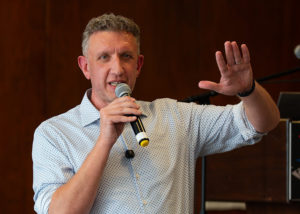
Chuck is a US-based internal communications strategist and the founder of ICology – a community and resource hub for IC professionals. He brings a practitioner lens to every conversation. Chuck is a recognised voice in the industry, a regular speaker and event host, and one of the most connected people in the North American IC world.
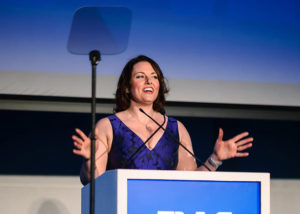
Jenni is a UK-based leadership and internal communications consultant, author of two best-selling books, and international speaker. She runs Redefining Communications, a consultancy working with organisations around the world to help them communicate better and close the gap between what leaders say and what employees experience.