
A study that tracked every worker and company in Denmark for 25 years found that the gender pay gap at a firm narrowed when a male manager had his first daughter. Chuck thinks the data holds up, and finds that depressing. Jenni doesn’t buy the causation at all.
That argument opens episode 76, recorded with Jenni just back from a week in Boston and Chuck on the road in Omaha ahead of Unite in London. From there, the pair move to a union “watch list” allegation at the maker of Grand Theft Auto, why the CEO shouldn’t be the face of every message, and whether AI really deserves the blame for bland internal comms.
Chuck opened with a piece from The Economist on a paper in the Review of Economic Studies by researchers at Aarhus University and Northwestern. They tracked every worker and company in Denmark from 1992 to 2017. When a male manager had his first daughter, women’s earnings relative to men’s at his firm rose 4.1%, and the share of women employed rose 4.5%. A son made no difference, and neither did later daughters. The gains came through new hires and promotions rather than raises for women already there, and the women hired were just as qualified as the men who would otherwise have gotten the job.
Chuck, who has a daughter and a son and has never liked the “girl dad” label, finds the data convincing and depressing in equal measure. Why does it take a daughter for some men to notice how women are treated? Jenni isn’t persuaded by the causation. In her experience, individual managers don’t set pay; HR policy and grading structures do. The fact that women already at the firm saw no change makes the link look shakier still. Where they did agree: proximity changes behavior, whether that’s a daughter or getting to know people from a different culture.
Next, BBC News reported on an employment tribunal in Glasgow, where former Rockstar North worker Dayne Oram claims the Grand Theft Auto maker kept a “watch list” of union members after a 2023 petition about working from home. He is one of 23 of the roughly 34 workers dismissed last October who are taking the case, represented by the IWGB union. Rockstar denies the claims and says the firings were for gross misconduct after confidential information was shared on a Discord server that around 300 staff used to talk about the company. Its lawyer pointed to the gap of two years and eight months between the petition and the dismissals.
Chuck’s question: when the real conversation moves to a space comms doesn’t own, is that a failure of the official channels? Jenni says no. She recalled staff setting up a Facebook group to complain about being moved to a side entrance, and how knowing about it helped bring the issue to the surface. People will always want a private conversation, the same way they’d chat in the kitchen. The comms job is to know it’s happening and bring the issue back in without breaching trust.
Chuck draws the line at confidential material sitting on a platform the company doesn’t own, and at derogatory posts about a manager. Jenni’s bigger concern is the watch list itself. Even if it isn’t true, once employees believe it exists, the damage to psychological safety is done, and leadership has work to do to prove otherwise. Chuck’s summary: if you don’t create spaces for employees, they will create their own.
An Inc. article by Michael Kaye argues that companies keep turning CEOs into thought leaders when they aren’t always the best spokespeople. Just 24% of people say frequent CEO media appearances make them trust a company more, the weakest trust builder tested, and 38% of knowledge workers would rather hear a technical explanation from a specialist. The proposed fix is a portfolio of voices: the CEO on strategy, employees on how the work really gets done, subject-matter experts for credibility, customers for proof, and creators for reach.
The piece was written for marketers, but Chuck applies it inside organizations, where nearly every significant message gets routed through a senior leader. Jenni says she has never built a comms plan around the CEO. Everyone on the board gets media training, the CFO delivers the finance update and the CMO the marketing update. “You’re not an island as a leader, you’re a team,” she says. The harder case is a CEO who wants to be everywhere, and there she’d use data like this to show it won’t have the impact they expect. Chuck would appeal to the CEO’s time: most messages simply aren’t worth it for them.
The last story is a TikTok from Heart 2 Heart Leadership claiming that if your team can tell AI wrote your internal comms, you’ve already lost them. Chuck’s counterpoint: employees have been tuning out hollow, ghostwritten leader emails for decades. AI didn’t invent corporate mush, it made it faster to produce. So is the profession underreacting, reacting or overreacting?
Jenni says overreacting. Drawing on a recent webinar with Shel Holtz, she argues that comms people aren’t just content creators, and that AI is genuinely useful for transcribing meetings, analyzing data and sparking ideas. Shel uses it to write a regular nutrition item in his newsletter, saving about 45 minutes each time. She does think readers can spot AI writing and switch off, which matters more in internal comms because of the trust being built. But she suspects the anxiety also reflects an identity crisis the profession has had for a while. Chuck points to Riverside, the platform Frequency records on, which uses AI to clean up the audio without replacing the hosts. The comms job, he says, is the judgment to tell a leader, “This isn’t really you.”
Jenni is freq-ing out about voice notes, after Chuck suggested before recording that they’re more of a women’s habit than a men’s one. She sends them to friends constantly, including an eight-minute rant on the way to the gym that morning. Chuck would like more men to use them and says he should lead by example. His own freq-out: recording on the road from Omaha, with in-person episodes coming up in London and a live recording at Unite.
Does having a daughter change how male managers treat women at work? A study in the Review of Economic Studies found that after a male manager’s first daughter, women’s earnings relative to men’s at his firm rose 4.1% and the share of women employed rose 4.5%. Jenni questions whether managers’ behavior can explain a pay change, since pay is usually set by HR policy and grading structures.
What is the Rockstar Games watch list tribunal about? A former Rockstar North worker told an employment tribunal in Glasgow that the company kept a watch list of union members after a 2023 petition about working from home. Rockstar denies it and says the dismissals were for gross misconduct after confidential information was shared on a staff Discord server.
Should internal comms shut down unofficial employee channels like Discord or WhatsApp groups? Jenni’s view is no. People will always have private conversations. The job is to know those spaces exist, listen through your networks, and bring the issues into official channels without breaching trust.
How much do employees trust CEO communication? Research cited by Inc. found just 24% of people say frequent CEO media appearances make them trust a company more, the weakest trust builder tested. And 38% of knowledge workers would rather hear a technical explanation from a specialist than from the CEO.
Who should deliver which messages inside an organization? The article proposes a portfolio of voices: the CEO on strategy, employees on how work gets done, subject-matter experts for credibility, customers for proof. Jenni has always had the CFO deliver finance updates and the CMO marketing updates, rather than routing everything through the CEO.
Is AI making internal communication worse? Chuck argues generic corporate writing existed long before AI; it just makes it faster to produce. Jenni thinks the profession is overreacting, and sees AI as useful when a human still applies judgment about what sounds like the leader.
Jenni: Welcome to Frequency. I’m Jenni Field.
Chuck: And I’m Chuck Gose. Frequency is your go-to for real talk about comms, culture, and employee experience beyond the buzzwords and straight to what matters. Jenni, I want to hear all about your trip to the US. But first, after that, we’re going to talk today about girl dads, Grand Theft Auto, CEO arrogance. I love that so much. And AI corporate mush.
Jenni: I’m excited to talk about those. But I have just come back from a week in Boston, which is a place I’ve not been before. And it was surprisingly small, if I’m honest. It was a smaller city than I thought it was going to be. But I was with a friend and it was her first time. I think I did, yeah. I was like, it’s like when we were over at Harvard and then we were over in Charlestown, I like, I feel like we’ve walked the length of…
Chuck: Did you think it was gonna be like a New York or Chicago? Is that yeah.
Jenni: Of Boston, but it was really good. I was speaking over at the university to some students at the College of Communication and my friend was experiencing the US for the first time, so she’s never been. We were staying by Fenway Park and there was a baseball game on as we came into town. So we sort of dumped our stuff and went straight out. And as we’re walking down the road, this guy was selling hot dogs and he went, hot dogs, get your hot dogs. And she was like, my God, I’m in America. I was like, yes, yeah, this is what happens.
Chuck: It’s real. Yeah, it’s real. It’s just not on it’s not just a it’s not just a movie thing. Yeah.
Jenni: Yeah, yeah, so it was really cool. We did the Freedom Trail, we went and saw whales, we ate a lot of pastries. I tried a Boston cream pie. It was great. It was really, I loved it. Pardon?
Chuck: Which is not really a pie. It’s not really a pie.
Jenni: No, it’s not. Cake. I was really disappointed. I was like, good pie. No, it’s a sponge cake. Again, glad I’ve experienced it. Not sure I need to do that again. But it was, yeah, was, would thoroughly recommend it as a place to go. I thought it was brilliant. But…
Chuck: What was other than being impressed by the hot dog vendor, what was your friend’s takeaway of their first trip to the US?
Jenni: She wants to live there. So she was looking at jobs of where she could go and work and how she could make that happen. Just really enjoyed it. And I think she’s made the decision to go and explore more of sort of that side of the US just because the time difference is good. The flight time is good. I think she’s got a few other places she’s going to head to. But it’s definitely given her a bit of the bug to come and visit and check it out. And it was, yeah.
Chuck: That’s good and I would say that’s that’s pretty remarkable in spite of our really bad PR around the world lately. That that the that that the what the great country that the United States is, and there’s a lot of great countries out there that do also do a lot of bad things, that the fact that those ideals still exist and still attract people, you know, based on what those are.
Jenni: Yeah, we both have the same belief that the people in the cities on the ground shouldn’t be impacted by someone else’s behaviour. So we’re both very keen to still come and visit. And I will be over there again next year, but I’ll talk more about that another time. But you’re coming over here next week, this week, as people are listening, actually.
Chuck: I am and I just wanted to point out how how I’ve really tried to hide how offended I was, Jenni, that you came to the US and didn’t even think to visit me. Yet here I am turning returning the favor, going all the way over there, spending nearly two weeks to spend time with you. It it’s not it’s not there’s not a ledger. We’re not keeping score, but if we were, I would be in the lead, is all I’m saying. Yeah.
Jenni: You would, you would, you would. But it just, I mean, as people are listening to this, you will actually be in the UK because you would have flown in today as people are listening.
Chuck: That is true. I will probably have just landed or been in air when people are listening to this on on on Monday morning. Yeah. So I will be I will be coming in hot to Unite.
Jenni: Yeah. All right. Good. Good. Good. Well, I’m looking forward to seeing you at Unite next week. So go on then, kick us off with your articles.
Chuck: Let’s get into this. The thing that finally moved the gender pay gap at Danish firms was not a quota or a training module. It was a baby girl. A paper in the Review of Economic Studies from Aarhus University and Northwestern tracked every worker and company in Denmark from 1992 to 2017 and found that when a male manager had his first daughter, women’s earnings ratio at his firm rose 4.1%, and the share of women employed rose 4.5%. If the manager had a son, nothing happened, and neither did additional daughters. The effect kicked in right after the birth and lasted as long as the manager stayed. The gains came from new hires and promotions, not raises for the women already there. And the new hires were no more qualified than the men who would have been picked instead.
They also noticed that firm sales and value added per worker barely moved because the women being hired again were just as capable as the men otherwise who would have gotten the job. But for anyone whose job is changing based on how leaders behave, this is a bit of a provocative finding. The researchers can’t even say whether it’s fatherhood specifically, I’m gonna say it’s not, or just proximity to difference. And as they dryly put it, ordering male bosses to father daughters is not a strong HR policy. I have both a daughter and a son. And in recent years, I would say it’s become this thing. And I’m gonna make a voice as I say it because I have to. Like, I’m a girl dad. Like, I’ve never understood that. I’ve never liked that. And yet, here’s this data that shows that for some reason it’s making a difference. So, Jenni, I’m asking you, do you buy into this girl dad nonsense?
Jenni: No, I can’t quite believe that that is the causation. Like, I feel like what else was going on in these organizations or with this matter, all of these things. Also…
In my experience, the manager doesn’t set the pay for individuals. That manager is set by HR policy and gradings and things like that. So I question that the causation is linked and I also question, you know, which managers are setting some of those things. Also the fact that it didn’t impact the women that were already there, I think makes it even more questionable. So it feels like it’s…
Like we found two bits of data and gone, ooh, look, this is linked. I’m just not sure there’s enough evidence to support that.
Chuck: See, I believe that it does. And I think and I think it’s really sad by it. Like I don’t like this term. And yet time and time again, I remember there’s this interview. Man, this is probably I don’t know how old their daughter is now, but when Jay-Z and Beyoncé had their daughter, all of a sudden he became very aware of like, ooh, I should probably clean up my language.
Like I probably shouldn’t use the shouldn’t call women the B word. Like how look how how offensive is that? I’m like, well, it was offensive before. Why all of a sudden now that you have a daughter, you’re like, this is the wrong thing to do. But before that, it was fine. There does seem to be this really sad awakening.
Amongst some men, I hate to say the not all men thing, because I know that’s a whole other meme we could go into, but that some men have this odd awakening. Like, no, women have been around a lot longer than your daughter has. And yet you behaved a certain way. But now that you have a daughter, you’re gonna behave differently, ignoring all the other women in your life and in other people’s lives where it was okay to behave a certain way. There does seem to be something there that I think is just BS.
Jenni: Yeah, so I do, I agree with that. I do think there is something where proximity to anything, I think, changes your behaviour. Whether it is becoming a father to a baby girl, I think your proximity, you know, if you get to know people from different cultures, I think then your understanding of that culture shifts and you change your behaviours to reflect that. I think that’s true. I just don’t, I just really struggle to believe that.
Chuck: And the way men act.
Jenni: The link to managers behaviour and pay. Just, think that’s the bit that’s questionable.
Chuck: No, we can agree to disagree and agree that I’m right. Next up.
Jenni: I think we agree, disagree and agree. I think there’s layers in there actually.
Chuck: There’s always layers to this. There’s always layers to this. Moving on, a former Rockstar North worker told an employment tribunal in Glasgow that the company kept a watch list of union members after they signed a 2023 petition about working from home.
Dayne Oram is one of 23 workers of about 34 dismissed last October, taking Grand Theft Auto maker to the tribunal represented by another group. Rockstar Games denies it all and says the firings were for gross misconduct after confidential information was shared in an online forum. Rockstar’s lawyer pressed the obvious gap. Two years and eight months separated the petition from the dismissals. The detail I think internal communication should make note of though is this forum. Employees built their own Discord server, not hard to do, but they went and did it, where roughly 300 Rockstar staff talked about the company. Workers called it organizing. Rockstar calls it a place where confidential material leaked and conduct crossed the line, pointing to a post that described a manager in derogatory terms. Oram conceded that some of the moderation calls he’d make very differently now.
This is one of those situations where both things can be true, and that’s what makes us all very messy. All of this is unfolding while Grand Theft Auto 6, which is coming out here in a few months, is expected to break all kinds of video game sales records. Got this blockbuster brand on the outside, and now this dispute over voice and surveillance on the inside. My question to you, Jenni, is we’ve got 300 workers built their own channel.
Because they wanted something where they could talk freely. When the real conversation moves to a space that the company or comms doesn’t own, is that a failure of the official channels? And and what is a comms team supposed to even do about something like this?
Jenni: Do you know this, it’s not the same, but it reminds me of a time where, when I was internal comms officer for an organisation and we had to move the entrance for staff to the side door because people were walking through reception and they kept swearing and there were sort of customers sat there. So they made the decision to move it. And in doing that, at that time, several workers set up a Facebook group saying, we hate the tradesman’s entrance at X company.
And sort of got everyone involved to join this group and we had it taken down. This is, and it’s hard for internal comms because actually, from my experience, people doing that, having knowledge of that helped bring that issue to the surface and have more conversations. This says that, I don’t know how secret it was that they had this space. They also had a space and it was just for staff. So I get the whole, bringing the company into disrepute possibly, but confidential material can’t be leaked if it’s being discussed by staff. Like you’re not leaking anything out anyway. Yes, you’re using a different platform, but hello WhatsApp. There’s, I think that’s a hard thing to kind of get into. I think from a comms perspective, I don’t think it’s a failure of your channels. I think people are always gonna wanna go and have a private conversation. It’s the same as going and having a quick chat in the kitchen about something, you know, while you’re making a couple, it’s the same, but online.
I think having knowledge of it is what’s important and then creating space for that information to come internally and then have that discussion. I think that’s the important bit. I think it’s always gonna happen. I don’t think you’re ever gonna stop it, but as an internal comms person, we have to know that’s happening and keep an eye on it and have people that will tell us that potentially through our networks and things, and then find ways to bring that conversation in without breaching trust and things like that. I think that’s the tricky bit to get right.
Chuck: I think if you work at a company, you don’t think something like this is going on, it’s going on in one way, shape, or form. I mean, I can remember working at companies where Slack was the primary channel. And then once people learn, like, your Slack DMs aren’t private messages, they’re still searchable and indexable and all those things. Then it just moved to your what you mentioned, WhatsApp or iMessage or whatever, or it is the private chat. I think the difference here is that private chat in the in the break room doesn’t have 300 people hanging around doing it in in what they think is is secret or private private. It it I think it does cross a line though when you are sharing company materials that might be confidential in something that is not company owned. Like that that to me is a is a breach. Like you that that’s easily to be fired on. No different than like I knew when I worked at a company that if we put a announcement in an email newsletter, I knew that the media would call within five minutes because then some employee somewhere forwarded that to a media member. Like you, you know that’s going to happen. I think it’s this it’s the volume of this. It’s the fact that you have confidential information sitting in potentially a very unsecure insecure area. I can see why the company is angry about it, probably less so than 300 people maybe, maybe talking bad about a manager. Again, the derogatory tone of it though, then you’re putting yourself at risk. I think there’s a lot of ways for employees to sort of organize themselves in a very positive manner to enact change that’s not leaking confidential information, that’s not tearing people down in there. I’m sure that those things just added to it. I just think it’s interesting in this time when it is also such a pivotal moment for this company with the release of GTA 6. I have never played Grand Theft Auto.
I’ve always been intrigued by it. And I’ve I’ve heard people talk about like what what this game release is gonna do to the economy of people like avoiding other activities because they want, they’ve been waiting so long for this game. So I’m sure that’s why this is getting the attention. But it it’s worth noting that this is happening at around that same time.
Jenni: Yeah. I think the other piece here for comms and HR people though is this use of like this watch list because I think that culturally is something that I think needs to be looked at because if there is a feeling that there is a watch list then you’ve got some work to do to kind of unpick that because that is creating that feeling of distrust that’s going to damage psychological safety all of those things. So even if it’s not true that seed of doubt has been put in place for people. I think that’s the, and we’ve talked about this before and other things, once that seed of doubt is in, it’s really hard to take that out. So I think there’s some work to do for them probably internally to prove that that isn’t the case. I think the different platform, the confidential information separate thing, but if employees feel like I’m gonna go on a watch list, you know, as a union member, then that is a…
That’s a very different cultural thing that I think needs to be addressed from a trust perspective with the leadership team.
Chuck: And I don’t know what the communication culture is like at this company, but this is a great example. If you don’t create spaces for employees, they will go and create their own. Plain and simple. And it’s gonna be in a place that you’d probably rather them not put information, Discord, WhatsApp, whatever it might be. Moving along to my favorite topic of CEOs, there’s a reflex to make the CEO the face of everything.
The number that should alert everyone, though, is just 24% of people say frequent CEO media appearances make them trust a company more, the weakest trust builder tested. Meanwhile, 38% of knowledge workers would rather hear a technical explanation from a specialist than the CEO. The proposed fix is a portfolio of voices with the CEO on strategy, employees on how the work really gets done.
Subject matter experts on credibility, customers on proof, and creators for reach. The original article in Inc. Really speaks to marketing, but I’m spinning this to bring it into internal comms and HR world, where we route nearly every significant message through a senior leader, then wonder why people aren’t paying attention to it. The research says the top of org voice has a low ceiling on trust and that people believe peers and experts more. We’ve talked about this in the past.
Episodes. The most durable finding in employee comms sits right underneath us that staff trusts their own manager over the CEO for almost everything that touches their day-to-day. So, Jenni, if 24 per 24% is roughly the trust ceiling for the top voice, who inside the organization should be delivering which messages and what would it take to stop defaulting to the arrogance of a CEO? I threw in that last part for myself.
Jenni: I love it. Good question of whether or not the CEO is the one driving that. And I know that sometimes we can think that it is, but it’s not always been the case in my experience. And I find this very interesting because every organization I’ve ever worked in and because I’ve set up internal comms functions in a lot of places, I have always made sure that everyone’s been through media training on the board and also made sure that the share of voices spread. I’ve never had a plan around the CEO and what the CEO is doing, because I’ve always said, it’s got to be everybody. You can’t, and I still say now, you’re not an island as a leader, you’re a team and you’ve all got to own that space. So I think it’s nice to see some data almost supporting that. And I think that the…
I think there has to be the experts. My CFO would always be delivering the finance update. My CMO would always be delivering the marketing update. There’d be no benefit to the CEO doing all of those things because what’s the point in having a team if you’re going to do that that doesn’t help anybody? I think that the CEO piece, I think it’s hard to battle if you’re in internal comms and you’ve got a CEO who wants to be everywhere. You know, I want to be the face. I want to be doing this. That’s a very different conversation. That’s harder.
But think that’s also about making sure that we’re protecting them and using this sort of data to say, look, this isn’t going to have the impact you think it is. So we need to go over here and talk to these other people. And then we’re going to get much better results based on what you want to happen. So I think you’ve got to figure out what’s going on and what’s driving it. But you have experts use them. It baffles me that we wouldn’t.
Chuck: I think so often we we are our worst enemy when it comes to we just default to the top because then that’s going to be the ultimate kind of yes or no. And I think I would I would appeal to their time and just be like, this isn’t worth your time. This isn’t like we the this isn’t worth it for you to spend. We let’s let’s spend that time in in the more critical areas. But I do think that there are the CEOs out there that just see themselves as the most important voice and perhaps they are, but it’s not the voice you need to hear all the time. And I think we just default to that because of that reason. And to your point, it’s worth I like thinking about it as that portfolio of voices and also running through those from a variety of ways. So yes, the CFO should be delivering and be available for the numbers, but it’d be also great to have others weigh in on that from an impact. Like what do those numbers then mean for marketing? What does the numbers mean for quality?
Running through that. I just think it’s again, it’s a reminder that it doesn’t always have to be the CEO. There’s no value whether you still do a printed newsletter or a printed magazine or you’re doing company videos, it doesn’t always have to be the CEO because they’re not the right person to deliver that message.
Next, as you know, Jenni, TikTok is a love language of mine. I came across a video that I wanted to share with you. There’s a short clip from Heart 2 Heart Leadership. Made a very critical claim. AI can help you communicate faster, but if your team can tell a bot wrote your internal comms, you’ve already lost them. It’s a good provocation and hit squarely on two people hosting the show who write comms for a living in the middle of this AI shift that we’re all going through. But the issue is whether the tool is really the problem.
Employees have been tuning out hollow, ghostwritten leader emails for decades, long before anyone had access to AI. We like to blame AI for slop, but it pretend as if it didn’t invent generic corporate mush long before that. It just made it faster to produce. So the more useful question is whether there was ever a human thought worth reading underneath this content or just quicker mush that now arrives with a name attached. So my question to you, Jenni, when we look about this pretending like again, I’ve talked about this before, like, my gosh, AI slop, like there wasn’t crap before that we were pushing out to people. Are we under reacting, simply reacting, or overreacting to the impact of AI on employee communication?
Jenni: This is interesting, I did a webinar recently about AI.
Chuck: You didn’t answer the question. Are we underreacting, reacting, or overreacting?
Jenni: I think we are overreacting.
Chuck: Okay, go on.
Jenni: So thank you. So I recently did a webinar on AI and internal comms and talking about the angle that everyone’s an internal comms pro now and that’s why, that’s what makes it hard because everyone’s got access to AI. And it was interesting in that conversation because we are not just content creators. And if that’s all you’re doing, then things are challenging, right? But I don’t spend my time writing loads of content for clients. I’m advising, I’m…
You know, having one-to-one conversations and getting underneath organisational challenges, all of that stuff. There is some writing sometimes, but that’s not necessarily what I’m doing now. But I think there’s also this belief that it’s all bad. And that was my sort of point on the webinar was AI can actually be really helpful. Can make things quicker. It can transcribe your team’s meeting so you don’t have to, you know, sit and take minutes and notes. Can…
Help you analyze data quicker. It might even write something better or give you an idea that you haven’t thought about that’s gonna help you do it. But I think we’re very focused on it being bad. And this, the, we can tell AI has written your internal comms. We can tell AI has written most things. I was reading a LinkedIn post earlier from someone I know and I was like, this is not written. You don’t, you just don’t talk like this. And the structure you can tell is AI. And it just makes me go, no, I’m out. Like I’m not, I’m not interested in that anymore. And I think that’s going to happen more and more.
It’s more problematic for internal comms because of the relationships and the trust building you’re trying to do with leaders and corporates and things. But we are overreacting because, and part of it I think is because we’ve maybe had an identity crisis for a while and this is kind of highlighting that.
Chuck: I think it’s you make a good point around the understanding when and how and why AI is being used. And I was thinking about us producing this this podcast. We use a platform called Riverside that we record on. It’s a great platform. It is our voices. We are talking to each other. It is us on video. That is not AI. But there are AI tools inside the platform that improve the audio, that I cut out some background noises. It’s still us, but the AI is is making those, like you said, making those improvements to it. It’s not replacing what we’re doing. And I think that’s that’s the part we want to react to is are we replacing ourselves with it or are we adding to ourselves with this? And that’s that’s a personal journey that I think everyone needs to go on. Yes, are leaders going? I’ve heard this from communicators. Are leaders gonna be like, here’s my message? And they can tell that it’s written by whether it’s Copilot or ChatGPT or whatever. Yes, but your job is to say, hey, this isn’t gonna sit well with people. This isn’t really you. Let’s let’s let’s make this you. I get what you’re trying to say over here, but let’s make it you over here. That’s the judgment that we need to all be bringing to it that AI cannot replace. And as soon as we let it replace us, then yes, then we’ve lost everyone in the conversation.
Jenni: Yeah. Yeah. And I think it’s the context that’s important. On the webinar with Shel Holtz, and he was saying that he produces a newsletter or an email newsletter or something quite regularly. And they have a, I think it’s called like a nutrition nugget every time, which is about a, you know, a piece of fruit or a pepper or something. And he said, it saves me about 45 minutes getting AI to write something about a pepper that I can just verify. And it’s done because I don’t need to spend my time writing that. You know, like 200, I don’t need to, that’s fine. And I think that’s where it’s not being so precious about it. And I think that’s probably part of the issue is you don’t have, we don’t have to have that preciousness about it.
Chuck: Well, that’s already prepared for us this week, Jenni. Let’s move along to our freq-outs. What are you freq-ing out about?
Jenni: Well, I’m freq-ing out about what you said before we came on air today. Because we were talking about voice notes and I’ve left you the occasional voice note. I think I’ve probably left you about maybe five and I think you’ve maybe left me one at a push. And I regularly voice note with my friends and you said to me, it’s definitely more of a female thing than a male thing. And I was like, is it? And on reflection, I think that’s probably true. But I’d like to know from our listeners if they feel that.
Yeah, 100%. As a man, I don’t voice note at all. As a woman, I voice note all the time. Most of my team, who are men, are always like, please don’t voice note me. So occasionally I do, and I’m like, I know you’re gonna hate this, but I’m really up against it, so you just gotta suck it up. But I just find that interesting. I’d never really thought about it, so that’s why I’m freq-ing out about it a little bit.
Chuck: I love the behavior. I’m here for it. I think it adds so much personality to it. And I hate defining it as all women do this and therefore men don’t do this. I would actually like it if men did more voice notes. And I noticed this among just around my wife. I mentioned this earlier where one time I went into the kitchen and I thought she was listening to a podcast. It was not. It was a 10-minute-long voice note from a friend of hers, which I think, again, that’s a better experience than someone writing out some lengthy, you know, text thread or whatever it is. So it’s it’s really amazing technology. I don’t know why.
Men don’t. I think men should. I should probably lead in that behavior. I guess if I want to see more men do it, I should be the one to do it. So I’m gonna try to make a point of it. I know that Kristen, my wife, likes it when you leave me a voice note, because when I play it, she pretends it’s Geri Halliwell like talking to us, like in the Spice Girls. So anyway, it it’s it’s an interesting behavioral, but it’s it goes back to even I think when in texting they’ve analyzed like women use more exclamation points than men do. So I think it’s it’s worth just acknowledging the different styles. Not necessarily one is better than the other, but I do think there’s something as we’re here talking about a podcast, the richness of a voice and the personality, how much better you can communicate than just in some sort of digital printed, typed out format.
Jenni: Yeah. And I remember when voice notes first came out and I remember going, why would you ever do this? Surely it’s just like leaving a voicemail, like why would you ever? And now, on most time when I walk to the gym, I’m voice noting Advita, my best friend, and I did an eight minute voice note this morning, having a rant about something or another. And then I know when she wakes up, she’ll have a little listen and she’ll reply and then she might voice note me back. And she’s often doing her makeup when she’s doing hers. And then she’ll go quiet and then she’ll go, sorry, I was just doing my lipstick. And she’ll come back.
Love it.
Chuck: What I what I like is the in the rollout, because the voice note versus the voice to text are also very different things. I’m not gonna out this person who did this. They thought they were leaving a voice to text, but actually left a voice note. So it was like, I’m running late. Stop, period. Da-da-da-da-da. Question mark. Like, and then, but that was then what sent was them articulating the message. Anyway. My freq-out is that.
People that are watching this, see, I’m not in my home office. I’m out on the road at currently in Omaha, Nebraska. And the next one that we do is in London at Unite. And then we’re also recording more in person when I’m in London. So it’s just that one, we’re back into this kind of event cycle where we might be coming from some different locations, but also how much I’m going to cherish being in person with you for the next few episodes. That’s how cool that was in Toronto when we were both there and got to record in studio together and now we’ll get to do that a few more times over the next couple of weeks.
Jenni: Yeah, I’m excited. I’m looking forward to doing the live one again at Unite because that’s always that was really good fun in Nashville last year. And I think, as we said after Toronto, let’s always find a studio and see where we can get together and record, you know, one or two maybe. So, yeah, we’ll definitely be having some very different YouTube videos over the next few weeks.
Chuck: Well, and that’s what we are freq-ing out about. Thank you all for joining us. The show notes have all the articles and links from today’s conversation. If Frequency is a regular part of your week, a quick review would go a long way. Subscribe wherever you’re listening and just share this with one person who’s interested in what we talk about. Thank you to my friend Poet Ali for the music. We’re back every Monday. See you next week.

Chuck is a US-based internal communications strategist and the founder of ICology – a community and resource hub for IC professionals. He brings a practitioner lens to every conversation. Chuck is a recognised voice in the industry, a regular speaker and event host, and one of the most connected people in the North American IC world.
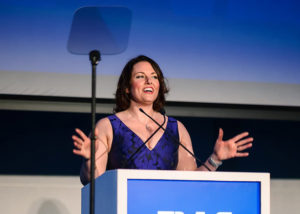
Jenni is a UK-based leadership and internal communications consultant, author of two best-selling books, and international speaker. She runs Redefining Communications, a consultancy working with organisations around the world to help them communicate better and close the gap between what leaders say and what employees experience.