
The CEO of an AI company has told his 200-plus employees he’d rather see the D+ version of their thinking than five polished pages of AI fluff, and that every customer email should be written by a human. Chuck likes the rough draft. He does not like the D+.
Jenni brings five stories this week, a first for the show, and they share a theme: the tools got faster and the talking got harder. Patrick Lencioni on overcommunicating clarity. Stephen Waddington’s mid-year report on the state of corporate communications, tested against the US. New Predictive Index data on how ready managers really are for tough conversations. And Priya Parker’s claim that Slack turbocharged workplace conflict, which prompts Jenni’s fair question: why Slack, when Yammer was first?
Jenni opens with a book, The Advantage by Patrick Lencioni, subtitled “why organizational health trumps everything else in business.” She has been recommending it to leaders as a better frame than employee engagement. From the chapter on overcommunicating clarity she reads four passages. The need for repetition comes from generic, rote corporate messaging, not cynical employees. Leaders confuse transferring information with people understanding it. Organizations fail at communication because they don’t achieve clarity and stick with it, not because they can’t build an intranet. And great organizations aren’t run like a democracy. Her question: whose job is it to make sure clarity exists at the top and cascades down?
Chuck’s answer is immediate: the CEO’s. Cascades always lose meaning, and that’s acceptable only if you know it. He coaches communicators that the moment they’re tired of a message is about when employees start to understand it, and that checking the box isn’t the same as landing it. Jenni adds that an event she attended last year put the old “hear it seven times” rule at 29.
Chuck asks whether “organizational health” even has a clear definition, and suggests treating it like an annual physical: which tests would you run? He also likes Lencioni’s point that employees wait to see how serious executives are, because they’ve seen executives come and go and will probably outlast this one.
Next is Business Insider on Spellbook’s AI writing memo. Scott Stevenson, cofounder and CEO of Spellbook, a Toronto company building AI tools for contracts, told his 200-plus employees that “AI nonsense” keeps reaching his desk looking more polished than the thinking behind it. His updated policy says AI works best in constrained tasks like coding and contract review, not unconstrained long-form writing. He would rather get a scrappy five-bullet proposal than five pages of polished fluff, and when in doubt, he wants the D+ version. Customer communications should always be hand-written, so Spellbook’s 5,000 customers feel human care. Jenni’s question: once people have tasted the speed, can they stop?
Chuck starts with the word itself. Typing an email isn’t handwriting. Then he offers his own mixed approach. He wrote an email to ICology members with incomplete profiles himself, and used Claude, connected to Mighty Networks, to add each person’s specific missing details. To him, that’s AI adding authenticity rather than removing it.
His bigger objection is the grade. Leaders told people to use AI for first drafts, and now they’re asking for D+ work, which no employee wants to hand their boss. He also questions how recognizable AI writing really is. The models learned from us, our language is converging with theirs, and there was plenty of slop before AI arrived.
Jenni’s diagnosis is different. The real problem is someone sending long documents without having done the thinking, so the conversation that follows isn’t real. That’s outsourced critical thinking, and it calls for a performance conversation, not a blanket rule about first drafts.
Jenni brings Stephen Waddington’s mid-year report for Wadds Inc., The state of corporate communications and public relations, published in July. It tests the four themes he set in January against six months of evidence from 35 editions of his newsletter and his doctoral research at Leeds Business School.
The points she walks through: intangible assets now make up 92% of S&P 500 market value, up from 17% in 1975, yet 45% of practitioners in a reader poll say they can’t link communications to financial outcomes at all. 43% of corporate affairs leaders now call themselves growth drivers, but only 36% have a defined strategy and 24% a formal AI strategy, and executive committee seats have slipped from 73% to 64%. Earned media accounts for around 84% of AI citations. Platforms have overtaken publishers as the main route to news, trust in news sits at 37%, and belief that companies should advocate on unrelated social issues has fallen from 90% to 55% in three years. And AI is absorbing the monitoring and drafting work junior practitioners have always used to build judgment.
Her question is whether it’s a UK-only picture. Chuck’s answer: it’s a mirror. But he pushes on the first theme. The market may have done the math on intangible assets, but companies aren’t acting on it when they lay off the knowledge those assets are made of. On the purpose retreat he doesn’t hedge: leaders are cowards, and silence is never the better strategy. The number he singles out is the report’s finding that female caregivers in PR average 91-hour weeks, almost two thirds of it unpaid caregiving. That isn’t sustainable, he says.
Human Resources Director interviews Anthony Belluccia, a behavioral scientist and I-O psychologist at The Predictive Index, who argues that AI is doing most of the doing. What’s left for managers is the hardest part: aligning, explaining change, giving feedback, building trust. PI’s 2026 AI and People Leadership Survey, of nearly 400 managers and more than 200 CEOs and business leaders, found 74% of leaders describe their managers as very confident handling tough conversations on their own. Only 20% of managers said they’d rather prepare for one without a framework, a coaching guide or input from HR, and 42% said they know what they want to say but struggle with how to say it.
Belluccia borrows from Harry Harlow’s 1950s experiments, in which infant monkeys clung to a soft cloth mother rather than the wire one that fed them. Organizations are building wire mothers with AI, he argues, but when change gets scary, people run to their managers.
Jenni’s question focuses on the 42%: if managers struggle with how to say it, how can anyone further down be expected to get it? Chuck is relaxed about that group, since admitting a conversation is tricky isn’t a failure. He worries more about the 20% who’d go in with no support at all, and asks managers which mother they are to their teams, the cloth or the wire. Jenni concedes the point: the 42% may well be getting training.
Chuck sent this one. In a clip from the New York Times’ The Interview, Priya Parker, author of The Art of Gathering, uses an image from her mentor Hal Saunders: negotiation used to be a chess match, and now it’s a game of squash with 15 balls and mirrors on every wall. She argues Slack turbocharged conflict because anyone can start a group and say anything without weighing its impact. Jenni’s question: why Slack, when Yammer was first?
Chuck, a Slack fan in withdrawal, says Slack gets blamed because we never want to take ownership. People who hate PowerPoint usually hate bad PowerPoints. He thinks Slack surfaced conflict rather than created it. Side conversations have always happened, from notes passed between desks to private chats during Teams calls. His reminder: private messages can all be surfaced by the company. Jenni still likes the squash image. From a recent personal situation, she has seen how quickly things escalate once digital communication is involved.
Chuck’s son is a high school senior, which means that next year Chuck will be paying two college tuitions at once. Any sponsors are welcome to his Venmo. Jenni’s freq-out is the run of travel ahead: London for a Unilever conference, Comms Reboot, then Porto. She writes packing lists for every trip just to get them out of her head. Chuck says he’s a big fan of lists, just not of making them, and shares the idea that the brain is great at dreaming and creating but a poor task manager.
What does the Spellbook CEO mean by a “D+ version”? Scott Stevenson wants employees to send a rough, unpolished version of their thinking, a scrappy five-bullet proposal rather than five pages of AI-polished fluff, so he can see the reasoning before it gets dressed up. His policy also says customer communications should always be hand-written.
Should companies ban AI for first drafts? Neither host thinks a ban fixes the real problem. Jenni argues that someone sending long documents they can’t discuss is outsourcing their critical thinking, which calls for a performance conversation. Chuck is happy to see rough drafts, but says no employee wants to be asked for D+ work after being told to use AI for first drafts.
How many times does a message need to be repeated? The old rule of thumb is seven. Jenni heard 29 at an event last year. Chuck’s practical test is that when communicators are tired of a message, employees are only just starting to understand it.
What is organizational health, and how is it different from employee engagement? It’s Patrick Lencioni’s frame in The Advantage: asking what a healthy organization needs, rather than how to engage employees. Jenni prefers it as a conversation with leaders. Chuck asks whether it has a clear definition and suggests treating it like an annual physical.
Are managers ready for tough conversations? Leaders think so more than managers do. In The Predictive Index’s 2026 survey, 74% of CEOs and business leaders said their managers are very confident handling tough conversations alone, but only 20% of managers would prepare for one without a framework, coaching guide or HR input, and 42% struggle with how to say what they mean.
Did Slack cause more workplace conflict? Priya Parker argues Slack turbocharged it, because anyone can start a group and say anything. Chuck thinks Slack surfaced conflict that was always there, and blaming the tool avoids ownership. Jenni agrees digital channels make conflict escalate faster.
Chuck: Welcome to Frequency. I’m Chuck Gose.
Jenni: And I’m Jenni Field. Frequency is your go-to for real talk about comms, culture, and employee experience, beyond the buzzwords and straight to what matters. And today, I have five stories, which I think might actually be a first, but we’re going to be talking about why organisational health trumps everything else, a summer report into the state of PR and communications, how AI is changing what leaders want to see, how Slack has impacted work culture, and the importance of communication when everything else is automated.
Chuck: Yeah, Jenni, I see your five, and now I know that’s our new standard going forward. So I am okay with it. I was thinking about this. I’m preparing not to be home for a bit, Jenni. I’ve been off the road for a few weeks. And it was funny, when I ended my last trip, my wife Kristen was like, you’re going to be home for like three weeks. And I was like, you can be excited about it. You can look forward to me being home for a little bit of time. But basically, I’m in Omaha for Brightside this week. I then come back and go to dad’s weekend at IU with my daughter. And then that Sunday, when I get back from that, I turn around and fly to London to come join you at the Unilever event. So it’s going to be basically three weeks of being on the road consistently, but not the whole time, kind of coming and going a little bit. So I’ve got to mentally prepare for this.
Jenni: Yeah, yeah. I mean, you’ve got to be packing and unpacking and laundry and, yeah, it’s a lot. It’s a lot.
Chuck: Thankfully there’s a little bit of a break between the different trips. But I’m really looking forward to staying at the Field estate when I’m over there in London. I don’t know if I get my own castle when I’m there. I’m just going to see what happens.
Jenni: Yes. You’re in the south wing when you’re coming to visit. So we’ve got you down there. You’ll be fine. All right, I’m going to kick us off today with the first story, which is actually a book. So I was listening to a book called The Advantage by Patrick Lencioni, for various reasons, which I’ll go into. I was listening to it, and then I thought, I need to buy this, because I’ve got too many notes I want to write down. And I talked about this on my senior internal comms round table call the other week, and I’ve also mentioned it on other round tables. The subheading of the book is “why organizational health trumps everything else in business”. And that’s why I was listening to it and reading it, because I wanted to explore more about what organisational health meant as a concept for leaders, instead of employee engagement, which is obviously a soapbox for me. So there’s a chapter in there called Overcommunicate Clarity, and there is loads in here. This was the chapter I was listening to thinking, I need to buy this because I need to highlight it. So I’ve picked just four quotes from it for us to talk about today, but it is genuinely a book I recommend. I’ve recommended it to several people, as I’ve said, and I think it’s really worth the read. So I’m going to share my four quotes, and then I’ve got a question.
Jenni: So, first quote: “The need for repetition is not a testament to cynicism on the part of employees. It is the result of the generic, almost spoof-like communication that takes place within so many organizations. It’s almost comical how rote these messages have become. And so it’s not surprising that employees give little credence to executive announcements, and instead wait to see how serious those executives are.” The second quote: “The problem is that leaders confuse the transfer of information to an audience with the audience’s ability to understand, internalize, and embrace the message that is being communicated. The only way for people to embrace the message is to hear it over a period of time, in a variety of different situations, and preferably from different people.” My third quote: “The reason most organizations fail to communicate to employees is not that they don’t know how to build an intranet site or write a blog or design a PowerPoint presentation, but that they don’t achieve clarity around key messages and stick with them. Employees don’t get consistent, authentic and relevant communication.” And my final quote is that “great organizations, unlike countries, are never run like a democracy.” I’m impressed I kept that to four. I obviously agree with so much of this, and so much more in the book. There is also a bit in this chapter about the danger of upward communication when clarity and consistency are missing. So whose job is it, is my question for you, Chuck, to ensure that there is clarity at the top, and that it is cascading down through each layer of leadership and management?
Chuck: It is the top. That’s their job. It is to ensure there’s clarity. If you have a president, if you have a CEO, that is their job. If clarity fails, that is on them. And even the fact that they talked about cascading, we know that it happens in organizations all the time. It has to happen in organizations. As long as we recognize that it’s not perfect, then it’s okay. But as soon as we expect, well, I told that person, and then that person can tell that person, and that person’s going to tell that person, we start to lose all the meaning entirely. But I think this is where I would love to see leaders take ownership and responsibility of it. If things are unclear, how do you then make them more clear? And I know there’s that old adage about people needing to hear, read, see a message, I think, seven times. I’m guessing it has to be more than that now, with the volume of messages and the volume of stuff out there.
Jenni: It is more than that now.
Chuck: And what I will caution and coach communicators on is, just when you’re tired of it is just about the time your employees start to understand and ask questions about it. Because sometimes we’re our own biggest killers of that. We think, we checked, we put it in all these places, so therefore they’ve gotten it. No, they are just now starting to get it. And just because you check the box doesn’t mean it’s done. So whether it’s repetition or redundancy, we have to lean into those things as positives. We can’t diminish the message because we are tired of it, because we are seeing it all the time. The leaders are seeing it all the time. Your employees absolutely are not.
Jenni: Yeah, and to come back to your point on the seven times, I was at an event last year, I think it was last year, I’ve lost track of all time, where they said it’s now 29, just to give some context of how much that’s changed.
Chuck: There, perfect. I believe it. I believe it.
Jenni: So, 100%. It’s a really good book. And I think if you get the chance to pick it up, it also talks more in the language of business leaders, which I think is just much more helpful than, in the world of internal comms, where we talk about “this is really important to drive engagement”. That’s not necessarily what you’re trying to achieve. What you’re trying to achieve is organisational health. And I think that’s just a conversation that’s worth leaning into a little bit.
Chuck: I’ve got a question for you about this, though. I’m curious. Do you think when someone says organizational health, is there a clear definition of what that means to a company and/or its leaders?
Jenni: No. It probably is in the book, at the beginning, and I was jumping to that chapter. I feel like as a concept, I would rather leaders looked at their organisational health than their employee engagement, because I think there’s lots of facets to that. If you want your organisation to be healthy, what are the things that you need to do to contribute to that? I think that’s a better conversation than, what do we need to do to engage our employees? I think we’re missing the mark a little bit there.
Chuck: Yeah, I wonder, if you think about it from the standpoint of health, if companies got an annual physical, what are you looking at? What are the blood tests you’re running? What’s the fitness you’re looking at? I think there’s a lot of opportunity there for organizations to reflect on truly what their health is. The other point, and then I’ll let you move along here, that I like is where they said that employees are waiting to see how serious executives are. I think executives come in like, because I’m in this position, I am therefore trusted, and they’re going to believe everything that I say. And I like his point that, no, these employees have been around the block. You’re not the first executive that’s come in here. They’re actually going to wait to see how long you’re sticking around. Because most likely they’re sticking around a lot longer than a lot of the people in the C-suite are.
Jenni: Yeah, and he talks in the chapter about things like Wankernomics, which we’ve talked about, and the Dilbert cartoons, which I’m sure you’re familiar with as well. They exist for a reason, because it is so comical in terms of where we’ve got to in some of the leadership stuff. So, really, really good book. The next story I want to bring is about the cofounder and CEO of Spellbook, which is an AI company, who said that AI nonsense routinely makes it to his desk. Whatever it is, he said, it can arrive looking far more polished than the thinking behind it. So he said he wants to see a rough version, or as he calls it, a D+ version of the work. He is trying to tackle the problem with his own guidelines, and he sent a memo to the company’s 200-plus employees updating the company’s AI policy and outlining how he wants them to use the technology. I’ll just say again, they’re an AI company. Here’s an excerpt from that policy, which he starts with: “We are an AI company and believe in the usefulness of AI. We think that today it works best in highly constrained work like coding or contract review. We do not believe that models are good at unconstrained long-form writing yet. Documents end up too long while saying too little, use repetitive language that decreases trust in your thinking, and sometimes contain ungrounded nonsense. While being able to create a polished long-form document with a prompt may feel powerful and professional, this impression is often only surface level. Good writing is concise and authentic. I would rather that you send a scrappy five bullet point proposal than five pages of polished fluff. Furthermore, AI writing has become increasingly recognizable. We want our customers to always feel our care when we communicate with them, and we don’t think that AI-generated writing accomplishes this.” He then goes on to share the new AI policy, which I won’t bring here. But my comment and question for you, Chuck, is that the core of this is the last point in his policy, which says customer communications should always be hand-written: “We want our 5,000 customers to feel authentic human care with every interaction.” But can people stop using AI for drafting content, to his point that it might feel powerful? Can they really stop now that they’ve started and had a taste of that speed and ease?
Chuck: I’m really curious about… okay, so this is a 2,000-person company, or no, a 200-person company. 200-plus. Let’s say 200 for easy math. They have 5,000 customers, and they want all customer communication to be hand-written. I assume he means hand-written like he doesn’t want AI used? Because if I’m typing an email, that is not handwritten.
Jenni: Yes, yeah, I’m assuming that the hands have been involved in typing.
Chuck: That’s an interesting rework of the use of the word handwritten, if we’re now thinking typing is now handwritten. I think we’re jumping a bit on that. I like it. I mean, yeah, everything should be there, but I’ll actually give an example of something that I did recently that was a mixture of these two, from a customer communication standpoint. So I noticed inside our ICology community that there were some people who had unfinished profiles. And so I was able to use Claude, hooked up to Mighty Networks, to figure out, here’s the list of people, and here are the areas of their bios or their profiles that are missing things. I wrote the email that I wanted to send to them, but then used AI to inject the data that was relevant to that person. So if you didn’t have an updated image, if you didn’t have the bio, if you didn’t have this. So not everybody got the same email that said, hey, go check your bio. It was only the people that had incomplete bios, and then what they had in there was personal to them. To me, that’s the mix of AI with his, quote unquote, hand-written content, which, I will push back, does add more authenticity to it. But I think, again, we told people to use AI for first drafts. Jenni, I think you’ve even said, yeah, use AI for the first draft. Now leaders are saying, no, don’t use AI for the first drafts. Come on, people, I want to see your D+ work. No leader has ever said, I want to see D+ work. No employee ever wants to say, I’m only going to show my leader D+ work. That is setting people up for failure.
Jenni: Yeah. So I think you feel about the hand-written thing how you feel about people saying that they read a book when they listened to a book, because I know that’s a really big issue for you.
Chuck: That’s one of my things too. You know that.
Jenni: Yeah, so I feel like the hand-written thing is in the same vein. It’s like, no, no, no, it’s not the same. It’s not the same. But I think there is something in this about the humanness of it. And I agree with you to an extent, around nobody wants to deliver rubbish work. I think the real issue here is, you’re sending me this really long stuff, but you haven’t done the work behind it. So when we have a conversation, that conversation isn’t real, because you can’t actually have a conversation about it, because you’ve not done the work. That’s a different problem, and that needs a different solution. And I think we’re probably trying to blanket that with “just don’t use AI for that”. That’s a different thing, in terms of you’re outsourcing your critical thinking. And I think that’s a performance management conversation, versus “don’t use AI for your first draft”.
Chuck: I do like when he said he wants to see a rough version. I do think that’s good. I think the D+ part, no one’s proud of that. I think you’d want people to be proud. So show what a rough version looks like. How much detail does he need versus not need, and something like that? And I will also push back on this whole “we think AI writing has become increasingly recognizable”. We think it has. But also, it learned from us, and then we’re learning from it, and it’s no different than languages sort of merging together. I think writing is also merging together. We’re using phrases that maybe weren’t used enough before, but now people are echoing them, no different than buzzwords or jargon. So I think we think it’s becoming recognizable because a lot of content is AI-written, but it’s also from us. So are we the problem? People like to point out all the AI slop that’s out there, as if there was zero slop before. As if everything before was A+ work, and now AI is actually bringing us down. No. Come on, people. Come on.
Jenni: Let’s be real, let’s be real. Right, I’m going to bring now a summer report from Wadds Inc. So Stephen Waddington set four predictions in January. He talked about communications as sensemaking and risk management, AI as a governance challenge, legacy media models collapsing, and capability as a self-inflicted constraint. And he’s created a summer report which checks all of those things against six months of data from 35 of his newsletters, plus his PhD research at Leeds Business School. Now, I spoke to Stephen before we brought this to the podcast, because he’d shared it recently on LinkedIn, but it says July on the report. So I was like, when did this come out? And it did come out in July, so it feels a bit late for us, because we like to do things that are current. But when I was reading it and looking at it, there were some bits in here that I thought were really worth bringing to the conversation. And again, I’ve used this with some of my clients as well. So I’m going to go through those different bits and pieces, and my question, which I’m going to say first, is about how this plays out in the US, because I feel like this is a bit more UK focused, and so I want to get your take on that.
Jenni: So the first thing in the report is, as he says, the market has done the maths. We talked about this before on a previous episode, the fact that intangible assets are now 92% of S&P 500 market value, and that’s up from 17% in 1975. So this is about reputation. Reputation alone is priced at something like £841 billion across the FTSE 350. We talked on a previous episode about what that means for communications and that intangible piece. But none of the studies around this talk about how communication really drives that reputation. So there’s a bit of a gap there in terms of what’s going on. And in the report, it says that 45% of practitioners in a reader poll said they can’t link communications to financial outcomes at all. I think that intangible assets number helps that. He talks about the fact that the mandate has outrun the maturity. So 43% of corporate affairs leaders now call themselves growth drivers. That’s more than double since 2024, but only 36% have a defined strategy, and just 24% have a formal AI strategy. Executive committee seats have slipped from 73% to 64%. So there’s a big gap here between ambition and readiness. He’s also bringing in that AI is still a governance problem. So adoption is tactical and bottom-up, held back by lack of governance rather than the tech itself. We talked about generative engine optimization last week. It’s in this report. In terms of GEO, the real finding worth discussing is that earned media drives roughly 84% of AI citations. Again, we touched on this last week, that shift: it’s not paid-for media, it’s earned media, which is different.
Jenni: He also talks about the media model being broken. So platforms have overtaken publishers as the main news source for the first time, 54% versus 51%. Trust in news is at its lowest level, at 37%, and creators now reach 46% of people with news, though 72% of creators say most pitches that they’re getting are completely irrelevant. He goes on to talk about the fact that there’s a bit of a purpose retreat. So belief that companies should advocate on unrelated social issues has dropped from 90% to 55% in three years. C-suite content has visibly shifted. And he also raises a question about whether silence is genuinely a better strategy, or just a convenient way to dodge something hard. Something we’ve talked about a lot here. Silence is a choice, I think we’ve said a few times. And then the sixth point is about the self-built capability crisis. He’s talking about the fact that AI is absorbing some of those more task-based things, so the monitoring, the drafting, but they are the tasks that junior practitioners have always done, and used to build their judgment over time. So that pipeline is starting to close, just as we’re now seeing the EU AI Act literacy requirement come in. We’ve talked about that as well. So there’s lots of things going on. He’s also talking a bit about the industry losing people it needs to fill the senior roles. So female caregivers, female practitioners, over-45s. Again, we’ve touched on some of that before. So there’s quite a lot in there. He also goes on to say what to watch out for in the second half of 2026. And we’ve obviously got a link to the report in the show notes, so it’s worth a read. But as I said up front, my question is, there’s a lot here, right? I’ve tried to condense it down as best as I can. And when I’ve talked about this with some of my clients and people that I coach in the UK, it’s very relevant. How does all of this stack up for you in terms of the US? Does it feel like, yeah, I can see this all playing out here? Or does it feel a little bit like that’s definitely a UK thing?
Chuck: Yeah, it’s a big generalization, but I do feel like the similarities are aligned. It’s a mirror, I would say. I don’t think anything here is really all that different. Just going through, I would say, though, on “the market has done the maths”: they’ve done the math, but they’re not paying attention to the math. So if intangible assets are up that much, and company profits are up that much, but we’re laying off so much of those assets, the intangible part, the knowledge that exists inside organizations… So they might have done the math, or they just don’t care about the math. AI is a governance problem because people aren’t taking the leadership on it, or they’re not bringing in the experts to help them build that. The purpose retreat? Yep, leaders are cowards. We’ve seen that, we’ve talked about that all the time on here. It’s much easier to not take a stand, which is taking a stand, than to take a stand. And so, no, silence is never a better strategy, in my opinion. It is the convenient way to dodge something hard, by just going with the flow of what everyone else is doing versus having a stance on it. So no, I think this is all pretty similar to what we’ve got here in the US.
Jenni: Okay, good, good. I think that’s helpful. I wasn’t quite sure from the report whether it was just UK-based. It felt a bit more UK focused, which is why I wanted to check. But I’m sure that Stephen will do this again, maybe at the end of the year, or he’ll do something next year, so I’ll make sure we bring it to the conversation. Because I think it’s a good broad thing for our listeners to have a look at, in terms of the impact that it has. The conversation I had about trust in news and how people are gathering information was with ten senior internal comms people the other day, because it’s important for us to understand and know that, and step a little bit outside of that internal space. So I think it’s a really great piece of work.
Chuck: I think a data point I want to call out, which I think is shocking, is in the last point around the self-built capability crisis: that female caregivers average 91-hour weeks. What is that, thirteen-hour days, seven days a week? That’s not sustainable. That’s not sustainable.
Jenni: No, there’s some really striking numbers in there. Right, the next article I’m bringing is about the fact that the work got automated, but talking about it didn’t. So this was a piece about artificial intelligence taking over the doing. So the spreadsheets, the scheduling, the drafts, all that stuff we’ve talked about. But what’s left, according to Anthony Belluccia, who is a behavioral scientist and industrial-organizational psychologist at The Predictive Index in Boston, is the hardest part of the job: talking to people. So he says AI is doing most of the doing. “Instead of creating the dashboards, instead of doing the coding ourselves, which could be outsourced, what’s left is the talking. So the aligning, the explaining change, the giving feedback, building trust, that’s what’s left. AI can give you guidance for that, but it can’t actually do that talking.” He goes on to say that the companies that come out ahead with AI are the ones whose managers know how to have good conversations with their teams. Now, the article talks about The Predictive Index’s 2026 AI and People Leadership Survey, which was conducted in July this year with 400 managers and more than 200 CEOs and business leaders. It found leaders and managers don’t agree on how ready managers are for some of these tough conversations. 74% of CEOs and business leaders describe their managers as very confident handling tough conversations on their own. However, only 20% of managers said they’d rather prepare for one without a framework, a coaching guide or input from HR. Nearly half, 42%, said they know what they want to say but struggle with how to say it. Belluccia also used an analogy from psychologist Harry Harlow’s well-known 1950s experiment to make his point. He says that Harlow gave infant monkeys two surrogate mothers, one made of wire that dispensed milk, and one made of soft cloth that offered no nourishment at all. The monkeys spent nearly all of their time clinging to the cloth mother, and ran to it for comfort whenever they were frightened, even though the wire mother was the one keeping them fed. Belluccia says every organization is building a wire mother right now with AI. We’re building these beautiful wire mothers that dispense the milk, the answers to everything, the reports, the drafts. But whenever change gets scary at work, nobody’s running to that AI dashboard. We’re all running to our managers. So my question for you, Chuck, is, I want to come back to that stat about nearly half, 42%, who say they know what they want to say but struggle with how to say it. These are senior leaders in organisations. If they don’t know, how can they expect anyone further down the organisation to really get it?
Chuck: Yeah, I don’t have a problem with that 42% number, because it’s okay admitting, hey, these could be some pretty tricky conversations, what is the right way to handle them? I see this as not being arrogant. I’m more worried about the 20% of managers who say they’d rather prepare without a framework or a coaching guide or input from HR. Those are the ones that I’m a little bit worried about, because who knows where this stuff is coming from? So I think the misalignment might be that 74% said their managers are very confident handling it on their own, but half said they know what they want to say and struggle with how to say it. I think this just shows how tricky it is to be a manager, and also how few managers are prepared, coached, have resources to go to. If you’re a manager, can you go to your manager about how to talk to your people? Are you accessible for those things? Are you the cloth monkey as a manager, or are you the wire monkey? So think about that as a manager: which one are you to your people? I think so often we’re told to just feed people, not comfort people. And I think these people saying, I know what I want to say, but I struggle with how to say it, they’re trying to comfort. That’s sort of my interpretation of it.
Jenni: Yeah. Yeah, and I think you’re right to call out that 42%, actually, because you’re right that it’s fine to say that you struggle. I think my interpretation was that they’ve gone, yeah, I know what I want to say, but I don’t know how to say it, and I’m not doing anything about that. That’s kind of how I interpreted it, but that isn’t fair, because they might be having training or doing something, and we just don’t know that. So that’s fair. That’s fair.
Chuck: And there’s a reason these are tough conversations. These are things that need to be handled with care. Confidence is okay, but I think admitting, hey, I want to get this right, is a lot better than someone saying, no, no, no, I’ve got it, I’m good.
Jenni: Yeah, yeah, I agree, I agree. Now, my last one today, which is my bonus fifth one, which is your fault, because you sent it to me, because you spend time on TikTok and I don’t. This is about how Slack has turbocharged workplace conflict. The title of this is “How has Slack changed workplace culture?” Priya Parker, who is a conflict resolution facilitator, breaks down this shift in an interview with David Marchese on a show which is called The Interview. It’s a clip from the full interview, which is shared on TikTok. She talks about how negotiation and diplomacy used to be a chess match, and now it’s a game of squash with 15 balls all at the same time and mirrors on all the walls. This is an analogy from her mentor, Hal Saunders, who she talks about. But she is specifically talking about how Slack has turbocharged conflict in the workplace, because anyone can create a group, anyone can say anything without consideration of the impact on others, and it’s deeply confusing for people. She does go on to talk about things like return to office, but I’m interested in the specific call-out of Slack here. So my question is, why is Slack to blame for this, when I feel like there are so many other platforms? And surely, I’m going to show my age now, Yammer was first. So why is it that Slack is the one that’s being called out here? Maybe I should be asking Priya that question.
Chuck: Yeah, I’m kind of developing the itch again, Jenni, because I went through a bit of Slack withdrawal a couple of years ago and I miss it. I was a big Slack fan, instead of Teams or some of these other ones. Here’s why Slack is to blame: because we never want to take ownership of it. We just always want to blame the technology side of it. So whether it’s Yammer, whether it’s Slack, it’s no different than people saying, I hate PowerPoint. No, you hate really bad PowerPoints. First off, it’s not PowerPoint’s fault that people create really bad content. You can create really cool things in PowerPoint or whatever. It’s never the technology, it’s how we’re using it. But it’s easy just to blame. It’s Slack’s fault. It’s because of the way Slack is. That’s just how it is. I want to call out, though, Priya is the author of The Art of Gathering, which is a really great book. I believe she has a new book out called The Art of the Fight, which is maybe where some of this stuff is coming from. I would argue, I can’t say that Slack turbocharged conflict. I think it surfaced it. I think it’s a little bit easier to see now, versus these conversations which might have been happening before. Maybe now it’s a little more direct. But also, we’ve all been on a Zoom call or a Teams call and seen people off on the side having side conversations, and then you learn, wait, my company can see all that stuff, I’d better go to iMessage or WhatsApp for this. This has always been happening. It’s just that technology has allowed it to happen. Maybe this is aging myself a bit, but back in school, people would pass notes between desks. That’s what Slack is now. You’re passing notes. So it’s always happened. It’s now risen to the surface. But again, a reminder to everyone: all private messages, Teams, Slack, whatever you might think is between you and a person, that can all be surfaced by the company.
Jenni: Yeah. I did like the analogy about the chess match versus a game of squash with 15 balls all at the same time and mirrors everywhere, because I do think that some of these platforms do feel like that. And I think negotiation and diplomacy, which used to be much more measured and considered, like a chess match, has become very, very fast. Even if I think about a personal situation for me recently, where things escalated really quickly when they probably didn’t need to, just because there was digital communication involved in that. And I do think that is just worth considering, in terms of how quickly things can escalate, certainly when you’re talking about workplace conflict. Right, that is the end of my five articles this week. What are you freq-ing out about?
Chuck: I’ve been going through some college conversations with our son, who is a senior, or grade 12 to those not in the US. So he will be off to college next year. And I remember at this one point there was going to be an overlap, which any parent with multiple children in college will feel: for one year, I’m going to have two kids in college. That is going to be some financial pain for anyone paying or contributing to their kids’ college tuition. That is going to be a rough year. So if you see me freq-ing out next year, it is because I will be paying for two college tuitions at the same time. So if anybody would like to sponsor Frequency, please contribute to this. I’ll give you my Venmo.
Jenni: Okay, well, we’ll bear that in mind. I love that. I love that. So my freq-out is probably similar to your starting one, about just how busy you are and what’s going on. I think about the amount of travel and stuff that’s going on. Obviously yours kind of finishes when you come to the UK, but that, for me, is the start of quite a hectic few weeks, where I’m in London, obviously, for the Unilever conference. And then I’ve got Comms Reboot in London, and then I’m off to Porto for an event over there. So I feel like, probably like you… I’ve got lists. You probably don’t have lists. I’ve got lists of all the things I need to pack for all those trips already, because I have to get it out of my head and somewhere. It doesn’t mean I’m going to pack all those things, but it just needs to be out of my head. But I’m almost at the point where I can’t think beyond this next one. So if someone was to talk about something beyond that, I can’t do that yet. I’m like, one thing at a time now. We’re having to really bring it close. So that’s my freq-out this week.
Chuck: A little bit offended, Jenni, that you don’t think I’m a fan of lists.
Jenni: Do you have lists?
Chuck: I’m a big fan of lists. My problem is I don’t often create them, but I am a fan of them. And I heard this great, I don’t know what we’d call it, analogy, explanation, whatever, where it talked about how the brain is great at dreaming and building and creating. It is not a great task management system. So, to your point, if you have things to do, putting them on paper actually does relieve the brain. You’re not having to remember, because it’s not good at that. So give it the things that it is good at.
Jenni: Yeah, yeah, I’m a big fan of lists and using them. But let us know if you’re listening and you’re a fan of lists too, because I feel like we’re all out there. Well, thank you for joining us this week. We hope that the articles and insights will help you think about how to improve comms, leadership and culture in your organisation. If you don’t yet subscribe or follow, please do, as it helps make sure you won’t miss an episode. All the links to all the articles we’ve mentioned today are in the show notes, so you can grab those to read if you want to explore anything further. We’ll be back with you on Monday with more news, insights and opinions on everything comms and leadership in workplaces today. Appreciate you being here with us.
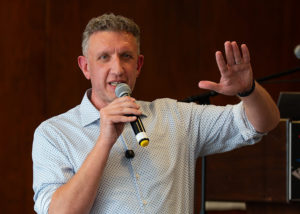
Chuck is a US-based internal communications strategist and the founder of ICology – a community and resource hub for IC professionals. He brings a practitioner lens to every conversation. Chuck is a recognised voice in the industry, a regular speaker and event host, and one of the most connected people in the North American IC world.

Jenni is a UK-based leadership and internal communications consultant, author of two best-selling books, and international speaker. She runs Redefining Communications, a consultancy working with organisations around the world to help them communicate better and close the gap between what leaders say and what employees experience.