
An eleven-year Ford employee with crashing blood sugar bought a $1.95 cookie from a vending machine at 3am, the card reader glitched, and days later he was fired for stealing. Chuck is angry enough about it that he moves his freq-out to the top of the show. From there the episode takes on four stories about the assumptions organizations keep running on: Rob Briner’s evidence that generational differences at work are a zombie idea, Harvard Business School research showing more than 80% of women managers spend at least 30% of the week on caring tasks, HiBob data on Britain’s always-on culture where 55% check messages within minutes of waking, and a Wall Street Journal piece on Gen Z rewriting what business casual means.
Chuck breaks format and puts his freq-out first because he cannot wait to talk about it. A diabetic worker at a Ford plant in Kentucky, on shift at 3am with his blood sugar dropping, went to buy a chocolate chip cookie from a vending machine. His card was declined at the first machine, he swiped at a second, got no failure message and left. Days later he was fired for theft, despite offering a bank statement showing the $1.95 had been deducted. Ford eventually offered him his job back with back pay; he had already found better paid work and declined. Chuck’s disappointment is layered — plant leadership for making the call, the union for allowing it, and above all Aramark, who reported him while knowing both that the charge had gone through and that their kiosks were faulty. Jenni’s response is that she can and cannot believe it at once, which she thinks is the worse of the two, and the detail that stays with her is that after eleven years he was not allowed to say goodbye to anyone or collect his things. Her diagnosis is the one that recurs all episode: policy replacing humanness, the same reflex that gives someone exactly five days of bereavement leave when they clearly need more. Chuck’s version is blunter — where was the common sense, and even if he had stolen it, is a cookie worth a job?
Jenni has been arguing against generational theory since she wrote her diploma paper on it, and a LinkedIn post from Rob Briner finally gives her the academic backing she wanted. Briner’s roundup finds no real evidence for strong generational differences in attitudes, needs, beliefs or communication styles, and quite a lot that contradicts them — claims that are, in his words, not only scientifically inaccurate but a cause of organizations wasting time and resources on activities that are very likely utterly pointless. The phrase Jenni seizes on is “zombie idea”: something endlessly repeated even though it is highly unlikely to be correct, surviving because we like it and it makes instant sense, which Briner argues should be treated as a warning sign of cognitive bias rather than confirmation. Chuck’s explanation for the persistence is that it is simple, easy and uncontroversial, so nobody has any incentive to interrogate it — and he admits to enjoying the Gen X label himself. He remembers Mamie Pierce running internal comms at the Cosmopolitan a decade ago and segmenting employees by psychology rather than birth year, because risk takers and conservatives exist in every cohort. Jenni’s sharper point is that what varies is environment: a toddler swipes an iPad because they have watched adults do it, and generational theory collapses the moment you apply it across cultures where beliefs and needs differ far more than birth decades do.
The Business Insider piece on the hidden cost of empathy opens with Aimee Young, a London-based HR executive who came back from maternity leave in March 2020 and found her emotional energy going to her colleagues’ anxieties rather than her newborn, functioning as an unofficial in-house therapist while nobody checked whether she was okay. The reporter interviewed around a dozen managers and the pattern repeats: a Boston consultant who quit because the therapy she was expected to provide became untenable, an LA healthcare manager kept awake not by her job but by the pressure to make her team feel happy and seen. Harvard Business School researchers surveyed more than 350 professional women managers and found over 80% spend at least 30% of the working week on caring tasks — a full day as quasi-therapists — with 59% saying that load has grown over the past year. Their framing is that women are becoming the emotional infrastructure of modern work, and the article traces the gender skew to benevolent sexism: women expected to be warm and penalized when they are not, at exactly the moment figures like Mark Zuckerberg, John Stankey, Jamie Dimon and Marc Andreessen are publicly championing toughness and masculine energy, leaving women doing more emotional labor in a culture that respects it less. Chuck’s honest answer is that he does not think there is a fix — shunning employees who need guidance is worse — and that the problem is not the empathy but the moment it becomes the job. Jenni’s addition is the one that lands: the risk is not only burden but harm, because a manager who is not a trained therapist or coach, running on lived experience alone, can do serious damage. She did a three-day mental health first aid course in 2021 and thinks something like it should now be close to mandatory for managers, alongside explicit training in where the boundary sits.
New research from HiBob on Britain’s workforce transformation gap, a sample of around 2,000 UK workers collected in May 2026, puts numbers to a feeling: 42% are considering quitting because of stress, 58% say pressure has increased compared with two years ago, and 49% feel expected to always be available. Half check work messages on holiday, 55% within minutes of waking, 42% mid-conversation and 29% on dates, while 47% feel mentally exhausted at the end of the working day and stress damages sleep for 41%. The chain runs upward — 72% of managers say they are expected to maintain consistently high performance, and they pass that pressure down. Chuck splits the accountability between employer and employee, remembering a manager who sent Slack messages at 11pm Pacific that arrived at 2am his time, carrying an urgency nobody had actually asked for. His marker for when it all changed is domestic: at General Motors his father could only be reached on the house phone and only for something critical, until the day he brought home a pager and Chuck’s mother lost her mind, because reachable had quietly become expected to respond. Jenni’s challenge is the one the research cannot answer — ask Chuck’s father whether he was mentally exhausted at the end of a day in 1985 and he would say yes, so how much of this is technology and how much is simply work? She takes her laptop on holiday deliberately, including to Japan this year where it never left the bag, because having the option removed would make her more anxious, not less. Both land on the same practical move: have the conversation about expectations out loud, the way the two of them did when Frequency started and one of them first went away.
The closing story is LinkedIn News on Gen Z redefining business casual, built on Wall Street Journal reporting that new hires are abandoning the dress-to-impress ritual for oversized silhouettes and athleisure, with one professional summing it up as “my outfit doesn’t reflect how professional I am, my work does.” Jenni brings a field report from London — two women heading to corporate jobs with laptops, one in what looked like pajamas and slippers, one in lace shorts, both showing rather more than she thought the office warranted — and asks her stylist Lisa for a considered view. Lisa’s answer is that while work and results are the true measure of professionalism, what people wear is a form of communication before a word is said; dressing appropriately does not mean a suit or an outdated dress code, it means understanding the environment, the audience and the message, and clothes will not do the job but they can open the door before the work speaks. Chuck’s position is that he does not care what anyone wears, followed immediately by the qualifier that other people will. His evidence is Stephanie Jenkins, who confirmed him in his first job out of college in 1998 with the note that he needed to learn how to use an iron — the work was good, the wrinkled khakis were not. He also watched dress codes at General Motors slide from jeans on Friday to jeans every day unless someone from Detroit was in the building, which he offers as proof of how easily the slope gets slippery. Jenni does care, on Lisa’s grounds, though she notes she is talking about irons while wearing an unironed linen shirt in a British heatwave.
What happened with the Ford employee fired over a cookie? A diabetic employee at a Ford plant in Kentucky, on shift at 3am with his blood sugar dropping, tried to buy a $1.95 chocolate chip cookie from an Aramark vending machine. The first swipe failed, the second gave no error, and he left with the cookie. Days later he was fired for theft after eleven years, despite having a bank statement showing the charge went through. Ford later offered him his job back with back pay and he declined, having found better paid work.
Is there evidence for generational differences at work? Rob Briner’s roundup of the academic research says no — there is little support for strong generational differences in attitudes, needs, beliefs or communication styles, and quite a lot of evidence contradicting them. Jenni reached the same conclusion in her diploma paper years ago. What varies is environment and life stage, not birth year.
What is a zombie idea? Briner’s term for an idea that persists even though the evidence suggests it is not correct. Generational differences is his example: endlessly repeated because it is simple and instantly makes sense. His argument is that the instant appeal should be treated as a warning sign of cognitive bias and a reason to question the idea harder, not accept it.
What did the Harvard Business School research say about women managers and emotional labor? Researchers surveyed more than 350 professional women managers and found over 80% spend at least 30% of their working week on caring tasks, effectively a full day a week acting as quasi-therapists, with 59% reporting that load has grown over the past year. Their framing is that women are becoming the emotional infrastructure of modern work.
How should managers set boundaries around emotional support at work? Chuck does not think there is a clean fix, because turning employees away is worse than absorbing some of it. Jenni’s answer is training and an explicit boundary: managers are not trained therapists or coaches, and lived experience alone is not enough to give advice safely. She points to mental health first aid training as something that should now be close to standard.
What did HiBob find about always-on culture in the UK? In a May 2026 survey of around 2,000 UK workers, 42% were considering quitting because of stress, 58% said pressure had increased over two years, and 49% felt expected to always be available. Half check work messages on holiday, 55% within minutes of waking, and 47% feel mentally exhausted at the end of the day. Managers report the same pressure from above, with 72% expected to sustain high performance.
What is the argument about Gen Z and business casual? Wall Street Journal reporting says new hires are skipping the dress-to-impress ritual in favor of comfort and individuality. Chuck does not care what people wear but warns that others do, which is why his career advice is to learn how to use an iron. Jenni’s stylist frames clothing as communication that happens before a word is spoken — not a case for suits, but for reading the environment and the audience.
Chuck: Welcome to Frequency, I’m Chuck Gose.
Jenni: And I’m Jenni Field. Frequency is your go-to for real talk about comms, culture and employee experience, beyond the buzzwords and straight to what matters. And this week we’re talking about the hidden cost of empathy at work, what business casual really means in the office, the truth behind the generational divide, and why the always-on culture is a leadership issue.
Chuck: Yeah, Jenni, getting into this week, I had full plans to talk to you about the World Cup, because we had some side chats about it. I know you’re not some super European football mega fan, but I still want us to talk about it because it’s going on out there. But I’m going to do a bit of a Frequency faux pas or reversal or whatever you want to call it, where I am going to do my freq-out first, because I cannot wait to not talk about this item. When I heard about it and I verified it, it completely blew me away, and I’m disappointed in it.
Chuck: So let’s set the scene here. You’re an employee working at a factory, it’s 3am. You’re diabetic and your blood sugar drops. So you go to the cafeteria to purchase a cookie. And then a few days later — you’re an eleven-year employee — you’re fired because they claim you stole a cookie from the cafeteria. This is a true story that happened at a Ford plant in Kentucky, where this employee, they’re paying these Aramark vending machines, and he swiped his debit card. Was it $2? It was a dollar ninety-five for a chocolate chip cookie. Swiped it, it failed, went to the next vending machine, swiped it, it didn’t say that it failed, so he left. He needed the cookie. His blood sugar was dropping.
Chuck: Two, three days later, he was fired for stealing, even though he wanted to show them his bank statement that said $1.95 was deducted. It’s like, I don’t know who to be more disappointed in. Am I disappointed in Ford, the factory and the plant leadership for firing this employee? The union, who I cannot believe let him get fired over this, when you think about all the other crazy things that go on inside companies? I think I’m actually most disappointed in Aramark, who were the narcs in this whole thing. They’re the ones who ratted him out, even though they know the charge went through and they know they’ve got these faulty kiosks where employees are trying to purchase these things. So now a couple of months later, this is all coming out. Ford had offered him his job back with back pay, and he basically — he didn’t give them the middle finger, but I’m going to say he gave them the middle finger. It’s like, no, I already have another job that pays more. And I think, man, what is going on in companies where that decision gets made? Eleven-year employee, $2 cookie, that decision gets made. The employee’s like, wait, no, that’s not what happened. They’re like, nope, sorry. We’ve talked about how the relationship between employer and employee is changing. I just can’t believe this happened.
Jenni: I can and I can’t, and I think that’s probably worse. When I was reading the story, I was like, oh my god, this is awful. But also I’m not surprised, and I’m not surprised partly because of the manufacturing side of it, where I do feel like there is a lot of black and white approach in some of those environments, and it feels like it’s just that. It’s just so unjust. And I love the fact that he went, no, you’re alright, I’m good, thanks. I’m not coming back, but I’ve made my point. And I just felt really bad when in the article he was like, I’ve been there for eleven years, I didn’t get to say goodbye to anybody, I wasn’t even allowed to go get my stuff. It just makes my heart hurt a little bit. I just thought it was horrible.
Chuck: Over a two dollar cookie that he actually paid for. Here’s the thing. Let’s say you’re Ford, Aramark tells you this, and you’re like, we’d better figure out what’s going on. Let’s say an eleven-year employee says, hey, my blood sugar was crashing, I had to just grab a cookie, here’s the two dollars. Even then you don’t fire somebody over that. It absolutely blew me away. I was freq-ing out about it. I know communicators at Ford, I know a lot of the team there at Ford, so this isn’t some demonization of Ford. It’s more the plant leadership, the union leadership at that factory, and then the rat in this whole thing, Aramark. Come on.
Jenni: Yeah. And it’s also when policy replaces humanness. We talked about this way back last year — we may have talked about it on the podcast or offline — but I was telling you about a friend of mine who was off work due to a very significant family bereavement, and it was like, mm, the policy is you get five days. And it was like, mm, I think they might need a bit more. And it was, no, that’s the policy. And it’s the same thing here. It’s like, nope, that’s the policy. Where’s the grey? Where’s the human bit in there? It blows my mind.
Chuck: Where’s just the common sense? Where’s the common sense in this? A dollar ninety-five. Even if he had said, yeah, I stole the cookie, is that worth firing somebody over? Which he didn’t even do, and they still fired him. It’s too much. It’s too much.
Jenni: I’m with you. Right, things that are too much takes me nicely on to our first story, which is about generations at work. Now, this is a conversation I’ve had for a long time. This is a link to an article by Rob Briner, who I’ve talked about before, and I really love his content on LinkedIn. The quote he’s responding to says: the age range in modern workforces spans Gen Alphas just starting out in their careers through to Gen Z, millennials, Gen X, and baby boomers still working beyond retirement age. Each has a distinctive way of learning and working.
Jenni: We hear this all the time in communications. It’s a theory that I have disputed for years, because when I did my diploma paper on generations at work years ago and the impact of different communication styles, I rapidly came to the conclusion that there is nothing to support this belief. And I’ve just sort of sat on that for a while, because I don’t really have anything else to back that up other than my little diploma paper that I did years ago. It’s a topic my clients talk about. It was a topic I was asked about on a podcast the other day. It’s on conference agendas for internal communicators. Gallagher have had it on their conference agenda twice in the last year.
Jenni: But Rob Briner is here to put a stop to this misinformation, and I’m here to help share that message far and wide. So in his recent LinkedIn post, which links to several other posts and to lots of academic research papers, he is clear that there is not really any evidence that supports these assertions and quite a lot that contradicts them. He says such claims about this generational divide are not only scientifically inaccurate, but they cause organisations who believe them to waste time and other resources on practices and activities which are very likely utterly pointless. He also introduces me to the concept of zombie ideas, which I love — ideas that persist though the evidence suggests they are not correct. Generational differences is a great example of an idea that is endlessly repeated, even though, as the articles demonstrate, it’s highly unlikely to be correct and probably even plain wrong.
Jenni: It says, in general, such ideas persist because we like them and they make sense instantly. Of course different generations have different ideas. Of course that happens. When this happens around any idea, we should regard that as a warning sign of cognitive bias. Rather than accept it, we should question it even more. It says the best available scientific evidence shows fairly clearly that there are not strong generational differences in attitudes, needs, beliefs or communication styles. I’m thrilled with this. Chuck, where did this start, why is it something that nearly every comms person believes, and how can we change their minds?
Chuck: First off, I don’t know if Rob Briner has trademarked or copyrighted zombie ideas, or if it’s his, but I’m going to use it — and Rob, I’ll give you credit for this. Because one, I love everything zombie related, period. So if we can throw ideas in and bring this into work, I’m a hundred percent on board with it, because there are a lot of zombie ideas out there. I think we could go through episodes, Jenni, and identify some of these zombie ideas. But here’s why: because it’s simple, and it’s easy, and it’s not controversial. And so people are then going to talk about it and just accept it because of those things.
Chuck: I remember years ago there was an internal communicator, she now has her own agency, named Mamie Pierce, who ran internal comms at the Cosmopolitan — this is before they joined MGM Resorts — and she talked about this very thing. So we’re going now ten years ago. They didn’t look at employees based on generations, but almost like a psychoanalysis. Because you’re going to have risk taking in people that are in the boomer generation and people that are Gen Alpha, risk takers or people who are conservative. We just like to think this way because it’s easy to put people in buckets based on you were born here and born there. Now, I do think there are some things to think about when people look at — I’ve seen the TikTok videos where they hand someone, we’ll say even Gen Z, a rotary dial phone and they’re like, use it. There’s different unique access to technologies that every generation has, but the psychology of it is still the same. It’s just your stage in life is going to be different. And I think that’s where we’ve gotten lazy with this approach.
Jenni: Yeah. And in the conversation I had on this podcast, we were talking about the fact that it’s the environment that is different. It’s not you that’s different. So your point about the I don’t know how to use this item — or give a toddler an iPad and they can just swipe through, because that’s the environment they’ve grown up in. They’ve watched adults swipe through, they’ve watched all of that happen. So you instinctively know how to use those things because of the environment that you’re in, not necessarily linked to your needs, beliefs, communication styles or anything like that. It’s purely environmental, which is why you can’t have generational theory across different cultures around the world, because there are so many different elements to your beliefs, needs and attitudes in different parts of the world that are so much more important to consider than generations.
Jenni: And I just think there’s not been enough critical thinking about this. When I was reflecting on how much it’s on agenda items, how much it’s on the minds of some of my clients who are senior internal communication professionals, saying, my CEO really wants us to look at the different generations — and I’m like, I don’t think we need to. I don’t think we do. And now I’ve got all the links to all the resources to say, here you go, and this is why. I’m really pleased that there’s so much data out there now to back this up, because I think we have to get rid of this. And I’m hoping that by talking about it here, we will help people question this and start to stop it. And maybe it’ll just change the world in about two months because everyone’s going to listen to Frequency and go, oh my god, I didn’t know this. And we’ve done our bit.
Chuck: And you know what, I was thinking about this too — people also like the labels, and present company included. I talk a lot of times about Gen X. I’m just glad you mentioned Gen X, Jenni, because so often it gets forgotten, because everybody talks about boomers and millennials. And we’ve kind of owned that persona. So it becomes this lazy persona, these lazy buckets, these lazy labels that we know don’t really mean anything, but we’re trying to apply meaning because everybody’s just sort of accepted it.
Jenni: Yeah, it has to stop. So I’m really excited about that coming forward. The next article is from Business Insider and it’s about the hidden cost of empathy at work. It’s a piece that opens with a story about Aimee Young, a London-based HR executive who returned from maternity leave in March 2020, just as the pandemic was hitting. And rather than directing her emotional energy toward her newborn, she found herself absorbing her colleagues’ anxieties, she was debriefing conflicts, she was effectively becoming this sort of unofficial in-house therapist. And, as she puts it, nobody was checking in on whether she was okay.
Jenni: Now, the journalist for this article interviewed about a dozen managers for the piece, and the pattern repeats. A Boston consultant who quit because the therapy she felt expected to provide became untenable. An LA healthcare manager who says it’s not her actual job that’s keeping her up at night, it’s the pressure to make her team feel happy and seen in this stressful world. The article then brings along some research from Harvard Business School, where researchers surveyed over 350 professional women managers and found more than 80% spend at least 30% of their work week on caring tasks. So effectively a full day a week as quasi-therapists. 59% said that load had grown over the past year, against a 2026 backdrop of economic anxiety, job insecurity and AI disruption. The researchers frame this starkly: women are becoming the emotional infrastructure of modern work.
Jenni: The article traces why this falls on women specifically, pointing to benevolent sexism, where women are expected to be warm and caring and penalised when they’re not. It also captures the tension with a very different leadership trend. Figures like Mark Zuckerberg, John Stankey, Jamie Dimon and Marc Andreessen have publicly championed toughness, hustle and masculine energy over introspection, which managers like Young say leaves women doing more emotional labour in a culture that respects it less. Chuck, the article suggests a few fixes, but what would your advice be to leaders experiencing this, and how do we navigate this challenge of being a therapist and a boss?
Chuck: Man, there are about eight different angles to this, because it’s challenging. I’m looking at it from my perspective when I managed people, and employees would come to you for guidance, or just simply to vent, or for support. That’s a good thing. I think the danger is what you’ve just described, where it becomes the thing. It starts to overtake, especially when this burden is carried — we’re going to assume this is carried more by women than men. Not to say that some male managers don’t and some female managers don’t, but it does seem like this burden hits women more. The fact that typically women do come across more as warm or introspective — those are great qualities. Everybody should be more caring and warm to everyone. Those are great things.
Chuck: And I think it comes down to the things we see where women are described as bossy but men are described as something else. When it’s the exact same trait, that’s the benevolent sexism that’s built into it. But let’s try to take the gender out of it. I think this is now one of the many challenges of being a manager. I don’t think there is a fix to this. If you shun your employees, that’s not going to help them. So how do you manage that? I don’t know that there’s a fix to that. I just think some people are probably better at balancing that and being that resource. I just spoke to a former employee of mine last week. He was going through some challenges. He hasn’t worked for me for years, but he still sought that out. So people need that guidance. They need that help. And whether it’s in this mentorship role or just this pure empathetic manager role, that’s a good thing. The challenge is when that becomes a burden on someone simply doing their job. Because when it comes down to it, this is just a job for everyone.
Jenni: And I think it also tracks to the change of work since the pandemic in terms of the wellbeing, the mental health, all the conversations that we now have, burnout, all of it, right? There is now this more emotional side to work that I don’t think people are equipped to deal with. We know that managers aren’t really that equipped to deal with even communicating with their team, let alone communicating around anything to do with mental health, therapist-esque stuff. I just don’t think that training and skill level is there.
Jenni: The report does talk about the fact that women are picking up this burden, and I am aware of that, I do see that. I speak to some of the clients that I coach who are female leaders and they’ll talk about their team and their mental health and their concern for all of those things. And that’s hard, because then you’re worrying about whether someone’s okay or not, and there’s a line there, I think — that boundary that needs to come in, which is you can’t control that. You’ve got to find that boundary for you as a manager, in terms of how much you can influence and support. And I think there’s possibly some new training need for managers around how do you support your team without treading into therapy, because you’re not a trained therapist, you could do so much more damage. You’re not a trained therapist, not a trained coach, not any of those things.
Jenni: I’ve had this conversation with friends of mine who are in those positions, and I’m going, I’m not sure you should be doing this, because I’m not sure you’re actually trained in coaching. And it’s, no, but I’ve got lived experience. That’s not enough. You could seriously harm people. So there’s a risk here for me — not just the risk of the burden on managers and the time it’s taking, but the longer term impact it could have if people aren’t trained in how to create those boundaries and how to manage effectively in a more emotional world of work. Maybe that’s the thing.
Chuck: And I think we’ve all experienced those managers whose natural state is more approachable. Their conversations allow you to go into that and maybe be more vulnerable to them, which isn’t a negative thing. The negativity comes when this becomes a burden on them. And to your point, which I had not thought about, the long term risk of this — both on an individual, but also, what if yes, they are empathetic and they’re warm and caring, but the advice they give isn’t the right one? That’s where the proper training and coaching needs to come in. That’s what I’m saying: I don’t think there is a fix to this. It’s just more to be aware that this is what’s being dumped on some of your managers, male or female, but tends to be more female at this point.
Jenni: Yeah. The advice I would give — I did a mental health first aid course back in 2021, I think it was like a three-day online course. I’ve got the textbook somewhere in this cupboard, because it’s about that thick, it’s massive. And we went through various different elements of mental health crisis and first aid and what to do. That’s really helped me with some of my friends and extended family in what to do. But I feel like almost that should be mandatory now for people, because there is that need to understand what to do so that you’re not doing the wrong thing, and making sure that you are giving the right advice. And I think that’s something that if I was a manager in an organisation today, then I would be going and asking for that kind of support, because I just think it’s going to get more and more prevalent, and I think you can equip yourself with some of those skills to help with some of that.
Jenni: Right, the next piece, linked to those challenges at work, is some new research from HiBob, who we haven’t spoken about for a while, and they’ve looked at the impact of the always-on culture. It’s placing significant pressure on workers across the UK, with nearly half, so 42%, considering quitting roles due to stress. The report suggests that the trend is becoming the norm for many employees, with workplace intensity building significantly in recent years. This research was with a sample of around 2,000 UK workers and was collected in May 2026.
Jenni: The data says more than half, so 58% of respondents, revealed pressure in their role has increased compared to two years ago, while 49% feel expected to always be available. 36% now work late on a regular basis, with 50% checking work messages while on holiday, and 55% revealing that they check work messages within just minutes of waking up. 42% admitted checking work messages in the middle of conversations, while 29% do so on dates. Managerial expectations are driving this, according to the survey, with nearly half highlighting a demand to always be available from their manager. And on top of this, senior leadership are playing a role for managers as well, so it looks like it starts from the top: 72% of managers said that they’re now expected to maintain consistent high performance levels, and many are absorbing that pressure. HiBob noted that this spillover between work and personal life and the negative impacts on employee wellbeing is what the crux of this is, really. So nearly half feel mentally exhausted at the end of their working day, while stress negatively affects sleep among about 41%.
Jenni: So looking at this research, there are some staggering figures in here. But all of this leads to the top of the organisation. And in our last few conversations and episodes, we’ve talked about this — all roots lead to the top. So what can HR and leaders do to stop this sense of what I would say is false urgency and always-on culture that has become the norm? And is this the same in the US? Because this is a UK study.
Chuck: I would be shocked if it was any different in the US compared to the UK. We’ve all lived this. And this is where I’m going to put blame on both sides of the employer and employee relationship. Both are accountable in this. I’ve worked for managers in the past that would send Slacks at 11pm Pacific time, which would be 2am my time. So when you wake up, you feel this urgency, like I need to respond. But they didn’t necessarily set that urgency, the message sort of did, because you know they were up late. So do you need to respond right away?
Chuck: I think it’s having this sort of understanding of how we communicate. What is the expectation? I’ve sent you some videos from this guy on Instagram or TikTok, George Stern, who reads emails and Slack messages and Teams messages that employees are sending him, with this dialogue back and forth with managers where managers are expecting people to call in on some calls during maternity leave, paternity leave, while they’re on vacation, even cancelling vacation mid-trip because something happened. So it’s always around who’s putting the pressure on them to then violate that relationship. But also, employees, we’ve opened that up. We’ve got apps and Slack and Teams and all those things on our personal devices. We can now log in from home, even if you’re not a remote employee. So we’ve opened that channel up.
Chuck: And I might have told this story in the past, but I remember when my dad worked for General Motors, he was a material traffic manager. So if something went down at the factory they had to call our house phone, and that was a pretty big violation, to call the house phone if something went down at work. There had to be something critical to get hold of someone, but it happened occasionally. Then it was the day my dad brought home a pager. My mom lost her mind, lost her mind, because all of a sudden they could just go straight to him with a little message. He’d get the little beep, look at it, and then have to call in. That was the start. That was the start. Where now employees are reachable, therefore we’re allowed to be reached. And then expectations get set. And then we see this is the manager lifestyle. Managers are getting that same pressure. So then they’re applying the same pressure down the chain.
Jenni: It’s interesting, as you were just talking there I was having a giggle about pagers. I remember getting a page, I think that was really cool back in the day. But also I wonder — I know that some of this data says that 47% feel mentally exhausted at the end of their working day. Part of me wonders whether that’s different if you were to ask your dad, years ago, before he had the pager, before any of that. If you were to say to him, are you mentally exhausted, he would be like, yeah, I’m exhausted, because I’ve been at work, I’ve been using my brain, so I’m quite tired. So some of this, I do wonder how much of it is linked to the technology and the always-on, and how much of it is linked to this is just work, this is what work has always been. But we don’t have a comparison of this data against people 20 years ago, 30 years ago, 40 years ago, to know what that felt like.
Chuck: He was wiped, wiped at the end of the day. Well, people didn’t care to ask. No one thought to ask or cared to ask.
Jenni: No. So we just have this as, oh my god, this is awful. But actually, is it? Or is this just how we feel at the end of work if we’ve got a job that’s quite intense, or we’re senior? Because I do think there is that. I also agree with you that there is a responsibility of the employee. I have this conversation all the time with my assistant. You don’t need to do that, you don’t need to. But there’s a part of her that’s like, I just want to check in that stuff’s okay, and I want to do this — and that’s her. I can only say it so many times, and she’s got to embrace that. I think that’s the part of it: you’ve got to find that balance of expectations, but also knowing what you’re like.
Jenni: I remember taking my laptop on holiday, and I nearly always take my laptop with me when I travel on holiday. When I was in Japan earlier this year, I took it mainly because I had a very long flight and I knew I could get some stuff done that I needed to do. It did not come out of the bag when I was on holiday, it sat in the bag. But if anything had happened, I know I can help. Nothing happened. There was never a call. But to take that option away would make me feel more uncomfortable. And I think there are elements of that that we have to consider about our own comfort and how we feel about things. And I’m okay with that. If one of these questions was, do you take your work devices away with you on holiday, and it was like 78% of people have their work devices with them, we’d all be outraged, right? But that’s my choice, and I’m cool with that. And I did it when I worked in-house. So I think there’s that critical thinking to apply to a little bit of this.
Chuck: Yeah, I’m thinking back, if my dad could have logged in and looked to see, here’s where parts are coming in, would he have slept better at night? Would he have had peace of mind? Because I think about that sometimes. Like you, I’m sure a lot of people take a laptop with them on trips. Sometimes it doesn’t feel like work, which I think is also the danger. Where we think, we’re just dropping in here, we’re just checking this, we’re just responding to this. That’s where we’ve allowed that to ease in. Like, no, that’s not good for you to do that, or to feel the need to, or the responsibility to. It’s setting up those boundaries. And I think we have all done a horrible job of establishing those.
Jenni: But you just made me think about when we first started Frequency, and I remember saying to you — you were going away, I think it was the first time either one of us had a holiday — and we had the conversation of, do you want me to still send you stuff? Because we’re pinging each other articles all the time, right? Whether we’re awake, asleep, it doesn’t matter. And you were like, no, no, it’s cool, it’s fine. And I feel the same. But at least we had that conversation to check in, and I think that’s what you have to do. I can hold them all back for two weeks and I can just shove them all at you, or would you like them? It’s having the conversation, right? I think that’s the most important thing.
Jenni: Right, the final piece is on business casual. So there was a story going around on LinkedIn about Gen Z redefining business casual. It says as Gen Z enters the workforce, their preference for comfort and individuality in their fashion choices is reshaping traditional workplace dress codes. The Wall Street Journal reports on this. So many new hires are ditching the dress-to-impress ritual for their first day of work, opting for oversized silhouettes and athleisure over suits and heels. Post-pandemic work environments and the surge of social media has also blurred expectations and resulted in more flexible policies. One of the professionals said, my outfit doesn’t reflect how professional I am, my work does.
Jenni: Right, before I come to the question on this, I have things to say. So I saw two women when I was in London the other week, one of whom looked like she was in pyjamas, and the other one was in some lace shorts. On both of them, you could see the bottom of their bum cheeks. Both of them were going to a corporate job, they had laptops and stuff like that. The woman that looked like she was in pyjamas was in the coffee shop and she had UGG slippers on as well. I decided it was a charity day for some sort of pyjama thing. But I was baffled as to why she was going to work in that.
Jenni: For regular listeners, you might remember last week we had a conversation about my stylist. So I messaged my stylist Lisa and sent her this business casual piece and said, what’s your take on this as a stylist, in terms of this business casual thing? She said: here are my thoughts. Whilst I absolutely believe that your work, skills and results are the true measure of your professionalism, first impressions still matter. What we wear is a form of communication before we’ve said a word. Taking time to look considered and appropriate for your role doesn’t mean wearing a suit or conforming to outdated dress codes. It means understanding your environment, your audience, and the message you want to send. Comfort and individuality can absolutely sit alongside professionalism. The key is dressing for the role you have, while also reflecting the role you aspire to. A polished appearance builds confidence, reinforces credibility, and shows respect for both yourself and those you’re meeting. Your clothes don’t do your job for you, but they can help open the door before your work speaks for itself. And I quite liked that. Obviously I’d agree with her, she’s my stylist, I’ve worked with her for years. So what’s your thought on this?
Chuck: I do not care. I do not care. And also, you do not have to care, but people will. And this is where, when you see these LinkedIn posts where people are like, what’s the best business advice someone has ever given you? My answer is always: learn how to use an iron. Because that was the advice given to me at my very first job by Stephanie Jenkins. This was back in 1998, first job out of college. I rolled in, probably like flannel button-down then and wrinkled khakis, and did great work. And it was a review period, like a 90-day review period, and after that, are you hired full time or not? So thankfully I got hired full time. And she’s like, yes, but you’ve got to learn how to use an iron. It does matter. The quality of your work matters, but also how you present yourself matters.
Chuck: So you do not have to care. I don’t care how people dress, but other people will. And that’s kind of what your stylist said — what are you trying to project out there? This is a bit like when you see people on the internet in these memes showing up dressed to work as Batman, where it’s like, don’t dress for the job you have, but the job you want. There’s a bit of that. So if you want to be seen as — think about the org chart above, and you have to dress at that level, because that’s how people will perceive you. But to my first thing: I do not care.
Jenni: I love that so much. I do care, and I care for the reasons that Lisa outlined — the environment. The two women that I saw the other day, I was just genuinely shocked. It’s really hot in the UK. I feel very seen now, because I haven’t ironed my linen shirt while talking to you about needing an iron. It’s so hot here, so I understand that it is hard to navigate that heat. But seeing your butt cheek is not something that I think is appropriate. I think it’s the environment that you have to consider in the workplace, and what’s appropriate. And I’m sure this is going to cause some discussion.
Chuck: I think there’s a bit of an evolution here. And I’m going to go back to when I worked for General Motors. I wouldn’t say it was a policy, it was just sort of a known behavior that on Fridays you could wear jeans, but the other days of the week you weren’t meant to. Then it turned into, well, people sort of wore jeans other days. It very quickly devolved into you basically wore jeans all the time, unless someone from Detroit was there, unless someone higher up was there. So it’s very easy to see this. It’s a slippery slope that everyone can fall into. I obviously didn’t see these two women. Maybe it was something going on at work, maybe because it’s so bloody hot there, whatever. I don’t know. But again, I’m not losing any sleep over it.
Jenni: Good. So you don’t have a freq-out today, because you did your freq-out at the beginning.
Chuck: No, I’m going to go back to it. Dollar ninety-five cookie. Dollar ninety-five cookie. That is my freq-out. Shame on you, Aramark. Shame on you, Ford factory leadership. Shame on you, union leadership. Okay, I’m done.
Jenni: You’re done. So my freq-out sort of links to the beginning of your opening today, which is just to recognise that the World Cup’s on. Because I had a huge freq-out this week. And like you said, I’m not a big football fan, but I will watch the World Cup. Wimbledon’s also on at the moment, so there’s a lot of sport in our house. And I was furious at the red card U-turn for the USA. I messaged you about it and I was like, I’m going to have to talk about this. And not because of the individuals involved, but I think in line with my work it’s sort of —
Chuck: You can include the individuals involved. That’s fine.
Jenni: But for me it’s the credibility, it’s the integrity, it’s the leadership, it’s all of those things that we talk about about work. And then you see this, like I’m just going to ring up my mate and go, that’s not really okay, you know, what do you think? Hmm, that’s not really okay, I’ll just change it. Like, what? And because I’m such a systems and process person, I’m like, there are rules, there were rules, and the rules were followed. And I hate it when people try and get round rules by using their power and influence. It just made me boil with rage. And I’m really glad that as we’re recording now they’re out. I’m thrilled at that, because my thought was the team won’t play him. The team will do the right thing and they won’t play him. Nope, played him. But Belgium beat them, so I feel better about that.
Chuck: Surely you didn’t think that FIFA was an upstanding organization to begin with. I mean, come on, they have a bit of a pretty decent track record of corruption. I’m embarrassed by it. It’s embarrassing. And I think karma played out. The ball don’t lie played out in this. And I think it actually disrupted the team, because all of a sudden what was a really feel-good moment for the US men’s national team became a very embarrassing one. And I will fully blame our president for jumping in on this, because before, he wasn’t anywhere near the World Cup and everybody was loving it and embracing it. And the moment he jumps in, everything sours. So lesson learned, everyone.
Jenni: Yeah, absolutely. So yeah, I was furious, so I wanted to have a freq-out about that. But I’ll finish on a positive freq-out, and it’s my birthday next week, so I’m very excited about having some time off work and celebrating with friends and family and lots of food and drink, because that’s how we celebrate things, isn’t it? What’s your phrase? Everything in — not abundance, that’s not your word.
Chuck: Elaborate and unnecessary.
Jenni: It’s going to be an elaborate and unnecessary week for me and I can’t wait for it. So that’s it this week. Thank you for joining us. We hope the articles and insights will help you think about how to improve comms, leadership and culture in your organisation. And if you don’t yet subscribe or follow, please do, as it helps make sure you won’t miss an episode. All the links to all the articles we’ve mentioned today are in the show notes. You can grab those to read if you want to explore anything further. We’ll be back with you on Monday with more news, insights and opinions about everything comms and leadership in workplaces today. Thank you for being here with us.
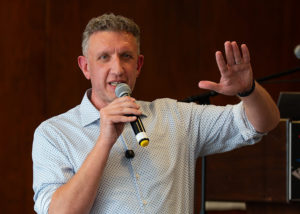
Chuck is a US-based internal communications strategist and the founder of ICology – a community and resource hub for IC professionals. He brings a practitioner lens to every conversation. Chuck is a recognised voice in the industry, a regular speaker and event host, and one of the most connected people in the North American IC world.
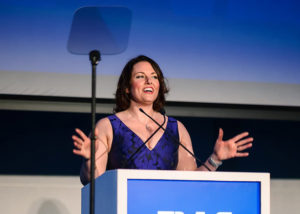
Jenni is a UK-based leadership and internal communications consultant, author of two best-selling books, and international speaker. She runs Redefining Communications, a consultancy working with organisations around the world to help them communicate better and close the gap between what leaders say and what employees experience.