
Gallup has global employee engagement at 20%, the lowest since 2020, and a $10 trillion productivity bill to go with it — but the number Jenni and Chuck actually stop on is the one underneath it: managers used to be more engaged than the people they lead, and that premium has now gone. Around it sit three stories about time. Keir Starmer resigns and the BBC’s coverage names communication as the failure, which sends both hosts to the question of whether any leader now lasts long enough to be believed. A New York Times Instagram post says remote work explains a third of the deterioration in American mental health, Adam Grant says hybrid is healthier than full-time office, and both are right about different things. And Jenni brings Dorie Clark’s The Long Game, which argues that most of the work happens in a phase where nothing appears to be working. Chuck also opens the ledger on Meta quietly switching off the keystroke tracking they covered in episode 56.
Jenni opens on the resignation of UK prime minister Keir Starmer, and specifically on the line in the BBC’s coverage that his opponents claimed he lacked the communication skills to get Labour’s message across, and that in an age when authenticity and emotion dominate politics he could come across as stiff and wooden. Her question is whether that skill can be taught — she believes it can, and would call the thing being asked for credibility rather than authenticity. Chuck agrees it is teachable, with a caveat delivered flat: most Americans would describe British people as stiff and wooden anyway, so it is hardly a distinguishing charge. What interests him more is the churn. Four prime ministers in five years, five once the Labour leadership contest is settled, against the five US presidents he has been alive to vote for — and his translation is a company cycling through four CEOs in the same period, and how little progress any of them could make. Jenni’s version of the same point is football: a manager who is not performing is simply removed, which is what UK politics has become, and what worries her is a party replacing the head of government with no general election and no public say. Chuck’s real question is whether swapping a leader out quickly is a strength or the absence of patience, because he sees the opposite failure inside organizations — plenty of CEOs would be described as stiff and wooden and stay for years while everybody gets on with it. His reference point for what good sounds like is Barack Obama, back in public view for his presidential library opening in Chicago, and the reminder that nobody was ever a perfect president or a perfect CEO but you cannot miss a genuinely great communicator. Jenni’s close threads it into the rest of the episode: judging a leader in months rather than years is short-term thinking wearing a political costume.
Gallup’s State of the Global Workplace has global employee engagement falling to 20% during 2025, the lowest level recorded since 2020, at an estimated cost of $10 trillion in lost productivity, with leadership quality and management capability named as the major drivers. Jenni’s framing is that engagement has stopped being a people issue running alongside business performance and is turning into a leading indicator of organizational resilience — while also saying plainly that she thinks it is the wrong measure of organizational health, peak having been just 23% in 2022. The stat she puts to Chuck is the manager one: engagement among managers has dropped nine points since 2022, with the largest single-year fall between 2024 and 2025, from 27% to 22%. The engagement premium managers used to enjoy is gone; they are now only as engaged as the people they lead. Chuck’s first move is to ask what Gallup thinks the number should be, because nobody ever says, and his objection to the $10 trillion is that framing the shortfall as lost productivity bills employees for what is an organizational failure — the honest version would ask what engaging people would gain. He expects managers to fall below their own teams if the trend holds, and his evidence is a conversation at a client a fortnight earlier where leaders described asking managers to do more with less: his correction was that they are being asked to do more with more, since delayering hands the work of the removed tier to whoever is left. Jenni turns the ladder-down logic upward instead — if engagement cascades from the top, who is engaging the people at the top, and how much of their own recognition, value and purpose are they expected to supply themselves? Both hosts end on the measurement itself, with Chuck noting that no company he has worked with reports 20%; internally the figure is always 70, 80, 90, which makes the global number and the internal number two different conversations wearing the same word. Jenni’s verdict is that a measure stuck between 20% and 25% for years is telling you it is the wrong measure, and she has a Forbes piece coming on it rather than a soapbox moment here.
The third story starts with a New York Times Opinion post on Instagram headed “we ran the numbers and remote work is bad for us”, whose authors describe the advantages they have personally used — morning sickness, a sick six-year-old — alongside days when they never went outside or spoke face to face with anyone. Surveys of more than half a million Americans across fifteen years, published in Science, put remote work behind roughly a third of the deterioration in American mental health over that period. Adam Grant’s comment calls the post misleading: it may hold for fully remote work, but hybrid is healthier than full-time office attendance, a conclusion he draws from 108 cited studies, with part-week home workers happier and not isolated. Jenni’s position is that both are right and that is exactly the problem — the post says remote, the correction is about hybrid, and the two get poured into the same pot for no good reason. Chuck’s first admission is that he has genuinely tried to become an Adam Grant fan and cannot get there, then makes the more useful distinction: remote work and remote employees are different things, and some work has always been remote, like a salesperson covering another city who signed up for exactly that. His challenge to the headline is arithmetic — if remote work explains a third of the decline, two thirds is something else, and mental, physical and financial health have all fallen over the same fifteen years. What he thinks is actually being measured is how much of people’s social life used to run through work: his father’s employer, General Motors, ran a golf league, a softball league and monthly picnics at a park the company owned, and his father’s work friends were at his graduation party. Jenni attributes part of that loss to the engagement industry itself, which made every picnic justify itself as a driver of a metric instead of being allowed to be a nice thing that let people connect. Her practical close is the one for communicators: this is emotive, the data is now plentiful and specific, and anyone communicating internally about ways of working has to be precise about which arrangement they mean or end up in a very tricky situation.
Jenni’s last item is a book, The Long Game by Dorie Clark, which she finished after hearing Clark speak at Chris Ducker’s Long Haul Leader Summit, and which she brings in because the leadership teams she works with react to the next three to six months and rarely look past it. Three quotes carry the segment: that most of life is spent in the deception phase, where others question your competence and you question it yourself after years without results, and playing the long game means being patient enough to wade through the self-doubt; that obstacles are inevitable and the only choice is whether to climb them, dig under them, smash them or go around; and that long-term thinking requires sacrifice, at times of dignity and pride, with powerful rewards for those willing to endure the discomfort and humiliation. Chuck’s answer starts with Frequency itself — an idea he had long before he approached Jenni, now planned out to 2027 and 2028 — and the argument that discipline comes from having somewhere to move toward. He connects the discomfort line to the list of phrases he has kept since reading Jon Acuff’s Soundtracks, adds a definition of therapy his wife Kristen sent him (becoming so aware of your insecurities that nobody can use them against you), and lands on the point that people abandon things far too quickly when the reward is not immediate: a LinkedIn video that underperformed does not tell you anything about what a year of them builds. Jenni’s addition is the one that turns the book into a workplace argument. Perseverance requires a view of where you are going, and she is not convinced internal comms teams, HR teams or leadership teams have one — without a named end point, an obstacle is just an obstacle rather than a cost on the way somewhere, which is precisely what makes resilience so much harder for the people being asked to show it. She also flags the caution buried in the dignity quote, which is that hearing it while calling yourself the department of no is very different from hearing it with real power behind you.
What is global employee engagement in 2026? Gallup’s State of the Global Workplace 2026 report puts global employee engagement at 20% for 2025, the lowest level recorded since 2020, down from a peak of 23% in 2022. Gallup estimates the decline is costing the global economy around $10 trillion in lost productivity.
Why is manager engagement falling faster than employee engagement? Gallup finds manager engagement down nine points since 2022, with the largest single-year fall between 2024 and 2025, from 27% to 22%. Managers used to enjoy an engagement premium over the people they lead and no longer do. Chuck’s explanation is delayering: when management tiers are removed, the work lands on the managers who remain, so they are being asked to do more with more, not more with less.
Is employee engagement the right measure of organizational health? Jenni argues it is not, and the episode makes the case in two parts. Nobody has ever said what the number should be, so a shortfall gets framed as lost productivity rather than an organizational failure. And a global figure that has sat between 20% and 25% for years while internal company scores routinely report 70, 80 or 90 is measuring something other than what organizations think it is.
Is remote work bad for your mental health? The Science study behind the New York Times post surveyed more than half a million Americans over fifteen years and attributes roughly a third of the deterioration in mental health to remote work. The crucial qualifier is that this is fully remote work. Chuck’s counter is that two thirds of the decline is something else, and that physical and financial health have fallen over the same period too.
What is the difference between remote work and hybrid work? Remote means working away from a workplace as the default; hybrid means splitting the week between home and an office. The research treats them differently — Adam Grant’s reading of 108 studies is that part-week hybrid workers are happier and not isolated, and healthier than full-time office attendance. Both hosts agree the words are used interchangeably in internal communication and should not be.
What is the deception phase in Dorie Clark’s The Long Game? It is the long stretch where effort produces no visible results, other people question your approach or competence, and you start questioning it yourself. Clark’s argument is that most of life is spent there and that playing the long game means being patient enough to wade through the self-doubt. Jenni’s addition is that you can only endure it if you know what you are heading toward.
Chuck: Welcome to Frequency. I’m Chuck Gose.
Jenni: And I’m Jenni Field. Frequency is your go-to for real talk about comms, culture and employee experience. Beyond the buzzwords and straight to what matters. And this week we’re talking about long-term thinking in a short-term world, the difference between remote and hybrid work, the resignation of the UK Prime Minister, and some interesting stats from Gallup. But I want to mention quickly that a few weeks ago, it was episode 56, we talked about Meta’s Model Capability Initiative, where they were tracking employee keystrokes, mouse clicks and internal messages across hundreds of different sites and apps, and we discussed the fact that that’s just not okay. Anyway, there are reports this week that have come out from The Verge that say they’ve now stopped doing that at Meta, so they’ve stopped tracking employees. So we wanted to let you know that at last, hooray, they’ve turned that off. Some good news for us this week.
Chuck: Maybe they were listening to us. I’m not quite sure. Let’s hope. Did we apply some pressure? I don’t know. I would like to think so. Jenni, I noticed you’re doing this podcast from a different background, which we talked about before, and it’s because you have access to air conditioning in this crazy heat wave that I think basically all of Europe is under right now.
Jenni: Yes, we are. So I have been fortunate enough to come and join my husband at work today, who has an office not too far away. So I’m enjoying air conditioning, because I decided that being at home would be ridiculous, because it is about thirty-six degrees, I think, outside. I’m a little chilly, if I’m honest, in the air conditioning, but it’s a good problem to have. It is stifling. In fact, I just saw on the news that France has recorded its hottest day and night ever in the last twenty-four hours. So yeah, it’s very, very warm over here.
Chuck: Well, as we approach July fourth here in the States, just be thankful that we did declare independence a couple of centuries ago, where we do enjoy air conditioning on a regular basis. We don’t have a few things up on many countries now, but I would say air conditioning — or aircon, as you like to say — is certainly one of them.
Jenni: Yeah, you’re winning at that in your houses. It’s just not standard here.
Chuck: But I have been seeing stories about how are people able to work if you’re not in an air conditioned office. And even seeing where you talked about France, where people have drowned because they’re jumping into rivers. It’s scary. I know we make light of how hot it is, but there is a lot of danger to it. I’m doing the quick math in my head — I think that’s in the nineties Fahrenheit, or upper nineties Fahrenheit, perhaps.
Jenni: Yeah, I would think so. And you can sort of make light of it, but it is really hard. It’s hard for elderly people, it’s hard for kids. All the schools are closing, and of course there’s no notice for that. The schools just decide, you know, tomorrow we’re going to close early. I saw a post from Shan Chateau on LinkedIn who was like, I got this notification at four o’clock today that my school is closing at twelve o’clock tomorrow, and at the same time the train company are reducing their service and my son gets the train to school, so now — and I work full time. So it just makes it really chaotic for people, because we’re just not built for it.
Chuck: It is. But there again, Mother Nature is undefeated, wins every single time. On to more of a work related topic, though — I did come up, I saw a brand new buzzword for us to add to our list, Jenni. This is doomjobbing. So this is taken off of doomscrolling, but now it’s basically this process of people just scrolling through seeing jobs, whether they’re applying or not, and just, am I going to get it or not — which is really just a statement on the current job market that we have all done to ourselves.
Jenni: I find it interesting that they’ve created a word for that, because doomscrolling for me would encompass all things. Whereas if it’s now doomjobbing, if you’re just looking at jobs — if I’m just looking at sort of recipes and people cooking, am I doomcooking? What are we going to start creating? Very specific needs.
Chuck: It’s very common. It’s like what we do here in the US, that because of Watergate, everything becomes something-gate, like Deflategate. So now I think it’s just doom-activity if you’re just caught up in the cycle of it. So anyway, let’s get on to your content here.
Jenni: So I’m going to kick us off, because I can’t come to the podcast today without talking about the news in the UK this week that Keir Starmer, who’s our Prime Minister, has resigned. He is the leader of the Labour Party here, just for some context for those of you across the pond. There’s a lot of talk about what happens next. I’ll link to an article in the BBC, and it talks about what’s going to happen next, the leadership contest for the Labour Party that’s going to happen. But what I wanted to talk about today was that this article specifically calls out leadership and communication. There’s a quote in it where it says his opponents claimed he lacked the communication skills to get Labour’s message across. In an age when authenticity and emotion dominate politics, he could come across as stiff and wooden. So my question, Chuck, is how important communication is for leaders, and the need for authenticity, or credibility. Getting the main message across, that vision, is so important for leaders, and I genuinely do believe this can be taught. But do you agree?
Chuck: I agree it can be taught. I would caution, though — I think most Americans would describe British people as stiff and wooden just in general. I don’t think that would be unique amongst your prime minister. I think the interesting thing for me is to think about, and I heard this on a podcast and I wanted to look it up to confirm it, that you’ve had four prime ministers in the last five years. I’m going to compare that to having four different CEOs in five years at a company. And how much progress can you really make if every year-plus you’re recycling through? I know that’s just the politics and the nature of how — even though we’re both democracies in some form or another, the way people are elected is very different there versus here in the US. But when I think about it, so you will have five when the new one comes in. You’ll have had five in five years. We’ve only had five US presidents since I’ve been able to vote. I think that math is pretty close. And I would love it if our current president resigned. I would cherish that moment. It just doesn’t happen the same way. And I wonder about the politics nature of that and how it applies then in companies, and the patience that people have or don’t have. It’s just interesting to me to think about that turnover.
Chuck: I agree with you. We’ve all seen and heard and felt what great communicators are. So think about just recently, Barack Obama’s presidential library opened up in Chicago, and seeing him come back to the front of things and listening to him talk — it’s like, what a great communicator he was. There’s no perfect president ever in history, there’s no perfect CEO ever. But you can’t not acknowledge that Barack Obama was a great communicator, able to articulate ideas. And at least there, if it’s not working, you can swap somebody out pretty quickly, whether that’s right or wrong. Whereas here in the US, that’s a much different process entirely.
Jenni: Yeah. And somebody likened the swapping to sort of football, or soccer, where if the manager isn’t performing you just get rid of them. And that’s sort of what our politics have become. It’s like, you’re not doing a good enough job, right, out you go, regardless of election. And I think that’s what’s going to be the issue in the UK — is there just going to be someone that replaces him as the leader of that party, and we don’t get a say in who that is?
Chuck: And you’ve had some that have just lasted like a few months.
Jenni: Yes, we have. It’s been smashing over here.
Chuck: But there again, I wonder what does that lead to? Is it a good thing to be able to replace that leader when things aren’t going well? Or is it not having the patience to see something through? That’s where I think you see that sometimes in companies.
Jenni: Yeah. And I think you link back to CEOs in terms of — if this was happening, if you had a CEO who, and I can think of probably several CEOs that people would describe as stiff and wooden, not just those in England, thank you, but in other parts of the world. And how often they just sort of stick around and everyone just gets on with it. Whereas there’s something different in politics. But I think there has to be this emotion, there has to be this authenticity, this credibility that’s coming through from leaders in order to make it work. Because otherwise what we’re creating, certainly over here, seems to be this culture of, you’re not doing a good enough job, out you go, so quickly, without that patience and that time to really think about it. Which is where I think I’ll come on to talking a bit later about this sort of long-term thinking in a short-term world. This feels like probably quite a good example of that short-term piece as well.
Jenni: Right, moving us on to Gallup. So they have newly released the State of the Global Workforce 2026 report, which reveals that global employee engagement has dropped to 20% during 2025, which is the lowest level recorded since 2020. Gallup estimates the decline is costing the global economy around $10 trillion in lost productivity. The report points to leadership quality and management capability as major drivers of engagement outcomes, reinforcing a trend seen across so many studies we’ve talked about this year. For organisations that are focused on growth and transformation, the message is significant. Engagement is no longer a people issue sitting alongside business performance. It’s increasingly becoming a leading indicator of organisational resilience, productivity and long-term success.
Jenni: Now, Chuck, I’ve got a long-winded question for you today. Peak employee engagement was in 2022 at 23%, and I still think that’s the wrong measure for organizational health. But there is one stat in the report that I wanted to ask you about, and that is that since 2022, Gallup finds manager engagement has dropped by nine points. According to the 2026 report, the largest year-over-year drop in manager engagement occurred between 2024 and 2025, when it declined by five points, from 27% to 22%. In short, managers used to enjoy an engagement premium at work, and they are increasingly only as engaged as those they lead. Now, this suggests that leaders’ engagement is the most important if it ladders down. So what needs to happen here? If the top engagement is the most important because it ladders down, what does that mean for organisational culture and internal comms and HR teams?
Chuck: Yeah, I want to know if Gallup is saying — if the highest point was 23% for employees and now we’ve dropped to 20, what does Gallup think engagement should be? If we’re saying that it’s costing $10 trillion in lost productivity, how many people should be engaged? Because what if this is just engagement? What if this is just the way things are? And you should be looking at how do we engage more to reclaim or gain productivity, instead of looking at it from a lost standpoint. Again, that’s putting it on the employees, as if somehow they are the ones costing this, instead of it being more of an organizational challenge.
Chuck: I do think the point around the managers is well put. I would sort of expect that sometime, if we keep this trend going, managers would actually drop below rank and file employees. Because I was at a company a couple of weeks ago and they’re like, we’re asking managers to do more with less. And I pushed back and said, I think you’re asking them to do more with more. They have more responsibility, more headaches, more challenges, and are still being asked to deliver on productivity, on efficiency, on whatever those KPIs are for an organization. So I think it just shows this relationship between employees and employers has evolved over time. And whatever this engagement number is isn’t really changing all that much. I think we’re seeing whatever it is is impacting managers on a greater scale, but we’re also seeing organizations completely eliminating layers of managers at companies, which means more is being dumped on the ones that are still in place. So I don’t know what Gallup is trying to prove here, other than kind of saying, hey guys, it’s really bad out there, and it’s going to be really bad, and hey, by the way, it’s really bad for your managers too. I don’t really know what we’re supposed to do with it.
Jenni: I know. And I’ve got a bigger — I could do a whole episode on my theory about employee engagement, but instead I’ve written an article for Forbes, which hopefully will be out soon. But I think you’re right in terms of what’s the number we’re really aiming for. If it’s 23%, what should it be? And if that’s $10 trillion, there are just so many questions in terms of, to your point, what are we really trying to prove? I think the thing that strikes me in this is, if they’re saying that managers are only as engaged as those they lead and that tracks all the way down, then I have a question over how engaged are people at the top? Because I do sometimes think they get, rightfully so sometimes, quite a hard time, especially from you, about having to do all of the great stuff that leaders should be doing. But who’s engaging them? How responsible are they for their own engagement, because they’re at the very top? Where does that sit? Because they’re still humans, they’re still people, they still have that same need that a lot of other humans have for being recognised and being valued. So if it ladders all the way down, there’s a question for me around that value and purpose at the top, and how much that’s felt in order for that to come all the way through the organisation. And I don’t know that that’s talked about that much.
Chuck: And I want to know — everyone’s engaged in something. So what are you engaged in? What are you asking to be engaged in? And when I look at these numbers, and we’ve talked ad nauseam that engagement shouldn’t be dribbled down to a number, but here we are talking about it as a number. I’ve never heard a company say we have 20% engagement, we have 23% engagement, whatever. It’s always 70, 80, 90. If everybody else has 70, 80, 90, how is Gallup reporting 22, 27, 20? Those are wildly different numbers, yet we’re having the same conversation about it. It’s never made sense to me.
Jenni: Yeah. And for me it’s starting to get to be quite a boring conversation, because to your point it doesn’t ever change. We’re stuck in this twenty, twenty-five percent. That’s clearly the wrong measure. If it was the right measure it would be moving in a direction that everybody says. Anyway, I’m not going to get into that soapbox moment, because I’ll be here for days.
Chuck: Well, but there again, maybe the twenty percent or twenty-five percent is actually the ideal state. And then what are we doing to actually engage people? What are we doing to nurture that relationship? How is it this dynamic where employees now feel supported by employers and therefore they support their employers? And that’s the game we’re out of. Now engagement is expected, and then if it’s not there, there’s something wrong with the employee — whereas companies aren’t doing the work to engage them, to involve them in the business.
Jenni: Yes. It’s doing the work, isn’t it?
Jenni: Right, our next post is from an Instagram post. So it had the title of, we ran the numbers and remote work is bad for us. And it’s an Instagram post from the New York Times Opinion, which prompted some comments from Adam Grant, who I’m a big fan of. And it’s all about this nuance of remote and hybrid work and what the data says. So the Instagram post said: we ran the numbers and remote work is bad for us. Both of us have experienced the advantages of remote work, especially when battling morning sickness or caring for a sick six-year-old. But on some days we wouldn’t venture outside or speak face to face with another human. Surveys of over half a million Americans from the last decade and a half revealed an uncomfortable truth. Despite its advantages, remote work has significantly deepened Americans’ isolation and distress. Our estimates, published in Science this month, indicate that remote work explains a third of the deterioration in mental health over the last 15 years.
Jenni: Now, Adam Grant’s comment was: misleading. This might be true for fully remote work, but hybrid work is actually healthier for us than being in the office full time. That’s the conclusion of 108 studies, which he does cite in his comment. People who work from home part of the week are happier and don’t feel isolated. Now, as I said, big fan of Adam Grant. But the post does state this is about remote work, and his comment is about hybrid work. And I do think the data is pretty solid in the remote work stuff about isolation — I’ve talked about that before. But he is also right, hybrid work is better for us. So my question, I suppose, is that this seems to be a comment almost for comment’s sake in some ways, because we seem to be getting muddled in hybrid and remote when we talk about work now. They are different, but somehow we seem to be just putting all of them into the same pot, and I don’t know why.
Chuck: Yeah. Can I be very vulnerable about something with you, Jenni? I really tried to become an Adam Grant fan. I just can’t get there. I really kind of wanted to be, and I don’t know why I really wanted to be, but I just can’t get there. Beside the point. I think we like muddying the conversation because it becomes very personal to us. There’s remote work, and then there are remote employees, and some work is always going to be remote, no matter the job. So if you are a salesperson working for a tech company, working in another city, most likely you’re probably going to be a remote employee — but that’s the job. That’s what you signed up for, that’s what you wanted to do. I do think it’s interesting. We’re blaming remote work for a third of the deterioration of mental health. There’s still two-thirds that is blaming other things causing the problem here.
Chuck: And I think it really just shows the nature in which we are social, that so much of our social activities used to revolve around work. This came up in a conversation I had with communicators a couple of weeks ago. I remember my dad, when he worked for General Motors, being in a golf league, being in a softball league. There were these monthly picnics at this park that the company owned. That’s the stuff that I don’t see companies facilitating — that type of social activity. I don’t know that people still view work the same as they did 10, 15, 20, 30 years ago. And so I think the mental health — I think all health has declined probably over the last 15 years. Mental health, physical health, financial health, all of that has declined. Sure, remote work might be a part of it, but that’s a very personal conversation. Some people might say, well, I do remote work, but I can go into the office. And another person, well, I’m hybrid, but I can work from home some days. So that’s where these labels are muddying this conversation. I think it’s important again to investigate that relationship between employer and employee. And I imagine there are a lot of companies — if they do things for those remote employees to engage them, to provide opportunities to connect, that’s going to be better than companies that just forget about people that are off to the side.
Jenni: I think you’re right about our relationship with work having changed, because I think that social element has gradually gone away. And I’m actually going to attribute that to the employee engagement industry that’s come in, because we’ve had to measure everything. So it’s like, well, how is this really driving engagement if we’re going to go off and have a picnic? It’s just a nice thing to do so people can have a nice time and connect with each other. It doesn’t need to be measured and have a percentage and have a feedback survey. It can just be about enabling connection and people connecting with people they work with and building relationships. But everything has become a measure. Everything has become a metric. And I don’t think that has helped us at all.
Chuck: And thinking about that a little bit too — I think at the age my children are at, and the age I was at when my dad was working and employed, I knew all of my dad’s friends at work. They would come by our house, they would do activities, they would go on hunting trips, they would go on fishing trips together, not even company sponsored stuff. I remember inviting them to my graduation party, because they were sort of part of this extended family. I don’t think that’s common now anymore. I know I’m in a weird spot because I work for myself, but I just don’t see that happening anymore.
Jenni: But I think that’s because our social lives have changed. A long time ago you maybe would live and work in the same sort of area, so that community was felt much more, whereas I think people commute much more now. It’s quite different. I know when I was working in London, that’s a 90 minute commute each way for me. And yes, I have made friends that I still see and keep in touch with, and they’ve been to my house and I’ve been to their house. But that has built over time, probably since I’ve left, actually, more than anything, because it becomes slightly more transactional. But I suppose I would just encourage people to be very clear about what they’re talking about when it comes to remote and hybrid, and the impact of these different ways of working, because I do feel that this is very emotive. And I think there’s also a lot of data now coming out — we’ve talked about so much data in so many studies about the impact of working at home on your own, the benefits of hybrid, all of those things. And I just think if you’re communicating about this internally, if you’re talking about this from an HR, internal comms, leadership perspective, your language has to be really clear, because otherwise you’re going to end up with some really tricky situations.
Jenni: Right, the final article I wanted to talk about is actually a book. So it’s a book called The Long Game by Dorie Clark, which I’ve just finished reading after I heard her speak at Chris Ducker’s Long Haul Leader Summit last year. Excellent read. Now, I was reading it for my own development, really, because I like the premise of the book, which is all about long-term thinking in a short-term world. And I thought that there were some things in the book, certainly towards the end, that were worth bringing to the podcast. Because I see this short-term thinking quite a lot in leaders as well, certainly with the leadership teams I work with. There are a lot of quick reactions, there’s a lot of thinking about the next maybe three, six months, but maybe not further ahead than that.
Jenni: There are a few quotes in the book that stood out for me, which I wanted to share here for people working in HR, people working in organisational culture, change, internal comms. So the first one is: most of life is spent in the deception phase, and it’s not just others who are deceived by outward appearances, questioning our approach or our competency. It’s also ourselves. We look at the lack of results, sometimes for years on end, and quite naturally wonder if we’re good enough or if we have what it takes. Playing the long game means being patient enough to wade through that self-doubt and persevere. The next quote is: obstacles are inevitable. In order to succeed, you have to learn how to climb above them, dig beneath them, smash them to pieces, or simply go around. It’s your choice. And then the final quote is: long-term thinking, and the actions that enable your eventual success, requires sacrifice, including at times the sacrifice of our dignity and pride. If you’re willing to endure the discomfort and humiliation, the rewards can be powerful. So all of this makes me think about listening to comms teams saying they’re the no department, or people I coach looking to grow in their career, and the way we can beat ourselves up in terms of our progress and how we’re achieving stuff. So my question for you is, how do you feel about reframing obstacles and the focus on long-term thinking, and what Dorie’s saying you need to endure in order to get to that long-term goal? Because the dignity and pride bit I thought would strike a chord with you.
Chuck: Yeah, it’s one of those things. We’re such creatures that want this immediate satisfaction that if it’s not there, we tend to bail too quickly. But the winning is sticking with it long term. And let’s use this podcast as an example. I had this idea long before I even approached you about doing it. And then we started doing it. And now we’re talking about things with Frequency, not just for 2026 but 2027, 2028 — what do things look like going forward? And I think that keeps the discipline in moving forward. As long as you’re moving forward, it’s easy to keep those goals and then play the long game out there. But going back to our very first conversation about the prime minister changing there in the UK, sometimes it’s hard to have those in companies if you don’t know what the next month or year is going to look like. And so how much in control are you of those goals?
Chuck: Yes, obstacles are inevitable. We see people overcome them all the time. But do you have the perseverance and the discipline to continue on in times where maybe things aren’t working that well? There was this TikTok video that my wife Kristen showed me that was a really interesting way to view therapy, that we talked about. And it said — I’m summarizing this — that basically the point of therapy is to become so aware of your insecurities that no one can use them against you. Which we kept processing. You become so aware of who you are that no one, no matter what they say — you’re like, yeah, I already know that. I already know I’m like that. That’s fine. And I felt like there are bits of me that have gotten to that point. So I think it is that perseverance and thinking there’s a lot to gain with that long-term vision, but you have to be in the environment where you are in control of that vision.
Jenni: That really made me laugh about the therapy piece. Mainly because we were doing a hen party at the weekend, bachelorette party, and we were doing sip and paint, where you’re having a drink and you’re painting another person. And I went completely abstract, so I was painting my mother-in-law and decided to channel Picasso. I shall share the picture with you, because it’s awful. And everyone was like, what are you doing? I was like, I’m really good at other things. I say that a lot — I’m very aware that I am not crafting, I’m not good at this, so I’m just going to go this way. But I say a lot, I’m really good at other things, and it is not painting.
Jenni: But what I think, as you were just talking then about being in it, that perseverance, that long-term piece, being in control of that — I also think you have to have a view about where you’re going. And if I think about the comms teams, HR teams, leadership teams, I’m not sure that there is that long-term view in terms of, I know where I’m going and I know there are going to be obstacles, I know they’re coming, but I know where that point is, I know where I’m heading, so I can weather that, I can dig underneath it, I can go round it, whatever it is. I’m not sure we’ve got that. I’m not sure that internal comms teams have that. I don’t feel like in organisations we’ve got that, I know what we’re trying to achieve. Like you said about Frequency, we’re looking at 2027, 2028. What does that look like? What are we going to do? It’s very exciting stuff, but we know what we’re trying to build, what we’re trying to achieve. So we can play in that space. There are things — we had a chat before we came on here about, is it this, do we want to do that, do we want to go and hit this. That’s an obstacle. We’re navigating around that, but we know where we’re going. I just feel that we lack that end point. And I think that’s making resilience harder for people, for sure.
Chuck: I think ever since I read the book Soundtracks by Jon Acuff, I’ve kept this list of phrases handy for me. And I’m adding one to it from this, which is: if you’re willing to endure the discomfort and humiliation, the rewards can be powerful. It is always hard to put yourself out there in a variety of settings. It will be uncomfortable. It could be humiliating, but you have to do it. And I think acknowledging this — people talk about, I did this LinkedIn video and only got so many likes. Who cares? You put it out there. You don’t know what’s going to happen long term with that, and the comfort you’re going to build, or the courage you’re going to build. And so the rewards can be powerful. I think we’re just so quick to move off of something if it’s not quite right, instead of, if we really believe in it and knowing there’s going to be some discomfort. I mean, we didn’t know when we started this podcast what was going to happen. We hoped, we assumed some people would listen. We hoped some people would listen, but we didn’t know what to expect. We started from zero with this. There’s a lot of power in starting from zero. You endure that, the rewards can be powerful, and this is where we are today. So, not saying we’re here to be symbols for this, but stick with it. If you have a great idea that you really believe in, you’re going to have to sacrifice. It might be uncomfortable. But that long-term thinking is ultimately what carries you through.
Jenni: Yeah, love that. Right, that brings us to the end. What’s your freq-out this week?
Chuck: I was thinking about this over the last weekend when we’re talking about July fourth. And I remember as a kid, I was barely alive during America’s 200th birthday. I was six months old, seven months old, something along those lines. And I remember thinking, what will it be like when America turns 250? Because that was kind of the next big anniversary milestone. Thinking, man, what an exciting time for our country. And it’s not at all. It’s like, what a whimper. We could have been gearing up as a country into this world, with the World Cup happening and seeing all these countries enjoying all this amazing cultural uniqueness that America has, from coast to coast, and foods and cultures and all these amazing things happening, and a 250th birthday. And it’s like a whimper. Which is kind of sad, because there’s a pretty good chance I’m not going to be around — actually, you know what, I don’t want to be around for 300. Let’s just make that clear. I’d rather not be around for 300. So it’s kind of a bummer. I’m freq-ing out about it because, thinking back, I really thought this would be such a cool moment. And it’s just really not a cool moment.
Jenni: Can you do anything to celebrate it, to make it brilliant for you and those you care about?
Chuck: Well, it’s not so much about my personal celebration. I’ve never been a big Fourth of July person anyway. But I just think about the climate of the country and what’s going on. And it’s hard — where it could be a moment of pride, it’s almost impossible to be proud of.
Jenni: Yeah. That’s fair. So my freq-out this week is Do Health. I am a big fan of health and preventative medicine and wellbeing and stuff, and I have a Whoop band that I wear which tells me everything about myself on a daily basis. But I’ve just got some results back. So there’s Do Health, which has been set up by Dr Chatterjee, who I follow. His book The Four Pillars I read at the same time as I listened to Soundtracks and Atomic Habits, and it was quite a transformative week that week. He set up this subscription service, so you can have blood tests and it tests all your biomarkers around your health, and then you get tested every four months. And I’ve just had my results, which are all good, which is fine. A few things I need to change. But I suppose I’m freq-ing out at just the amount of data I’ve now got about myself, and I can upload that into my Whoop, which has been tracking me for the last two years. So I can get all of this stuff now to help me look at stuff for me, rather than all the noise that’s out there on Instagram and TikTok and everything about your health and what you should eat and how you should exercise and what you should do. And I feel like I’m starting to really narrow that into a nice sort of tailored, personalised thing. So I’m kind of just freq-ing out about having some time to really dig into that and nerd out on the data, which is quite exciting.
Chuck: What were some of the — if you don’t mind me asking — the things that you feel like you need to work on? What did it say that you need to do?
Jenni: So it went through things like your liver health, your heart health, stuff like that. It’s massive. And it’s picked up just a couple of things where it said, you need to have some more oily fish in your diet, try and have some nuts and seeds. Which is fair, like I don’t eat a lot of that stuff. Take an omega-3 supplement kind of thing — tick, I’m getting my oily fish. But there was nothing in there that was like, this is really serious and you want to look at this. And I wanted to look at things like inflammation. I’m also a woman of a certain age now, so I wanted to check some of my hormone levels and stuff. So it was really interesting. And my sister’s a nurse, who was entirely nerding out on the results yesterday as well. So it’s good. And also it feels like it’s going to help me look at what are the lifestyle changes I might make, and then look at that in four months and test it and see if it’s made a difference. I like that continual testing. So yeah, there’s nothing dramatic, but I think it’ll be just a few little lifestyle tweaks, and I think that will be interesting. But it’s very robust.
Chuck: I’ve seen some people talk about that where it’s given them such amazing insight and given them action items on what they can do. And other people, they have paralysis around it, where it’s almost like too much data. And I think that’s something that we’ve seen companies suffer with, individuals suffer with. At what point is the data helpful versus an annoyance versus a distraction? That’s challenging.
Jenni: Yes. I think also when I first got the data yesterday, I was like, my God, there’s a lot in here. But it’s got an AI element to it. So you can discuss your results and you can talk about it. And I think if you just got the results and went, okay, and then it does your little plan and then that’s it — whereas I’m asking lots of questions like, could it be this? Is it linked to that? What does this mean? And then uploading it to Whoop means I’ve got so much more data. I think if you’re curious enough to really interrogate it and ask questions, then it gets less overwhelming than when you’re just looking at a blanket of data.
Chuck: I’m thinking back to a couple of years ago when I had my first heart scan, and you can see it, and there are these two little yellow dots. And I remember asking — that’s not good. They’re like, you’ve got a score of four. And I’m like, am I going to die now? What does this mean? And they’re like, no, that’s kind of normal. You have the heart of a 40-year-old. So I thought, there it was the analysis, it wasn’t just the data point, it was putting that data into an understanding for me, versus saying, you’ve got a four, that person’s an eighty, that person’s a one. I don’t know what that means. You’re forty-seven and you’ve got the heart of a forty-year-old. Okay. That’s good. Thank you. I’ll do this heart scan again.
Jenni: Yeah. And it’s not looking at stuff in isolation, is it? Because when I was talking to the AI piece, I was saying, could it be — I have electrolytes every day, could that be having an impact on my potassium levels? And it was like, no, because these other markers say this, so this means this. It’s just really clever. And I think that’s the problem with some of our medical stuff, is it looks at one thing, whereas this is looking at your whole body, which is very exciting. Anyway, we’ve talked about this enough. Everyone’s probably had enough of us having our little health geek-out.
Jenni: So thank you for joining us this week. We hope that the articles and insights will help you think about how to improve comms, leadership and culture in your organisation. If you don’t yet subscribe or follow, please do, as it helps make sure you won’t miss an episode. All the links to all the articles we’ve mentioned today are in the show notes, so you can grab those to read if you want to explore anything further. We’ll be back with you on Monday with more news, insights and opinions about everything comms and leadership in workplaces today. We appreciate you being here with us.
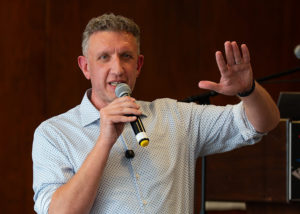
Chuck is a US-based internal communications strategist and the founder of ICology – a community and resource hub for IC professionals. He brings a practitioner lens to every conversation. Chuck is a recognised voice in the industry, a regular speaker and event host, and one of the most connected people in the North American IC world.

Jenni is a UK-based leadership and internal communications consultant, author of two best-selling books, and international speaker. She runs Redefining Communications, a consultancy working with organisations around the world to help them communicate better and close the gap between what leaders say and what employees experience.