
A virtual assistant in Quezon City earning seven dollars an hour writes the LinkedIn post about how leadership isn’t about titles, it’s about kindness — and then a WhatsApp group of other virtual assistants goes and likes it. That is the world this episode opens in, and the four stories that follow all circle the same question: what is actually authentic at work, and who is really doing the work. Chuck and Jenni take in University of Maryland research that spots AI writing at 93% accuracy from structure alone, US data showing one in four workers is now over 55, and the case of Beth Littlewood, who drove 800 miles overnight for a meeting her manager did not attend and won roughly £149,000 representing herself.
Jenni comes to the recording straight from the Gallagher Summit in London, where she and Advita Patel presented their COMPASS framework for helping internal communicators build influence and impact. Two lines came home with her. The first, which she credits to Chris Andrew of Gallagher, is that trust travels socially, not structurally — a phrase Chuck likes enough to make her dig her notes back out and repeat it. The second came from Nadia at SSP, an organization Jenni used to work for: in internal comms your job is to enable and coach leaders through change, not to own it, which is a useful corrective for a function that keeps absorbing responsibility for everything inside the business. A morning keynote added the point that change is operational but also emotional, and that a change programme needs a trust strategy alongside it, which is usually the missing piece. Jenni’s verdict on the event itself is affectionate but honest: good content, good reminders, and a format that has not moved in five years and feels a little 2005.
Chuck opens the stories with Rest of World’s reporting on six virtual assistants in the Philippines who write LinkedIn posts and comments on behalf of Western executives. One woman produces 30 to 40 comments a day from a four-page memo about her client’s favorite books; the group keeps WhatsApp threads to tip each other off about which clients to like and comment on so the engagement looks organic; one of them accidentally posted “Huge win” under a 9/11 memorial. The line Chuck wants to sit with is the one from inside the trade: it’s all AI comments by fake people answered with fake replies by other fake people. Jenni had breakfast the day before with an in-house head of internal comms who told her she cannot bear LinkedIn anymore, and her diagnosis is that the virtual assistants are filling a gap somebody else created. The problem is not who typed it, it is why: writing for the clicks, the comments and the ego boost rather than to be useful. Her own test is vivid — if someone stopped her and quoted a post she did not recognize, the dread would be total, so she will not outsource it. Chuck presses the more uncomfortable question: if a leader will not invest their own time on LinkedIn, how short is the jump to outsourcing the internal update, and what exactly do they gain from content they never even read? His closing shot is that this is the authenticity leaders keep asking to be credited for — outsourced thought leadership that is not their thought and not their leadership.
The flip side arrives immediately: research out of the University of Maryland that analyzed 61,000 human and AI stories across 304 features and can identify AI writing with 93% accuracy — not from vocabulary, but from structure. Strip out the em dashes and the clichés and the tell survives, because AI over-explains, spells out the lesson, resolves the conflict cleanly and ties the bow, while humans leave gaps and trust the reader to close them. The argument for communicators is that too many all-hands scripts and leadership updates have gone AI-shaped: too linear, too neat, too rational, when the leaders anyone actually remembers wander a little, sit in the tension and admit the doubt. Jenni’s read is that the structural tell is the dangerous one, because it is far harder to argue your way out of than a stray dash, and it feeds the skepticism employees already carry: when something reads too neat, people go hunting for the gap. Chuck turns it around. He is not convinced those AI attributes are automatically negative — over-explaining, spelling things out and resolving the conflict are how you stop people from failing to connect the dots, and “we trust the audience” is also where a lot of miscommunication starts. Jenni’s answer is about imagination: humans are one of the few species that can imagine, and a diet of stories that finish every thread trains that muscle out of us. Chuck’s parting shot is at the em dash apology community — no, you have not been using them your whole life.
The workforce story comes from The Independent: one in four US workers is now over 55, up more than 17% in a decade and outpacing every other group, with more than half of farm managers, more than half of school bus drivers and nearly half of transit drivers in that bracket. The organizational consequences are succession, retention and knowledge transfer — whole functions where the people who know how everything works are five years from the door and nothing has been written down. The thread underneath is the one both hosts keep returning to: how much of this is wanting to work versus not being able to afford to stop. Jenni’s example is an Instagram reel of an older man working in a DIY store who explained that his wife had died and there was not enough money, and who visibly did not want to be there; the want-versus-need distinction is something managers need to understand about their people, and it is not really a comms team’s data to hold. Her broader complaint is that the profession has drifted: the entire narrative about short, sharp, ten-second video for a younger generation is aimed at the wrong end of a workforce that is getting older, when the old rule still applies — make the content available multiple ways to reach multiple people. Chuck notes he is five years from that decrepit category himself, that 55 today is not 55 forty years ago, and that retirement itself has become an illusion for many; he has seen the stories of people driving for DoorDash in their eighties. His structural read is that the employer-employee bargain has broken — people used to be taken care of at the end of a career and are not, so they keep working because they do not feel protected. Jenni’s practical takeaway is a question she now wants in engagement research: why do you work here?
The closing story, from the BBC, is the one Jenni says had to be on the show because a judge blamed poor communication for all of it. Beth Littlewood, a canoe polo champion and a personal trainer at a gym chain for more than ten years, was at the European Championships in Germany when her manager told her mid-competition that her leave was not approved and she had to be back in Bridgend in person for a meeting. She drove 800 miles through the night. The manager did not show up; he was away on training. She represented herself at tribunal with, in her own words, meticulous records, and won about £149,000. The judge said common sense was wholly departed from and called the no-show contemptuous, and the tribunal’s own framing was that these were trivial management issues that should never have been escalated. Jenni’s reaction is unguarded — it makes her boil — and her hope is not punitive but structural: that the people involved have either left or been retrained, and that the organization did not simply pay it off and carry on, because what Beth cares about most is the systemic holiday-pay miscalculation she exposed, which could benefit personal trainers across the company’s hundred-plus clubs. She also notes the industry context, that personal training is largely unregulated and its workers are treated dreadfully, and wonders how long ago this happened given UK tribunals are now running about five years behind. Chuck’s read is blunter: this is not poor communication, it is awful management, almost certainly tolerated for years and almost certainly not limited to Beth, and the fact that meticulous documentation is what saved her is the clearest proof of his earlier point about the employer-employee relationship. He would be shocked if the manager kept his job, and he wants to know about the layers above who tolerated it.
Who actually writes those LinkedIn leadership posts? Often not the executive. Rest of World interviewed six virtual assistants in the Philippines who write posts and comments for Western executives, in one case producing 30 to 40 comments a day from a four-page memo about the client’s favorite books, and coordinating in WhatsApp groups to like and comment on each other’s clients so the engagement looks organic.
What does the University of Maryland study say about detecting AI writing? It analyzed 61,000 human and AI stories across 304 features and identified AI writing with 93% accuracy. The signal is structural, not lexical: AI over-explains, spells out the lesson, resolves conflict cleanly and moralizes, while human writers leave gaps for the reader to close. Removing em dashes and clichés does not hide it.
Is being messy on purpose now a comms skill? That is the question the episode puts. Jenni’s view is that the structure has to feel genuine, and that content reading too neat will trigger the same skepticism employees already bring to corporate messaging. Chuck’s counter is that clarity and resolution are not automatically flaws — trusting an audience to connect the dots is also how miscommunication happens.
How old is the US workforce now? One in four US workers is over 55, up more than 17% in a decade, outpacing every other group. Some sectors run far higher: more than half of farm managers, more than half of school bus drivers and nearly half of transit drivers. The organizational risks are succession, retention and undocumented knowledge walking out the door.
Why does it matter whether older workers want to work or need to? Because it changes how you communicate with them and what you design for them. Jenni’s point is that managers, not the comms team, are the ones who need to know which it is, and Chuck’s is that the employer-employee bargain that used to protect people at the end of a career no longer does, so many keep working because they do not feel protected.
What happened in the Beth Littlewood tribunal case? Littlewood, a canoe polo champion and personal trainer, was told mid-competition in Germany that her leave was not approved and that she had to attend a meeting in Bridgend in person. She drove 800 miles overnight; the manager did not attend because he was away on training. Representing herself with meticulous employment records, she won roughly £149,000, and the judge called the no-show contemptuous.
Jenni: Welcome to Frequency. I’m Jenni Field.
Chuck: And I’m Chuck Gose. Frequency is your go-to for real talk about comms, culture and employee experience. Beyond the buzzwords and straight to what matters. Jenni, this week we’re going to be talking about leaders outsourcing their own thought leadership, new research on the battle between humans and AI on storytelling, America’s aging workforce, and an employee getting paid for their manager missing a meeting.
Jenni: I’m excited about these, but before we get into that, I have just got back from the Gallagher Summit in London, and I just thought it was worth sharing a couple of things from there. It’s a two-day event in London from the team at Gallagher, and they have different tracks about AI, change and insights, I think. I might have been in the insight session. I was with Advita Patel. We were sharing our COMPASS framework for internal comms people to have more influence and impact. So I’ll pop a little link in the show notes to that.
Jenni: But there were a couple of things from the session that I thought were worth bringing here. The first was the theme of the conference, which felt very much about humanity, the human connection, that humanity gap piece, even though we’ve got all this digital stuff going on. There are a couple of quotes that I really liked. There was one which talked about — the quote was, trust travels socially, not structurally. And I think that came from Chris Andrew from Gallagher. And I really liked that yesterday. And then there were some quotes today, which was Nadia who works for SSP, who I used to work for. She was talking about change and taking people on a change journey and how to do that. But she made the point, which I really liked, of: it’s your job in internal comms to enable leaders. It’s your job to coach them. It’s not your job to own it. I just really liked the reminder of that, because I think sometimes we hold on to a lot of stuff in internal comms, especially when we’re being told that we are responsible for everything inside an organisation. And I thought it was good. It was a very good couple of days. A little bit tired, I would say. It feels like it could do with a little zhuzh up as a conference. It’s had the same format for about five years now and some of it feels a little bit 2005.
Chuck: There’s a lot of events that could use a little zhuzhing that have been around for a little while. But I really love the trust quote. Will you say that line again for me?
Jenni: Yes, you’re going to make me get my notes back out again. Trust, trust — hang on, hang on. Trust travels. Yes, that was it.
Chuck: I think you said trust travels socially, not structurally. Yeah, that’s great. I really love that.
Jenni: Yeah, it just makes you think a little bit more about it. And there was also something today that reinforced that, which was the keynote in the morning. She was a lady — I think she was from Hewlett-Packard, I’ve only just got back — and she said that change is operational, but it’s also emotional. And I’m sure it was her who also talked about the fact that you need to have a trust strategy to go alongside your change programme. That’s what she said: there needs to be a trust strategy, and that’s often what’s missing. And I thought that was very important as well. There was a lot of change stuff that was worth taking away. Some good reminders of what to do if you haven’t done them for a while or you’re new to internal comms, but some nice anecdotes about some of those important foundations for some things as well. So it was good.
Chuck: Well, Jenni, let’s get into our stories for this week. We’ve all seen some of these same LinkedIn leadership posts. Things like, quote, leadership isn’t about titles, it’s about kindness. And underneath, you then see a slew of executives nodding along in the comments. Like, beautifully said. Turns out that this is probably a guy in Quezon City making seven bucks an hour running it all through ChatGPT. This Rest of World publication talked to six virtual assistants in the Philippines who write the posts and the comments on behalf of Western executives. One woman generates 30 to 40 comments a day off of a four-page memo about her client’s favorite books. They’ve got WhatsApp groups where they even tip each other off to go like and comment on each other’s clients, so this engagement then looks very real. One of them — I love this story, but not — accidentally posted, quote unquote, huge win. Unfortunately, this was under a 9/11 memorial post. This is the quote I want us to focus on. Quote: it’s all AI comments by fake people answered with fake replies by other fake people. This is now the world we are all in. So the question for us, Jenni: if the exec didn’t write it, didn’t think it, and didn’t even comment back, whose voice is it? And is this one of the reasons why we don’t trust anything?
Jenni: I love this story and I’ve got so many thoughts about this. I was having breakfast with someone yesterday before the conference and she was saying to me — she’s the in-house head of internal comms — and she was saying, I can’t bear LinkedIn anymore. It’s just so full of this, right? And I think that this is the problem, because there are so many people, whether you work inside organizations or you’re consultants or you’re leaders or whatever you might be doing, where you can feel that you’re writing something for the attention, you’re writing it for the clicks, you’re writing it for the comments, and that’s where it’s falling down. It’s not necessarily that it’s someone else doing it, because most of those posts you can see are pretty much generated from AI, but it’s the reason behind why people are doing it, and that’s what I think is the issue. These virtual assistants are just filling a gap in the market where people feel that they need to do this, but they’re doing it for glory, for ego, for all of those things. Whereas that’s not why you should be posting on LinkedIn or any social platform. You should be posting on it to be helpful or to support people or whatever it might be. But if you’re just on there to get the likes and the comments and the ego boost, then please go away, because you’re clogging it up for those of us that actually want to have meaningful conversations and share insights and debate and have a social media platform — like, social, that’s the point.
Chuck: Okay, my follow-up question, Jenni. Are you saying you’ve never posted on LinkedIn for a little ego boost?
Jenni: No, I haven’t. I’ve posted to promote the stuff that I’m doing in a way to show people that I’m doing it, but my reason for posting is not, I need a little pat on the back. That is not my reason for posting. You know, it’s nice when people say about our session that we did at the summit, you know, best session of the two days. That’s lovely, right? That is always nice, but that’s not my reason for posting. My reason for posting was to share: these are the things I took away from the two days and I hope they’re helpful to other people. But yes, it does always feel nice. I’m not, you know, dead inside.
Chuck: Yeah, I think the point for me is there’s this expectation or pressure that maybe these leaders are feeling that they have to be visible. They don’t want to take the time. They don’t think it’s valuable for their time, but yet they think it’s valuable for other people to consume this content from them that actually isn’t even them. And so I just wondered, where’s the slippery slope on this? If they’re doing this on LinkedIn, where’s then the jump for internal? That’s a pretty easy jump to take for a lot of leaders. So my question is, what do they ultimately gain? If they aren’t personally investing, then what is their benefit? They’re not probably seeing this stuff. If they were, they would probably go in and do some of it on their own. I just think, again, it shows that when we want authenticity from leaders, this is the authenticity. This is how they are showcasing their authentic self, by simply outsourcing thought leadership in air quotes when it’s not even their leadership.
Jenni: Yeah, and the thing that would worry me — and I’ve had conversations with people about doing this, right? This is quite a conversation, certainly I think in the entrepreneurial space, where my job is a communications consultant and speaker. My job is not to be an influencer and a content creator. I do that, but I could outsource that if I didn’t love doing it. But to me, I can’t do that. Because if somebody came up to me and said, I saw your post about leadership isn’t about titles, it’s about kindness, and it really resonated with me — I’d be thinking, crap, I don’t know what I’ve said. That fills me with absolute dread and horror. So I would never outsource it, because I wouldn’t want to get caught out. So I wonder what’s going on around this for these leaders that are outsourcing it. And is it leadership inside organizations, or are these entrepreneurs or speakers or authors who are doing it because they want to create a brand? I think there’s maybe different reasons behind it, but it gives me the ick.
Chuck: Same, same, same. Well, right off that, here’s the flip side to this stuff. University of Maryland looked at 61,000 stories, both human and AI, and pulled out 304 features. Per this, they can spot AI writing with 93% accuracy, but here’s the kicker. It has absolutely nothing to do with the words. You can strip out the em dashes and the clichés, and you can still tell, because AI makes different choices about how a story is built. AI over-explains, it spells out the lesson, ties everything in a bow, resolves a conflict cleanly. We humans, we leave gaps. We trust the audience to connect the dots. The writer’s point is that too many business presentations have gone AI-shaped. Way too linear, way too neat, way too rational. The leaders we actually remember wander a bit, sit in the tension, and then admit the doubt. This matters for communicators because we’re the ones drafting these all-hands scripts and the leadership update. The tell isn’t the words used anymore. It’s the nice, tidy, clean ending. Jenni, based on this: if everyone’s using the same tools, is being a little messy on purpose now an actual comms skill?
Jenni: Do you know what I think it is? I’ve seen so many people say, if there’s a typo in something, it’s like, well, at least you know AI didn’t write it. But the bit for me that’s interesting here is the structural point, and I do think that that is really important. I think there is a time and a place for using AI to help draft stuff, but I think when you’re trying to tell a story, or you’re really genuinely trying to do some thought leadership around certain things and want to talk about that, the story that you’re telling and how you’re doing it has to feel genuine. And I think if we can easily see that that structure isn’t quite right, then that’s a worry, because that’s really hard to navigate around. And I think it’s going to get even harder for people to say, no, no, this wasn’t AI, this was a person, when the structure is different. And I think it’s going to be interesting to see how people start to behave and respond to that from a trust perspective as well. This feels too neat — like the scepticism that employees often have inside organizations. When things feel too neat, then it’s going to go even worse, isn’t it? Because you’re going to be looking for that gap or that something, or you’re just going to be second-guessing it even more, I think.
Chuck: It’s interesting to me that it’s viewing these AI attributes as a negative. That we’re saying, over-explaining something and spelling out the lesson and tying everything up and resolving the conflict cleanly — that somehow that’s the negative. And where it then points out, we trust the audience to connect the dots. Therefore there’s gaps, there’s misses. We’re leaving it in their hands, which is where a lot of miscommunication can happen. So it’s this weird paradox of — wait, let me finish, let me finish — that the human writing or story is better, because people distrust AI. But what if the AI narrative is actually better, because it over-explains, it spells things out, it goes into the depth? Whereas with human storytelling — I’m not saying that’s bad, but we’re saying we trust that audience to connect the dots. What if they can’t connect the dots, but the AI story did? I’m not saying AI is better than human storytelling. I’m just saying we’re assuming that those qualities are negative.
Jenni: And my mm-hmm as you were talking was around the fact that one of the things that separates humans from other species — there’s many things, but one of the things is our ability to imagine. So we have that ability, which is different to a lot of other species. And I think the risk of AI being so specific and tying the bow and finishing it and making it neat is: what does that do to our imagination? And I’m talking about storytelling as a whole now, not just in a corporate setting. We’ll be watching a film or something at home and it just sort of ends. It finishes the story, but I’m like, I want to know what happens to this bit and that bit and what happened over here. And I’ve still got questions, which really annoy me, because I like it all in a nice little bow, but it lets my mind wander and imagine and think differently. And I think if all stories end up tight and neat and all done, then that cognitive ability stops, because there’s no need to do it, because everything’s given to you. And I think that’s a bit risky for us as human beings.
Chuck: Also, I still stand by this: strip out the dashes. I’m over this em dash apology community out there. Everybody now coming out saying, oh my gosh, I’ve been using them my whole life. No, you haven’t. It’s okay. We called it out. We found the tell. Strip them out. It’s good. We can all move on from that. Next up, one in four US workers is now over 55, up more than 17% in a decade, outpacing everyone else. Some industries are running on it: more than half of farm managers, over half of school bus drivers, nearly half of transit drivers. People are staying in or coming back mostly because the maths of retirement doesn’t math. There’s an individual upside though — you can delay Social Security, get a bigger check. But the org-level story is the one for our listeners. This impacts things like succession, retention and knowledge transfer. You’ve got whole functions where the people who know how everything works are now five years from the door and no one’s written anything down. Now, the quieter, uncomfortable thread underneath, looking at the age of these people: how much of this is I want to keep working versus I can’t afford to stop working? That distinction changes everything about how you communicate with that workforce. So the employee experience question here, Jenni, is: are our comms and culture still built for a workforce that’s getting younger, but the data is actually saying the opposite?
Jenni: I mean, there’s lots in here, isn’t there? And I think your question about, or your point around, why are people staying — is it I want to keep working or I can’t afford to stop? I was watching an Instagram reel, I think probably about six months ago, and it was in the US and it was an older chap working at some kind of DIY store. And he was like, I have to keep working because my wife died and we don’t have enough. And it was a guy talking to him who I think goes and crowdfunds money. And so then he went in a few weeks later with a massive cheque for this guy so he could stop. And it was really emotional watching it. You could see that he didn’t want to be working, but he didn’t have any choice. And that is, to your point, very different in terms of want versus need. And I think that’s important for managers to know and understand about their people, rather than maybe the comms team and stuff like that. But this point about the workforce ageing, and that’s the biggest population of the workforce, versus all of this narrative about the younger generation and how they want things short and sharp and short videos and 10 seconds and no one wants the detail and all of this stuff — it just feels like that’s wrong. The data is telling us you can’t just focus in on that. You’ve still got the same rules apply as they’ve always applied where we’ve had different generations at work, which is you have to have content multiple different ways in order to reach multiple different people. That’s still the same. And I do think we’ve probably, based on this, drifted too far the other way.
Chuck: When I read this, when I first saw the one in four workers now over 55, that sounds really old. And then I realized I’m just five years from this old decrepit workforce that’s hanging around too long. I think there’s a lot of things going on here. I think there’s also an element where this illusion of retirement is now an illusion — that people just work in new ways, and also people’s health is better than it was decades ago. People are living longer. In a lot of cases, 55 now is not the same 55 that it was 20, 30, 40 years ago. I remember people that worked with my dad that retired at 50. I can’t imagine now retiring at 50. What the hell would I do with myself at this point? I actually don’t imagine myself ever retiring. I just don’t know what that looks like. I think the dangerous part is the people who say they can’t afford to stop working. That’s the sad part of this. And that’s where, as a society, we should look at systems in place to support individuals. Because we know when you’re 70, 80, 90, you can’t do the same work you did when you were 30, 40, 50. It’s just not possible, as much as you want to believe it. But I do think there are some people who truly enjoy working. Maybe not this gentleman at the DIY store you talked about, but there are people, even if it’s 15, 20 hours. I’ve also seen some of those sad stories of people that were doing DoorDash in their 80s. And this guy shouldn’t even have been driving, probably, but he felt like he needed to contribute. He felt like he needed to earn money. So there’s not an easy answer here. It’s just more of a reality for people to take in mind, of looking at your workforce — that if your leaders are looking at things that happened decades ago, it’s just not going to be the same math going forward.
Jenni: You’ve got me thinking about the reasons why we work. And I know I’ve chatted a bit on Frequency over the course of us doing this show about my bee in my bonnet about employee engagement not being the right measure, and I will get that out my brain at some point. But I’m not sure in any of the employee engagement surveys that people are doing that we ask the question about why do you work here. And I feel like actually that’s a very interesting question in terms of engagement. Why do you work here? Do you work here because you love the brand, or your parents did, so you’re following in their footsteps? Or do you work here because it’s close to my home and it’s a good paycheck? So why do we do that? We did this research when I did my research with deskless workers — not about why they worked there, but we could start to understand a different relationship for deskless workers when they worked in a retail-type environment versus a skilled manufacturing environment. Their relationship to the organization was different in terms of their content needs. I’m interested in that now from a knowledge worker perspective — do we ask people that? And I’d love to know from our listeners if you do ask people that and if you have that data and insight, because I’m going to pull that into my engagement stuff. I think that could be really interesting in terms of what content you give them, what’s useful, what’s helpful, because you’d know why they were turning up.
Chuck: I think this is also an indictment of the changing relationship between the employer and the employee. It used to be that if people took retirement, or even early retirement at 55 or 60 or whatever that age was, they were taken care of by that company. There was an exchange that happened. That no longer exists. I think that’s the reality that employees now face — they don’t have that same protection that they used to have from their employer, where everything will be taken care of. That’s simply not there anymore. So they’re probably going to keep working because they don’t feel protected by the people that they work for.
Jenni: Yeah, and it’s that safety, isn’t it? I don’t feel safe. Yeah, I think you’re bang on.
Chuck: All right, it’s story time, Jenni. This is a real story. Beth Littlewood is a canoe polo champion and a personal trainer at a gym chain for more than 10 years. She’s at the European Championships in Germany. Her manager tells her mid-competition that her leave isn’t approved and she has to be back in Bridgend in person for a meeting. So what does she do? She drives 800 miles through the night to make it. And the manager doesn’t show up. He’s away on training. She represented herself in court, no lawyer, just — in her words — meticulous records of her employment. She won about 149,000 pounds. From this, the judge said, quote, common sense was wholly departed from, and called the no-show contemptuous. And the part she cares about isn’t the money, it’s that she exposed a systemic holiday payment miscalculation that could now help personal trainers across this company’s hundred-plus clubs. The employment tribunal’s own words are: these were trivial management issues that should never have been escalated. Beth submitted several complaints and claims over the years. Jenni, I have so many questions about this, so I’m going to let you pick which question you answer here. Do you want to talk about the judge blaming poor communication for this whole thing, or the fact that Beth won because she kept meticulous records — and what does that say about trust at work?
Jenni: Oh, I think we’ll probably cover both, but I think the judge blaming poor communication was what made me think we need to talk about this story on here, because it’s everything I believe about work. If you can improve communication, work will be a better place for everybody. And this story about Beth is horrendous, in terms of how she was treated and the fact that she felt she had to drive the 800 miles. It’s everything that is wrong in organizations. People talk about having toxic bosses and all this sort of stuff, and this is such an example of exactly that. It’s like the person was just on a massive power trip. And to not show up and then be at training — honestly, it makes me boil. It makes me boil inside.
Chuck: Yeah, I think we’ve all been let down by managers over the years. I don’t know that I’ve ever had something quite like this. My wife might disagree — she might say there’s been some things that happened. But to me, this isn’t just poor communication. This is awful management. And I guarantee you, if this happened to Beth, this was happening across the spectrum. Probably not every personal trainer at every gym. But to me, this is one of those cultural things where they put up with it. They tolerated it for a very long time. And the fact that she had to keep these records — you know, meticulously kept these records — is what ultimately protected her, is what saved her. So this to me goes back to that thing I just talked about, the relationship between the employer and the employee. It is up to you to protect yourself. Not every company is going to be like this, but in some cases, this company’s not going to protect you unless you’ve got it documented out there. And then in this case, she had to go to court for it.
Jenni: Yeah, and I don’t think it says in the story how long ago this happened. There was a story I was reading, which I don’t think we’ve talked about because we read so many things in between, but it was about the fact that in the UK it’s now taking five years to get through tribunals. And so I wonder how long ago this actually happened and how long that’s been. But it’s an industry that’s very challenging. Personal training is very unregulated, and they are treated dreadfully. I’ve worked with people in this industry and it is really tough. But to your point, it’s management, it’s so many things. I wonder what the consequences have been for the people involved. And I’m not saying we should hunt them down, but I would hope that those people have either left the organization or are going through significant training and development in how to behave appropriately as a manager. And I hope it hasn’t just been, we’ll just pay this off and carry on and nothing changes. Because, to her point, this is actually — I’ve exposed something that’s much bigger, and that’s really important. I hope that the behaviours and the culture in this organisation shift as a result, because if it doesn’t, then that is a real shame.
Chuck: In the grand scheme of a company — I’m guessing they said they’ve got 100 plus clubs — 149,000 pounds is probably not that big a deal. But I’d be shocked and disappointed if this manager kept his job as a result of this. Knowing the consequences of this, knowing the risk of other people being like, well, wait, he also did that to me, or this other thing happened — all of a sudden, more of this starts to happen. So I’d be shocked if they found out. And I would also want to know, what about the layers above then too? Because clearly they were tolerating other behavior as well. At least now Beth got a little bit of pay out of it. But I bet if you were to go back and look at this over ten plus years, she’d rather it not happen at all.
Jenni: Yeah, totally. Well, fingers crossed it has all worked out well.
Chuck: That’s our content for this week. Jenni, what are you freq-ing out about this week?
Jenni: So I’m freq-ing out about the fact that when I was on stage at the summit, I lost a decade. So I was sharing my story about going from a communications assistant to a communications director. And I was standing there and I said, in 2012, I was a communications assistant, and in 2016, I was a communications director. And Advita Patel, who I was presenting with, went, 2012? No, you wish. And I went, oh no, it’s 2001. I’d just completely forgotten that entire decade, thinking I’m still 25. So it was very funny. And I’m delighted that she called me out on it and I’ve lost a decade.
Chuck: I’m sure that got a good response from the room.
Jenni: It did. I just had to keep saying, at an undisclosed period of time, this is what happened, because I just clearly couldn’t remember my dates.
Chuck: My freq-out is very ego driven, Jenni, coming back to that topic. So I went back and watched our previous episode, which has been episode 59. What people don’t know is that was recorded at 7 a.m. Eastern time, and I had come off a long trip and then got up and recorded. So everything came out great. But I was staring at myself on the screen, Jenni. And what people may not realize is my hair at 7 a.m. looks very different than it does several hours later. My hair goes through these changes throughout a day. And so I saw it and I was like, oh my God, that’s 7 a.m. Chuck. That is not midday Chuck. And now it’s forever on YouTube. So as you see any clips out there, you’ll probably be like — you don’t get it. You know, we’re always hypercritical of ourselves. But I’m like, wow, the hair was kind of down and weird and all that, and by the end of the day it’s all up and high.
Jenni: I’m going to go watch it now. I’m going to go watch it now and see what 7 a.m. Chuck is like. It’s fine. I will, I’ll let you know what I prefer.
Chuck: We all have our little triggers out there and we’re all vain and vulnerable, but yeah, watching that video is a bit harsh. Thank you, Jenni. Please let me know what you think, that would be wonderful. And that’s what we are freq-ing out about this week. The show notes have all the articles and links from today’s conversation. If Frequency is a regular part of your week, a quick review means a lot and goes a long way. Subscribe wherever you’re listening, and share this with one person who’s interested in what we talk about. Thank you to my friend Poet Ali for the music. We’re back every Monday. See you next week.
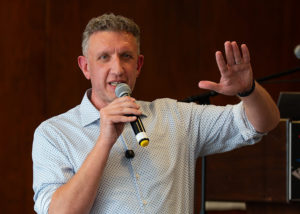
Chuck is a US-based internal communications strategist and the founder of ICology – a community and resource hub for IC professionals. He brings a practitioner lens to every conversation. Chuck is a recognised voice in the industry, a regular speaker and event host, and one of the most connected people in the North American IC world.
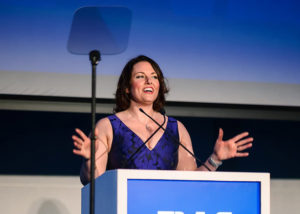
Jenni is a UK-based leadership and internal communications consultant, author of two best-selling books, and international speaker. She runs Redefining Communications, a consultancy working with organisations around the world to help them communicate better and close the gap between what leaders say and what employees experience.