
Chuck Gose celebrates the UK’s first snowfall of the season and Jenni Field’s Business Book Awards shortlist certificate before the pair dig into new Gallup data on the purpose gap at work, Kate O’Neill’s argument that feedback needs shared context, Mita Mallick’s case against “firefighter” leadership, and unsettling new research on AI reading personality from LinkedIn photos.
Jenni opens celebrating the UK’s first snowfall of the season and a shortlist certificate for her book in the Business Book Awards’ Leadership category, while Chuck describes Indianapolis’s brief, unconvincing “fake winter.” Chuck previews his three articles — Gallup research on purpose at work, Kate O’Neill on feedback and context, Mita Mallick on boundaries, and an Economist piece on AI reading personality from photos — framing them as symptoms of the same underlying issue.
Discussing [Gallup and Stand Together’s Power of Purpose study](https://news.gallup.com/poll/697403/purposeful-work-boosts-engagement-few-experience.aspx), which finds engagement jumps from 9% to 50% when workers feel a strong sense of purpose, Jenni argues purpose is often skipped because it’s the harder, more meaningful work, and because the word itself can feel loaded for leaders who assume it only applies to mission-driven nonprofits rather than for-profit companies. Chuck focuses on the finding that only 30% of hiring managers see personal purpose and passion as important to success, reading it as a signal that many roles are quietly being treated as “just a job” by the employers doing the hiring, not only the employees filling them.
Reacting to Kate O’Neill’s LinkedIn post arguing feedback without shared context is just noise, surveillance, or bias, Jenni connects it to the SBI (Situation, Behaviour, Impact) framework from Roshi Kaur Chadha’s Inclusion on Purpose and describes wanting feedback only from people she respects and trusts, not unsolicited critique from anyone. Chuck shares his own practice of asking would-be critics to hold feedback until he’s had a chance to reflect, and both hosts land on the idea that feedback should require consent, with timing being as important as the content itself.
Discussing Mita Mallick’s post that “not every fire is yours to fight,” Jenni argues workplaces need to shift the stories they celebrate toward sustainable, boundaried leadership rather than dramatic last-minute rescues, tying it directly to burnout and wellbeing. Chuck adds that many “heroic” saves are really leaders who let situations deteriorate before stepping in, and that recognition programs often reward this “always-on” firefighting instead of the people who quietly prevent the fire altogether.
Covering an Economist piece on a working paper that used AI facial-analysis models on LinkedIn photos of MBA graduates to infer personality traits linked to pay and promotions, Jenni calls the findings a step backward from the blind-recruitment progress the industry has worked toward, while Chuck frames it as evidence that AI hiring tools simply inherit and automate existing human bias around appearance and background. Both hosts discuss how automated rejections without human review compound the emotional toll on job seekers, and agree communicators can raise the ethical risks without being dismissed as anti-technology by focusing questions on unintended consequences rather than rejecting the tools outright.
Jenni’s freak-out is a positive one — a LinkedIn post from Populo’s Andrew Hubbard sharing praise from a measurement masterclass he ran, which she says models the kind of open self-celebration more people in comms should practice. Chuck’s freak-out flips the mood, questioning why so much of comms LinkedIn reads like negative opinion columns rather than people sharing genuine wins, and both hosts close by asking listeners to tag them in posts celebrating their own good news.
Why do so few hiring managers see personal purpose as important to success in a role, even though purpose strongly predicts engagement? Only 30% of hiring managers see personal purpose and passion as important to success, according to Gallup and Stand Together’s Power of Purpose study, even though engagement jumps from 9% to 50% when workers feel a strong sense of purpose — Chuck reads the gap as a signal that many roles are quietly being treated as “just a job” by employers themselves, not only by employees.
What does it mean to say “nobody needs feedback, they need shared context”? Kate O’Neill’s LinkedIn post argues feedback without shared context is just noise, surveillance, or bias — Jenni connects it to the SBI (Situation, Behaviour, Impact) framework and says feedback should require consent, with timing being as important as the content itself.
Why does “firefighter” leadership get celebrated more than sustainable, boundaried leadership? Mita Mallick’s post argues “not every fire is yours to fight” — Jenni says workplaces need to shift the stories they celebrate toward sustainable, boundaried leadership rather than dramatic last-minute rescues, since many “heroic” saves are really leaders who let situations deteriorate before stepping in.
Can AI reliably (or fairly) infer personality traits from a LinkedIn photo, and what does that mean for hiring bias? Not fairly, both hosts argue — an Economist piece covers a working paper that used AI facial-analysis models on LinkedIn photos of MBA graduates to infer personality traits linked to pay and promotions, which Jenni calls a step backward from blind-recruitment progress, and Chuck frames as AI hiring tools simply inheriting and automating existing human bias around appearance.
Why does so much workplace communication content on LinkedIn skew negative? Chuck questions why comms LinkedIn so often reads like negative opinion columns rather than people sharing genuine wins, closing the episode by asking listeners to tag both hosts in posts celebrating their own good news instead.
Chuck: Welcome to Frequency, I’m Chuck Gose.
Jenni: And I’m Jenni Field. Frequency is your go-to for real talk about comms, culture, and employee experience — beyond the buzzwords and straight to what matters. First of all, I’m quite excited this week because we’ve had our first snowfall in the UK — I don’t know whether you’ve had any over there yet, but we get very excited here because it doesn’t settle, it’s just a big flurry, and it was really cold this week. I just get excited about snow — have you had any yet?
Chuck: We did get a little bit in Indianapolis, but it was kind of “fake winter” — it got cold, it snowed, then it warmed back up and it all melted. We don’t get as excited about it, it’s more a sense of doom about what’s in store for the rest of winter, since technically it’s not even winter yet. Thankfully we haven’t had much — it kind of came on as a surprise when we got it.
Jenni: Fair. I think it caught us a bit this week too, but I get quite excited. The other thing I want to celebrate — for those watching on YouTube, this arrived in the post for me — my shortlist certificate for my book in the Business Book Awards, shortlisted in the Leadership category. My publisher sent it and it arrived today, so that’s exciting. I’ve got a sign behind me that says “she’s mad, but she’s magic,” and a whiteboard next to it that we’ve discussed off-podcast.
Chuck: Where are you hanging it? Do you have a spot for it?
Jenni: I don’t really use it, and there’s stuff on it from September, so I want to clear that off and create a little gallery wall to put it up there. That’s my plan. Thank you — I’m very pleased, celebrating that win. So what are the articles for this week?
Chuck: Love it, congratulations again. Yes — before we get into some Gallup research on purpose at work, the other stories I picked kind of feel like symptoms of the same thing. We’ve got Kate O’Neill arguing people don’t really need feedback, they need shared context. We’ve got Mita Mallick saying not every fire is yours to fight as a leader. And there’s an Economist piece on AI trying to read your personality from your face.
Jenni: God.
Chuck: We’ll start with Gallup and Stand Together’s new Power of Purpose study, which finds that when people feel strong purpose at work, 50% of them are engaged; when purpose is low, that drops to 9%, with only 31% of the US workforce engaged overall. Purposeful workers are also far less likely to feel burned out or be job hunting. Yet leaders massively underweight it — just 30% of hiring managers say a strong sense of personal purpose and passion for the mission is very important to success in a role, compared with 77% who say communication skills are important. At the same time, 45% of workers say they’re mainly working for pay and benefits, and only 18% feel their current job has a purpose they truly believe in, even though more say that’s what they want in an ideal job. So you’ve got this gap: purpose clearly moves the needle on engagement, burnout, and retention, but it’s treated as a soft extra instead of a design principle for jobs, conversation, and recognition. Jenni, when this data is this loud about purpose, what do you think stops leaders from treating it as a core performance lever rather than a fluffy nice-to-have?
Jenni: I love these stats — the personal purpose and passion one especially, I enjoyed that immensely. I think this gets ignored because it’s the hard work. It’s easy to focus on tactics, easy to focus on the stuff you should be doing, but if that isn’t linked to purpose, the data shows it’s really hard to get behind. I think purpose is quite a loaded word for executives and leaders — it can get lost in that weighted meaning. What we’re really talking about is meaningful work: why are we doing what we’re doing, what’s the reason behind it? But I think the word “purpose” makes people feel like you can’t have one unless you’re a nonprofit improving society, rather than a for-profit business. I also think it’s the hard work leaders push to the bottom because they don’t feel they need it — there’s still this view of “I’m just going to tell people what to do and they’ll do it,” and I don’t think they believe some of this data, if I’m honest.
Chuck: What surprises me is that 30% — and this isn’t C-suite necessarily, these are hiring managers — say strong purpose and passion is very important. That feels like a signal, connecting to what we talked about last week: is it just a job? I think this shows hiring managers are saying, this is just a job, do the things we think you need to do, whether you feel a greater sense of purpose or not — we don’t think it’s that important. Maybe that’s not a miss, maybe it just shows some of these jobs are just jobs no matter which side of the coin you’re on.
Jenni: Yeah — let’s go back to the communication skills percentage, because I feel there’s a link between that and purpose. 77% of hiring managers said communication skills were very important to success in a role. I think there’s a correlation between purpose and communication skills — probably entirely unfounded, but if you can articulate that purpose and communicate the message, that’s 100% of the issue. So is it that there’s no purpose, or is it that there’s poor communication about the purpose that’s the real issue?
Chuck: I get a sense it’s more about that personal purpose — knowing why I’m here. That 45% working mainly for pay and benefits is a bit of that “just a job” idea, not in a negative way. I had a colleague at Rolls-Royce who used to joke that it is a job — if Rolls-Royce stopped paying everybody tomorrow, most people wouldn’t show up. There might be a few who still come in because they don’t know what else to do, but most of us wouldn’t show up if we weren’t getting paid. We’ve talked before about how most companies exist to profit, and there’s nothing wrong with that — let’s just call it what it is. If hiring managers are treating it as just a job, maybe employees should treat it the same way.
Jenni: Yeah, I’ve got so many thoughts about the whole “just a job” thing — it’s really stayed with me. I was at a Gallup event this week talking about UK engagement, which I’ll share in a future episode. I have so many mental post-it notes about this that I need to gather together, because there are just so many layers we could really delve into.
Chuck: Next, a LinkedIn post from Kate O’Neill closes out: “Unpopular opinion, nobody needs feedback. What we actually need is a shared context for how we’re working together.” She breaks feedback into pieces — without patterns, it’s just noise; without psychological safety, it’s surveillance; without shared goals, it reflects the giver’s preferences more than the quality of the work. Her argument is that feedback works only when it sits inside a clearly defined operating system for the team — what we’re trying to do, how we make decisions, what “good” looks like. Otherwise you get one-off judgments, performance whiplash, and confusion dressed up as development. For communicators, that’s a nudge to look upstream — maybe the problem isn’t that employees can’t handle feedback, but that nobody has put in the work to create that shared context at all. Jenni, if you take Kate’s view, what’s the first thing leaders and comms teams should fix: the way they give feedback, or the way they define and communicate context?
Jenni: The way they define and communicate context. I agree with Kate, and it reminded me of my best friend Advita Patel saying on stage recently, “I don’t want people’s feedback” — I’m kind of here for that. I don’t want feedback from everybody, but I want it from people doing the work who I respect and listen to. I’m not a fan of people who just come over and give you feedback unsolicited. This also reminded me of the book Inclusion on Purpose by Roshi Kaur Chadha, which has a great framework called SBI — Situation, Behaviour, Impact — for giving feedback. I’ll pop it in a LinkedIn post after this episode, it’s a really good framework. Without that context, so much bias can creep into feedback that isn’t just or fair. Unless you can talk about the impact of someone’s behavior or work, it’s just opinion — and that’s horrible. I know so many people who’ve experienced feedback like “we don’t think you had enough gravitas” — what does that even mean? I can’t do anything with that. What’s the outcome you want by giving me that feedback? So I’m absolutely for context first, and then discussing how the feedback is given. Are you the same, or the other way around?
Chuck: I’ll give a little plug for iCology’s mentorship program, which we’ve launched for 2026. I was a mentor to a mentee last year who really struggled with feedback a leader gave her, and someone once said to me, “sometimes feedback is just feedback” — like holding a microphone too close to a speaker and getting that noise. That’s feedback, and it’s not good or helpful. I think a lot of feedback comes from sources or contexts that are irrelevant. I’ve had to be clear with some people who like to give feedback after an event I’ve hosted — I’ll say, I already know what I could have done better, I already know what I did well, you don’t need to tell me anything; next week, give me ideas on what new things we can do. I don’t need it right away. Sometimes the timing is the most important part of context — sometimes it’s way too soon, sometimes way too late. It’s finding that Goldilocks sweet spot.
Jenni: Yeah, it reminded me of when I did Comms Reboot in Toronto over the summer, and I told you I was going to ask for your feedback, probably on the day, and that I was okay with that. We had a chat over drinks because — a bit like you — I know what I could have done better, but I also wanted your feedback, because you’re someone I want to hear from and respect. Whereas if somebody else had just come over and said “this wasn’t great,” I’d have been like, not interested in what you’ve got to say.
Chuck: I think there’s almost a consent element here — asking people, “do you want feedback on this?” If they say no, don’t give it. If they say yes, that’s your permission to provide it. The unsolicited part is often the problem.
Jenni: Yeah — there’s a whole meme now around “consent for feedback” we could do. I can see your brain already going there.
Chuck: There is, absolutely. Next up, Mita Mallick’s post on LinkedIn is a love letter to boundaries, which we’ve talked about a lot: “not every fire is yours to fight, and not every hero story ends well.” She points out that leaders who rush into every crisis end up exhausted, resentful, and less effective, and they accidentally train their teams to escalate everything instead of solving problems at the right level. Her bigger point is cultural — many workplaces still reward the firefighter myth, the leader who works late, answers every ping, rescues every messy project. That looks noble, but it hides poor planning and broken systems. Protecting your energy and saying no is framed not as selfishness, but as part of a leader’s job. For IC and HR, this touches the stories we amplify — do we celebrate sustainable leadership and clear expectations, or only the dramatic heroics when things go wrong? Jenni, how can we start to shift the stories we tell so boundaries and sustainable leadership are celebrated as much as the hero saving the day?
Jenni: I think it’s a great point — I always ask, is it a hill you want to die on, which I’ve had to learn myself about the things you’re going to fight for. I think this shift has to align to the values and culture — how are you telling stories about the values that demonstrate the behaviors you want to see? I also think this is more micro than the whole organization — it’s down to leaders and managers in their teams recognizing and celebrating the right behaviors that support boundaries and sustainable leadership. This is really important when we look at burnout and wellbeing and their correlation to how people feel at work. I think we need to make this a priority going into next year for internal communicators — how do we celebrate and shine a light on the behaviors we want to see, rather than focusing so much on the bad, and maybe that positive spin helps us reframe things.
Chuck: I like that she brings in the firefighter myth — people who let things get bad and dangerous, then come in to save the day, and that’s ultimately what people see and recognize. Maybe part of that heroism was because they were the villain — maybe they let things get to that point in the first place. What about the people who don’t let it get there? We’ve talked before about how the “always-on” mentality gets recognized, but that’s honestly celebrating the wrong behavior. We should look at the people who don’t have to save the day all the time as the model we recognize more.
Jenni: I remember using a phrase with a client, exactly this — someone who’d created the chaos and then come in to save it. I said, “he’s just trying to white-horse it,” coming in on a white horse, and you could see it all the time — we were like, “yeah, he’s white-horsing.”
Chuck: And finally, The Economist looks at a new working paper where researchers ran facial-analysis models on LinkedIn photos of tens of thousands of MBA grads, using AI to infer Big Five personality traits and link them to outcomes like pay, seniority, and promotions. The upsetting headline is those AI-inferred traits had real predictive power for career and salary outcomes, roughly on par with factors like school prestige. One of the most striking findings is that the pay gap between people with “advantageous” photo-based traits and those without is huge — bigger than the Black-white pay gap for men, and a large share of it for women, according to commentary on the study. It points to a dystopian scenario where your face isn’t just a biometric identifier but a proxy for potential used by recruiters and algorithms, with all the bias that implies. For culture, trust, and inclusion, this is a nightmare cocktail — tools sold as objective efficiency boosters could hard-wire new forms of discrimination, increase employees’ sense of being constantly judged, and undermine the work leaders say they’re doing on fairness and belonging. Jenni, when leadership gets excited about AI tools that promise better hiring through facial or behavioral analysis, how would you advise communicators to frame the ethical and cultural risks without being written off as anti-tech?
Jenni: This is a bit terrifying, isn’t it? All I can think about is how we’ve tried to get to a place of almost blind recruitment — taking off names and things that could trigger bias, so you’re looking at the individual, not what they look like or what school they went to. This feels like it’s going backward. Your question about framing this without being anti-tech — I think it’s in the questions you ask, the curious questions about the impact, framed around the outcome you’re trying to achieve rather than sounding negative. If someone wants to use this and we have a policy about making our hiring process inclusive, my question would be, how does this support that? I think that’s all you need — really good questions that point out the danger and risk here, because that risk is huge. And I’m hoping there isn’t an option where we can all just run our faces through it and it tells us, because I don’t want to do that if it exists.
Chuck: This is where it’s the challenge of — the taller you are, the more white you are, the more male you are, there’s proof that impacts salary and promotions already. All this shows is that AI is just as biased as people are — the schools people go to have an impact too, only to a degree. I heard an AI talk recently about the bottlenecks — for so long, the bottleneck was writing code, that took time and specialty. AI has cleared through that bottleneck now; the next bottleneck is judgment, and that’s something the human element is still superseding AI at. But in a lot of these cases, we’re letting AI make judgment calls, especially in hiring — I’m hearing from my iCology members about submitting for a job and getting rejected within minutes, no human looked at that, but a judgment call was made. That’s the danger with tools like this.
Jenni: Yeah, and we have to think about the broader implications for society as a whole — if there’s no human interaction and you’re rejected, and we’re social beings who need to belong and feel safe, and that’s happening again and again, it feels unjust and unfair. You just want to talk to a person, and that impact on how you feel about other people seeps into everyday relationships and life. I think that’s part of why people feel more stressed, sad, and less hopeful — this automation isn’t helping us come together and find the community and belonging we all need. We don’t think about the long-term implication of “let’s get some tech in here to sift through 200 applications” — I can see the logic, but the application is having a deep impact on us as a human race.
Chuck: It’s accomplishing one goal but not the ultimate goal. If you want to hire the right person, that’s the goal; if you want to speed things up, which is more important? If it’s speed, you’re not going to get the right person; if you get the right person, you’re not going to speed things up.
Jenni: Yeah — but there’s also something about introducing an “unintended consequences” conversation, creating space to ask what could happen if we do this. I think we’re moving so quickly we’re not stopping to think about those consequences, and if we don’t catch that now with the pace of technology, there’s going to be damage longer term. I think we — not just as communicators or HR professionals or leaders, but as human beings — have a duty to come together and apply judgment and checks and balances, to make sure we’re not anti-tech, but mindful of the impact technology will have on human beings, and how we do that ethically and responsibly for the long term.
Chuck: Yeah, you can be critical of tech without being anti-tech. That wraps up the articles for this week. Jenni, what are you freaking out about?
Jenni: My freak-out is actually very joyous this week. I saw a post from Andrew Hubbard, senior director of communications at Populo, who wrote that he’d recently done a masterclass on measurement and said, “I don’t really feel like a master of anything, but I got some feedback and it’s really made my day,” sharing some of those comments. He kindly tagged me in the post alongside a few others, calling us “the real masters,” which was lovely. What I enjoyed was someone taking a moment to reflect on their own courage and vulnerability, and then share the positive feedback that came from it — you don’t see much of that on LinkedIn, and it filled my cup reading it. I think more people should do that, because it’s lovely.
Chuck: We had an iCology member once post in the community saying, “I’m going to take a page out of Chuck Gose’s book and brag about something I did.” I hope that’s the page you take out of my book — I want people to celebrate themselves more. If I could offer Andrew a piece of advice he didn’t ask for: just own it. We don’t need to self-deprecate the first part — people really enjoyed it, celebrate that, we don’t need this weird self-deprecating humble-brag element to it. I wish people would celebrate their successes more — in our house, we say we should celebrate the little things too; our code is “elaborate and unnecessary,” because there aren’t enough things in life that are elaborate and unnecessary, so we celebrate that way. Andrew, congratulations, keep owning your successes. I’m going to be the negative one this time — I’m actually wondering, do people enjoy working in comms? Half the LinkedIn posts I read are people saying nobody believes this, nobody understands that, or it’s complaining — where’s the positivity? I want to see more positivity and less of every post reading like an editorial opinion column about how the world is falling apart. From an industry and professional standpoint, where’s the positivity? I don’t see a lot of it, and I’m a little freaked out about that.
Jenni: No, that’s fair — I had the same freak-out about three or four months ago. I also think some people post negative stuff for the reactions and engagement, and that’s the stuff that gets people piling on — misery loves company. But I’ve taken a leaf out of your book and have a list of people I’m going to talk about across LinkedIn over the next year or so who I really want to celebrate and recognize, because we need more positivity. If you’re listening and work in comms, post something on LinkedIn that’s been brilliant about your week, month, or year, and tag us in it so we can start to see some joy.
Chuck: Yeah, have a positive freak-out and celebrate those things — we need more of that, and feel comfortable bragging. Thank you all for joining us this week. All the articles that inspired this conversation are in the show notes, and please don’t forget to rate and review after you’ve listened. Subscribe so you don’t miss another episode, and pass this along to someone you think would enjoy listening or watching — you can also find Frequency on YouTube. Thank you to my friend Poet Ali for contributing music to the show. We’re back every Monday with more news, insights, and opinions about everything comms, leadership, and workplaces today. Keep tuning in and turning up.
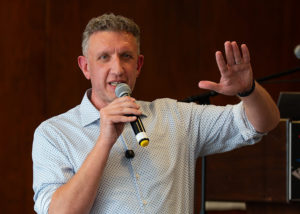
Chuck is a US-based internal communications strategist and the founder of ICology – a community and resource hub for IC professionals. He brings a practitioner lens to every conversation. Chuck is a recognised voice in the industry, a regular speaker and event host, and one of the most connected people in the North American IC world.
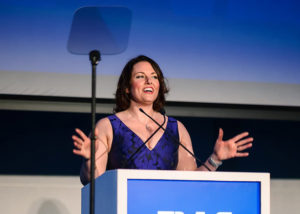
Jenni is a UK-based leadership and internal communications consultant, author of two best-selling books, and international speaker. She runs Redefining Communications, a consultancy working with organisations around the world to help them communicate better and close the gap between what leaders say and what employees experience.