
Jenni Field shares reflections from Chris Ducker’s Long Haul Leader Summit before she and Chuck Gose dig into a new “Meaningful Productivity” report on workplace exhaustion, MIT Sloan’s case that poor leadership — not hybrid work itself — is the real problem, data on manager engagement and recognition, and the risk of over-specializing in a comms career.
Jenni shares her weekend at the Long Haul Leader Summit in Cambridge, organized by her coach Chris Ducker around his new book Long Haul Leader — about sustainable, non-burnout leadership. Both hosts note how uniquely valuable, and comparatively rare, in-person weekend gatherings of this kind are, and Jenni reveals that next year’s Comms Reboot event will move to a weekday format after her earlier attempt at a weekend event in Chicago struggled to sell tickets.
Discussing Forty1’s Meaningful Productivity Report, Chuck and Jenni unpack the finding that employees spend up to 60% of their time coordinating across nearly 10 daily apps rather than doing value-creating work. Jenni argues the report’s real insight — that visible, acted-upon listening restores energy far more than any productivity slogan — is something the industry has understood for years without consistently acting on it.
An MIT Sloan Management Review piece argues that rules about office days will never outperform genuine rituals that help teams do the right work in the right way. High-performing teams measure outcomes and build a specific, short list of in-person moments that actually matter, treating presence as a tool rather than a scoreboard. Chuck and Jenni debate whether command-and-control policies or cultural rituals actually win out in practice.
Nectar research shows just 59% of employees see their leaders as genuinely engaged, tying that perception to concrete, repeatable habits: steady recognition, and leaders showing up in the actual work rather than only in broadcast communication. Chuck and Jenni discuss whether weekly recognition, as the research suggests, is a realistic expectation for time-strapped managers or an unrealistic bar.
Closing on a LinkedIn post by Michelle Frith, the hosts discuss the risk of comms careers narrowing into pure channel-execution roles as teams chase performance metrics, and make the case for a “T-shaped” career — deep craft skill paired with broad enough business fluency to influence real decisions, not just run channels well.
What does the “productivity paradox” reveal about workplace exhaustion? Employees spend up to 60% of their time coordinating across nearly 10 daily apps rather than doing value-creating work, according to Forty1’s Meaningful Productivity Report — Jenni argues the report’s real insight is that visible, acted-upon listening restores energy far more than any productivity slogan.
Is hybrid work really the problem, or is it poor leadership? Poor leadership, according to an MIT Sloan Management Review piece — rules about office days will never outperform genuine rituals that help teams do the right work in the right way; high-performing teams measure outcomes and build a short list of in-person moments that actually matter, treating presence as a tool rather than a scoreboard.
Why do only 59% of employees see their leaders as actively engaged? Nectar research ties the perception to concrete, repeatable habits — steady recognition, and leaders showing up in the actual work rather than only in broadcast communication — Chuck and Jenni debate whether weekly recognition is a realistic expectation for time-strapped managers or an unrealistic bar.
What’s the risk of over-specializing in a communications career? Comms careers risk narrowing into pure channel-execution roles as teams chase performance metrics, per a LinkedIn post by Michelle Frith — the hosts make the case for a “T-shaped” career instead: deep craft skill paired with broad enough business fluency to influence real decisions, not just run channels well.
Chuck: Welcome to Frequency, I’m Chuck Gose.
Jenni: And I’m Jenni Field. Frequency is your go-to for real talk about comms, culture, and employee experience — beyond the buzzwords and straight to what matters. I want to kick us off this week — I spent my weekend at the Long Haul Leader Summit in Cambridge, organized by my coach Chris Ducker, who’s just published a book called Long Haul Leader. It was my second time at his summit, and I want to talk about the importance of getting together with people in real life. I know you talk about this a lot with your ICology group — I spent the whole weekend in a room with a hundred entrepreneurs and business owners from around the world, and the biggest takeaway from everyone was just the joy of solving problems together in person. It was very cup-filling for me, and it’s made me feel even more strongly about the importance of bringing people together, even though Chris isn’t running the event again next year.
Chuck: What exactly is a “long haul leader”?
Jenni: The book’s about being in leadership for the long haul — staying healthy and not burning out while still being successful. I’ve only just picked it up, but there were sessions all weekend on burnout, wellbeing, and even how AI might be affecting our original thinking. Genuinely thought-provoking content throughout.
Chuck: I think weekend events might be uniquely British — you don’t see that pattern much in the US.
Jenni: Completely — when I first tried bringing Comms Reboot to Chicago in 2023 as a Saturday event, I sold about five tickets and had to pull it. When I ran it again on a weekday with ContactMonkey, we sold 80. It’s working less over here too, honestly — Comms Reboot next year will move to a weekday, which is an exclusive reveal for everyone listening today. Second thing — what are you reading? I’ve just started Cues by Vanessa Van Edwards, who we both met at Unite in Nashville.
Chuck: Nothing right now, if I’m honest — I haven’t read a book in months. I’ve got Fooled by Randomness sitting next to me that I bought weeks ago and haven’t touched. Maybe this is the nudge I need.
Jenni: I’m very happy to nudge, or bully, whichever gets results. I’ve actually been in “fiction land” for six to eight weeks myself, which has been lovely, but I feel ready to come back out of it.
Chuck: I’ve never traveled to fiction land, Jenni — maybe I need to.
Jenni: You’d love it, honestly — I’ll recommend some good ones. Let’s get into this week’s stories. I’ve really outdone myself — we’re going to talk about two of our favorite topics, hybrid work and poor leadership, in the same article, plus the dangers of low leadership engagement and career over-specialization. But first, exhaustion — Forty1’s Meaningful Productivity Report argues work isn’t broken because people are lazy, it’s broken because the day gets carved into tiny, frantic pieces. Employees use nearly 10 apps a day, spending up to 60% of their time coordinating rather than delivering value — the “productivity paradox,” where more investment in efficiency produces less meaningful output. The report says the fix hiding in plain sight is listening that leads to visible change. We’ve talked about the importance of this forever — why doesn’t it happen?
Jenni: I think it’s a mix of bad habits, a lack of strategic intention, and genuine fear of failure — leaders often don’t know what to do with what they hear once they’ve actually listened, so they avoid asking in the first place. It connects to Cal Newport’s Slow Productivity too — busyness has become a proxy for value, when it’s often the opposite.
Chuck: That tracks with everything we’ve said about managers being stretched too thin to actually act on feedback even when they do gather it — listening without the capacity or authority to close the loop just breeds more cynicism than staying silent would have.
Jenni: Exactly, and that’s the part that never seems to get fixed no matter how many reports come out saying the same thing.
Chuck: Next, one of our favorite combinations — MIT Sloan Management Review arguing hybrid work is not the problem, poor leadership is. High performers measure outcomes and set clear norms for when in-person time actually matters, treating presence as a tool rather than a scoreboard. The article’s case: rules about office days will never outperform rituals that help teams do the right work in the right way. What wins — command and control, or cultural rituals?
Jenni: Cultural rituals win every time, in my experience — a rule can be followed in letter while being completely ignored in spirit, whereas a ritual that genuinely helps people do better work gets adopted because people can feel it working. The challenge is that rituals take deliberate design and reinforcement, while a blanket policy is just easier to announce and enforce on paper.
Chuck: That’s the whole appeal of “three days in office” as a policy — it’s simple to communicate, even if it does nothing to actually solve whatever problem prompted it in the first place. A genuine ritual, like a defined weekly moment that has to happen in person, requires leaders to actually think about what needs a room and what doesn’t.
Jenni: And that thinking is exactly the work most organizations are skipping by defaulting to a blanket day-count instead.
Chuck: Next — Nectar research finding only 59% of employees see their leaders as actively engaged, tied to specific habits: steady recognition and leaders showing up in the actual work rather than only in broadcast messaging. Is weekly recognition, as this research suggests, realistic for managers, or are we expecting too much?
Jenni: I think it’s realistic if we make it genuinely easy and specific rather than another vague ask — give managers small, concrete scripts and moments to recognize progress, rather than expecting them to invent meaningful recognition from scratch every week on top of everything else they’re doing. The 59% number doesn’t surprise me at all, given how stretched managers already are.
Chuck: Agreed, and this is a case where comms can genuinely help — scripting these habits and making them low-effort is exactly the kind of practical support that turns a fuzzy engagement problem into repeatable behavior.
Chuck: Last one — Michelle Frith on LinkedIn warning that comms careers can get boxed into narrow channel tacticians as teams chase performance metrics, arguing for a “T-shaped” career instead: depth in a craft, breadth across the business. Do you see this narrowing happening?
Jenni: Absolutely — I see it constantly with people who become excellent at running one specific channel but never build the broader business fluency to translate their work into strategic influence. The T-shape is the right model; depth without breadth limits your ceiling, and breadth without depth means you’re not genuinely excellent at anything specific either.
Chuck: It’s a good reminder for anyone early in their career specifically — don’t let yourself get so good at one narrow thing that you can’t eventually speak the language of the wider business.
Chuck: That wraps this week’s stories. What’s your freak-out?
Jenni: Mine’s actually holiday planning — I’m already thinking ahead to next year’s travel, which feels like it’s coming around faster every year.
Chuck: Same — time keeps accelerating the older I get. Thank you all for joining us this week. All the articles and books that inspired this conversation are in the show notes — rate and review after you’ve listened, subscribe so you don’t miss an episode, and pass this along to someone who’d enjoy it; find us on YouTube too. Thank you to Poet Ali for contributing the music to the show, and we’ll be back next week with more news, insights and opinions about comms and leadership in workplaces today. Keep tuning in and turning up.
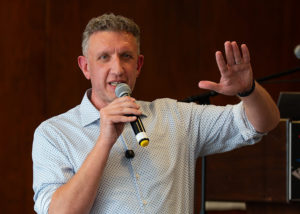
Chuck is a US-based internal communications strategist and the founder of ICology – a community and resource hub for IC professionals. He brings a practitioner lens to every conversation. Chuck is a recognised voice in the industry, a regular speaker and event host, and one of the most connected people in the North American IC world.
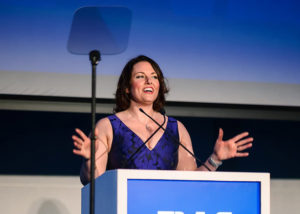
Jenni is a UK-based leadership and internal communications consultant, author of two best-selling books, and international speaker. She runs Redefining Communications, a consultancy working with organisations around the world to help them communicate better and close the gap between what leaders say and what employees experience.