
Chuck Gose and Jenni Field open with the fat cat of Santorini and a new personality-type label before digging into data showing return-to-office mandates function as a “retention tax,” Gallup’s five dependable levers of employee engagement, research on post-pandemic personality shifts, the Netherlands’ near-standard four-day week, and the workplace trauma response known as “fawning.”
Jenni opens with the story of a Santorini shopkeeper’s Instagram-famous cat, Bruja, whose 30,000-plus followers reportedly saved the struggling store from closing — a story Chuck ties back to the enduring power of mascots and simple, non-human identities in building an audience. Jenni also shares a newly named personality type, “otrovert,” describing people who thrive in the company of others without needing constant stimulation or full retreat, which she jokingly claims for herself.
Discussing new analysis shared by Adam Grant covering more than three million tech and finance workers, Chuck and Jenni unpack findings that RTO mandates raise turnover — especially among top performers and women — without a corresponding profit gain. Jenni argues inflexible RTO functions as a genuine retention tax, and lays out the guardrails she’d insist on before any leadership team communicates a mandate.
The hosts walk through [Gallup’s five dependable drivers of employee engagement](https://www.linkedin.com/posts/gallup_five-key-drivers-of-employee-engagement-activity-7370818239347609600-STRt/) — purpose, development, caring managers, ongoing conversations, and a focus on strengths — with Jenni comparing them to the older “enablers of engagement” framework from Engage for Success (strategic narrative, engaging managers, employee voice, and organizational integrity) and identifying which lever she sees most neglected in real organizations today.
A piece by Bruce Daisley on longitudinal research showing a measurable personality shift since the pandemic — particularly declining conscientiousness and agreeableness among younger adults — prompts Jenni and Chuck to debate whether leaders should respond by adjusting expectations, workplace rituals, or the cadence of manager feedback first.
Discussing [reporting on the Netherlands’ near-standard four-day](https://www.thetimes.com/article/847c9070-ff5d-4547-9dcb-0d8626b97438), roughly 32-hour work week, Chuck and Jenni compare it with Belgium’s compressed-schedule approach and Portugal’s well-reviewed pilot, and discuss how a leadership team should decide between genuinely reducing hours versus simply compressing the same hours into fewer days — and how to communicate that trade-off fairly to frontline and customer-facing teams.
Closing the episode, the hosts discuss a Fast Company piece on “fawning” — instant yeses, conflict avoidance, and heroic responsiveness that can look like model-employee behavior but is identified by psychotherapist Ingrid Clayton as a trauma response, not genuine engagement. Chuck and Jenni discuss what leaders can do to give employees real permission to set boundaries and disagree productively, rather than unconsciously rewarding fawning behavior.
Is return-to-office really a “retention tax,” and what does the data show? Yes, in Jenni’s view — new analysis shared by Adam Grant, covering more than three million tech and finance workers, finds RTO mandates raise turnover, especially among top performers and women, without a corresponding profit gain, which Jenni argues functions as a genuine retention tax on inflexible policies.
What are Gallup’s five dependable levers of employee engagement? Purpose, development, caring managers, ongoing conversations, and a focus on strengths — Jenni compares them to the older “enablers of engagement” framework from Engage for Success (strategic narrative, engaging managers, employee voice, organizational integrity) and discusses which lever she sees most neglected in real organizations today.
Are people’s personalities actually shifting since the pandemic, and what should leaders do about it? Longitudinal research cited by Bruce Daisley shows a measurable personality shift since the pandemic, particularly declining conscientiousness and agreeableness among younger adults — Jenni and Chuck debate whether leaders should respond by adjusting expectations, workplace rituals, or the cadence of manager feedback first.
How is the Netherlands making a four-day work week the norm, and what are the alternatives? The Netherlands has made a roughly 32-hour, four-day work week near-standard; Chuck and Jenni compare it with Belgium’s compressed-schedule approach and Portugal’s well-reviewed pilot, and discuss how leadership teams should decide between genuinely reducing hours versus simply compressing the same hours into fewer days.
What is “fawning,” and how can it hurt someone’s career while looking like engagement? “Fawning” describes instant yeses, conflict avoidance, and heroic responsiveness that can look like model-employee behavior but is identified by psychotherapist Ingrid Clayton as a trauma response, not genuine engagement — the hosts discuss what leaders can do to give employees real permission to set boundaries rather than unconsciously rewarding fawning.
Chuck: Welcome to Frequency, I’m Chuck Gose.
Jenni: And I’m Jenni Field. Frequency is your go-to for real talk about comms, culture, and employee experience — beyond the buzzwords and straight to what matters. I want to kick things off today with the fat cat of Santorini. I was away last week for a friend’s wedding — congratulations, Mr. and Mrs. Fisher — and while we were there we went to find the “fat cat of Santorini,” a cat named Bruja who has over 30,000 Instagram followers and reportedly saved her owner’s struggling shop from closing. People now build entire honeymoons around visiting her.
Chuck: When I saw this in our notes, my brain went twenty different directions — a kids’ book, a mafia nickname — but really it’s a great example of the power of mascots. Four-legged creatures often make the best ones, and you don’t have to overthink it.
Jenni: It was genuinely lovely — we hired a car just to get to the other side of the island to see her. I’ll share a photo when this episode goes out. The other thing I wanted to bring is a new personality label I saw this week: “otrovert.” Psychiatrists are apparently recognizing a third type alongside introvert and extrovert — people who thrive in the company of others without needing constant chatter or the intensity of extroverted energy. I’m claiming this one for myself.
Chuck: We love labels as much as we love mascots — this feels a bit like reading a horoscope, where everyone finds themselves in the description. It sounds like about 99% of people, 99% of the time.
Jenni: Maybe, but it resonated — on Myers-Briggs I test as an extrovert, yet I don’t need constant stimulation the way that label implies. Anyway — what have you got for us this week?
Chuck: We’ve got Gallup’s five dependable levers of engagement, evidence that post-pandemic personality shifts may be reshaping culture, the Netherlands’ near-standard four-day week, and a new frame for people-pleasing at work managers should learn to spot quickly. First — Adam Grant shared new analysis of more than three million tech and finance workers showing that after companies impose return-to-office mandates, turnover rises, with the steepest losses among top performers and women, hiring gets harder, and there’s no accompanying profit boost. Is inflexible RTO basically a retention tax, and what guardrails would you insist on before communicating any mandate?
Jenni: I’d call it exactly that — a retention tax, and a real cost most leadership teams aren’t pricing in. Before communicating any mandate, I’d want clear evidence of what specific problem the mandate is meant to solve, a plan for how you’ll measure whether it worked, and honesty with employees about the trade-offs rather than dressing it up as being about culture or collaboration when the data doesn’t back that up.
Chuck: The “no profit boost” finding is the one leadership teams keep ignoring — if there’s no clear business case, you’re just accepting the turnover cost for its own sake.
Chuck: Next, Gallup’s five dependable levers of engagement: purpose, development, caring managers, ongoing conversations, and a focus on strengths — with managers accounting for roughly 70% of the variance in team engagement. Which of these do you see most underfed in real organizations right now?
Jenni: Caring managers and ongoing conversations, without question — that connects right back to everything we’ve said about managers being stretched too thin to actually have those conversations well. I’d compare this to the older Engage for Success framework I’ve used for years — strategic narrative, engaging managers, employee voice, organizational integrity — which covers similar ground but adds real emphasis on employee voice, something Gallup’s five levers don’t name quite as explicitly. Neither framework is wrong, but I don’t think either is too simple; the challenge has never been knowing the levers, it’s been actually pulling them consistently.
Chuck: Agreed — this is a case where the research isn’t new, it’s the execution that keeps failing.
Chuck: Next, longitudinal research suggesting our personalities themselves may be shifting since the pandemic — younger adults showing declines in conscientiousness and agreeableness and a rise in neuroticism, roughly a decade’s worth of change compressed into two years. If the baseline is genuinely moving, what should leaders adjust first: expectations, rituals, or feedback cadence?
Jenni: I’d start with feedback cadence, because that’s the most direct lever managers control day to day, and it gives you real-time information about whether your expectations and rituals still fit the people actually in the room. I’d also flag this data is US-based, so I’d be cautious extrapolating it to a global workforce without more research.
Chuck: Good catch on the caveat — I think expectations probably need to shift too, but you can’t responsibly reset expectations until you’ve got the ongoing feedback loop Jenni’s describing in place first.
Chuck: Let’s talk about the four-day week — across Europe it’s moving from experiment to operating model. In the Netherlands, a de facto four-day, roughly 32-hour week is common, and productivity has held up; more than half of women and nearly one in five men work under 30 hours. The UK’s 2022 pilot saw most participating companies keep the policy. Belgium took a different approach, giving employees the legal right to compress a standard week into four longer days rather than cutting total hours, and Portugal’s government-backed pilot saw about 95% of firms rate the shift positively. If a leadership team says “let’s try a four-day week,” do you push for true hour reduction or a compressed schedule?
Jenni: I’d always push toward genuine hour reduction where the business model allows it, because that’s where the real wellbeing gains in this research show up — Belgium’s compressed model is really just flexibility, not fewer total hours, so the benefits are different and smaller. The harder conversation is fairness for frontline and customer-facing teams who can’t simply compress their schedules the same way office-based teams can; you have to be upfront that the shift may look different by role, and explain why, rather than pretending everyone gets an identical version of the policy.
Chuck: That fairness gap is exactly where a lot of these pilots get their loudest internal pushback — nobody wants to be told their version of “four-day week” is actually just a differently arranged five days.
Chuck: Last story — Fast Company on “fawning,” a workplace pattern that on the surface looks like model-employee behavior: instant yeses, conflict avoidance, heroic responsiveness. Psychotherapist Ingrid Clayton frames it as a trauma response rather than genuine engagement. How should managers respond when they spot this?
Jenni: This is such an important reframe, because a manager who unconsciously rewards fawning — praising the person who never pushes back, never says no — is actively reinforcing a pattern that erodes that person’s own boundaries and creativity over time. Leaders have to explicitly give people permission to disagree productively and set boundaries, not just say the door is open and hope someone walks through it.
Chuck: That connects back to the psychological safety conversation we keep returning to — permission has to be actively granted and modeled, not just implied.
Jenni: Exactly, and it takes real, deliberate work from leadership, not a poster on the wall about “speaking up.”
Chuck: That wraps this week’s stories. What’s your freak-out?
Jenni: Mine’s actually a celebration — a friend of mine just launched a newsletter, and I want to use this moment to say how much community support matters when someone puts new creative work out into the world. Go support your friends’ side projects; it costs you nothing and means a lot.
Chuck: Completely agree — and it’s National Inclusion Week here as we record, which feels like a fitting note to end on: now really is the time to keep showing up for people, in small ways and large ones. Thank you all for joining us this week. All the articles that inspired this conversation are in the show notes — rate and review after you’ve listened, subscribe so you don’t miss an episode, and pass this along to someone who’d enjoy it; find us on YouTube too. Thank you to Poet Ali for contributing the music to the show, and we’ll be back next week with more news, insights and opinions about comms and leadership in workplaces today. Keep tuning in and turning up.
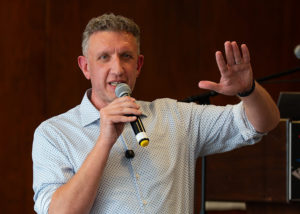
Chuck is a US-based internal communications strategist and the founder of ICology – a community and resource hub for IC professionals. He brings a practitioner lens to every conversation. Chuck is a recognised voice in the industry, a regular speaker and event host, and one of the most connected people in the North American IC world.

Jenni is a UK-based leadership and internal communications consultant, author of two best-selling books, and international speaker. She runs Redefining Communications, a consultancy working with organisations around the world to help them communicate better and close the gap between what leaders say and what employees experience.