
Marking their 20th episode, Chuck Gose and Jenni Field dig into why workplace communication feels so noisy, whether attention spans are really getting worse, what actually makes an all-employee meeting worth attending, and a sharper-edged theory about CEOs, Gen Z, and the end of “we matter at work” messaging.
Discussing a Harvard Business Review piece on the noise plaguing workplace communication — unread memos, missed Zoom alerts, inconsistent reports — Chuck floats the idea of a dedicated “comms ops” role focused on communication structures rather than messaging itself. Jenni pushes the conversation toward a bigger, recurring question: where does internal comms’ remit actually start and stop when the breakdowns described are really about individual behavior and channel preference.
Jenni shares a LinkedIn post by Jonathan Haidt, author of The Anxious Generation, arguing that today’s most connected generations show declining ability to follow through on plans and resist distraction. Chuck, self-described as loving this topic despite his reputation for hating it, argues every older generation has said the same thing about the one below it, and that what’s really changed is the sheer number of content choices competing for people’s attention, not their underlying capacity to pay attention.
Referencing a case study from The Gathering Effect, Jenni contrasts a typical “content agenda” (Q1 review, finance update, HR update) with an “effect agenda” built around outcomes, like helping employees understand department goals and how their work connects to customers. Chuck agrees outcomes should come first, but argues the harder problem is making people actually want to pay attention — floating the idea of a swipeable, TikTok-style town hall format that lets employees skip past content that doesn’t interest them.
The hosts close on a LinkedIn post by Sharon O’Day arguing that after a decade of “values, belonging, and purpose” messaging, corporate tone is turning clinical — pointing to AT&T’s and Chevron’s leadership stances — while Gen Z employees respond with equally clear-eyed boundary-setting of their own. Chuck argues this might finally free internal comms from chasing “employee engagement” as traditionally defined, while Jenni worries the profession isn’t yet equipped to pivot toward the more business-outcome-focused role this moment calls for.
Is fixing noisy day-to-day workplace communication internal comms’ responsibility? It’s genuinely unclear, the hosts conclude — Chuck floats a dedicated “comms ops” role to manage communication structures, while Jenni pushes back that many of the breakdowns described (unread memos, missed alerts) are really about individual behavior and channel preference, not something comms can fully own.
Are attention spans actually getting worse, or do we just have more choices? Chuck argues it’s mostly the latter — while a LinkedIn post by Jonathan Haidt argues today’s most connected generations show declining ability to resist distraction, Chuck counters that every older generation has said the same about the one below it, and what’s really changed is the sheer number of content choices competing for attention, not people’s underlying capacity to pay it.
What separates a “content agenda” from an “effect agenda” for a town hall? A content agenda starts from the calendar date and a fixed list of updates (Q1 review, finance, HR); an effect agenda starts from the outcome you want employees to walk away understanding, like how their work connects to customers — Jenni argues most town halls still default to the former.
Why are CEO communications getting more clinical, and how is Gen Z responding? A LinkedIn post by Sharon O’Day argues that after a decade of “values, belonging, and purpose” messaging, corporate tone is turning clinical — pointing to AT&T’s and Chevron’s leadership stances — while Gen Z employees respond with equally clear-eyed boundary-setting of their own, rather than performing warmth back.
Should internal comms move on from “employee engagement” as its core metric? Chuck thinks so — he argues this shift might finally free internal comms from chasing “employee engagement” as traditionally defined, while Jenni worries the profession isn’t yet equipped to pivot toward the more business-outcome-focused role this moment calls for.
Jenni: Welcome to Frequency, I’m Jenni Field.
Chuck: And I’m Chuck Gose. Frequency is your go-to for real talk about comms, culture, and employee experience — beyond the buzzwords and straight to what matters. Jenni, I want to kick off with a bit of a disappointment: we need to talk about your LinkedIn reactions. I posted one of my favorite photos of you, marking our 20th episode, and out of celebrate, insightful, love, or support, you just gave it the plain thumbs-up.
Jenni: It takes a lot to get praise from me, Chuck — I feel like I’m always just saying “work harder.”
Chuck: That’s exactly why we get along. But I found a way for you to make it up to me — hear me out before you reject it. You’ve started recording the audiobook version of your book. Have you considered having an American voice read a version of it too? Like Taylor Swift’s re-recordings — this could be “Chuck’s version.”
Jenni: I’ve actually just finished recording it, so that window may have passed, but I’ll consider it.
Chuck: We could always do a reprint — “Chuck’s version” right under the title.
Jenni: Or, “nobody believes Chuck.”
Chuck: That’s a bit harsh. Let’s get into your articles for the week.
Jenni: I’ve got some great ones this week focused on changes happening in the world of work and what they mean for internal comms teams — recent news about CEOs getting more clinical, Gen Z echoing that same directness, some insight into attention spans, and what makes a great all-employee meeting. First, streamlining how we communicate at work. There’s a Harvard Business Review piece making the case that workplace communication is noisy and needs to be streamlined, especially as RTO mandates and hybrid work make things noisier still. It gives examples: a detailed memo nobody reads before a decision meeting, a missed Zoom call because the alert came via Slack, a CEO delaying approval of a memo because there was no summary in the email body, a leader receiving five inconsistent reports from five business units. The authors argue effective communication isn’t about writing less, it’s about making reading easier. Is fixing this in the remit of the IC function, or does it belong somewhere else?
Chuck: Elements of it fit, but a lot of these examples are just human behavior. This might point to a role I’ve seen discussed more — “comms ops” — someone who sets up the structures for how communication happens rather than doing the communicating itself. But all it takes is one senior leader deciding they’d rather send email than use Teams, and no comms person is going to be the one to tell the CEO they can’t do that.
Jenni: This strikes at the heart of one of internal comms’ biggest ongoing challenges — where the remit starts and stops. Some people will feel this is their job to fix; others will say it isn’t. I think we’re wandering into a messy operational middle that isn’t necessarily where internal comms should live.
Chuck: The example about a CEO delaying approval of a memo because there wasn’t a summary in the email — comms isn’t going to fix that. That’s just individual habit; even Gmail nudges you if you mention “attached” without attaching a file, and it still doesn’t fully solve the problem.
Jenni: And it doesn’t allow for individual preference either — if a leader prefers a summary before the attachment, that’s something they need to communicate themselves. Which leads nicely to the next article, about attention spans — a LinkedIn post by Jonathan Haidt on “the attention apocalypse.” I know you hate this topic, but I’m going in anyway.
Chuck: I actually love this topic — keep going.
Jenni: Haidt shares a graphic showing, by age, how the noisy world we live in affects our ability to make and follow through on plans, and how distracted and less outgoing people report feeling. As he writes, quoting his book The Anxious Generation: this isn’t Gen Z’s fault — we overprotected them in real life and underprotected them online, gave them infinite scroll and 24/7 comparison to unrealistic role models instead of the long unstructured play time every previous generation had. He also cites a stat that the number of times someone needs to see something before acting has grown from about seven touchpoints to 28.8. What should internal comms professionals do about this?
Chuck: I agree with the point about overprotecting in real life and underprotecting online — that speaks directly to age-gating issues in a lot of apps. But my challenge is: if you compared 16-year-old me in 1991 to older generations on the same measures — making plans and following through, persevering until finished, being easily distracted — I’d have scored worse on all of them too. I think this is mostly generational commentary dressed up as new data. My parents worried I watched too much MTV; did that change my brain? I don’t know, but I turned out fine. I think our attention spans are actually just as strong as ever — we simply have more choices now and less tolerance for content that doesn’t hold us. Given one radio station eighty years ago, your attention span on that station would look incredible by comparison.
Jenni: I’m not a huge fan of generational theory either — my 2012 diploma research looked at how different generations communicate, and I started to question how much of it is really generational versus just how people behave at a given age or life stage. I have the same question about “most stressed generation ever” data — weren’t we all pretty stressed as teenagers going through exams and hormonal changes, regardless of era? I’d want to see that historical comparison as context.
Chuck: People like labels, and people like generations — proud Gen Xer here, the generation everyone forgets about. I think the bigger shift is that workplaces now span a much wider age range than before — you can have a 50-plus-year gap between the youngest and oldest workers in some frontline settings, so of course there are going to be style differences. I don’t know why we’re surprised by that.
Jenni: Filing that under “of course it is, keep going.” The next article was inspired by a piece from The Gathering Effect on improving employee town halls, which got me thinking about outcomes and purpose. I still see internal comms teams start from “the next town hall is on this date, what should we talk about,” when it should run the other way: decide the outcome, then figure out how to communicate it. The article contrasts a typical “content agenda” — welcome, Q1 review, finance update, HR update — with an “effect agenda” built around outcomes, like helping employees understand department goals and how they connect to customers. What’s your advice for making town halls actually work?
Chuck: I love that framing — the content agenda is one employees have already seen a hundred times, and they’ve tuned out accordingly. But defining the outcome is only step one; the harder question is how you get people to actually pay attention. Look at the true cost of an all-hands meeting in terms of everyone’s time, and you’ll see people quietly context-switching to Slack the whole time anyway. We batted around an idea inside iCology of doing town halls TikTok-style — swipe past what you don’t care about, and you’d get real data on what people actually want to hear.
Jenni: But how do you balance that against the presenting skills of whoever’s hosting? Not every CEO or CFO is a natural presenter, and it doesn’t feel fair to expect that of them on top of their actual expertise.
Chuck: Who says they have to be the ones hosting? One of my favorite town halls ever was led by a customer success manager who wove boy-band lyrics throughout the whole thing — it was genuinely entertaining, and it showed a side of her people didn’t normally see at work. That’s the kind of “interesting,” not jazz-hands-on-stage, that actually works. We also floated the idea from a previous episode of departments having to “spend” their internal currency to get airtime on a town hall — if it costs you something, your content better be worth it.
Jenni: That’s really about flipping the process: sit down with the CEO and figure out the story you want to tell first, then find the best way to tell it — rather than parading every department through a fixed slot out of habit.
Jenni: The last article today is about the role of internal comms in this new era of work — a LinkedIn post from Sharon O’Day, flagged to us by Shona Sullivan. Sharon writes that after a decade or two of comms emphasizing values, belonging, and purpose, the tone has shifted: AT&T’s CEO telling 100,000 employees to return to office five days a week or reconsider whether they belong, Chevron’s CEO opening a cost-cutting era by telling employees to be less nice to each other. CEO communication is getting frostier, culture more clinical, efficiency in, empathy out. But she points out it’s not just coming from the top — Gen Z on TikTok is pushing back just as clearly, setting boundaries and rejecting the idea that work is family. Internal comms is caught in the middle, going from “warm hug of the organization” to “polite bouncer at the door.” Is this where internal comms should have been all along, before engagement culture took over? And is the profession equipped for it?
Chuck: I want to go back to your word “frostier” — this connects right back to our earlier conversation about authenticity. These CEOs have probably believed this the whole time; they were just performing the version employees said they wanted before. Now that they’re being blunt, that’s arguably more authentic, even if it doesn’t feel good. To your question about whether comms is equipped — I want to say yes, because if we finally let go of “employee engagement” as we’ve been measuring it, we’d stand a lot straighter as a profession. I do think companies should look for ways to genuinely engage employees, just not the way engagement has typically been defined and tracked.
Jenni: I want us to be equipped for it too, but I worry we’re not quite there. I’ve been looking at industry event agendas for the next six months to see how much the industry is adapting, and one UK event agenda I looked at recently felt like a mishmash with no clear theme — I can’t justify two days out of my calendar for that. I worry the industry at large is going to under-deliver on this shift toward real business-outcome alignment, because it’s simply easier to keep doing what’s familiar.
Chuck: We have our own platforms, and all we can do is keep doing this well ourselves — we’re not going to change everyone else. But to the communicators listening: I think you’re up for this. Letting go of the “engagement monkey” is overdue — leaders led us down that path and then showed us, through moves like AT&T’s and Chevron’s, that engagement metrics weren’t really what mattered to them after all. Others will likely follow that same blunter posture now that it’s been modeled.
Jenni: And there’s something notable in how many people entering the workforce now are comfortable saying “I don’t want this to be my family, I have clear boundaries, I finish at this time.” I remember being seen as strange for not joining colleagues at the pub after work because I wanted to go home and see my own friends instead. I think what we’re seeing is genuinely coming from both directions, meeting somewhere in the middle, not just leaders imposing something on a resistant workforce.
Jenni: That wraps our articles for our 20th episode. What’s your freak-out this week?
Chuck: I hate humble brags, so I’ll just tell this as a straightforward story. Earlier this week I was at a Workvivo event in Atlanta with a great turnout of local communicators and HR leaders. Afterward, a woman named Ashley Bailey came up to introduce herself as a longtime listener — a really nice reminder that those of us creating content don’t always see the impact it has. A couple of hours later, in the Delta Sky Club, I ran into John Acuff, author of Soundtracks, whom we’ve referenced on past episodes — a genuinely random, delightful encounter. The takeaway: when you’re visible and putting things out into the world, you never quite know who you’ll bump into.
Jenni: I’m still jealous you get to casually run into John Acuff in an airport lounge. My freak-out links to what you just described — the quieter people doing excellent work who aren’t always the loud, visible ones at events. I’m hosting a small roundtable in London in September for senior internal comms people to talk about what’s missing from industry events, since I keep hearing senior folks say the agendas don’t speak to their level anymore. It’s free, capped at around fifteen people, and I want to hear directly from people doing this work rather than assume what they need.
Chuck: I’m curious to hear what comes out of it — I’ve heard similar frustrations here in the States.
Jenni: That’s it for this week, our 20th episode. Thank you for joining us. All the articles that inspired this conversation are in the show notes — rate and review after you’ve listened, subscribe so you don’t miss another episode, and pass this along to someone who’d enjoy it; find us on YouTube too. Thank you to Poet Ali for contributing the music to the show, and we’ll be back next week with more news, insights and opinions about comms and leadership in workplaces today. Keep tuning in and turning up.

Chuck is a US-based internal communications strategist and the founder of ICology – a community and resource hub for IC professionals. He brings a practitioner lens to every conversation. Chuck is a recognised voice in the industry, a regular speaker and event host, and one of the most connected people in the North American IC world.
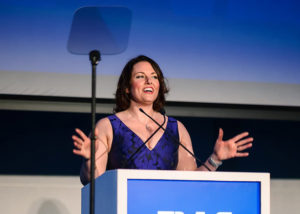
Jenni is a UK-based leadership and internal communications consultant, author of two best-selling books, and international speaker. She runs Redefining Communications, a consultancy working with organisations around the world to help them communicate better and close the gap between what leaders say and what employees experience.